Kumihimo: Braid Silky Cord Into Bracelets on a Foam Disk

Kumihimo: Braid Silky Cord Into Bracelets on a Foam Disk

DariaCurated by Daria
Jump to the 8 picks

Eight Threads Go In, One Silky Rope Comes Out

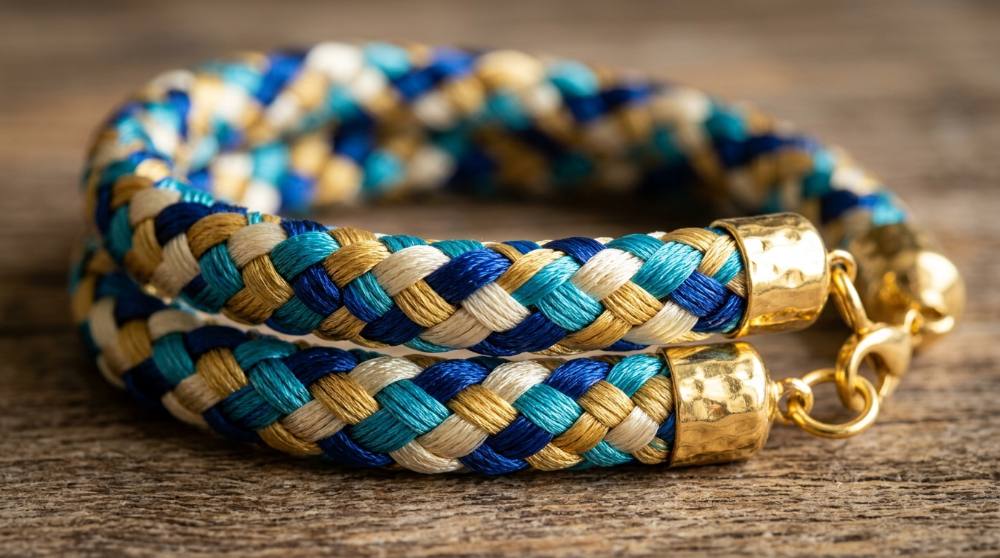
Around 300 meters of hand-braided silk cord went into lacing a single suit of samurai armor. That craft is kumihimo, literally “gathered threads,” and it has run in Japan for well over a thousand years, from sword fittings to the obijime cord still tied around kimono sashes today. The modern version is much humbler: threads move around a notched disk, and a tight, glossy rope grows down through the hole in the middle. Even the foam disk has a good origin story — it was co-designed by a trained engineer who is also a second-generation kumihimo artist.

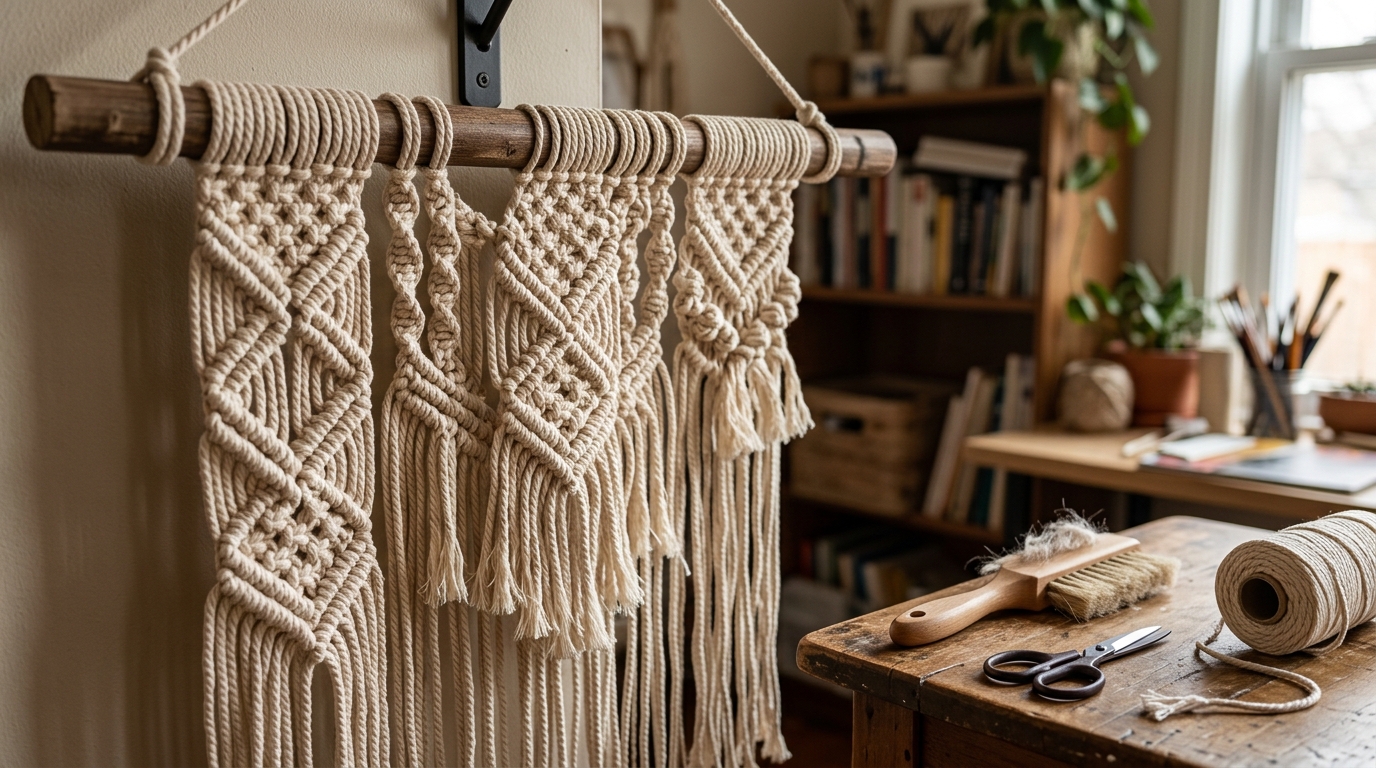
Your first session looks like this: eight satin strands hang off the edge of the disk, you lift one, drop it into a new notch, give the disk a quarter turn, and repeat until your hands stop needing you. A round cord grows down through the center hole — already glossy, already more even than you expected. If you've tried knotting your first macramé wall hanging, the meditative pull will feel familiar, but the motion is completely different: closer to dealing cards than tying knots. There's only one move to learn for the classic eight-strand braid, which is why school craft clubs teach it to ten-year-olds.

Start with the true minimum: a disk, a bundle of satin cord, and the caps and glue that turn a braid into a bracelet. That short list is the whole kit — everything past it is comfort, not necessity.

All four picks below sit firmly in pocket-money territory; if braiding turns out not to be your thing, you're out about the cost of a takeout dinner.

Foam Kumihimo Braiding Disk

Pick 01 of 08

Foam Kumihimo Braiding Disk

A dense foam disk with 32 numbered notches around the edge and a hole in the middle where the braid forms. The notches grip each cord so you can let go with both hands mid-braid and nothing unravels. Look for firm EVA foam around a centimeter thick that holds cords snugly without fraying them.

Why we picked this exact one: The Beadsmith 6-inch Round Kumihimo Disk is the exact disk practitioners name when beginners ask which one to buy, with firm dense foam that grips cord far better than wood or hard plastic. Its rating has held at 4.7 stars across well over a thousand reviews. One honest gripe from long braids: the 3/8-inch foam can flex under heavy beaded work, and some braiders stack two disks for stiffness.

See it on Amazon
2 mm satin rattail cord set for braiding

Pick 02 of 08

2 mm satin rattail cord set for braiding

Silky nylon cord about 2 mm thick, bundled in many colors. Satin cord braids into the glossy, rope-like finish most people picture when they think of kumihimo bracelets, and mistakes slide apart easily instead of locking in. A multicolor set matters more than any single shade, because pattern comes entirely from where each color sits on the disk.

Why we picked this exact one: This Coowayze 16-color rattail set covers the classic 2 mm size in enough shades to try dozens of color layouts for about ten dollars. Buyers put it at 4.6 stars. It's standard craft nylon rather than premium Japanese silk — exactly right for learning, less so for heirloom pieces.

See it on Amazon
glue-in cord end caps and clasps kit for finishing bracelets

Pick 03 of 08

glue-in cord end caps and clasps kit for finishing bracelets

An assortment of small metal barrels that glue over the cut ends of a braid, plus the lobster clasps and jump rings that join them into a wearable bracelet. A kit with several cap diameters matters, because braids come out thicker or thinner depending on cord and strand count. The cap should fit the braid end snugly, within about a millimeter.

Why we picked this exact one: SUNNYCLUE's 230-piece box bundles caps in several sizes with matching clasps and rings, so a beginner isn't guessing which single diameter to order. It holds 4.7 stars from buyers. Everything comes in one antique-silver finish — fine for casual bracelets, limiting if you want gold-tone gifts.

See it on Amazon
strong flexible craft adhesive for securing end caps

Pick 04 of 08

strong flexible craft adhesive for securing end caps

An industrial-strength craft glue that dries clear and stays slightly flexible, which suits jewelry that gets bent and knocked around on a wrist. A small tube lasts through dozens of bracelets because each cap takes only a drop. Use it in a ventilated room and let finished pieces cure before wearing them.

Why we picked this exact one: E6000 is the adhesive kumihimo teachers actually name when explaining how to attach end caps, and this 1.9 oz Plus tube is the standard craft size of it. Its rating sits at 4.7 stars. The trade-offs are real: it wants an open window while you work, and a full day of patience before you tug on anything.

See it on Amazon

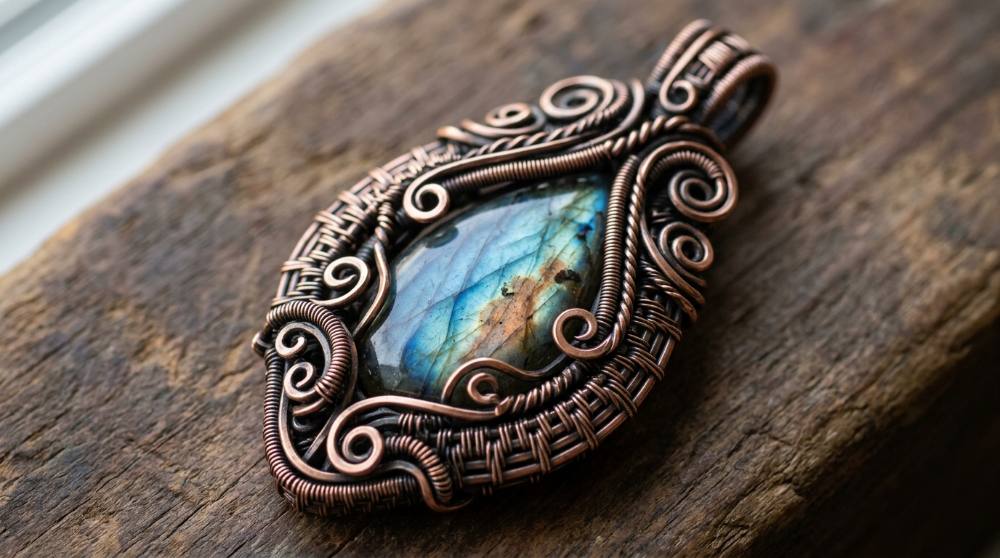
These four things take you from first cross to a finished bracelet in one evening. Measure before you glue — squeeze the braid end and hold it against a cap, because a cap more than a millimeter oversize will shed the braid no matter how much adhesive you use. If the small-findings-and-pliers side of this appeals to you, beginner wire art lives in exactly that world. Fair warning: once you've capped one bracelet cleanly, you'll want to cap everything in the house.

Upgrades for When the First Braid Hooks You

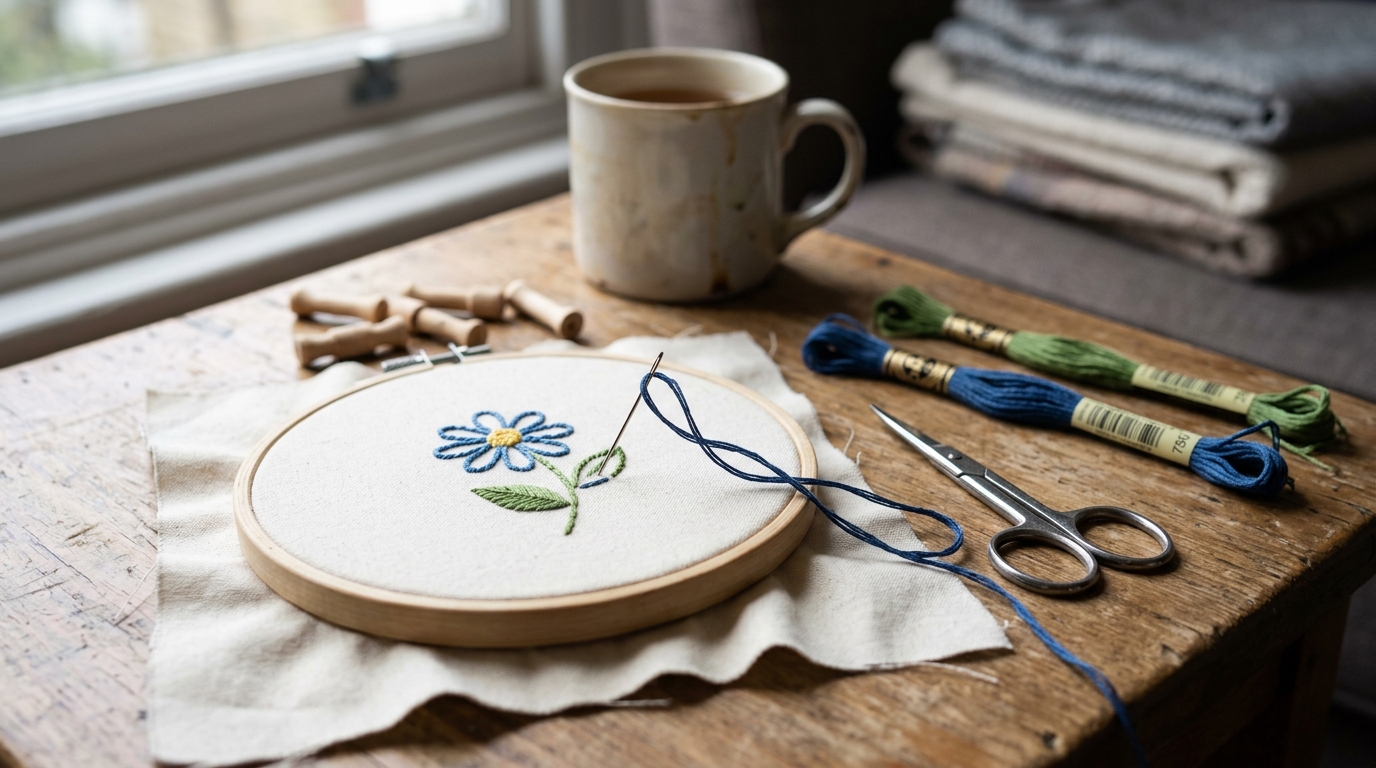
None of this is required for braid number one. A few sessions in, though, the same patterns emerge: unweighted braids come out tight at the top and loose at the bottom, necklace-length cords knot themselves into bird's nests, and the flat braids you keep seeing online refuse to come off a round disk. That's the gap these four fill. My advice is to skip the beautiful wooden marudai stands for now — they're wonderful eventually, but at this stage a small accessory usually solves this month's actual problem. And if you have floss left over from starting embroidery, it braids nicely in six-strand bundles, though it does love to tangle.

braiding counterweight with alligator clip

Pick 05 of 08

braiding counterweight with alligator clip

A small weight of around 45 grams on a padded alligator clip that grips the finished end of the braid and hangs down through the disk's center hole. The constant downward pull keeps every stitch forming at the same tension no matter what your hands are doing. Look for a clip that grips firmly without chewing delicate cord.

Why we picked this exact one: The Beadsmith Kumi Weight Lite clips on in a second, and its 45-gram pull sits inside the range braiders actually use for disk work. Its rating stands at 4.7 stars. It is, admittedly, a fair price for a weight on a clip — a binder clip and a few washers do the same job, just less elegantly.

See it on Amazon
no-tangle thread bobbins for managing long cords

Pick 06 of 08

no-tangle thread bobbins for managing long cords

Small plastic spools that snap shut around wound cord and release it only when tugged. For anything longer than a bracelet — straps, belts, necklaces — they stop the loose ends hanging below the disk from knotting around each other. This style carries a small built-in weight in each bobbin, which also steadies tension strand by strand.

Why we picked this exact one: The Beadsmith's Bob-EEZ bobbins snap closed over the cord with a satisfying click, and this set of eight adds 24-gram built-in weights so each strand tensions itself. Reviewers rate them 4.6 stars. They're genuinely optional at first — practitioners agree bracelet lengths don't need bobbins at all.

See it on Amazon
0.8 mm braided nylon cord for fine, firm braids

Pick 07 of 08

0.8 mm braided nylon cord for fine, firm braids

A thin, tightly woven nylon cord that produces slimmer, firmer braids with a matte, casual look — closer to friendship-bracelet territory than glossy satin. The 0.8 mm size suits fine-cord work and beaded designs. A multicolor spool set lets you experiment widely without committing to full rolls of one shade.

Why we picked this exact one: PH PandaHall's 15-color set is the Chinese knotting cord practitioners describe as sturdier and better finished than embroidery floss, in the useful 0.8 mm size. Thousands of jewelry makers have reviewed it, averaging 4.6 stars. Each color comes as a modest 10-yard spool — enough to sample freely, not enough for a large project in one shade.

See it on Amazon
square kumihimo plate for flat braids

Pick 08 of 08

square kumihimo plate for flat braids

A square foam plate with numbered slots along each side, used instead of the round disk when you want flat braids — watchband and bag-strap shapes rather than round cords. The braid still forms through a center opening; only the geometry of the moves changes. Same dense foam, same care: keep it to one cord thickness.

Why we picked this exact one: The Beadsmith Square Kumihimo Disk is the natural sibling to the round disk — same maker, same dense foam, and the one practitioners suggest as the flat-braid addition. It's the best-rated item on this page at 4.8 stars. Buy it second, not first: the round disk remains the main tool.

See it on Amazon

Add these when the itch arrives, not before — the plain disk-and-satin stage deserves a couple of weeks on its own. If the tidy, gridded side of thread crafts also appeals, beginner cross-stitch runs on the same pocket-money budget. And keep your first lumpy braid; when braid number ten comes off the disk, you'll be glad you have something to compare it with.

Why Your First Braid Goes Wobbly (and Other Braiding Mysteries)

Why is my braid tight at the top and loose at the bottom?

Because your hands relax as you settle in, and the braid records every change in pull. Beginners try to fix this by concentrating harder, which works for about five minutes. The reliable fix is mechanical: hang a small weight — around an ounce — from the braid under the disk so the tension stays constant whether you're focused or watching TV. Even a clip holding a couple of steel washers does the job.

Can I braid with yarn from my knitting stash?

Mostly yes, but the two known failures are specific. Pure elastic can't hold steady tension, and 100% acrylic yarn shreds and stretches as it rubs through the disk slots, so both fight you the whole way. Blends with a modest acrylic share braid fine, and cotton or wool yarns are happy on a disk. When in doubt, braid a short test length before committing a full project to it.

Why won't my end caps stay on?

Usually the cap is too big: it should be no more than about a millimeter wider than the braid end, or no amount of glue can bridge the gap. Bind the cut end tightly with thread before gluing so it can't bloom open inside the cap. Then leave the adhesive alone for a full day — strong craft glues cure slowly, and wearing the bracelet the same evening is how most caps come off.

My disk went soft and floppy after a few projects — did I buy a bad one?

No — foam disks wear in to whatever you braid on them. Run thick 3 mm cord through the slots for a few projects and they open up enough that thin cord won't grip properly afterwards. Braiders handle this by dedicating one disk to thick cords and one to thin, and by treating disks as cheap consumables rather than lifetime tools. If the slots have gone truly slack, a fresh disk costs less than the cord on it.

How long should I cut my cords?

The working rule is about three times the finished length: a 20 cm bracelet starts from roughly 60 cm cords if you begin with a knot. Braiding eats length surprisingly fast, and running out two-thirds of the way through a piece is a rite of passage nobody enjoys twice. Cut generously — leftover tails make good test braids — and add extra when a design uses beads or thick cord.

Love what you see here? Save individual picks with on any item, or copy everything to a list of your own in one click — great for coming back to later, or dropping as a not-so-subtle hint.

Disclosure: Some product links may be affiliate links. If you make a purchase through one of these links, we may earn a small commission at no extra cost to you.