Bend, Twist, Shape: Wire Art for Complete Beginners

Bend, Twist, Shape: Wire Art for Complete Beginners

DariaCurated by Daria
Jump to the 13 picks

One Spool, Two Pliers, and a Free Evening

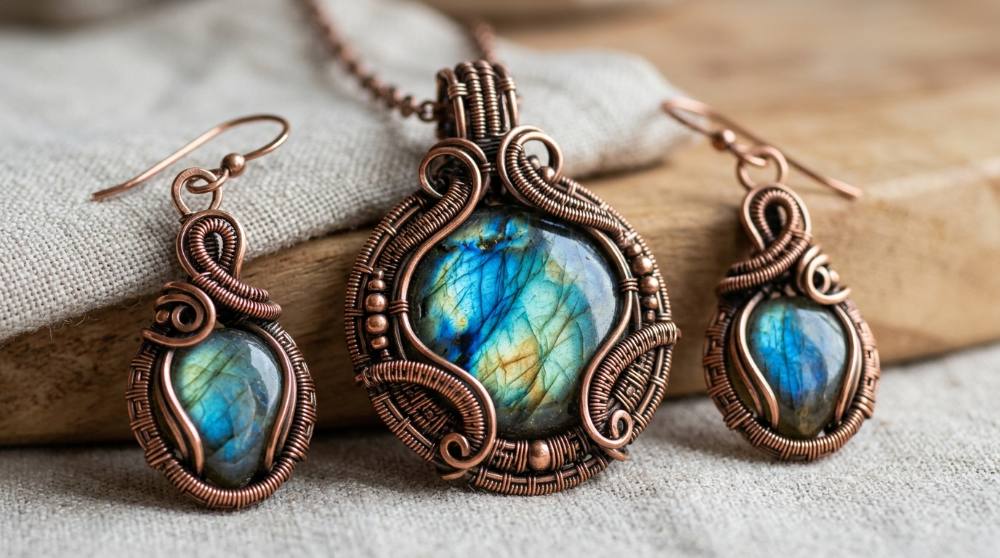
Wire art is exactly what it sounds like: you take a length of soft metal and bend it into something — a pendant gripping a stone, a ring, a three-inch dog that stands up by itself. People do it at kitchen tables and craft-fair stalls, and in enormous numbers on YouTube, where a wrapped-stone tutorial is mostly somebody's hands and nothing else. It's an old trick. Before anyone could draw wire through a plate, goldsmiths cut a thin strip of metal and twisted it into a rough round thread, and that stayed the method until drawing took over somewhere around the eighth to tenth centuries. The art side is younger and odder: in 1920s Paris, Alexander Calder bent wire into portraits and animals, then built a whole miniature circus of wire and string that packed into suitcases and got performed on gallery floors.

There's no waiting. Nothing cures, nothing dries, nothing needs a kiln, so you sit down after dinner and you're wearing the thing by bedtime. That makes wire an unusually sensible answer to the problem of picking a first hobby, since you find out whether you like it on day one rather than day nine. The catch is that wire punishes bad tools faster than most crafts. Dull cutters leave a burr that snags on knitwear, and cheap plier jaws print little dents down the wire that never come out.

Buy almost nothing to start. Two pliers, one good cutter and a spool of soft copper will carry you through your first dozen pieces; the finer second spool can wait a week if money is tight. Add the fifth tool on the day a project actually stalls without it.

Everything below is cheap enough that a shelved hobby won't feel like a mistake.

Precision Wire Bending PliersPrecision Wire Bending Pliers

Pick 01 of 13

Precision Wire Bending Pliers

Round-nose pliers have two smooth tapering cones instead of flat jaws, so a loop takes the diameter of whatever point on the taper you wrap it around. That is how repeatable eye loops, spirals and pendant bails get made without a jig. Look for tips that meet cleanly right at the end and a spring that returns the handles on its own.

Why we picked this exact one: The Beadsmith round-nose pliers are the pair that keeps turning up in wire tutorials, and at 4.6 stars across 716 reviews they earn it. The double leaf spring is the detail worth paying for, since it opens the jaws for you and your hand only has one job. The tips are fine enough for small loops, which also means they will splay if you use them on hard steel wire.

See it on Amazon
Precision Chain Nose PliersPrecision Chain Nose Pliers

Pick 02 of 13

Precision Chain Nose Pliers

Chain-nose pliers taper to a flat, narrow tip that reaches into a wrap where fingers cannot go. They do the unglamorous work: holding a wire steady while you turn it, squeezing a coil tight, pressing a sharp cut end down flat against the piece. Smooth inner jaws matter more than anything else here, because serrated ones leave permanent teeth marks in soft metal.

Why we picked this exact one: The Beadsmith extra-fine-tip chain nose pliers beat the wider six-inch version here because beginner work is small and tips that reach into a wrap matter more than leverage. They sit at 4.5 stars, and the smooth jaws are specified rather than assumed, which is not true of most bargain sets. Fine tips are the first thing to go out of alignment on heavy gauges, so keep something blunter for aluminium.

See it on Amazon
Precision Flush Cutter ToolPrecision Flush Cutter Tool

Pick 03 of 13

Precision Flush Cutter Tool

Flush cutters carry a flat face on one side of the blade and a bevel on the other, so one end of a cut comes out flat and the other comes out pinched into a point. The flat side goes towards the part you are keeping. Past that, what separates a good cutter from a bad one is how long the blades stay sharp on soft copper and whether they close without a gap at the very tip.

Why we picked this exact one: The Xuron Maxi-Shear 2175 is the cutter wire wrappers name unprompted, usually while mentioning that theirs has lasted years. Its 4.7-star average is the least controversial verdict in this whole setup. It is not built for hard steel or memory wire, so keep a cheap pair of side cutters around for anything that is not soft metal.

See it on Amazon
Flexible Crafting Copper Wire SpoolFlexible Crafting Copper Wire Spool

Pick 04 of 13

Flexible Crafting Copper Wire Spool

Twenty gauge is the workhorse thickness for wire jewelry: firm enough that a frame holds its shape while you wrap around it, soft enough to bend with your fingers. Dead soft is the temper to look for, meaning the wire arrives fully annealed and stiffens as you work it. A one-pound spool runs to several hundred feet, which sounds excessive right up until the first few attempts land in the scrap tin.

Why we picked this exact one: The Novacave spool states both gauge and temper, which rules out the coated craft-aisle wire beginners keep getting caught by. Three hundred and thirty feet on one spool means the cost per finished piece drops low enough to stop counting scrap. Bare copper does darken in storage, so keep the spool bagged if you like starting bright.

See it on Amazon
Flexible Soft Copper Craft WireFlexible Soft Copper Craft Wire

Pick 05 of 13

Flexible Soft Copper Craft Wire

This is the thin wire that binds the thick wire. It coils around frame wires, lashes them together and builds the woven texture that makes wire jewelry look intricate, and at this thickness it bends under finger pressure alone. Much finer and it snaps while you pull it tight; much thicker and it refuses to sit flat against the frame.

Why we picked this exact one: The Mangolite 26-gauge spool is bare dead soft copper rather than coated craft wire, so it darkens at the same rate as the 20-gauge frames it binds. It holds 4.7 stars, and 413 feet is a great deal of binding wire for under ten dollars. Bare copper will oxidise on the spool over a few months, which wipes off easily but is worth knowing before it looks alarming.

See it on Amazon

With these five you can wrap a stone, make a pair of earrings, and bend a ring around a marker pen in one evening. My advice: put the money into the cutter and go cheap everywhere else, which is roughly the reasoning behind working out which craft supplies deserve the extra spend. Copper darkens on your fingers as you work, and that isn't a fault — a cloth takes it straight back off.

The Tools You'll Want by Your Third Pendant

None of this is needed on day one. These turn up around the third or fourth piece, once your hands have stopped shaking and you start noticing what actually slows you down — a kink you can't press out, a ring that comes out a size and a half small. Pulling a wire through nylon jaws makes a soft squeak and it comes out mirror-straight, which is the most satisfying thirty seconds of the whole process. The classic beginner overspend is the ten-piece plier set: it looks like value, and then eight of them sit untouched in a drawer. If you like the feel of working a row of macramé knots, the rhythm here is familiar. Tension in the left hand, small corrections in the right.

Non-Marring Nylon Jaw PliersNon-Marring Nylon Jaw Pliers

Pick 06 of 13

Non-Marring Nylon Jaw Pliers

These carry soft plastic jaws instead of steel, so you can clamp a wire and pull it through without leaving a mark. That one action drags the kinks and coil memory out of wire straight off the spool. The jaws wear grooves over time, and the better pairs let you swap them out, which is worth checking before buying.

Why we picked this exact one: The Beadsmith double nylon jaw pliers have soft faces on both sides rather than one, so a wire gets straightened from both directions in a single pull. At 4.6 stars they are well rated for a tool this specific. There is no spring in the handles, which some people dislike, though it does make a slow controlled pull easier.

See it on Amazon
Professional Ring Sizing Mandrel ToolProfessional Ring Sizing Mandrel Tool

Pick 07 of 13

Professional Ring Sizing Mandrel Tool

A ring mandrel is a long tapered steel rod marked with ring sizes, used to form a wire ring at a known diameter and to true it up once it is wrapped. The taper means one rod covers every size, and the markings turn guesswork into a number. Ungrooved rods are the general-purpose choice for wire work.

Why we picked this exact one: The SE 13-inch polished steel mandrel is marked in US sizes 1 to 16 and costs a fraction of a jeweller's bench version. Its 1,554 reviews make it the most-bought take on a fairly boring tool, which usually means it is fine. It is plain steel with no grip, so it is cold and heavy in the hand — no real problem for something you hold for thirty seconds at a time.

See it on Amazon
Precision Needle File Set with CasePrecision Needle File Set with Case

Pick 08 of 13

Precision Needle File Set with Case

Needle files are small hand files in assorted profiles, flat and round and half-round and triangular, for taking the edge off a cut wire end. A few strokes turn a point into something that will not catch on skin or fabric. Coarser steel files cut fast on copper, while diamond-coated ones are meant for harder metals and last longer on them.

Why we picked this exact one: The TARIST 12-piece set covers steel and diamond-coated files together, so it still works if you move from copper to brass or steel later. At 4.5 stars across 723 reviews it is a safe generic buy in a category where brand reputation counts for little. The roll-up pouch is flimsy, but the files themselves are the point.

See it on Amazon
Oval Gemstone Cabochon SetOval Gemstone Cabochon Set

Pick 09 of 13

Oval Gemstone Cabochon Set

Cabochons are stones cut with a domed top and a flat back and no drilled hole, so the only way to mount one is to build a wire frame that grips it. At 25 by 18 millimetres they are big enough to keep hold of while you work, since small stones are a great deal fiddlier, and still small enough to wear afterwards. Mixed packs also show how differently a translucent stone and an opaque one read once they are wrapped.

Why we picked this exact one: The PH PandaHall 25-piece assortment works out around seventy-five cents a stone, which is the right price for something you will re-wrap four times. It rates 4.5 stars, and the ovals are cut to a consistent size, which matters when you are repeating one wrap to learn it. These are ordinary craft-grade stones rather than collector material, so expect pretty rather than fine.

See it on Amazon

Buy these one at a time, in whatever order your frustration picks them. And don't start on the stones you actually care about — first wraps sit loose, the stone rattles inside its frame, and the cure is another six attempts rather than better material. It's the same curve as sculpting a first figure out of wool, where the shape only tightens with repetition.

Hammered, Darkened, and Occasionally a Small Dog

Wire people split into two camps. One wraps stones and calls it jewelry; the other bends figures and calls it sculpture, and that second camp works in aluminium because it's soft, thick and cheap enough to waste. Nothing here is a general upgrade. Each of these opens one specific door, and if you enjoy tools that leave a mark on the material — the same pleasure as stamping and burnishing a first piece of leather — the hammer is where wire suddenly gets fun.

Flexible Heavy-Duty Craft WireFlexible Heavy-Duty Craft Wire

Pick 10 of 13

Flexible Heavy-Duty Craft Wire

Aluminium wire is far softer than copper at the same thickness, so it can be shaped by hand into a standing figure, a tree or a line drawing without the pliers doing all the work. Twelve gauge, around two millimetres, holds a pose while still bending under thumb pressure. It will not darken the way copper does, which is part of why sculptors reach for it and jewellers mostly do not.

Why we picked this exact one: The Anezus 12-gauge aluminium wire gives a hundred feet for roughly the cost of two pendants' worth of copper, which makes experimenting cheap enough to be careless. Its 4.7-star average across more than two thousand reviews is the largest sample in this setup. The anodised silver surface scuffs, showing grey where pliers grip, so shape it with fingers wherever you can.

See it on Amazon
Durable Steel Jewelry Bench BlockDurable Steel Jewelry Bench Block

Pick 11 of 13

Durable Steel Jewelry Bench Block

A bench block is a flat, hardened steel plate that gives a hammer something unyielding to work against. Hit wire on wood and the wood absorbs the blow; hit it on steel and the wire flattens and hardens instead. The face has to be genuinely smooth, because any pit in the surface prints straight into the metal.

Why we picked this exact one: The OWDEN block is a three-inch chrome-plated steel disc with a mirror-polished face, which is what stops the hammer's marks transferring to the underside of the work. At 4.7 stars over 1,608 reviews it is the default answer in this category. It has no rubber base, so it rings loudly and walks across a table — sit it on a folded towel.

See it on Amazon
Dual-Headed Precision Chasing HammerDual-Headed Precision Chasing Hammer

Pick 12 of 13

Dual-Headed Precision Chasing Hammer

A chasing hammer carries a broad, slightly domed face for flattening and a small ball pein on the other end for dimpling texture into metal. The dome is deliberate, since a perfectly flat face leaves hard edges where it lands. It is light for a hammer, because control matters more than force when the target is a two-millimetre wire.

Why we picked this exact one: The Beadsmith two-sided chasing hammer pairs a 28mm domed face with a 14mm ball pein, covering both jobs in one tool. It holds 4.7 stars, and the wooden handle is long enough that the head does the work instead of your wrist. Several reviewers find the head heavier than a dedicated jeweller's hammer, which is a fair trade at the price.

See it on Amazon
Extended Life Jewelry Patina GelExtended Life Jewelry Patina Gel

Pick 13 of 13

Extended Life Jewelry Patina Gel

Liver of sulfur is a sulphur compound that oxidises copper and silver on contact, taking a bright piece to brown, grey or near-black in seconds. Gel forms keep far longer than the traditional dry lumps, which go stale once the jar has been opened. A small amount goes into warm water rather than being used neat, and the piece is then polished back so the raised parts shine against dark recesses.

Why we picked this exact one: The Beadsmith XL gel is the liver of sulfur wire wrappers actually keep on the bench, mostly because it stays usable long after a dry batch would have died. Nearly 3,600 reviews at 4.7 stars is an unusual amount of agreement for a chemical. It smells strongly of sulphur, which is a real reason to use it near a window rather than at the kitchen table.

See it on Amazon

Hammering does two jobs at once: it flattens the wire into a ribbon that catches light, and it stiffens the metal so the shape holds. Copper browns on its own if a piece sits in a drawer for a month, while the patina gel does it while you watch, and a polishing cloth then brings the high points back. Work near an open window; the gel smells like a boiled egg that's given up, and even that stink is less waiting than a first resin pour asks of you.

Why Your First Pendant Wobbles, and Four Other Things Nobody Warns You About

Why does the stone still rattle after I've wrapped it three times?

Almost every tutorial opens with a cabochon, so that's where beginners start, and a cabochon is one of the harder things in the craft to hold properly. The grip comes from frame wires tensioned against each other around the edge of the stone, not from the number of turns, so adding wraps around a loose frame only builds bulk over the same wobble. Experienced wrappers routinely send newcomers to earrings, chain links and flat weaves for the first few weeks, where you can see exactly what the wire is doing. Come back to stones once your hands already know the moves.

Why is my wire covered in little dents when the tutorial's looks smooth?

Steel plier jaws mark soft copper, and the marks are permanent, since you can't polish out a dent, only file it into a smaller one. Beginners also grip far harder than they need to, because it feels like force is what shapes wire when it is mostly leverage and a slow hand. Use smooth-jawed pliers on anything that will end up visible, keep the toothed ones for scrap and cut ends, and straighten wire by pulling it through nylon jaws rather than squeezing it. If a section is already chewed up, cut it off; nobody has ever rescued one.

Why did my wire snap when I bent it back?

Every bend hardens the metal a little. That is useful, and it is why a dead soft piece ends up rigid enough to wear, but it also means one spot can only be reworked a few times before it goes brittle and breaks. Beginners hit this while nudging a single loop over and over until it looks right. Plan the bend, make it once, and when a segment has been fiddled with more than a couple of times, cut a fresh length instead of nursing it.

Why does craft-store wire behave nothing like the wire in tutorials?

A lot of wire sold in craft aisles is coated or plated over some other core, and it's sold by colour rather than by temper. Temper is the missing spec: dead soft, half hard and hard describe how much the metal resists you, and tutorials assume you know which one you have. Wire wrappers are blunt about it — buy from a supplier that states the temper, and treat unlabelled craft wire with suspicion. Dead soft is the beginner default, because shaping it hardens it as you go.

Why do my finished pieces keep catching on clothes?

It's the cut ends, and it's usually a cutter problem before it's a filing problem. A flush cutter leaves one flat face and one pinched, V-shaped face, so the flat side of the jaw has to face the piece you are keeping; turn the tool around and you've built a small fish hook into your own necklace. After cutting, run a needle file over the end and tuck it under a wrap where a fingertip can't find it. Sharp ends are the one real injury risk in a craft that otherwise has none.

Love what you see here? Save individual picks with on any item, or copy everything to a list of your own in one click — great for coming back to later, or dropping as a not-so-subtle hint.

Disclosure: Some product links may be affiliate links. If you make a purchase through one of these links, we may earn a small commission at no extra cost to you.