Beaded Jewelry: String Your First Necklace or Bracelet

Beaded Jewelry: String Your First Necklace or Bracelet

DariaCurated by Daria
Jump to the 9 picks

You Could Be Wearing This by Dinner

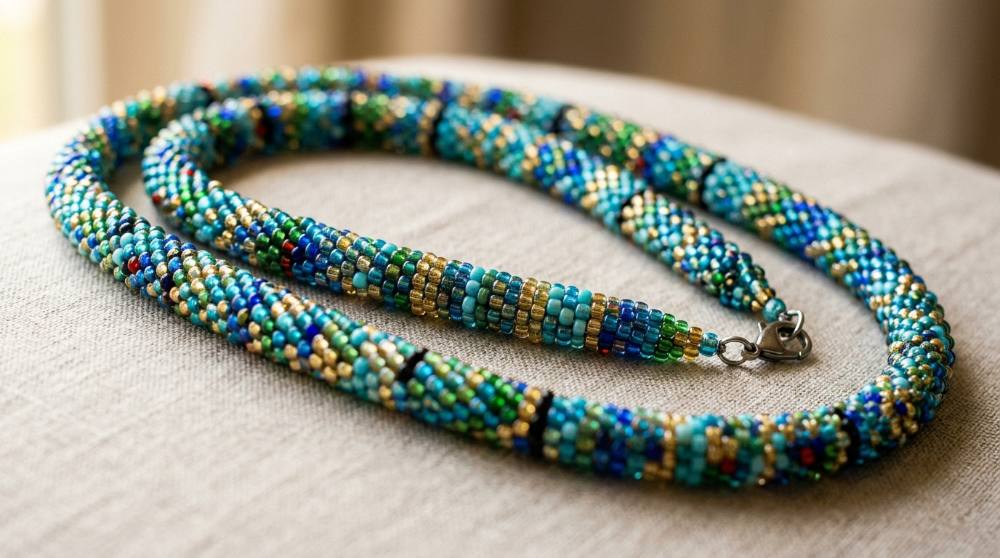
Slide a glass bead down a thin steel wire. That's the whole move — repeat it a few hundred times at a kitchen table and you've got a necklace nobody believes was made in an afternoon. Most good glass beads still come from two places, the old Bohemian glassworks of the Czech Republic and a handful of Japanese factories, and Czech beads are still sold the traditional way: looped into multi-strand bundles called hanks. Even the sizing is historical — the aught system behind a label like 11/0 dates to the 1800s, and the tiniest sizes haven't been produced since the 1890s. My favorite bit of bead trivia: the recipe for truly black glass was lost during World War I, so hold a modern black bead up to the sun and it glows deep purple.

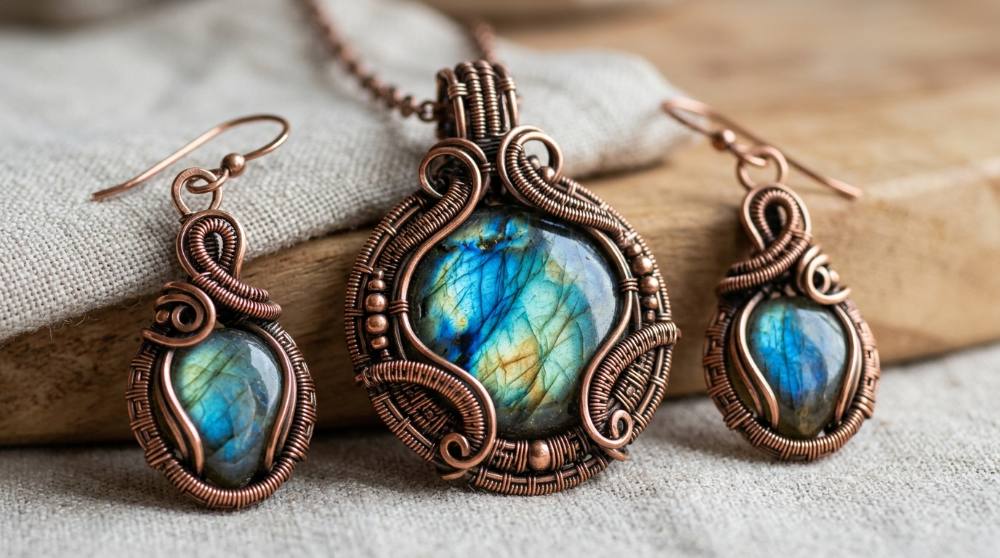
Among all the doors into jewelry making, stringing is the forgiving one. There's no torch, no technique wall — if you can thread a shoelace, you can do this. The craft lives in pattern choices, which color next and where the big bead sits, while the hardware stays dead simple: a small metal crimp squeezed flat at each end holds everything to a clasp. Compare that to wire-wrapped jewelry, where every joint is wire bent around wire, and it's obvious why nervous beginners get pointed here first.

Start smaller than feels sensible: one spool of flexible beading wire, a bag of decent glass beads, crimp tubes with a clasp, and the pliers to close them. That's a complete studio. Everything else can wait for the second necklace.

Nothing below costs enough to sting if beading turns out not to be your thing — the picks lean cheap on purpose, because a first bracelet deserves low stakes.

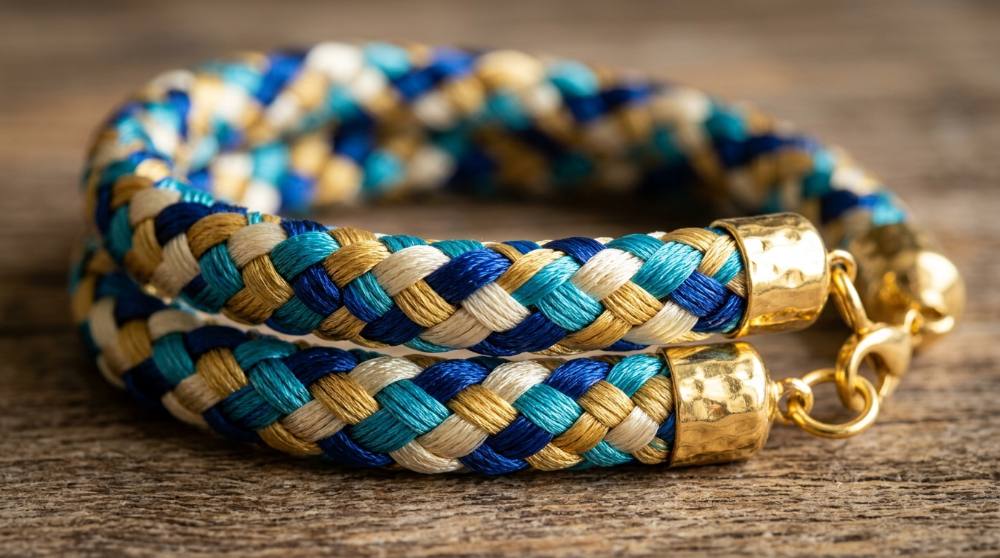
If it's the meditative-hands part that appeals more than the glass itself, this craft has cousins worth a look: kumihimo braids silky cords into bracelets on a foam disk instead of stringing them on wire. Beading's edge is speed. You wear the first result the same day, and the five tools below are all it takes.

The Five Things Doing All the Work

Beading has a short but strict shopping list, and the strictness hides in specs you'd never guess mattered. The wire comes in strand counts — 7, 19, 49 — and the more hair-fine steel strands twisted inside, the softer the drape; cheap 7-strand wire is why so many first necklaces hang stiff and take a permanent kink at the first sharp bend. Crimps have sizes too, and they have to match the wire or the strand slides apart on the second wearing. None of this costs much. It just punishes substitutions — the classic one is fishing line, which stretches, sags, and generally lets the whole piece down.

Disclosure: This section may contain affiliate links to Amazon. We may earn a small commission from qualifying purchases at no extra cost to you.
Durable Stainless Steel Beading Wire

Pick 01 of 09

Durable Stainless Steel Beading Wire

Nylon-coated beading wire is dozens of hair-fine stainless steel strands twisted together and sealed under a smooth coating. The 49-strand grade is the most flexible made, so finished pieces drape like fabric instead of standing away from the collarbone, and the .018-inch diameter fits through most glass beads while still taking a standard crimp. The strand count and diameter printed on the spool matter more than the price.

Why we picked this exact one: The Beadalon 49-strand .018-inch is the exact spec experienced stringers default to for glass beads. Its 4.8-star average is unusually high for a consumable spool, and the drape is the visible difference between handmade-looking and shop-looking. The trade-off: it costs about three times what 7-strand wire does — flexibility and kink-resistance are what you're paying for.

See it on Amazon
Precision Bead Crimping Pliers

Pick 02 of 09

Precision Bead Crimping Pliers

Crimping pliers have a two-stage jaw made for tiny metal crimp tubes: one notch creases the tube around the wire, the second folds the crease into a neat, rounded lock. It's a single-purpose tool, and that's the point — the fold it makes is what keeps a clasp attached for years. Choose one sized for the crimps you actually own; 2mm coverage is the beginner standard.

Why we picked this exact one: The Beaditive bead crimping plier is sized for both 2mm and 3mm crimp tubes, which covers everything in a starter findings kit. It holds a 4.6-star average, and the spring-loaded handles are kind to the hand across a long stringing session. It won't close micro 1mm crimps or jumbo tubes, but neither shows up in beginner work.

See it on Amazon
Heavy Duty Wire Cutting Tool

Pick 03 of 09

Heavy Duty Wire Cutting Tool

Flush cutters cut with one flat face, leaving the wire end smooth and square rather than pinched to a point. Beading wire is stainless steel at its core, so it needs a real cutting tool — scissors and nail clippers dull fast and chew up the nylon coating instead of cutting through. A slightly larger cutter with longer handles makes the cut effortless.

Why we picked this exact one: The BOENFU 6-inch flush cutters are a plain, sturdy tool with over eleven thousand reviews behind them. The flat cutting face leaves wire ends smooth instead of pinched, and the longer handles give real leverage on stainless beading wire. They're a bit chunky for trimming in very tight spots close to a crimp — angling the flat side in makes it work.

See it on Amazon
Complete Jewelry Making Kit

Pick 04 of 09

Complete Jewelry Making Kit

A findings assortment collects the small hardware that finishes a piece: crimp tubes to lock the wire, crimp covers to dress them up as beads, wire guardians to protect the loop at the clasp, plus lobster clasps and jump rings. Sorted compartments matter more than piece count, because the parts look nearly identical at a glance. Check that tube sizes are labeled — crimps must match the wire diameter.

Why we picked this exact one: The Acejoz 1,203-piece assortment bundles the whole end-of-strand hardware problem into one compartment box: crimp tubes, covers, wire guardians, lobster clasps, and jump rings. At around ten dollars it's the cheapest way to have every finding on hand from the first evening. The metal is plated craft grade rather than sterling — fine to learn on, worth upgrading once pieces become gifts.

See it on Amazon
Vibrant Assorted Seed Beads Set

Pick 05 of 09

Vibrant Assorted Seed Beads Set

Small glass beads around 3mm are the pattern-making workhorse of strung jewelry: big enough to pick up without tweezers, small enough that color choices read as stripes and gradients. An assortment with generous amounts per color lets you plan a whole bracelet around one or two colors instead of running dry mid-strand. Glass over plastic is worth insisting on — the weight and the shine are most of the finished effect.

Why we picked this exact one: The Funtopia 34,000-piece set solves the quantity problem directly — its 3mm beads come in per-color amounts that actually finish whole bracelets, with letter beads thrown in. A 4.6-star average is high for a budget assortment, and the latched case doubles as storage. Uniformity sits a step below Japanese-made beads, so expect to cull the occasional odd-sized one while stringing.

See it on Amazon

With these five on the table you can go from bare wire to a finished, clasped bracelet in one sitting — and there's a real little thrill the first time the beads zip down the wire and stack themselves into a pattern. Expect your first crimp to be ugly; everyone's is, so squash a few on scrap wire before committing to a strung design. One habit worth starting immediately: after crimping, thread the wire tail back through the last inch of beads before trimming, so no sharp stub ever touches skin.

Small Upgrades That Earn Their Keep

None of this section is required, but each piece deletes a specific annoyance. A design board ends the guessing game of whether your pattern actually reaches around a wrist. Stretch cord opens up the clasp-free bracelet — the kind you make six of in one evening. And a couple of proper smooth-jawed pliers save your findings from workshop tools, whose ridged jaws chew visible teeth marks into soft plated metal. If you're the type who'll end up making charms as well as stringing them, polymer clay pendants and earrings pair naturally with a bead stash.

Bead Organizer with Clear Lid

Pick 06 of 09

Bead Organizer with Clear Lid

A bead design board is a flocked tray with curved measuring channels where a necklace gets laid out before any stringing happens. The channels are marked in inches from the center, so the finished length and the pattern's balance are visible at a glance, and the velvety surface keeps round beads from rolling off on their own adventures. Recessed cups hold the working palette.

Why we picked this exact one: The INDIVSHOW bead board adds the one feature most cheap boards skip: a clear cover, so a half-finished layout survives being carried off the dinner table. The flocked channels are marked in inches and hold three strand plans at once. At under ten dollars, there's little reason to keep planning necklaces loose on the tabletop.

See it on Amazon
Stretchy Beading Cord Spool

Pick 07 of 09

Stretchy Beading Cord Spool

Elastic beading cord makes bracelets with no clasp at all: string, stretch, knot, done. The 1mm thickness suits most glass beads, and the standard finish is a surgeon's knot sealed with a small drop of jewelry glue, tucked inside a neighboring bead hole. Give the cord a few gentle pre-stretches before stringing so the finished bracelet doesn't loosen later.

Why we picked this exact one: Stretch Magic's clear 1mm cord is the name-brand elastic beaders reach for by default, and a 25-meter spool outlasts any starter phase. It knots cleanly with a surgeon's knot and takes glue without clouding. No elastic lasts forever though — a daily-wear stretch bracelet wants re-stringing every year or so, whatever the brand.

See it on Amazon
Multi-Compartment Bead Storage Boxes

Pick 08 of 09

Multi-Compartment Bead Storage Boxes

Divided storage cases with latching lids keep a growing bead stash sorted by color and size, with findings kept apart from beads. Clear lids let you scan for the right compartment without opening anything, and included label stickers start paying off once several near-identical silvers and whites accumulate. Small grids suit seed beads and findings best.

Why we picked this exact one: The Mr. Pen pair of 28-grid cases keeps crimps, clasps, and bead colors from merging into one glittering heap. Nearly five thousand reviewers rate the latching lids well, which is the part that matters when a case gets knocked off a table. The grids are small — right for findings and seed beads, cramped for anything chunky.

See it on Amazon
Essential Jewelry Making Pliers Set

Pick 09 of 09

Essential Jewelry Making Pliers Set

A basic jewelry plier set pairs chain-nose pliers for gripping and opening jump rings, round-nose pliers for forming wire loops, and a small side cutter. The jaws are smooth rather than ridged, which is the whole difference from toolbox pliers. In strung jewelry they're the supporting cast — opening a jump ring to hang a charm, coaxing a bent clasp straight.

Why we picked this exact one: The Shynek 3-piece set covers the chain-nose, round-nose, and cutter trio for less than many single pliers cost. It's one of the most-reviewed sets in the category and holds steady at 4.5 stars. The joints are hobby grade rather than jeweler's grade — smooth enough for findings work, just not built for heavy wire-forming.

See it on Amazon

Add these when the hobby sticks, not before — a drawer of untouched gadgets is the most common souvenir of a hobby tried too hard. If you're still weighing whether beading is even the right first craft, a side-by-side look at starter hobbies for adults is a fair way to compare. Otherwise: string the bracelet first, buy the board second.

Why Did It Break? And Other First-Week Mysteries

Should I string on beading wire, stretch cord, or thread?

Beginners often grab whichever string is closest, but each one belongs to a different kind of project. Nylon-coated beading wire is for necklaces and bracelets that close with a crimp and a clasp; stretch cord is for slip-on bracelets knotted shut; thread is for off-loom bead weaving with a needle, which is a different craft entirely. Mixing them up is how first pieces fail — crimps, for instance, only grip properly on beading wire. Pick the closure first and the right string follows.

Why did my necklace fall apart at the crimp?

Almost always the crimp didn't match the wire, or it was squashed with flat pliers instead of a crimping tool. A 2x2mm crimp tube suits standard .018-inch wire; go much larger and the folded metal never really bites. Keep the two wire passes uncrossed inside the tube, crease with the pliers' first notch, fold with the second, then tug to test before stringing a single bead. And skip the glue — cyanoacrylate can eat the wire's nylon coating and quietly make things worse.

What does a number like 11/0 on a seed bead packet mean?

That's the aught system, a 19th-century sizing convention the bead world never let go of, and it runs backwards: the bigger the number, the smaller the bead. An 11/0 — say eleven-aught — is about 2mm and is the classic workhorse size, while a 6/0 is a chunky 4mm. The trap is assuming every brand's 11/0 matches: sizes drift between manufacturers, and even color batches vary between production lots, so buy enough of a color to finish the piece. For a first project, larger beads around 3-4mm are far less fiddly.

Why does my bracelet hang stiff instead of draping?

Strand count. Beading wire is braided from 7, 19, or 49 tiny steel strands under its nylon coat, and fewer strands means stiffer wire — the 7-strand grade hangs rigid and holds a kink permanently once bent sharply. The fix costs only a few dollars more: 49-strand wire moves almost like thread while staying just as strong. Stringing too tight causes the same stiffness, so leave a whisper of slack before crimping — the beads need room to articulate around a wrist.

How many beads do I actually need to buy?

More of fewer colors — the exact opposite of the beginner instinct. The classic mistake is a rainbow of tiny packets: a 7.5-gram tube of small seed beads barely finishes one bracelet, and a hundred nearly-empty tubes can't finish anything at all. Plan by length instead: a bracelet runs 7-8 inches, the most common necklace length 17-19, plus a couple of spare inches for crimping. Buy generous amounts of two or three colors you love and you'll finish pieces instead of collecting samples.

Love what you see here? Save individual picks with on any item, or copy everything to a list of your own in one click — great for coming back to later, or dropping as a not-so-subtle hint.

Disclosure: This section may contain affiliate links to Amazon. We may earn a small commission from qualifying purchases at no extra cost to you.