Gilding means laying hammered metal leaf over something ordinary - a picture frame, a drawer front, a scrap of plaster moulding - until it reads as solid gold. The leaf is beaten absurdly thin. At about a tenth of a micron, a nugget the size of a match head opens out to roughly half a square metre of it, which is why gilders work behind shut windows and barely breathe over the bench. Egyptian goldbeaters worked this out some five thousand years ago, and the kit has hardly changed since: a knife, a leather pad, a flat brush carrying a trace of grease. Before polished agate took over, the tool that burnished gold to a mirror was an actual tooth, usually a dog's.
Most people arrive here sideways. You strip and repaint a junk-shop chest, reach the carved bit on the drawer front, and realise paint cannot do what you want there. That is the moment gilding starts to make sense: it is the finishing move at the end of a thrifted furniture flip rather than a hobby you take up on its own. The work is slow and oddly physical. You brush on adhesive, wait, keep testing it with a knuckle, then lay metal so light it moves if you sigh.
Keep the first kit tiny. Size, a booklet of imitation leaf, one soft mop brush and a clear sealer will gild a whole drawer front, and that genuinely is all. The agate, the cushion, the knife and the real gold can wait until you know whether the waiting part suits you.
Nothing on this page costs enough to sting if you decide gilding is not for you, and the one deliberate splurge is flagged as a splurge.
Where This Little Kit Can Take You
A few real moments and results from this hobby — made with tools no fancier than the ones below.
Carved wood turned to goldEvery scroll and shell here is wood underneath; only the skin is metal.
A leaf waiting on the cushionThe knife cuts it, the flat brush lifts it, and fingers never touch it.
Before the shopping list, it helps to see what the finish actually looks like close up - the grain of the wood still showing through, the faint seams where one sheet overlaps the next.
The Short List That Gets Gold Onto Wood
The whole process hangs on one decision made twice: which adhesive, and exactly when to lay the leaf. Everything else here is cheap. Beginners nearly always overbuy at this stage, collecting a cushion, a knife and a tip before gilding anything, then finding that loose leaf laid straight from the booklet covers a flat drawer front perfectly well. Buy the four things that touch the wood. Add tools when a shape forces you to.
Disclosure: This section may contain affiliate links to Amazon and eBay. We may earn a small commission from qualifying purchases at no extra cost to you. Product listings from eBay are provided for discovery purposes and link directly to eBay.
Pick one
These 2 do the same job. You only need one of them, so pick the one that suits you better.
01Pick 01 of 12Option A
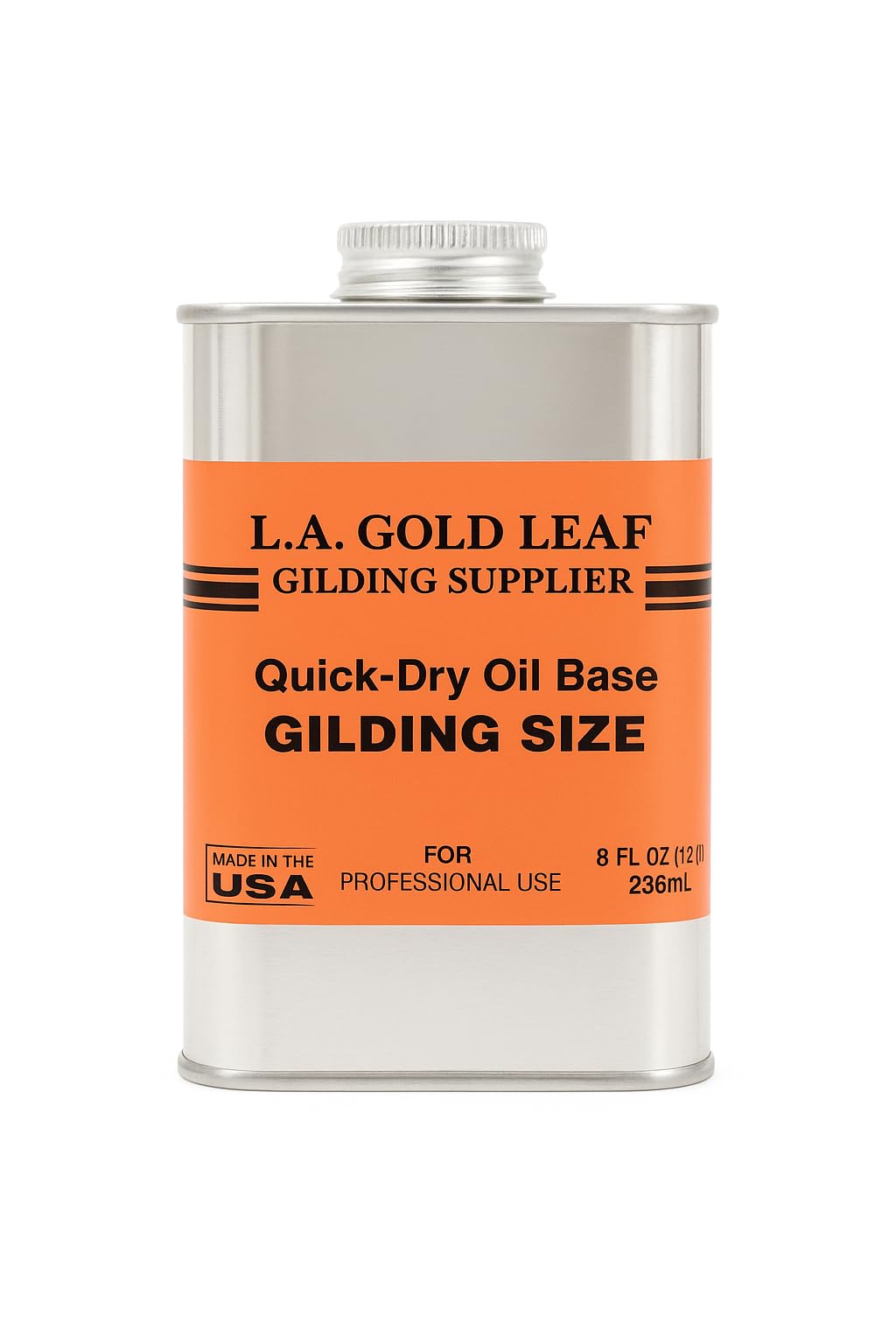
Quick-Dry Oil Size for Leafing Wood
An oil-based varnish brushed on as the adhesive layer under metal leaf. It dries to a tacky state rather than a hard one and holds that tack for a couple of hours, which is the window you lay leaf in. Oil sizes are sold by speed: a quick size comes to tack in under an hour, while a slow size takes ten to twelve hours and stays open far longer.
Why we picked this exact one: The L.A. Gold Leaf Quick Dry Size is a genuine trade oil size rather than a craft-aisle glue, from a supplier that sells to sign gilders, and the eight-ounce can is far more than a few frames need. The catch is honest: it carries only a handful of Amazon ratings, because people who buy this normally buy it from specialist suppliers. It also smells like varnish and wants a ventilated room, which the water-based option beside it does not.
Pros
Stays open for hours, so a carved frame gets leafed in one pass
The traditional adhesive for wood, so frame tutorials match what you are doing
Cons
Solvent smell, so it wants a ventilated room
The surface has to be fully sealed first, or the oil sinks in and the leaf will not hold
A milky acrylic size that brushes on white and turns clear as it reaches the right tack. It washes out of brushes with soap and water, and once dry it stays flexible, which suits leafing on canvas or leather as well as on wood. The working window is generous for a beginner, because the tack arrives quickly and then stays usable for hours.
Why we picked this exact one: Speedball's Mona Lisa adhesive is the bottle most craft gilders learn on, and its tack arrives in roughly ten to fifteen minutes instead of an hour. Two ounces sounds tiny until you realise a thin coat is the only coat that works, and the bottle outlasts several projects. It is aimed at craft and art work rather than exterior or architectural gilding, so a weathered outdoor sign is not its job.
Pros
Tacky in about fifteen minutes, so a first piece happens the same evening
No solvent smell, and brushes wash out under the tap
Cons
Made for craft and art work, not for exterior or architectural gilding
Traditional frame tutorials assume oil size, so their timings will not match
Loose sheets of brass-based leaf, five and a half inches square, interleaved with tissue in a booklet. Imitation leaf is noticeably thicker than genuine gold, which makes it easier to pick up and lay, but also means a crease stays visible rather than vanishing. It tarnishes in ordinary room air, so anything gilded with it gets a clear coat afterwards.
Why we picked this exact one: These EllaYIDOI sheets are the standard five-and-a-half-inch composition size at well under a dime each, and the listing is aimed at frames, mouldings and furniture rather than resin and nail art. Two hundred sheets is far more than a first project needs, which is exactly the point. The leaf is thinner than premium Italian composition leaf and wrinkles if you drag it, so lay each sheet down rather than sliding it into place.
Soft round-tipped brushes used after the leaf is down, first to press it into full contact and then to sweep away the loose scraps at the overlaps. Goat hair is the usual choice because it is soft enough not to scratch a freshly laid sheet. A set gives you small heads for corners and wider ones for flat runs.
Why we picked this exact one: The GACDR seven-piece set is natural goat hair on birch handles for about the price of a single artist's mop, and having the range of sizes means you are not poking at a corner with a head twice too wide. A thousand ratings on a tool this niche is unusual. They shed a hair or two at first, so run them across your palm before the brush goes anywhere near wet size.
A thin clear coat brushed over finished leafing to keep air off the metal. On brass and copper leaf it is the difference between a piece that stays bright and one that goes brown at the edges. It comes with a small brush, and a gilded frame wants one light coat rather than a thick protective film.
Why we picked this exact one: The Barnabas sealer is formulated for metal leaf rather than borrowed from the general varnish shelf, and the 60 ml bottle with its own brush covers several frames. Thousands of ratings across the Barnabas leaf range sit behind it. One honest limitation: any coating dulls the brightest gleam slightly, which is why gilders seal imitation leaf and often leave genuine gold bare.
With those on the bench you can gild a frame, a drawer front or a candlestick without buying anything else. One warning worth having early: the sealer is not optional on imitation leaf. Brass tarnishes, and a sealed piece stays bright while an unsealed one goes brown and blotchy within months. If you are weighing up where it pays to spend more later, the supplies worth paying for versus the cheap ones makes the same argument across other crafts.
Or Buy the Whole Thing in One Box
There is a single-box version of everything above: twenty-five sheets of composition leaf with its own adhesive and sealer. It exists because a first gild should not mean four separate bottles, and because plenty of people want to find out whether they enjoy the waiting before they commit to the materials properly.
The one-box alternative
Imitation Gold Leafing Kit
A boxed set holding twenty-five sheets of composition gold leaf, a bottle of water-based adhesive, a matching sealer and a printed instruction sheet. The leaf is a copper and zinc alloy rather than gold, which is what keeps the price where it is. No brush is included, so you press the leaf with fingers or supply your own.
Why we picked this exact one: Speedball's Mona Lisa kit uses the same adhesive and sealer the company sells individually, so nothing inside is a watered-down kit grade. Twenty-five sheets is realistically one small frame plus your mistakes. The instruction sheet is clear, but the missing brush is a genuine annoyance, because fingerprints pressed into brass leaf show up weeks later as tarnish marks.
Twenty-five sheets of five-and-a-half-inch leaf: a small frame, or a drawer front with mistakes allowed. When the box is empty you are buying leaf and adhesive separately anyway.
Two hundred sheets and bottles you refill once a year. Enough to gild a mirror surround and still practise on offcuts. better here
Quality of the tools
The adhesive and sealer are the same pair sold individually, so nothing is a lesser kit grade. There is no brush, and fingers smear brass leaf.
A proper goat-hair mop sweeps skewings off without scratching, and you can choose oil size when a carved piece needs a longer working window. better here
The first evening
Open the box, brush the adhesive, wait about fifteen minutes, lay leaf. A finished piece before bed is realistic. better here
Same evening if you pick the water-based size; the next day if you pick oil size and let it come to tack properly.
Where it leads
Nothing in the box blocks you from going further, but the leaf runs out fast and none of it helps with carved detail.
Every item carries forward into genuine gold leaf and the burnishing work later, and the mop brush is the tool you will still own in ten years. better here
Our verdict: it depends. Buy the kit if you want one gilded frame finished this weekend and would rather not own four separate bottles; build it from the picks if you already know there is a mirror, a dresser and a run of mouldings waiting.
When Brass Stops Being Enough
There is a hard line in gilding, and it is worth knowing before you walk into it. Imitation leaf cannot be burnished to a mirror, whatever you rub it with. That deep shine on an antique frame comes from genuine gold laid onto wet clay over gesso and then polished with a stone, which is water gilding: a slower craft with its own rules and its own smell of warm rabbit-skin glue. These three are where that road starts.
06Pick 06 of 12Worth the upgrade
Gold Leaf Sheets for Gilding
Hammered 24 karat gold, each sheet a little over three inches square and interleaved with tissue. Genuine gold is far thinner than imitation leaf, so it settles into carving instead of bridging it, and it never tarnishes. A ten-sheet pack covers roughly two thirds of a square foot.
Why we picked this exact one: The Barnabas 24K ten-sheet pack is the sensible way in, at roughly half the outlay of the usual twenty-five-sheet book, which matters when the first two sheets will probably tear. It is loose leaf rather than transfer, the right choice for mouldings and carving where backing paper cannot reach. Buy it once you have gilded a few pieces in brass and know the waiting suits you; at this price a wasted sheet stings, and beginners waste sheets.
Polished agate tips in several shapes and lengths, mounted on handles. The stone is harder than gold but glass-smooth, so drawing it over leaf laid on damp clay compresses the metal into a mirror rather than scratching it. Several shapes exist because flat faces, hollows and beads each need their own curve.
Why we picked this exact one: This NIUPIKA set gives five shapes for less than one gilding-branded burnisher costs, and the eight to twelve centimetre sizes cover flat panels and small mouldings. They are sold for jewellery polishing, which is the same stone doing the same job on the same metal. The handles are plain and none of them is the classic dog-tooth profile, so deeply carved work will want a dedicated shape later.
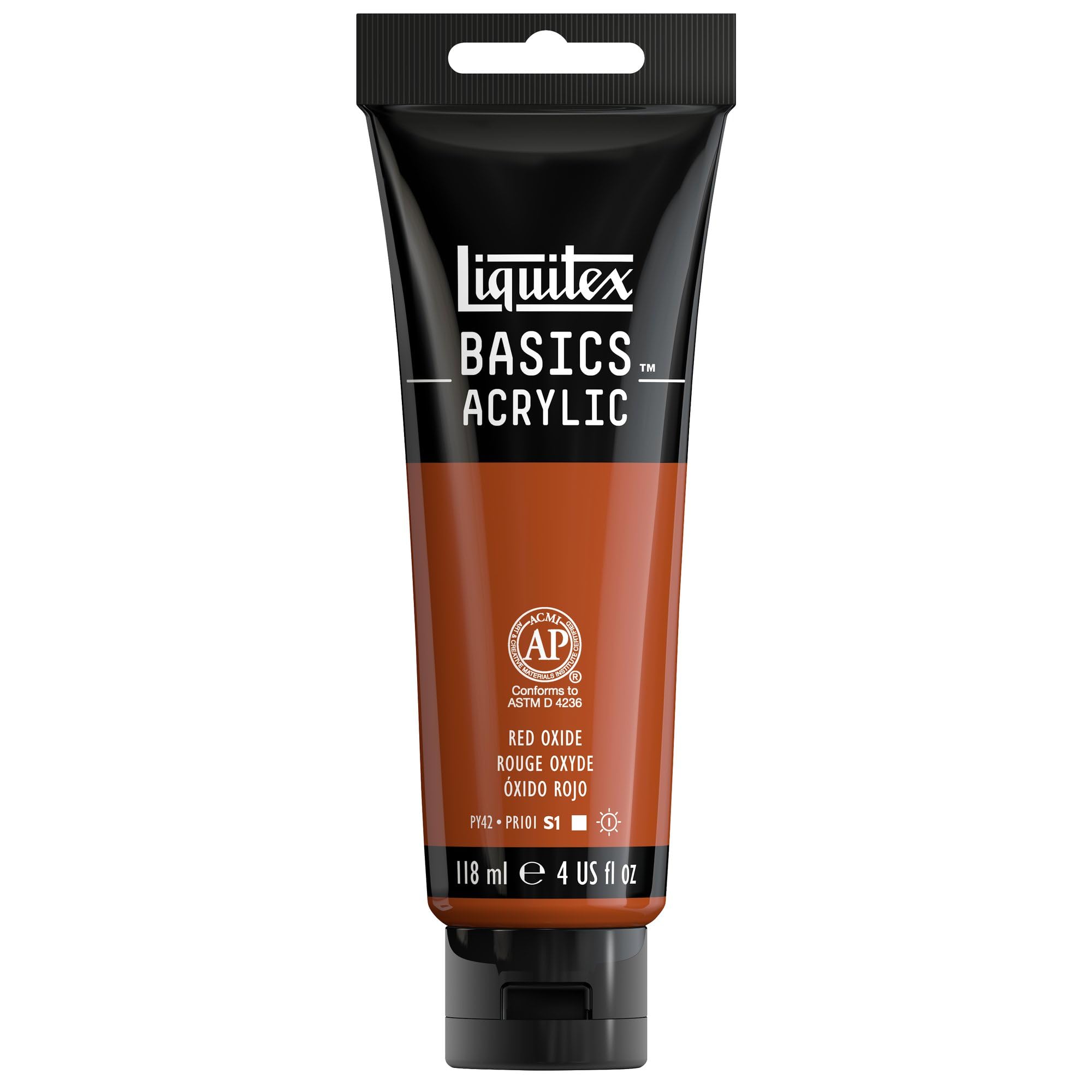
An opaque earth-red acrylic in a standard artist's tube. In gilding it stands in for traditional clay bole, the coloured ground laid under the leaf. Red oxide is the classic choice because it warms the gold above it and turns any missed patch into something that reads as shadow.
Why we picked this exact one: Liquitex BASICS in Red Oxide is the cheapest dependable way to get that traditional terracotta ground, and a four-ounce tube will base-coat more frames than you are ever likely to gild. It is student-grade paint, which is fine when the paint is about to be covered in metal. Sand it smooth before sizing, because gold leaf advertises every ridge underneath instead of hiding it.
None of this is needed for a first project, and plenty of people gild happily for years without touching it. But the first time you burnish one small panel to a proper mirror, you understand why others spend decades here. The same skills scale down absurdly well, too - gilded detail is a favourite trick in miniature and dollhouse work, where a whole frame is the size of a postage stamp.
The Tools You Will Want on the Second Project
After one frame you will know exactly which part annoyed you. For most people it is the leaf itself, and specifically the way a sheet lifts off the booklet and wraps around a knuckle instead of the wood. These three fix particular annoyances rather than improving the gold itself. If you like decorating plain wood in general, burning designs into it goes unexpectedly well with gilding: scorch the pattern, then gild the recesses.
09Pick 09 of 12
Gilders Tip Brush
A wide flat brush of long fine hair set into a stiff card handle, used to pick up a whole sheet of loose leaf and carry it to the work. The hair is charged with the faintest trace of grease so the leaf clings to it and then releases onto the tacky size. Three inches or so is the usual width for full sheets.
Why we picked this exact one: The Custom Shop tip is the plain three-and-a-half-inch trade pattern with the cardboard handle that sign gilders have used for decades, at a fraction of what a pure squirrel-hair version costs. Its natural and synthetic blend is less grabby than squirrel, which arguably suits a beginner. Be realistic about it: gilders with thirty years behind them still call the tip the hardest tool on the bench, and no brand of it makes the first attempts go smoothly.
A wax paste loaded with fine metallic powder, rubbed on with a fingertip and buffed to a shine. It is not leaf and will not pass for leaf across a whole panel, but on a missed corner or a worn frame edge it blends in convincingly. One small tube covers a surprising amount of surface.
Why we picked this exact one: The AMACO Rub n Buff three-colour kit covers antique gold, Grecian gold and a leaf tone, which between them can be matched against most imitation leaf. Fifteen millilitres looks laughable until you use it, because a pin-head of wax covers a corner. It stays slightly soft and will mark under a cloth, so buff it properly and seal over the top.
A soft dark wax rubbed over a finished surface and wiped back, leaving colour in the recesses and clean highlights on the raised parts. On gilding it does in ten minutes what decades of dust and handling would otherwise do. Beeswax-based waxes stay workable long enough to wipe back if you have gone too far.
Why we picked this exact one: Howard's Chalk-Tique in the dark shade is the wax furniture flippers reach for, and the six-ounce tin works out cheaper per use than the boutique antiquing waxes sold beside chalk paint. Nearly seventeen hundred ratings on a finishing product is reassuring. It has to go over a sealed surface, though: dark wax on bare brass leaf stains it unevenly and will not come back off.
A fair warning about the tip: it takes practice, and no version of it is magic. Gilders who have used one for thirty years still call it the fiddliest thing on the bench. The waxes are the opposite, and that is their appeal - five minutes of rubbing turns a flat new gold surface into something that looks like it has lived in a house, which is the same instinct behind building little assemblage boxes out of found pieces.
The Boring Bit That Keeps Your Lungs Out of It
Gilding is mostly benign. Two parts are not. Oil size is a varnish and smells like one, so it wants an open window and a room you are not sleeping in that night; the older formulas carried lead as a drier, which is why modern cans make a point of printing lead free on the label. Sanding is the other one. Gesso, filler and old paint throw a fine dust that hangs in the air long after you have stopped, so a mask earns its keep here more than gloves do. And keep leaf well away from fans and heaters. A draught will fold a sheet in half before it ever lands.
What It Costs After the First Frame
Here is the cheerful part. Imitation leaf is so cheap that the running cost is close to nothing: a couple of hundred sheets for under ten dollars, and a small frame might use six of them. Your real spend is adhesive and sealer, perhaps twice a year. Real gold is a different universe - a book of twenty-five genuine sheets costs more than this entire starter list, each sheet is barely three inches square, and you will tear some while learning. That is the honest reason most hobby gilders stay on brass for years and save the gold for one small panel. Once the gear is on the bench you start eyeing other things to gild, too: a candlestick, a mirror, the bent forms from beginner wire work.
One Small Book Worth Owning
Gilding is oddly badly served online. Most of what is written covers glass and sign work, while the frame-and-furniture side sits in a handful of conservation books instead. One of them is short enough to read in an evening and specific enough to follow at the bench, which is rarer than it sounds. It is also the way into the oldest gilding of all, the tooled gold on an antique book spine - a close cousin of working leather by hand.
12Pick 12 of 12Book worth reading
Gilding Handbook
An eighty-page paperback from a conservation publisher covering the materials and methods of gilding: gesso, bole, water and oil gilding, and the repair of older gilded surfaces. It is written for people who will actually do the work, with recipes and quantities rather than inspiration photographs. Short enough to read in one sitting and then keep on the bench.
Why we picked this exact one: Practical Gilding by Peter and Ann Mactaggart is the title specialist gilding suppliers stock on the shelf beside the leaf itself, which is about the strongest recommendation a craft book gets. Archetype is a conservation press, so the methods are the ones restorers use rather than craft-blog shortcuts. It is genuinely slim for the money at eighty pages, and Amazon lists it only on a lead time, so this links to a new copy from an established eBay book seller instead.
Everyone says to wait until the size is tacky. Tacky how?
The test is your knuckle, not your fingertip. Drag a clean dry knuckle lightly across the sized area and listen for a faint squeak: a tug means it is still wet, and a surface that feels like dry varnish means you have missed the window entirely. The catch is that the squeak lasts a while, so it tells you nothing about whether you are at the start or the end of it. The fix gilders use is to size a scrap at the same time as the piece, an old jar lid is ideal, and prod the scrap every so often instead of mauling the work. When the lid only just lets go of your knuckle, lay the leaf.
Why did my gold go dull and blotchy after a few weeks?
Because it was not gold. Imitation leaf is brass, and brass oxidises in ordinary room air, usually starting at the edges and at every fingerprint. A clear coat stops it, but which clear coat matters more than people expect: sign gilders stick to acrylic clears because the solvents in some varnishes and enamels carry sulphur, and sulphur tarnishes brass straight through the coating you just applied. Seal the same day you gild, and keep bare fingers off the leaf while you work.
Can I polish imitation leaf to a mirror with an agate burnisher?
No, and it is the most common crossed wire in the craft. Burnishing with a stone only works in water gilding, where loose gold is floated onto damp clay over gesso and the stone presses it into that soft ground. Leaf stuck down with oil or acrylic size is sitting on a hard film, so an agate simply scratches it or drags it off. In oil gilding, burnishing means something else entirely: pressing the leaf down and sweeping the loose scraps away with a soft mop. The satin finish you end up with is the finish, not a failed mirror.
My leaf keeps sticking to the brush instead of the wood.
That is a tip with too much grease on it. A gilder's tip picks leaf up because the hair carries the faintest film of oil, usually collected by wiping the brush across a forearm or through hair, and it is very easy to overdo. Wipe it on a clean cloth and try again with less. For a flat frame you can skip the tip altogether and lay leaf straight from the booklet, folding the tissue back and rolling the sheet on; the tip earns its keep on carving and mouldings, not on flat runs.
Does the colour under the gold really matter?
More than you would guess, and it costs nothing. Leaf is thin enough that whatever sits beneath tints it: a warm red-brown ground makes gold look richer and older, while a yellow ochre ground disguises the gaps. Those gaps have a name - gilders call them holidays - and on a first attempt there will be several, usually along edges and in corners. A bole-coloured base coat means a missed patch reads as shadow rather than bare wood. Sand that base smooth first, because gold leaf does not hide a rough surface, it reveals it.
People Worth Following Into This Hobby
Real practitioners we found while researching this setup — people who do the work, show their process, and publish on sites they run themselves. No sponsorships, no affiliations; we just think they're worth your time.
Runs a gilding studio and teaches beginner-to-advanced classes in person and over Zoom, writing up each method at length, from acrylic mordants to traditional gesso recipes.
His beginners' posts answer the exact question this setup's essentials section raises, which adhesive to start with, and he explains why brass leaf is the right thing to learn on before genuine gold.
The membership body for working gilders in the US and beyond, running regional classes, biennial conferences, a members' directory and recorded Zoom sessions on gilding technique.
A reader who gets past the brass-leaf stage needs a teacher rather than another article, and their class listings and member directory are the shortest route to one.
A decorative painter who gilds frames and mouldings by hand and publishes step-by-step accounts of water gilding, including the glue strengths that crack a ground and the mistakes that cost him gold.
His water gilding walkthrough is the detail behind this setup's specialty section: why the agate only works over clay bole, and how wet the ground has to be when the stone finally goes on.
A picture frame historian who edits a specialist magazine on antique frames, now in a research partnership with the National Gallery, publishing conservators and curators on how frames were carved, gilded and later ruined.
Once a reader has gilded something, her essays explain what they are looking at on an old frame, including why so much antique gilding has been stripped, regilded or painted over.
Love what you see here? Save individual picks with on any item, or copy everything to a list of your own in one click — great for coming back to later, or dropping as a not-so-subtle hint.
Disclosure: This section may contain affiliate links to Amazon and eBay. We may earn a small commission from qualifying purchases at no extra cost to you. Product listings from eBay are provided for discovery purposes and link directly to eBay.
Your next hobby might be in here
Every so often I stumble on a hobby too good not to share. Get new hobby setups and guides by email — no spam, unsubscribe anytime.