Build Tiny Rooms: Dollhouse Miniature Making for Beginners

Build Tiny Rooms: Dollhouse Miniature Making for Beginners

DariaCurated by Daria
Jump to the 10 picks

Welcome to the One-Inch World

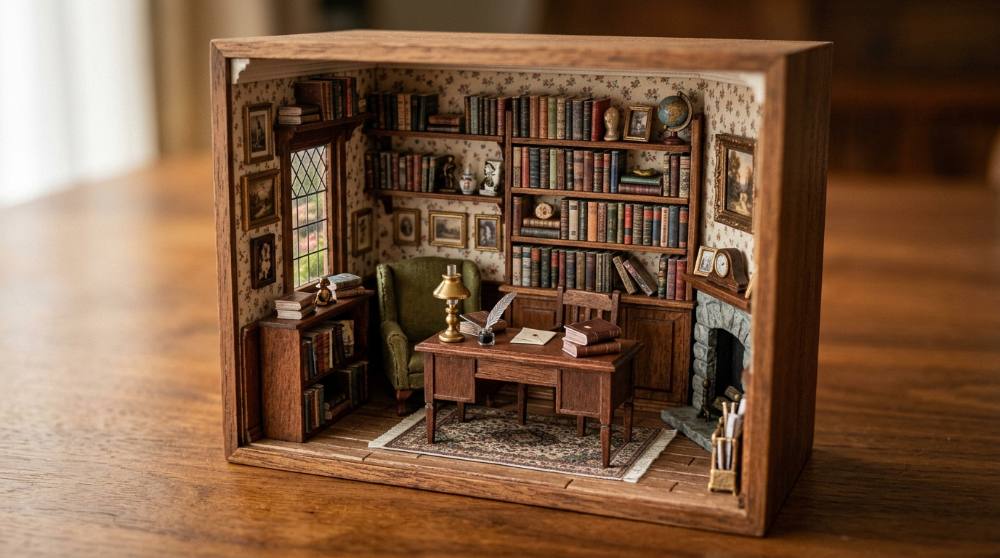
Dollhouse miniature making is interior design at one-twelfth size: you build a room — walls, floor, wallpaper, furniture — small enough to sit in your lap, and every real-world foot shrinks to a single inch. It began as a grown-up obsession, not a toy. Dutch merchant wives of the 1600s filled cabinet houses so lavish that one of them, Petronella Oortman's, cost about as much as a real canal house in Amsterdam, and children weren't allowed near it. Queen Mary's dolls' house from 1924 has working plumbing, electric lights, and tiny books written for it by Arthur Conan Doyle and Rudyard Kipling. Today the habit usually starts far smaller: a single room in an open-fronted box, called a room box, that fits on a shelf.

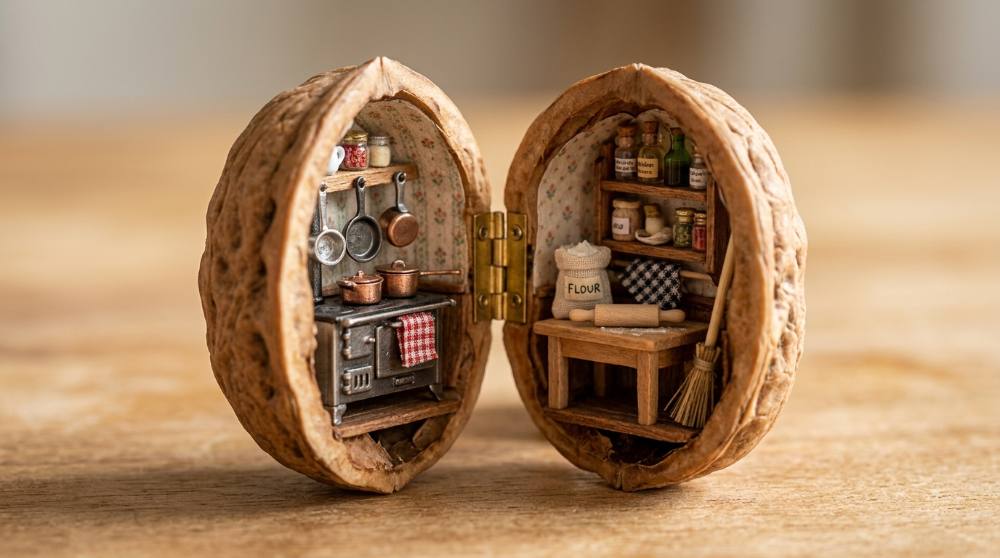
If you've already fallen for tiny things — say, building whole scenes inside a walnut shell — a room box is the same itch with actual elbow room. There's space for a real floor, wallpaper with a repeating pattern, and furniture you can rearrange when the mood strikes. Most people start one of two ways: a boxed kit with every part pre-cut, or a scratch build from sheet wood and glue. Both count. The kit teaches you how the parts go together; the scratch build teaches you why.

Start smaller than you think you should. One kit or a few sheets of wood, a sharp knife, a steel ruler, a cutting mat, and a bottle of glue will carry you through an entire first room — the mini table saws you'll see in build videos can wait years. We picked everything below with a beginner's wallet in mind: cheap enough that trying costs little, decent enough that the tools won't fight you.

You don't need a workshop, either. A cleared kitchen table and a tray to corral the parts is honestly enough, though if you're carving out a small art corner at home, this is the rare craft that stores flat on one shelf between sessions. Fair warning: the first time a tiny drawer actually slides open, you're in for good.

The First-Room Toolkit

Here's the quiet consensus among people who build minis: the knife matters more than the wood. A fresh blade slices balsa cleanly; a dull one tears it, wanders off your line, and leaves you blaming your hands instead of the steel. So buy spare blades in bulk and change them the moment cutting starts to feel like work. Everything else on this short list exists to make your cuts straight, your corners square, and your parts stay put while the glue grabs.

Disclosure: This section may contain affiliate links to Amazon. We may earn a small commission from qualifying purchases at no extra cost to you.
all-in-one miniature room kit with pre-cut parts and furniture

Pick 01 of 10

all-in-one miniature room kit with pre-cut parts and furniture

A boxed miniature build with pre-cut wooden parts, papers, fabric and an LED light — everything needed to assemble one complete furnished scene. The instructions walk you through piece by piece, so a kit doubles as a course in how miniature structures go together. Clearly numbered parts and photo instructions matter more than the theme when choosing one.

Why we picked this exact one: The Rolife Cathy's Flower House is the kit miniature-makers point beginners to first; Rolife instructions are repeatedly praised in the community as the clearest in the category, and this build holds a 4.7-star average across more than 2,700 reviews. It's a slow build measured in evenings, and the tiny plant pieces will test your patience long before the structure does.

See it on Amazon
precision craft knife set with spare blades for balsa and paper

Pick 02 of 10

precision craft knife set with spare blades for balsa and paper

A slim hobby knife takes replaceable pointed blades and cuts by drawing, not pressing, which is how thin sheet wood and wallpaper keep clean edges. Sets that bundle a large pack of spare blades are the practical choice, since blades dull quickly against wood and card. A textured metal grip that won't roll off the table is worth checking for.

Why we picked this exact one: The DIYSELF set packs four handles and forty No. 11 blades for around eight dollars, which removes the only real excuse for cutting with a dull blade. It holds 4.6 stars across more than five thousand reviews. The handles are plain aluminum without a soft grip — at this price, dedicate one to glue-spreading duty and keep the sharpest for cuts.

See it on Amazon
self-healing cutting mat that protects the table and squares your parts

Pick 03 of 10

self-healing cutting mat that protects the table and squares your parts

A layered rubber mat closes back up after each knife pass, so the blade never catches in an old groove or scores the table underneath. The printed grid doubles as a squaring tool: line a wall panel along the lines and you can check a right angle without a separate square. Around 12 by 18 inches covers a full room-box footprint.

Why we picked this exact one: The anezus 12-by-18-inch mat is double-sided and five-ply for about nine dollars, with a 4.7-star average from over twenty-one thousand buyers. It's marketed at sewists, but the surface and grid are the same as mats sold under hobby brands for more. It carries a faint rubber smell for the first day or two out of the package.

See it on Amazon
cork-backed steel ruler for measuring and guiding knife cuts

Pick 04 of 10

cork-backed steel ruler for measuring and guiding knife cuts

A stainless ruler does two jobs in miniature work: measuring parts and acting as a fence for the knife. The cork strip on the back keeps the edge from sliding mid-cut. Steel matters because a knife pass will carve notches into plastic or wooden rulers, and every later cut inherits the damage.

Why we picked this exact one: The ZTEOFO 12-inch ruler has the two features that matter — stainless steel and a non-slip cork back — for about five dollars, with a 4.7-star rating. Inch and centimeter scales both run edge to edge, which helps because many miniaturists work in metric for the easier scale arithmetic. It's a plain tool with nothing to go wrong.

See it on Amazon
thick tacky craft glue for wood, paper and fabric assembly

Pick 05 of 10

thick tacky craft glue for wood, paper and fabric assembly

Tacky glue is a thick PVA that grabs parts on contact instead of letting them slide around while drying. It bonds wood, paper, card and fabric — which covers nearly everything in a room box — and dries clear. A small bottle lasts, because most miniature joints want a dot, not a bead.

Why we picked this exact one: Aleene's Original Tacky Glue is the bottle miniaturists actually name when they say tacky glue — in community threads it's shorthand for the whole category. The four-ounce bottle runs about six dollars and holds a 4.7-star average across six thousand reviews. It grabs fast, which cuts both ways: reposition a part quickly or it stays where it landed.

See it on Amazon

That's the whole kit — a box to build, a blade, and the flat steel and rubber that keep both honest. When the room stands, you'll want things to put in it. Plenty of miniaturists sculpt their tiny bread, fruit and flowerpots from air dry clay, and that modelling habit moves straight into a room box.

The Details That Make People Lean In

None of this is required for a first build, and buying it all upfront is the classic over-shop. But somewhere in your second room the itch starts: you want trim around the door, wallpaper that isn't hand-drawn, a dresser stained the exact brown you had in mind. That's what this list is for. The thing beginners misjudge here is scale — a print that looks dainty on your desk reads like circus wallpaper at one-twelfth size, because a two-inch flower on real wallpaper should be a sixth of an inch in the room. Papers drawn for 1:12 sidestep the whole problem.

thin basswood sheets for scratch-building walls and furniture

Pick 06 of 10

thin basswood sheets for scratch-building walls and furniture

Basswood is the hobby's standard sheet wood: light like balsa but with a finer, stiffer grain that holds a crisp cut edge. Sixteenth-inch sheets suit furniture panels, shelving and trim, and they take stain and paint evenly. Sheets sometimes arrive with a slight bow; a light misting of water and a night under a heavy book flattens them out.

Why we picked this exact one: The DIYDEC six-pack of 12-by-12-inch, 1/16-inch sheets costs about seven dollars, so a mis-measured cut costs cents rather than regret. It carries 4.5 stars across roughly 1,400 reviews. It's raw craft-grade wood — check each sheet for warp on arrival and press it flat before cutting, not after.

See it on Amazon
adjustable-angle miter shears for clean corners in trim and strip wood

Pick 07 of 10

adjustable-angle miter shears for clean corners in trim and strip wood

Miter shears cut soft strip wood at a set angle in one squeeze, with a dial that locks anywhere from 45 to 135 degrees. For baseboards, door trim and picture frames they replace a saw and miter box on small stock. They're made for soft wood and plastic trim, not hardwood.

Why we picked this exact one: The Zeromall multi-angle shear is the budget version of the mitering shears practitioners recommend for miniature molding, at about twelve dollars. Its 4.2-star average is the lowest on this page and fairly earned — it's a rough-and-ready tool rather than a precision instrument — but on soft strip wood it beats freehand knife miters by a wide margin.

See it on Amazon
self-adhesive dollhouse wallpaper printed at 1:12 scale

Pick 08 of 10

self-adhesive dollhouse wallpaper printed at 1:12 scale

Printed wallpaper sheets scaled for one-inch-scale rooms, with a peel-and-stick back that skips the paste stage entirely. The pattern repeat is sized to look right next to 1:12 furniture. Sheets trim cleanly with a knife and steel ruler; hang the paper first and cut window openings afterward.

Why we picked this exact one: TexturKontor's three-sheet set is printed for 1:12 specifically and holds 4.4 stars, and the self-adhesive backing spares beginners the wrinkle stage of pasted paper. At about thirteen dollars for three sheets it costs more than printing your own — that's the honest trade: convenience over per-sheet price.

See it on Amazon
fine detail paint brushes for miniature furniture and trim

Pick 09 of 10

fine detail paint brushes for miniature furniture and trim

Detail brushes in sizes 0 and smaller carry just enough paint for chair spindles, drawer fronts and window frames. At this stage a large pack matters more than a premium one, because tiny brushes splay with use and get retired often. Synthetic bristles handle acrylics well and rinse clean in water.

Why we picked this exact one: The anezus 30-piece set costs about seven dollars — roughly 23 cents a brush — in the three liner sizes miniature painting actually uses, rated 4.6 stars by about 1,700 buyers. These aren't sable heirlooms: treat them as consumables and retire any brush the moment its point splits.

See it on Amazon
acrylic craft paint set for miniature walls, floors and furniture

Pick 10 of 10

acrylic craft paint set for miniature walls, floors and furniture

Water-based acrylics cover bare basswood in a coat or two, dry in minutes, and clean off brushes and fingers with tap water. A boxed set of core colors mixes into nearly any furniture or wall shade. Small two-ounce bottles suit the scale of the work — a room box uses paint by the teaspoon.

Why we picked this exact one: The Apple Barrel Essentials set brings twelve two-ounce bottles for about twelve dollars with a 4.8-star average across two thousand reviewers. It's the same inexpensive craft paint community threads recommend for kit repaints and touch-ups. Budget acrylics do run thin over dark colors — plan on an extra coat there.

See it on Amazon

Add these as a project demands them, not before. The paper end of the hobby is genuinely bottomless — miniaturists trade printable wallpaper, flooring, book covers and grocery labels online, so one session at a printer can furnish a whole shelf of rooms. And if sculpting the little things turns out to be your favorite part, those same hands do well with polymer clay jewelry — the material skills are close cousins.

Why Your First Room Looks Slightly Off (and How to Fix It)

Why does my furniture look wrong together when every piece looked fine in the shop?

You've probably mixed scales. Dollhouse items are sold in 1:12, 1:16, 1:24 and smaller, listings don't always shout which, and a 1:16 chair next to a 1:12 table reads as subtly broken even to people who can't say why. Pick 1:12 for a first room, check the listed scale before buying, and sanity-check with the one-inch rule: a real 30-inch table should stand about two and a half inches tall. Anything that fails that test by more than a little belongs to a different world.

My wood sheet arrived curved — did I get a bad batch?

Almost certainly not; thin sheet wood routinely ships with a slight bow, and builders treat flattening as a normal first step rather than a defect. Work with the warp and your table legs will never sit level. Lightly mist the sheet with water, press it under a heavy book overnight, and cut from it the next day.

Do I need a mini table saw like the people in build videos?

No — and buying one early is the most expensive beginner mistake in this hobby. Experienced builders are blunt about it: with steady hands, a craft knife, a metal ruler and a cutting mat are all you need for sheet wood at this scale, and the power tools mostly buy speed or ease rather than quality. Some miniaturists use saws because hand strain or arthritis makes knife work hard, which is a reason to upgrade later, not a requirement to start.

Where do people get tiny wallpaper, books and cereal boxes?

They print them. There's a whole trade in 1:12 printables — wallpaper, wood-plank flooring, book covers, food packaging — shared through hobby sites and forums, and seasoned miniaturists rank a working printer among their most-used tools. Print on plain paper first to check the scale against a piece of your furniture, then reprint on heavier paper once it looks right. It's the cheapest realism upgrade the hobby has.

Love what you see here? Save individual picks with on any item, or copy everything to a list of your own in one click — great for coming back to later, or dropping as a not-so-subtle hint.

Disclosure: This section may contain affiliate links to Amazon. We may earn a small commission from qualifying purchases at no extra cost to you.