Four Wheels, One Flat Street, and a Lot of Patience
A skateboard is seven thin sheets of maple pressed into a curved plank and bolted to two metal axles, and the whole sport lives inside that. People skate driveways, half-empty car parks, bike paths and purpose-built concrete bowls, almost all of them places nobody designed for it. It started in 1950s California as something surfers did when the waves went flat, and for the next twenty years the wheels were clay or steel, which skipped off every pebble in the road. Polyurethane arrived in the early 1970s and boards suddenly gripped. Then a mid-1970s drought drained California's backyard swimming pools, skaters climbed into the empty bowls to ride the curved walls, and that is where every bowl at your local park comes from: a water shortage.
Here is what nobody warns you about the first week. It is not about tricks at all. It is about standing on a moving plank without your legs locking up, and most adults can push and roll inside an afternoon, then spend a month getting comfortable turning. I would plan for that month. The people who quit are almost always the ones who expected an ollie by day three, so if you are still weighing this up against other things you could take on, our rundown of starter hobbies that actually suit adults is honest about the time each one eats.
Our line on gear is simple: buy the fewest things that get you rolling safely, then stop. A board, a helmet and wrist guards cover the first few months, and the flat-soled shoes you might already own.
We kept the picks to what a shop would hand a nervous adult, and left out the gear people buy in month six.
Where This Little Kit Can Take You
A few real moments and results from this hobby — made with tools no fancier than the ones below.
Carving an empty concrete bowlNobody built these curves for skateboards; drained swimming pools taught skaters to ride them.
A board that has been riddenWorn urethane, scuffed axles and a chipped ply edge, all of it earned in a few months.
None of this is about being brave. It is repetition on a flat surface until your feet stop arguing with you. If the falling part is what is putting you off, quad roller skates keep both feet strapped to the wheels and are a gentler way into rolling, where a skateboard can simply leave without you; this page assumes you want the board.
Bolting Your Own Board Together
Buying the parts separately is how a skate shop sets up a first board, and it needs one T-tool and a quiet half hour at the kitchen table. The deck turns up bare. You lay the grip tape on yourself, trim the edge with a blade, then punch the eight bolt holes through from underneath. It is the only assembly in this sport and it is oddly satisfying. The belief worth dropping right now is that beginners need good parts; what beginners need is parts in the right size.
Disclosure: This section may contain affiliate links to Amazon. We may earn a small commission from qualifying purchases at no extra cost to you.
01Pick 01 of 09
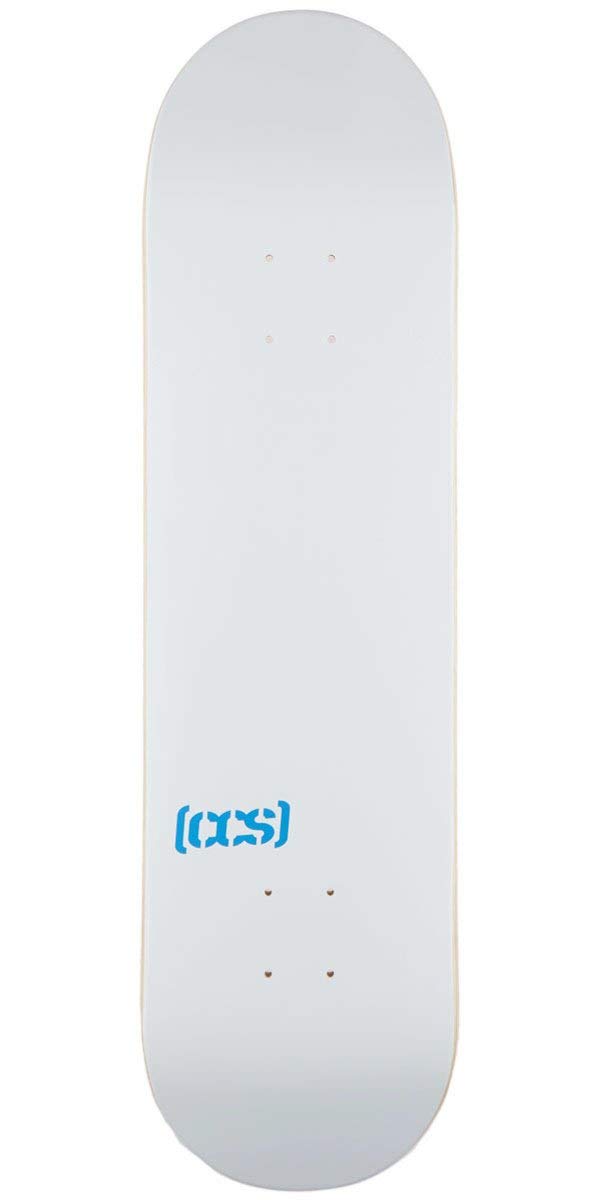
Maple Skateboard Deck
A skateboard deck is the plank itself: seven layers of maple veneer glued and pressed into a shape with an upturned nose and tail. Width is the number that matters for a beginner, measured in inches across the middle, and it decides how stable the board feels underfoot. Decks ship bare, so grip tape and mounting bolts are separate purchases.
Why we picked this exact one: The CCS Logo deck in 8.0 inches is a skate-shop house brand pressed from the same 7-ply Canadian maple as boards costing twice as much, and it averages 4.7 stars. Eight inches is where shops say adult beginners now start, after years of steering them onto 7.75 boards that feel cramped under a size 10 shoe. The graphic is a plain logo rather than art you would hang on a wall, which is the right call for a deck you are about to scrape down a kerb.
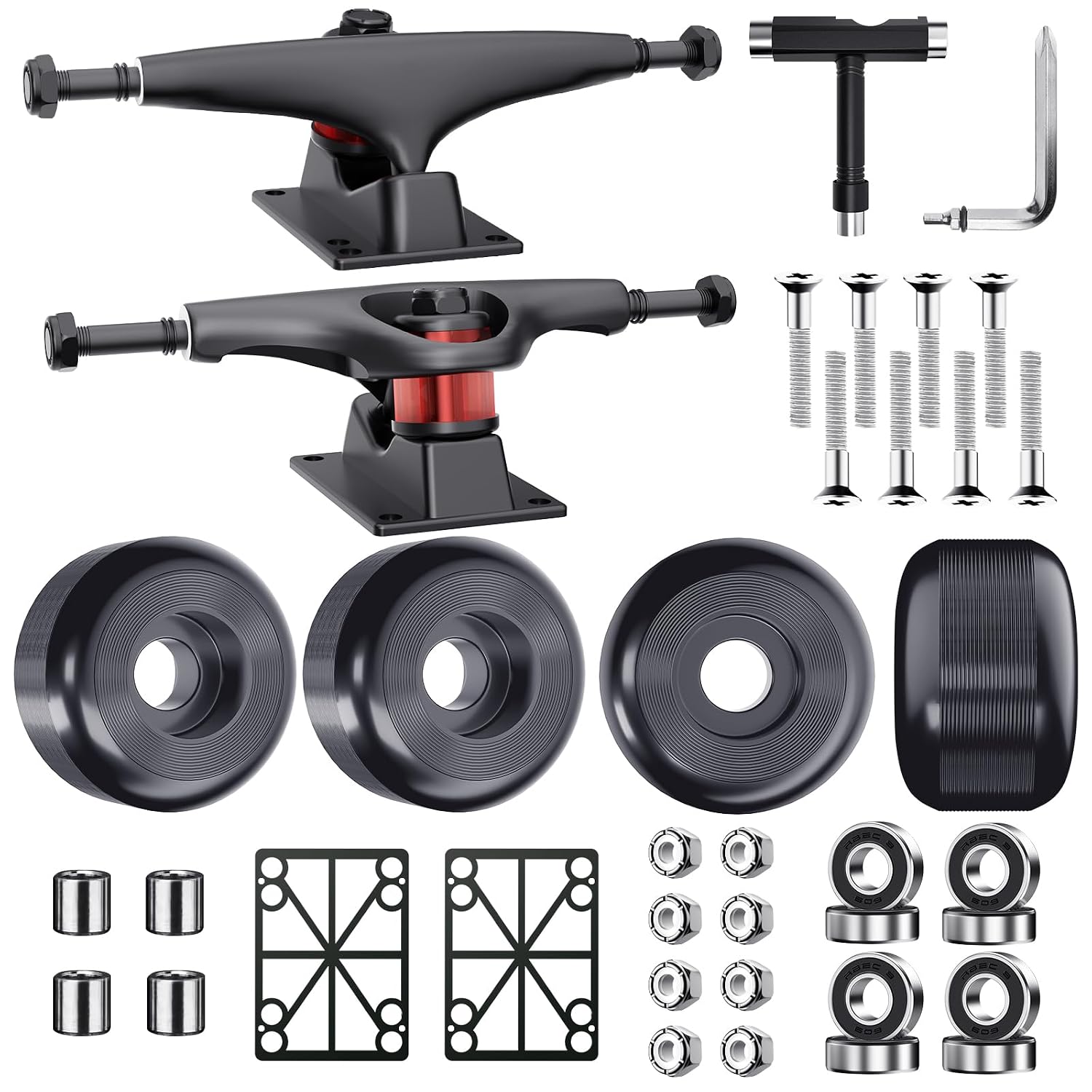
Everything under the deck arrives as one bundle: two aluminium trucks that steer when you lean, four urethane wheels, eight bearings, riser pads and the mounting bolts. Truck width should roughly match deck width, which is why these sets are sold by the deck size they fit. A wheel diameter around 52mm with a hard durometer is the standard street setup, since taller or softer wheels rub the deck when you turn hard.
Why we picked this exact one: The Jizmo combo set pairs 139mm trucks with 52mm wheels and ABEC-9 bearings for decks between 7.75 and 8 inches, which is the right pairing for the deck above. It throws in a basic T-tool and two riser pads, so nothing is missing between opening the box and the first push. The trucks are budget aluminium rather than the forged ones experienced skaters run, and you will feel that the day you start grinding kerbs; for learning to push, turn and stop they are fine.
A skate helmet sits lower at the back than a bike helmet and covers the base of the skull, which is where a backwards fall lands. The certification stamps inside the shell matter more than the shape: look for the bicycle standard and the skateboard-specific one, which is tested for repeated knocks rather than a single crash. Fit is tuned with swappable foam liners instead of a dial at the back.
Why we picked this exact one: The Triple Eight Certified Sweatsaver carries both the CPSC and ASTM stamps, which is the pairing worth looking for if a helmet has to survive a season of small knocks. It ships with two sets of liner pads so you can tune the fit yourself, and it holds a 4.8-star average. New liners feel too tight for the first couple of sessions before they pack down, which reads as the wrong size if nobody warns you.
A pad set covers the three places a beginner lands: knees, elbows and the heels of the hands. The wrist guards are the important piece, built around a rigid splint that stops the joint folding back when you put a hand down. Knee and elbow caps are hard plastic over foam so you slide across the concrete instead of catching on it.
Why we picked this exact one: The Triple Eight Saver Series set is the one most skate shops keep on the wall, with moulded ABS splints in the wrist guards rather than the thin plastic strips cheaper sets use. All three pieces pull on without sleeves, so the knee pads come off mid-session without unlacing your shoes. Sizing runs off your own measurements rather than shirt size, and guessing it gives you pads that creep down, so get the tape measure out first.
Skate shoes use a flat, almost tread-free sole so the whole foot sits down on the grip tape with no rocking. Uppers are suede or heavy canvas because the ollie foot drags across the grit and eats ordinary mesh within weeks. A cupsole shoe wraps a thicker stitched sole around the upper, which lasts longer but mutes how much of the board you can feel.
Why we picked this exact one: The DC Court Graffik is a suede cupsole, the durable end of the skate-shoe trade-off, and it has stayed in production for two decades for that reason. It carries a 4.6-star average and is one of the few genuine skate shoes on Amazon with a review count in the thousands. The thick sole does dull board feel next to a thin vulcanised shoe, so if feeling the tail under your foot matters more to you than the shoes lasting, go thinner.
Get these five home and you can push down your own street the same evening. One gap catches everyone: a bare deck still needs a sheet of grip tape, around eleven dollars, so either budget for it or ask the shop, because plenty will grip a deck for you when you buy it there. And if you genuinely are not sure this is the hobby you want to give a season to, working out which first hobby fits you is a cheaper experiment than a garage full of maple.
Or Buy It Already Built
A complete skateboard turns up assembled and gripped, and it is on this page for an honest reason: it costs less than the parts above and you can skate it the hour it lands. The trade is that somebody else picked every component, width included. It is the same call as reaching for a cheap first ukulele rather than specifying a better instrument you cannot yet judge.
The one-box alternative
Complete Skateboard with Trucks and Wheels
A complete skateboard is sold as one box: deck, grip tape, trucks, wheels, bearings and bolts already assembled and tightened. The components are matched to each other, which removes every sizing decision a beginner would otherwise have to make. Deck width, wheel diameter and bearing grade are all fixed by whatever the maker specified.
Why we picked this exact one: The Element Popsicle complete pairs a 7-layer maple deck with 5-inch aluminium trucks, 51mm wheels and ABEC-5 bearings, from a skate brand that has been pressing boards since the early nineties. It averages 4.3 stars, a step below the parts above and about what budget completes deliver. The deck is 7.75 inches, narrower than the 8-inch boards shops now hand adult beginners, and that is the clearest reason to think twice.
Set up at 7.75 inches on 51mm wheels, which handles flat ground, gentle banks and a quiet car park perfectly well.
You pick the width, so an 8-inch deck on 52mm wheels matches what shops actually hand adults now. better here
Quality of the parts
A real brand deck, but budget trucks and ABEC-5 bearings you will feel on rough pavement.
The deck is shop grade; the trucks and bearings in a parts bundle sit in much the same budget tier as the kit's.
The first evening
Open the box, check the bolts are tight, skate. Nothing to grip, nothing to assemble. better here
Half an hour of gripping, trimming and bolting before the first push, and you need a blade for the grip tape.
Where it leads
The wheels and bearings wear out and get replaced anyway, so you learn the tool eventually either way.
You learn which part does what while bolting it together, which makes the first upgrade obvious instead of guesswork. better here
Our verdict: it depends. Buy the complete if you want to be rolling the day the box lands and you are not yet sure you will still care in a month; build from the parts if you already know you want an 8-inch board and expect to still be skating when the first set of wheels wears down.
Falling is not an edge case in skateboarding, it is the curriculum. The board slides out, you step off at the wrong moment, a pebble stops a wheel dead. Roughly one in five skateboard injuries lands on the forearm or wrist, and most of those are breaks, because the arm shoots out on its own before you have decided anything. Wrist guards are the one piece of kit that moves that number, and they are also the piece beginners skip because they feel self-conscious. If the thought of a board sliding out from under you is the sticking point, learning on ice skates at least gives you a barrier to hold while your balance catches up.
Helmets deserve one paragraph of attention before you buy. A bicycle helmet is built to absorb a single serious impact and then be replaced, while the skateboard standard is tested for repeated smaller knocks, which is the shape a learning session actually takes; look inside the shell for both stamps rather than trusting the word skate on the box. Take a rest day between sessions too, because shins and ankles complain long before anything dramatic happens, and something quiet like urban sketching fills a sore-ankle afternoon better than another hour of trying.
The Small Stuff You Will Want by Month Two
None of this makes you better at skating. It makes the board stop annoying you, which turns out to matter, because the people who keep going are the ones whose gear is not quietly fighting them. If you are working on the habit side of this as well, our notes on keeping a beginner routine alive transfer almost word for word to a driveway and a board.
06Pick 06 of 09
Perforated Skateboard Grip Tape
Grip tape is a sheet of adhesive-backed sandpaper that covers the top of the deck and does the actual work of holding your shoes on. A standard sheet is nine inches by thirty-three, enough for one board with a trim to spare. Perforated versions have tiny holes punched through so air escapes as you press the sheet down.
Why we picked this exact one: Mob Grip's perforated sheet is the one to get over the plain version, because the pinholes let trapped air escape while you squeegee it down instead of leaving bubbles you later stab with a pin. Mob is the grit most skate shops default to, and a nine by thirty-three sheet covers one board with enough left over to trim. Some skaters have had Mob sheets lift at the edges, so press the perimeter down hard and leave it a day before skating it.
A skate tool gathers the sockets a skateboard needs into one T-shaped handle, usually with a screwdriver hidden in the shaft. Boards use three specific sizes for the axle nuts, the kingpin nut and the mounting bolts, so a household spanner set rarely covers all of them. It is the only tool required to assemble, adjust or strip a board.
Why we picked this exact one: The Zeato T-tool covers the 3/8, 1/2 and 9/16 inch sockets a skateboard uses and hides a Phillips driver in the shaft, which is everything short of a blade for trimming grip. It holds a 4.7-star average and is comfortably the cheapest thing on this page. It is stamped steel rather than forged, so the sockets will round off eventually if you lean on badly seized nuts.
A bearing cleaning unit is a small sealed tub with a threaded rod that holds eight bearings apart while you shake them in solvent. Skate bearings mostly fail from grit and water rather than wear, which means they are usually rescuable instead of replaceable. The canister keeps the solvent contained and the bearings spaced so the grit actually flushes out.
Why we picked this exact one: The Bones cleaning unit is the one skaters have used for decades, and its spacer rod keeps all eight bearings apart so solvent reaches both sides instead of pooling in the bottom. It holds a 4.7-star average. Worth knowing before you order: the solvent is not included, so you will need mineral spirits or a citrus degreaser plus a bottle of bearing oil to finish the job.
Skateboard wheels are solid urethane, and the formula they are poured from decides whether they hold their round shape under a slide. Harder wheels, around 99a, break loose predictably on smooth concrete, which is what street and park skating ask for. Fifty-three millimetres sits in the middle of the normal street range and keeps the board low enough that the wheel does not rub the deck in a hard turn.
Why we picked this exact one: Spitfire's Formula Four urethane in the 53mm Tablets shape is the step up most skaters make first, and 99a is the hardness to buy when you are replacing the wheels that came with a budget setup. Wait until you have worn the originals down or flat-spotted them, because new skaters rarely carry the speed where the difference shows. Once you are sliding to stop and rolling over rough pavement it is obvious, and they hold a 4.8-star average.
Buy these as the problems turn up rather than all at once. The one I would get early is the tool, because a loose kingpin feels exactly like losing your nerve and takes ten seconds to fix. Skating rewards the same stubborn five-minutes-a-day attention that learning to solve a cube quickly does, and the gear only has to stay out of the way.
Why Your Board Keeps Doing That
Why does the board shoot out from under me the second I step on?
Almost everyone steps onto the tail or the nose first, because that end is closest. The board pivots on its back wheels, the far end kicks up, and you land on your hip wondering what you did wrong. Put your front foot straight onto the bolts, the four visible screw heads near the nose, and the board has nowhere to tip. Same rule when you step off again.
People keep telling me I push mongo. Does that actually matter?
Mongo means pushing with your front foot while the back foot stays parked on the tail, and it feels natural to a lot of beginners because the front foot is already carrying the weight. The trouble arrives later: every push leaves your back foot stranded off the tail, so you cannot pop the board, and unlearning it after a year of muscle memory is grim. Push with your back foot from the very first session even though it feels backwards. Two weeks and it will not.
Why will my board not turn, when it leans fine if I push it with my hand?
New trucks ship tight, and tight is genuinely the right setting while you are learning to stand, because it kills the speed wobble that throws beginners at roughly walking pace. The catch is that most people never touch the kingpin nut again, then decide they cannot carve. Loosen the kingpin a quarter turn at a time, skate it, repeat. Stop the moment the board starts to shimmy under you at speed, and go back a quarter turn.
The tail of my board is going thin and sharp. What did I do?
That is razor tail, and it comes from dragging the tail along the ground to slow down, which is the instinctive way to stop before anybody teaches you otherwise. Each stop sands a little more wood away until the tail is a blade, the pop goes dead, and the plies start to splinter apart. Learn to step off the back of a rolling board instead, or drag the sole of your back shoe. A razored deck usually dies months early.
People Worth Following Into This Hobby
Real practitioners we found while researching this setup — people who do the work, show their process, and publish on sites they run themselves. No sponsorships, no affiliations; we just think they're worth your time.
Runs one-to-one skateboard coaching on Sydney's Northern Beaches and films free trick-breakdown tutorials for everything from rolling down a bank to the kickflip.
His free Skate Basics series starts exactly where this page stops, with pushing, kickturns and pumping rather than tricks, and his trick roadmap answers the beginner question this setup deliberately leaves open: what to learn next once you can roll.
Started skateboarding at 43, teaches adults to push, roll and drop in, and writes openly about falling over in front of a park full of teenagers.
Her course opens with the two things this setup spends the most words on, board width for your own feet and the wrist guards beginners talk themselves out of, and she teaches the falling technique the safety section only names.
Runs an indoor skatepark in Haywards Heath with adult beginner lessons, and publishes short pieces on what a first skatepark visit is actually like.
Their adult-beginner piece covers the part this page cannot sell you, which is the skatepark etiquette and first-session nerves that stop people using the gear they just bought.
Runs beginner-friendly adult skate sessions around Brighton and Hove with boards and pads provided, and writes up the basics they teach in them.
Their guide spells out the skatepark turn-taking rules and the grass-and-carpet practice trick, which is the cheapest way to use the board in this setup before taking it anywhere public.
Love what you see here? Save individual picks with on any item, or copy everything to a list of your own in one click — great for coming back to later, or dropping as a not-so-subtle hint.