Four Strings Is Not Many, and That Is Exactly the Point
A ukulele is about as long as your forearm, four nylon strings, and a sound somewhere between a tiny guitar and a wind chime. It arrived in Hawaii in the 1870s with Portuguese immigrants who carried over a small four-string guitar called the machete, and the islanders renamed it with their word for flea. Here is the bit that surprises people. A soprano and a tenor are tuned to exactly the same four notes — the bigger one is not lower, just roomier under the fingers. You will find ukuleles in school music rooms, on porches, and in the back of a lot of parents' wardrobes.
Most instruments make a beginner wait. Six months of scratchy bowing, or a year of scales, before anything sounds like music. A ukulele does not do that: two chords and a steady down-strum will carry a real song by the end of the first week, which is why it keeps landing in the hands of six-year-olds and worn-out adults alike. The catch is that the gap between a playable ukulele and a decorative one is almost invisible in a photograph.
Our philosophy here: buy the instrument, something to tune it with, and a bag to stop it getting stepped on. That is week one, finished. Everything else on this page can wait until somebody has actually played the thing twice.
Nothing below is expensive enough to sting if the whole experiment has fizzled out by February, and that was the filter.
Where This Little Kit Can Take You
A few real moments and results from this hobby — made with tools no fancier than the ones below.
Small hands on a red sopranoThe frets sit close enough together for a child to reach a chord.
A strum in afternoon lightFour strings and a thumb is the whole technique for the first week.
Shaping a chord outdoorsFingertips do the work here; the first week is the one that stings.
Waiting against a sunlit wallA clip-on tuner left on the headstock means tuning takes fifteen seconds, not five minutes.
Down the neck, four strings
One warning before the shopping starts. What makes a beginner ukulele pleasant or miserable is not the wood or the badge on the headstock, it is how high the strings sit above the frets down at the nut — and you cannot see that in a product photo. The four items below were picked partly with that in mind.
Four Purchases and You Are Playing
A ukulele that will not hold its tuning is a toy, and a ukulele nobody can tune is firewood with strings on it. That is why a clip-on tuner sits here beside the instrument rather than three sections further down. The other two items are insurance. Nylon strings snap at inconvenient moments, usually while someone small is winding a peg the wrong way, and an unprotected uke propped against a wall gets knocked over sooner or later. I would rather spend twenty dollars on a padded bag now than explain a cracked soundboard later.
Disclosure: This section may contain affiliate links to Amazon. We may earn a small commission from qualifying purchases at no extra cost to you.
01Pick 01 of 09
Soprano Ukulele with Nylon Strings
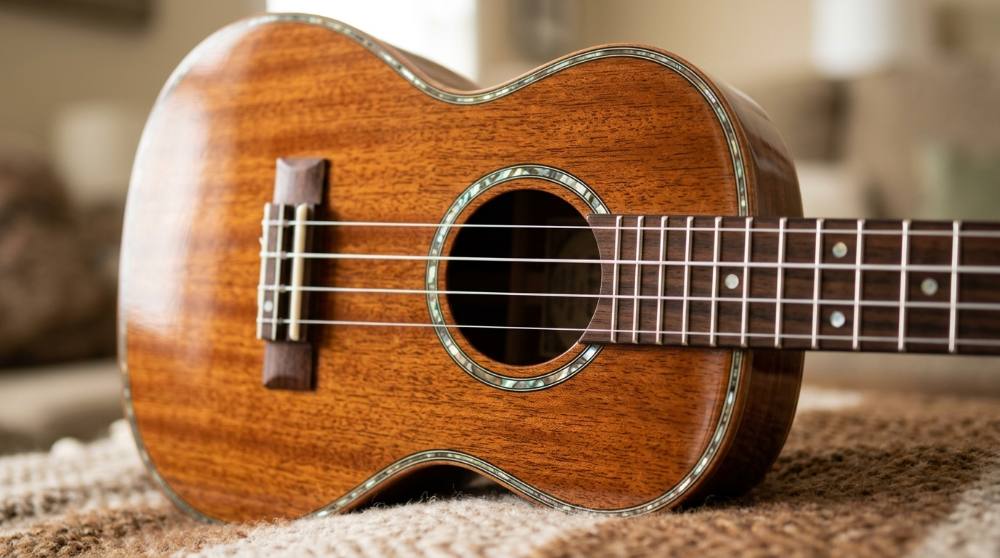
A soprano is the smallest of the standard ukulele sizes, with a scale length of roughly 13 to 14 inches and about 21 inches long overall, which puts the frets close enough together for a child to reach a chord shape. Mahogany bodies are the common choice at this price because they sound warm rather than brash. Look for geared tuning pegs rather than friction pegs, a hardwood fingerboard, and strings that sit low over the first few frets.
Why we picked this exact one: The Kala KA-S mahogany soprano is the instrument ukulele forum regulars keep naming when a beginner asks what to buy. Its 4.6-star average on Amazon matches that reputation, and the mahogany body gives the warm tone people expect from a first uke rather than the thin snap of painted plywood. The trade-off is price: you can spend half as much and still get four strings, but budget ukuleles tend to arrive with the strings sitting so high over the first frets that holding a chord is real work.
A clip-on tuner grips the headstock and reads the pitch of each string from the instrument's vibration rather than through a microphone, so it still works in a noisy room. The display shows the note name and whether it is sharp or flat. For a ukulele you want one that reads the four standard notes without a mode change, and a screen you can read from the playing position rather than upside down.
Why we picked this exact one: The D'Addario Universal Micro Headstock Tuner is the one that comes up when ukulele players compare notes on tuners that survive daily use, and it holds a 4.5-star average on Amazon. It reads vibration through a piezo pickup rather than listening through a microphone, which matters if someone else is practising in the same room. One caution for a child's instrument: it runs on a CR2032 coin cell, so an adult should change the battery.
Ukulele strings are sold as sets of four and sized by the instrument's scale, so a soprano set is not interchangeable with a concert one. Synthetic gut has become the standard material on beginner instruments because it holds pitch better than plain nylon once it has stretched in. A spare set in the bag means a broken string costs an evening rather than a week.
Why we picked this exact one: The Aquila Super Nylgut AQ-100 soprano set is the same family of string that Kala lists on its KA-15 series ukuleles, so it is a like-for-like replacement rather than a change of character. Aquila's own listing says this generation stretches less than the one before it, which shortens the week of constant retuning. One thing to get right when ordering: high G is the standard tuning, and the low G version of the same set changes the sound more than most beginners expect.
A gig bag is a soft padded sleeve sized to a particular ukulele length, so a 21-inch bag fits a soprano and nothing bigger. The useful ones have about a centimetre of foam, a full-length zip, and a pocket big enough for a tuner and a spare string set. Backpack straps matter more than they sound: a child carrying an instrument by one handle will bang it off every doorframe between the bedroom and the car.
Why we picked this exact one: The HOT SEAL 21-inch case bag carries about 10 mm of padding, noticeably thicker than the limp nylon sleeves bundled with budget ukuleles. It holds a 4.7-star average on Amazon. The exterior is water-repellent rather than waterproof, so it will shrug off a walk through drizzle but not a water bottle emptied into a school bag.
Buy these four and the first song is a matter of days, not months. One honest expectation: brand-new strings go flat constantly for the first week or so. That is them stretching, not a fault, and the fix is to retune after every couple of songs until they settle. Everything in the next section is something you will want only once the uke has stopped living in its bag.
The Three Things People Buy Second
None of this is needed to learn a song, and I would wait a month before buying any of it. But there is a pattern in how beginners stall. My honest observation: a ukulele zipped into a bag in a cupboard gets played far less than the same one standing in the corner of a room, and that is most of the argument for a stand. The strap solves something different. With no strap the right forearm has to pin the instrument against the body, so the left hand starts gripping the neck to help — and that is exactly the hand that needs to stay loose.
05Pick 05 of 09
Ukulele Soundhole Strap
Plenty of ukuleles ship without strap buttons, so a strap either needs a button drilled into the body or a pair of hooks that grip the edge of the soundhole. The hook kind fits in about ten seconds and leaves no marks. Look for a padded shoulder section and enough adjustment to fit both a child and an adult, since one ukulele in a house usually gets passed around.
Why we picked this exact one: The Eyeshot no-drill strap hangs from two J-hooks at the soundhole, so nothing gets screwed into a new instrument, which matters if the uke might later be handed down or resold. It sits at 4.4 stars on Amazon, and the jacquard webbing runs into a widened leather shoulder pad rather than ending in a bare nylon edge. Fair warning: a hook strap lets the body swing a little more than a button-mounted one, and some players never get used to that.
A ukulele stand is a small folding frame that holds the instrument upright by its lower bout, with rubber or foam wherever the wood touches. The wooden kind collapses flat and weighs enough not to topple when the instrument goes in. Check that the width adjusts if the household might end up with more than one size of uke.
Why we picked this exact one: The Donner wood ukulele stand is solid acacia rather than the hollow plastic frames sold at the same price, and that extra weight is what stops it skating across a floor when a child shoves the uke in sideways. It carries a 4.5-star average on Amazon. The width opens far enough to take a violin or a mandolin as well, so it is not wasted if the instrument collection changes.
A capo clamps across the fretboard and raises all four strings at once, which lets a player keep the chord shapes they already know while the song moves to a different key. Ukulele capos are cut to a flatter fretboard curve than guitar ones, and a guitar capo will usually close on a uke but press unevenly. The quick-change kind opens with one hand and parks on the headstock between songs.
Why we picked this exact one: The Kyser Quick-Change ukulele capo is the uke-specific version of the clamp most guitarists already own, cut to a ukulele fretboard rather than a guitar one, and it sits at 4.7 stars on Amazon. It parks on the headstock when it is not in use, which is how capos avoid disappearing into sofa cushions. It costs several times what the generic mini capos cost, and what the price buys is the aluminium body and US manufacture listed on the page rather than any extra function.
If you only buy one, buy the stand. The capo is the one to leave longest; it becomes genuinely useful the day somebody wants to sing a song in a key their voice can actually reach, and it is dead weight before then. Small warning about the strap: the hooks sit against the edge of the soundhole, so check they are padded and not bearing straight on bare wood.
Why Paper Still Beats the App Here
There is no shortage of free ukulele lessons on a screen, and plenty of them are very good. The problem is the screen. Hand a seven-year-old a tablet to learn a chord from and you have handed them a tablet, and the chord is now competing with everything else living on it. A book lies open on the floor next to the uke, notifies nobody, and lets a parent see at a glance where their kid actually got to. Both of the books below are the ones long-time players keep pushing at beginners.
08Pick 08 of 09Book worth reading
Beginner Ukulele Method Book
A method book works through the instrument in order: how to hold it, the first chord shapes, a strumming pattern, then short pieces built only from what has already been covered. That sequencing is what separates it from a songbook, where song three might need a chord nobody has taught yet. For a child, look for large chord diagrams and tablature printed alongside standard notation.
Why we picked this exact one: The Hal Leonard Ukulele Method Book 1 by Lil' Rev is the paperback ukulele forum regulars point at when someone asks for a first book, and it is the graded path a lot of teachers work from. It holds a 4.6-star average on Amazon. It is dry in places, because a method book is not entertainment, and a young child will need an adult sitting alongside for the first few pages.
A fake book prints the lyrics with chord names above the words instead of full notation, so you strum and sing rather than reading every note. The big collections are organised for people who play in groups and need songs everybody half-knows. Many of them need only two or three chords, which is the part that matters in a first year.
Why we picked this exact one: Hal Leonard's The Daily Ukulele Leap Year Edition, arranged by Jim and Liz Beloff, runs to 366 songs and is the book ukulele groups keep naming as the one to own for strumming and singing. It holds a 4.7-star average on Amazon. It is the most expensive thing on this page and a genuinely heavy book, and the earlier editions get recommended just as often if the price puts you off.
Start with the method book and save the songbook for a weekend. One practical note: a songbook that thick will not stay open on its own, so a cheap page weight or a clothes peg saves a surprising amount of swearing.
Why Will It Not Stay in Tune, and Other Week-One Panics
Why does it go out of tune every twenty minutes when it is brand new?
New nylon and synthetic gut strings are still stretching, and a fresh set can take a week or more of playing before it holds pitch reliably. Beginners read this as a faulty instrument or faulty pegs, and either send the uke back or give up tuning it, which is the worse outcome. The fix is to tune more, not less: retune after every couple of songs for the first week, and leave it a shade sharp when you put it away. After that it settles into needing one quick check a day.
Soprano or concert, and does the bigger one sound lower?
A soprano runs roughly 13 to 14 inches of scale and about 21 inches overall; a concert is roughly 15 to 16 inches of scale and about 23 overall. The thing most buyers get wrong is assuming the bigger body means a lower-pitched instrument. It does not. Soprano, concert and tenor are all tuned to the same four notes, and only the baritone is different, so choose on hand size instead: a six or seven year old needs the tight fret spacing of a soprano, while most teenagers and adults find a concert more comfortable to hold.
The chords are really hard to press down. Is my child just not strong enough?
Probably not. On a lot of inexpensive ukuleles the strings sit too far above the first couple of frets straight out of the factory, and pushing them down takes force no six-year-old has. Players call this high action, and it is the single most common reason a cheap uke feels unplayable rather than merely cheap. It is fixable, because the nut and saddle are small replaceable parts that get filed or sanded lower, but check the instrument before you conclude the child is the problem.
Which chords should we learn first?
Not necessarily C and G7, which is where a lot of song sheets open. A well-worn teaching route starts beginners on F and C7 instead, because both are easy shapes to hold and two chords are enough to carry a real song. Opening with a chord that needs three fingers planted at once is how plenty of people decide their hands do not work. Get a two-chord song sounding steady, then add the rest.
Do we have to get it set up by a shop?
Experienced players will tell you yes, and on an expensive instrument they are right. On a first ukulele under a hundred dollars it is a judgement call, because a professional setup can cost a serious fraction of what the uke cost. Here is the practical test: press each string down at the first fret. If that takes visible effort the nut slots are cut too high and a setup will transform the instrument. If it feels easy, play it as it is.
People Worth Following Into This Hobby
Real practitioners we found while researching this setup — people who do the work, show their process, and publish on sites they run themselves. No sponsorships, no affiliations; we just think they're worth your time.
Plays ukulele professionally on the UK festival circuit and posts a free YouTube lesson with downloadable written notes every week.
His complete-beginners lesson one comes with notes you can print, which is the paper-not-screen route this page argues for, and he teaches the first chord shapes a soprano makes reachable.
Teaches and performs ukulele full time from Honokaa, Hawaii, and has published an ad-free library of over a hundred lessons since 2007.
His beginner lesson is where the F and C7 starting point in our FAQ comes from, and it covers holding, tuning and the first strum in the order a new player meets them.
A Grammy-winning Hawaiian musician who built a free graded ukulele lesson library covering beginner, fingerstyle, classical and Hawaiian playing.
His free beginner track starts with the parts of the instrument and the first four chords, which is the next step after the tuner and the method book on this page.
A British Columbia music educator who co-authored the ukulele method book Sounds and Strings and built a 47-lesson classroom ukulele curriculum.
Parents who end up teaching at the kitchen table benefit from the order a classroom curriculum uses, which is the same sequencing argument we make for the method book.
Love what you see here? Save individual picks with on any item, or copy everything to a list of your own in one click — great for coming back to later, or dropping as a not-so-subtle hint.