Somewhere in a French sports hall, a few hundred people sit at folding tables, each given fifteen seconds to stare at a scrambled cube before their hands lift off the mat and the clock starts. That's speedcubing. Not solving the cube once, but solving it over and over, shaving off tenths. Ernő Rubik invented the puzzle in 1974, shops worldwide got it in 1980, and 200 million people bought one and mostly gave up. The part that still gets me: in 2010 a team proved that every one of the 43 quintillion possible scrambles can be solved in twenty moves or fewer, while the method you'll actually learn takes around eighty.
Nobody tells you that the cube you already own is probably why you quit. Toy-shop cubes grip. You turn a face, it catches halfway, a corner twists, and the piece you just placed is gone. A proper speed cube doesn't do that. It turns when you're only half aligned and holds together while you fumble, which is the whole distance between “this is impossible” and “fine, one more.” It also asks almost nothing of your house, which makes it an unusually low-risk answer to how to choose your first hobby.
Start with less than you think you need. One decent magnetic 3x3 and something that counts seconds is the entire hobby; the lube, the stands and the second puzzle can wait until you've solved the thing fifty times.
Nothing on this page is expensive enough to resent if the cube ends up back in the drawer by February.
Where This Little Kit Can Take You
A few real moments and results from this hobby — made with tools no fancier than the ones below.
Hands over the timer matThe cube is already scrambled; the clock does not start until both hands leave the pads.
A hall full of folding tablesCompetitions run on ordinary trestle tables, a few hundred solvers at a time.
Give yourself a weekend. Most people get from “I can't do this” to a complete solve in a few hours spread over a couple of days, and the first time you finish one with the tutorial closed there's a genuine little jolt of surprise. If you're still drawing up a shortlist, it belongs among the best starter hobbies for adults for exactly that reason: the payoff arrives early, and it arrives in your hands.
The Cube, the Clock, and the Mat
Three purchases and you're a speedcuber, which is a lower bar than almost anything else you could take up this year. The cube does the real work. The timer turns practice into something you can watch improving, because “I think I'm getting faster” is not data and your memory will cheerfully lie to you about it. Unlike a proper jigsaw puzzling station, none of this needs a surface you can leave undisturbed for a week. It lives in a drawer.
Disclosure: This section may contain affiliate links to Amazon. We may earn a small commission from qualifying purchases at no extra cost to you.
Pick one
These 2 do the same job. You only need one of them, so pick the one that suits you better.
01Pick 01 of 08Option A
magnetic 3x3 speed cube with adjustable spring tension
A 55.5 mm stickerless 3x3 built for turning speed rather than display, with 48 magnets set into the pieces so every quarter turn settles square instead of drifting past. The spring core has nine settings, which means you can loosen it as your turning gets quicker or tighten it if corners start twisting. Look for stickerless plastic rather than applied stickers, which lift at the edges within weeks of real use.
Why we picked this exact one: The MoYu RS3 M V5 SE is the direct successor to the RS3 M 2020, the cube that pushed far pricier flagships off a lot of competitors' desks. At 67 grams it's light enough that a long session doesn't tire your wrists, and the nine-setting spring core means you retune it rather than replace it. The catch is that this listing is new enough to carry only about fifty reviews, so you're trusting the line's reputation more than this particular page.
Pros
Weighs 67 g, light enough for long one-handed practice
Nine spring settings you can dial by hand without tools
Cons
A newer listing with only about fifty reviews behind it
No MagLev or ball core, which the pricier V5 versions add
budget magnetic 3x3 speed cube for learning the beginner method
The stickerless 3x3 that became the default answer for anyone buying their first proper cube. It arrives pre-lubricated at a usable factory tension, so there is nothing to set up before the first solve. The hollow, snappy feel it's known for comes from the mechanism rather than the magnets, which is why it reads as fast even when it isn't tight.
Why we picked this exact one: The MoYu RS3 M 2020 has been the speedsolving forum's standing answer to “which cube should I get” for years, and the listing carries over three thousand reviews. It's the budget cube that replaced more expensive mains for a lot of serious solvers, which says more than any spec sheet does. The trade-off is simply age: it's a 2020 design, and the V5 that replaced it costs about a dollar less.
Pros
Over three thousand reviews and years as the forum's default first cube
Pre-lubricated at a usable tension straight out of the box
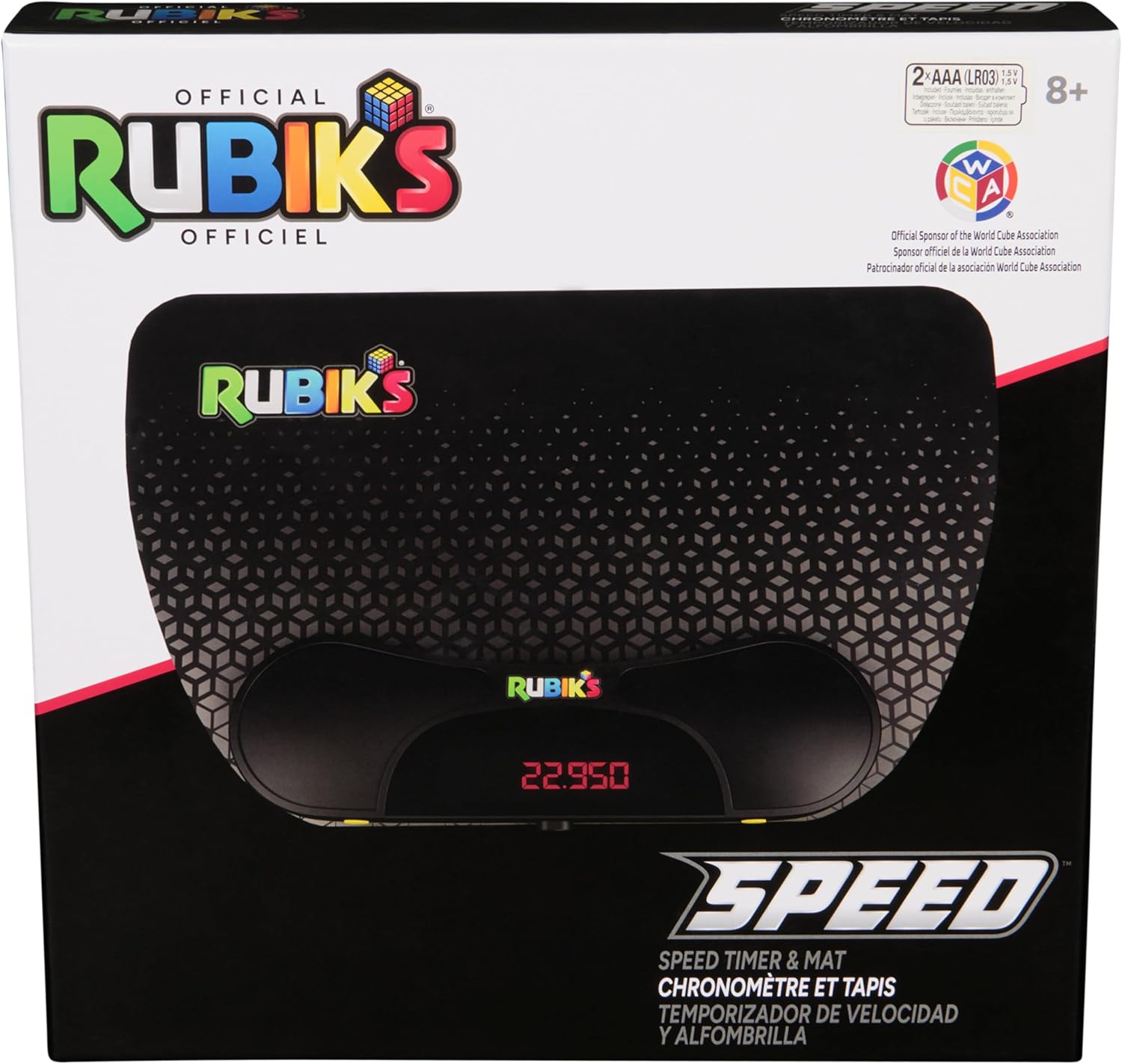
touch-sensor speed timer with mat for timing every solve
A two-sensor timer attached to a neoprene mat: you rest both hands flat on the pads, the clock starts the instant they lift, and stops when you put them back down. An inspection mode gives you the fifteen seconds competitors get to study a scramble, and flags the penalty for starting late. What matters when choosing one is that the pads trigger on contact rather than on a press, because a button changes how you grab the cube.
Why we picked this exact one: The Rubik's Speed Timer & Mat Set is the one timer under forty dollars that ships with the competition inspection rules built in, including the automatic two-second penalty for starting late. It sits at 4.7 stars across its reviews and does the single job a home timer needs to do, without the cup-stacking features you'd never touch. It isn't on the World Cube Association's approved list, so treat it as practice hardware rather than a rehearsal for the official table.
Expect the new cube to feel alarmingly loose for the first ten solves, and expect a faint click each time the magnets pull a face into line. That's not a fault, it's the thing you paid for, and your hands adapt quicker than you'd guess. Timing from the very first day is the habit worth building, and it fits inside a beginner creative routine without rearranging your evening, because a session here is five minutes rather than an afternoon.
Once You Know You're Staying
Everything above gets you solving. Everything here is for the point where the tutorial is closed for good and you've started wondering what else is out there. Speedcubing is solitary in much the same way solo pen-and-paper dungeon crawling is: one person, a small surface, an hour that quietly disappears. The difference is that you can do this one standing on a train, with the cube rattling in a coat pocket on the way there.
04Pick 04 of 08
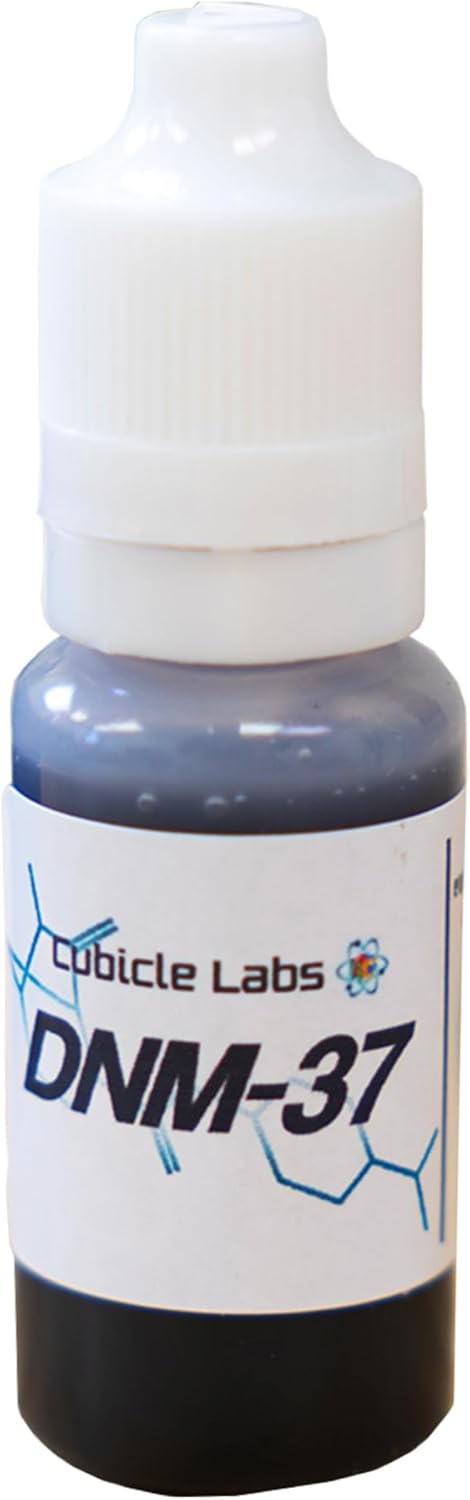
water-based lubricant for loosening up a stiff cube
A thin, water-based lubricant applied two drops at a time inside the cube, where it coats the surfaces that rub as pieces pass each other. It makes a stiff cube turn more freely and quietens the plastic-on-plastic scrape you get on a dry one. The 15 ml bottle holds more than most people use in years, so quantity is never the thing to compare.
Why we picked this exact one: Cubicle Labs' DNM-37 is one of the two lubricants the speedcubing community names by default, and it's the lighter, water-based one intended for the pieces rather than the core. It holds 4.8 stars across its reviews, and the stated dose is two drops, which tells you how little the job actually needs. Go heavier and the cube turns gummy, which is the most common way a beginner makes a good cube worse.
Three-pronged plastic bases that hold a cube tilted on a corner instead of letting it sit flat. They take anything from a 2x2 up to the larger cubes, so one pack covers a collection as it grows. The practical benefit is that a cube on a stand stays where you left it rather than being swept off the desk edge by a sleeve.
Why we picked this exact one: GoodCube's five-pack of holders costs under seven dollars and carries more than five hundred reviews at 4.7 stars, which is about as settled as a desk accessory ever gets. Five feels like four too many today and roughly right in a year. They are plain moulded plastic with no weight to them, so a hard knock sends stand and cube across the desk together.
magnetic 2x2 cube as a second puzzle with a faster practice loop
A 2x2 uses the same corner logic as a 3x3 with the edge pieces taken away, so most of what you already know carries over and a solve finishes in seconds rather than minutes. That short loop is why it's usually the second event people pick up. A magnetic one is worth it for the same reason as on a 3x3: the faces settle square on their own instead of needing a nudge.
Why we picked this exact one: The YJ MGC 2x2 is the pick the speedsolving forum lists for this event, where it's described as fast with legendary corner cutting. It holds 4.5 stars across roughly 280 reviews at under sixteen dollars. It is a small, light cube and feels a bit cheap in the hand next to a 3x3 flagship, which is mostly a comment on what it costs.
competition-grade timer and mat used at official events
The timer that sits on the table at sanctioned competitions, accurate to a thousandth of a second, with a detachable head that mounts on its own mat. It runs in a two-pad mode and a four-pad mode, the second requiring both hands fully down before a solve can begin. A port on the back feeds an external display, which is how the big screens at events show a time as it runs.
Why we picked this exact one: The Speed Stacks G5 StackMat is the timer the World Cube Association is standardising on: from 2 January 2027 every official attempt must use a G5 in four-pad mode, retiring the older G3 and G4. That makes it the one timer here worth buying if a competition is anywhere in your plans. At forty dollars it's more timer than home practice needs, and the four-pad start takes some unlearning if you've been starting with one hand.
flagship magnetic 3x3 with magnets in the core as well as the pieces
A flagship 3x3 that places magnets in the core and in the corner pieces, so the cube pulls itself into line from the centre outward instead of only at the edges. The effect is a more settled feel at high turning speed, where a budget cube starts to float. The difference is smallest at beginner speeds and grows as your hands do.
Why we picked this exact one: The GAN 11 M Pro sits at the top of the speedsolving forum's 3x3 recommendations and holds 4.8 stars across more than fourteen hundred reviews. Buy it once you're reliably under about thirty seconds and you already know you'll still be cubing next year, because that's the point at which you can feel what the core magnets are doing. Anyone still learning the method should wait: the forum's own position is that there is no best cube, and a forty-dollar one won't fix a step you haven't learned yet.
The order most people buy these in is wrong. Lube goes in the basket first because it's cheap and sounds like tuning, when a new cube already arrives lubricated and that bottle will do nothing for you for a month. Buy the second puzzle instead, or buy nothing at all and solve another hundred times. If the quiet, repetitive shape of this appeals, solo miniature wargaming scratches a similar itch at a far slower tempo.
The Questions That Arrive Around Solve Fifty
Is a magnetic cube cheating, or just an expensive shortcut?
It comes up because the magnets feel like they're doing a share of the work, and in a sense they are. The World Cube Association settled it in its regulations, which permit puzzles to be refined internally by sanding, lubrication or modifications that improve stability, naming magnets outright. Everyone on the podium at every official event is using one. The practical cost of holding out is that you'd be learning finger tricks against a cube that punishes them, which trains a slow, careful grip you then have to undo.
Shouldn't I learn on a cheap cube first so a good one feels easier later?
This advice circulates endlessly, and the speedcubing wiki calls it a misconception peddled by uninformed cubers, which is unusually blunt for a wiki. The issue isn't comfort, it's technique. A stiff cube forces you to line up each face perfectly before the next turn, so you rehearse a slow, deliberate grip for weeks. Pick up a cube that cuts corners afterwards and you have to dismantle that habit before you can use the new one, so start on the cube you mean to keep.
How many algorithms am I signing up for, honestly?
Beginners hear the number 78 for the full advanced last layer and quietly decide this hobby isn't for them. The beginner layer-by-layer method needs about six, and gets you a finished cube in roughly eighty to a hundred moves. The step after that isn't 78 either: the last layer splits into a two-look version of nine cases for orienting and six for permuting, so fifteen algorithms covers the next real jump. The full set is something you accumulate over months, if you ever bother at all.
CFOP, Roux or ZZ, and does picking wrong cost me?
People agonise over this because the names sound like a commitment you can't reverse. All three reach single-digit solve times, and the forum's standing answer is to choose one and stay with it rather than switching every few weeks. CFOP is the usual pick mainly because it grows straight out of the beginner method you already know, so nothing you've learned gets thrown away. The genuine cost isn't picking the wrong one. It's spending three months sampling all three.
Why have my times stopped dropping even though I'm practising more?
Nearly everyone stalls somewhere, and the instinct is to turn faster, which mostly produces more corner twists and the occasional pop. The real limit is usually that you stop moving while you hunt for the next piece, so your hands sit idle through a surprising share of the solve. The fix practitioners keep repeating is counterintuitive: do deliberately slow solves in which you never stop turning, and make yourself spot the next piece while your hands finish the current one. The speed returns on its own once the pauses are gone.
None of this has to be settled in your first week. The hobby rewards the same stubbornness as any slow craft, which is why it sits comfortably beside patience crafts with jaw-dropping results, even though nothing exists at the end of it except a cube that looks exactly like it did before.
People Worth Following Into This Hobby
Real practitioners we found while researching this setup — people who do the work, show their process, and publish on sites they run themselves. No sponsorships, no affiliations; we just think they're worth your time.
Dylan Wang writes and films the whole path from a first solve to single-digit times, including OLL and PLL trainers and public critiques of other people's solves.
This setup's FAQ sends readers from layer-by-layer towards CFOP without picking the method for them; his beginner tutorial deliberately skips notation and long algorithms, and his CFOP guide is the next rung.
Mark writes a step-by-step CFOP walkthrough with the algorithms laid out inline, plus separate beginner, notation and timer pages.
A reader who follows this setup's advice to time every solve hits the plateau described in the FAQ; his speedcubing guide is the written reference for the look-ahead and F2L work that gets past it.
A Minnesota speedcuber who has held the 2x2 world record average three times and publishes his own algorithm sets for 2x2 and 3x3 alongside guides on reaching a given time.
The 2x2 in the nice-to-have list is the easiest second event to pick up, and his site is where the algorithm sets for it are laid out by a person who actually held the record.
An educator and competitive speedcuber since 2007 who rebuilt the beginner tutorial around research on how people actually learn, and keeps algorithm sets for six different puzzles.
The FAQ here argues that the method you start on matters less than sticking with it; hers is the beginner method written by someone who teaches for a living, which is the version to use if the standard tutorials lost you.
Love what you see here? Save individual picks with on any item, or copy everything to a list of your own in one click — great for coming back to later, or dropping as a not-so-subtle hint.