Skating didn't start out as fun. The oldest skates anyone has dug up are horse leg bones, strapped under the feet of people in southern Finland around five thousand years ago, who used them to cross frozen lakes instead of walking the long way round. Researchers at Oxford and Milan who strapped on replicas and measured the effort put the saving at up to ten percent of what the walk would have cost. Those first skaters didn't push off their edges at all. They kept their legs nearly straight and poled themselves along, and the glide came mostly from leftover animal fat on the bone. Metal blades only turned up in the 13th century, which is when skating finally started to look like what happens at your local rink on a Saturday afternoon.
A public session is where nearly everyone starts. You pay for an hour, you're handed a pair of rentals, and you spend the first twenty minutes gripping the barrier while eight-year-olds swerve past you backwards. That's normal. The gap between ice and beginner quad roller skating shows up within a minute: on wheels you can stand still and think, while on ice you're always drifting a little and your ankles have opinions about it.
My advice: buy almost nothing until you've been three or four times. Rentals plus gloves and a pair of thin socks will carry you honestly through a first month. After that the whole kit is skates that fit you, hard guards to walk in, and hands that aren't freezing.
Nothing below costs enough to sting if you decide after five sessions that you'd rather be warm.
Where This Little Kit Can Take You
A few real moments and results from this hobby — made with tools no fancier than the ones below.
String lights over open iceAn ordinary public session after dark, which is where most skaters take their first strokes.
Frost along a worn bladeScuffed leather and a rime-covered edge after an hour on the ice.
Rink culture is friendlier than it looks from behind the barrier. Staff expect wobbling, and the regulars carving crossovers down the middle were wobbling two winters ago. If you're still working out which hobby to commit to, skating is unusually cheap to test. One session tells you most of what you need to know.
The Short List You'll Actually Use
Here's the thing nobody says out loud at the counter: the skates matter less than the fit of the skates. A boot half a size too big will teach you worse habits than a cheap boot that locks your heel down. So the order is fit first, brand second, price third. And rentals count as skates - if you're still testing this, rent, and put the money into the other three things.
One more thing about rentals, since it catches everybody. If your feet go numb ten minutes in, that's almost never the cold. It's the laces, pulled far too tight across the instep because tight felt like the safe choice.
Disclosure: This section may contain affiliate links to Amazon. We may earn a small commission from qualifying purchases at no extra cost to you.
Pick one
These 2 do the same job. You only need one of them, so pick the one that suits you better.
01Pick 01 of 09Option A
Recreational Figure Ice Skates for Adults
A recreational figure skate is a softer boot with a long, flat blade and a small toe pick at the front. The extra blade length puts more steel on the ice, which is what makes balancing easier than it is on a shorter, more curved hockey blade. Look for a boot that holds your heel still when you bend your knees, and remember that skate sizes run smaller than street shoes and vary between makers.
Why we picked this exact one: The Lake Placid Cascade women's figure skate is the pick here because it's a proper figure boot at rental-replacement money, with a reinforced ankle and a stainless blade rather than the stamped steel on department-store skates. At 4.3 stars, the complaints cluster on sizing rather than build, which matches what fitters say about every skate in this bracket. It's a soft boot, so it'll break down after a season or two of weekly skating. That's the trade for the price.
Pros
A real adult figure boot with proper ankle reinforcement
Fitted to one person instead of spanning a size range
Stainless blade that takes a proper sharpening
Cons
No growth room at all, so it's the wrong buy for a child
Soft boot that breaks down after a season or two of weekly skating
An adjustable youth skate has a push-button mechanism in the sole that lets one boot span several shoe sizes. It answers the problem every skating parent hits, which is a child outgrowing a boot halfway through the season. Fit it to the foot the child has now and allow half a size of growth room at most, because a loose heel makes balancing harder and raises blisters.
Why we picked this exact one: The Lake Placid Summit adjustable youth skate is the one to get here, largely because of how many parents have reported back on it - over 1,400 ratings is unusual in this category. It adds a locking buckle and power strap on top of the laces, which is the difference between a child's ankle staying upright and folding over by the second lap. The adjuster does add bulk under the foot, and a skater who has stopped growing is better served by a fixed boot.
Pros
Spans several shoe sizes, so it survives a growth spurt
Buckle and power strap hold a child's ankle better than laces alone
Cons
The adjuster adds bulk and weight under the foot
Less supportive than a fixed boot for a teenager or adult who has stopped growing
Hard guards are rigid plastic covers that clip over the blade so you can walk from the bench to the ice without grinding the edges on concrete or tile. Most adjust to blade length, either by cutting them down or through a sprung link that stretches over the blade. They are for walking only, and they come off the moment the skates do.
Why we picked this exact one: The Guardog Top Notch guards are the ones to buy because they're spring-loaded and cut down to length, so a single pair fits figure and hockey blades from roughly six inches up to twelve and a half. They sit at 4.5 stars, and the recurring gripe is the colour fading rather than the guard popping off mid-step. They come scented, which is either charming or faintly absurd depending on who's wearing them.
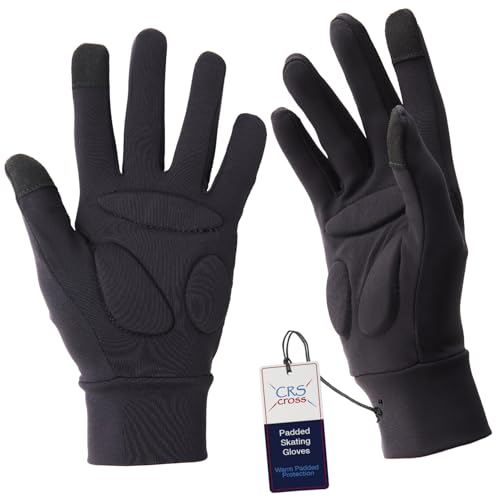
Skating gloves are thin, close-fitting gloves with padding over the palm and knuckles. They keep your hands warm without the bulk of a ski glove, which matters because you need to feel the barrier when you grab it. Padding on the heel of the hand takes the sting out of pushing yourself back up off the ice.
Why we picked this exact one: The CRS Cross padded skating gloves are the pick because they put three impact pads where a hand actually lands without turning into a mitten. They hold 4.7 stars, and the water-resistant shell means they don't soak through after the third fall the way knit gloves do. Sizing runs small, so go up if you're between two.
Skating socks are deliberately thin and tall, reaching well above the top of the boot. The height stops the hard cuff rubbing bare skin on your shin, and the thinness leaves the boot the room it needs to hold your foot. A microfibre blend sheds sweat better than cotton, which goes cold the second you stop moving.
Why we picked this exact one: The CRS Cross knee-high skating socks come two pairs to a pack, which is the right number for anyone skating weekly. They sit at 4.6 stars, and the microfibre-spandex blend stays thin enough that you can still lace a boot you were fitted for. One size covers children and adult women, so they're a poor bet for larger adult feet.
With those four things in a bag you can turn up at any public session and skate. One warning about a brand-new pair: the blades arrive with a factory finish rather than a skating edge, so get them sharpened before the first session or you'll slide sideways out of every turn and quietly blame yourself. If you're still browsing starter hobbies for adults, this one has an unusually short gap between buying the gear and doing the thing.
The Stuff You Buy Around Session Four
None of this is needed to skate, and all of it turns up in skate bags for a reason. Soakers and padded shorts solve two problems you only meet once you own a pair: rust, and the specific ache of landing on your tailbone twice in one hour. The upgrade at the bottom is a different kind of purchase, and it's worth reading the honest version of when to make it. If you're building a weekly beginner routine, the gear that keeps the kit alive matters more than the gear that makes you look like a skater.
06Pick 06 of 09
Padded Protective Skating Shorts
Padded skating shorts are stretch shorts with foam pads sewn over the hips, the outer thighs and the tailbone. They go on under leggings and don't show. The pads stay thin enough to skate in, which is the whole point, because bulky snowboard armour changes how you stand.
Why we picked this exact one: The CRS Cross padded figure skating shorts are the right version of this: nine EVA pads, three-quarters of an inch thick, placed for the way skaters land rather than the way snowboarders do. At 4.7 stars they hold up better than the generic hip-pad shorts sold for ski season. They run small, and the elastic waistband is the part people grumble about.
Soakers are stretchy fabric sleeves with an absorbent lining that go over the blade for storage, never for walking. They catch the condensation a cold blade pulls out of warm air on the way home. They only do their job on a blade that has already been dried with a towel.
Why we picked this exact one: The Gemscream soakers are a sensible pick at this money: a microfibre lining inside a velvet shell, with an elastic opening that grips rather than pinging off across the changing room. They're sold in three sizes by blade length, so measure first - most of the reviews below five stars are people who guessed. There's no reinforced strip on the sole, so don't walk in them.
A skate backpack has a shaped main compartment that takes a pair of boots upright, so the blades aren't cutting into everything else you packed. The useful ones aren't sealed tight, so damp boots get some air on the way home. Around thirty litres swallows skates plus the layers you peel off at the rink.
Why we picked this exact one: The Transpack ICE is the bag most rink regulars end up carrying, built from coated 600-denier polyester with a layout that keeps the boots upright and away from the rest of your kit. It holds 4.8 stars, which is high for anything at this price. It's also the dearest thing on this page after the skates, and an unzipped gym bag genuinely works until it doesn't.
A boot-and-blade set from a figure skating maker pairs a stiffer, better-shaped boot with a named steel blade riveted to the sole. The blade has a defined rocker and a real edge, so a sharpener knows exactly what to do with it. These are the skates learn-to-skate programmes put people into once they're past the first few weeks.
Why we picked this exact one: The Jackson Classic 200 is the step up worth making, pairing a supported vinyl-coated boot with a Mark I blade that's standard issue in learn-to-skate programmes. At 4.7 stars it has more agreement behind it than anything else near this price. Make the jump once you're skating most weeks and starting on crossovers. Before that it's overkill, and a boot stiffer than you need will hold you back, which is the mistake fitters see most often.
Everything here can wait until it annoys you into buying it, which is the right way round. The one I'd move earlier is the soakers, because blade rust is quiet and cumulative and you don't notice until a glide starts feeling sticky. A towel from the airing cupboard does the first half of that job for free.
Falling Is a Skill, and You Will Practise It
You're going to fall. Everybody does, and the ice is harder and colder than it looks from the bench. The awkward part is that adults fall worse than children do: a child goes loose and bounces, while an adult braces, locks the arms out and sends the whole impact through a wrist or an elbow. Coaches who teach adults say the same thing over and over - hands in, chin down, let your hip and thigh take it. Skateboarders learn the identical lesson on concrete, which is why our first skateboard setup leans so hard on pads.
A helmet is sensible while you're learning, and it matters most on a backward fall, where your head is the last thing to arrive. A multi-sport helmet is fine; it needs to sit level rather than tipped back, with the strap done up. Plenty of rinks have their own rule for class skaters, so ask at the desk. Wrist guards are a backup rather than a solution, and a skater who learns to keep their hands in front of them needs them less every week.
Two rink-floor hazards nobody warns you about. Walking on bare blades across tile grinds grit into the edges and puts nicks in steel you just paid to sharpen. And stepping onto the ice with your guards still on is the classic beginner wipeout - people have come away from that one with concussion, not just a bruised ego. The fix is boring and it works: guards on every single time you step off, no exceptions, so taking them off becomes reflex.
None of this should put you off. The risk at a public session is low and it drops fast once you can stop on purpose. If an hour on cold ice turns out not to be your thing but winter outdoors still is, beginner birdwatching asks even less of your wardrobe.
Why Your Own Skates Might Feel Worse Than the Rentals Did
I bought my own skates and now I'm worse. What happened?
Almost always one of two things, and both are fixable. Either the boot is stiffer than you need, because a shop sold you something rated for jumps you won't attempt for years, or it's simply new and hasn't softened yet. Rentals are so broken down that they let your ankle move freely, which feels like control until you try to hold an edge. A boot matched to what you're doing now breaks in over a handful of sessions, and the right question at the counter is what you skate today, never what you hope to skate. Progress on ice is invisible for a few weeks and then shows up all at once, which is the same bargain as patience crafts with jaw-dropping results.
My blades are rusting and I always store them in the hard guards. Isn't that what guards are for?
That's the trap, and it catches careful people specifically. Hard guards hold meltwater against the steel inside a closed bag, so the most diligent-looking habit in the changing room is the one that pits your edges. Guards are for walking and nothing else. Take them off when the skates come off, dry the blade with a towel including the sides, the toe pick and around the screw heads, then put soft soakers on. Pull the soakers off again once you're home so the steel finishes drying in open air.
Should I size my child's skates up so they last the whole season?
Tempting, and it backfires. Half a size of growth room is the ceiling fitters work to; a full size lets the heel lift on every stroke, which raises blisters and makes balance genuinely harder to learn. A child who can't feel the blade shuffles rather than glides and concludes that skating isn't for them. Fit the foot they have now, check the heel stays put when they bend their knees, and plan on replacing skates every one or two seasons.
Why do thin socks keep getting recommended when the rink is freezing?
Because socks are part of the fit, not part of the heating. Thick socks or two pairs take up the room the boot needs to hold your foot, so the foot slides, and a sliding foot both blisters and loses the edge control that actually keeps you upright. Wear one thin pair that comes above the top of the boot, so the hard cuff isn't rubbing your shin. Your feet stay warm from moving, and from laces that aren't strangling your instep.
How do I know when it's worth buying instead of renting?
Count sessions, not months. Rental fees add up quietly, and a skater going weekly passes the cost of an entry-level pair inside a season at most rinks. The stronger signal is technical: once you can glide on one foot and you're starting on crossovers, rentals are actively holding you back, because a boot shaped by hundreds of other feet can't give your ankle anything to push against. Before that point, renting is the smarter spend.
People Worth Following Into This Hobby
Real practitioners we found while researching this setup — people who do the work, show their process, and publish on sites they run themselves. No sponsorships, no affiliations; we just think they're worth your time.
A New Jersey figure skating school co-founded by two-time Olympian Igor Lukanin and Kristen Fraser, publishing buying guides and skill explainers between coaching sessions.
Their first-skates buying guide walks a parent through heel lock, growth room and boot stiffness in more detail than this page has room for, which is exactly the decision our essentials section asks a reader to make.
Writes Skate Guard, a figure skating history archive running since 2013, digging up forgotten skaters, eras and events and turning them into books.
Our opening paragraph covers bone skates and the 13th-century arrival of metal blades in four sentences; readers who want the rest of that story have a decade of researched articles waiting there.
Runs a video library of short lessons from elite and specialist figure skating coaches, published two at a time every week since 2008.
Once a beginner is past the gear in this setup and onto edges and crossovers, this is where the same skill gets explained by several coaches with different fixes for the same problem.
Love what you see here? Save individual picks with on any item, or copy everything to a list of your own in one click — great for coming back to later, or dropping as a not-so-subtle hint.