Junk Journaling: Turn Scraps and Ephemera Into Art

Junk Journaling: Turn Scraps and Ephemera Into Art

DariaCurated by Daria
Jump to the 4 picks

The Prettiest Thing You'll Ever Make From Trash

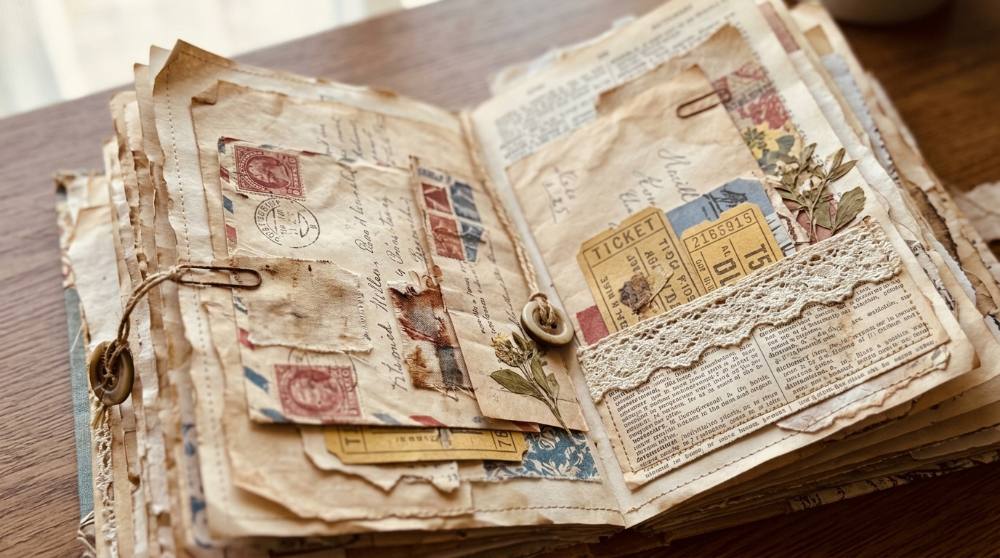
A junk journal is a book built from paper that was never supposed to survive: bus tickets, torn envelopes, the tissue that came wrapped around your last parcel. Crafters call this material ephemera, and layering it into thick, touchable pages has quietly become one of the internet's biggest paper crafts — TikTok alone holds more than 400,000 junk journal posts. The habit is far older than the hashtag, though. Victorians were pasting calling cards and die-cuts into scrapbooks back in the 1880s, and collage artists have been working over discarded books for decades. The modern community even speaks its own language: a paper strip that holds a scrap in place is a 'bellyband,' and a hidden pocket for loose treasures is a 'tuck spot.'

If scrapbooking with its matching paper packs ever made you feel boxed in, this is the opposite craft. Scrapbooking starts with photos and builds a tidy layout around them. Junk journaling starts with whatever's in the pile and lets the pile decide. Nothing has to match, a torn edge counts as texture, and ruining a page costs you the price of junk mail — nothing. Plenty of people take it up precisely because a beautiful blank notebook feels too precious to touch, and this one never does.

Start stingier than feels right: one soft notebook, one glue stick, a pair of scissors, and the junk mail already on your counter will carry you through a month of pages. Everything else can join later, once you know what you reach for.

Every pick below was chosen with a quitter's budget in mind — if junk journaling doesn't take, you're out about the cost of a takeaway pizza, and you'll still own decent scissors.

One honest warning before the kit: this community jokes, with reason, that collecting supplies and actually journaling are two different hobbies, and plenty of people amass gorgeous scrap boxes for months without gluing a single page. Buy small and make one ugly spread this week. If you later find you crave more structure than free-form collage gives you, a beginner bullet journal setup delivers the same pen-and-paper satisfaction with the chaos dialed down.

A Journal, Some Glue, and Scissors: That's Honestly It

Everything below fits in a shoebox with room left for scraps. The journal choice stalls beginners longest, so here's the short version: don't buy anything precious. Junk journal pages fatten fast as glue and layered card go in, and a rigid hardcover spine will eventually strain against it, while a soft cover just bulges amiably and keeps closing. Somewhere down the road you may want to fold and sew your own book from loose signatures — beginner bookbinding tools turn that into a genuinely fun weekend project — but nobody needs an awl on day one.

Set of Blank Kraft Notebooks

Pick 01 of 04

Set of Blank Kraft Notebooks

A set of slim, unlined notebooks with plain kraft covers, sized A5 so a spread stays finishable in one sitting. Soft covers matter in this craft: as glued layers build up, a flexible spine keeps closing where a rigid one would strain. Several thin books also mean you can theme them — one for travel scraps, one for daily junk — or sacrifice the first entirely to experiments.

Why we picked this exact one: The ZZTX 4-pack got the slot because it solves a beginner's real problem — preciousness — for about seven dollars: four identical kraft notebooks mean the first one is allowed to be a mess. Buyers rate the set 4.6 stars, and the plain covers take paint, collage or tea-stained paper without fighting a printed design. The paper is thin, but in a craft where every page gets reinforced with glued layers, that's a fair trade at this price.

See it on Amazon
Permanent Clear Glue Stick Pack

Pick 02 of 04

Permanent Clear Glue Stick Pack

The workhorse adhesive of paper collage: a dry glue stick grabs thin paper without soaking it, so pages don't ripple the way they do under liquid glue. Small sticks are easy to control on fiddly scraps, and one lives happily in a travel pouch. Look for a stick that glides smoothly and dries clear rather than crumbly.

Why we picked this exact one: The UHU Stic is the glue stick junk journalers name when someone asks which brand actually holds, a reputation more than 2,600 Amazon reviewers agree with. Twelve small sticks suit a hobby of short, frequent gluing sessions better than one giant stick drying out in a drawer. Fair warning: the little 0.29 oz size empties fast on full-page backgrounds — save those jobs for a tape runner.

See it on Amazon
Craft Glue Tape for Scrapbooking

Pick 03 of 04

Craft Glue Tape for Scrapbooking

A palm-size dispenser that rolls a dry strip of double-sided adhesive directly onto paper. It bonds on contact, holds heavier card like postcards and pocket pages, and adds zero moisture, so the layer underneath stays flat. It's also the tidiest adhesive to use away from a desk, with nothing to squeeze, drip or cap.

Why we picked this exact one: The Secopad glue tape 4-pack earns its place on track record — it's one of Amazon's best-selling craft adhesives, with over 9,600 ratings. Each cartridge holds 26 feet of tape, so the set will outlast a first journal several times over. The dispensers aren't refillable, which is the trade-off at this price; crafters who burn through a roll a week eventually upgrade to refillable models.

See it on Amazon
precision detail scissors for fussy-cutting ephemera

Pick 04 of 04

precision detail scissors for fussy-cutting ephemera

Short-bladed scissors with fine pointed tips, made for steering around small printed motifs — flowers, faces, postage stamps — in the detailed trimming this community calls fussy cutting. Blades around five inches long give far more control than household scissors and reach into tight interior corners. A non-stick coating is worth seeking out, since in this hobby scissors constantly cut through taped and glued paper.

Why we picked this exact one: The Fiskars No. 5 non-stick micro-tip pair was picked for the blade coating, which matters more than it sounds: uncoated blades gum up with glue and tape residue and start chewing paper instead of cutting it. Fiskars has been the default name in craft scissors for decades, and this model sits at 4.7 stars. It costs a little more than no-name detail scissors — that's the price of blades that stay smooth.

See it on Amazon

That's the entire kit, under forty dollars, and most of it will outlive several journals. The raw material arrives free in your mailbox every week from here on. The genuinely hard part isn't supplies but minutes: ten quiet ones spent smoothing a scrap down with a thumbnail, often enough to matter, and folding those minutes into a simple beginner creative routine does more for the journal than any further purchase would.

Wrinkled Pages, Bulging Spines, and Other Rites of Passage

Where does everyone get their ephemera — do I have to buy those packs?

Buying printed ephemera packs first is the classic false start: the vintage-look sheets seem right, but they make every journal resemble the same store kit, and the spending snowballs. The fix costs nothing — collect for one week before you glue anything. Junk mail, receipts, food packaging and ticket stubs pile up shockingly fast, and thrift stores, little free libraries and free seed catalogs cover the pretty stuff. Save bought embellishments for later, when you know your own style.

Why are my pages wrinkling — should I use a glue stick or matte medium?

Reaching for liquid glue or matte medium as the everyday adhesive is the mistake, because water is what makes thin paper buckle. Once a page dries wavy there's no flattening it, and facing pages can end up stuck together too. Day to day, use dry adhesives: a glue stick for scraps, a tape runner for card and backgrounds. Matte medium still earns a place, just later — brushed on thinly as a sealer over a finished page, with wax paper underneath and the journal left open to dry for a day or two.

How do I tea-stain paper so it looks antique instead of just damp?

The trap is treating staining as a soak-and-bake job: strong tea, oven drying, done. Heat-dried stained paper comes out brittle and crunchy, since tea and coffee are mildly acidic to begin with. Brush or dip lightly instead and let pages air-dry flat — slower, but they stay soft and take glue well. For deeper color, instant coffee mixes stronger and lays down more evenly than leftover drip coffee.

My journal is getting fat and won't close anymore — did I ruin it?

No — you've just met the reason junk journalers avoid rigid hardcovers, whose spines strain and can crack as glued layers stack up. A bulging book is the normal end state of this craft, not a failure. Soft covers flex around the extra thickness, and spiral bindings lie flat no matter how far gone the pages are. When a journal finally refuses to shut, do what the veterans do and tie it closed with twine or an elastic band; the overstuffed look is half the charm.

Love what you see here? Save individual picks with on any item, or copy everything to a list of your own in one click — great for coming back to later, or dropping as a not-so-subtle hint.

Disclosure: Some product links may be affiliate links. If you make a purchase through one of these links, we may earn a small commission at no extra cost to you.