Diorama Building: Whole Scenes Built to Scale

Diorama Building: Whole Scenes Built to Scale

DariaCurated by Daria
Jump to the 10 picks

A Whole Afternoon, Six Inches Across

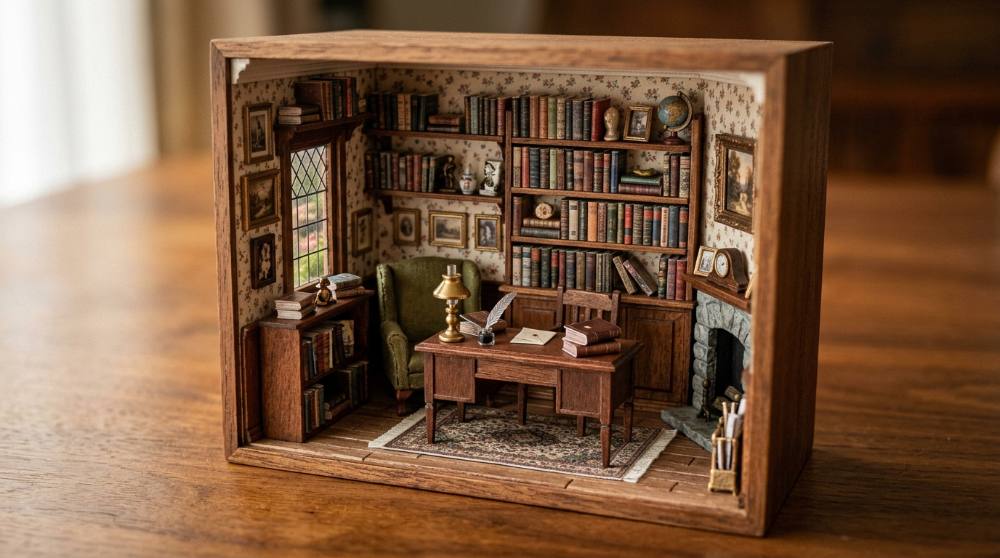
Picture a shoebox-sized patch of the world frozen mid-story: a tram easing down a hillside street, a lavender row ending in a dusty track, a quarry lit from inside at dusk. That's a diorama, and people build them on kitchen tables and at club nights, in scales from thumbnail-sized 1:87 up to chunky 1:35. Here's the odd part. The word didn't start out meaning any of this - Louis Daguerre, the photography pioneer, coined it in 1822 for a Paris theatre where up to 350 people stood on a giant turntable while light shifted behind a translucent painting. Museums borrowed the name later for their habitat cases; the first, a wetland scene built around taxidermy muskrats, opened in Milwaukee in 1889.

The thing nobody warns you about is how much of a diorama is ground. You'll spend one evening on the figures and four on the dirt they stand in, and the dirt is what sells it. A convincing scene is mostly texture - a slope that reads as a slope, grass that isn't one flat green, ruts where wheels actually went. That's why the list below leans so hard toward terrain rather than the models you'd expect to be the point.

Our philosophy here: build small and buy less. A rigid box to work in, something to shape the ground, something to cover it, and a handful of figures will get you a finished scene. Trees, pigments and lights can wait until you've made one.

Nothing below costs enough to hurt if you decide after one Saturday that dioramas aren't your thing.

If you'd rather start with four walls and a ceiling, a beginner dollhouse room box teaches the same skills in a tidier package, while an open scene lets you cheat with distance and sky. Pick a moment you can describe in one sentence before you buy anything. "A delivery van stuck on a farm track" will carry you further than "a village".

The Five Things Your First Scene Needs

Beginners nearly always buy the wrong end of this list first. Figures and vehicles are the fun part, so they come home first, and then there's nowhere to put them. Work the other way round - box, then terrain, then people. Groundwork compound is the bit that surprises everyone: it goes on wet like oatmeal, smells faintly of wet newspaper, and dries into something you can carve, sand and paint.

Disclosure: This section may contain affiliate links to Amazon. We may earn a small commission from qualifying purchases at no extra cost to you.
deep shadow box frame that houses and protects a finished miniature scene

Pick 01 of 10

deep shadow box frame that houses and protects a finished miniature scene

A shadow box is a picture frame built deep enough to hold a three-dimensional scene behind glass. Internal depth matters far more than the frame's face size, because terrain, buildings and trees all stack upward from the base. Look for a hinged or removable front so you can reach inside while building, and a back panel solid enough to take glue and weight.

Why we picked this exact one: The VAULTUSCN 8x10 shadow box earns its place on depth: 4.7 inches of it, which is enough for a hillside rather than a flat tabletop. Its glass door is hinged and latching, so you can work inside the box and then shut it against dust without dismantling anything. It's a display frame rather than a modelling product, so the back panel is thin, and most builders glue a sheet of board or foam onto it before they start.

See it on Amazon
rigid extruded foam sheets for carving diorama hills and slopes

Pick 02 of 10

rigid extruded foam sheets for carving diorama hills and slopes

Extruded polystyrene, sold as pink or blue insulation board, is the standard bulk material for miniature terrain. It carves with a craft knife, sands into smooth slopes and weighs almost nothing, so a tall scene doesn't become a heavy one. The white beaded foam that packaging is made from behaves completely differently, crumbling into static-charged balls, so check the listing actually says extruded or XPS.

Why we picked this exact one: The Hanaive pink XPS sheets come 2 inches thick, which is the dimension that actually matters, since thinner craft foam forces you to laminate layers just to get a modest slope. Four sheets is more than one beginner diorama needs, so expect leftovers, though offcuts turn into rocks and retaining walls soon enough. The surface is slightly chalky out of the wrapper and takes glue better after a quick sand.

See it on Amazon
papier-mache style groundwork compound for shaping diorama terrain

Pick 03 of 10

papier-mache style groundwork compound for shaping diorama terrain

This is a dry powder of shredded paper fibre and binder that you mix with water into a stiff paste. Spread over foam or board it becomes the actual ground surface, taking wheel ruts, footprints and rock texture while it's soft, then setting hard enough to sand. Mix it thicker than feels right, because a wet mix curls at the edges as it dries and can take days to cure.

Why we picked this exact one: AMACO Sculptamold gets recommended over the older Celluclay by modellers who've used both, mostly because it shrinks and cracks less as it dries. It holds an impression well if you let it firm up for a few minutes before rolling a wheel across it. Three pounds of powder covers several small scenes, and it dries porous, so a sealing coat before painting saves a surprising amount of colour.

See it on Amazon
fine ground foam turf for covering diorama groundwork in grass

Pick 04 of 10

fine ground foam turf for covering diorama groundwork in grass

Ground foam turf is dyed, shredded foam in a shaker jar, sprinkled onto wet glue to cover bare groundwork. The fine grade sits flat and reads as short grass or moss at small scales, which is what most of a scene needs. Apply it over diluted white glue and tip the excess onto a tray, where it dries and gets reused.

Why we picked this exact one: Woodland Scenics fine turf in green grass is the shade most first scenes need, and one jar holds far more than a single diorama uses. The colour is deliberately muted rather than vivid, which sounds like a drawback until you set it beside bright craft flock and see which one looks like AstroTurf. A second, darker shade is worth adding later, because blending two is what stops turf looking sprayed on.

See it on Amazon
pre-painted 1:87 scale people for populating a miniature scene

Pick 05 of 10

pre-painted 1:87 scale people for populating a miniature scene

Scale figures are the reference that tells a viewer how big everything else is. At 1:87 an adult stands about 20 mm tall, and buying them pre-painted skips the hardest skill in the hobby, which is painting a face smaller than a grain of rice. Mixed sets of standing and seated poses beat uniform ones, because a scene needs people doing different things.

Why we picked this exact one: Evemodel's 30-piece 1:87 set gives you around thirty different poses, which matters more than the headcount, because repeated figures give themselves away the moment two of them stand near each other. They're factory-painted to a standard that reads well at arm's length and looks rough under a macro lens, and that's the right trade for a first scene. A few arrive with visible mould lines you'll want to trim before gluing.

See it on Amazon

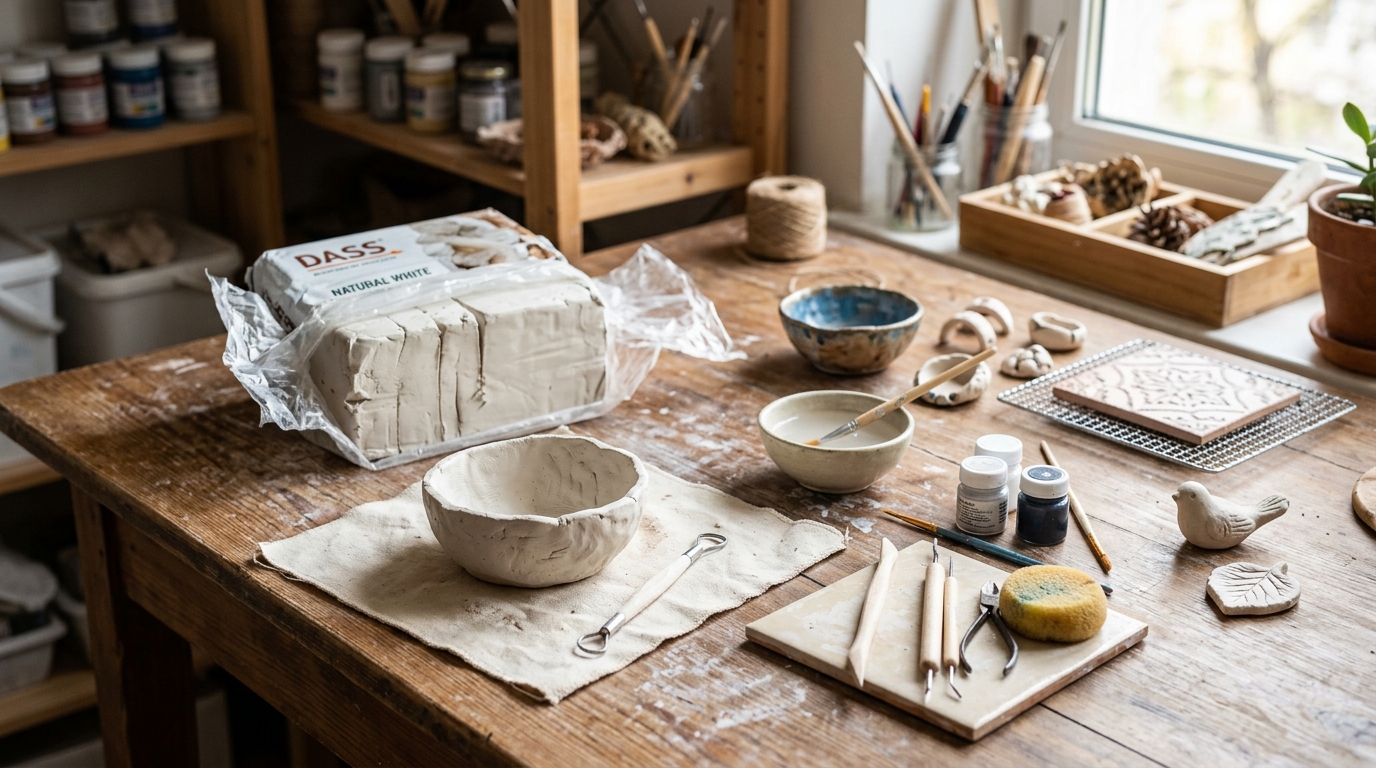
Seal every wooden surface of the base before anything wet touches it, top and bottom and edges alike. Skip that and moisture from the compound will warp the board and crack your dried terrain weeks later, long after you've stopped connecting the two. Once the ground is down and the figures are pressed into it rather than perched on top, the scene already reads. If you'd rather hand-sculpt rocks and walls than buy them ready-made, a beginner air-dry clay setup covers that side of the craft.

Where a Scene Starts Looking Real

Everything here is optional and I'd genuinely wait on most of it. The exception is texture. Groundwork painted one flat brown looks exactly like groundwork painted one flat brown, and no quantity of trees will rescue it, whereas earth texture and a dusting of pigment break that flatness in about ten minutes. Fair warning: weathering pigment behaves like cocoa powder, and the first time you knock a pot over you'll be finding it in your keyboard for a week. If you enjoy working very small, building tiny scenes inside walnut shells is the same instinct pushed to its limit.

ready-mixed textured earth paint for finishing diorama groundwork

Pick 06 of 10

ready-mixed textured earth paint for finishing diorama groundwork

This is acrylic colour with fine grit suspended in it, brushed over dried groundwork so soil gets its colour and its gritty surface in one pass. It's translucent, which means it works as a layer over a darker base rather than as a covering coat. A 200 ml tub goes much further than a small scene needs.

Why we picked this exact one: Vallejo's Diorama FX Brown Earth is the one to reach for first because it was made for this exact job rather than adapted from figure painting. The translucency is a genuine constraint: brush it straight onto white compound and it looks weak, so lay a dark brown base under it. The tub is large enough that you'll still be using it two scenes later.

See it on Amazon
loose weathering pigments for dusting dirt onto scenery and vehicles

Pick 07 of 10

loose weathering pigments for dusting dirt onto scenery and vehicles

Weathering pigments are ultra-fine coloured powders brushed onto a finished surface so they settle into corners the way real dust does. They go on dry and can be pushed around for a long time before you fix them down, which makes them forgiving to learn on. Four earth shades covers most ground and most vehicles.

Why we picked this exact one: Vallejo's Pigment FX Dust and Dirt set carries the four shades a ground scene keeps asking for: dark yellow ochre, burnt umber, natural iron oxide and desert dust. It handles like cocoa powder, so work over a tray, and the first spill will teach you more than the instructions do. Fixing it permanently needs a separate fixer or a matt varnish, and neither is in the box.

See it on Amazon
mixed-height model trees and bushes for filling a miniature landscape

Pick 08 of 10

mixed-height model trees and bushes for filling a miniature landscape

Ready-made model trees are wire-and-foam armatures with foliage already attached, sold in mixed heights so a group doesn't look planted by a machine. Sizes from roughly 4 to 16 cm cover everything from a bush at the front of a scene to a tree that breaks the skyline. They come without bases, so you drill a hole and glue each one where you want it.

Why we picked this exact one: The OrgMemory 29-piece mixed set is the sensible way to find out which sizes your scenes actually use before spending on individual display trees. The foliage runs a flat, slightly toy-ish green and a few trees arrive squashed from packing, both of which a spray of darker green and some patient bending will fix. At this price the casualties don't sting.

See it on Amazon
pre-wired micro LEDs for lighting windows and lamps inside a scene

Pick 09 of 10

pre-wired micro LEDs for lighting windows and lamps inside a scene

Pre-wired micro LEDs arrive already soldered onto fine wire, so a scene can be lit without a soldering iron or any electronics knowledge. Warm white is the shade that reads as interior light; cool white looks like a fridge. The wire is thin enough to thread through a hole drilled in foam and hide under the groundwork.

Why we picked this exact one: The ZZHOB 25-piece pre-wired set includes the holder and connectors, which is what makes it usable straight out of the packet instead of a shopping list of its own. These are 0805 surface-mount LEDs, so they're genuinely tiny, which is ideal in a window and hopeless if you drop one on a carpet. They're wired in parallel, so one supply runs several, and twenty-five is far more than a first scene will light.

See it on Amazon
electrostatic applicator that stands grass fibres upright on groundwork

Pick 10 of 10 · Worth the upgrade

electrostatic applicator that stands grass fibres upright on groundwork

A static grass applicator charges loose grass fibres so they stand on end as they land in wet glue, instead of lying flat like sprinkled foam. The effect depends entirely on the earth clip being pushed into the wet glue to complete the circuit. Fibres in mixed lengths, roughly 3 to 9 mm, give a far more natural field than any single length does.

Why we picked this exact one: The Woodland Scenics Static King is the step up worth taking once you've finished two or three scenes and know that grass is where your work looks weakest; before that, sprinkled turf is honestly fine. It's a mid-priced unit rather than a professional one, and the clear hopper showing how much fibre is left is more useful day to day than it sounds. Two catches: the power supply is sold separately, and these applicators do hand out small shocks, so budget for rubber gloves too.

See it on Amazon

Add one of these at a time and photograph the scene after each. You'll learn more from the comparison than from any tutorial, and you'll notice the cheap wins usually beat the expensive ones. A shadow under a wheel costs nothing. When you want props nobody sells at your scale, like crates sized for a 1:87 loading dock, a beginner polymer clay setup will make them for pennies.

The Traps Nobody Mentions Until You've Fallen In

Why does my scene look empty no matter how much I add to it?

The base is too big for the idea. It's the classic novice error: pick a board first, discover the scene doesn't fill it, then keep buying trees and barrels to make it look busy. The result stays thin because the composition was never tight, and every addition pulls attention further from the thing the scene is about. Decide the moment first, then cut the base to fit it - a cramped diorama almost always reads better than a roomy one, and you can mount a small scene on a wider plinth later if it needs air.

My groundwork cracked days after it dried. What went wrong?

Two causes, and beginners usually manage both at once. An unsealed wooden base drinks the water out of the compound, swells, and then flexes as it dries out again, which splits the hard shell on top of it. A compound mixed too wet does its own damage: the edges curl as they dry, it takes days rather than hours, and a really soggy mix can grow mould before it cures. Varnish the base on both faces first, mix the compound to a stiff dough rather than a batter, and build it up in thin layers.

I bought a static grass applicator and the grass still lies flat. Why?

Almost always the earth connection. The fibres only stand up if the charge has somewhere to go, which means the ground pin has to be pushed down into the wet glue itself, not laid nearby. Run it ungrounded and it half works, which is the confusing part - you get a patchy field and assume the machine is faulty. Push the pin into the glue, work in small patches so nothing dries before you've covered it, and wear rubber gloves, because these units bite.

Everything is the right scale but it still looks like toys. What am I missing?

Uniformity, in two places. Models placed on top of the ground instead of into it have no weight, so press each vehicle and figure down into the compound while it's soft to leave a seat for it. Then look at your materials: one grade of gravel spread everywhere reads as a quarry spoil heap rather than as nature, and a single length of grass in a single green reads as a lawn. Mix two or three grades of stone, and mix grass between roughly 3 and 9 mm in more than one shade.

Can I just use dirt from the garden?

Yes, and it beats bought scatter for particle variation, which is exactly the quality that makes ground look real. The catch is that garden soil arrives with insects, eggs and spores in it, and sealing that under glue inside a closed box is how people end up with something living in a finished diorama. Dry it in a low oven first, sieve it, then fix it down with white glue thinned with a little water. It's free, and it looks better than most things that aren't.

Love what you see here? Save individual picks with on any item, or copy everything to a list of your own in one click — great for coming back to later, or dropping as a not-so-subtle hint.

Disclosure: This section may contain affiliate links to Amazon. We may earn a small commission from qualifying purchases at no extra cost to you.