Beginner Polymer Clay Setup

Beginner Polymer Clay Setup

Daria AparinaCurated by Daria Aparina

What Polymer Clay Is and Why Beginners Love It

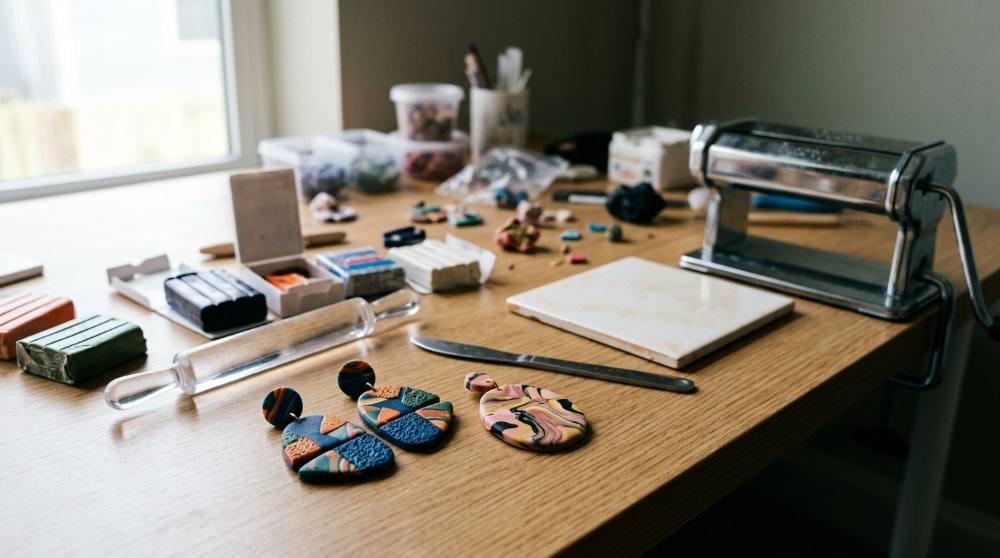
Polymer clay is an oven-bake modeling material made from PVC plastic and plasticizers — it stays soft and workable at room temperature, then hardens permanently when baked in a standard home oven, usually at around 275°F (130°C). I was surprised, when I first started looking into this hobby, by just how little space and setup it actually requires: a small corner of a table, a few basic tools, and an oven is genuinely all you need. Unlike painting with acrylics or watercolors, there is no drying time to manage, no brush-cleaning between steps, and no large surface area needed. You condition the clay by hand or with a roller, shape or sculpt it, bake it for 15–30 minutes, and you have a finished solid object. If you have been exploring other hands-on creative hobbies — like the structured calm of paint-by-numbers kits designed for focused relaxation — polymer clay will feel similarly approachable, with a tactile satisfaction that is hard to replicate with any other medium.

oven-bake polymer clay in 12 assorted colors for modeling and jewelry making

oven-bake polymer clay in 12 assorted colors for modeling and jewelry making

A set of twelve soft, pre-colored blocks of oven-hardening polymer clay, each block weighing 25 grams. The clay conditions easily by hand and blends smoothly, making it well suited to a beginner who wants to experiment with color mixing from day one. When baked at the manufacturer’s recommended temperature, it sets to a firm, matte finish that holds fine detail.

8-inch acrylic roller for smoothing and conditioning polymer clay

8-inch acrylic roller for smoothing and conditioning polymer clay

A smooth, clear acrylic rod used to roll polymer clay into even sheets and slabs of consistent thickness. Unlike wooden or textured rollers, an acrylic roller does not stick to the clay surface and leaves no grain pattern behind. It is lightweight enough to control with one hand and long enough to handle most beginner-scale project sizes.

stainless-steel clay blade set with rigid, wavy, and flexible cutting options

stainless-steel clay blade set with rigid, wavy, and flexible cutting options

A set of three stainless-steel blades in different profiles — a rigid straight blade for clean cuts, a wavy blade for decorative edges, and a flexible blade for curved cuts and lifting clay from a surface. Each blade snaps into a sturdy handle, making them easier and safer to use than bare blades. The three profiles together cover the most common cutting tasks a beginner will encounter.

oven-safe silicone work mat for polymer clay sculpting and baking

oven-safe silicone work mat for polymer clay sculpting and baking

A reusable, non-skid silicone mat sized at approximately 7.75 by 13 inches, designed to serve as both a work surface and a baking tray insert. The non-stick surface prevents clay from bonding to the mat during sculpting, and its oven-safe construction means finished pieces can be placed directly in the oven on the same mat without transferring them. The mat is easy to clean between clay colors.

27-piece polymer clay sculpting tool set with needle, dotting, and carving tools

27-piece polymer clay sculpting tool set with needle, dotting, and carving tools

A 27-piece set of double-ended clay sculpting tools covering the most common detail-work tasks: needle tools for poking holes and scoring seams, dotting tools for round impressions, ball styluses for smoothing curves, and carving tools for removing small amounts of clay. The tools are made from a hard plastic that does not react with polymer clay and are easy to wipe clean between sessions. The range of tip profiles makes this set versatile across jewelry-making, figurine work, and surface decoration.

With these five items, you can complete real finished projects from your very first session. I would suggest starting by conditioning a few colors separately and experimenting with simple blending before committing to any specific shape — that early, low-stakes exploration is where most beginners first realize how enjoyable the material is to work with. The clay-only, minimal-cleanup nature of the process also makes it ideal for anyone who enjoys creative rituals in a small space; if that quality appeals to you, the same satisfying hands-on spirit runs through a cozy candle-making setup, which shares the same focused, apartment-friendly character. Once you have a feel for how the clay responds to the roller and the blade, the sculpting tools will start to feel intuitive far sooner than you might expect.

Tools That Make the Process Easier and More Precise

None of these items are necessary before your first session, but each one resolves a real friction point you will encounter within the first few weeks. A clay conditioning machine removes the most physically demanding part of the process — hand-kneading stiff clay blocks into workable slabs — and produces a uniform sheet far more quickly than a hand roller can. A large set of mini shape cutters gives you clean, repeating outlines for earrings and pendants without the inconsistency of freehand cutting. Texture rollers imprint decorative patterns onto flat clay with a single pass, adding visual depth that would take much longer to build by hand. And a dedicated finishing glaze seals completed pieces to protect the surface and add a professional polish. What struck me during my research is how unanimously experienced clay crafters recommend adding these items once the basics feel comfortable — not because the basics stop working, but because these tools open up a noticeably wider range of designs.

manual clay conditioning machine with adjustable thickness settings for polymer clay

manual clay conditioning machine with adjustable thickness settings for polymer clay

A hand-cranked pasta-style machine with multiple thickness settings, designed to condition and sheet polymer clay quickly and evenly. Feeding clay through the rollers repeatedly conditions it far faster than hand-kneading, especially for stiffer clay formulas. It also produces sheets of precisely controlled thickness, which is useful for any project where consistent depth matters, such as flat earrings or cane slices.

76-piece stainless steel polymer clay cutter set in 67 shapes for earrings and small jewelry

76-piece stainless steel polymer clay cutter set in 67 shapes for earrings and small jewelry

A set of 76 stainless-steel mini cutters in 67 geometric and organic shapes including circles, ovals, leaves, teardrops, and abstract forms, along with a letter stamp and circle size guides. The cutters press cleanly through rolled clay sheets to produce uniform outlines with no tearing or dragging. The stainless steel construction means they do not rust with regular use and hold their edge through repeated use.

set of 8 embossing texture rollers for adding surface patterns to polymer clay

set of 8 embossing texture rollers for adding surface patterns to polymer clay

A set of eight hand-held rollers, each engraved with a different repeating pattern — including geometric grids, floral motifs, and abstract lines — that press into a clay surface as the roller moves across it. Unlike flat texture sheets that require pressing down evenly across a large surface, rollers apply consistent pressure along a single line and work well on both flat slabs and gently curved forms. The patterns produced are crisp and do not require any additional tools to activate.

water-based glossy glaze for sealing and protecting finished polymer clay pieces

water-based glossy glaze for sealing and protecting finished polymer clay pieces

A brush-on, water-based glaze formulated specifically for use on baked polymer clay surfaces. It dries to a clear, high-gloss finish that protects the clay from moisture and light surface scratching. Unlike generic acrylic varnishes or nail polish — which can chemically react with polymer clay and leave a permanently sticky surface — this glaze is designed to be chemically compatible with oven-baked PVC clay.

The conditioning machine is the item I would prioritize in this section — once you start working with stiffer clay formulas or blending large color batches, the difference it makes to your session length is immediate. The glaze is worth adding even before your first finished project is ready: understanding that polymer clay needs a clay-compatible sealant — not a generic craft varnish — is the kind of knowledge that saves a finished piece from being ruined weeks later. If you also enjoy painting as a creative outlet, you will recognize a similar principle at work: applying the right final coat is as important as the making itself, just as it is in the finishing step of a beginner watercolor painting setup, where protecting a completed piece is the last and often most satisfying step.

Love what you see here? Save individual picks with on any item, or copy the whole list to your own wishlist in one click — great for coming back to later, or dropping as a not-so-subtle hint.

A Few More Beginner Setups We Carefully Put Together

Pencil & Graphite Travel Sketching For Beginners

Pencil & Graphite Travel Sketching For Beginners

View Setup
Watercolor Travel Sketching Beginner Essentials

Watercolor Travel Sketching Beginner Essentials

View Setup
Paint by Numbers Relaxation Setup

Paint by Numbers Relaxation Setup

View Setup
Cozy Candle Making Starter Kit

Cozy Candle Making Starter Kit

View Setup
Beginner Watercolor Painting Setup

Beginner Watercolor Painting Setup

View Setup
Disclosure: Some product links may be affiliate links. If you make a purchase through one of these links, we may earn a small commission at no extra cost to you.