A day hike is a walk you finish before dark. A few hours on a marked trail through forest, moorland or mountain, a sandwich somewhere in the middle, and your own car waiting at the end. People do this in famous national parks and on scruffy paths behind the supermarket, and most of it really is just walking with better scenery. What surprises people is how new the whole idea is: walking for pleasure only caught on in Europe in the eighteenth century, and before that a long walk through the hills meant you were either a pilgrim or poor. The usual candidate for the first recreational hike is the poet Petrarch, who said he climbed Mont Ventoux in April 1336 just to look at the view, though historians still argue he may have invented the trip.
The gap between a good first hike and a miserable one is almost never fitness. It's feet, water, and the jacket you left in the car. I've watched genuinely fit people turn back at the two-mile mark with raw heels, and I've watched unfit people amble happily for five hours because their shoes fitted and they'd packed a snack. Gear won't make you stronger. It just removes the reasons to quit early, which is roughly the same argument we make in our guide to picking a first hobby without wasting money.
So here's where we stand: buy as little as you can get away with. Shoes that fit, socks that aren't cotton, something to carry water in, and a jacket that keeps rain out. That's a day hike. Everything further down this page is a comfort or a safety margin, not a requirement.
Nothing here is expensive enough to sting if you decide after two walks that you'd rather stay indoors with one of the quieter hobbies for adults, apart from the shoes, and the shoes are the one place the money actually goes somewhere.
Where This Little Kit Can Take You
A few real moments and results from this hobby — made with tools no fancier than the ones below.
Peaks ahead, afternoon to spareThe track does all the navigating for you until the treeline runs out.
Lug soles, three hikes inThe mud packed into the tread is the part no catalogue photograph ever shows.
None of this needs a plan beyond picking somewhere with a car park and a marked loop. Start shorter than you think you should; the walk back is always longer than the walk out.
Feet First, Then Everything Else
Five things, and three of them go on your body. The usual beginner mistake is to spend the whole budget on tall waterproof boots and then carry water in a supermarket bottle with no jacket at all, which is exactly backwards. Boots are the most visible purchase, so they feel like the important one. What actually decides whether you enjoy the afternoon is whether your heels stay intact and whether you're warm when the wind picks up on the top. The pack matters less than people fear, too: if you've ever worked out what genuinely fits in a daypack, you already know twenty litres swallows more than it looks like it should.
Disclosure: This section may contain affiliate links to Amazon. We may earn a small commission from qualifying purchases at no extra cost to you.
01Pick 01 of 09
Low-Cut Hiking Shoes
Low-cut hiking shoes sit below the ankle and trade the height of a boot for less weight on your feet. The sole carries deep lugs that bite into loose dirt and wet rock, and a stiffer midsole than a trainer so sharp stones don't bruise through. Go by fit above every other spec: room in front of your longest toe for the downhill, and a heel that doesn't lift when you walk uphill.
Why we picked this exact one: The Merrell Moab 3 is the shoe most people get handed when they ask for a first pair, and a 4.6-star average across more than 15,000 ratings suggests the advice holds up. This is the vented version rather than the waterproof one, which is deliberate: a mesh upper drains and dries after a wet crossing instead of holding the water in. The suede scuffs, and it's no help at all in snow.
Hiking socks are knitted from merino wool or a wool-synthetic blend rather than cotton, with extra cushioning under the heel and the ball of the foot. The wool moves sweat away from your skin and holds some warmth even when it's damp. Look for a seamless toe and a snug fit through the arch, because a sock that wrinkles inside the shoe is a blister waiting to happen.
Why we picked this exact one: The Darn Tough Hiker Midweight Micro Crew is the pair hikers keep naming when somebody asks what to put on their feet, and it carries an unconditional lifetime guarantee, so a worn-through sock gets replaced. More than 12,000 ratings average 4.7 stars. One pair costs roughly what a multipack of cheap socks does, so most people buy a single pair and see whether they notice the difference.
A day hiking pack holds somewhere between 18 and 25 litres, which is enough for water, a jacket, food and a small first-aid kit and not much more. Side pockets that take a bottle without removing the pack are the feature you'll use most. A ventilated back panel matters more than you'd expect, because the sweat patch between pack and spine is the first thing you feel when you stop in the wind.
Why we picked this exact one: The SKYSPER 20L daypack is the budget end of this done properly: 20 litres at 1.1 pounds, bottle pockets on both sides and fixtures for trekking poles, with over 6,000 ratings at 4.6 stars. It has a chest strap but no hip belt, which sounds like a gap and mostly isn't, since a hip belt only starts earning its keep past about fifteen pounds. Go heavier later if winter layers push you there.
A rigid one-litre bottle is the simplest way to carry water on a day hike. The wide mouth lets you fill from a tap or a spout without a funnel, drop in ice, and scrub the inside properly once it starts to smell. Graduation marks up the side are more useful than they look, because they tell you at a glance how much you've got left.
Why we picked this exact one: The Nalgene Tritan wide-mouth 32 oz bottle has been the default trail bottle for decades, and its 4.8-star average over 12,000-plus ratings is about what you'd expect from something this hard to break. The opening is wide enough to scrub by hand. It's heavier than a disposable bottle and it does clunk about inside a pack, which is the trade for not crushing when you sit on it.
A rain shell is a thin waterproof layer with taped seams and a hood, cut to pack down small enough that you carry it on days you don't expect to need it. The point is as much about blocking wind as rain, since wind is what actually strips the heat off you on an exposed ridge. Look for pit zips or a mesh lining, because a fully sealed jacket will sweat you out on a climb.
Why we picked this exact one: The Columbia Watertight II is the jacket that turns up on every budget rain-shell list, with 3,350 ratings at 4.7 stars and a price that won't hurt when it eventually wets out. The seams are taped and it packs into its own pocket. It isn't especially breathable, so on a steep climb in the rain you'll end up damp either way, just warm instead of cold.
With these five you can walk a marked five-mile loop in changeable weather and be fine, which is genuinely all a first hike needs to be. Expect the shoes to feel stiff for the first couple of outings and expect to drink more than you planned. Once the walking itself stops taking all your attention, a lot of people start carrying something to notice things with, which is how keeping a nature journal tends to creep in sideways.
The Things You'll Want by Hike Four
Nothing in this section is needed for a flat five-kilometre loop, and I'd resist buying any of it before you've done three or four walks and noticed what actually annoys you. Buy to a complaint, not to a list. If your knees ache for two days afterwards, that points at poles. If you keep rationing water, that points at the reservoir or the filter. And if you find yourself lingering at the top until the light goes, a headlamp turns that from a problem into the best part of the day, somewhere between a first stargazing kit and an excuse to stay out late.
06Pick 06 of 09
Adjustable Aluminum Trekking Poles
Trekking poles are a pair of adjustable shafts with wrist straps and swappable tips, collapsing short enough to strap to a daypack. They let your arms take a share of the work on descents and give you two extra points of contact on loose scree or a stream crossing. Most beginners set them so the forearm sits level with the ground on flat trail, then shorten them going up.
Why we picked this exact one: The Cascade Mountain Tech aluminium poles are the pair that keeps surfacing in beginner recommendations, at 4.6 stars across more than 5,000 ratings for roughly the price of a nice lunch for two. They collapse to fit a daypack and arrive with rubber tips, mud baskets and snow baskets in the box. Aluminium is heavier than carbon, which is the trade you make for the price.
A headlamp straps to your forehead and leaves both hands free, which matters when you're picking down rocks or digging through a pack in the dark. Output is quoted in lumens, and a few hundred is plenty for walking a marked trail. Check whether it runs on replaceable batteries or a built-in cell before you buy, because that decides how you rescue a dead lamp.
Why we picked this exact one: The Black Diamond Spot 400 is the usual answer here, with 400 lumens and a dimmer, rated 4.6 stars across nearly 1,300 reviews. It runs on AAA cells rather than a sealed battery, so a dead lamp is fixed with spares from a pocket instead of a cable and a wall socket. The headband soaks up sweat and wants washing every so often.
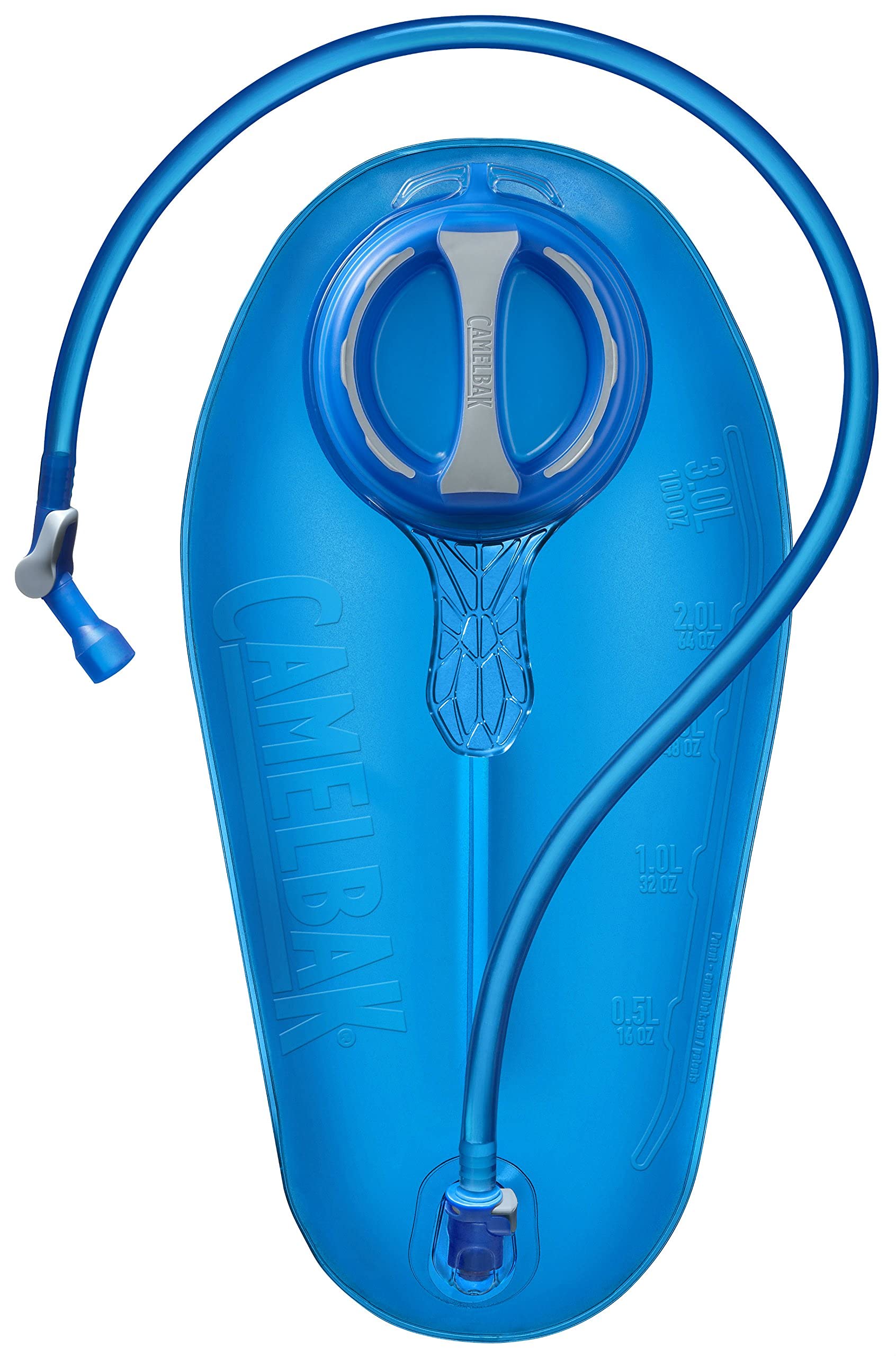
A hydration reservoir is a flexible bladder that lies flat against your back inside the pack, with a hose clipped to one shoulder strap. You drink without stopping or taking the pack off, which usually means you drink more. The trade is that filling it and drying it out properly takes real effort next to rinsing a bottle.
Why we picked this exact one: The CamelBak Crux reservoir holds three litres and sits at 4.6 stars across more than 9,000 ratings, with a screw cap wide enough that you can actually dry the inside. Bottle people have a fair case against it, though: you can't see how much is left without unpacking, and a refill means pulling the bladder out of a loaded pack. Try one on a route where you already know the water stops.
A squeeze filter is a small hollow-fibre cartridge you screw onto a pouch or a bottle and press water through by hand. It strains out bacteria and protozoa, which covers what's usually living in temperate mountain water. It does nothing about viruses or chemical pollution, so it belongs on hill streams rather than downstream of farmland.
Why we picked this exact one: The Sawyer Mini is small enough to forget about in a hip pocket and has gathered over 41,000 ratings at 4.7 stars, which is about as much field testing as a piece of gear can accumulate. It threads straight onto the squeeze pouch in the box or onto a standard bottle. Flow slows noticeably as it clogs, and backflushing it with the included syringe is the chore everyone puts off.
Pick one of these at a time and give it a few outings before adding the next, or you'll end up carrying four solutions to problems you don't have. The pleasant side effect of a pack with room in it is that other things start going in: a pair of binoculars, once working out which bird that was gets its hooks into you. A phone already lives in your pocket anyway, and the light on a ridge at the end of the afternoon is better than anything you'll get at home, which is reason enough to read up on getting sharper photos out of a phone camera.
Ten Essentials, Minus the Scout-Manual Voice
In the 1930s a Seattle climbing club called The Mountaineers wrote down a list of ten things to carry into the hills, and the list is still going. It has been rewritten since, and the rewrite is the part worth knowing: these are ten systems, not ten objects. Navigation, light, sun protection, first aid, a knife or repair kit, fire, shelter, spare food, spare water, spare clothes. A phone with downloaded maps covers navigation. Your rain shell is the shelter. An energy bar that's lived in the pack lid since August is the spare food. Framed that way it stops being a shopping list and becomes a checklist you can run in your head at the car, the same ten headings that make a first car-camping setup feel less daunting than it looks.
Here's where hikers genuinely disagree, and it's worth hearing both sides rather than being sold one. The traditionalist position is that the whole list goes in the pack every time, because the thing that kills day hikers is the unplanned night out, and an unplanned night out is exactly what the list is designed for. The lightweight camp, which has won most of the arguments over the last thirty years, says a two-hour loop within sight of a road doesn't need a fire kit and a bivy, and that treating every walk like an expedition just puts people off. Both camps are made of people who hike a great deal. The sensible reading is that the list scales with how far you are from help: a popular trail with phone signal needs water, a layer and a light, while a quiet ridge two hours from the nearest road earns the full ten.
One habit worth more than any item on the list: tell somebody where you're going and when you expect to be back. It costs nothing, and it's the only thing on this page that works after you've already got into trouble. Much the same discipline applies to any solo outdoor hobby where you wander off alone for an afternoon, from a first fishing setup onwards.
The Questions People Ask After Their First Blister
Do I actually need boots, or will my trainers do?
Beginners buy boots because they've been told boots support your ankles, and that belief is much shakier than it sounds. The lab work does show a high cuff restricts how far an ankle can roll, but the studies that followed real people in real training found no meaningful difference in sprain rates between high-tops and low-tops, and at least one found fewer sprains in the low-tops. What boots genuinely buy you is impact protection when your ankle bone meets a boulder, plus warmth. For a marked summer trail, a comfortable pair of trainers or trail shoes is a perfectly respectable answer, and the weight you save sits on your feet where it counts most.
Why did my waterproof boots end up full of water?
Because the water didn't come through the boot, it came in over the top. In sustained rain it runs down your trousers and your calves and drips straight into the cuff, and a sealed boot then holds it there for the rest of the day. People assume waterproof means dry feet and so buy the waterproof version by reflex, usually paying more and getting a hotter, slower-drying shoe. Unless you walk in genuine bog or cold wet snow, a ventilated shoe that dries out as you keep moving is the easier life.
How far is too far for a first hike?
Most people plan by distance and get ambushed by the climbing. The old rule hillwalkers still use is Naismith's: allow an hour for every three miles, or five kilometres, and add another hour for every two thousand feet of ascent. That rule was written for a fit walker in decent conditions, so a beginner should treat it as a floor and add a generous margin on top. Plan in hours rather than miles, work out what time the light goes, and pick a loop you'd still be comfortable finishing if everything took half again as long.
Everyone says 'the ten essentials' - isn't that overkill for a two-hour loop?
Often, yes, and pretending otherwise is how beginners end up ignoring the whole idea. The trap is reading it as ten objects you must own rather than ten questions you should be able to answer, which is how the list was rewritten decades ago. The consequence of skipping it entirely is narrow but real: the hike that quietly turns into a night out, usually because somebody rolled an ankle at the far end of the loop. Scale it to the trail. Water, a layer and a light cover a busy path near a road; the full ten belong on anything remote or unfamiliar.
Why was I colder in April than I ever was in January?
Because spring and autumn are the seasons that catch people out, not winter - search and rescue teams say so repeatedly. In January you dress for January. In April you leave the house in a t-shirt because the car park was sunny, then meet wind and drizzle four hundred metres higher up, wearing summer-weight clothes that are now wet. Damp mild conditions strip heat faster than dry cold does. The fix is boring and works: the shell goes in the pack on every walk between March and November, whatever the forecast said.
People Worth Following Into This Hobby
Real practitioners we found while researching this setup — people who do the work, show their process, and publish on sites they run themselves. No sponsorships, no affiliations; we just think they're worth your time.
Has walked tens of thousands of miles on six continents and writes up the practical side - blisters, hydration, first-aid kits, foot care - from his own trips rather than from a gear cupboard.
This setup tells beginners that fit and sock choice decide whether a first hike ends early; his health and safety pages take that same ground much further, with a dedicated blisters write-up and a day-hike list to aim at once the first loop is done.
Runs online hiking and backpacking programmes for women and writes long, revised beginner guides, opening the gear list with the story of a trip where the safety items mattered.
Our ten essentials section argues the list should scale with how far you are from help; her Hiking 101 gear list walks a complete beginner through the same ten headings with a printable checklist, which is the natural next click.
Answers reader questions about hiking gear and technique one at a time, with filmed demonstrations such as the lacing method she uses to stop her heels lifting.
The FAQ here explains why heel lift turns into a blister but stops short of showing the fix; her lacing video and sock-liner notes are exactly the practical follow-up a reader needs after a first painful walk.
Works as an independent hiking guide with NOLS wilderness medicine training and publishes detailed trail guides and beginner walk-throughs instead of guiding in person.
A reader who finishes this page wanting a specific trail rather than a shopping list lands well here: his beginner guide covers picking the right hike, the trailhead and what to do when you lose the path, which this setup deliberately leaves alone.
Love what you see here? Save individual picks with on any item, or copy everything to a list of your own in one click — great for coming back to later, or dropping as a not-so-subtle hint.