Slow Down and Really See: Nature Journaling for Beginners

Slow Down and Really See: Nature Journaling for Beginners

DariaCurated by Daria
Jump to the 12 picks

You'll Never Walk Past a Weed Again

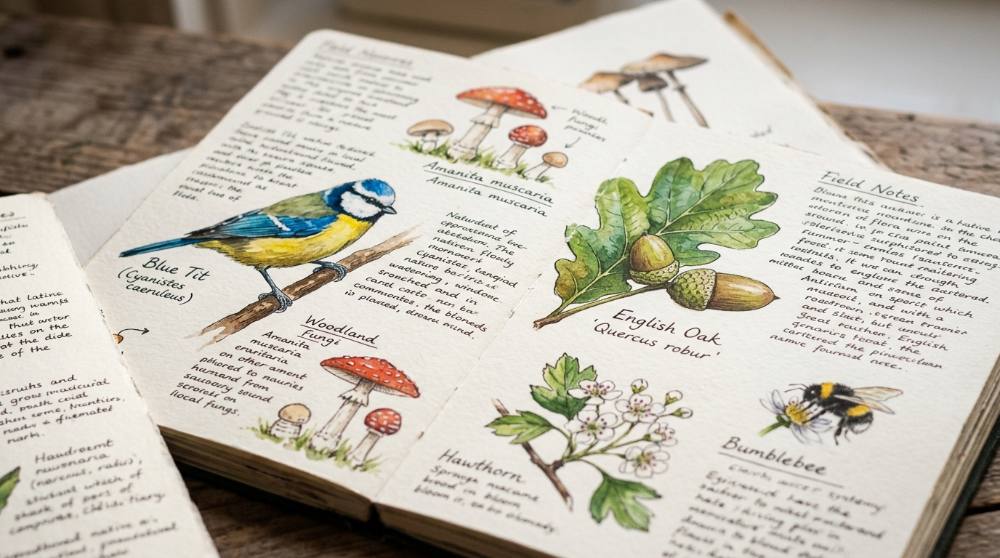
Nature journaling is words, pictures and numbers on the same page. You draw the leaf, note the date and the weather, then write down the question you couldn't answer. People do this on porches and at the edge of a car park with a puddle worth watching. Its lineage runs through naturalists' notebooks — and one famous name in that line is a genuine surprise: before Peter Rabbit, Beatrix Potter spent most of her energy on natural history, especially fungi, and many of her scientific drawings survive. There's a global journaling week each June.

The thing that surprises people first is how much of it is writing. You'll spend twenty minutes on a seed head and half the page ends up as sentences: what the light was doing, how many seeds you counted, whether the stem smelled of anything. The prompt beginners get taught is three phrases — I notice, I wonder, it reminds me of. That's the whole method. Everything below exists to serve it.

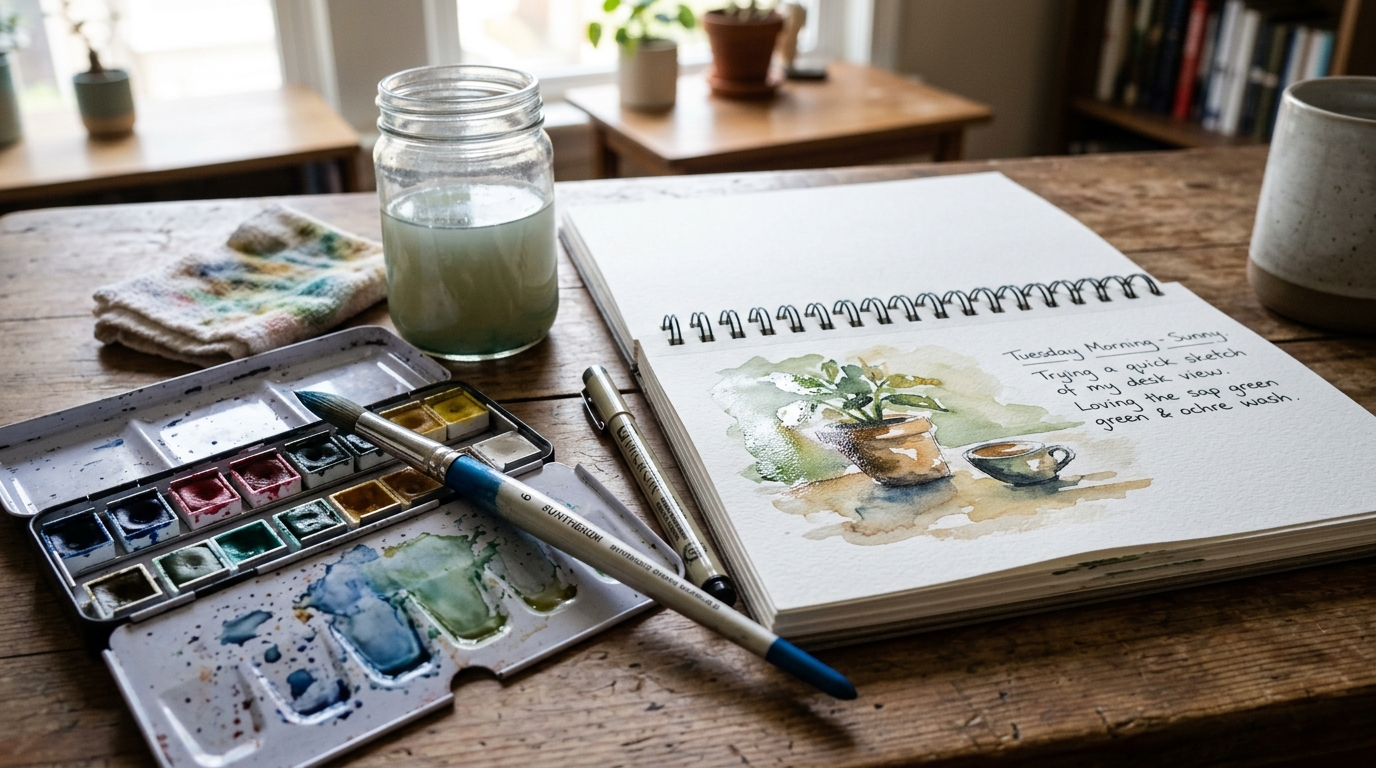
Our position on gear: buy for one session, not for the hobby you hope to have in a year. Paper that survives a wash, a pencil and a waterproof pen will carry your first dozen pages. Add a brush with water in the handle and a pocket set of paints. That's a nature journal kit. If it's the drawing that worries you rather than the shopping, the groundwork in a beginner pencil sketching setup transfers over unchanged.

Nothing here costs enough to sting if the journal ends up in a drawer by August.

Premium Hardcover Mixed Media JournalPremium Hardcover Mixed Media Journal

Pick 01 of 12

Premium Hardcover Mixed Media Journal

A hardbound journal with paper heavy enough to take ink, pencil and a light watercolour wash without buckling or bleeding through to the back. Mixed-media paper sits between drawing paper and true watercolour paper, which makes it the practical choice when one page has to hold both handwriting and paint. Look for a stiff cover you can lean on and a size that fits the bag you actually carry.

Why we picked this exact one: The Strathmore 500 Series hardcover mixed media journal is the pick here, and Strathmore is one of the names journalers give when someone asks which mixed-media paper to buy. Its 90 lb vellum-surface sheets take a wash without any stretching or taping, and the hard cover means you can draw with the book balanced on one knee. Sixty-four pages is thinner than a fat sketchbook, which some people find a relief and others find stingy.

See it on Amazon
Professional Graphite Drawing Pencil SetProfessional Graphite Drawing Pencil Set

Pick 02 of 12

Professional Graphite Drawing Pencil Set

A range of graphite grades in one flat tin, from harder leads that hold a crisp outline to soft ones that lay down shadow in a couple of strokes. Outdoors the range is the useful part: you rough a shape with something soft, then tighten the details with something harder. A tin that includes an eraser and sharpener saves you hunting through the bottom of a bag for loose bits.

Why we picked this exact one: We went with the Faber-Castell Pitt Graphite Matte tin of eight, which runs HB through 14B and packs a sharpener, eraser and blending stump into a flat metal case. Faber-Castell has a long reputation in graphite, and the matte finish cuts the shine that makes soft pencil hard to read on a page in daylight. Eight grades is more than most journalers use, so expect to live in two of them.

See it on Amazon
Precision Fineliner Pen SetPrecision Fineliner Pen Set

Pick 03 of 12

Precision Fineliner Pen Set

Pigment-ink fine-liners in a range of nib widths, built so the line stays put when water passes over it. In a nature journal they do double duty: the drawn line and the handwritten note beside it. Check that the ink is described as pigment or archival rather than dye, because dye ink lifts and goes grey the moment a wash touches it.

Why we picked this exact one: The Sakura Pigma Micron six-pack is the one to get, and Microns are the pens you will see in most nature-journaling kits. The set spans several nib sizes, so small field notes and a heavier contour line both come out of the same pouch, and the ink genuinely holds under a wash. The caps are slim and easy to lose in leaf litter, so keep them together.

See it on Amazon
Portable Watercolor Paint SetPortable Watercolor Paint Set

Pick 04 of 12

Portable Watercolor Paint Set

A small hinged box of dry half-pans with a lid that folds out as a mixing palette. Dry pans suit fieldwork because there is nothing to squeeze, nothing that dries out between trips, and the box shuts on wet paint without much drama. Twelve colours is plenty, since most of what you see outdoors gets mixed from a handful of them.

Why we picked this exact one: The Winsor & Newton Cotman Sketchers' Pocket Set is the obvious starting point, and it is the set journalers name most often for beginners. Cotman is the student line beneath a professional range, so the pigments behave predictably without professional pricing, and the small brush in the lid is enough to begin with. The mixing area is genuinely small, so you will be wiping and reusing it several times a page.

See it on Amazon
Versatile Water Brush PenVersatile Water Brush Pen

Pick 05 of 12

Versatile Water Brush Pen

A brush with a squeezable barrel that stores water, so a gentle press feeds the bristles while you paint. It takes the water jar out of your kit, which is the most awkward object to carry and the easiest to knock into the grass. Fill it at the tap before leaving and squeeze a drop onto a tissue to clean between colours.

Why we picked this exact one: The Pentel Aquash waterbrush in medium is the standard answer, and it is the specific brush journalers hand beginners for about the price of a sandwich. It holds enough water for a page or two, and the nylon tip keeps a usable point instead of splaying after a few sessions. It is a poor tool for large flat washes, so think of it as a small-area brush.

See it on Amazon

With those five things you can sit down almost anywhere and fill a page. One warning worth having early: watercolour needs to be properly dry before the book shuts, or the damp page kisses its neighbour and leaves a ghost of itself behind. Give it a minute. If the painting side is what pulls you in, beginner watercolour journaling goes deeper on colour than this page does.

The Small Stuff That Stops Your Page Blowing Shut

Almost everything that wrecks an outdoor journaling session is logistical rather than artistic. Wind flips the page mid-sentence. Your paints are at the bottom of a bag under a jumper, and by the time you've dug them out the bird has gone. These four cheap things take the friction out, and if you're working out how to carry it all, the thinking in a travel art kit that fits in a bag applies directly. I'd buy the clips before anything else here.

watercolour pencils in botanical greens and earth toneswatercolour pencils in botanical greens and earth tones

Pick 06 of 12

watercolour pencils in botanical greens and earth tones

Coloured pencils with water-soluble pigment, so a line goes down dry and then softens under a wet brush. They give you colour without opening a paint box, which is why they travel well and get used on days when setting up feels like too much effort. A set weighted towards greens, browns and muted flower colours goes further outdoors than a rainbow assortment.

Why we picked this exact one: The Castle Art Supplies Botanical set of 24 wins here because the palette is chosen for plants rather than for a colour wheel, so you get several usable greens instead of one. The tin is slim enough to slide in beside a journal. At this price the cores are softer and chalkier than artist-grade pencils, which shows if you press hard on damp paper.

See it on Amazon
small metal hinge clips to hold journal pages flat in windsmall metal hinge clips to hold journal pages flat in wind

Pick 07 of 12

small metal hinge clips to hold journal pages flat in wind

Small spring-hinge clips that grip the edge of a page block and hold it down. Two on the outer edge is the usual arrangement, one near the top and one near the bottom, and they also stop a facing page flopping over while paint dries. Small ones are enough here, since anything bigger just gets in the way of your hand.

Why we picked this exact one: These Orcielo 0.87-inch bulldog clips are the right size for a journal edge, big enough to hold the block and small enough to keep your drawing hand clear. Thirty in a pack is far more than anyone needs, which is fine, because clips are exactly the item that disappears into undergrowth. The black finish scuffs quickly, though a scuffed clip works identically.

See it on Amazon
low-tack paper tape for fixing pressed leaves and found scraps into a journallow-tack paper tape for fixing pressed leaves and found scraps into a journal

Pick 08 of 12

low-tack paper tape for fixing pressed leaves and found scraps into a journal

Thin paper tape with a light adhesive that sticks to a page and peels away again without tearing it. In a nature journal the use is mostly structural: a strip along one edge holds a pressed leaf so the specimen stays put but can still be lifted and looked at from behind. Muted colours sit better next to pencil and watercolour than novelty patterns do.

Why we picked this exact one: The Mr. Pen earthy-tones set of ten rolls suits the job because the colours are muted browns and greens rather than prints. Ten rolls is a sensible number for one journal, and Mr. Pen is a dependable low-cost stationery line. The adhesive is deliberately light, which is what a pressed leaf wants, but it will not hold anything with real weight.

See it on Amazon
canvas roll-up wrap for carrying pencils, pens and a small brushcanvas roll-up wrap for carrying pencils, pens and a small brush

Pick 09 of 12

canvas roll-up wrap for carrying pencils, pens and a small brush

A fabric wrap with rows of sewn slots that rolls closed and ties, holding each pencil separately instead of letting everything rattle loose in one pocket. Slots keep points from snapping against each other, which is what happens in a zipped case. Check the slot width, because thicker watercolour pencils and brush barrels will not fit a wrap cut for standard graphite.

Why we picked this exact one: This Maydahui canvas roll is the pick at the price, and the printed leaf pattern happens to suit where it will be used. Canvas rolls beat hard cases for a journaling kit because they flex around whatever you put in them and pack flat. The 72-slot version is longer than most journalers need, so expect empty rows, or give them to a waterbrush and a folded cloth.

See it on Amazon

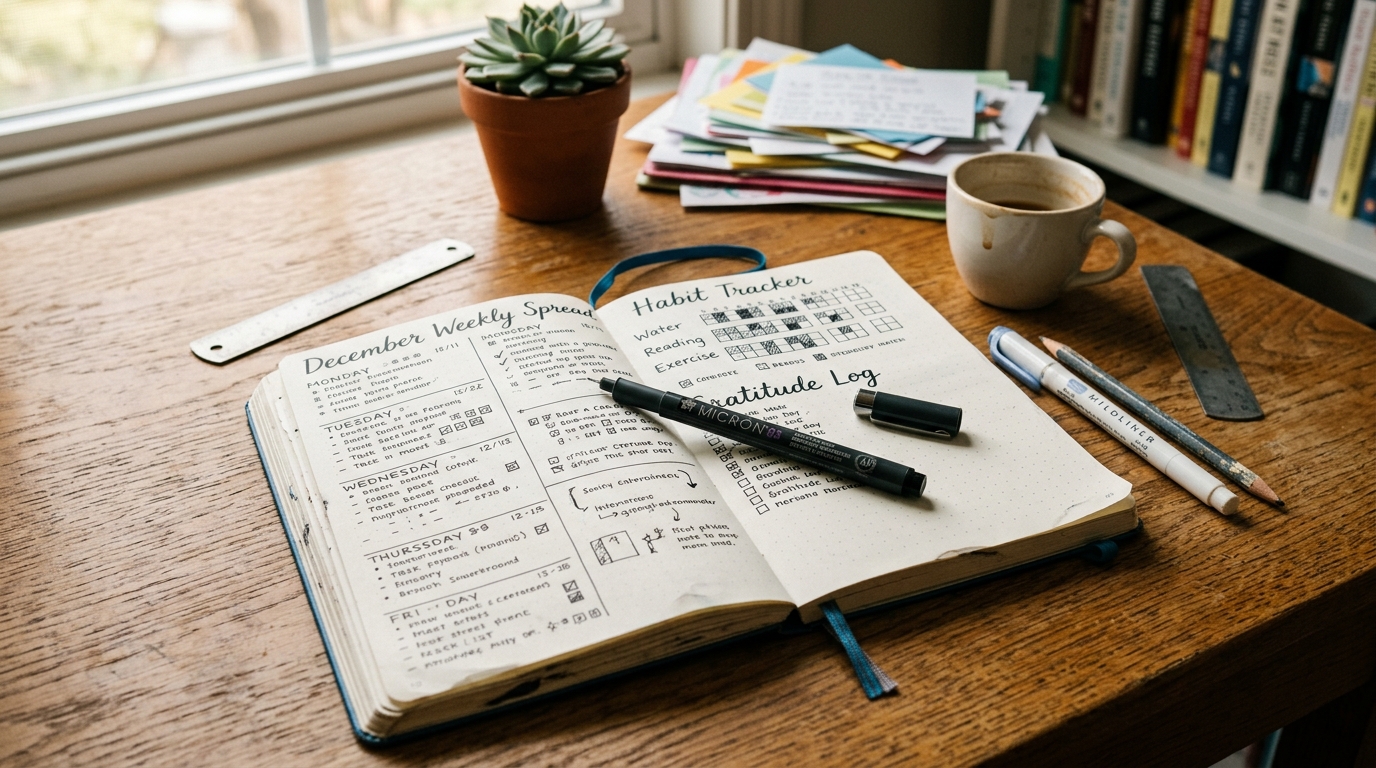
None of this makes your drawings better, which is exactly why it's easy to skip and easy to regret. Buy the boring things. Beginners spend on more colours and then have nothing to hold the page still or keep a pressed leaf attached. If you'd rather log than paint, the structure in a beginner bullet journal setup is worth borrowing — plenty of nature journalers write far more than they draw.

For the Rabbit Hole You're About to Fall Down

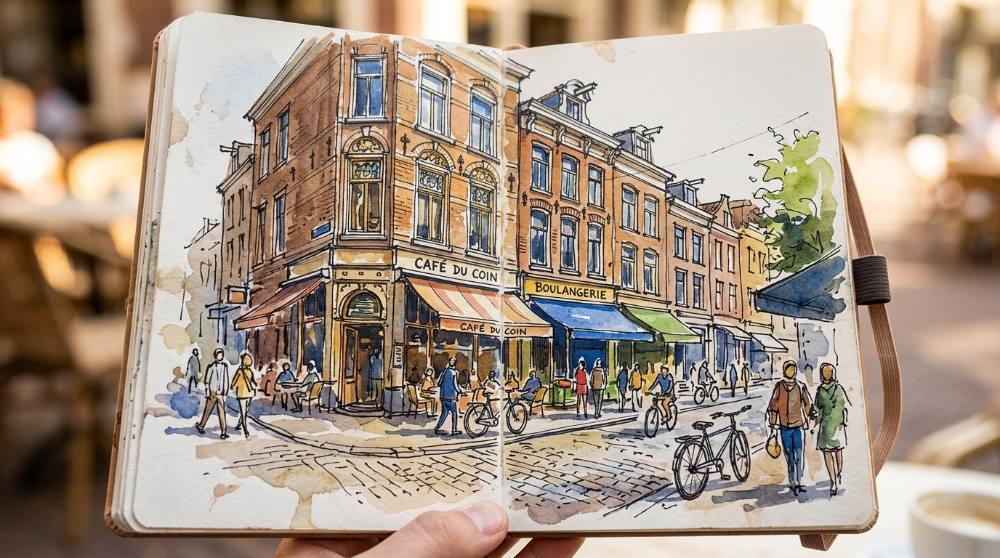
At some point one thing takes over. It's usually a moss, a lichen, or the bird that yells from the same branch at six in the morning, and suddenly recording that it was there isn't enough — you want to see it properly. These three tools each open one door. Urban sketchers hit the same wall from the opposite side, so if buildings and street corners pull harder than hedgerows, beginner urban sketching covers that kit instead. Buy the one that matches what you keep drawing, not all three.

10x folding hand lens for examining moss, lichen and flower parts10x folding hand lens for examining moss, lichen and flower parts

Pick 10 of 12

10x folding hand lens for examining moss, lichen and flower parts

A small folding magnifier built around a triplet lens, meaning three glass elements corrected so the edge of the view stays sharp and colours do not fringe. Ten times magnification is the field standard: enough to resolve the parts of a flower or the structure of a moss, and still steady handheld. Hold it close to your eye and bring the specimen up to the lens, not the other way round.

Why we picked this exact one: The DANOPLUS 10x triplet loupe is a reasonable buy at this level, and its 20.5 mm lens gives a slightly wider view than the smallest jeweller's loupes do. The folding metal body protects the glass in a pocket, which is where this will live. It is sold for gem and coin work rather than fieldwork, so the listing talks about carat weight, but the tool is the same one botanists carry.

See it on Amazon
8x42 binoculars for watching and sketching birds at a distance8x42 binoculars for watching and sketching birds at a distance

Pick 11 of 12

8x42 binoculars for watching and sketching birds at a distance

Roof-prism binoculars at eight times magnification with 42 mm objective lenses, the combination birders settle on because it balances a steady image against enough light for early morning. Higher magnification sounds better but amplifies hand shake and narrows the field, which makes finding a moving bird harder rather than easier. Check how close they focus, since a lot of journaling happens at the hedge in front of you.

Why we picked this exact one: The Gosky 8x42 roof-prism pair is the sensible middle, well rated across thousands of buyers at a price that does not compete with your paint budget. BAK4 prisms and fully multi-coated glass are the specifications worth having at this level and they give a bright enough image at dawn. At 8x42 they are a real weight on your neck all day, which is precisely why journalers say to skip binoculars unless birds are genuinely your thing.

See it on Amazon
six-inch metal pocket rule for recording the size of what you drawsix-inch metal pocket rule for recording the size of what you draw

Pick 12 of 12

six-inch metal pocket rule for recording the size of what you draw

A thin steel rule with a pocket clip, marked in both inches and millimetres. In a journal it does one job well: it gives you a real measurement to write beside the drawing, so a leaf recorded at 40 mm stays 40 mm however large you happened to draw it. Metal is worth the difference over plastic because it stays straight and survives being sat on.

Why we picked this exact one: The Johnson Level & Tool 7203 pocket rule is the one to grab: six inches of stainless steel with a clip, for less than a takeaway coffee. The dual inch and metric scales matter, because the plant and animal descriptions you will read later are almost always metric. It is a machinist's tool, so the etched markings are precise and also harder to read in low light than a printed ruler.

See it on Amazon

None of these replaces sitting still, which is the actual skill. Magnification especially is a trap for your attention: you'll lose forty minutes to the underside of one leaf and come home with a single drawing, and honestly that's a good afternoon. Don't mistake gear for progress.

Why Your First Few Pages Feel Like a Waste of Good Paper

My fine-liner started skipping after three trips out. Did I get a dud?

Probably not, and the paper is the likelier culprit. Watercolour paper has a rough tooth that wears down felt and fibre nibs far faster than smooth sketch paper, and journalers who work on it regularly find their pens drying out early. That is a large part of why mixed-media paper became the usual compromise: it takes a light wash and still leaves a nib alive. If you fall for a very toothy surface, keep a cheap pen for those pages and save the good one for smoother paper.

Do I have to identify everything I draw?

No, and trying to is one of the fastest ways to stall. Beginners often feel a page isn't legitimate without a species name, so they stand there scrolling on a phone instead of looking at the plant. Experienced journalers invert it: observe, draw, write down what puzzled you, and sort the name out afterwards, where free apps like Merlin for birdsong or Seek for almost anything else do the work from your sofa. A page that reads some kind of sedge, waist high, smelled green is a real record.

My bird sketches never look like the bird. What am I getting wrong?

You're drawing outlines at something that refuses to hold one. A careful contour is a losing bet on a moving subject, and the standard answer is gesture sketching: a few seconds, two or three lines for the angle of the body and the tilt of the head, then let it go. Six rough attempts teach you more than one careful failure. Photographs are fair game as well, and plenty of journalers shoot in the field and do the drawing at a desk that evening.

I've had a beautiful sketchbook for a month and I still can't open it.

Journalers have a name for this one: the book feels too precious, and the blank first page ends up carrying the weight of everything the whole thing might become. The cost is straightforward, in that the book stays pristine and the practice never starts. So make page one deliberately unceremonious. Write the date, the place and the temperature, draw something dull like a bottle cap, and the spell breaks.

Why can I never finish a page while I'm actually outside?

Because the page in your head is a finished artwork and the page that works is a fast record. One journaler's working benchmark is a painting roughly postcard-sized in twenty minutes or less, on the grounds that the point is the memory rather than the composition. Draw a small box on the paper before you start and stay inside it. Whatever you don't reach can go on the next spread, and most journals are built out of half-finished pages.

Love what you see here? Save individual picks with on any item, or copy everything to a list of your own in one click — great for coming back to later, or dropping as a not-so-subtle hint.

Disclosure: Some product links may be affiliate links. If you make a purchase through one of these links, we may earn a small commission at no extra cost to you.