Bank fishing is mostly standing at the edge of some water watching a float do nothing, and then not watching it for the two seconds it finally goes under. People do it off park ponds, canal walls and whatever gravel shore sits twenty minutes from the house. It's an old habit. The oldest fish hooks anyone has dug up were carved from sea-snail shell in a cave on Okinawa about 23,000 years ago, which puts hook-and-line fishing thousands of years ahead of farming. And in the United States a federal excise tax on fishing tackle has quietly funnelled more than $20 billion into state fisheries since 1952, so the first rod you buy helps pay for the fish in the pond you'll stand beside.
What nobody mentions is how little of fishing is catching. You'll spend an hour re-tying knots with cold fingers, donate a hook to a submerged branch, and still want to go back on Saturday. It travels well, too: a two-piece rod slides into the car beside the stove and the sleeping bags, which is why it folds so neatly into a weekend of car camping. One trip is enough to tell you whether the waiting suits you.
Our philosophy here is to buy the four things you cannot fish without and nothing else. A spinning combo, a spool of line, a small box of hooks and weights, and a pair of pliers will put a fish on the bank. The second tackle tray can wait until you know which fish you're actually chasing.
Everything below sits in the price bracket where quitting after three Saturdays won't sting. That's the same test we apply to any first hobby worth the money.
Where This Little Kit Can Take You
A few real moments and results from this hobby — made with tools no fancier than the ones below.
First light off the dockThe hour before the sun clears the far shore is when shallow fish feed hardest.
A tray of tarnished spoonsEvery lure in a working tray has teeth marks or a bent hook somewhere on it.
Fishing suits people who are happy being a bit bored somewhere nice. If that reads as a flaw, it's honestly the whole appeal. Before the shopping list, here's what a quiet morning on the water actually looks like.
Rod, Line, Tackle, and a Pair of Pliers
A beginner's rig is four purchases and about twenty minutes of fiddling in a car park. Three of them are obvious. The fourth, the pliers, is the one people leave at home on trip one and regret the moment a bluegill takes a size 6 hook down past its lip. The mistake I'd warn against here isn't buying cheap; it's buying a telescopic travel rod because it packs small. Anglers who've used them say the action goes soft and the joints flex in odd places, and they'll point you at a two-piece instead every time.
Disclosure: This section may contain affiliate links to Amazon. We may earn a small commission from qualifying purchases at no extra cost to you.
01Pick 01 of 14
two-piece spinning rod and reel combo for all-round freshwater fishing
A spinning combo pairs a rod with a matched open-face reel, so you are not left guessing whether the two balance. For general freshwater use a rod of six to seven feet in medium power covers panfish, bass and the occasional catfish without feeling like a broomstick. Look for a two-piece blank rather than a telescopic one, and a reel in the 2500 to 3000 size class with a drag that gives line smoothly.
Why we picked this exact one: The Ugly Stik GX2 spinning combo is the one most anglers hand a beginner, and the six-foot two-piece with the size 30 reel is the version that suits a bank. Its graphite-and-fiberglass blank is famously hard to break, which matters for a rod that lives in a car boot. The trade-off is weight. It is noticeably heavier than a pure graphite rod, and you feel that after a long session.
Monofilament is single-strand nylon that stretches a little under load. That stretch forgives an over-enthusiastic hookset, and it makes knots easier to tie and far easier to pick apart when they go wrong. For general freshwater work on a mid-size spinning reel, eight-pound test with a few hundred yards on the spool is the usual starting point; braid is more sensitive but wants a fluorocarbon leader and a mono backing before it behaves.
Why we picked this exact one: Berkley Trilene XL in eight-pound test is the default spool in half the tackle boxes in America, and the 330-yard size fills a 2500 or 3000 reel with plenty to spare. It is limp enough to lie flat on the spool, which is exactly what stops loops forming. It is not the toughest mono made, though. Fish rocky banks every week and you will get through it faster than a heavier line.
terminal tackle assortment of hooks, floats, split shot and swivels
Terminal tackle is everything that goes on the business end of the line: the hook, whatever makes it sink, and whatever shows you a bite. A sorted assortment lets you change hook size at the water instead of unpacking the car. Look for bait-holder and octopus hooks across several sizes, removable split shot, and a few small floats.
Why we picked this exact one: The Shaddock Fishing 160-piece set covers the real spread a beginner needs in one latched tray: bait-holder and octopus hooks in a range of sizes, split shot, snap floats and swivels. The split shot is the removable kind, so you can pinch it on and take it off again without re-rigging. The box itself is thin plastic, so treat it as a sorting tray and not something to sit on.
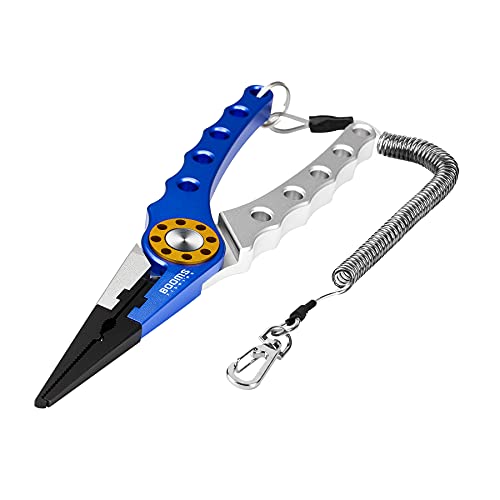
Fishing pliers have long thin jaws that reach past teeth and gill plates to grip a hook shank. Most also carry a cutter for line and a notch for opening split rings. Aluminium ones do not seize up after a few wet days the way plain steel pliers do, and a lanyard keeps them out of the lake.
Why we picked this exact one: The Booms Fishing X1 is an aluminium-handled plier with stainless jaws, a braid cutter and a split-ring hook, and it arrives with a sheath and coiled lanyard for about the price of lunch. The spring-loaded jaws let you work one-handed while the other hand holds a flapping fish. The cutter does dull on heavy braid eventually, but it handles mono for years.
With these four in a bag you can fish any public bank that allows it, once the licence is sorted. Expect the first trip to be largely admin: spooling line, learning one knot, picking apart the first overrun while the good light goes. That passes quickly, much like the first awkward evening of any hobby you take up from scratch as an adult.
What Gets Added After the Third Saturday
None of this is needed to catch a fish. All of it turns up in the bag of anyone who kept going. The order is predictable. First you get tired of carrying things in your hands, then you get tired of squinting at a silver sheet, then you lose a good fish at your feet because you tried to swing it up the bank. Each item below answers one of those. That carrying problem is the same one day hikers solve with a properly packed daypack.
05Pick 05 of 14
fishing backpack with rod holders and removable tackle trays
A fishing backpack carries tackle trays inside and straps rods to the outside, so both hands stay free while you walk a shoreline. The useful ones have a water-resistant shell and trays you can lift out and swap between trips. Capacity matters less than how fast you can reach the tray you want without putting the bag down.
Why we picked this exact one: The KastKing KarryAll ships with four tackle boxes already cut to its compartments, which saves the second shopping trip nobody budgets for. Its external rod holders take two rods, so you can scramble down a steep bank with your hands free. At 40 litres it is bigger than a first-year angler strictly needs, and a fully loaded one is real weight on a hot afternoon.
polarized sunglasses for cutting glare off the water
Polarized lenses block the horizontally reflected light that turns a lake surface into a mirror. With the glare gone you start seeing submerged rocks, weed edges and sometimes the fish themselves. Angling-specific pairs also wrap close to the face so light does not leak in at the sides.
Why we picked this exact one: The Flying Fisherman Matecumbe uses the brand's AcuTint polarized lenses, which lift contrast rather than simply dimming everything, at roughly a fifth of what glass-lens pairs cost. Anglers are honest that cheap polarized glasses handle glare perfectly well and only fall behind when you are trying to pick a fish out of shallow water. These sit in the middle of that gap.
landing net with an extendable handle for bank and dock fishing
A landing net lifts a fish out of the water instead of asking the line to carry its whole weight. A telescoping handle matters from a bank or a dock, where the fish ends up well below your feet. Fish-friendly mesh is rubberised or knotless so it does not strip slime and scales on the way up.
Why we picked this exact one: The KastKing Brutus extends to 31 inches, which is enough reach from a dock edge or a steep bank without becoming a pole you carry separately. Its aluminium frame is rated to around 44 pounds, so it is not the part that gives way. The PVC-coated mesh is kinder to fish than knotted nylon, though it will grab a treble hook given half a chance.
flexible fillet knife for cleaning small freshwater fish
A fillet knife has a thin, flexible blade that follows a ribcage instead of cutting through it. Short blades suit panfish and trout; long ones suit bigger fish and feel clumsy on small ones. A sheath is not optional on a blade this thin living in a bag.
Why we picked this exact one: The Rapala Fish 'n Fillet Superflex in the four-inch length is the classic first fillet knife, and that short blade is honestly the right size for the bluegill and crappie a beginner actually keeps. It comes with a sheath, and the laminated birch handle still grips with wet hands. Four inches runs out of blade on a big channel catfish, which is the day you buy a longer one.
step-up spinning reel with a sealed drag and ten bearings
A better spinning reel changes two things you notice on the first cast: how smoothly line leaves the spool, and how evenly the drag feeds line to a running fish. More sealed bearings mean less grit and fewer rough spots after a wet season. Sizes in the 30 to 35 range suit a general freshwater rod.
Why we picked this exact one: The Pflueger President in size 35 is the reel anglers name when somebody asks what to buy once they know they will keep fishing: ten stainless bearings and a sealed felt drag for around seventy-five dollars. Buy it the season you start losing fish to a stuttering drag, not before. If you are still deciding whether you enjoy standing about in the rain, keep the combo's reel and spend the money on petrol to new water.
Buy these one at a time, in the order the annoyances arrive. There's no prize for owning the lot by March, and the anglers I'd trust tend to own less gear than the ones posting photos of it. If the polarized lenses end up being your favourite purchase, take the hint: a lot of people who start fishing quietly become people who stand still and look at things, which is also how birdwatching gets its hooks into someone.
Bait or Lures: Where Beginners Split
A few trips in, everyone hits the same fork. One path is bait: something that smells, hanging under a float at a depth you chose, and a great deal of sitting still while the water laps at the stones. The other is lures, casting something that pretends to be alive and winding it back over and over, which is more work and far better company on a slow day. Most people end up doing both. They buy for one first. The bait lane rewards the same patience that produces crafts with jaw-dropping results; the lure lane rewards restlessness.
10Pick 10 of 14
balsa slip float for fishing bait at a set depth
A slip float slides freely along the line until it meets a small stop knot you have positioned, which fixes how deep the bait hangs. That lets you fish an eight-foot hole and still cast comfortably, because the float sits next to the hook until everything lands. Balsa bodies carry a split shot and still dip on a shy bite.
Why we picked this exact one: Thill's America's Favorite Float is the balsa slip float most tackle shops carry, and the one-inch oval is the right body for panfish and small bass. Balsa rides lower in the water and telegraphs the nibble a fat plastic bobber would absorb. You get two per card, so buy a spare. This is the item you leave in a tree.
Dough bait is a mouldable paste you press around a small hook so it sits just off the bottom or hangs under a float. It keeps for months in the jar, which is the whole point next to live worms. Beginners reach for it because there is nothing wriggling to handle and no dawn trip to a bait shop.
Why we picked this exact one: Berkley's PowerBait Natural Glitter Trout Bait is the jar stocked trout have effectively been raised to eat, and the glitter version shows up better in tinted water. It costs less than a coffee and lasts a season if you keep the lid clean. It does very little for bass or catfish, so treat it as a stocked-pond bait and not a general one.
assorted jig heads for pairing with soft plastic baits
A jig head is a hook with a moulded lead ball at the eye, so a soft plastic body swims nose-down and sinks at a predictable rate. Weights from about 1/32 to 1/8 ounce cover most shallow freshwater work. An assortment lets you match the sink rate to the depth instead of fishing whatever happened to be in the packet.
Why we picked this exact one: This OROOTL 60-piece set runs from 1/32 up to 3/8 ounce in a single box, which is the range a shore angler walks through in one afternoon. The painted heads and 3D eyes are a cosmetic nicety. The useful part is having five weights sorted rather than one. Paint chips off the lead fairly quickly, which bothers nobody except you.
Soft plastic shad bodies thread onto a jig head and give it a silhouette plus a small tail kick on the retrieve. Two inches is the size panfish, crappie and small bass will all take, which makes it a sensible first bag. They tear after a few fish, so bulk packs work out better than a card of eight.
Why we picked this exact one: The Bobby Garland Baby Shad is a crappie-fishing staple, and the 50-count flip-lid bag works out far cheaper per bait than the small cards. Blue Thunder is a sound all-water starting colour: dark enough to throw a silhouette, bright enough to find in stained water. The bodies are soft, which is why they get bitten and also why each one lasts only a few fish.
An inline spinner is a weighted body with a blade that turns around the shaft as you reel, throwing flash and vibration. You cast it out and wind it back at a steady speed, which makes it close to impossible to fish wrongly. The 1/8 ounce size casts far enough from a bank without ploughing straight into the weed.
Why we picked this exact one: The Worden's Original Rooster Tail from Yakima Bait has been a tackle-shop fixture for decades, and the 1/8-ounce yellow is the version that works close to everywhere. Its hackle tail keeps pulsing even when the blade stalls on a slow retrieve, which is why it still outfishes a lot of flashier modern spinners. Single lures get expensive if you keep feeding them to snags.
Pick the lane that matches your temperament rather than the one that sounds more skilful. Plenty of very good anglers have never thrown a spinner in their lives. Buy two or three items from one side, fish them for a month, then raid the other. If the sitting-still half appeals, you might also enjoy taking a knife to a block of wood while the float sits there doing nothing.
Hooks, Spines, and the Things That Actually Hurt
Fishing isn't a dangerous hobby, but it has three specific ways of catching a beginner out, and none of them is drowning. The first is your own hook: look behind you before every cast, because dogs and toddlers arrive silently, and keep the point covered while you walk. If a barb goes into a finger, cut the line and get it seen rather than pulling. A lot of good fishing happens at dawn and dusk, which means walking uneven ground by torchlight on the way out, the same way stargazers do coming back from a dark field.
The second is the fish. Catfish carry venom glands and hard spines in the dorsal and pectoral fins that puncture skin and infect easily, and bluegill and perch have spiky dorsal rays that will find the soft part of a palm. Gloves and long sleeves are the sensible answer for anything spiny, a long pair of pliers handles the hook, and if you're unsure how to hold something, cut the line instead. Wet your hands before you touch a fish you plan to release; dry hands strip the slime coat that keeps it from getting sick. And accept that the smell stays on your fingers through two washes.
None of this needs gear beyond the pliers you already bought and the sense to sacrifice a hook rather than fight it. Tell somebody where you're going if you fish alone at first light. Keep a note of what you caught, where, and in what weather, too: the people who do that end up with something nearer a nature journal than a scorecard, and it makes them better anglers faster than any purchase does.
Why Your Line Keeps Exploding Into a Bird's Nest
Do I really need a licence to fish a public pond for an hour?
Almost certainly, and this is the mistake that costs money rather than fish. Nearly every US state requires a licence for freshwater angling, and the age it kicks in varies: commonly sixteen, but seventeen in Texas and Michigan. Non-residents often need one whatever their age. Buy it on your state wildlife agency's website before you leave the house. It takes about five minutes, and the same page carries the season dates and size limits for the water you'll be standing on.
Why does my brand-new line keep jumping off the reel in loops?
Two causes, and neither is the reel. The first is overfilling. Line stacked level with the spool lip has nothing holding it down, so it springs off in coils the second tension drops, and you get the nest. Stop filling just short of the rim. The second is spooling it on backwards: lay the filler spool flat on the ground, wind a couple of dozen turns, then push the reel towards it. If the slack corkscrews, flip the spool over and carry on.
I keep my drag tight so I don't lose fish. Is that wrong?
It's the most common self-inflicted break-off there is. A drag wound down means the line absorbs the lunge a fish makes at your feet instead of the reel giving a little, and eight-pound mono loses that argument. Set it to start slipping at roughly a quarter to a third of the line's rated strength. Pull line off by hand and it should come steadily, not in jerks. Bear in mind the pressure climbs on its own as a running fish empties the spool.
The hook is somewhere down the fish's throat. What now?
Don't go digging. Pushing plier jaws down a gullet tears the gills, and a fish that bleeds there usually dies some time after you've watched it swim off. Cut the line as close to the hook as you can reach and release it; a deep-hooked fish let go quickly does far better than one you've excavated. The habit that prevents it is striking earlier. Float-caught fish get swallowed because people wait for the float to vanish completely rather than lifting on the first decisive dip.
Everyone says go at dawn. Does the time of day matter that much?
More than your gear does, which stings a bit after you've spent a hundred dollars. Shallow fish feed hardest in the hour either side of sunrise and sunset, when the light is low and small prey moves about. The same bank at noon under flat sun can feel like fishing an empty bathtub. If midday is all you have, work the shaded side, the deeper edge, or whichever bank the wind is pushing into.
People Worth Following Into This Hobby
Real practitioners we found while researching this setup — people who do the work, show their process, and publish on sites they run themselves. No sponsorships, no affiliations; we just think they're worth your time.
Domenick Swentosky guides on central Pennsylvania limestone water and has written 900+ articles plus a podcast breaking down how he reads rivers and fights fish.
This setup tells beginners to read depth and set a drag they can trust; Troutbitten is where that thinking is worked out in public, in far more detail than a starter page has room for.
A Florida angler publishes his own freshwater how-to guides, species identification pages and lake write-ups, centred on panfish and crappie.
The jig heads and two-inch plastics in this setup are exactly what his jig tutorials cover, and panfish are what a beginner on a bank will actually catch first.
A tournament bass angler writes a monthly first-person blog about how he rigs, where he fishes and which baits he carries, including a piece on bank angling.
His bank-fishing article argues for exactly the mobility this setup's backpack is for, and it gives a beginner a sense of how a serious angler pares gear down.
Love what you see here? Save individual picks with on any item, or copy everything to a list of your own in one click — great for coming back to later, or dropping as a not-so-subtle hint.