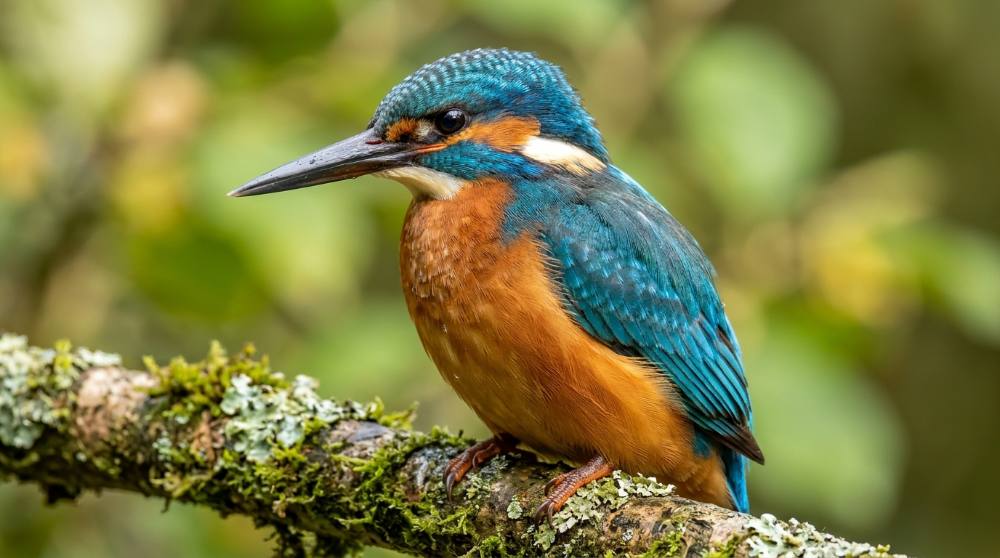
Birdwatching is mostly standing still. You hear something you can't place, you lift a pair of binoculars, and a shape in a hedge turns into a bird with a name. People do it from kitchen windows, on the same commuter walk every morning, on estuary mud at low tide. Here's the part outsiders never guess: the hobby's biggest annual event, the Christmas Bird Count, began in 1900 as a deliberate replacement for a holiday shooting contest in which hunters competed to bring in the largest pile of dead birds. Twenty-seven people took part that first Christmas, and the count still runs every December.
The first week is strange. You'll aim at a branch, find nothing, and realise the bird moved two seconds before you got there. That mostly stops around day four, once your hands learn to go up without your eyes leaving the spot. None of it is a gear problem, which is lucky, because the gear list here is short.
Our take: buy two things and go outside. A decent 8x42 binocular and a field guide for your own region will carry you through an entire first year. The feeder, the scope and the notebook can all wait until you know you like this.
Everything here is the modest version of itself on purpose, because nobody should pay for good glass before they know they'll use it, and if you're still deciding which hobby to try first, this is an unusually easy one to walk away from.
Where This Little Kit Can Take You
A few real moments and results from this hobby — made with tools no fancier than the ones below.
A long look into the hedge
A well-worn pair on a strapOffset porro barrels like these give more optics per dollar than roof prisms at the budget end.
One warning before the gear. This hobby creeps up on people: you look up a single bird, and then you want to know what the other eleven in the garden are. It sits comfortably among the low-cost hobbies adults take up late, except you can start this one from a kitchen window.
What Goes in the Bag Before You Leave
There's a trap right at the start, and it's magnification. Beginners reach for the 10x or the 12x because bigger sounds better, then find they can't hold the image still enough to tell a sparrow from a wren. An 8x shows a wider slice of hedge, holds steadier, and keeps more of the scene in focus at once, which is how you find the bird at all. The arithmetic is blunt: a 10x gives you roughly 64 percent of the depth of field an 8x does. Everything below fits in one coat pocket and a strap.
Disclosure: This section may contain affiliate links to Amazon. We may earn a small commission from qualifying purchases at no extra cost to you.
01Pick 01 of 09
8x42 roof-prism binoculars for everyday bird identification
A full-size 8x42 binocular magnifies eight times through 42mm objective lenses, which is the combination most birders settle on for general use. The wide field makes it easier to find a small bird in a moving hedge, and the large objectives keep the view usable in the half-light at either end of the day. When choosing a pair, check the eye relief if you wear glasses, and look for nitrogen- or argon-filled sealing so the inside never fogs.
Why we picked this exact one: The Vortex Crossfire HD 8x42 is the pair I'd put in a first-timer's hands. It holds a 4.8-star average, which is unusual at this price, and the Vortex VIP warranty is unconditional and transferable, so a cracked pair gets replaced whoever broke it. The supplied strap is thin enough that most people swap it within a month, but the glass is not where the corners were cut.
regional illustrated field guide for identifying birds near home
A regional field guide covers only the birds that actually occur in one half of a continent, which cuts the number of lookalikes you have to rule out. Illustrated guides draw every bird in the same posture and the same light, so the differences between two similar species line up on the page in a way photographs rarely manage. Look for one that fits a coat pocket and prints a range map beside each entry.
Why we picked this exact one: The Sibley Field Guide to Birds of Eastern North America, second edition, is the book named most often when birders are asked what a beginner should carry. Sibley paints every species in the same stance and light, which is exactly what makes two confusing sparrows comparable at a glance. Buy the Western edition instead if you live west of the Great Plains; halving the number of birds on the page is the whole point.
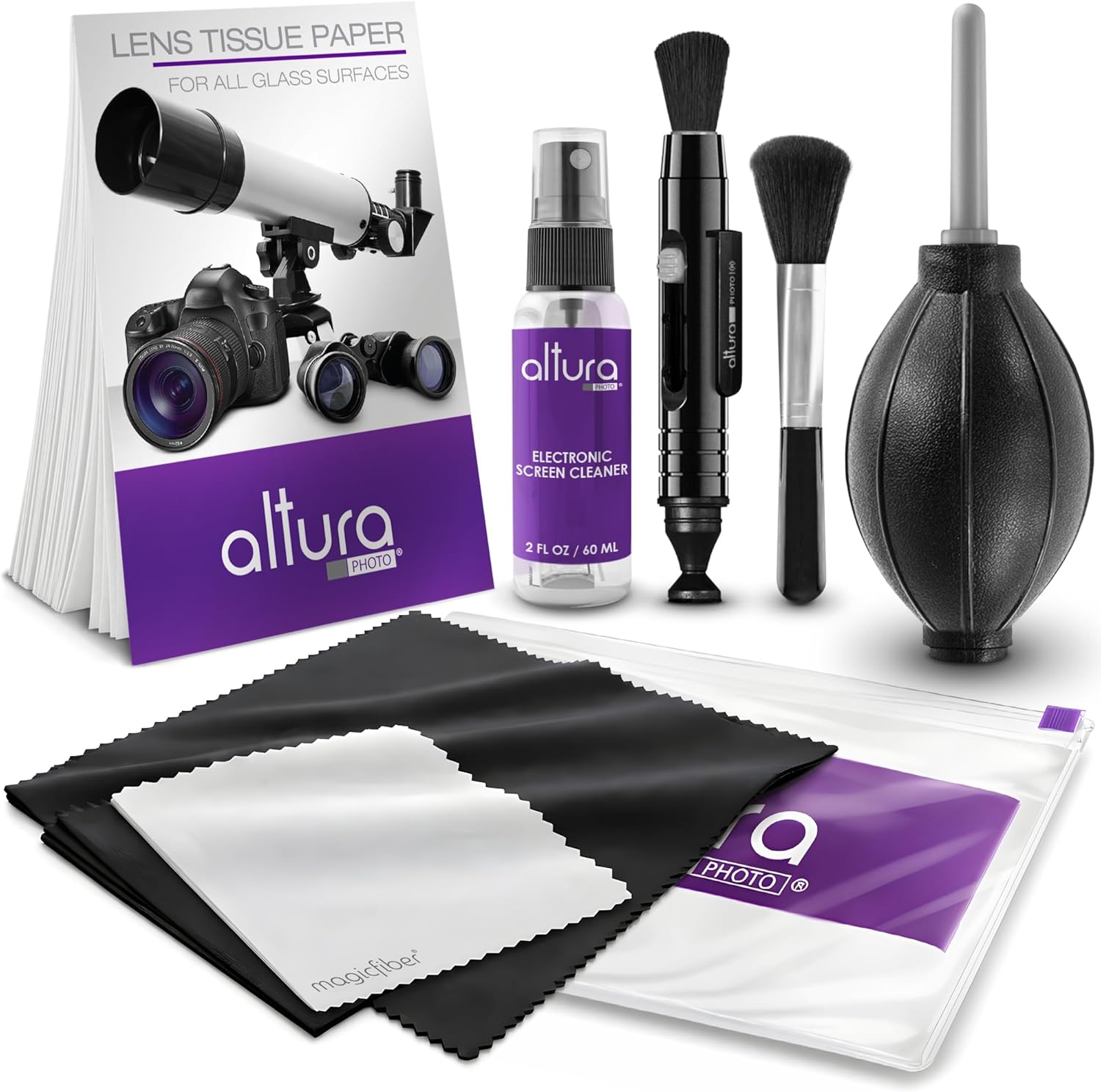
lens cleaning kit with air blower, brush and microfiber cloth for optics
An optics cleaning kit works in stages: an air blower lifts loose grit, a soft brush sweeps off whatever stays, and only then does a microfiber cloth touch the glass. The order matters more than the products do, because nearly all lens damage happens when something hard gets dragged across a coating. Look for a kit with a real rubber blower rather than a canned-air substitute, which can spit propellant onto the lens.
Why we picked this exact one: The Altura Photo lens cleaning kit covers the whole sequence that keeps optics intact, with a blower and a brush in the box rather than a cleaning pen on its own. Pens are the common shortcut and the one birders argue about, because the carbon tip can leave residue on water-repellent coatings. It is sold for cameras, so the supplied tissues are sized for small front elements and you'll use the cloth on binocular objectives.
Buy those three, walk out of the door, and you can put a name to the next bird you see. Don't expect the guide to fall open at the right page in week one; flipping through it badly is how the pictures get into your head, and the smell of a new paperback in cold air is part of the deal. If it's the looking-closely part that appeals, nature journaling runs on the same attention and costs even less to begin.
When You Want the Birds to Come to You
After a few trips out, what most people want next is to stop going out. A feeder stuck to the glass turns washing up into birding, and the birds come close enough that you can count the dark feathers on a chickadee's cap without lifting anything. One rule here saves lives, and it's counterintuitive: put the feeder nearer than three feet to the window, or more than thirty. Close, and a bird leaving it can't build up the speed to hurt itself on the glass. Keep about ten feet between a garden feeder and the nearest branch too, or you've built a squirrel diving board. If there are already children helping with a first vegetable patch, the feeder slots into the same weekend routine.
04Pick 04 of 09
clear window-mounted bird feeder with suction cups for close viewing
A window feeder is a clear acrylic tray that sticks to the outside of the glass on suction cups, usually with a removable seed tray for refilling and cleaning. Because the birds land a hand's width from your face, it does the one thing a garden feeder can't: it shows plumage detail at a range where binoculars are useless. Look for a sliding tray and drainage holes, since wet seed spoils fast and a feeder you dread cleaning is one you stop filling.
Why we picked this exact one: The Nature Anywhere window feeder has gathered more than eleven thousand ratings, a deeper track record than most feeders in this format ever build. Its seed tray slides out without unsticking the whole unit, and that one detail decides whether a feeder gets cleaned every week or quietly abandoned. Suction cups need a genuinely clean, dry pane and a re-press after the first frost, which is true of every feeder of this kind rather than this one in particular.
black oil sunflower seed for window and garden feeders
Black oil sunflower is the most widely used feeder seed and the one that attracts the largest range of species, which is why it is the standard first choice for a new feeder. It works in trays, tubes and window feeders without any adjustment. Buy a size you can store dry and seal shut, because damp seed clumps and turns mouldy faster than most people expect.
Why we picked this exact one: The TRAILMARK NATURALS ten-pound pack arrives as two sealed five-pound bags, which is the practical detail that matters: you open one and the other stays safe from damp. Ten pounds is about right as a first purchase for a window feeder, where a twenty-five pound sack would go stale long before it emptied. It costs more per pound than the big agricultural sacks, and that is the trade for not having to store one.
weatherproof pocket notebook for field notes and quick bird sketches
A field notebook for birding has to survive drizzle, fit a coat pocket and open one-handed while the other hand holds binoculars. Weatherproof paper is coated so ink sits on the surface instead of bleeding through a wet page, which is the difference between notes and a grey smudge. Top-spiral binding matters more than it sounds, because it lets the cover fold flat back against itself.
Why we picked this exact one: The Rite in the Rain 3 by 5 top-spiral notebook is the pocket format birders keep going back to, and this listing is a three-pack, so soaking or losing the first one isn't an event. The coated paper really does handle rain, though it wants a pencil or a pressurised pen; an ordinary rollerball skates across a wet page. Three pads is more than a first season needs, which is where the price comes from.
shoulder harness that carries binoculars off the neck
A binocular harness replaces the neck strap with an X of elastic webbing across the back, moving the weight onto the shoulders and stopping the binoculars swinging as you walk. Full-size 42mm binoculars weigh somewhere between 640 and 840 grams, which a neck strap turns into a dull ache by the end of a day out. Wider webbing is worth looking for if you carry heavier glass, since narrow elastic has to be cinched tight to work.
Why we picked this exact one: The Vortex binocular harness is the standard answer to the neck-ache problem and clips to any pair with conventional strap lugs. It uses elastic rather than fixed webbing, so the binoculars travel up to your eyes without unclipping anything. Worth knowing first: birders carrying heavier glass often find narrow elastic harnesses like this one have to be set tight enough that raising the binoculars takes effort, and prefer wider webbing instead.
tripod-mounted spotting scope for distant water birds and shorelines
A spotting scope is a single high-magnification telescope on a tripod, zooming roughly 20 to 60 times where binoculars stop at eight or ten. It exists for the situations binoculars can't solve: ducks on the far side of a lake, waders out on an estuary, a raptor perched across a valley. The tripod isn't optional, because at these magnifications even a braced elbow turns the image into a wobble.
Why we picked this exact one: The Gosky Flagship 20-60x80 arrives with its own tripod and phone adapter, which is why it works as a first scope instead of the start of a shopping list. Make this step up once you know you'll keep birding and once you find yourself at lakes and estuaries; if your birding is hedges and woodland, a scope will mostly sit in the cupboard, so wait. At this price the image softens noticeably towards the top of the zoom, so expect to spend most of your time nearer 20x than 60x.
None of this is required, and I'd add it slowly, one thing at a time, so you find out what you actually use. The notebook is the sleeper pick of the group: writing down what you saw makes you look at the bird instead of the page, and even a terrible sketch teaches you the parts of a wing. If you end up drawing more than listing, a proper sketchbook is a better home for that than a pocket pad.
One Book That Isn't a Field Guide
A field guide shows you what the birds look like. It doesn't tell you how to look, which is the thing beginners are actually missing when they skim past the right page three times in a row. One short book fills that gap, and it's the title that gets named over and over whenever someone asks what to read first. It's full of drawings too, so if you arrived here from drawing streets and buildings on location, the approach will feel familiar.
09Pick 09 of 09Book worth reading
beginner's guide to how bird identification actually works
This is a short book about the skill rather than the species: feather topography, how moult changes a bird's appearance through the year, why distance and light make colours lie. It covers the habits around identification too, including taking notes, sketching and keeping a personal record. A beginner reads it to find out what the field guide assumes they already know.
Why we picked this exact one: Sibley's Birding Basics is the title birders name when a beginner asks what to read before anything else, and it comes from the same illustrator as the field guides, so the vocabulary carries straight across. It's thin and unhurried, closer to an extended introduction than a textbook. The edition dates from 2002 and shows it in a few places, mostly where apps and digital recordings have moved on, but feather tracts have not.
Read it slowly, a chapter between outings rather than all at once. Most of it only lands after a real bird in real light has confused you. Keep it at home; the field guide is the one that goes in the bag.
Four Things Nobody Warns a New Birder About
I've hung the feeder and nothing has come. Did I buy the wrong one?
Almost certainly not. A new feeder is a restaurant nobody has heard of yet, and the local birds have to find it before anything happens, so a week or two of nothing is ordinary. The usual mistake is to start swapping feeders or seed in that window, which resets the clock every time. Scatter a handful of seed on the ground underneath to advertise it, and if birds are already gathering in a shrub nearby, lay a trail of seed between the shrub and the feeder. Then leave it alone.
The app named a bird I never actually saw. Can I count it?
Sound identification apps are genuinely useful and genuinely fallible, especially with species that sound like each other, and they will cheerfully name something that isn't there. Birders treat them as a prompt rather than a verdict: the app says what to go looking for, and you confirm it with your eyes or with a song you already know. Logging unconfirmed app hits is how beginners end up with a list they quietly stop trusting. Use it to shorten the search, not to end it.
I wear glasses. Does that change which binoculars I buy?
Yes, and it's the one specification worth checking before you order anything. You want eye relief of about 15mm or more, because glasses hold your eyes further back from the eyepiece and without that margin you get the view through a tunnel with the edges cut off. Twist the eyecups all the way down to use it; left extended, they cause the same problem. Within a given range the 42mm models usually offer a little more eye relief than their 32mm siblings, so the bigger pair is often the kinder one for glasses wearers.
Why do my binoculars look worse after I clean them?
Because most people clean them wrong. The harm isn't from the dirt, it's from dragging grit across the coating with a shirt tail or a tissue, and the result is a permanent haze of fine scratches that no later care undoes. At that point the lens has to be replaced, not polished. Blow the dust off first, brush away whatever's left, and only then let a clean cloth or a sealed wipe touch the glass. Clean them far less often than you think you should.
People Worth Following Into This Hobby
Real practitioners we found while researching this setup — people who do the work, show their process, and publish on sites they run themselves. No sponsorships, no affiliations; we just think they're worth your time.
Writes and broadcasts a short daily birding programme she has produced since 1986, with every episode archived and searchable on her own site.
Her archive is the best free answer to the question this setup leaves open, which is what to do with the binoculars once you own them: single-species episodes on the common feeder birds a beginner will meet first.
A professional ornithologist who taught for over thirty years and writes plain-language explainers on bird biology and birdwatching technique.
His piece on intuitive birdwatching explains why experienced birders stop working down an identification key and start reading shape and movement, which is exactly the skill the field guide in our essentials assumes you are building.
Runs a long-standing multi-author birding blog where working birders post field notes, species write-ups and book reviews from around the world.
Their winter feeding piece goes further than our feeder section does on what to put out once the weather turns, and it is written by someone feeding birds rather than selling them.
Co-author of the Stokes field guides who has posted her own feeder photographs and observations from her garden since 2006.
She photographs and writes up the exact birds a reader will meet at the window feeder in this setup, including which ones arrive on sunflower seed and what a Cooper's Hawk sitting near the feeders means.
Love what you see here? Save individual picks with on any item, or copy everything to a list of your own in one click — great for coming back to later, or dropping as a not-so-subtle hint.