String Art: Turn a Board and Nails Into Wall Art

String Art: Turn a Board and Nails Into Wall Art

pre-sanded solid wood plaque for mounting string art

Start here · pick 01 of 13

pre-sanded solid wood plaque for mounting string art

See it on Amazon

Affiliate link: we may earn a small commission, at no extra cost to you.

DariaCurated by Daria
Jump to the 13 picks

Nothing Here Is Actually Curved

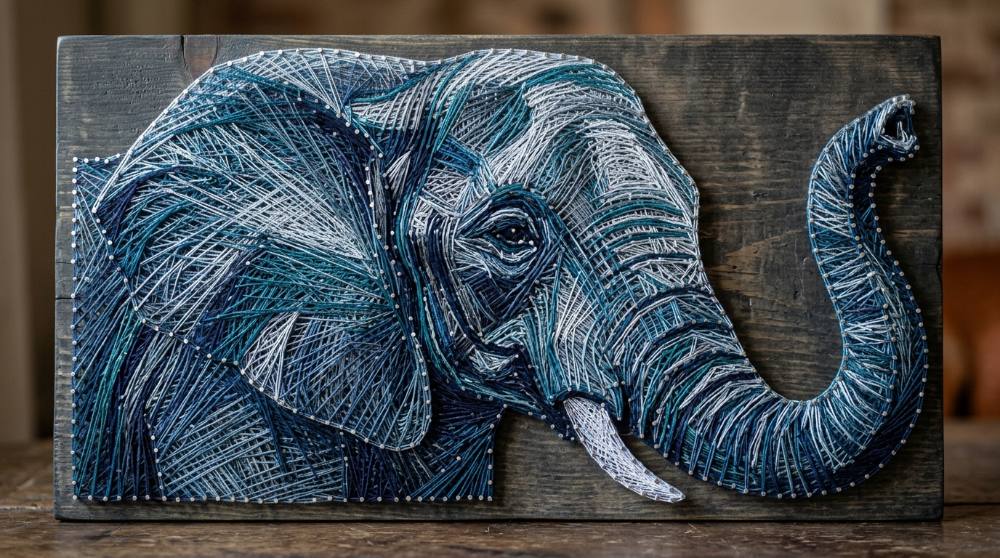
Every line you wind in string art is dead straight. Nothing bends. You hammer small nails along the outline of a shape, wind thread from one nail to the next until the gaps fill in, and the eye insists it is looking at curves that were never there. It began as a Victorian maths lesson: Mary Everest Boole had children stitch coloured thread through pricked card so they could see geometry rather than just read about it. The craft escaped the classroom in the late 1960s, and by the mid-seventies American homes were full of thread pictures strung on black velvet board.

What makes it worth trying isn't the technique, which you'll have down in about ten minutes. It's the ratio. A first board genuinely looks like something you would hang up, and that is rare — most crafts make you sit through a few ugly attempts first. That's partly why it keeps turning up in advice on picking a first hobby that won't leave you discouraged. The hammering is the slow part, and your thumb finds that out early.

Our take: buy only what actually touches the work. That's five things. A solid board, a box of small nails, a light hammer, cotton thread, and something to grip those nails with will put a finished piece on your wall this weekend. Pattern books and spacing jigs can wait until you've made two.

Nothing below costs enough to sulk about if the hammering turns out not to be your thing.

String art has a habit of becoming everybody's present the moment you finish one, which is how a lot of people end up with a hammer habit they didn't plan on. If you're weighing up which handmade craft to take up before the holidays, this one scales kindly: a name board is an evening's work. The gallery is next.

The Five-Piece Kit That Gets a Board Finished

The list is short, and that isn't a simplification for the sake of it. There genuinely isn't a sixth thing. Where beginners come unstuck is the hardware aisle, where it's easy to walk out with nails too long for the board, a hammer too heavy to aim, and a panel that won't take a nail in the middle. Each of those has a number behind it, and the numbers below are the ones people who do this constantly actually use.

Disclosure: This section may contain affiliate links to Amazon. We may earn a small commission from qualifying purchases at no extra cost to you.
pre-sanded solid wood plaque for mounting string art

Pick 01 of 13

pre-sanded solid wood plaque for mounting string art

A string art base is a flat piece of solid wood thick enough that a short nail bites in and stops well before the back. Softer species like basswood, pine and spruce are the usual pick, because they take a nail without a fight and still grip it once the thread starts pulling. Look for at least half an inch of thickness, kiln drying so it won't warp, and a surface that has already been sanded.

Why we picked this exact one: The Make Market basswood oval plaque sold through Michaels is a full three-quarters of an inch thick, so a 15 mm nail sinks in and still leaves plenty of shank standing for thread. It arrives kiln-dried and lightly sanded, which clears away the two chores that usually come before the fun part. The oval shape is a commitment, and if you had a square board in mind this isn't it, but 11 by 14 inches leaves room for a name, a mandala or a decent silhouette.

See it on Amazon
small round-head nails sized for winding thread around

Pick 02 of 13

small round-head nails sized for winding thread around

String art nails are far shorter than anything in a general hardware pack, usually around 15 mm, and they carry a flat round head that stops thread climbing off. The head is the whole point of the design. Count matters as well, since even a plain outline swallows 80 to 150 of them before you have wound a single row.

Why we picked this exact one: The newlng 500-piece round-head nails measure 1.5 by 15 mm, which lands on the size experienced makers name as their everyday default. Five hundred covers several boards, and the electroplated finish keeps them from looking grubby beside pale cotton. They are iron rather than brass, so a damp garage will spot them eventually and the spares are better kept indoors.

See it on Amazon
lightweight magnetic tack hammer for driving tiny nails

Pick 03 of 13

lightweight magnetic tack hammer for driving tiny nails

A small hammer around 8 ounces is the right tool here, not the framing hammer living in the garage. The low weight is enough to seat a 15 mm nail without bending it, and light enough that your wrist survives two hundred of them. Some heads carry a magnetic slot that holds the nail upright for the first tap.

Why we picked this exact one: The Mr. Pen 8 oz claw hammer has a magnetic nail starter, and that one feature is what makes driving 150 tiny nails bearable, because it stands the nail up so your fingers never enter the strike zone. It holds a 4.8-star rating. The handle is rubberised rather than wood, which some people dislike, though it doesn't slip once your hands warm up.

See it on Amazon
cotton crochet thread in a wide colour range for winding

Pick 04 of 13

cotton crochet thread in a wide colour range for winding

Crochet cotton is the usual thread for string art because it holds tension, doesn't slide about on metal, and still reads as a line from across the room. Sizes 10 and 20 suit most designs, with the thicker 3 and 5 reserved for large filled areas. Buying a multi-colour set early makes sense, since layering colour is what lifts a board out of school-project territory.

Why we picked this exact one: The LE PAON 48-ball set is size 8 cotton, sitting comfortably inside the band that working makers recommend for general designs. Forty-eight colours for under thirty dollars buys a lot of runway, and each ball holds roughly 47 yards, so a single colour area won't run dry mid-row. The balls are small at 5 grams apiece, so a large block of one colour will go through two of them.

See it on Amazon
smooth flat-nose pliers for holding nails upright while hammering

Pick 05 of 13

smooth flat-nose pliers for holding nails upright while hammering

Flat-jawed pliers hold a short nail square to the board while you tap it in, which is far harder to manage with fingertips. Smooth jaws matter here, since serrated ones chew the plating off decorative nails. A spring-loaded pair helps, because your other hand is busy with the hammer.

Why we picked this exact one: The SPEEDWOX 5-inch flat nose pliers have smooth jaws and a spring return, so they reopen themselves between nails and leave no marks on the heads. They are built for jewellery work, which is exactly the scale string art happens at. The jaws are small, so larger hands take a few nails to settle into the grip.

See it on Amazon

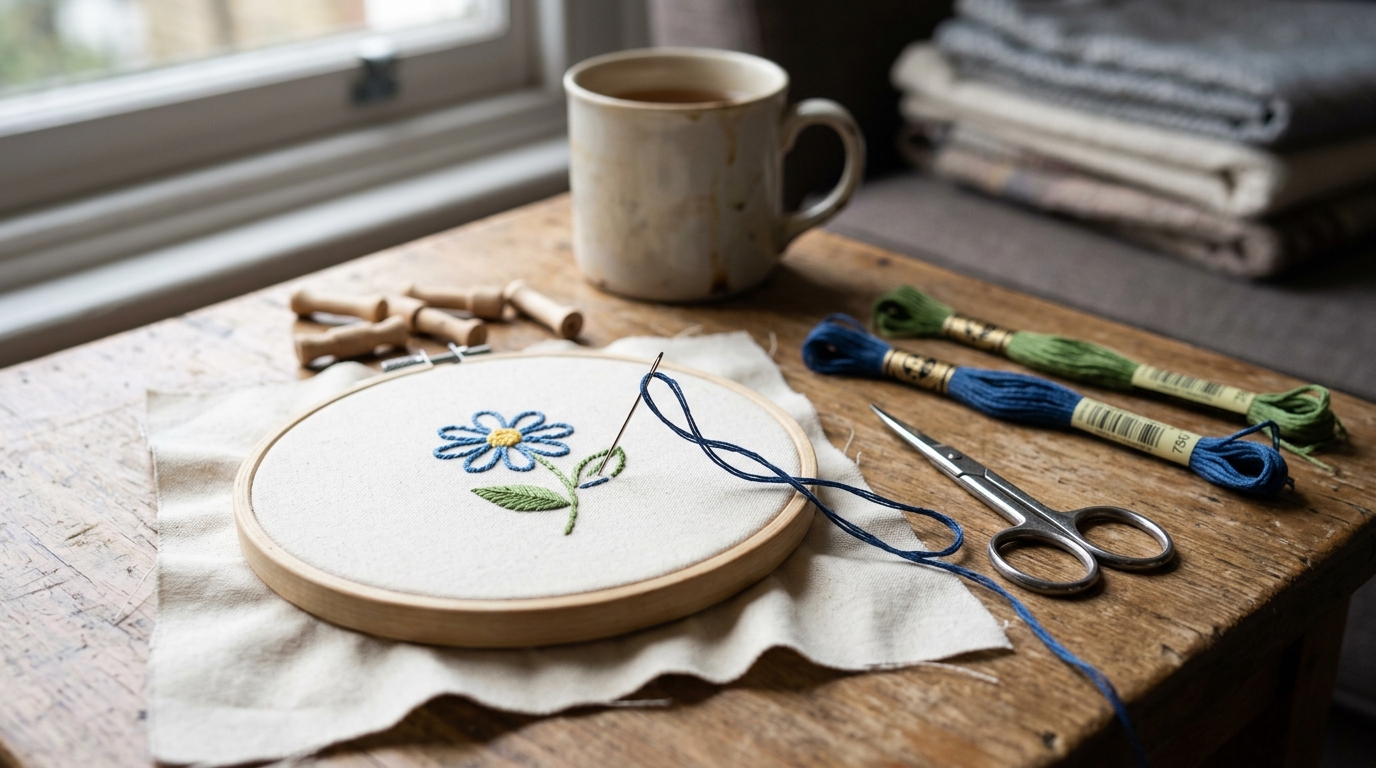
With these five on the table you can finish a board in an evening, and the first one will almost certainly end up with a few nails standing taller than their neighbours. Leave them. Nobody notices once the thread is on, and tapping them flush afterwards tends to loosen them instead. If you already have a hoop and floss sitting around from a beginner embroidery setup, keep the floss for embroidery, because it behaves very differently stretched between nails.

Finishing Touches That Change How a Board Reads

None of this is needed for a first piece, and honestly I'd make one bare-wood board before buying any of it, just to find out whether you enjoy the process at all. What these do is close the gap between a craft project and a thing on a wall. Stain is the big one. Raw pine reads as unfinished behind bright thread, and the same surface prep does half the work in beginner woodburning on raw boards.

penetrating wood stain for darkening a bare craft board

Pick 06 of 13

penetrating wood stain for darkening a bare craft board

Stain soaks into bare wood and darkens it without burying the grain, which is exactly what you want sitting behind bright thread. Oil-based penetrating stains go on with a brush or a rag and usually need a single coat. Half a pint covers far more boards than you would guess.

Why we picked this exact one: Minwax Wood Finish in Golden Oak is the half-pint tin most people already half-remember from a shed somewhere, and it sits at the cheap end of a line that has been on hardware shelves for decades. It penetrates in about five minutes and dries in two hours, which matters because hammering into a tacky board drags colour up around every nail. It is oil-based, so budget for white spirit and an open window.

See it on Amazon
matte clear spray sealer for protecting a finished thread piece

Pick 07 of 13

matte clear spray sealer for protecting a finished thread piece

A light clear coat over a finished board slows the dust that an open weave of thread collects surprisingly quickly. Matte is the normal choice, because gloss puts a shine on cotton that reads as plastic. Spray from a distance in thin passes so the strands aren't weighed down.

Why we picked this exact one: Aleene's Spray Acrylic Sealer in matte lays a flat, non-reflective coat that adds no shine to cotton. It is a craft-aisle product rather than a hardware-grade lacquer, which suits a thread surface better than something built for floors. Six ounces is a small can, so a large board will eat a fair share of it.

See it on Amazon
scratch awl for marking nail positions before hammering

Pick 08 of 13

scratch awl for marking nail positions before hammering

An awl presses a shallow dimple at each nail position so the point has somewhere to sit when you start tapping. This isn't drilling. The mark is barely a dent, just enough to stop the nail wandering off the line, and a solid hardwood handle gives better control than a thin pointed tool.

Why we picked this exact one: The General Tools scratch awl puts an alloy steel point in a fluted hardwood handle, so it sits properly in the palm while you press a hundred marks in a row. It is a carpenter's tool rather than a craft-aisle one, and that shows in how little the point wanders. There's no cap on it, so it needs a sensible home in a drawer.

See it on Amazon
assorted-grit sanding sponges for smoothing a bare board

Pick 09 of 13

assorted-grit sanding sponges for smoothing a bare board

Sanding sponges flex over edges and bevels in a way flat paper won't, which helps on a plaque with a shaped rim. Working coarse to fine gets a raw board smooth enough that thread slides across it instead of catching. The washable kind survive several boards.

Why we picked this exact one: The Romeda eight-pack covers 60, 80, 120 and 220 grit with two blocks of each, colour-coded so you aren't squinting at the back of a worn block to work out which is which. They wash out, which matters once stain prep starts making dust. The blocks are on the thick side, fine across a flat face but awkward inside a tight curve.

See it on Amazon

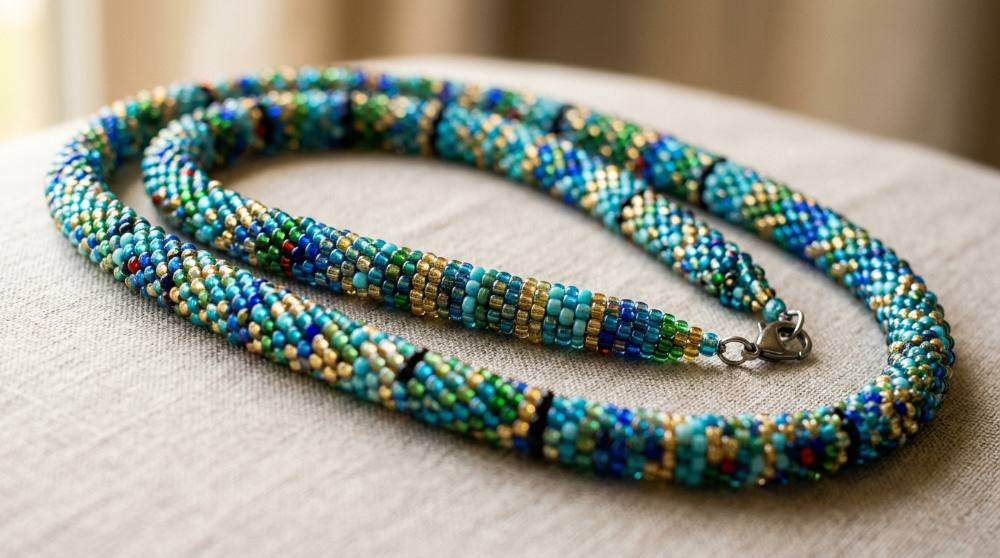
Do the sanding and the staining in one sitting, then walk away and leave it alone. The quickest way to spoil a board is to start hammering while the stain is still soft, which drags colour up around every single nail and leaves a halo you cannot sand out. Give it the full drying time printed on the tin. Prepping materials before you start is the same habit that makes a first beaded jewelry setup run smoothly, and it's worth building early.

Turning a Photograph Into Thread

This is the version people share: a face or a dog rendered in one continuous thread wound between a few hundred nails around a circle. It is a genuinely different job from a name board. You don't design it — software reads the photo and hands you a numbered sequence, and the skill becomes following that sequence for three hours without losing your place. The thread gets thinner, the nail count climbs, and the board goes round. Some makers swap cotton for copper wire on accent lines, which puts them closer to a beginner wire art setup than to winding thread.

round softwood plaques sized for circular thread portraits

Pick 10 of 13

round softwood plaques sized for circular thread portraits

Photo-based string art is almost always built on a circle, because the generated nail sequence assumes points spaced evenly around one. A 12-inch round in a soft species keeps two hundred nails from turning into an ordeal. Thickness still applies, and anything under roughly half an inch risks points coming through the back.

Why we picked this exact one: The GNIEMCKIN pine circle plaques are 12 inches across and 0.7 inches thick, so a 15 mm nail bites hard and still stops well short of the back. Pine sits at the soft end of the range, which counts for a lot when you're driving two hundred nails rather than forty. It comes as a four-pack, and that is the honest reason to pick it, because a first photo portrait rarely works and spare boards are what stop people quitting at attempt two.

See it on Amazon
fine black cotton thread on a large spool for dense line work

Pick 11 of 13

fine black cotton thread on a large spool for dense line work

Photo string art builds tone by layering thousands of thin lines, so the thread has to be much finer than crochet cotton. Sewing weight around 50 is the common choice, and one image can swallow well past a thousand yards. Low-lint thread is worth looking for, because fluff becomes visible across that many crossings.

Why we picked this exact one: Connecting Threads Essential Thread in black is 50-weight triple-ply long-staple cotton on a 1,200-yard spool, enough to carry most of a single portrait. Triple-ply means it keeps its nerve while being dragged across metal nail heads a few thousand times. It is matte rather than lustrous, so the shading reads as grey instead of glinting under a lamp.

See it on Amazon
combined protractor and circle tool for spacing nails evenly

Pick 12 of 13

combined protractor and circle tool for spacing nails evenly

Marking two hundred evenly spaced points around a circle by eye does not work. The arithmetic is easy, but the marking isn't, and a 360-degree protractor with a rotating inner disc lets you step round by fixed angles instead of measuring arc length. Circle stencils on the same tool help you draw the outer ring to begin with.

Why we picked this exact one: The Helix Angle and Circle Maker combines a 360-degree protractor, a rotating disc and built-in circle stencils, so one small tool handles both the ring and the spacing. It is a school-supplies staple with a long rating history behind it. At 6 inches across it won't lie over a 12-inch board, so you'll be marking outward from the centre rather than around the rim.

See it on Amazon
wide clip-on LED bar light for long stringing sessions

Pick 13 of 13

wide clip-on LED bar light for long stringing sessions

A bar-style clip light spreads light along a board instead of dropping a bright spot in the middle of it. That matters once a grid of nails starts throwing small shadows across the area you're working in. Adjustable colour temperature also helps when you're matching thread colours after dark.

Why we picked this exact one: The Glocusent clip-on light runs 57 LEDs along an 11.3-inch bar, wide enough to cover a 12-inch board without a hotspot in the centre. It clamps to a table edge and bends, so the light can come in low and flat across the nail heads rather than straight down. It is plug-in rather than battery, which tethers you to a socket.

See it on Amazon

Expect the first photo portrait to look like nothing much for the first third, then arrive fairly suddenly once the lines start stacking. Stopping early because it clearly isn't working is the single most common way people abandon one. Check it from six feet, not six inches. Up close it's always a mess of crossing lines, and it's meant to be.

Why Your First Board Fights Back

Why do my nails start leaning once I've wound a few rows?

Thread pulls sideways across the board rather than down into the wood, so every wrap is quietly levering each nail over. Beginners make it worse by hauling the thread tight, on the assumption that tension equals neatness. The damage shows up late: a nail that works loose halfway through takes the surrounding winding with it when it goes, and on a thin board the panel itself can bow. Drive each nail vertically, sink it by about a third to a half of its length, and wind snug instead of taut.

How many nails does a shape actually need?

Most first-timers use far too few, then wonder why a curve came out faceted. Spacing of roughly half an inch is the working rule, which puts around forty nails into a three-inch heart and 80 to 150 into a simple shape on a normal board. Too few and the thread cuts a straight chord across the curve instead of following it. If a section looks angular once it's strung, the fix is more nails, not more thread.

Should I drill the holes first?

Nearly everyone assumes yes, and nearly nobody who does this regularly bothers. A drilled hole is wider than the nail, so the nail sits loose and lifts out under tension, which is the exact opposite of the point. Drilling also throws dust into the grain that reappears through stain later. Press a shallow dimple with an awl instead, or simply hammer straight through the printed paper pattern, which is what most makers do.

Why does my piece look sparse when I've used loads of thread?

Thread vanishes visually much faster than it vanishes from the ball, and people underestimate the length badly. A small heart wants twelve feet before it stops looking thin, and a larger shape closer to fifteen or twenty. The usual error is switching colour too early, which splits one area into two sparse halves rather than one solid block. Wind a colour until the board stops showing through, and tie each colour off on a nail rather than knotting two colours to each other mid-span, where the knot ends up sitting in plain view.

Love what you see here? Save individual picks with on any item, or copy everything to a list of your own in one click — great for coming back to later, or dropping as a not-so-subtle hint.

Disclosure: This section may contain affiliate links to Amazon. We may earn a small commission from qualifying purchases at no extra cost to you.