Rockhounding is what happens when you stop walking past gravel. People do it in creek beds, along road cuts, and at quarries that open their gates a few weekends a year, filling a bag with rocks that mostly look like rocks. Then one gets cracked open and there's banded agate inside, or a cavity lined with quartz crystals. The name is older than you'd guess: rock hound turns up in American English around 1915, and back then it meant a professional geologist, not a hobbyist. Amateurs took the word later, and in 1965 Oregon's legislature made the thunderegg its state rock after rockhounds around the state voted it their first choice.
The gear question trips people up far more than the finding does. Spend an hour searching and you'll come away convinced you need a trim saw and a UV lamp before your first outing. You don't. Almost everything that makes a first trip work fits in one bag, and the piece that teaches you the most is a lens small enough to lose in a pocket. If you're still weighing this up against a few other things you fancy trying, our guide to picking a first creative hobby without wasting money is a sensible place to start.
Here's the rule I'd give a friend: buy the fewest things that let you pick a rock up, look at it properly, and still have both eyes afterwards. A pick, eye protection, a 10x lens, a bag, and boxes for the keepers. Everything else can wait until you've been out three or four times and know what your local rock actually does.
Nothing below costs enough to sting if you go out twice and decide rocks aren't your thing.
Where This Little Kit Can Take You
A few real moments and results from this hobby — made with tools no fancier than the ones below.
Thundereggs cut open and polishedThe rusty rind gives away nothing about the banded agate underneath it.
A handful worth keepingEverything here was picked one at a time out of the gravel underfoot.
None of this takes skill on day one. You walk, you look down, you pick things up, and some evening later you find out what one of them is. The pictures below are the part nobody quite believes until they've seen it.
What Actually Goes In the Bag
Each of these earns its place on a first outing, and the list stops there on purpose. The cheap version of most of them is fine. The cheap version of one of them will cost you an eye. Outdoor treasure hunting comes in a few flavours, and a beginner metal detecting setup scratches a similar itch with a machine doing the searching. Rockhounding makes you do the looking yourself, which is slower and, I think, better.
Disclosure: This section may contain affiliate links to Amazon. We may earn a small commission from qualifying purchases at no extra cost to you.
01Pick 01 of 12
22-ounce rock pick for prying and trimming field specimens
A rock pick is a one-piece forged hammer with a flat square face on one side and a pointed tip on the other. The point levers specimens out of cracks and seams, while the face trims waste rock off a find so it fits in a box. Look for a head and handle forged from a single piece of steel, because a two-piece hammer eventually works loose at the joint.
Why we picked this exact one: The Estwing E3-22P is the pick rockhounds name first and keep naming, and 22 ounces is the size most of them settle on for general field work. It is forged in one piece, which removes the loose-head failure that kills cheaper picks. It won't break rock apart, though, so don't buy it expecting a sledge; that is a different tool's job.
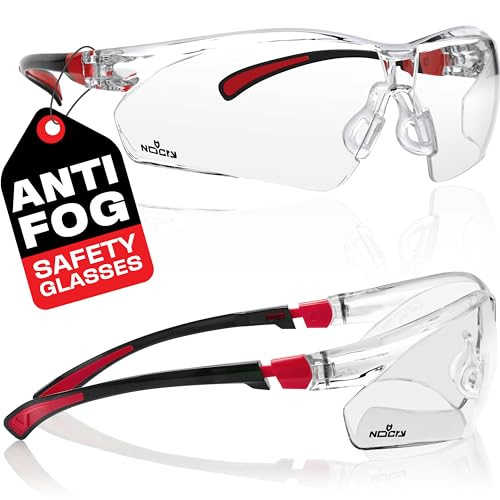
impact-rated safety glasses for hammer work on stone
Safety glasses for striking work are rated to stop a fast-moving fragment, which ordinary sunglasses and prescription lenses are not. Wrap-around styles close the gap at the temple, which is where chips arrive sideways. An anti-fog coating is worth having, because a lens pushed up onto your forehead protects nothing.
Why we picked this exact one: The NoCry clear wrap-around safety glasses carry the ANSI Z87 marking, which is what separates real impact protection from tinted plastic. They hold more than fifty thousand reviews, an unusual amount of evidence for a thirteen-dollar item. The arms run long for smaller faces, but they adjust, and the anti-fog coating holds up on a cold morning.
10x triplet hand lens for identifying minerals in the field
A hand lens is a small folding magnifier you hold close to the eye, bringing the rock up to it rather than the other way round. Ten times magnification is the standard power for mineral work, showing crystal faces, cleavage planes and grain without the shallow focus of stronger lenses. A triplet is built from three cemented elements, which keeps the edge of the view sharp instead of smeared.
Why we picked this exact one: The Ade Advanced Optics 10x21TB-A is a true triplet at a price where most loupes are single-element magnifiers that blur everything outside the middle. Ten times is the power mineral collectors actually use, and plenty of them keep the lens on a cord so it can't be put down and lost. The leather case matters more than it looks, since a scratched lens is a dead lens.
wide-mouth tool tote for carrying field gear and finds
A collecting bag needs a flat reinforced bottom, a mouth wide enough to drop a fist-sized rock through, and seams that survive sharp edges. Most rockhounds end up with something built for tools rather than something built for shopping. Wrapping finds in newspaper before they go in stops them chipping each other on the walk back.
Why we picked this exact one: The WORKPRO 13-inch tool tote has the reinforced base and wide double-zip mouth this job needs, at 4.8 stars across more than six thousand reviews. Plenty of collectors just use a five-gallon bucket, which costs less and works fine; this keeps tools upright in pockets and doesn't bang your shin on a slope. At thirteen inches it fills up heavier than you expect, which is its own kind of discipline.
clear specimen boxes with magnifying lids for storing labelled finds
Specimen boxes are small clear cases, one per find, usually with a lid that magnifies slightly. Each holds the rock and a slip of paper giving where and when it was collected. Twenty of them sounds like plenty until the second trip.
Why we picked this exact one: This DoubleFill 20-pack gives one 1.57-inch cube per find with a 2.5x magnifier moulded into the lid, so a specimen can be inspected without being handled. At 4.2 stars from 68 reviews it is the least-reviewed thing on this list, which says more about how niche the item is than how it performs. The cubes are small, so anything bigger than a walnut wants a flat box instead.
With these five you can walk a creek bed, work a road cut, and come home with things worth keeping. Expect a first trip to produce a bag of gravel and one genuinely good find; that ratio improves quickly once your eye learns what banding looks like under water. If you like hobbies where the gear stays small and the patience does the work, a beginner birdwatching kit runs on the same bargain of good optics, a field guide and time.
When You Want to Open Things Up
Sooner or later a rock refuses to leave its seam, or you get a geode home and realise you have no idea how to open it without turning it into gravel. That's where the second layer starts. None of it is needed on day one, and I'd genuinely wait a few trips, because you'll buy better once you've felt how hard your local rock is.
06Pick 06 of 12
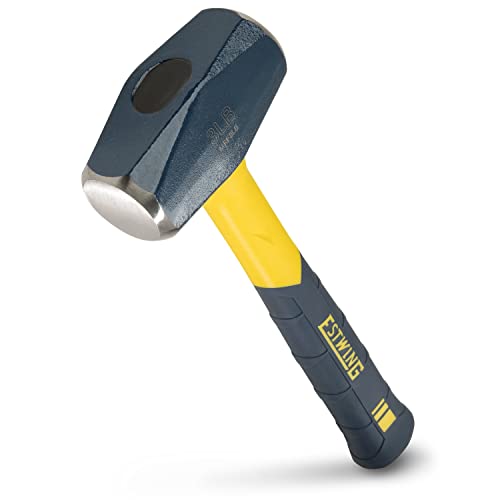
3-pound crack hammer for breaking rock and driving chisels
A crack hammer is a short-handled hand sledge with two flat faces, used to drive a chisel or break a rock along a line you have chosen. Three or four pounds is the usual weight, heavy enough to do work and light enough to swing accurately in one hand. It is a separate tool from a rock pick, and the two aren't interchangeable.
Why we picked this exact one: The Estwing Sure Strike MRF3LB is the 3-pound hand sledge most often paired with the same brand's rock pick, at 4.8 stars across more than eleven thousand reviews. Its fibreglass handle takes the shock better than an all-steel version over repeated hits. It is really a two-tool purchase, because a crack hammer without a chisel just makes smaller rocks.
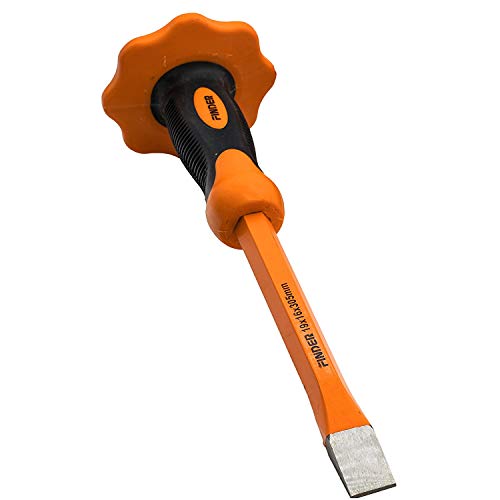
flat stone chisel with a hand guard for splitting along seams
A cold chisel splits rock along bedding planes and seams instead of smashing it, which is how a fossil or a crystal pocket comes out whole. The hand guard is a rubber flange that absorbs the blow when the hammer misses the head. That will happen.
Why we picked this exact one: The Finder 12-inch flat chisel carries the bi-material hand guard that saves knuckles, which is the feature worth paying for on a tool struck with a three-pound hammer. At 4.6 stars from over a thousand reviews it holds an edge well for the price. The head will mushroom over time on hard rock, and that lip wants grinding off rather than striking.
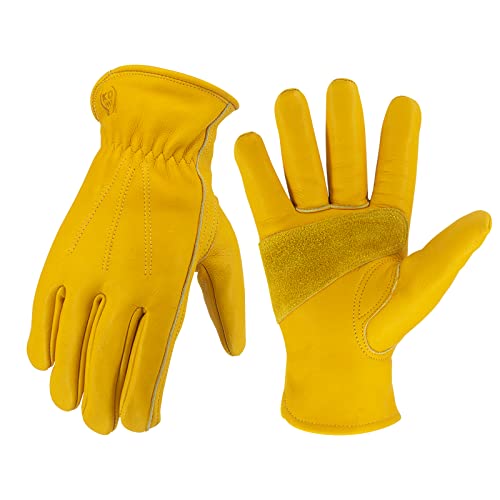
leather work gloves for handling freshly broken stone
Leather work gloves protect against the edges on freshly broken rock, which are far sharper than weathered ones. Cowhide handles abrasion better than synthetic fabric and moulds to the hand after a few outings. A snug fit matters more than thickness, since loose gloves make a hammer harder to control.
Why we picked this exact one: These KKOYING cowhide gloves are reinforced across the palm, which is where rock edges land, and at 4.6 stars from nearly three thousand reviews they outlast the fabric-backed gardening type. Under ten dollars makes them the cheapest insurance in the kit. Sizing runs small, so order up if you're between sizes.
filtered 365nm ultraviolet torch for finding fluorescent minerals
Some minerals glow under ultraviolet light, which turns an ordinary pile of rocks into something else entirely after dark. The wavelength matters: 365 nanometres behind a filter is the one that works, while cheaper 395-nanometre lights flood everything in visible purple and wash the glow out. A filtered lamp looks dim to the eye, and that is the point.
Why we picked this exact one: The DARKBEAM 365nm has the black filter lens that separates a real UV torch from a purple novelty, and its own listing is upfront that it looks less bright than a 395nm lamp precisely because the visible light is being blocked. At 4.6 stars from over a thousand reviews it is remarkably cheap for what it does. Never look into it, and don't expect every rock in the drawer to glow.
rotary rock tumbler for polishing collected stones over several weeks
A rotary tumbler turns a barrel of rocks and grit for weeks at a time, working through coarse, medium and fine stages before the polish. Barrel capacity decides how many stones run at once, and a rubber barrel is quieter and kinder to them than hard plastic. The machine runs day and night, so noise is a real consideration in a flat.
Why we picked this exact one: The KomeStone K2 is the step up from the one-pound plastic kits: brushless motor, thick rubber barrel, and a timer, which all matter when a machine has to run continuously for four weeks. Buy it once you've filled a bucket with rough and know you'll go out again. Before that, a cheap kit teaches the same lesson for a third of the price.
None of this changes whether you find good rocks. It changes what happens to them afterwards. Give a tumbler far longer than you think before you judge it, because the usual mistake is cutting the coarse stage short, and hammer-broken rough can need months in coarse grit alone. If finished results that look impossible are the appeal, these slow crafts with jaw-dropping results run on exactly the same deal: nothing clever, just time.
The Two Things That Actually Hurt People
Rockhounding isn't a dangerous hobby, which is precisely why people get careless at it. The injuries that do happen are boring and preventable, and they come from two directions: what the rock does when you hit it, and where you're standing when you hit it.
Eye protection goes on before the hammer comes out, every single time, including the one quick swing you were only going to do quick. You notice the first chip when it pings off the lens. Gloves come next, because fresh fracture surfaces cut deeply and you'll handle most of the pieces bare-handed if you let yourself. Then there's the ground. Quarry faces and road cuts shed loose material from above without warning, and a road cut puts traffic at your back while you're facing the wrong way. Park properly, work from the side rather than directly under an overhang, and leave anything that looks freshly fallen where it is.
Tell somebody where you're going, especially if the site is half an hour down a forest road with no signal. And know that a legal problem is likelier than a physical one: collecting is fine on much public land and banned outright in national parks, so five minutes spent checking who owns the ground is the most useful habit on this page. If the hazard list puts you off, plenty of creative hobbies adults start from scratch keep you indoors entirely.
The Book Does the Identifying
Identification works by elimination, not by recognition. You test hardness, check the streak, look at how the thing broke, and the guide narrows it down from there. Which means the book teaches you the questions, and the questions are the part that stays with you. Keeping a notebook alongside it helps more than you'd think, in the same way a beginner nature journaling setup makes people notice things they'd walked past for years.
11Pick 11 of 12Book worth reading
comprehensive field guide to rock and mineral identification
A full identification guide organised by physical properties rather than by appearance, so it works as a key rather than a picture book. It covers hardness, streak, cleavage, crystal system and the tests that separate look-alikes. The format is made to be carried rather than shelved.
Why we picked this exact one: Frederick Pough's A Field Guide to Rocks and Minerals, in the Peterson series, is the book long-time collectors call an essential resource and keep going back to for mineralogy questions. It is dense rather than pretty, with fewer colour plates than newer guides and a great deal more substance. At 4.7 stars it is the identification book to own if you only own one.
photographic rock and mineral guide for quick visual narrowing
A heavily photographed guide covering several hundred rocks and minerals, with a specimen image for each and short entries on properties and occurrence. The flexible cover survives a rucksack. It complements a key-based guide rather than replacing one.
Why we picked this exact one: The DK Nature Guide: Rocks and Minerals is the compact photographic guide collectors hand to newcomers alongside a proper key, and at 4.8 stars it is the better-liked of the two books here. It is weaker on diagnostic tests than the Peterson guide, which is exactly why the pair works. At around thirteen dollars, owning both isn't much of a decision.
Buy the national guide first and add a regional one for your own state or county later; that second book is where the useful where-to-go information lives. Write the date and the exact spot in the front of whichever one you carry. Bringing small found things home and keeping them properly is its own quiet pleasure, which is roughly what pressed flower art is built on too.
What Nobody Mentions Until You Get Home With a Bucket
Is it actually legal to take rocks home?
Beginners assume all public land works the same way, and it doesn't. On BLM land in the US you may collect reasonable amounts of rocks, mineral specimens and gemstones for personal use with hand tools, as long as you're not in a developed campground or on somebody's active mining claim. National parks are the opposite, where collecting is prohibited without a research permit. Petrified wood has its own quota on BLM ground: 25 pounds plus one piece per day, capped at 250 pounds a year. Check who owns the ground before you go, because the rule changes at the fence line, not at the state line.
I found an arrowhead next to the agates. Can I keep that?
No, and this is the one that catches well-meaning people. Projectile points, pottery, historic bottles and old metal tools are cultural artifacts, and removing them from federal land is illegal under the Archaeological Resources Protection Act however small or ordinary the piece looks. The same goes for fossils with a skeleton, so dinosaurs, fish and mammals are out, while common shells, corals and plant fossils are usually fine in reasonable amounts. Leave it where it is, photograph it, and note the spot.
How do I tell quartz from calcite when both look like white crystal?
Colour tells you nothing here, which is why people get stuck. Hardness separates them straight away: quartz sits at 7 on the Mohs scale and scratches glass, while calcite sits at 3 and won't mark a copper coin. Keep a few scratch references in the bag, because a fingernail is about 2.5, a copper penny about 3.5, a glass plate 5 to 5.5 and a steel nail about 5.5, and always scratch the unknown rock with the reference rather than the other way round. Calcite also breaks into neat rhombs, where quartz fractures in curved, glassy shells.
Why does everything look so much worse once I get it home?
Because you found it wet. Water does roughly the job a polish does, so a creek pebble that blazed with banding in the stream dries to a chalky grey on the kitchen table. This isn't a sign you picked badly. It's the most common disappointment in the hobby. Wet a candidate before you give it space in the bag, and judge it in that state, because that's what it will look like once it's tumbled or oiled.
I have a bucket of rocks and no idea what any of them are. Now what?
Sort before you identify. Put them into rough groups by hardness and lustre, set aside the genuinely dull two thirds without guilt, and only then work the remainder through a key. The mistake is trying to name every rock in the bucket on the night you get home, which ends in a labelled box of guesses that's worse than no labels at all. Local rock and mineral clubs will go through a handful of pieces with you in ten minutes at a meeting, and one evening of that teaches more than a month of searching.
People Worth Following Into This Hobby
Real practitioners we found while researching this setup — people who do the work, show their process, and publish on sites they run themselves. No sponsorships, no affiliations; we just think they're worth your time.
Photographs and writes up every stone he picks off New Zealand beaches, then tumble-polishes them and publishes the results.
This setup tells beginners that identification is slow and that colour lies; he has spent years documenting exactly that, stone by stone, with the honesty to say when he still doesn't know what something is.
Runs monthly meetings, member field trips to mines and quarries, and a long-running newsletter written by the collectors themselves.
The FAQ here tells beginners to take a bucket of unknowns to a club meeting rather than guess alone; this is a club that has been doing exactly that since the 1950s and says so on its contact page.
Keeps the collecting-site access information, tool photographs and the Rockhound Code of Ethics that Washington's member clubs work to.
The safety and legality sections of this page lean on the collecting ethics that clubs actually enforce on field trips, and this is the plain-language source for them, alongside photographs of the tools in real use.
A Carson City non-profit that runs monthly speaker meetings and member field trips across the Great Basin, and publishes its own reading list.
Beginners reading this will want somewhere to go in high-desert country, where the good ground is scattered and hard to find alone; this club takes members out and names the books it rates.
Love what you see here? Save individual picks with on any item, or copy everything to a list of your own in one click — great for coming back to later, or dropping as a not-so-subtle hint.