
Origami for Beginners: One Sheet, Endless Possibilities
One Square of Paper, a Table, and Ten Quiet Minutes
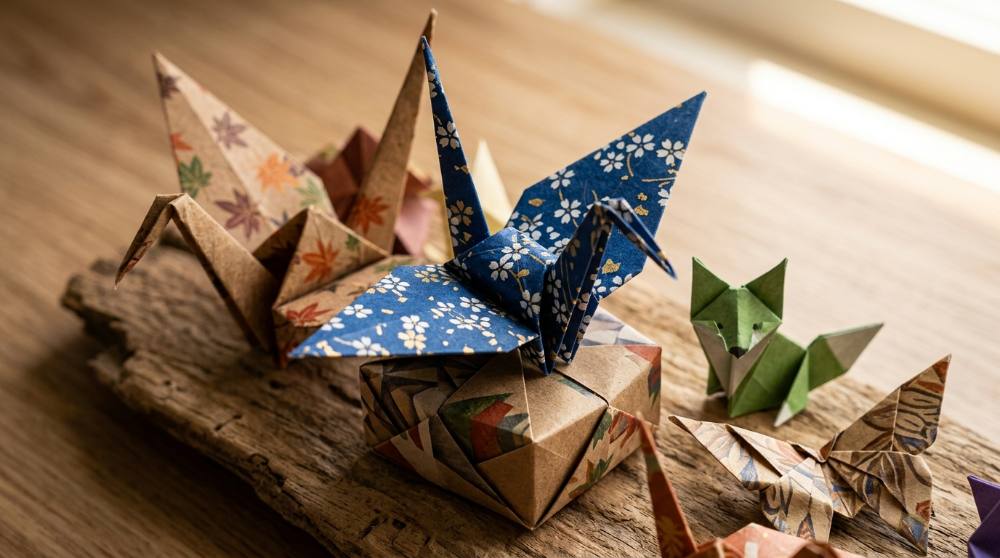
Origami is the art of turning a single square of paper into something — a crane, a jumping frog, a lidded box — using nothing but folds. No cuts, no glue, no tape. It has been folded in Japan since the Edo period, though here is the twist: the no-cutting, color-on-one-side style most of us picture actually absorbed German kindergarten ideas when Japan opened its borders around 1860. Those same folding rules now show up in serious engineering, from heart stents that expand inside an artery to solar panels that unfold in space. Fold a thousand paper cranes, the old legend goes, and you are granted a wish.
Here is the good news. The barrier to entry is almost comically low — you can start with copy paper cut into a square, and plenty of folders do. That low cost is exactly why origami keeps landing on lists of good starter hobbies for adults. Still, there is a real gap between a floppy first crane and a crisp one. It comes down to paper that holds a crease and creases you press flat enough to stay.
My advice: buy almost nothing. A pack of real origami paper and one beginner book will keep you busy for weeks, and your own thumbnail makes a fine crease tool until it doesn't. Add the bone folder when your fingers start to tire, not before.
Everything here is cheap enough that if origami doesn't stick, you're out the price of a sandwich, not a hobby.
Double-sided origami paper in assorted colors, 6-inch squares

Standard origami paper, called kami, comes in pre-cut squares that are colored on both sides and thin enough to fold sharply without cracking. A 6-inch square is the size most beginner diagrams assume, and an assorted-color pack lets you match a model to a mood. Look for sheets cut truly square, since even a millimeter off throws off every symmetrical fold down the line.
Beginner origami instruction book with simple step-by-step projects

A good beginner book teaches the handful of core folds and bases, then walks you through simple models with clear diagrams. Printed instructions beat memory: you can prop the book open, follow the arrows, and unfold when you lose your place. Look for one aimed squarely at beginners, with projects that build on each other rather than jumping to complex designs.
Bone folder creasing tool for sharp, flat paper folds

A bone folder is a smooth, blunt hand tool you run along a fold to press it crisp and flat. Real bone and hard polished plastic both work; the point is a slick edge that burnishes a crease without tearing or shining the paper. It's the difference between a fold that springs back and one that stays put.
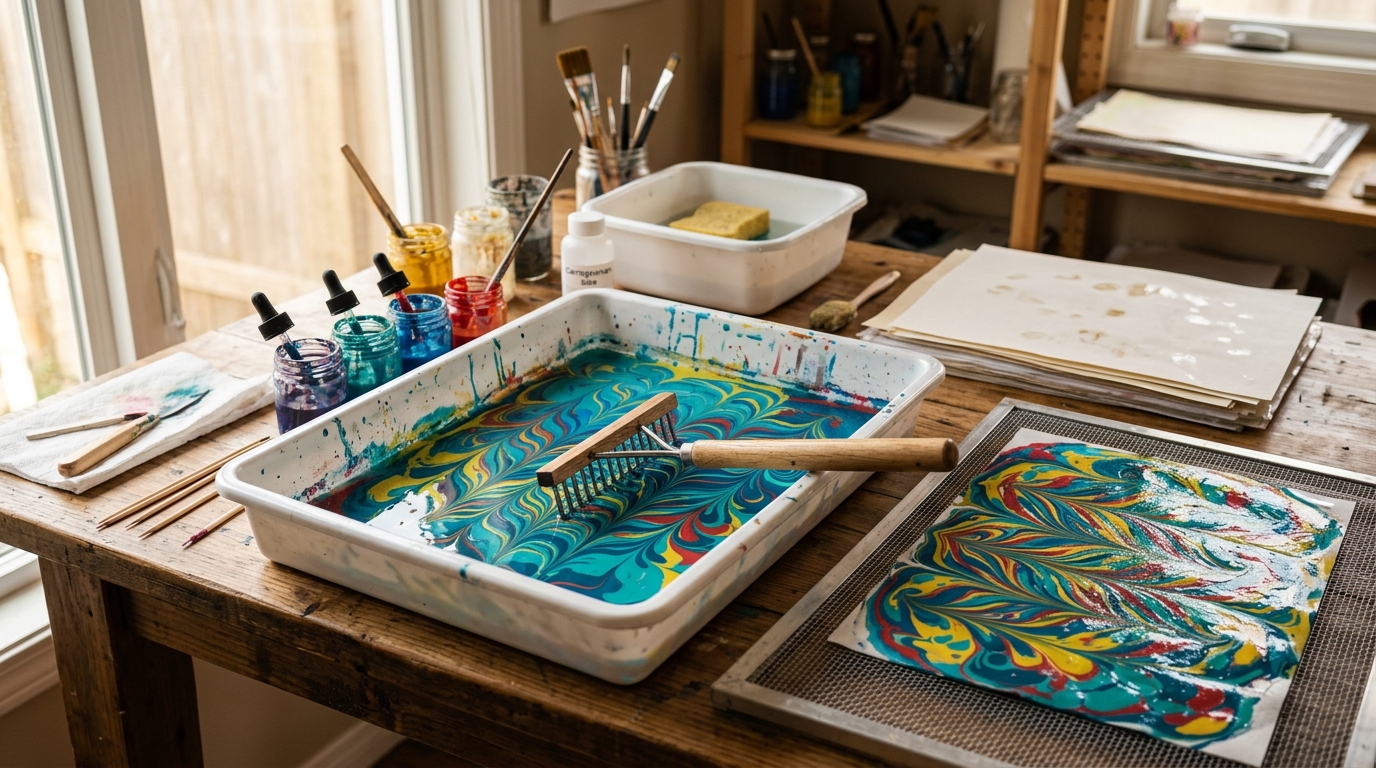
Get these three in a drawer and you can fold most traditional models — cranes, boxes, jumping frogs — from start to finish. Your first few will look rough. That's normal; crisp folding is a motor skill that clicks somewhere around crane number ten. If you enjoy the slow, hands-and-paper side of making things, beginner paper marbling scratches a similar itch. Once folding feels natural, the extras in the next section open up fancier finishes and harder models.
The Upgrades Worth Making Once You're Hooked
None of this is required, and I'd wait until you've folded through that first book before buying any of it. The point here isn't more gear — it's removing small frustrations and unlocking a few showier results. A metallic sheet turns a plain crane into something you'd actually set on a shelf. Tweezers reach folds your fingers can't. And that bone folder, by the way, pulls double duty if you ever wander into beginner bookbinding, where the same tool creases spines.
Metallic foil origami paper for display-worthy finished models

Foil-backed origami paper has a thin metallic layer bonded to paper, giving folds a reflective, jewel-like finish. It also holds a crease exceptionally well and takes sharp points, which is why folders reach for it on showpiece models. The trade-off is that foil remembers every crease, so it's less forgiving of a wrong fold than plain kami.
Fine-tip precision tweezers for small and intricate folds

Precision tweezers give you a second, narrower set of fingertips for the tiny folds that show up in small and modular models. Fine-tip stainless steel lets you pinch a crease, tuck a flap, or hold a point that's too small for a thumb. They're not needed for a basic crane, but they earn their keep as models shrink.
Intermediate origami book with a wide range of models to grow into

A second book with a broader model range is how you keep progressing once the beginner projects feel automatic. Look for one with many designs and dense, well-drawn diagrams, so there's always a slightly harder fold waiting. The best ones grow with you rather than being outgrown in a weekend.
Large 8-inch double-sided origami paper for practice and bigger models

Bigger sheets, around 8 inches, make multi-step models far easier to learn because each fold has more room and thick layers feel less cramped. Beginners often blame themselves when a small sheet is the real problem. Larger paper also produces more impressive finished pieces for display or gifting.
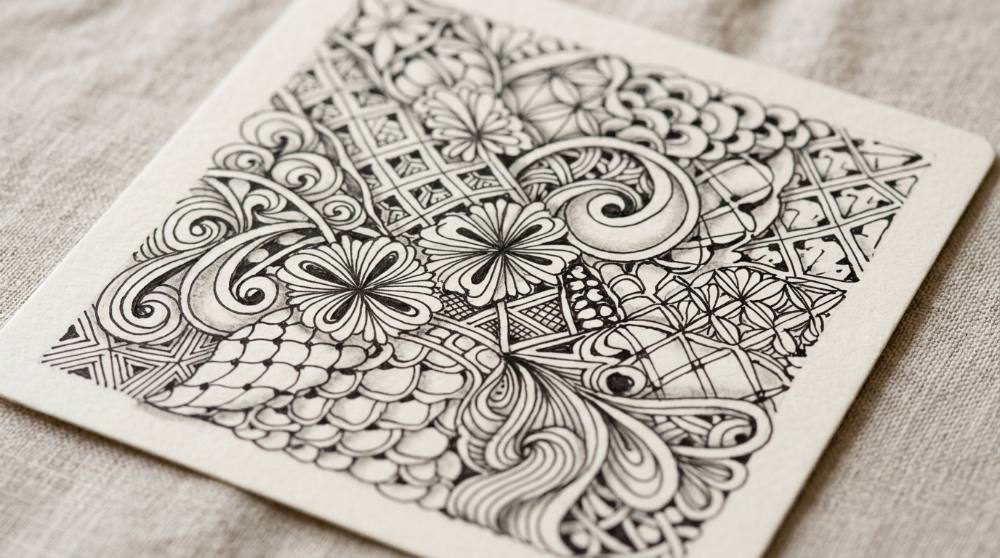
This layer is dessert, not dinner. Buy it slowly, one piece at a time, as your folding tells you what it's missing. Plenty of people stay in the essentials-only zone for years and never feel held back. If origami becomes your gateway into calmer, screen-free evenings, that same pull leads toward beginner Zentangle and structured doodling. Both reward patience over speed, and neither costs much to try. And if you're still weighing whether this is your thing at all, it's worth a look at how to choose your first hobby before the next paper order.
Why Your Crane Keeps Coming Out Crooked
Why does my model get messier with every fold instead of neater?
Beginners tend to rush the first two or three folds, figuring the real precision comes later. It's backwards. Every later fold lines up against those early creases, so a corner that's a millimeter off at the start becomes a gaping mismatch by the end. Slow down at the very beginning, line up corners exactly, and press those foundation creases hard — the rest of the model inherits whatever you do here.
I bought a giant cheap pack of paper — why do my folds still look off?
Not all paper sold as origami paper is cut truly square, and the cheapest bulk packs are often a hair rectangular. Since most models are symmetrical, an off-square sheet will never line up no matter how careful you are, and you'll wrongly blame your own folding. Check a sheet against a book corner or ruler before you commit to a pack. If it's off, trim it square or keep that pack for practice scribbles.
Should I learn a new model on small paper or big paper?
The instinct is to grab a small sheet for a hard model so you don't waste the nice paper. That backfires. Thick layers get impossibly cramped at 6 inches, folds slip, and an otherwise learnable model starts feeling impossible. Learn anything new on the biggest paper you have, then size down once your hands know the sequence by heart.
Why does my paper tear or go fuzzy right at the trickiest folds?
Reverse folds and sinks make you crease, unfold, and re-crease the same spot several times, and thin kami weakens fast under that stress, especially if you dig in with a fingernail. The fibers give out exactly where the model is hardest, which is maddening. Fold each crease decisively once, use the smooth edge of a bone folder instead of a nail, and reach for sturdier paper on models packed with reverse folds.
FORK_CTA_HINT