Sumi-e Ink Wash for Beginners: One Brushstroke, One World

Sumi-e Ink Wash for Beginners: One Brushstroke, One World

DariaCurated by Daria
Jump to the 14 picks

Black Ink, White Paper, and No Undo Button

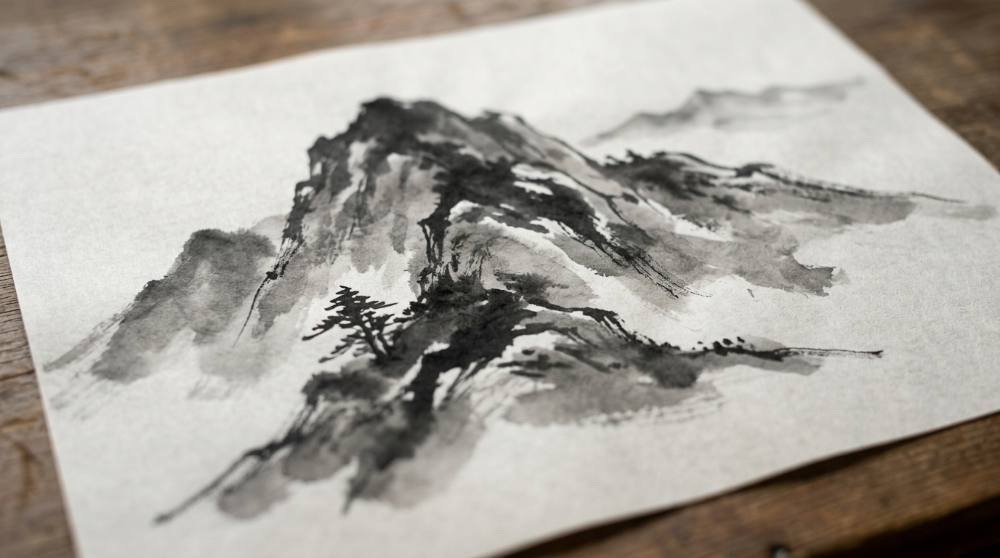
One brush, one black ink, and every grey in between — that's the whole palette. You thin part of the ink with water, load the brush, and a few strokes later there's a mountain or a stalk of bamboo. The style grew up in Tang-dynasty China and crossed to Japan in the 1300s with Zen monks, and it's still taught in temple halls and community centres there. The odd part is the ink. Traditionally it comes as a hard stick of soot bound with animal glue, often perfumed with clove or sandalwood, so grinding it fills the room with a faint smell of incense.

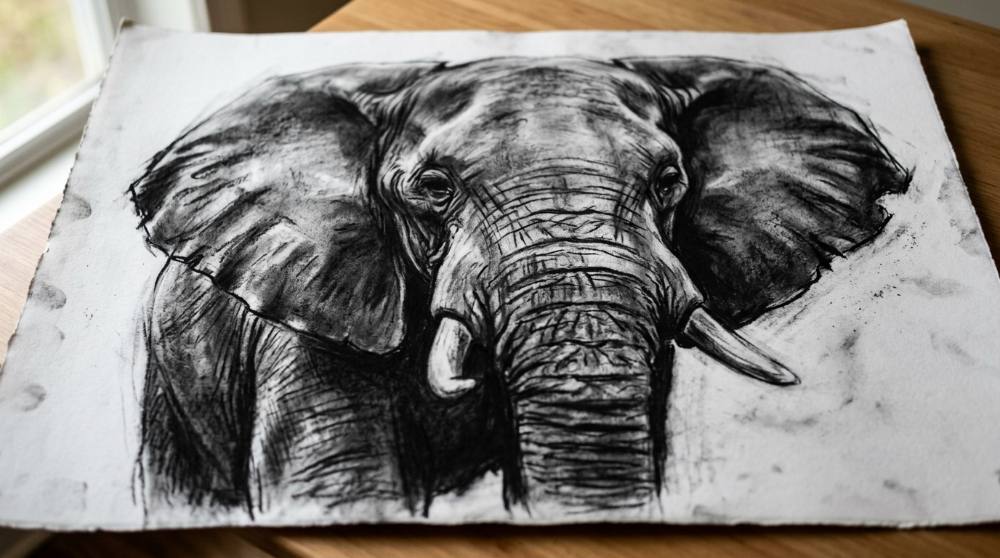
What catches people out is that nothing here can be fixed. Ink soaks into the paper on contact: no lifting it, no painting over it, no erasing. Your first bamboo will look like a row of limp asparagus, and you'll paint twenty more before one of them looks like bamboo. That's normal. Being bad at this is cheap, which helps, because paper comes fifty sheets at a time. If you'd rather work in black and white with something you can smudge and lift back off, charcoal drawing is the forgiving cousin of this hobby.

Our advice: buy as little as you can get away with. A brush, a bottle of ink, a stack of absorbent paper, a felt mat to catch what soaks through, and a white dish to mix your greys in. That's a working setup. Everything else on this page can wait months.

Nothing below costs enough to make you feel guilty if the whole thing turns out not to be for you.

bamboo-handled ink brushes in three sizes for sumi-e strokesbamboo-handled ink brushes in three sizes for sumi-e strokes

Pick 01 of 14

bamboo-handled ink brushes in three sizes for sumi-e strokes

An Asian painting brush has a stiff inner core wrapped in softer outer hair, which lets it hold a lot of ink and still come to a fine point. The three-size format covers most of what a beginner paints: a large one for washes and leaves, a medium for stems, a small for detail. Look for a bamboo handle and hair that springs back into a point when you roll it damp between your fingers.

Why we picked this exact one: The I-MART Chinese Calligraphy Brush Set of 3 covers small, medium and large for the price of one decent Western brush. At 4.2 stars it isn't the highest-rated set on the page, but it has the review history to back that rating up, and beginner sets in this bracket routinely stay in use for years. The sizing runs on the small side, which is fine for A4-ish work and less so for big sweeping strokes.

See it on Amazon
bottled liquid sumi ink for brush paintingbottled liquid sumi ink for brush painting

Pick 02 of 14

bottled liquid sumi ink for brush painting

Liquid sumi ink is ready to use straight from the bottle, so you can skip the grinding stone at the start. It pours dense and black, and everything lighter comes from diluting it with water in a dish. Check that it's sold for sumi or calligraphy rather than as a general waterproof drawing ink, because the binders in the latter are hard to rinse out of brush hair.

Why we picked this exact one: Yasutomo's Bokuju liquid ink is one of the bottles that comes up repeatedly when beginners ask where to start, and 6oz is enough for a year of practice at beginner pace. It holds 4.7 stars across a large review base. The bottle is plain and the cap is nothing special, but the ink dilutes to clean, even greys, which is the whole job.

See it on Amazon
half-sized xuan paper sheets for ink wash paintinghalf-sized xuan paper sheets for ink wash painting

Pick 03 of 14

half-sized xuan paper sheets for ink wash painting

Xuan paper comes in three grades: raw, which drinks ink and blooms; ripe, which is sized and holds a crisp edge; and half-ripe, which sits between them. Half-ripe is the usual recommendation for a first pack, because it still gives the soft bleed the style depends on without punishing every slightly wet brush. Sheets this size are meant to be cut down, and most beginners get two or three paintings out of one.

Why we picked this exact one: The Corciosy half-raw-ripe pack is one of the few listings that states its sizing grade outright, which matters because "rice paper" on Amazon covers everything from tracing tissue to card. Fifty sheets at 4.6 stars is enough paper to be careless with. It's a smaller seller than the 100-sheet bargain packs, so the review count behind that rating is modest.

See it on Amazon
wool felt underlay mat for absorbent painting paperwool felt underlay mat for absorbent painting paper

Pick 04 of 14

wool felt underlay mat for absorbent painting paper

A felt mat goes under the paper and does two jobs at once: it soaks up the ink that passes through the sheet, and it grips the paper so it doesn't slide mid-stroke. Wool or a wool blend a few millimetres thick is the standard. Buy one a little larger than the paper you use, since anything hanging over the edge is where the mess starts.

Why we picked this exact one: The MEGREZ felt mat is a wool-fibre blend at 19.6 by 27.5 inches, which covers a standard half sheet of xuan paper with room to spare. Its 4.5-star average across nearly 400 reviews is the strongest record in a category full of two-review listings. It's grey rather than the traditional white, so stray ink marks show less over time.

See it on Amazon
white porcelain wells for mixing graded ink washeswhite porcelain wells for mixing graded ink washes

Pick 05 of 14

white porcelain wells for mixing graded ink washes

Ink wash painting works in at least three ink strengths, and each one needs somewhere to live while you paint. Separate wells let you keep a pale wash, a mid grey and full-strength ink side by side and reload without remixing. White isn't decorative here, because you can't judge how dark a grey is against a dark or coloured surface.

Why we picked this exact one: The MEEDEN 7-well porcelain tray offers more dilutions than most people will use, in the plain white glaze that judging ink tone needs. At 4.8 stars over 1,300 reviews it's the most consistently rated dish in this bracket. Porcelain does chip if you knock it off the desk, but it wipes clean of ink where plastic palettes stain grey.

See it on Amazon

With those five things on the table you can start tonight, and the first hour will mostly go on discovering how much water your brush is actually holding. If you're still weighing up a first hobby, the session length is a real argument for this one: twenty quiet minutes and a single sheet worth keeping. Everything after this section is what you'll want later. None of it is urgent.

When You're Ready to Grind Your Own Ink

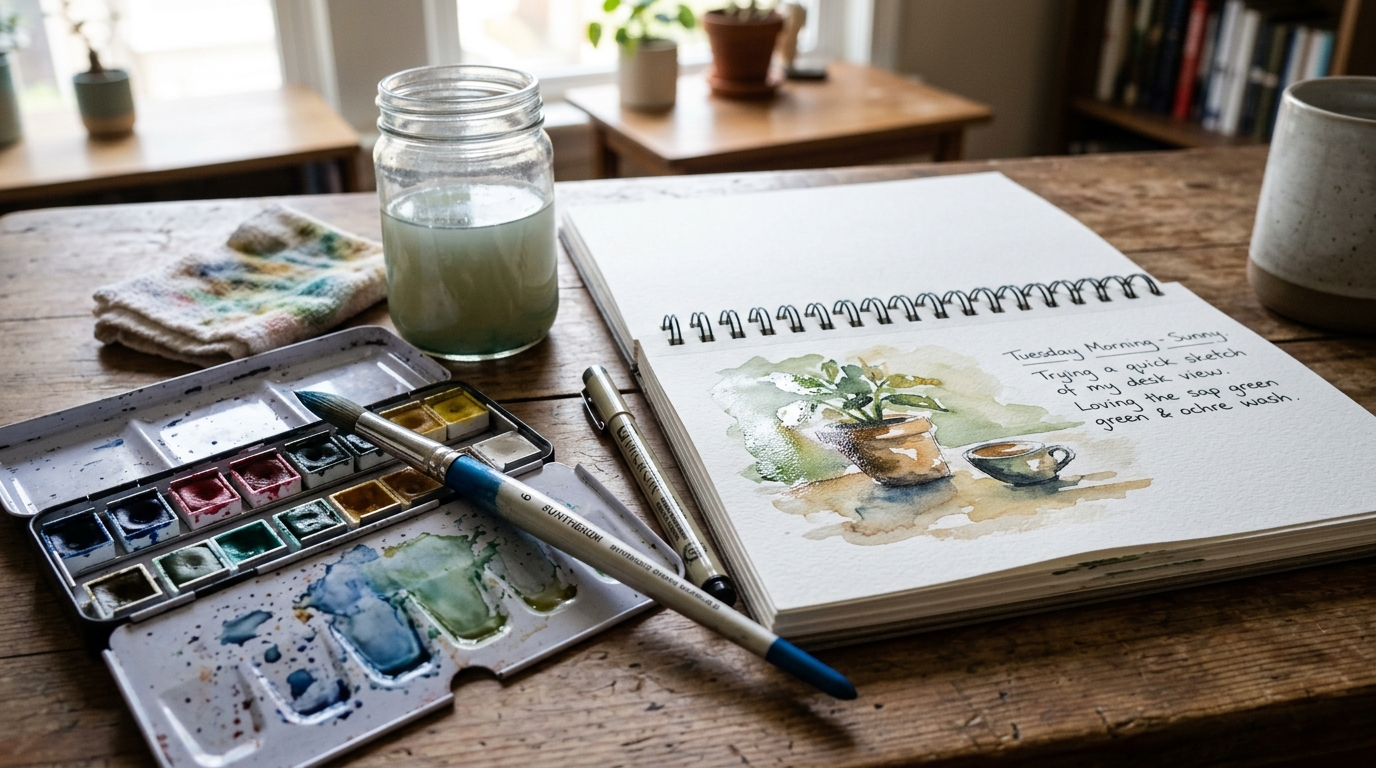
Bottled ink will carry you a long way. Plenty of people never move past it. But at some point you'll want to know why every book goes on about the stone. Grinding is slow on purpose — you add a little water, work the stick in circles, and by the time the ink is dark enough you've stopped thinking about your day. You also get control: less water for a black that sits on the paper like lacquer, more for the pale washes that make distance. Bottled ink hands you one strength to dilute down from, while a stone lets you start anywhere. If the water-control side of that appeals, watercolour journaling scratches a similar itch in colour.

solid oil-soot ink stick for grinding fresh inksolid oil-soot ink stick for grinding fresh ink

Pick 06 of 14

solid oil-soot ink stick for grinding fresh ink

A solid ink stick is soot bound with animal glue, ground against a wet stone to make ink on the spot. Oil-soot sticks carry more glue and give a warm black that spreads less on the paper, while pine-soot sticks have less and run cooler and bluer. A stick this size lasts an extremely long time, since one session uses a barely visible amount of it.

Why we picked this exact one: The Hukaiwen oil-soot ink stick is a handmade block at a price that makes experimenting painless, and oil soot is the more forgiving of the two types for painting rather than lettering. It sits at 4.4 stars over 240 reviews, unusually solid for this category. It needs a stone to be any use at all, so it's only worth buying alongside one.

See it on Amazon
natural grinding stone with lid for making ink from a sticknatural grinding stone with lid for making ink from a stick

Pick 07 of 14

natural grinding stone with lid for making ink from a stick

An inkstone is a shallow stone dish with a flat grinding face and a well that the ink runs down into. You add a few drops of water, work the stick in slow circles, and stop when the ink is as dark as you want it. A lid matters more than it sounds, because ink left open dries into the well and has to be scrubbed out.

Why we picked this exact one: The Easyou natural inkstone runs 4 inches with a fitted cover and ships with a small ink stick, so it works on its own if you want to test grinding before committing further. It holds 4.6 stars across 121 reviews, the best record among stones that clear a meaningful review count. The included stick is a basic one, which is part of why a better stick is worth buying separately.

See it on Amazon
reusable water-writing cloths for stroke practicereusable water-writing cloths for stroke practice

Pick 08 of 14

reusable water-writing cloths for stroke practice

These cloths darken where water touches them and fade back to blank within a few minutes, so a brush loaded with plain water behaves roughly the way ink behaves on paper. They're for drilling the same stroke over and over without burning through sheets. The fade means you can't keep anything, which is rather the point.

Why we picked this exact one: The Dianelhall set gives six cloths at 17 by 13 inches, enough to leave one permanently on the desk and still have spares. It holds 4.4 stars over 289 reviews, the strongest record among reusable practice cloths. The surface is gridded for characters rather than painting, so you end up working around the lines a little.

See it on Amazon
weighted bar for holding thin painting paper flatweighted bar for holding thin painting paper flat

Pick 09 of 14

weighted bar for holding thin painting paper flat

A calligraphy paperweight is a long, heavy bar laid across the top of the sheet. Xuan paper is thin enough to lift, curl and drift under a moving brush, and a bar along one edge stops all of that. Weight matters more than length, since a light decorative one just slides along with the paper.

Why we picked this exact one: The MEGREZ cast-iron carp weighs about 435 grams across 7.3 inches, enough to hold a half sheet without covering the area you're painting. It sits at 4.9 stars, the highest in the category, though on only 56 reviews. It costs more than a plain brass bar would, and you're partly paying for the fish.

See it on Amazon
bamboo slat roll for drying and storing brushesbamboo slat roll for drying and storing brushes

Pick 10 of 14

bamboo slat roll for drying and storing brushes

A bamboo roll holds brushes in separate channels with air moving around them. Washed brushes are usually left where air can reach them rather than shut away, because damp trapped at the base of the hairs is what eventually loosens a head. Rolled up, it also carries brushes without crushing the points.

Why we picked this exact one: The Easyou bamboo roll is the traditional slat design at under ten dollars, and 4.3 stars over 117 reviews is a real record in a category of near-anonymous listings. At 14 by 12.5 inches it takes a full beginner's set with room left over. The tie strings are thin, and they're the first thing on it that will fail.

See it on Amazon

I'd skip the ink stick for a while if extra setup tends to put you off, since grinding adds a few minutes to the front of every session and some evenings that's the difference between painting and not painting. The paperweight is the sleeper here. Rice paper curls and slides, and one weight along the top edge kills a frustration most beginners blame on their own clumsiness. Small things like that decide whether a hobby sticks, which is worth remembering if you're working through a list of starter hobbies for adults.

Colour, Fine Lines, and a Red Stamp of Your Own

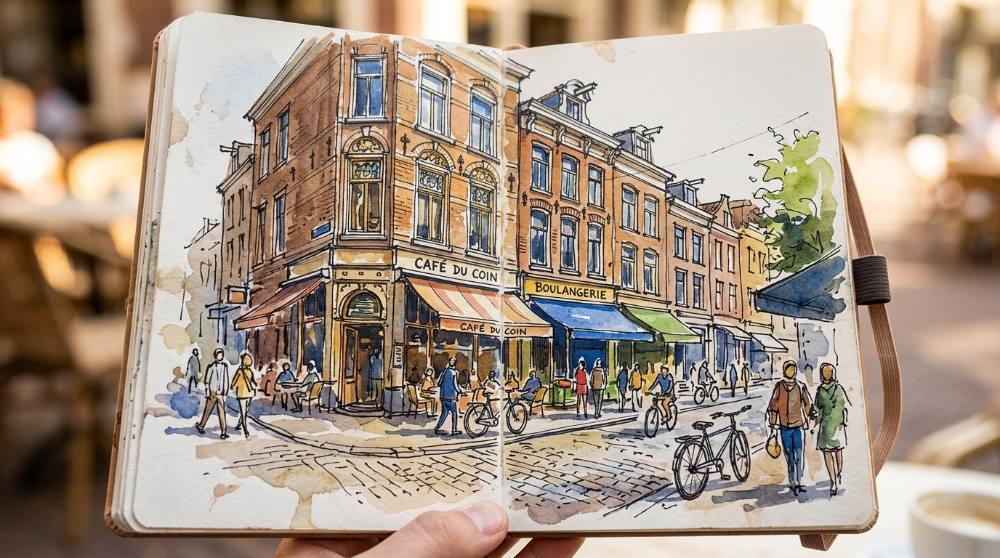
Strictly speaking, sumi-e is black ink and nothing else. In practice painters have been sneaking colour in for centuries — a wash of blue behind a mountain, one flush of pink on a plum blossom. The rule of thumb is that colour should look like it arrived late and only stayed a minute. The other two items here go in the opposite direction: a wide flat brush for skies and water, and a set of very thin ones for the lines a big brush turns into blobs. Then there's the seal. A red stamp in the corner is how a piece gets signed, and pressing it on is the most satisfying two seconds of the whole process. If you like the idea of ink lines away from a desk, urban sketching tends to end up on the same table as this.

traditional Chinese painting colours in tubes for ink worktraditional Chinese painting colours in tubes for ink work

Pick 11 of 14

traditional Chinese painting colours in tubes for ink work

Chinese painting colours are made to sit over and beside ink rather than replace it, so they stay transparent and let the brushwork show through. Twelve is the standard set size and covers the mineral and plant colours the tradition actually uses. They get used sparingly, thinned heavily and applied as one flush of colour rather than as full coverage.

Why we picked this exact one: Marie's is the brand that comes up by name in Chinese painting circles as the standard student-grade colour, and this twelve-tube 12ml set is the usual configuration. At 4.6 stars over 1,100 reviews it's the best-documented option on Amazon. Tube colour dries out if the caps aren't seated properly, which is worth a second's attention each time you finish.

See it on Amazon
wide flat goat-hair brushes for skies and background washeswide flat goat-hair brushes for skies and background washes

Pick 12 of 14

wide flat goat-hair brushes for skies and background washes

A hake is a wide, flat, soft brush made for laying an even wash across a large area in one pass. Goat hair carries a lot of water and releases it slowly, which is what keeps a big wash from streaking. Three widths cover everything from a narrow band of mist to a full background.

Why we picked this exact one: The XDT hake set covers roughly one, two and three inches in goat hair, which is the useful spread for paper up to about half a sheet. At 4.4 stars over 300 reviews it's the most reviewed hake set in the budget bracket. Rinse it and tug gently at the hairs before the first wash, since flat goat brushes typically shed a little until they settle.

See it on Amazon
fine outline brushes for thin, controlled ink linesfine outline brushes for thin, controlled ink lines

Pick 13 of 14

fine outline brushes for thin, controlled ink lines

Line-drawing brushes are long and very thin, built to hold enough ink to draw an unbroken line without reloading halfway. They're the tool for outlines, stems, whiskers, insect legs and anything a leaf-sized brush turns into a blob. Held upright rather than angled, they give about the thinnest mark a brush can make.

Why we picked this exact one: The TIUSUTA four-brush line-drawing set covers several thicknesses of fine line for the price of a coffee, which is the right way to find out which one you actually reach for. It carries over a thousand reviews at 4.3 stars, far more history than most brushes this size. The handles are lightweight and feel cheap in the hand, which matters a good deal less than the point does.

See it on Amazon
red oil-based seal paste for stamping a finished paintingred oil-based seal paste for stamping a finished painting

Pick 14 of 14

red oil-based seal paste for stamping a finished painting

Seal paste is a thick, oil-based red compound rather than a liquid ink: you press a carved stone seal into it and then onto the paper. That consistency is what gives the crisp, slightly raised red mark you see in the corner of ink paintings. Kept closed, a box of it stays workable for a long time.

Why we picked this exact one: The Marsrut seal paste set is three 30g boxes of oil-based red paste, cheap enough to keep one in a travel kit. It clears 4.3 stars over 56 reviews, more track record than most seal pastes carry on Amazon. It doesn't include a seal, so you'll need a carved stone before any of it is useful.

See it on Amazon

None of this is for month one. Buy it when a specific painting demands it, not before — an unopened box of twelve colours is a slightly sad object. The fine brushes are the ones I'd get first, because the moment you try to paint a bird's leg with a brush built for bamboo leaves, you'll understand exactly why they exist.

The Questions That Come Up Around Sheet Number Four

Why are my lines fuzzy on the proper rice paper but fine on watercolour paper?

Almost everyone blames the paper and goes hunting for a sized version instead. It's the brush. Raw xuan is thirsty, so a brush carrying too much water dumps it into the fibres and the edges bloom outward before the stroke is finished. Keep a scrap sheet beside you and touch the brush to it first, and if it leaves a wet halo, blot more out. Painters who work on raw paper get clean lines with quite dilute ink, so the ink strength isn't your problem, the water is.

Can I just use the India ink I already have?

It's the most common shortcut and it quietly ruins brushes. Many India inks are waterproof formulas whose binder sets deep in the hairs where rinsing doesn't reach, so the brush stops coming to a point and starts to splay. You'll notice around week two, when your fine strokes go furry. Use ink sold for sumi or calligraphy instead. If you've already done it, wash the brush in lukewarm water straight after every session and accept that it may not fully recover.

The ink went through the paper and onto my table. Did I buy the wrong stuff?

No, raw xuan is thin and unsized, and soaking through is simply what it does. The mistake is painting directly on a hard surface. Felt underneath takes the excess and stops a pool forming beneath the sheet, which is what causes those grey blotches that appear on the front from nowhere. Use a mat a little larger than your paper, and read the ink on it as a sign that things are working.

How do I get three different greys out of one brush?

Beginners try to mix the tones on the paper and end up with mud. Set the dilutions up first in separate white dishes, one pale, one mid grey, one at full strength, because you can't judge ink tone against a dark or coloured surface. Fill the brush from the palest dish, then touch just the tip into the darker one, and a good brush will hold both and lay them down in a single stroke. Press the loaded brush against the rim of the dish before you paint. That sheds the excess and pulls the hairs back into a point.

Why does everyone start with bamboo when I want to paint landscapes?

Bamboo is one of the Four Gentlemen, along with plum blossom, orchid and chrysanthemum, and those four have been the standing curriculum of ink painting for centuries. They aren't beginner subjects in the sense of being easy. They're a small set of shapes that between them demand nearly every brush move the style uses, which is why teachers keep you there. Skipping straight to mountains usually buys you a year of paintings that look almost right without your being able to say why.

Love what you see here? Save individual picks with on any item, or copy everything to a list of your own in one click — great for coming back to later, or dropping as a not-so-subtle hint.

Disclosure: Some product links may be affiliate links. If you make a purchase through one of these links, we may earn a small commission at no extra cost to you.