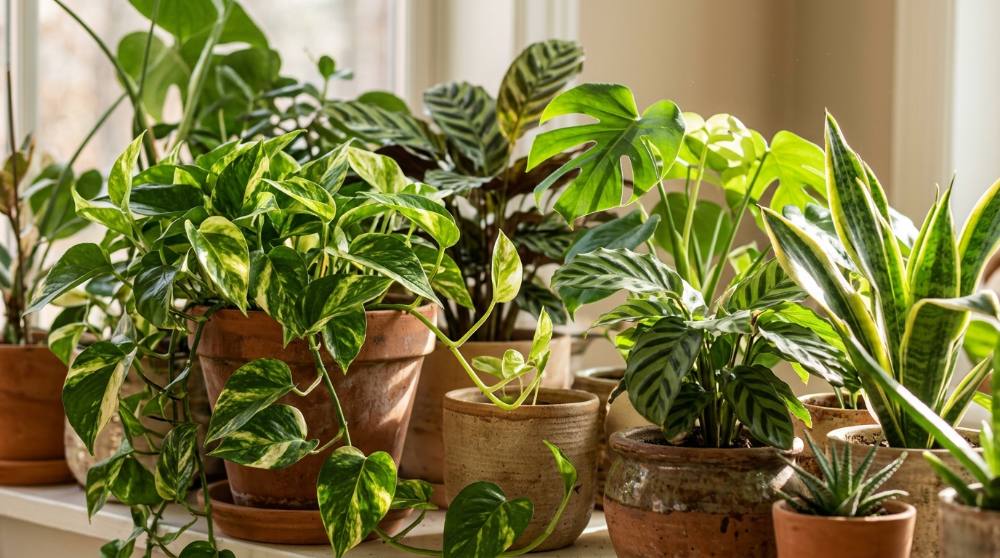
Most houseplants began as understorey plants somewhere warm and humid, and now they live on a shelf in your flat. People keep them in offices, in student rooms, in bathrooms with one frosted window. The habit traces back to a London doctor, Nathaniel Bagshaw Ward, who in 1829 sealed a moth cocoon into a glass jar with some damp soil and noticed a fern spore sprouting happily inside; his glass cases went on to carry living plants through months at sea, and Victorian Britain promptly lost its head over ferns. One thing does still surprise people. The old line about houseplants purifying your air does not hold up, and when researchers reanalysed thirty years of chamber studies in 2019 they put the requirement at somewhere between 10 and 1,000 plants per square metre of floor to match what a couple of open windows already do.
Nearly everyone's first houseplant dies, and almost nobody works out why. It is rarely neglect. It is a handsome pot with no hole in the bottom, filled with dense bagged soil that stays wet for a fortnight, parked three metres from the nearest window. Fix those three things and the plants that were supposedly impossible turn out to be fine. That is all a plant corner really is: a spot with enough light, and pots that let water leave.
Our philosophy here is to buy almost nothing. A pot that drains, a bag of mix and a scoop of perlite will keep two or three plants alive for years, and the plants themselves are better bought from a local garden centre than shipped in a box. Everything after that is comfort.
Nothing on this page costs more than a decent takeaway, so if you discover in March that you would rather not own plants, you have lost very little.
Where This Little Kit Can Take You
A few real moments and results from this hobby — made with tools no fancier than the ones below.
A shelf unit turned jungleEvery pot on it started as one plant on a windowsill.
Firming soil around new rootsPress just enough to hold the plant upright, no harder.
None of this asks much of your week. Plants have no deadline, which is a large part of why they suit people who have bounced off hobbies that do; if you are trying to build a small creative routine that survives a busy month, watering three pots on a Sunday is about as low-friction as a habit gets. The pictures below are what this looks like after a year or two, not after a week.
The Three Purchases That Decide Everything
Buy the plant last. That sounds backwards, but the pot and the soil are what kill plants, and a healthy pothos from a garden centre will sit happily in its nursery pot for weeks while you sort out the rest. Nursery pots are ugly and they are also close to perfect: thin plastic, half a dozen holes in the base, sized to the roots currently filling them. The mistake almost everyone makes on day one is tipping the plant straight out of that and into a sealed ceramic cube because the cube matched the shelf.
So the shopping list stays short. Something that drains, something to fill it with, and something to make that fill drain faster. If you are still deciding whether this is your hobby at all, it is among the cheapest entries on any shortlist of first hobbies worth trying, and the kit keeps working for years afterwards.
Disclosure: This section may contain affiliate links to Amazon. We may earn a small commission from qualifying purchases at no extra cost to you.
01Pick 01 of 10
ceramic plant pots with drainage holes and saucers
A graduated set of glazed ceramic pots, each with a hole punched through the base and a matching saucer to catch what runs out. The sizes step up from about four inches to just under seven, which covers the pot sizes most houseplants are sold in. When choosing a set, look for a hole you can actually see rather than a dimple the maker left unpunched, and a saucer deep enough to hold a few tablespoons of water.
Why we picked this exact one: The Ton Sin textured ceramic set of three earns its place because all three pots have genuine drainage holes and matching saucers, which is rarer among decorative ceramics than you would expect. It holds 4.6 stars across more than 2,600 ratings, and the matte texture hides the pale water marks that show up on gloss white. The smallest pot is genuinely small and suits a rooted cutting rather than a full plant.
A bagged, soilless growing medium built from peat or coir, aged bark and perlite rather than ground-up earth. It holds water without setting into a solid block, and it arrives free of the weed seeds and insect larvae that garden soil carries indoors with it. A cubic-foot bag is far more than a few pots need, but it keeps for years if you fold the top over and store it dry.
Why we picked this exact one: Espoma's Organic Potting Mix is the bag to reach for, with a peat-and-perlite base that stays open instead of slumping after a few waterings. It sits at 4.7 stars from over 13,000 ratings. A mild starter feed is already in it, so a freshly potted plant will not need fertiliser for a couple of months; the catch is the full cubic foot, which is a lot to find space for in a flat.
coarse horticultural perlite for opening up potting mix
Perlite is volcanic glass heated until it pops into light, white, porous grit. Stirred through bagged mix it creates air pockets that stop the medium packing down, so water runs through instead of sitting. Coarse grades do the job far better than the dust-fine kind, which vanishes into the soil and changes very little.
Why we picked this exact one: The MDPQT professional-grade horticultural perlite comes in a coarse grade, which is the part that matters: fine perlite compacts along with the soil, and this stays chunky. It rates 4.5 stars across roughly 760 ratings. Ten quarts is generous for indoor use, and like all perlite it carries white dust, so mix it outside or dampen the bag before you pour.
Mix the perlite through before you pot anything. One part perlite to four parts mix is the mild, forgiving end of what growers use, and people who water often go as far as half and half; err toward more perlite if you know you are heavy-handed. Leave the plant in its nursery pot and drop the whole thing into a prettier pot if you prefer the look, just lift it out to water and let it stop dripping before it goes back. Potting up is also a genuinely good job to hand a child, since the worst outcome is soil on the floor, much the same bargain as a first outdoor patch for kids.
What Actually Makes the Next Year Easier
None of this keeps a plant alive. It makes keeping one alive less of a guessing game, which for most people is the difference between three plants and thirty. The honest order of importance runs light first, then a way to tell what is happening under the surface, then convenience. The watering can is pure convenience and I would still buy it early, because a stubby spout puts water everywhere except the soil.
Light is where beginners are most confidently wrong. “Bright indirect” gets repeated everywhere and almost nobody checks it. Growers who do measure work in foot-candles, and the numbers are blunt: houseplants grow nicely at roughly 400 to 800, do acceptably between 200 and 400, and merely survive below that. A free lux app on your phone, divided by about eleven, gets you close enough to discover that the corner you had mentally filed as bright is nothing of the sort.
04Pick 04 of 10
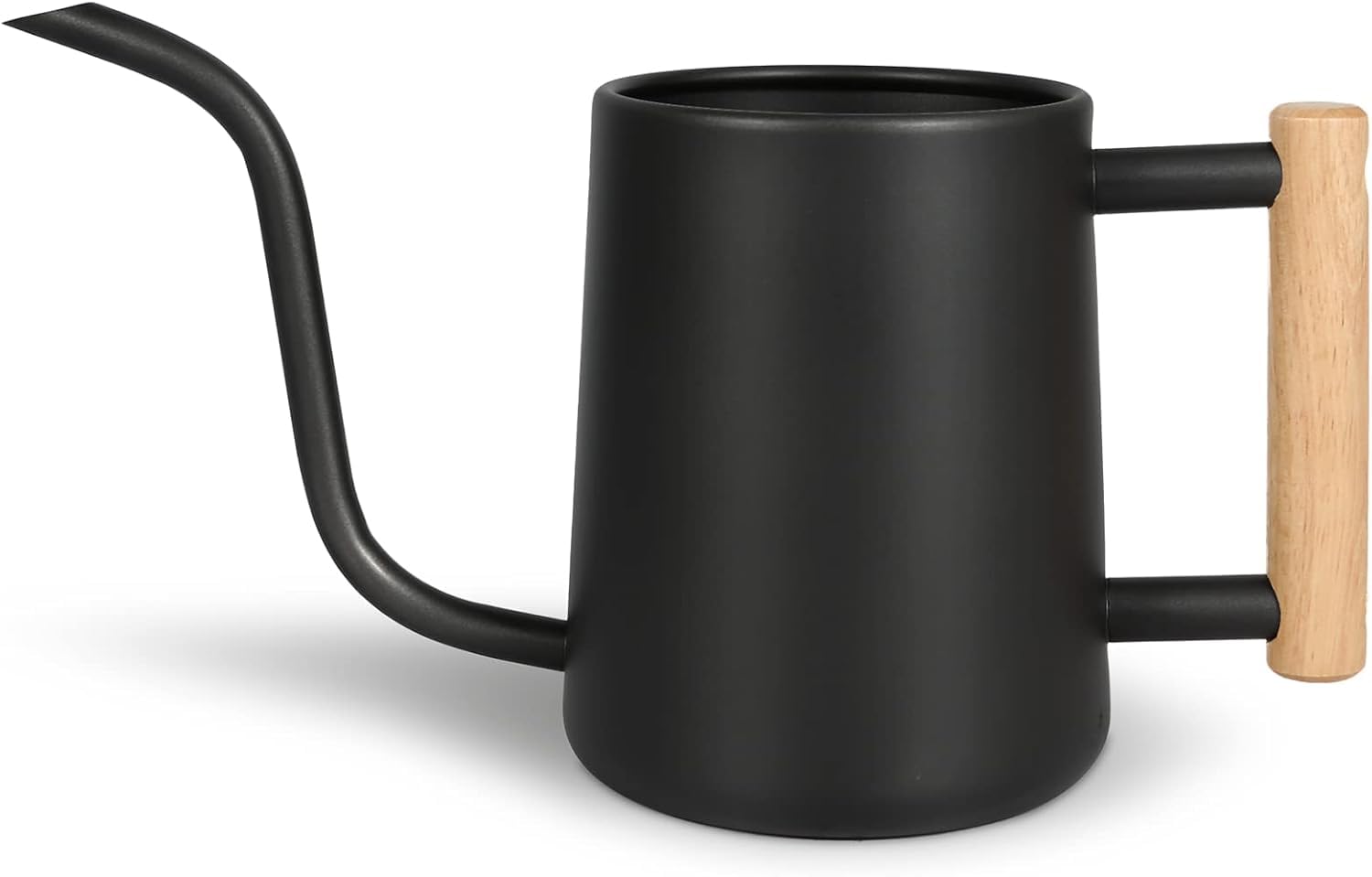
long-spout watering can for indoor plants
A small metal can with a spout narrow and long enough to reach under foliage and put water on the soil instead of the leaves. One litre is about right indoors: enough for three or four pots, light enough to hold steady at arm's length. The narrow bore also slows the pour, which helps when you are trying to soak a pot without flooding the saucer.
Why we picked this exact one: The LTSUMI 35 oz stainless steel can has the long, narrow spout that makes this manageable, and it holds 4.7 stars across more than 2,200 reviews. A litre means a refill if you keep more than a handful of plants, which is the trade-off for something you can hold one-handed over a crowded shelf.
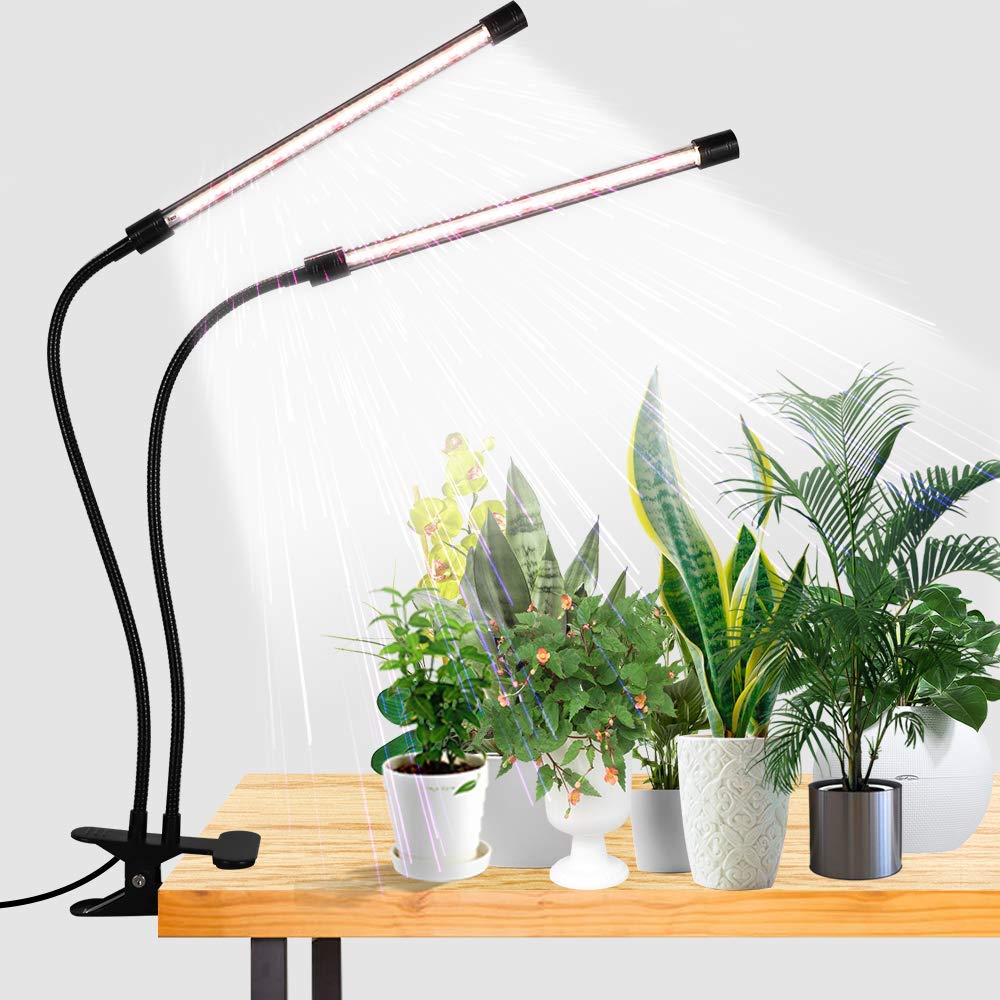
clip-on full-spectrum LED grow light for dark rooms
A small LED panel on a flexible gooseneck that clamps to a shelf edge and points light where the window does not reach. Full-spectrum white models look like ordinary daylight in a room, unlike the purple blue-and-red panels sold for growing vegetables. Most include a timer, which matters because plants respond to a consistent day length rather than to whatever you remember to switch on.
Why we picked this exact one: The GooingTop 6000K gooseneck lamp is the sensible choice for a flat: white light rather than the purple kind, a clamp that grips a shelf, and 4, 8 and 12 hour timer settings so the day length stays steady. It carries 4.5 stars from over 22,000 ratings. It lights one plant or a tight cluster rather than a whole shelf, so a long run of plants needs two.
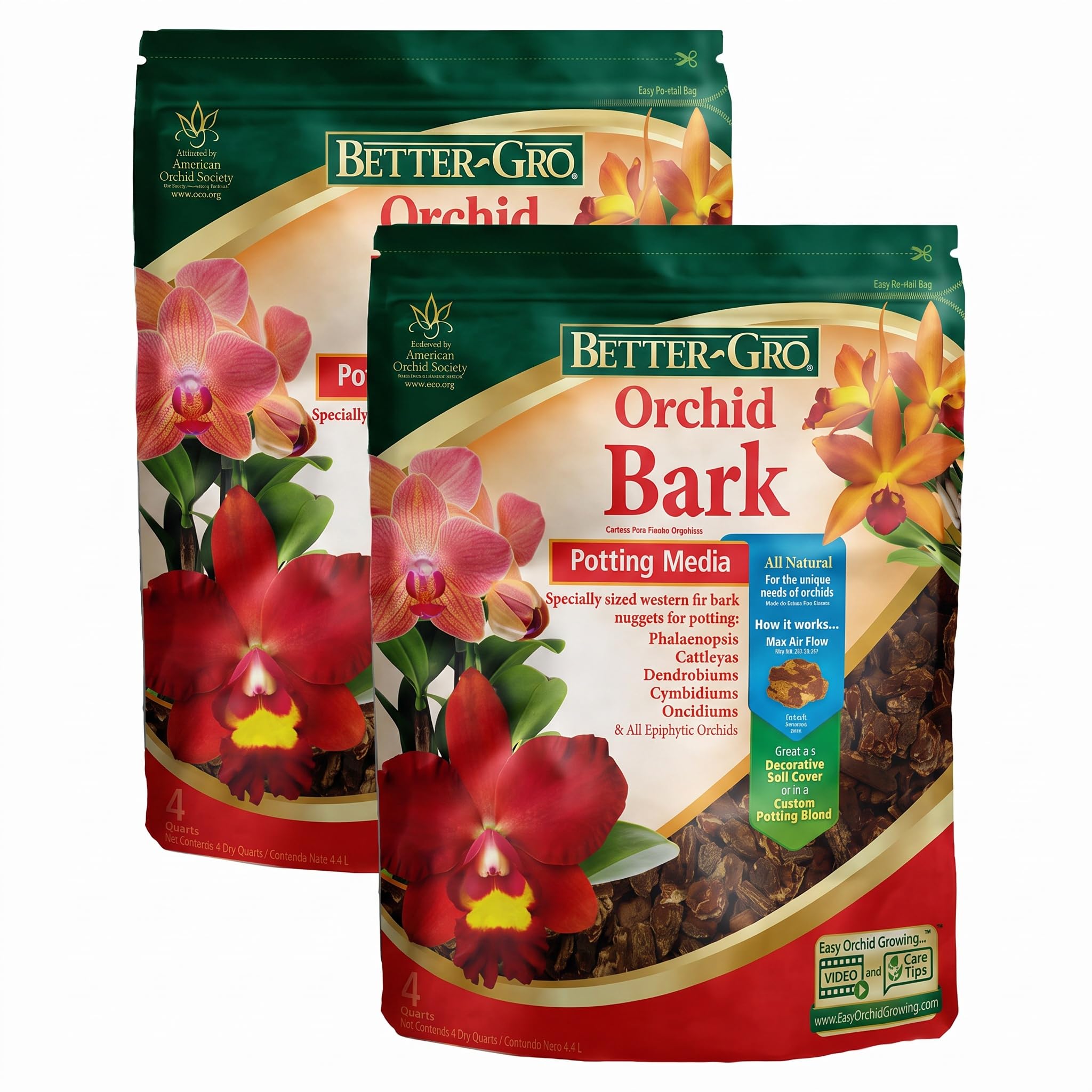
Graded bark chips sold for orchids and borrowed by houseplant growers to open up a mix for plants whose roots evolved clinging to trees rather than sitting in soil. The chunks hold a thin film of water on their surface and let the rest run past. Pothos, monstera and philodendron all take to it; a cactus gains nothing from it.
Why we picked this exact one: Better-Gro Orchid Bark is the easiest premium-grade bark to get hold of, and it arrives as two four-quart bags, which amends a lot of pots. It holds 4.7 stars across more than 6,300 ratings. The chip size runs large for a four-inch pot, so it suits six-inch pots and up unless you break the pieces down by hand.
These 2 do the same job. You only need one of them, so pick the one that suits you better.
07Pick 07 of 10Option A
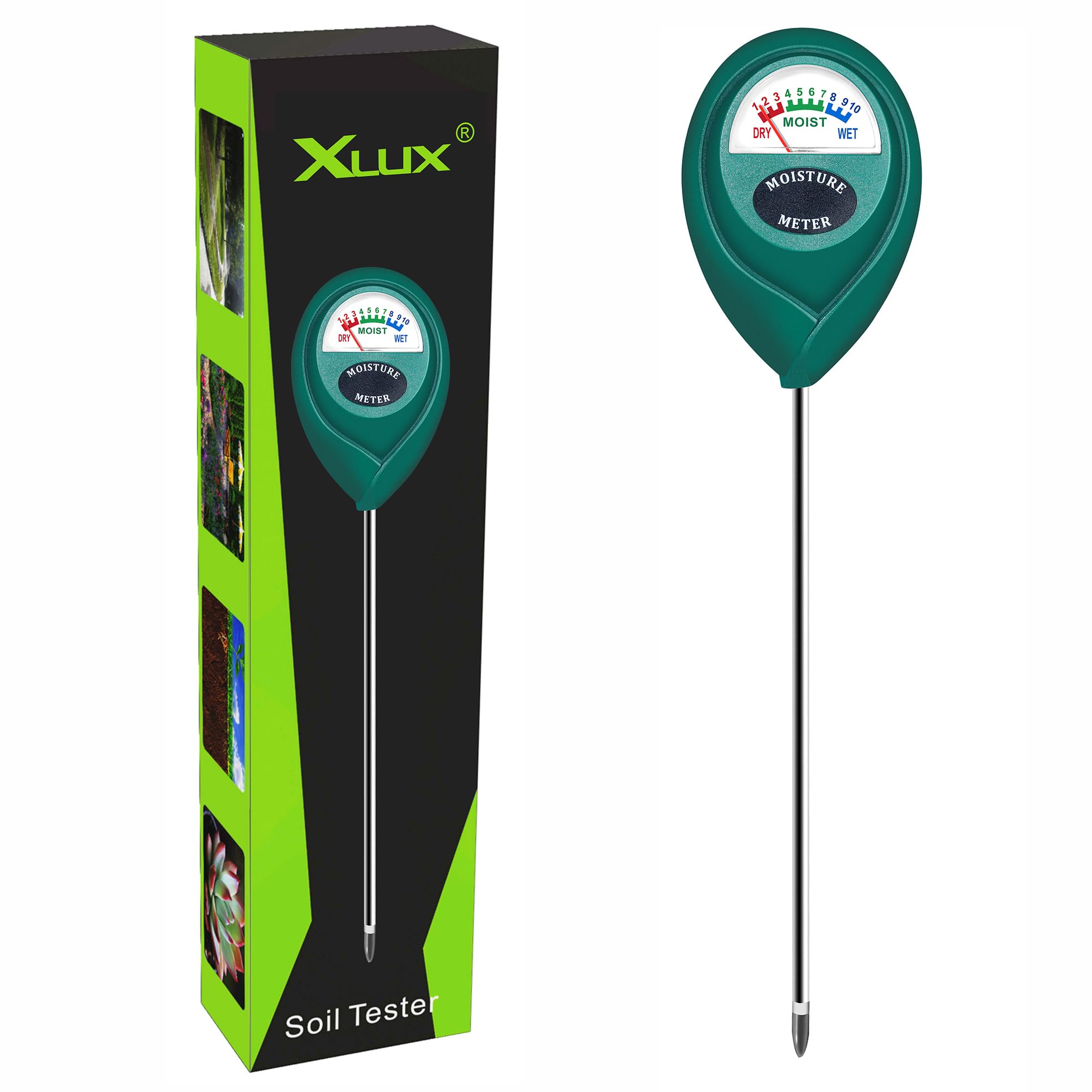
probe moisture meter for checking soil before watering
A battery-free probe with a dial, pushed into the soil to read how wet it is at root depth. The needle responds to conductivity rather than to water as such, so the number is a rough indication rather than a measurement. Used consistently in the same pot it still tells you something worth knowing: whether today is wetter or drier than last time you checked.
Why we picked this exact one: The XLUX single-probe meter is the one most people end up owning, at 4.4 stars from over 67,000 ratings, and it needs no battery. Be clear-eyed about what it is, though: long-time container growers distrust these meters because fertiliser salts shift the readings over time, and in a chunky bark mix the probe often finds an air gap and reports dry soil.
Pros
Gives you a number without having to interpret anything
Reaches root depth in a pot too deep for a finger
Ready to use straight out of the packet
Cons
Readings drift as fertiliser salts build up in the pot
wooden skewers for reading soil moisture at root depth
Plain bamboo sticks, pushed at an angle toward the middle of the rootball and drawn back out after a few seconds. Damp soil darkens the wood and clings to it; dry soil leaves the stick clean. A twelve-inch length reaches the bottom of most houseplant pots, which is exactly the part you cannot otherwise inspect.
Why we picked this exact one: A pack of GoodCook 12-inch bamboo skewers is what experienced container growers reach for, and this one sits at 4.7 stars from more than 3,300 ratings. It is not instant gratification: you have to learn what “still damp” looks like on wet wood over a few weeks. Keep one stick per plant so you are not carrying soil, and whatever is in it, between pots.
Pros
Shows moisture through the full depth of the pot, not one point
Unaffected by fertiliser salts or by a chunky mix
One pack lasts for years
Cons
You have to learn to read it, which takes a few weeks
Buy one way of checking moisture, not both; they answer the same question and you will end up trusting whichever one you pick up most. The bark is the piece to skip if your first two plants are a snake plant and a ZZ, which would both rather have grit than wood chips. If you are adding plants to a room that already has a few other quiet things going on, this sits comfortably beside the other low-pressure hobbies worth starting as an adult.
The Pet Problem Nobody Mentions at the Garden Centre
Three of the four plants everyone recommends to beginners are a problem for pets. Pothos is the sharpest of them: the leaves carry insoluble calcium oxalate crystals, and a cat or dog that chews one gets intense burning of the mouth, tongue and lips, heavy drooling, vomiting and difficulty swallowing. Snake plant works through saponins instead, and tends to produce nausea, vomiting and diarrhoea. ZZ plant also carries calcium oxalate, rated a medium poisoning risk, with vomiting and diarrhoea if an animal eats the leaves in any quantity.
The cheerful exception is the spider plant, which is listed as non-toxic to both cats and dogs. Dracaenas, sold everywhere as easy starter plants, are back on the toxic list through saponins. If you live with an animal that grazes, the fix is not a spray bottle. It is putting the toxic ones somewhere the animal genuinely cannot reach, or not buying them at all and leaning on the spider plant instead.
This is worth knowing before you fall for a plant rather than afterwards, because a plant you have already named is much harder to rehome. Children are the smaller worry, mostly because a mouthful of oxalate crystals is unpleasant enough that nobody goes back for a second bite, but the same shelf logic applies.
Two Books That Cover Different Halves of the Problem
Houseplant information online is mostly written one species at a time and mostly copied from other websites, which is why you can read five pages about a pothos and still not know whether your corner is bright enough for one. A book is an odd recommendation for a hobby with this much content online. The good ones earn it by doing something the blog posts do not: explaining the mechanism once, so you can apply it to whatever you carry home next. One of these teaches you how to look at a room. The other tells you what a brown tip means at nine on a Sunday night.
09Pick 09 of 10Book worth reading
beginner houseplant book built around light and watering
A houseplant book organised around conditions rather than arranged as a species-by-species directory: how much light a spot genuinely receives, what thorough watering actually means, how to read growth against decline. It uses photographs of real plants in real rooms, including the ones that are struggling. A reference section at the back covers common plants once the principles are in place.
Why we picked this exact one: Darryl Cheng's The New Plant Parent is the title houseplant communities keep steering beginners toward, and it contains the clearest explanation of “bright indirect light” anyone has put in print. It holds 4.7 stars from nearly 3,000 ratings. This paperback edition prints to order, so delivery takes a little longer than a shelf-stocked title.
symptom-first troubleshooting reference for houseplant problems
A compact illustrated reference that works backwards from what you can see: yellow leaves, brown tips, sudden drop, white fuzz along a stem. Each common houseplant gets a page covering its light, water and feeding needs plus the specific ways it tends to fail. It is built to be grabbed off a shelf when something looks wrong rather than read end to end.
Why we picked this exact one: The new edition of Veronica Peerless's How Not to Kill Your Houseplant is the practical counterpart to a principles book, carrying 4.7 stars from more than 7,500 ratings. Its symptom-first layout is genuinely faster than searching online at the moment you need it. The per-plant pages are short by design, so it answers “what is wrong” better than “how do I grow this really well”.
Read the principles one cover to cover and keep the symptom one near the plants, spine out, where you will actually reach for it. If the noticing turns out to be the part you enjoy more than the shopping, that same instinct powers keeping a nature journal, and the two habits feed each other nicely.
The Questions That Come Up in Month Two
Why do my plants die even though I water them carefully?
Careful usually means small, frequent sips, and that is exactly the problem. A splash wets the top inch and then runs down the gap between the rootball and the pot wall, leaving dry pockets through the middle where most of the roots live while the surface stays permanently damp. Water thoroughly instead: pour until it runs out of the drainage hole, tip away whatever collects in the saucer, then leave the pot alone until it has genuinely dried down. Less often, far more each time.
Can I just put gravel in the bottom of a pot with no hole?
No, and this one is repeated so widely it feels like it must work. Water does not drain out of soil into gravel the way it drains out of a hole; it perches in the soil just above the gravel layer, so all you have achieved is less soil for the roots and a wet zone sitting exactly where it was before. There is a second problem too. With nowhere to flush out, carbonate and fertiliser salts accumulate in the soil until they start pulling water back out of the roots. Use the pretty pot as a cover and keep the plant in something with a hole.
The soil feels dry on top. Is it safe to water?
Not necessarily, and this is where the finger test quietly fails people. In a pot deeper than about six inches the top three inches can feel bone dry while the bottom three are still saturated, so you top it up and drown a plant that was already too wet. Push a wooden skewer in at an angle toward the middle of the rootball, leave it a few seconds and look at it: damp soil darkens the wood and sticks to it. The other method experienced growers fall back on is simply lifting the pot, because a watered pot and a thirsty one feel completely different once you have done it a dozen times.
How do I tell whether a spot is actually bright enough?
Measure it, because eyes adapt and rooms lie. Your vision adjusts so smoothly that a corner two metres back from a window feels only slightly dimmer than the sill, when it may be receiving a small fraction of the light. A lux reading from a phone app, divided by about eleven, gives a rough foot-candle figure: four hundred and up is where most houseplants grow well, two hundred to four hundred is survivable, and below that you are keeping a plant rather than growing one. Take the reading around midday on an ordinary overcast day, not in direct afternoon sun.
Should I repot a new plant as soon as I get it home?
Usually not, unless roots are already circling the base or pushing out of the drainage holes. The nursery pot it arrived in drains well and fits the rootball, and the plant has enough to adjust to in a room far darker and drier than the greenhouse it came from. When you do move it, go up one pot size rather than three. A small plant in a large pot sits surrounded by a volume of soil it cannot dry out, and soil that stays wet that long is the overwatering problem again wearing a different costume.
People Worth Following Into This Hobby
Real practitioners we found while researching this setup — people who do the work, show their process, and publish on sites they run themselves. No sponsorships, no affiliations; we just think they're worth your time.
Measures the light in his own rooms with a hand-held meter and publishes the foot-candle numbers plant by plant.
This setup tells beginners to stop guessing at “bright indirect light” and measure it instead, and his light-meter walkthrough is where that habit comes from.
Writes long, photographed troubleshooting posts about his own houseplants, including the ones that rotted.
The FAQ here argues that careful little sips of water are what kill beginner plants, and his overwatering piece takes that argument apart symptom by symptom.
Runs a one-person houseplant advice practice and publishes species-by-species care sheets with his own soil and pest recipes.
Readers who have sorted out pots and soil hit species questions next, and his per-plant sheets answer them without the copied filler most plant sites run on.
Answers reader plant questions one at a time and keeps a searchable toxicity index built from decades of interior plant work.
The safety section here warns that three of the four easiest starter plants are toxic to pets, and their plant-by-plant toxicity pages are the practical next step for anyone with a cat.
Love what you see here? Save individual picks with on any item, or copy everything to a list of your own in one click — great for coming back to later, or dropping as a not-so-subtle hint.