Gardening With Kids: A First Patch That Actually Grows

Gardening With Kids: A First Patch That Actually Grows

Curated by Daria

This page may contain affiliate links.

child-sized garden tool set with real steel heads

Where I'd start

A plastic trowel bends on dry soil, making kids feel like the dirt is winning before they even start digging.

child-sized garden tool set with real steel heads

See it on Amazon
Jump to the 10 picks

The Dirt Is Half the Point

The word kindergarten means, literally, a garden of children. The German teacher who coined it in 1837 wasn't being poetic about young minds. His school had beds outside, gardening was one of the main things the children did there, and each of them was given a small plot to look after. Most of what you'll grow with a four-year-old today happens in a pot on a balcony or a square metre by the back door, not on an allotment. And the payoff is better documented than you'd expect: pooled studies of seven- to twelve-year-olds found that children who garden eat more fruit and vegetables than children who don't, with no effect at all on their weight.

What really decides whether this sticks, though, isn't the seeds. It's how long the child has to wait. A four-year-old's patience for an invisible seed runs out in about a week, and radishes are ready to pull twenty to thirty days after sowing, which is roughly the longest gap a small person will tolerate between doing a thing and getting a thing. Carrots can take seventy to a hundred and twenty days. Plenty of beginner lists for kids put carrots near the top, and I'd leave them out of the first season completely, because by the time they're ready your child has moved on to dinosaurs.

So the philosophy here is to buy less than feels responsible. A packet of radish seed, something to put it in, a block of growing medium and a can the child can carry full - that's a whole first season, and it comes to less than a pair of school shoes.

Nothing on this page costs enough to sulk about if the entire project gets abandoned by June.

One thing worth saying before any shopping happens. For a small child the digging and the pouring aren't the boring bit before the vegetable - they're most of it. The radish is a trophy they'll mention for a week, but the wet, gritty, faintly disgusting handful of coir is why they come back on Tuesday. Set the whole thing up for a kid who wants their hands in something.

Five Things, and Nothing Else

Five purchases get a child from an empty balcony to a radish on a plate. The temptation is the boxed garden kit with a cheerful little watering can and a trowel about the thickness of a teaspoon, and the people who run school garden programmes are blunt about why those fail. Children's garden tools are mostly toys. A six-year-old putting their weight on a plastic trowel in dry ground will snap it inside ten minutes, and what the child takes from that is that digging doesn't work. School coordinators buy child-sized rakes and hoes but hand out full-size adult trowels, because small hands manage those perfectly well.

Disclosure: This section may contain affiliate links to Amazon and eBay. We may earn a small commission from qualifying purchases at no extra cost to you. Product listings from eBay are provided for discovery purposes and link directly to eBay.
child-sized garden tool set with real steel heads

Pick 01 of 10

child-sized garden tool set with real steel heads

A short-handled set of four digging tools scaled to a child's reach rather than an adult's, with pressed steel heads on wooden shafts. The point of difference from a toy set is the head: steel bites into packed soil, while moulded plastic skids off it and splits. Look for heads that are riveted or bolted to the handle rather than pushed on, and a shaft length somewhere around two feet so a standing child can get weight over it.

Why we picked this exact one: The G & F Products JustForKids four-piece set is the one school garden programmes keep re-buying, including a children's librarian whose sets are still in service years on. Steel heads are bolted to solid wood shafts of about 27 inches, the right height for a standing five- to eight-year-old. The wooden handles are the trade-off: left in the rain all season they swell and grey, so these want a box by the door. It's graded 5 and up, and the long hoe wants an adult nearby.

See it on Amazon
one-gallon galvanized watering can with a removable rose

Pick 02 of 10

one-gallon galvanized watering can with a removable rose

A metal watering can holding roughly a gallon, with a detachable sprinkler head on the spout. The rose breaks the flow into droplets so a seedbed gets watered instead of washed out, and pulling it off turns the can into a straight pour for filling a tray. Galvanized steel matters mostly because the rose is the part that gets dropped, stood on and snapped.

Why we picked this exact one: The Megawodar one-gallon galvanized can earns its place on the removable spout head, because the rose is the part children destroy. One gardener went through two plastic cans with snapped roses and a third she dented before buying metal, and she found a gallon the right size for a three-year-old's body. Be honest about the weight though: a full gallon of water is a little over eight pounds, so a four-year-old will fill it halfway for the first season and that is fine.

See it on Amazon
fast-germinating radish seed assortment for succession sowing

Pick 03 of 10

fast-germinating radish seed assortment for succession sowing

A set of five radish varieties in separate packets, chosen across colours, shapes and maturity times. Radish is the fastest edible root a beginner can direct-sow, and having several packets means sowing a short row every week or two instead of one big row that all arrives at once. Check the days-to-harvest printed on each packet, because they are not all the same crop.

Why we picked this exact one: This Gardeners Basics five-variety radish assortment covers Cherry Belle and White Icicle, the two varieties Florida's extension service names for home growers, plus French Breakfast and German Giant. One caveat before you open them: the fifth is a daikon, which needs around seven weeks rather than four, so it's the wrong one to hand a five-year-old first. The seller is a US seed company with 99.5% positive feedback across 350 ratings and keeps more than ten in stock.

See it on eBay
five-gallon fabric grow bags for a child's own container patch

Pick 04 of 10

five-gallon fabric grow bags for a child's own container patch

Non-woven fabric pots that hold about five gallons of growing medium each and fold flat when empty. Fabric drains through its whole surface rather than through a few holes, which makes overwatering much harder to do, and it air-prunes roots instead of letting them circle. Handles matter more than they sound: a planted bag is heavy, and chasing the sun around a balcony is half of container growing.

Why we picked this exact one: The JERIA twelve-pack is the cheapest honest way to give each child two or three pots of their own, and it is backed by close to 22,000 ratings at 4.7 stars. Five gallons is deeper than radishes need and about right for peas or bush beans later, so the same bags carry forward into a second year. Fabric pots do dry faster than glazed ceramic in high summer, which is the price of that easy drainage.

See it on Amazon
compressed coconut coir block as a soilless container growing medium

Pick 05 of 10

compressed coconut coir block as a soilless container growing medium

A dried, compressed block of coconut husk fibre that expands into several times its volume of light, water-holding growing medium once you soak it. It is the peat-free half of the standard soilless container mix, and it ships as a brick rather than a sack, which is why it is cheap. Coir carries almost no nutrients of its own, so container plants growing in it need feeding after the first few weeks.

Why we picked this exact one: The Drip Depot coir brick is the cheapest route to a proper container medium here, and watching a dry block swell into a bucketful of fluff is genuinely the best ten minutes of the whole setup for a small child. Drip Depot is a long-standing US irrigation retailer carrying 99.9% positive feedback over 13,000 ratings, with more than ten of these in stock. Straight coir holds water but feeds nothing, so plan on a liquid feed once the seedlings are up.

See it on eBay

Laid out on the kitchen floor, the whole thing takes about twenty minutes: soak the block, fill two bags, scratch a shallow line, drop the seed in no deeper than a quarter inch, cover it, water it. Then comes the hard part, which is doing nothing for three days while a child asks whether it's working. It is. The first pale loops push through around day four or five, and that's the moment this either lands or doesn't.

What the Second Season Asks For

Everything below is for the child who got through a first harvest and came back for more. None of it makes the radishes better. What it does is stretch the hobby across the months when there's nothing to sow outside, and hand over a few more jobs a child can own outright. The common mistake at this stage is buying the expensive thing first - a grow light before a single packet has been sown, usually - and then finding the whole lot in the shed come September.

rubber-coated gardening gloves sized for children

Pick 06 of 10

rubber-coated gardening gloves sized for children

Knitted gloves in child sizes with a rubber or latex palm coating. The coating is what makes them useful: bare knitted cotton soaks through in a minute and then feels horrible. Sizing is the thing to get right, because a glove that slips off at the fingertips is worse than no glove and will be abandoned immediately.

Why we picked this exact one: The Vgo kids' rubber-coated gloves sit at 4.8 stars across more than 8,000 ratings, an unusually strong record for children's gardening gear. School garden coordinators report ordinary coated kids' gloves surviving a year and a half of class use, which is a harder life than a back garden will give them. Buy a size up only if the child is between sizes, because loose fingertips are what gets gloves pulled off and lost.

See it on Amazon
seed-starting tray with a clear humidity dome

Pick 07 of 10

seed-starting tray with a clear humidity dome

Shallow cell trays with drainage holes and a transparent lid that traps moisture while seeds germinate. The dome works as a miniature greenhouse: it keeps the surface damp through the few days when a drying crust will kill a sprouting seed, and it comes off the moment the seedlings touch it. Adjustable vents let the humidity out gradually rather than all at once.

Why we picked this exact one: The MIXC 120-cell trays come with the dome and the vents for about sixteen dollars and carry more than 11,000 ratings. Classroom growers improvise the same thing from a lidded storage box for around thirty dollars, so this is less a luxury than a tidier version of what already works. The cells are thin and will crack if you twist them, so push seedlings out from underneath.

See it on Amazon
full-spectrum LED grow light with a repeating timer for winter sowing

Pick 08 of 10

full-spectrum LED grow light with a repeating timer for winter sowing

A clip-mounted LED panel on a gooseneck, with a timer that repeats the same on-and-off cycle every day without being reset. Seedlings on a winter windowsill stretch into pale, floppy stems because they are reaching for light that is not there, and a lamp a few inches above them stops that. The timer matters more than the wattage, because the failure mode is forgetting.

Why we picked this exact one: The GooingTop clip lamp is a 6000K panel with a repeating four, eight or twelve hour timer, and it sits at 4.5 stars across more than 22,000 ratings for around twenty dollars. Worth knowing that classroom gardeners often skip dedicated grow lights altogether and use a five-thousand-lumen LED shop light instead, so if one is already in the garage, use that. The clip only grips a thin edge, so a thick shelf means propping the gooseneck rather than clamping it.

See it on Amazon
six-inch plastic plant markers for labelling a child's rows

Pick 09 of 10

six-inch plastic plant markers for labelling a child's rows

Flat plastic stakes with a writing face, pushed into the medium beside a sowing. Six inches is long enough that a couple of inches stay visible above the surface once the stake is anchored. They are reusable season after season, and the small hole at the top lets them be tied to a bag handle rather than lost.

Why we picked this exact one: The Delatanus hundred-pack costs under seven dollars and, unlike most label sets at this price, does not ship with a permanent marker - which is the right outcome for this age group. A graphite pencil writes on the matte face perfectly well and is the safer thing to hand a five-year-old. The stakes are only a millimetre thick, so they want pushing into loose medium rather than packed ground.

See it on Amazon
five-tray worm composting bin for turning kitchen scraps into plant food

Pick 10 of 10 · Worth the upgrade

five-tray worm composting bin for turning kitchen scraps into plant food

A stacking bin in which composting worms work upward through trays of kitchen waste, leaving finished castings in the tray below and draining liquid into a reservoir at the base. It runs indoors or out, takes vegetable peelings rather than garden waste, and produces a concentrated plant food. Worms are bought separately, and the bin needs a shaded, frost-free spot.

Why we picked this exact one: The VermiHut Plus five-tray bin is the step up worth taking once a child has done a full season and still wants to be out there, at 4.5 stars over about 1,900 ratings. It replaces the liquid feed those containers will otherwise want every three or four weeks, and the worms hold a five-year-old's attention far longer than the vegetables do. Wait if the first season is still running: it's a live system that needs feeding year-round, and eighty dollars of worms is a sad thing to abandon in August.

See it on Amazon

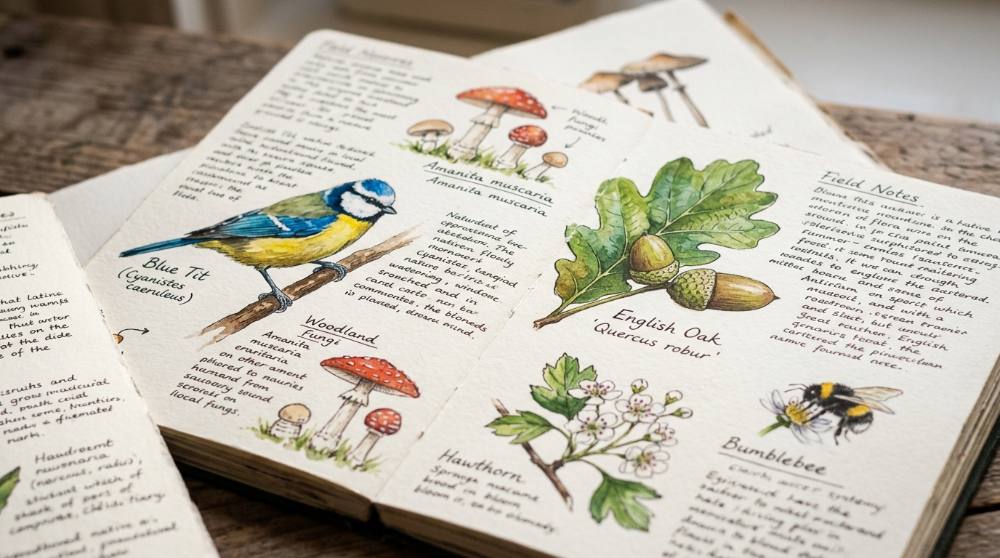
Start with the labels and the gloves, which come to about seventeen dollars together and get used from day one. The tray and the light only earn their keep if somebody is genuinely going to sow in February. And if it turns out the part your child loves is the watching and the drawing rather than the digging, a beginner nature journaling field kit takes that further than another seed packet ever will.

Four Things Worth Knowing Before Anyone Kneels Down

None of this is a reason not to do it. It's the short list of things worth knowing once, properly, before a child is elbow-deep in a bag of coir.

Seed is not food, and some of it is treated

Seed sold for sowing can be coated with fungicide, and that coating is often brightly coloured, which is exactly the wrong signal to send a toddler. Guidance for early-years settings is that seeds shouldn't be used with children under three at all. Over three, the rule is simple and worth repeating every single time: seeds go in the soil, not in mouths. The US Poison Control line, 1-800-222-1222, answers questions about particular plants and seeds.

Lock up anything that isn't soil

Fertiliser, any garden chemical and the sharp tools all need somewhere a child can't reach when nobody's watching. Keep products in their own containers and never decant them into a drinks bottle, because a child reads a familiar bottle as something to drink.

Skip manure entirely

Animal manure can carry organisms that make people ill, and fresh manure has no business anywhere near a bed children eat from. Composted manure is safer but not safe enough to be worth the question here. Container medium and a liquid feed do the same job without it.

Hands and feet

Wash hands before gardening as well as after. Before, because whatever is already on a child's hands ends up on the thing they're going to eat later. Closed shoes rather than sandals, and nobody eats straight off the plant without washing it, however good a radish looks in the hand. Some plants irritate skin on contact, so if a rash turns up after a session, that's usually the reason.

Hoes and long-handled rakes are the tools that want an adult standing close, mostly because a child swinging one has no real sense of where the far end is. The short tools are fine to hand over once the rules have been said out loud a couple of times.

Why Did We Get a Pot Full of Leaves and No Radishes?

We did everything right and the roots never swelled. What happened?

You almost certainly didn't thin them. Radish seed is small and a child's instinct is to tip in a satisfying amount, so every seed germinates and the seedlings come up shoulder to shoulder. Crowded roots have nowhere to go sideways, so the plant puts everything into leaves and you get a lush green pot with nothing underneath. When the seedlings are about an inch tall, pull out enough that the survivors stand as far apart as the packet says. It feels like vandalism to a five-year-old, so give them the job of counting what's left.

Should we start the radishes off in the seed tray like everything else?

No, and this one catches almost everybody, because every other beginner guide starts seeds in trays. Radishes are a root crop, and moving a seedling disturbs the very root you're trying to grow. Extension services say plainly not to transplant them, and school garden educators say the same thing: radish seed goes straight into the container it will finish in. Save the tray for the things you genuinely do move, like peas and lettuce.

Everything looked fine on Friday and had collapsed by Sunday. Are containers just harder?

A container holds a small, fixed amount of water with nothing underneath to draw on, so in hot weather it can need watering daily, and up in the high eighties and nineties sometimes more than once a day. That's the trap in a weekend away. The second half of the problem is slower and sneakier: all that watering washes nutrients out of the bottom, so a pot that was thriving in week two is hungry by week five. A liquid feed every three or four weeks sorts it.

Do we put stones in the bottom of the pot for drainage?

No. This is the most widely repeated piece of wrong gardening advice there is, and it makes things worse rather than better. Water doesn't cross easily from a fine medium into a coarse one, so a gravel layer holds water up in the soil above it instead of letting it drain away, and the roots sit wetter than they would have. Fill the container uniformly, all the way down. Leave about an inch below the rim on a small pot so there's somewhere for the water to sit while it soaks in.

They harvested once and lost interest. Is that it?

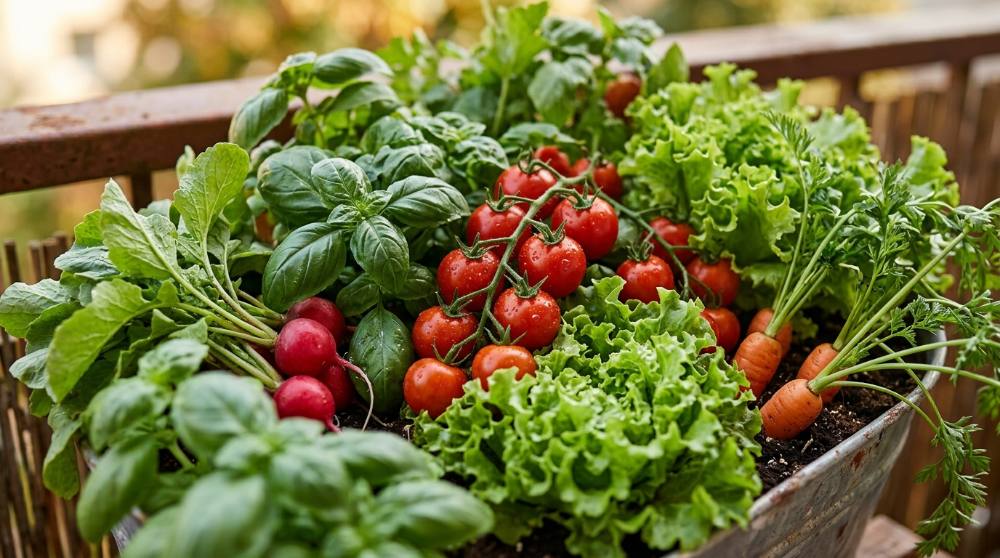
That's the normal shape of it, and the fix is never letting the pot stand empty. Sow a short row every ten days or so instead of one long row, so something is always a week away from being pulled. Gardeners set a phone reminder for exactly this, because nobody remembers on their own. Lettuce helps too, since it can be cut and will come again rather than finishing in one go. A pot with nothing happening in it is a pot a child stops visiting.

Love what you see here? Save individual picks with on any item, or copy everything to a list of your own in one click — great for coming back to later, or dropping as a not-so-subtle hint.

Disclosure: This section may contain affiliate links to Amazon and eBay. We may earn a small commission from qualifying purchases at no extra cost to you. Product listings from eBay are provided for discovery purposes and link directly to eBay.