Alcohol Ink Art: Wild Color Blooms on Glossy Paper

Alcohol Ink Art: Wild Color Blooms on Glossy Paper

DariaCurated by Daria
Jump to the 10 picks

One Drop, One Puff of Air, and It's Already Blooming

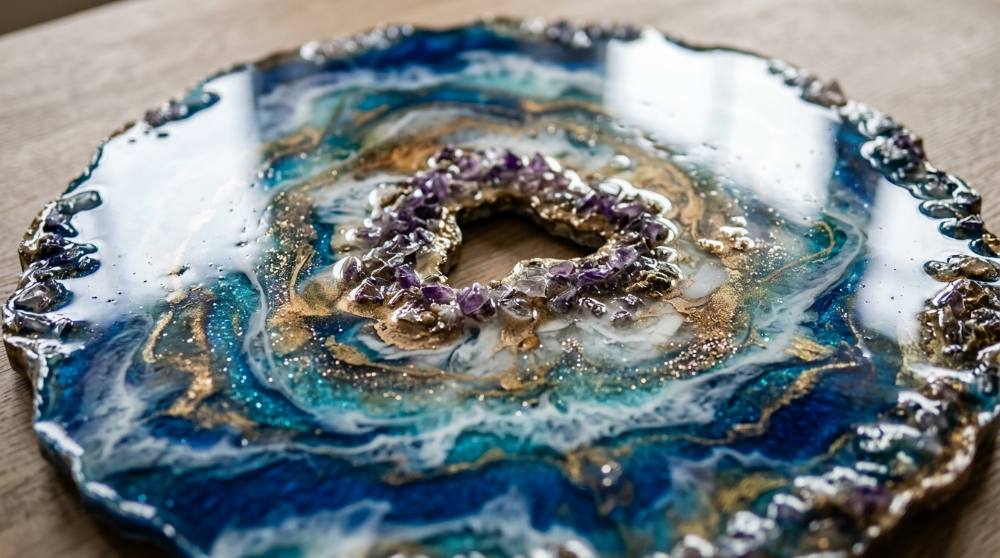
Put a single drop of alcohol ink on a slick white sheet and it won't sit still. It races outward, thins into a halo and dries with a hard dark rim in about the time it takes you to reach for the next bottle. That's the whole game: dye dissolved in alcohol, dropped onto something it can't soak into, then chased around with a puff of air or a splash of more alcohol until it looks like agate or a nebula. The inks started life in the rubber-stamping aisle, sold to card makers who wanted dominoes and glossy card to look like polished stone — painters borrowed them later. And the "paper" everyone uses isn't paper at all: Yupo is a Japanese polypropylene sheet from 1970, its name stitched together from the initials of the two companies that invented it, and it was originally made for labels and maps that had to survive rain.

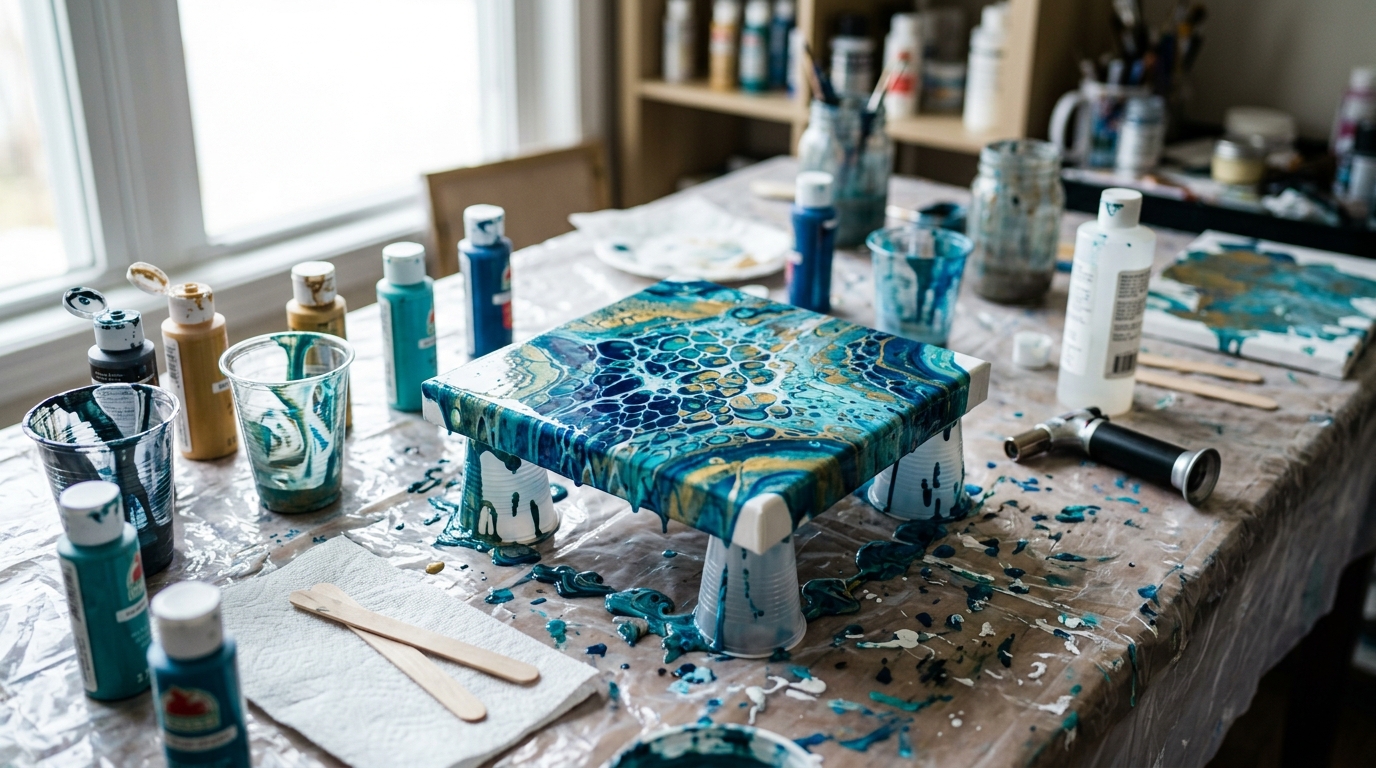
Your first session will not look like the pieces that made you want to try this. It'll look like a puddle, and it'll smell like a nail salon. Both are normal. What nobody tells you is how little ink you actually need — one drop is a lot, and most early disasters come from adding a second one on top of it. If you've done any acrylic pouring for beginners, the thrill is the same, but here everything is dry in a minute and you can wake it back up with a splash of alcohol and try again.

My rule for this hobby: buy the inks, a bottle of 91% alcohol, a pad of Yupo, a rubber blower and a box of gloves, then stop. That's the whole kit for the first month.

Everything below was picked so that if the fumes or the chaos put you off after two evenings, you've spent less than a night at the cinema and own nothing you'll resent.

alcohol ink starter set of nine saturated colours for fluid art on Yupo and tile

Pick 01 of 10

alcohol ink starter set of nine saturated colours for fluid art on Yupo and tile

A set of concentrated, dye-based inks in dropper bottles, covering a spread of bright colours plus a metallic and a black. Because the inks are transparent and extremely strong, one drop dilutes into a wide wash, so a small set lasts a long time and colours can be mixed to make new ones. Look for a set with a few clear primaries and one metallic rather than dozens of near-identical shades.

Why we picked this exact one: The Jacquard Piñata Color Exciter Pack was the pick because it's the set experienced ink painters keep naming, and its nine half-ounce bottles include a brass metallic that shows up in an enormous number of finished pieces. It sits at 4.8 stars, and the colours stay true when diluted rather than drifting muddy. One honest trade-off: these inks are ethanol-based, so the white and some darker shades can turn grainy if you thin them with isopropyl instead of a blending solution.

See it on Amazon
91% isopropyl alcohol for thinning, moving and reactivating alcohol ink

Pick 02 of 10

91% isopropyl alcohol for thinning, moving and reactivating alcohol ink

Plain rubbing alcohol at 91% strength, which does the job of water in watercolour: it thins the ink, keeps it moving, and wakes dried ink back up. It also cleans tiles, hands and the work surface. Buy it at the pharmacy strength, not the 70% first-aid bottle, and keep it in a dropper or needle-tip bottle rather than a spray.

Why we picked this exact one: The Amazon Basics 91% Isopropyl Alcohol went in because it's the exact strength ink painters settle on — 70% dries too slowly to form crisp lines and 99% flashes off before you can move it. It costs a fraction of branded blending solutions, which several painters find leave a tacky film. The only downside is that a 16-ounce bottle disappears faster than you'd think once you start pouring puddles.

See it on Amazon
smooth synthetic Yupo paper that alcohol ink floats on instead of soaking into

Pick 03 of 10

smooth synthetic Yupo paper that alcohol ink floats on instead of soaking into

A polypropylene sheet with a hard, perfectly smooth surface that ink cannot soak into, so it stays wet and mobile long enough to push around. It won't buckle, and it takes alcohol without pilling. Genuine Yupo behaves differently from the many cheaper "synthetic" imitations, which is why painters keep asking for it by name.

Why we picked this exact one: The Legion Yupo 9x12 pad was chosen because it's the real thing rather than a look-alike, and painters who switched from budget synthetic papers describe the difference as night and day. Ten sheets of the 74 lb weight for this price is fair for a surface this specific. Be warned that it stains: unlike a tile you can't wipe Yupo back to pure white, so save it for pieces you mean to keep.

See it on Amazon
rubber squeeze-bulb air blower for pushing alcohol ink across the page without fumes

Pick 04 of 10

rubber squeeze-bulb air blower for pushing alcohol ink across the page without fumes

A hand-held rubber bulb with a nozzle that puffs a controlled jet of air when squeezed. It moves wet ink in the direction you point it, which is how the streaks, fades and blown-out edges are made. Choose one with a decent-sized bulb and a firm nozzle so each squeeze gives a real push rather than a sigh.

Why we picked this exact one: The Ranger Tim Holtz Ink Blower is the one the ink manufacturer itself recommends over sprays and airbrushes, and it's the tool experienced painters point beginners to instead of a straw. It's rated 4.6 stars from a large number of buyers and needs no batteries or cord. It is pricier than a generic camera dust-blower that does a similar job, so if money is tight a photography bulb is an acceptable stand-in.

See it on Amazon
disposable nitrile gloves to keep alcohol ink off your hands while you work

Pick 05 of 10

disposable nitrile gloves to keep alcohol ink off your hands while you work

Thin, powder-free nitrile gloves that fit closely enough to handle dropper bottles and tilt paper without fumbling. Alcohol ink is a dye and it stains skin for days, so a box of these is used up steadily. Nitrile is preferred over latex because it stands up to the alcohol and doesn't trigger latex allergies.

Why we picked this exact one: The Supmedic Soft Max nitrile gloves were picked as the plainest good option: powder-free, latex-free, and rated 4.7 stars across a very large number of buyers. A box of 100 lasts a beginner for months at a couple of pairs a session. They're thin, which is what you want for feel, but that also means they tear if you're rough pulling them on.

See it on Amazon

With these five things you can make a real bloom tonight: a puddle of alcohol on the Yupo, one drop of ink at its edge, a couple of squeezes of the blower, and you'll see the lacy rings appear as it dries. Don't be tempted by cheap no-name "alcohol ink paper" or the marker pad the shop suggests — anything that drinks the ink kills the effect, which is exactly where cheap supplies catch you out. Crack a window before you open the first bottle, and keep a roll of paper towel next to you to blot the moment a puddle turns thick.

The Second Order, After the First Headache

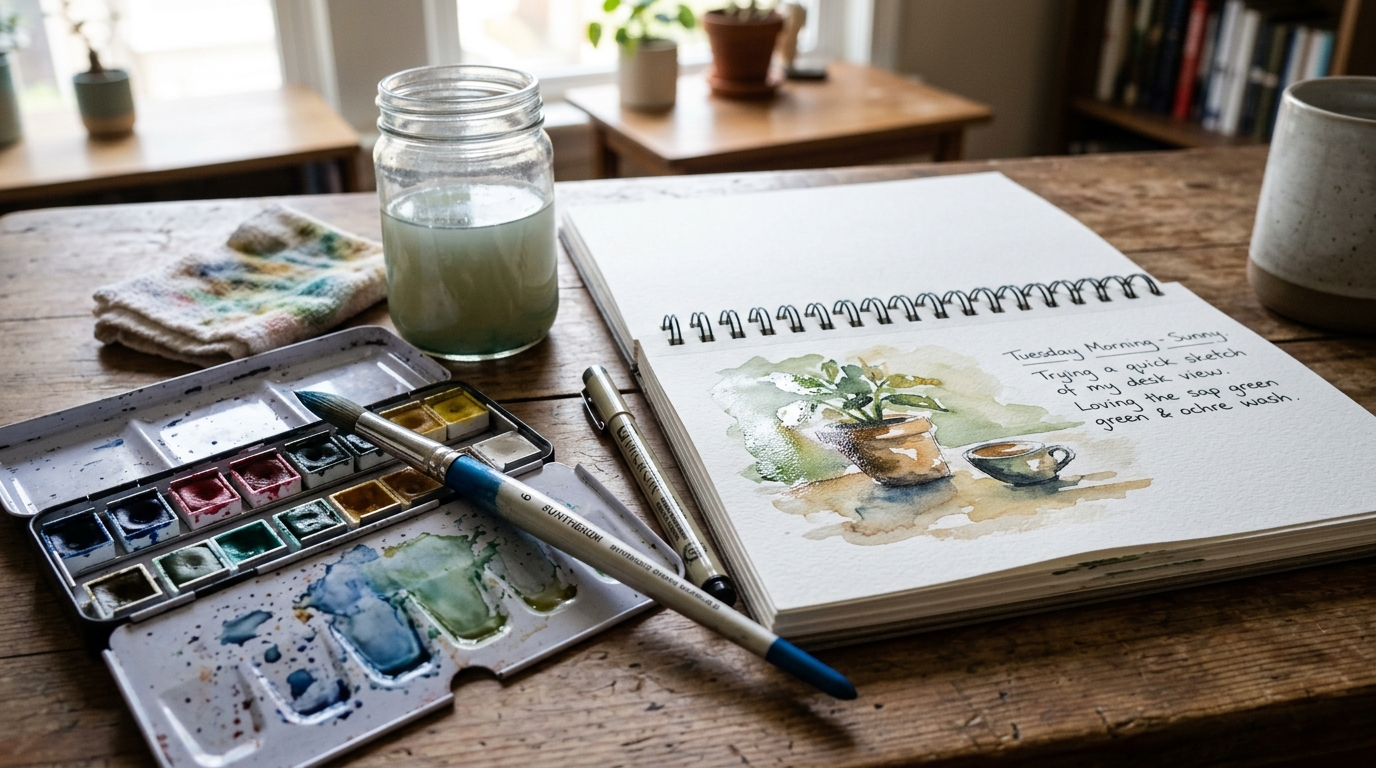
A few sessions in you'll notice three things. Yupo is expensive to practise on, your fingers are purple, and your temples ache after an hour with the window shut. This section fixes those. None of it is needed on night one, but each item answers a real complaint people have once they're hooked. If you'd rather keep control of exactly where colour goes, watercolor journaling for beginners is the calmer cousin — alcohol ink rewards letting go, and some people never make peace with that.

glossy white glazed ceramic tiles for practising alcohol ink and making coasters

Pick 06 of 10

glossy white glazed ceramic tiles for practising alcohol ink and making coasters

Square white tiles with a shiny glaze that ink can't soak into, so they behave like Yupo but wipe clean with alcohol when you don't like the result. That makes them the cheapest way to practise. Look for a glazed, glossy finish; unglazed bisque tiles drink the ink and lose the effect.

Why we picked this exact one: The Creative Hobbies 12-pack of glossy glazed tiles was chosen because they're glazed, which is the detail that matters, and because at just over a dollar a tile they're cheap enough to treat as scrap. They're rated 4.7 stars and come sized to become coasters once you've made something worth keeping. Note that they're bare tiles: if you want cork backing you'll add it yourself.

See it on Amazon
UV archival spray varnish that seals alcohol ink without reactivating it

Pick 07 of 10

UV archival spray varnish that seals alcohol ink without reactivating it

An artist-grade clear spray with UV blockers, formulated so it can be applied over finished work without disturbing it. Alcohol ink is a dye and fades in daylight, and most ordinary clear sprays are alcohol-based and smear the colours, so the varnish has to be one painters have tested on ink. Spray outdoors or with a respirator, in light coats.

Why we picked this exact one: The Krylon Gallery Series UV Archival Varnish in gloss was picked because the alcohol ink community moved to it after Krylon stopped making the old varnish everyone used, and it collapses what used to be a three-spray routine into one product. Its 4.4-star rating is a touch lower than the rest of this list, mostly from people who sprayed too heavily and got clouding. Go light, from a distance, and test on a spare tile first.

See it on Amazon
needle-tip squeeze bottles for placing alcohol precisely and mixing custom ink colours

Pick 08 of 10

needle-tip squeeze bottles for placing alcohol precisely and mixing custom ink colours

Small plastic squeeze bottles with fine metal needle tips that put a single drop of alcohol exactly where you want it, or lay a thin controlled line. Painters also use them to mix their own colours from a few base inks. Look for a set with a few tips so you can dedicate one bottle to alcohol and others to mixes.

Why we picked this exact one: The FJNATINH five-pack of 30 cc needle-tip bottles was chosen for being cheap, well reviewed and the right size to hold in one hand while you work. More than four thousand buyers rate them 4.4 stars, mostly for glue and paint. The needle tips clog if ink dries in them, so flush with alcohol at the end of a session.

See it on Amazon
half-face respirator with organic vapour cartridges for long alcohol ink sessions

Pick 09 of 10

half-face respirator with organic vapour cartridges for long alcohol ink sessions

A soft half-mask with organic-vapour cartridges built in, the kind used for spray painting, which filters the alcohol vapour that plain dust masks let straight through. This one comes pre-assembled and is treated as disposable, so there's nothing to fit or maintain. Choose one rated for organic vapours, not particles only, and get the size that seals on your face.

Why we picked this exact one: The 3M 53P71 disposable half-facepiece was picked because it arrives with organic-vapour cartridges already attached, which removes the confusing part of buying a respirator, and it's rated 4.7 stars. It's cheaper than a reusable 3M mask plus separate cartridges. The trade-off is that when the cartridges are spent the whole thing is replaced, and it only comes in limited sizes.

See it on Amazon
large silicone craft mat to protect the table from alcohol ink and spilled alcohol

Pick 10 of 10

large silicone craft mat to protect the table from alcohol ink and spilled alcohol

A thin sheet of clear silicone that covers the work area, catches ink that runs off the edge of the paper, and wipes clean with alcohol. Nothing sticks to it, so dried drips peel off. Look for a size that fits your table with room to spare around a 9 by 12 sheet.

Why we picked this exact one: The LEOBRO 23.4 by 15.6 inch clear silicone mat was chosen because it's big enough for a 9 by 12 sheet with a margin for run-off, and it's rated 4.7 stars by thousands of buyers. It's a lot tidier than the puppy pads and taped-down bin liners many painters start with. Being thin, it can slide on a glossy table, so a damp cloth underneath helps.

See it on Amazon

Tiles turn practice into coasters, a varnish keeps the colour from fading on the wall, and the mask means you can work longer than twenty minutes without paying for it the next morning. Sealing is its own rabbit hole, so start with one can and one test tile rather than a shelf of sprays. And once you've got a stack of inked tiles you love, a beginner resin art setup is the natural next step for turning them into glossy, wipe-clean coasters.

Why Does Mine Look Like a Muddy Puddle Instead of a Bloom?

Why do I get thick, tacky ridges instead of thin lacy edges?

Almost always because there's too much ink on the surface. Beginners squeeze a fat drop, then another, and the dye piles up faster than the alcohol can carry it, so it dries into sticky ridges that won't move. Blot the excess with a paper towel, use far less ink than feels right, and push it with plenty of 91% alcohol instead. If you're using a bottled blending solution or extender and the ridges appear the moment it touches the page, that's a known culprit too — many people find those stay tacky and go back to plain alcohol.

My colours went grainy and speckled overnight. What happened?

Two usual causes. Humid weather makes alcohol ink congeal into dark spots and specks, and people who work in muggy climates often just skip humid days. The other is mixing brands: some inks are ethanol-based, and their white and darker shades can separate into flecks or turn to a gummy mess when hit with isopropyl. Shake the bottle hard, keep white and metallics for a blending solution rather than straight alcohol, and if the weather is sticky, wait.

Why did my finished piece change colour the second I sprayed it?

Because most clear sprays are alcohol-based, and alcohol reactivates the ink — the same trick that lets you rework a dry piece ruins it under a varnish. Beginners grab any clear coat from the hardware shelf and watch the colours bleed or shift. Use a varnish artists have tested on ink (the UV archival type is the current go-to now that the old favourite has been discontinued), let the piece dry at least a day first, and spray a light first coat from a distance. Test on a scrap tile before you touch a piece you like.

Why do I have a headache after an evening of this?

You've been breathing alcohol vapour, and possibly heating it. A hairdryer on warm drives the fumes off faster, so if you use one, keep it on the cool setting. Blowing through a straw puts your face right over the puddle, and putting alcohol in a spray bottle turns it into a mist you inhale — the ink makers themselves warn against both. Open windows, a fan blowing across the table, and a rubber blower instead of your lungs solve most of it; a respirator with organic-vapour cartridges is what people reach for once sessions get long.

Why does my second layer erase my first?

Any alcohol that lands on dried ink wakes it up and pushes it away, so a fresh drop poured straight onto a finished area shoves the old colour aside instead of sitting on top. That's the mechanism, not a defect. Let the first layer dry fully, then place new ink onto a small puddle of alcohol beside the area you want to keep and let it drift in, or use a brush to bring colour in with only a little alcohol. If you want a bright white gap back, this same erasing behaviour is how you get it: a wet cotton bud lifts the ink clean off a tile.

Love what you see here? Save individual picks with on any item, or copy everything to a list of your own in one click — great for coming back to later, or dropping as a not-so-subtle hint.

Disclosure: Some product links may be affiliate links. If you make a purchase through one of these links, we may earn a small commission at no extra cost to you.