Strip ballet back and most of it is one slow sequence at a rail: pliés, tendus, rond de jambe, the same order every class opens with whether the room holds a first-timer or a principal. Adults do it in cleared corners, in front of wardrobes, with a laptop propped on a dining chair. The French vocabulary you'll be learning has a specific culprit. In February 1653 a fourteen-year-old Louis XIV danced the rising sun in Le Ballet de la Nuit, a court spectacle that ran about thirteen hours through the night, and eight years later he founded the Académie Royale de Danse in Paris — which is a big part of why a person counting to eight in a spare room is doing it in French.
Nobody warns you how much of beginner ballet is standing still. You'll spend weeks on where your weight sits over your foot, and that isn't the class failing to get going — it is the class. Everything below exists to make standing still safe and checkable: something steady to hold, something on your feet that lets you feel the floor, something to see yourself in. If you're still weighing this against two or three other ideas, our notes on how to choose a first hobby are a decent place to argue it out first.
Our philosophy: buy the four things that make a first class possible, then stop. A barre you trust, soft shoes, a mirror, and a patch of floor that behaves the same way twice. Leotards, leg warmers and a proper sprung floor can wait until you've shown up ten times.
Nothing on this page is studio-grade, on purpose — if ballet turns out not to be yours, you've spent roughly what a month of in-person classes costs, and the mirror stays useful either way. It's one of the more equipment-heavy entries on our list of starter hobbies that suit adult beginners, which is worth knowing before you start.
Where This Little Kit Can Take You
A few real moments and results from this hobby — made with tools no fancier than the ones below.
Morning barre by the windowThe whole practice happens inside about one square metre of floor.
Shoes left on the barreA season of practice shows up on the satin long before it shows up in the mirror.
One more thing before the shopping. Ballet at home is supplemental by nature — you are practising, not being taught, and nothing here replaces somebody watching you. Treat the first month as learning where your own body is in space, and keep the ambitions small.
The Four Things Between You and a First Plié
The irreducible kit is smaller than the internet suggests and more expensive than you'd hope, because one item in it costs real money. A barre is the big line on this bill, and there's no honest way around it: a chair back tips, a windowsill is the wrong height, and a kitchen counter puts your shoulder up by your ear. The other three are cheap. If you've already set up a home yoga corner you'll recognise the shape of the problem, though almost none of the gear carries over — the mat especially.
Disclosure: This section may contain affiliate links to Amazon. We may earn a small commission from qualifying purchases at no extra cost to you.
01Pick 01 of 08
Freestanding Adjustable Ballet Barre
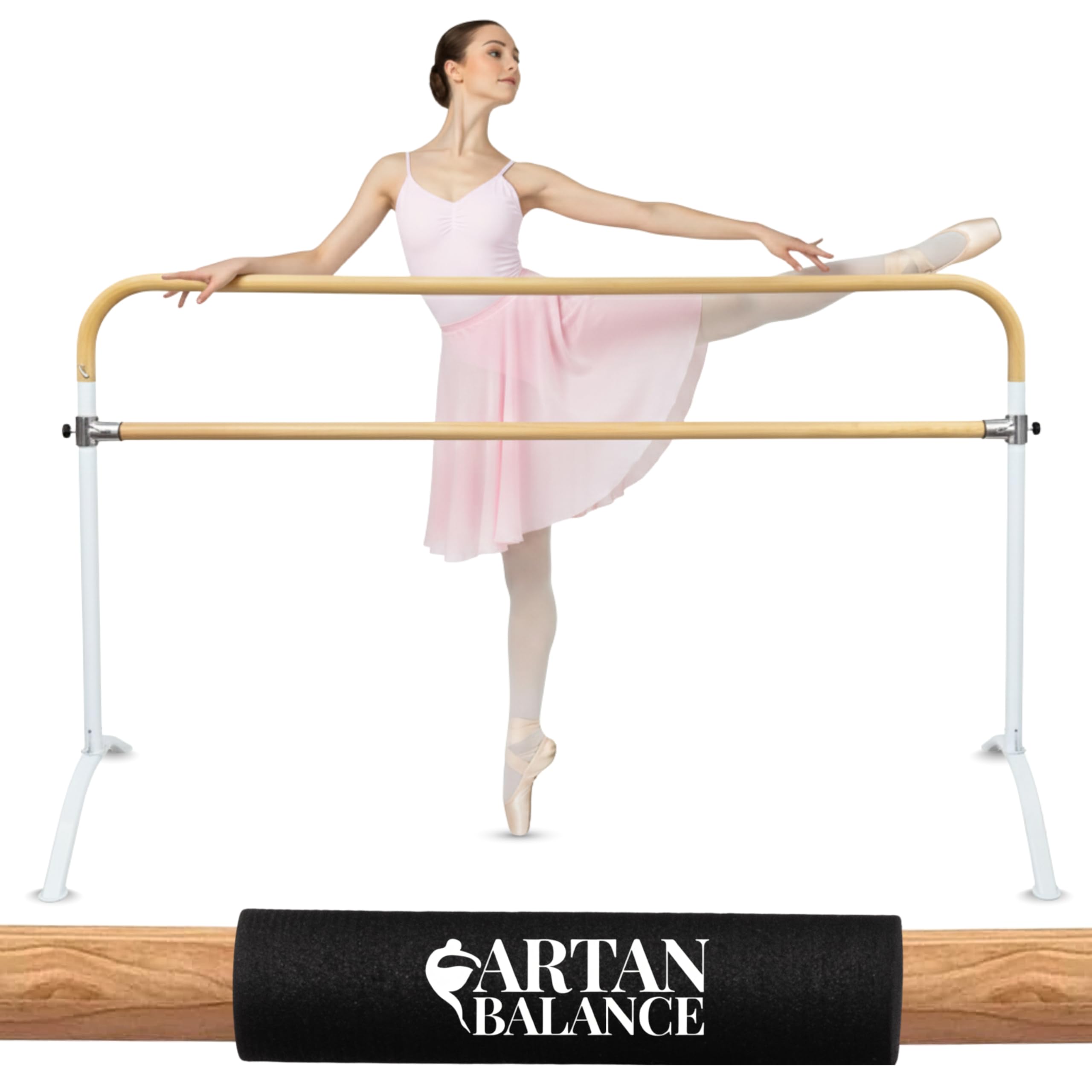
A freestanding barre is a waist-height rail on two weighted feet that you stand up wherever there is floor space. The height adjusts, which matters, because a barre is meant to sit roughly level with your elbow when your arms hang at your sides rather than at the height of whatever furniture you own. Look for a wide, low base and rubber feet; the footprint is the part that keeps it underneath you when your weight shifts.
Why we picked this exact one: The Artan Balance portable ballet barre is the one in this category with a review history worth reading — 514 ratings, where most home barres have a handful. It sits at 4.3 stars, and the curved legs give it a noticeably wider stance than the folding budget barres, which matters more than any other spec on the listing. It is powder-coated steel with a woodgrain print rather than real wood, so it looks cheaper up close than it feels under your hand.
Ballet slippers are thin soft shoes that let the sole of the foot read the floor while still allowing it to slide. Canvas is the usual first pair for an adult: lighter and cheaper than leather, and it moulds to the foot within a few sessions, though it wears through sooner. Sizing has almost nothing to do with street shoes, so work from the maker's own chart and aim for snug with the toes lying flat rather than curled.
Why we picked this exact one: The Bloch Performa is the stretch-canvas slipper most adult beginners end up in, and with over 5,000 ratings it is the best-documented fit on the market. Its elastics come pre-attached, which spares a first-timer the small misery of sewing them on in the right place. Reports on its sizing run in both directions, so order from the brand's chart rather than your trainer size and pick a seller with easy exchanges.
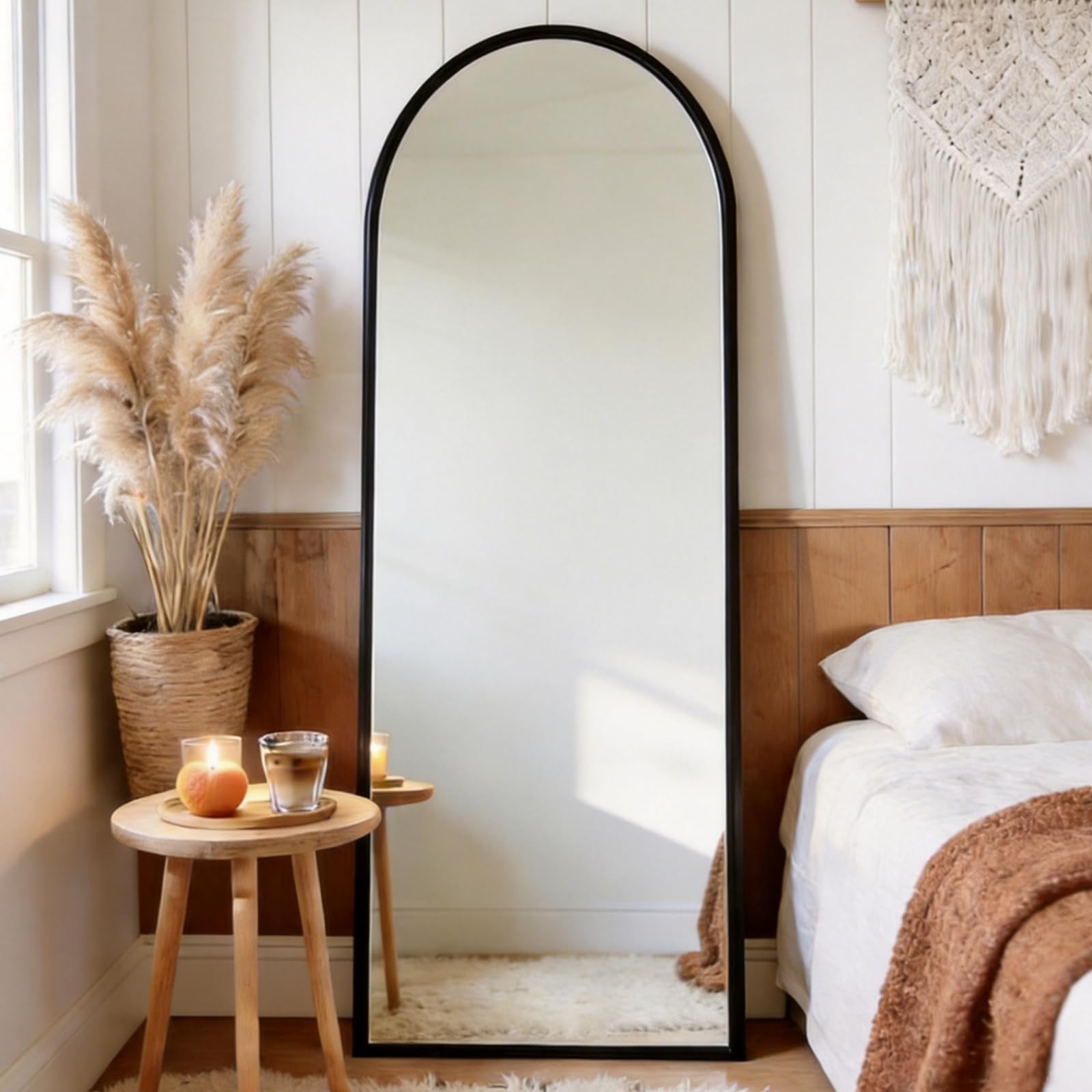
A full-length mirror leaned against the wall shows the whole line from head to foot, which is the only way to catch what your body is doing while it is doing it. Height matters more than width for barre work, because you need your feet and your shoulders inside the same reflection. Anything this tall standing near somebody balancing wants securing to the wall.
Why we picked this exact one: The NEWBULIG arched floor mirror stands 64 inches tall, which clears the full standing line for most adults with room to spare above the head. Its rating has held at 4.6 across a couple of hundred reviews, which is steadier than most large cheap mirrors manage. The arched top is decoration rather than function, but it does mean the thing reads as furniture in a living room instead of gym equipment.
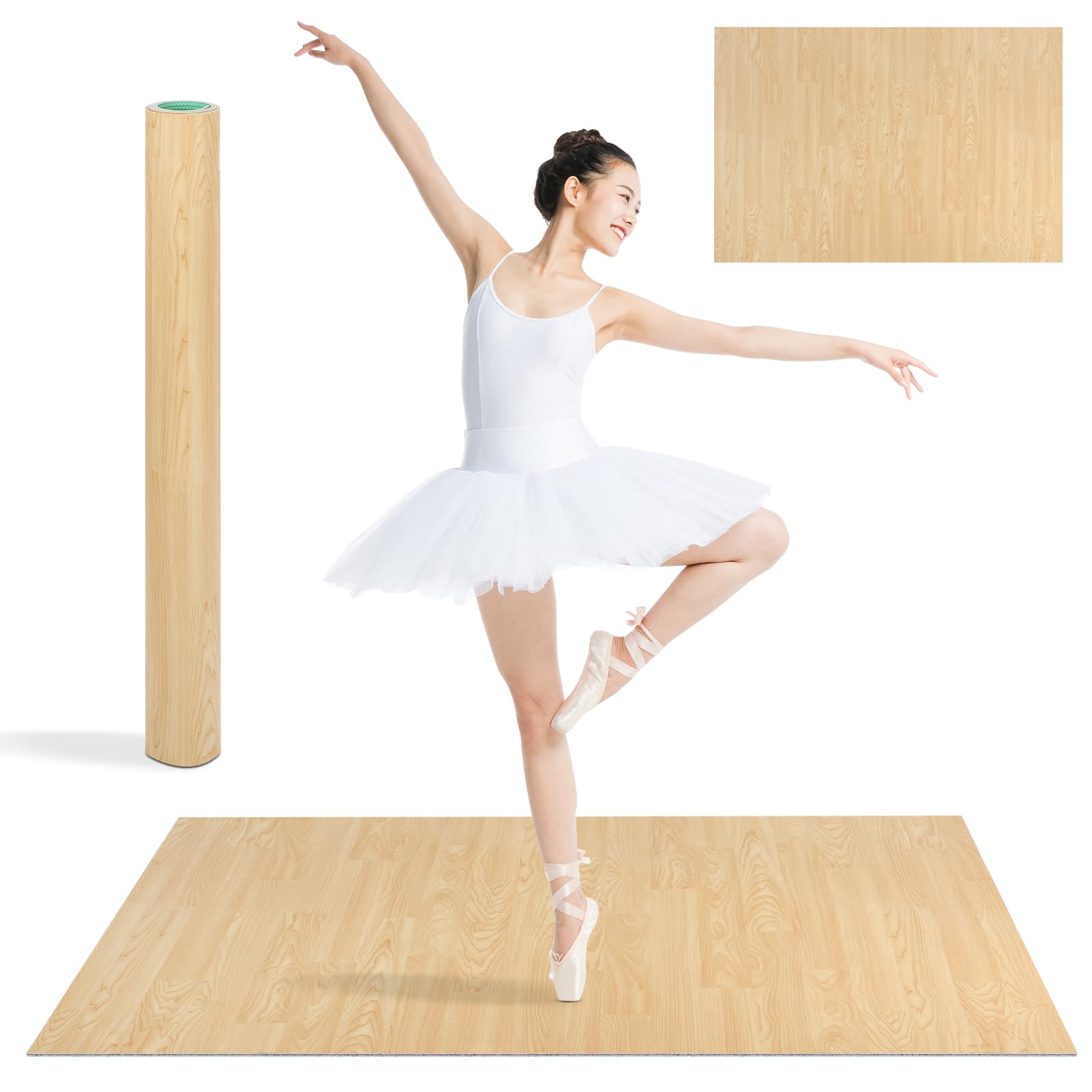
Marley is the matte vinyl surface studios lay over their sprung floors, and a rolled version gives you a patch of it at home. It is made to a particular grip: enough that a shoe will not skid out from under a relévé, not so much that a pivoting foot catches and twists the knee. Let a new one lie flat for a day before you dance on it, and check it is not sliding or bunching under your feet.
Why we picked this exact one: The XHIKOWAT marley mat is 5mm thick and rolls out to three feet by four, which covers the square you actually occupy at a barre. It is one of very few in this category holding above four stars, though only 31 people have rated it — an honest picture of a niche where most listings sit down in the threes. If you want something bigger later, dance-flooring specialists sell the same material by the metre.
Set all four up once and leave them standing if you possibly can. The single biggest predictor of whether a home practice survives month two isn't motivation, it's whether the barre has to come out of a cupboard first. That's the same quiet lesson as mat Pilates at home, where the mat that lives rolled up in a wardrobe is the one nobody uses.
What You'll Want By Week Six
None of this is needed to start, and I'd actively discourage buying it on day one — you don't yet know which parts of a session you find hard. Six weeks in you will, and these four fill the gaps that actually show up: the floor work before the barre, the small foot muscles that give out first, the teacher you can't quite hear, and eventually the barre itself. There's the same arc in a beginner ukulele setup, where the accessories only make sense once you know which chord keeps defeating you.
05Pick 05 of 08
Non-Slip Grip Pilates Socks
Grip socks have rubber pads moulded into the sole so the foot cannot slide on a hard floor. They are for the parts of a session spent off your feet — the warm-up, floor barre, the stretching at the end — rather than for dancing in. Choose a pair whose grip covers the ball of the foot and the heel instead of a few isolated dots under the toes.
Why we picked this exact one: TAVI's Savvy is the grip sock you see most often in barre and Pilates studios, and it has held 4.6 stars across more than two thousand ratings. The grip runs as a pattern across the whole sole rather than in scattered dots, which is what stops a heel sliding mid-stretch. They are thin, so a cold floor stays a cold floor.
Flat exercise bands come in graded strengths and are the standard tool for low-load foot work: pointing against resistance, slow lowers, turning the ankle in and out. They need no space and no setup, since you sit on the floor, loop one over the arch and work. A beginner kit arrives with several strengths so there is somewhere to progress to.
Why we picked this exact one: THERABAND's beginner kit is the brand physiotherapists hand out, which matters here because its colour-to-strength scale is the one most exercise instructions quietly assume. Three bands come in the box, yellow through green, so the next step up is already paid for. This is the non-latex version, which sidesteps the allergy problem the original has.
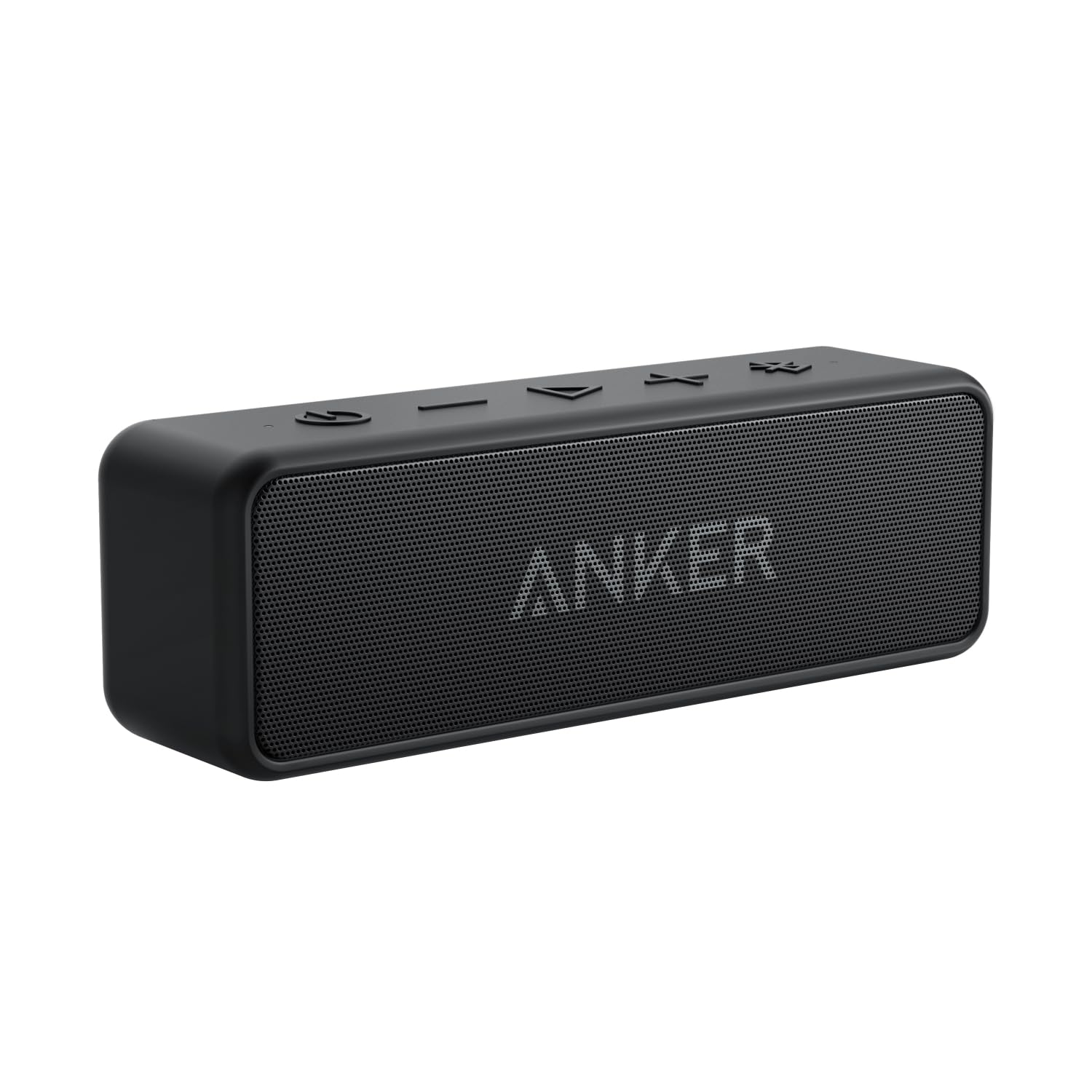
A compact Bluetooth speaker pairs with whatever device is running your class and puts the teacher's voice somewhere you can hear it from across the room. Laptop speakers point away from you and disappear under your own breathing the moment you start moving. Battery life matters more than volume for this, since you want it to survive a week of sessions between charges.
Why we picked this exact one: The Anker soundcore 2 is the small speaker with the longest track record at this price, quoted at around 24 hours of playtime per charge. Its rating has held at 4.5 across an enormous number of reviews, which is rare in budget audio. It is tuned warm rather than for speech, so music sounds fuller than a piano recording really wants, but spoken counts come through cleanly.
A longer double barre carries two rails at different heights and gives you room to work along it rather than on one spot. Six feet is enough for a full barre facing either direction without repositioning yourself between exercises. These are heavier than a short single barre and are meant to live in one place rather than fold away after every session.
Why we picked this exact one: The Artan Balance 6ft curved double barre is the step up from a 4ft single, and it earns its price once you have been practising a few months and know the corner is permanent. The lower rail is the real gain, giving a second height for stretches and for anything done facing the barre. Wait on it if you still have to pack the barre away after each session — this one is awkward to move, and a single barre does everything a beginner's first months ask for.
Spend on these in that order and you'll probably never regret any of it. The one trap is buying the bigger barre early as a way of committing to the hobby — commitment comes from showing up, not from hardware, which is the whole argument behind building a beginner practice routine.
Three Ways a Home Barre Goes Wrong
None of what follows is health advice — it's the setup equivalent of checking a ladder before you climb it. Home barre work has a small, specific set of failure modes, and all of them come from the room rather than from the dancing.
The barre comes over. Dancers who've used freestanding barres are blunt about the footprint: much less than about 30 cm of base on each side and you risk pulling the thing down on top of yourself. A freestanding barre is for light balance assistance, not for hanging off — that's what a wall-mounted one bolted into studs is for. If you find yourself gripping, the barre is too low or the exercise is too hard, and neither is solved by holding tighter.
The floor betrays a foot. Plain socks on wood are genuinely dangerous the moment anything turns. Thick carpet is the opposite problem: it catches the front of the foot and lets the ankle roll when you come down off a relévé. Concrete under thin flooring, common in basements and newer flats, takes the impact your knees were hoping the floor would absorb, so jumping belongs somewhere else.
You start cold. A class video opens at the barre because the dancers in the studio warmed up in the corridor. Five to ten minutes of easy movement first — marching, ankle circles, gentle pliés in parallel — is the difference between a pleasant hour and a sulking Achilles. And pointe work is not a thing to try at home unsupervised, whatever the shoes look like in photographs.
Read that list once, set the room up accordingly, and then forget it. On days when something genuinely hurts, the right move is to close the laptop and do something else entirely — jigsaw puzzling asks nothing at all of your ankles.
The Questions That Turn Up in Month Two
Why does my standing leg wobble more at home than it did in a studio class?
A studio barre is bolted to a wall and does not move; a freestanding one shifts a millimetre or two under your hand, and your balance system reads that tiny movement as the floor moving. Beginners respond by gripping harder, which makes the barre move more. The fix is counterintuitive: rest two fingers on the rail instead of a whole hand, and let the wobble live in your standing leg where it belongs. That's where the balance is actually learned.
Why do my neck and shoulders ache after a session that was all legs?
Because your arm has been doing the balancing. Pulling down on the barre or bracing against it loads the shoulder and the side of the neck for forty minutes straight, and you won't notice while it's happening. A barre at the wrong height makes it worse — too low and you fold over it, too high and your supporting shoulder rides up towards your ear. Set the rail so your elbow hangs comfortably at your side and check that your shoulder stays down through both a plié and a relévé.
Everyone says turnout comes from the hips — what does that mean standing in my living room?
It means the rotation starts at the hip joint and the knee and foot follow, rather than you planting your heels and twisting your feet apart to hit a shape you saw in a photograph. Forced turnout shows up as knee pain, a pinching feeling at the front of the hip, or ankles rolling inward. The practical test is whether your kneecap points along the same line as your second toe in plié. If it doesn't, bring the feet in until it does, however modest that looks.
Should I be watching myself in the mirror the whole time?
No, and this one surprises people who bought the mirror specially. Staring at your reflection trains you to find positions by sight, so the moment you look away or close your eyes the position disappears. Use it the way a teacher's glance works: run the exercise from memory, then check once and compare what you felt against what you see. Spending the last part of each session facing away from the mirror is the quickest way to make corrections stick.
Can I skip the warm-up if the class video starts with pliés?
The barre is a warm-up for someone who already walked to a studio and changed their shoes. Going from a desk chair straight into deep pliés and rond de jambe asks cold hip rotators and a cold Achilles to work at end range, which is where adult beginners collect their first nagging injury. Give it five to ten minutes of unglamorous movement first — marching, ankle circles, a few parallel pliés, some gentle spine mobility. You'll also find the first exercise of the actual class stops feeling impossible.
None of this gets answered in one session, and that's fine. Ballet rewards the people who keep turning up more obviously than almost any hobby, mostly because the first three months are so visibly clumsy that anyone still there at month four has already done the hard part.
People Worth Following Into This Hobby
Real practitioners we found while researching this setup — people who do the work, show their process, and publish on sites they run themselves. No sponsorships, no affiliations; we just think they're worth your time.
Runs a structured online ballet school for adults and films teaching videos on the unglamorous parts of practising at home, flooring and surfaces included.
Their home-flooring lesson is the clearest explanation anywhere of why a marley mat behaves differently from carpet or tile, which is exactly the decision this setup's floor pick turns on.
Teaches classical ballet online from her own studio after thirty years dancing, teaching and choreographing, and records full-length classes aimed squarely at adult beginners.
This page assumes you will follow a real class rather than improvise, and her adult-beginner recordings are structured lessons with corrections spoken aloud, which is what a home practice is missing.
A dance school running since 1978 that now teaches adults live on Zoom, including a four-week absolute-beginner introduction capped at fifteen places.
Practising alone at a home barre builds habits nobody corrects, and a short live course with a teacher watching is the cheapest way to find out what your alignment is actually doing.
Publishes a long-running library of articles on dance technique, turnout, foot and ankle strength and training away from the studio, written from a dance-physiotherapy angle.
The foot and ankle conditioning this setup's resistance bands are for is covered there in far more detail than a gear page can hold, as is the turnout question the FAQ raises.
Love what you see here? Save individual picks with on any item, or copy everything to a list of your own in one click — great for coming back to later, or dropping as a not-so-subtle hint.