Tip a thousand pieces onto a table and you've bought yourself an evening that asks nothing of you but attention. Puzzling began as a teaching trick: in the 1760s a London mapmaker glued maps onto wood and sawed along the county borders so schoolchildren could put Europe back together. Adults took it over around 1900. The odd part is that those early puzzles came with no picture on the box, just a title, so you had no idea what you were building until the last pieces went in — printed box images only arrived in the mid-1930s. During the Depression, drugstores and libraries rented puzzles out for three to ten cents a day.
The gear question doesn't show up until about day three. You start on the dining table because that's where the light is, then dinner happens, and you find yourself sliding a half-built sky onto a baking tray at arm's length. Forty pieces go on the floor. If you're still working out which creative hobby to commit to first, puzzling is an unusually cheap way to find out whether you enjoy sitting still. Nothing on this page makes you better at it. The pieces don't care. What a surface and a decent lamp decide is whether a puzzle lives for a fortnight or gets swept back into the box on Thursday.
So the philosophy here is to buy as little as you can get away with: something to build on that you can roll up or cover, something to sort into, a lamp that actually reaches the table, and one puzzle at a count you'll finish. Four things. Everything after that can wait until you've done two or three.
Nothing below costs enough to sting if it turns out this isn't your sort of evening.
Where This Little Kit Can Take You
A few real moments and results from this hobby — made with tools no fancier than the ones below.
A harbour emerging piece by pieceThe painted water is nearly always the last section to close.
Two hands, one more pieceSorting by colour stops feeling deliberate somewhere in the first hour.
Puzzling is quietly sociable in a way few indoor hobbies manage — people wander past, place one piece, say nothing, and wander off again. Start at 300 to 500 pieces even if that sounds too easy, because a 1000-piece box with a lot of sky in it is where most beginners stop. If what appeals to you is the hands-busy, screen-free part rather than the puzzle-solving, a paint-by-numbers relaxation setup scratches a very similar itch.
The Four Things That Save Your Table
Things go wrong in a reliable order. First you lose the table, then you lose pieces, then around ten at night you stop being able to tell navy from charcoal and give up on a whole section that turns out to be obvious in the morning. These four buy back all three. Like starting cross-stitch one simple X at a time, the trick is keeping the first purchase small enough that stopping costs you nothing. None of it is clever: a mat, some trays, a lamp, and a puzzle at a count you'll actually finish.
Disclosure: This section may contain affiliate links to Amazon. We may earn a small commission from qualifying purchases at no extra cost to you.
01Pick 01 of 11
Jigsaw Puzzle Roll-Up Mat
A felt mat large enough for a 1000- or 1500-piece puzzle, which rolls around a tube so an unfinished puzzle can be put away without being broken up. The felt surface grips the pieces instead of letting them skate about, and elastic bands hold the roll closed. Look for one that comes with an inflatable tube rather than a solid cardboard one, and check the flat dimensions against the puzzle size printed on the box.
Why we picked this exact one: The Becko US roll-up mat is the one I'd start with, mostly because of its tube: it inflates rather than being solid cardboard, and puzzlers who have used both say the inflatable kind keeps its shape far longer. Two elastic bands close the ends so the roll doesn't creep open in a cupboard. The honest trade-off is the felt itself - pieces sit where you put them, which is wonderful when you roll it and mildly irritating when you want to shuffle a pile around.
A set of shallow stacking trays used to split a tipped-out puzzle into edges, colours and patterns before assembly begins. Lids let a sorted batch be stacked and lifted off the table in one go. The useful feature is a pale, plain base - pieces read clearly against it - and a shallow lip, so pieces slide out rather than needing to be picked up one at a time.
Why we picked this exact one: The Tidyboss eight-tray set earns its place through the white bases, which is exactly the trick experienced puzzlers use when they sort onto baking trays lined with white paper - the piece colour stops competing with the tray colour. Eight trays is enough to split a 1000-piece puzzle into edges plus seven colour groups. They're ABS plastic rather than anything lovely, and the lids are a snug fit that takes a moment to seat.
A task lamp that puts bright, even light across a table rather than down a narrow cone. Adjustable colour and brightness settings matter more here than raw wattage, because the hard part of puzzling at night is separating two shades of the same colour. A head that tilts and swivels lets you push the light across the puzzle without it bouncing straight back off a glossy surface.
Why we picked this exact one: The Lepro 9.5W desk lamp covers this for very little money, with five colour settings and five brightness levels so you can find a white that doesn't glare off a coated puzzle. Its 800 lumens is plenty for a table-sized pool of light. The base is small, which is good for a crowded puzzle table and less good if anyone leans on the arm.
A 500-piece puzzle is the sensible first purchase for an adult who hasn't done one since childhood - a few evenings rather than a few weeks. What makes a puzzle beginner-friendly is not the count but the picture: look for four or five clearly different areas you could point at, rather than a single wash of sky or water. An anti-glare finish helps under a lamp.
Why we picked this exact one: The Ravensburger Positano is a good first build because the image does the work - cliff houses, boats and sea split into obvious zones instead of one enormous gradient. Ravensburger's piece fit is the reason puzzlers keep naming the brand: the pieces seat with a small click and stay seated when you nudge a section. It's a coastal scene, so there is still a stretch of water that will take an evening of its own.
That lot will carry you through a dozen puzzles. One warning about the mat, because it catches everyone: pieces grip felt rather than slide on it. That's exactly what you want when you roll it up, and exactly what annoys people when they're pushing a pile of sky around mid-session. If it bothers you more than it helps, the rigid board below is the fix, not a different mat. Puzzling is one of the cheapest things on any list of creative hobbies for adults starting from scratch, which is a large part of why it's so easy to try.
When You Know You're Keeping This Up
Three or four puzzles in, you'll notice which parts of the process you've started to resent. For most people it's the unrolling, and the box lid that slides flat every twenty minutes no matter what you prop it against. These fix those. If what you're enjoying turns out to be the pattern-spotting rather than the picture, a proper beginner speedcubing setup is the obvious next rabbit hole. My honest advice on this section: buy none of it on day one. Beginners overspend on boards long before they know whether they want a dedicated surface at all.
05Pick 05 of 11Worth the upgrade
Rotating Wooden Puzzle Board
A rigid board that holds a full 1000-piece puzzle, spins on a bearing so you can reach the far edge without standing up, and has shallow drawers underneath for sorted pieces. A cover keeps cats and sleeves off a half-finished puzzle. Check the working surface against the finished size printed on your puzzle box before buying - boards are often smaller than they look.
Why we picked this exact one: The Beyond Innoventions rotating board is the step up I'd make once you've finished two or three puzzles and know you'll keep going; before that it's a lot of money for a surface. Its 30 by 22 inch top takes a standard 1000-piece puzzle, the lazy-susan bearing saves a lot of leaning, and four drawers replace the sorting trays on the table. Wait on it if you're still deciding whether puzzling is your thing - a felt mat does the same job for a quarter of the price, just less comfortably.
A folding magnifier with a wide rectangular lens and its own dimmable light, used over the box lid rather than over the puzzle. Around 5x is the useful range - stronger lenses cover too little area to be worth the swap. A rechargeable one saves hunting for button cells halfway through an evening.
Why we picked this exact one: The AKKYCVS 5x page magnifier suits puzzling better than a jeweller's loupe because the lens is rectangular and wide enough to take in a whole corner of the box image at once. Its built-in light is dimmable, which matters when you're already sitting under a bright lamp. It folds flat, though the hinge is the part most likely to wear out first.
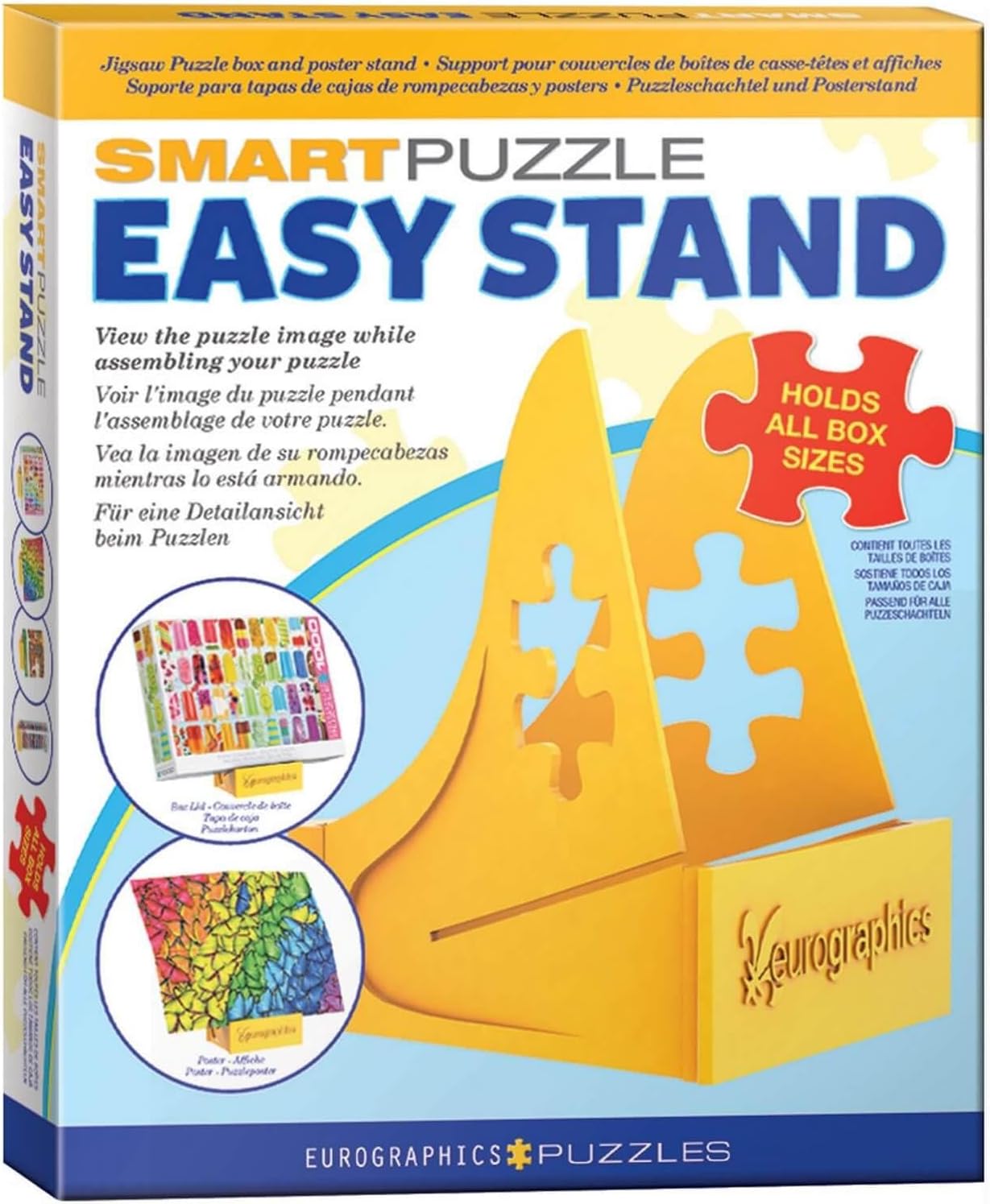
A small stand that holds the puzzle box lid at a readable angle beside the work surface. It sounds trivial until you have tried working from a lid propped against a mug, which slides flat every twenty minutes. Some versions also take a folded poster, which is what the better puzzle brands include instead of relying on the lid.
Why we picked this exact one: The EuroGraphics box stand is made by an actual puzzle company rather than adapted from a cookbook holder, so the angle suits a lid rather than a hardback. It folds down to nothing between puzzles. Its review count is modest next to everything else here, which reflects how few people think to buy one rather than any problem with it.
A board changes how the hobby feels more than anything else here — the puzzle stops being a thing that occupies the table and becomes a thing that lives on a shelf. There's a satisfying moment the first time you lift a half-finished puzzle by its edges, drawers and all, and carry it out of the room intact. If you like the idea of a build that ends with something mechanical on the shelf, a working wooden clock or gear car runs on the same sort of evening.
Turning Thursday Night Into Something on the Wall
Finishing a puzzle and then breaking it up feels wrong the first few times, which is how most people end up here. Preserving one is a genuinely separate purchase from puzzling, and worth understanding before you start rather than after — a puzzle built loose on a mat is much harder to rescue than one built on something flat. Plenty of puzzlers also keep a running log of what they've built and when, the same impulse behind keeping one notebook for everything. The order is always the same: flatten, bond, back, frame.
Pick one
These 2 do the same job. You only need one of them, so pick the one that suits you better.
08Pick 08 of 11Option A
Puzzle Glue and Sealer
A water-based liquid sealer brushed across the face of a finished puzzle, which soaks into the seams and locks the pieces together. Two thin coats hold better than one thick one, and the second goes on after the first has had roughly twenty minutes. A matte version avoids the plastic shine that a gloss finish gives a printed surface.
Why we picked this exact one: Mod Podge Puzzle Saver is the bottle puzzlers reach for most, and the matte formula is the one to get - the gloss reads as varnish on a printed image. An eight-ounce bottle covers several 1000-piece puzzles. The real risk is enthusiasm: lay it on thick and the board absorbs the water, the edges curl, and you end up gluing the back as well to flatten it out.
Pros
One coat reaches every piece and every edge, with no seams
Seals the printed surface as well as bonding it
Cheap enough that a patchy first attempt doesn't matter
Cons
Two coats plus drying time, so it's an afternoon not ten minutes
Too much and the puzzle warps or the edges curl
Changes the finish of the printed surface slightly
Clear adhesive sheets laid across the back of a finished puzzle, bonding it without any liquid, drying time or smell. Because each sheet is smaller than a finished 1000-piece puzzle, several are tiled with slight overlaps. Press from the centre outwards, slowly - trapped air is the one mistake that can't be undone once the sheet is down.
Why we picked this exact one: The PUZZLE EZ sheets are the cleanest route if the idea of a wet brush near your finished puzzle makes you nervous, and the pack includes adhesive hanger tabs so you can skip a frame entirely. Each sheet measures 12.2 by 15.3 inches, so a 1000-piece puzzle takes four of them and the back ends up with visible seams. That's invisible on the wall and slightly annoying while you're doing it.
Pros
Done in minutes, with no drying and no smell
Leaves the printed surface exactly as it was
Hanging tabs are already in the box
Cons
A 1000-piece puzzle takes four sheets, so the back has seams
Trapped air bubbles are easy to make and impossible to fix
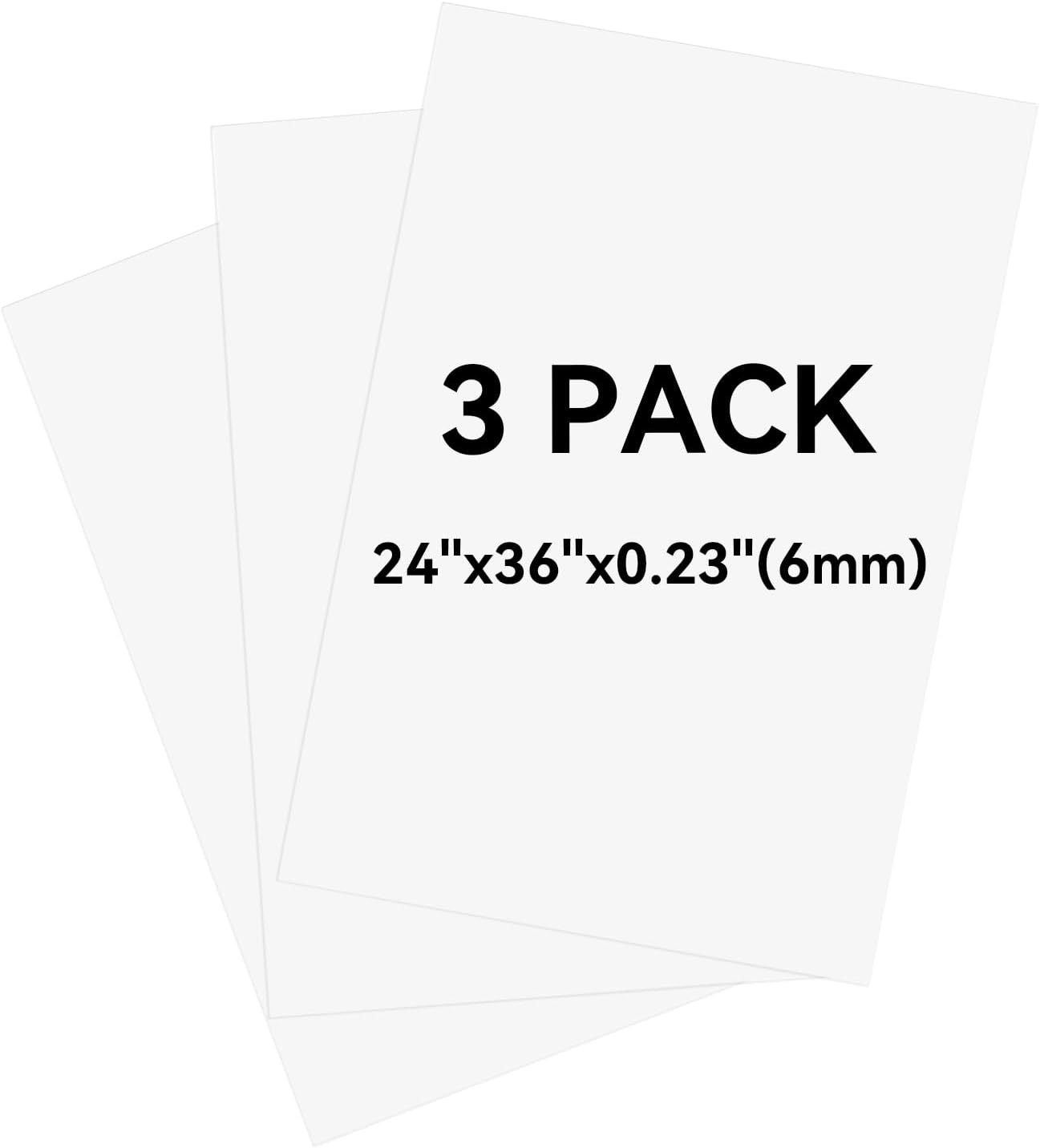
Rigid foam-core sheet used as the backing a bonded puzzle is mounted onto, cut slightly larger than the puzzle and then trimmed to the frame. Around a fifth of an inch of thickness keeps a big puzzle from flexing and popping seams when it's lifted. A craft knife and a straight edge cut it cleanly; scissors do not.
Why we picked this exact one: The AIKUPNEY 24 by 36 inch sheets are oversized on purpose - a standard 1000-piece puzzle is about 20 by 27 inches, so you trim rather than piece two boards together. At 0.23 inches they're on the thick side for foam board, which is what you want behind a heavy puzzle. Three sheets is more than most people need, but they're awkward to buy singly.
A frame cut to the usual finished size of a 1000-piece puzzle, with backing and hangers included so no trip to a framer is needed. Measure your finished puzzle before ordering - the dimensions are printed on the box, and smaller counts need a smaller frame or a mat. Hinged hangers on the back let the same frame hang either way up.
Why we picked this exact one: The MCS 20 by 27 puzzle frame fits the standard 1000-piece size without any cutting, and comes with MDF backing and hinged hangers so it hangs portrait or landscape. The natural woodgrain finish stays out of the way of a busy image. It will not fit the 500-piece puzzle in the essentials above, which is the catch - check the finished size on your own box first.
Give the glue longer than you think it needs. A puzzle that feels dry on top can still be damp in the seams, and that's when the edges lift as you move it to the backing board. Something to remember for the spring, too: after a winter of sitting very still, binoculars, a guide and a notebook make a decent counterweight.
Why Your Second Puzzle Goes Faster Than Your First
I bought a 1000-piece puzzle and stalled right after the border. What went wrong?
Almost certainly the image, not the count. Beginners pick by piece number because it's the big figure on the box, but puzzlers put 100 to 500 pieces in the beginner band, 500 to 1000 in the novice band and 1000 to 2000 in the serious one, and within any of those a picture with large stretches of near-identical colour is a different hobby from one with distinct regions. A thousand pieces of foliage will beat you; a thousand pieces of a harbour town will not. Before buying, look at the box and count how many areas you could point at and name — four or five is a good sign, one is a warning.
Why won't the pieces on my cheap puzzle stay together when I move a section?
Thin board, and it's not your technique. Budget puzzles use thinner chipboard that absorbs moisture from the room, so the pieces go soft and pliable and a joined section sags apart the moment it's lifted. The same puzzles are often cut with worn dies, which leaves furry edges and pieces still half-attached to their neighbours in the bag. If a piece has to be pressed rather than dropped into place, that's the tell. It's the one argument for paying a few pounds more on the puzzle itself rather than on accessories.
I rolled up my mat and half the puzzle came apart inside it. Is that normal?
It's the known weakness of every roll-up mat, and the reason experienced puzzlers keep going back to rigid boards. Rolling asks a flat sheet of interlocked cardboard to bend, and the longest joined sections are the ones that give. Roll it loosely in one direction only, never fold it, and get the elastic bands on before you stand it up. The other killer is mundane: a rolled mat left on the floor will be stepped on, and that ends it.
Can I glue a puzzle I built on a felt mat?
Not directly — wet glue will bond the puzzle to the felt and you will lose both. Move it first. The method puzzlers use is to slide a sheet of stiff brown parcel paper or a thin board underneath, a few inches at a time, then shift the whole thing onto a hard surface covered with parchment or wax paper. If the puzzle is too fragile to survive the move, lay parchment over the mat and slide the puzzle onto that instead. This is the single best reason to build on something flat if you already know you want to keep it.
I picked up a secondhand puzzle and some tabs have gone furry. Is it ruined?
Usually not. What has happened is that the top paper layer has started to separate from the cardboard underneath at the tabs, which is ordinary wear on a puzzle that has been assembled many times. A dab of ordinary white school glue pressed under the lifted layer and left under something flat overnight puts it back, and the piece behaves normally afterwards. Do it as you find them rather than at the end, because a furry tab that gets forced into place is the one that tears properly.
People Worth Following Into This Hobby
Real practitioners we found while researching this setup — people who do the work, show their process, and publish on sites they run themselves. No sponsorships, no affiliations; we just think they're worth your time.
Builds furniture from plywood scraps and publishes the cut lists and build photos for each one, including a rotating puzzle board with four drawers.
The nice-to-have section recommends a rotating board with drawers as the one real upgrade; her post shows how to build the same thing from plywood offcuts for a fraction of the price, with the dimensions worked out.
Writes long-running posts about her own puzzling setup and answers reader questions about where the sorted pieces actually go while a puzzle is in progress.
Her post covers the exact question this setup leaves open - how to lay out sorted pieces around a 1000-piece puzzle when the board is already full - with photographs of her own table rather than stock images.
Has logged every jigsaw puzzle she has finished since 2016, with notes on piece quality, fit and which brands hold together when a section is moved.
This page is about where you build a puzzle, which is the first decision in the essentials section; her archive is also the easiest place to see how piece quality differs between brands before buying a second puzzle.
Publishes step-by-step home craft tutorials, including a photographed walk through gluing a finished puzzle and hanging it without a frame.
The specialty section stops at which glue to buy; her tutorial shows the part that actually goes wrong - spreading a thin enough coat and handling the puzzle afterwards - and covers hanging it with no frame at all.
Love what you see here? Save individual picks with on any item, or copy everything to a list of your own in one click — great for coming back to later, or dropping as a not-so-subtle hint.