A one-year-old keeps a beat badly, you keep it well, and for about ten minutes neither fact matters. That is really all toddler music is: somebody small shakes something, somebody large sings, and you meet in the middle. It happens in church halls, library basements and on a great many kitchen floors. England's statutory early-years framework names it outright, listing a range of soundmakers and instruments in the same document that tells nurseries how to run a day, which is rare for anything you would call a toddler activity. The odd part is where the gear comes from. Most of what early-childhood specialists buy is made by percussion companies that also supply working drummers, only shrunk to fist size.
The first session rarely looks like music. A toddler hits the drum twice, drops it, picks up a shaker, puts the shaker in their mouth, then goes off to bang the radiator instead. Teachers plan for this. They have a name for the noise phase, and the fix is not to stop it but to give it half a minute at the start, on purpose, so the rest of the ten minutes has somewhere to go.
Four instruments that sound good beat twenty that do not. A drum you can hit with a flat palm, a pair of shakers, something with tuned bars and one jingling thing - a two-year-old's rhythm section is genuinely that short. The rest can wait until they ask for it.
Everything below is cheap enough that it will not sting if your toddler decides at eighteen months that drumming is for other people.
Where This Little Kit Can Take You
A few real moments and results from this hobby — made with tools no fancier than the ones below.
First taps on a real drumheadA drum low enough to reach is a drum that gets played.
A floor full of soundMost of the first month is exploring sound, not keeping time.
Three maracas waiting to be shaken
One more thing before the list. Toddler music is loud by design, but it should not be sharp. Child-development services put it plainly: avoid loud instruments around young children, and a surprising number of brightly coloured toys fail that test the moment you open the box. Everything in the next section was picked partly on how it sounds across a small room.
Four Noises and Somewhere to Put Them
Here is the misconception worth killing early: a bigger set is not a better set. The twenty-piece bundles look like value and arrive as a pile of thin plastic that rattles rather than rings, and early-years teachers say so bluntly - instrument kits are usually padded out with filler nobody picks up twice. Four good ones get played. The fifth item on this list is not an instrument at all, and it is the one that decides whether the other four stay an activity or become clutter under the sofa.
Disclosure: This section may contain affiliate links to Amazon. We may earn a small commission from qualifying purchases at no extra cost to you.
01Pick 01 of 09
double-sided wooden hand drum for toddlers
A small wooden frame drum with a skin-style head on one side and a ridged wooden tone surface on the other, so a single instrument gives three or four different sounds. A short beater normally comes with it, held in a slot on the frame rather than living loose in a drawer. The thing to look for at this age is a drum whose sound output is deliberately limited, because toddler drums end up very close to small ears.
Why we picked this exact one: We went with the Hape Double-Sided Drum because it is graded from twelve months and still sounds like an instrument rather than a toy. The built-in holder for the beater is the detail that matters day to day, and Hape states outright that the drum is built to restrict how loud it gets, which is the most common complaint about toddler percussion. It is small, though. An adult hand covers most of the head, so this is the child's drum and not a shared one.
A set of five sealed wooden eggs, each filled to a slightly different weight so they rustle rather than rattle. Eggs are the easiest shaker for a toddler because there is no handle to aim and no wrong way to hold one. Size and seam are what to check before buying: an egg around two inches across is too big to swallow, and a glued seam you can prise open with a thumbnail is the fault worth rejecting.
Why we picked this exact one: The WoodenEdu set of five is the one we would buy, because each egg measures roughly 2 by 3 inches and so cannot fit the small-parts cylinder an under-three page has to respect. It is also graded from twelve months, where most egg shaker sets are marked three years and up. Wood gives a soft rustle instead of a clatter. The honest caveat is the review count, still under a hundred, but the alternatives at this age grade were thinner and louder.
An eight-bar xylophone tuned to a plain do-re-mi scale, mounted on wheels with a tow rope so it can be dragged from room to room. The mallet stores in the body of the toy instead of disappearing under furniture. At this age the number of bars matters far less than the tuning: eight notes a toddler can actually land on beat anything chromatic and clever.
Why we picked this exact one: The National Geographic Kids Turtle Xylophone wins its slot mainly on age grade: the maker rates it for toddlers 1 to 3, where almost every other eight-note xylophone is marked three years and up because of its loose, thin mallets. Storage for the mallet is built into the shell, and the tow rope turns it into something a new walker pulls around the flat. It is newer than the rest of this basket and has fewer than fifty reviews so far, though the ones there run high.
A tambourine built for a baby's hand, with the jingles set into the frame and deliberately damped, plus a row of sliding beads round the rim for fingers to push. It covers the bell sound in a basket without the loose metal jingles that make most bell instruments unsuitable before three. The plastic body wipes clean, which matters when everything ends up in a mouth.
Why we picked this exact one: The Baby Einstein Tiny Tambourine earns its place because its jingles are muted and fixed into the frame, and it is graded from three months. No handled jingle stick we opened could match that; they all carry a not-for-under-threes small-parts warning. It is also the cheapest thing in the basket by a distance. The trade-off is that it is the first item your child outgrows, because by three they will want a proper rim tambourine with a real head.
soft-sided storage basket for the instrument collection
A woven cotton rope bin roughly seventeen inches across with a handle on each side, soft enough that it will not mark a wall or a shin when it gets dragged about. Anything that holds instruments works, but a shallow open basket beats a lidded box because a toddler can see what is inside and choose. Rope sides also fold flat when you want the floor back.
Why we picked this exact one: This COMFY-HOMI cotton rope basket is the size that actually works, at 17 by 13 inches, which swallows a drum, a xylophone and a handful of shakers without stacking them. The soft woven sides mean a toddler can tip the whole thing over and nothing chips. It is among the better-reviewed baskets in its size class, with roughly 3,600 ratings. It is a household basket rather than a toy, so look at the handles now and then; rope handles do fray under hard use.
Give it a fortnight before you judge how it is going. The first week is mouthing and throwing; somewhere in the second, a toddler starts hitting the drum when you sing and stopping when you stop, and that is the whole skill. Keep the basket somewhere they can see it but not raid it. Instruments that are always underfoot stop being interesting, and the handing-over moment is also when you get to run a thumbnail round the shaker seams.
What You Add When They Stop Eating the Shakers
Almost everything interesting in children's percussion carries a three-years-and-up grade, and that is not manufacturers being cautious for fun: loose mallets, metal bars and bells that work free are the wrong shape for a mouth. So treat this as the second-birthday list rather than the shopping list. The mistake I see most often is buying it all at eighteen months, quietly confiscating half of it a week later, and concluding the child is not musical.
06Pick 06 of 09
wooden rhythm sticks for tapping along
Three pairs of plain hardwood sticks, about eight inches long and rounded at both ends, tapped against each other or against the floor. Rhythm sticks are the quietest way to practise keeping time, and because there is no resonating body the sound stops dead, which helps when a session needs winding down. Unpainted wood is the thing to look for, since painted sticks chip.
Why we picked this exact one: We would pick the MGTECH six-pack because the sticks are solid hardwood, rounded at both ends and carry no paint to flake off, which is the specific way the cheap coloured sets fail. Six sticks means three people can play, and playing together is rather the point of sticks. They are classroom-plain rather than lovely, and at this length they also make a perfect toddler-sized weapon, so they belong in the supervised half of the basket.
Squares of thin, light fabric that float down slowly when thrown, used in music sessions for the parts of a song where you move instead of play. The short juggling size is the right one for small children, because full-length dance scarves trail on the floor and get stood on. They wash, which they will need to.
Why we picked this exact one: The AIVIAI set of 24 is our pick on size and count: these are the short juggling squares rather than long dance scarves, so a new walker will not trip on one. Two dozen is enough for a whole playgroup, and the fabric washes. They are a supervised item, as any loose fabric is at this age, and thin enough that a determined toddler will eventually pull a thread out of one.
A pocket-sized paperback collecting dozens of traditional children's songs with words and simple melody lines. The value to a parent is not the tunes you already know but the second and third verses you do not, which is what stops a ten-minute session becoming Twinkle Twinkle four times over. If anyone in the house reads music, pick a book with notation rather than lyrics alone.
Why we picked this exact one: Wee Sing Nursery Rhymes and Lullabies is the title we would start with, because it is the series early-years teachers keep reaching for and it is written by the two women who built it, Pamela Conn Beall and Susan Hagen Nipp. It costs less than anything else on this page. The lullaby half is the quiet surprise: it is the part still in use at bedtime years after the drum has been retired. It is a plain pocket paperback printed to be sung from, not a picture book a toddler will sit and look at.
A 27-bar metal glockenspiel covering just over two octaves, with colour-coded, properly tuned bars on a wooden frame. Unlike an eight-note toddler xylophone it plays real melodies, sharps and flats included, so it stays useful well into school. Mallets and a carry case usually come with it, and the case is the difference between an instrument and one more thing in the toy box.
Why we picked this exact one: The MiniArtis 27-note glockenspiel is the step up we would make once you are sure the music habit has stuck. It spans G2 to A5 with colour-coded bars and ships with a 30-song book, so an adult with no training can follow it too. Hold off while your child is still mouthing things, because the mallets are loose and the bars are metal; this wants a three-year-old at the youngest. Buy it at the right moment and it is the only instrument on this page still in use at seven.
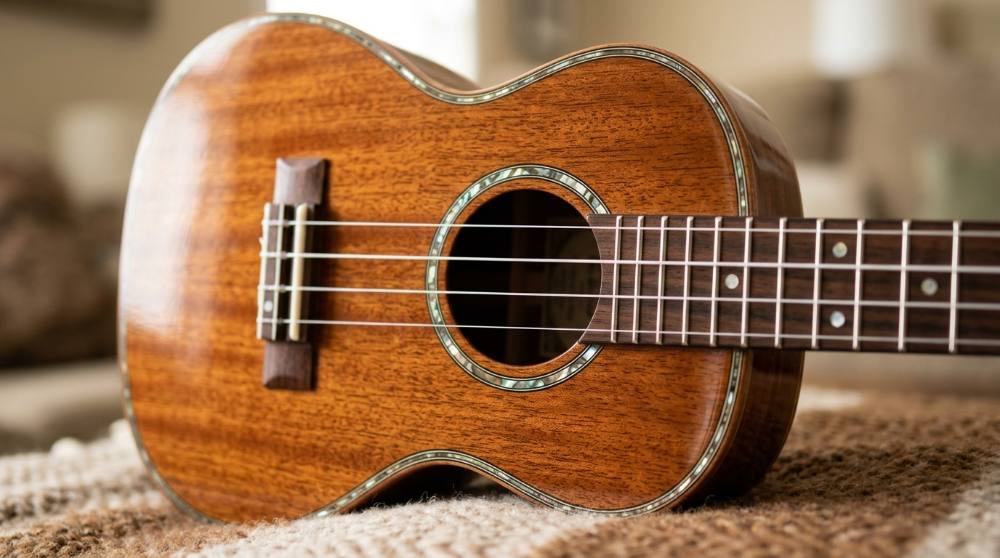
There is a natural end to all of this. Somewhere around four or five a child who is still interested stops wanting a basket of sounds and starts wanting one instrument with a name, which is usually when families start looking at a first ukulele and the four chords that come with it. You will know the moment when it arrives. They will ask what a song is called.
Four Things Worth Checking Before You Hand It Over
None of this is frightening, but all of it is specific, and a music basket carries a couple of hazards a toy box does not.
Seams first. A shaker is a sealed container full of small hard things, and the failure that matters is a seam that opens. A child can prise a cheap egg apart and swallow the steel pellets inside; it has happened. Run a thumbnail round the join of every shaker when you unpack it, and again every few weeks. Cheap eggs are where this goes wrong.
Then mallets. Most beaters sold with drums and tone blocks carry a line saying they are not approved under three, and foam-tipped ones get bitten through within days. If a mallet worries you, take it out of the basket. Palms work, and rhythm sticks work once the child is old enough for them.
Bells are the third. Loose jingle bells are almost exactly the size and shape that causes trouble, which is why every toddler-safe option either encloses them in a frame or sews them into fabric. Any handled jingle stick you find will say not for children under 3 on the listing, and it means it.
Last, volume. Child-development services give the same advice in plain words: avoid loud instruments around young children. A set you can hear two rooms away is not a better set. And the scarves, obvious as it sounds, are a with-you item only.
One habit covers most of this. Unpack everything yourself before it reaches the floor, pull on anything that looks detachable, and put the pieces you are not sure about on a shelf for a year rather than binning them.
Why Does It Always End in Banging?
Why does my toddler bang everything the second I hand it over?
Because the urge to make the biggest possible sound shows up long before the ability to choose a smaller one, and fighting it eats the whole session. Early-years teachers handle it by scheduling it: half a minute at the start where the only rule is do not hurt the instrument, then a clear stop signal, then the actual playing. Skip the free bit and you will spend the next eight minutes saying gently. The stop signal matters more than the start, so pick one gesture and use the same one every time.
Should I buy wooden instruments instead of plastic ones?
Not automatically, and this is where a lot of money goes astray. The split that matters is not wood against plastic but built-to-be-played against built-to-be-sold. Specialist plastic instruments are washable, nearly unbreakable and sound fine, while cheap painted wood chips and cheap wood glue lets go. What to check instead: paint that can flake, a seam you can open with a thumbnail, and whether the thing rings or just clatters.
My child is nearly three and still will not play in time. Is that normal?
Yes, and expecting otherwise is the most common disappointment parents report. Sessions at this age are about exploring sound, not keeping a beat, and the published early-years guidance asks only that children be given a range of soundmakers and instruments - nothing about being in time with anything. What appears first is not the beat but the stop: a child learns to end when you end. Treat that as the milestone and the timing turns up later.
Why do the instruments get ignored after a week?
Usually because they are always available. A basket left out on the floor becomes furniture within days, the same way a toy in the corner stops being seen. Keeping it up on a shelf and fetching it down on purpose costs ten seconds and buys back months of interest. The other half of it is you. These are things played with a grown-up, and a toddler handed a drum alone will mostly test whether it bounces.
Do I need to be able to sing?
No, and believing you do is why a lot of these baskets sit unused. A toddler is not assessing your pitch. They are tracking your face, your timing, and whether you stop when they stop. Teachers of this age group lean on repetition and predictability rather than performance, the same few songs in the same order with the same ending, because what a one-year-old is actually learning is that sound can be taken in turns.
People Worth Following Into This Hobby
Real practitioners we found while researching this setup — people who do the work, show their process, and publish on sites they run themselves. No sponsorships, no affiliations; we just think they're worth your time.
Runs weekly caregiver-and-child music classes in Tampa and writes short, practical guides for parents doing the same thing on the living-room floor.
Their guide to picking a toddler songbook is the natural next read after the song book in our nice-to-have list, and it answers the question this setup leaves open: which songs actually work at eighteen months.
Teaches baby and toddler music classes in Sydney and publishes gentle, specific how-tos for the same games played at home with pots, scarves and a voice.
Their ten at-home activities are what to do with the basket once you own it, and they make the point this setup makes about short, caregiver-led bursts rather than background music.
A board-certified music therapy practice that runs parent education classes and publishes a Using Music in Your Home series for families of young children.
Their instrument-exploration piece covers the turn-taking games that give a drum and a pair of shakers something to do, which is exactly the gap between owning the basket and using it.
A board-certified music therapist who writes monthly song and teaching plans for early-childhood music and runs an annual online conference for the people who teach it.
Her steady-beat and body-part song posts are the best free source of things to actually sing while a toddler shakes an egg, which is the part no instrument basket comes with.
Love what you see here? Save individual picks with on any item, or copy everything to a list of your own in one click — great for coming back to later, or dropping as a not-so-subtle hint.