Sew Your Own Christmas Ornaments From Felt Sheets

Sew Your Own Christmas Ornaments From Felt Sheets

DariaCurated by Daria
Jump to the 10 picks

Tiny Stockings, Wonky Stars and a Very Happy Tree

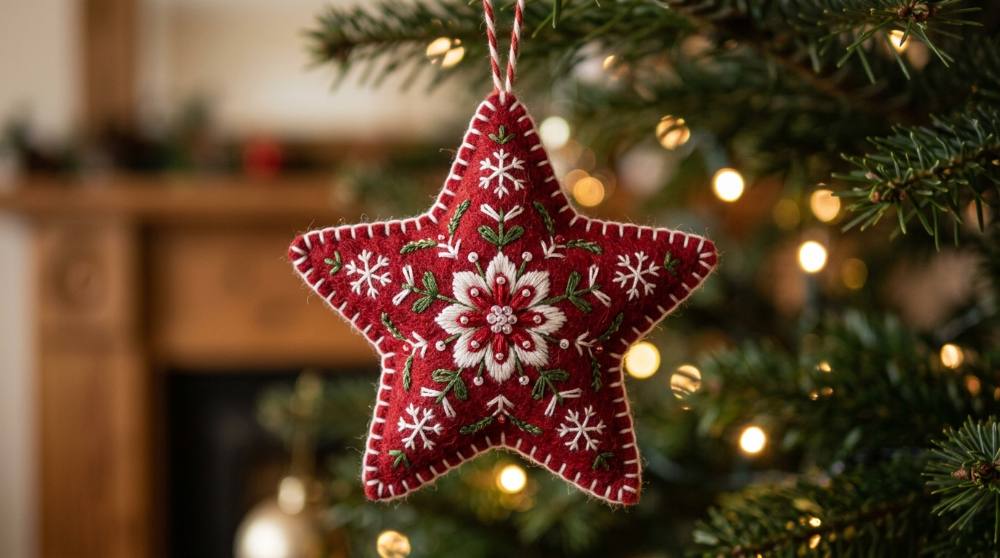
A felt ornament is two matching shapes cut from a thick sheet of felt, stitched together around the edge and plumped with a pinch of stuffing. That's it. People sew them at home in the weeks before Christmas, and the sequin-covered felt kits sold since the 1960s have their own collectors, with finished pieces still turning up at estate sales. The fabric itself is ancient. Felt is made by matting fibers together instead of weaving them, and it's one of the oldest known textiles, with possible traces of felting from around 6000 BCE.

This isn't needle felting, where you poke loose wool with a notched needle until it firms into a little sculpture, and there's a whole needle felting setup for that craft. It isn't quite embroidery either. Here the felt sheet is the ornament, and your stitches hold it together. You'll borrow a couple of embroidery stitches for faces and snowflakes, but the one doing most of the work is the blanket stitch, looping round the edge like a tiny fence.

Keep the first shop small. Wool-blend felt, a pack of floss, a needle, small sharp scissors and a bag of stuffing will make a whole row of ornaments.

Nothing below costs more than a takeout dinner, so a lopsided first star won't sting.

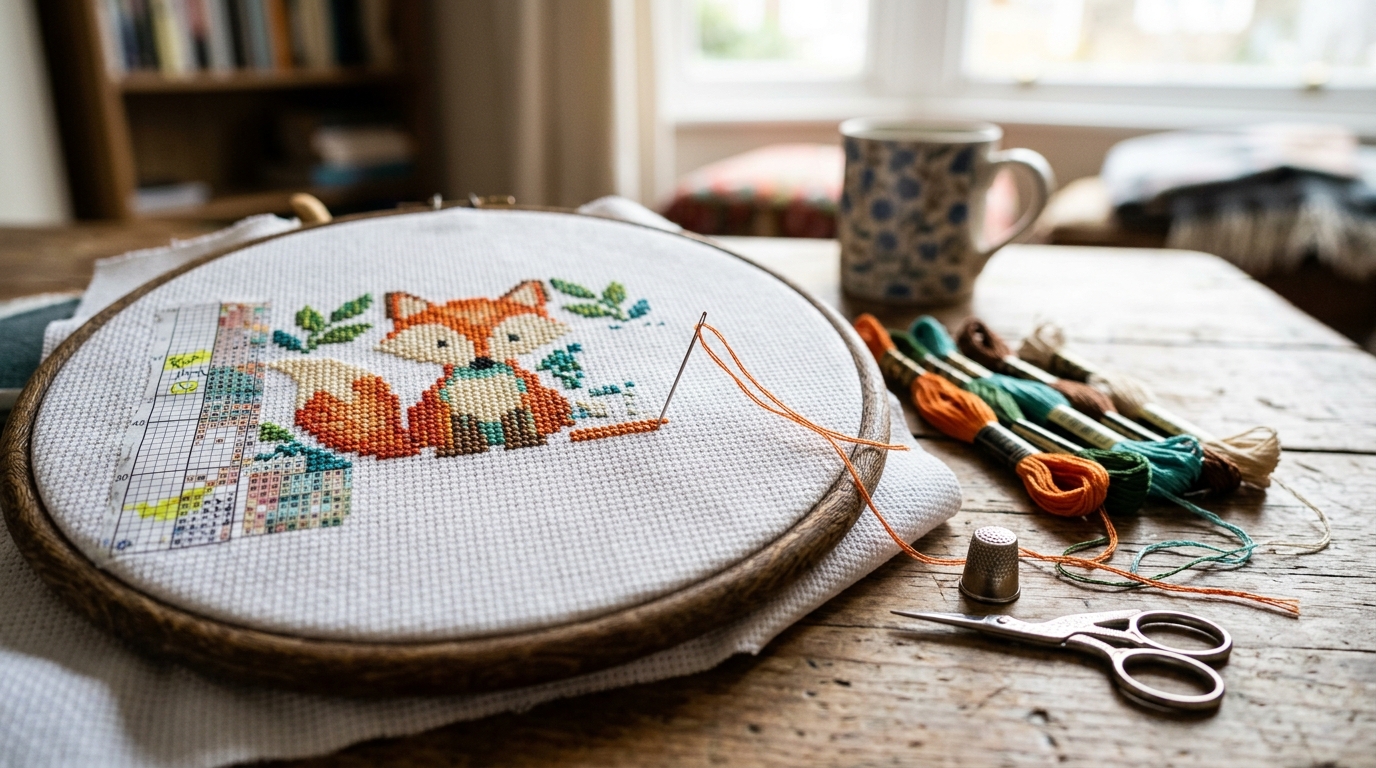
Give the first one a whole evening. Cutting two identical shapes takes longer than you'd expect, and the blanket stitch feels clumsy for the first few inches before your hands settle into it. If you've already tried stitching a first embroidery piece, the floss and needle will feel familiar straight away.

Five Things Between You and a Finished Star

Spend your care on the felt. Cheap acrylic craft felt looks fine in the packet, but small pieces fray, it grows a fuzzy halo of pills once it's been handled, and it melts under an iron. Wool-blend felt is wool mixed with rayon. It feels dense and matte instead of slick, and a sheet usually costs about twice what acrylic does. Over a batch of palm-sized ornaments, that difference is tiny.

Floss comes as six thin strands twisted together. Split it. Three strands sit neatly on a small shape, while all six look chunky. A size 5 embroidery needle handles most of the stitching, and small pointed scissors are what get you clean star tips.

Disclosure: This section may contain affiliate links to Amazon. We may earn a small commission from qualifying purchases at no extra cost to you.
Wool-blend felt sheets in Christmas colors for cutting ornament shapes

Pick 01 of 10

Wool-blend felt sheets in Christmas colors for cutting ornament shapes

A pack of 9 by 12 inch sheets of felt made from a blend of wool and rayon, in a coordinated set of holiday shades. Each sheet is enough for several small ornaments, and the 1 mm thickness is easy to cut and push a needle through. When choosing, look for a stated wool content and a matte, dense surface rather than a thin, shiny one.

Why we picked this exact one: We chose the Benzie Design wool-blend felt pack in The Cottage palette. Benzie is one of the felt suppliers that heirloom ornament designers point their pattern buyers to, and this palette already covers reds, greens and neutrals for stockings, stars and trees. At about $2.35 a sheet it costs more than acrylic craft felt, but a single sheet stretches across several ornaments.

See it on Amazon
Six-strand cotton embroidery floss for blanket stitching and ornament details

Pick 02 of 10

Six-strand cotton embroidery floss for blanket stitching and ornament details

A bundle of cotton embroidery floss skeins in seasonal colors, each made of six fine strands twisted together that can be separated. The same thread joins the two felt layers around the edge and stitches faces, snowflakes and other small details. Look for colorfast cotton so a red does not bleed onto white felt.

Why we picked this exact one: We picked the DMC Holiday Decor floss pack of 30 skeins. It is double-mercerized, colorfast cotton in 8.7-yard skeins of divisible six-strand thread, and the pack's mix of reds, greens, golds and whites covers most Christmas designs, though you may still want an extra skein of whichever white you use most.

See it on Amazon
Sharp embroidery needles with long eyes for stitching floss through felt

Pick 03 of 10

Sharp embroidery needles with long eyes for stitching floss through felt

An assortment of sharp-pointed embroidery needles in several sizes, each with a long eye that takes multiple strands of floss. A sharp point pierces dense felt cleanly, and the long eye makes threading three strands far less fiddly. Lower numbers are thicker needles, so an assorted card lets you match the needle to the thread.

Why we picked this exact one: We went with the Clover Gold Eye embroidery needle card in sizes 3 to 9. It includes size 5, the size an experienced felt ornament designer uses for most of her embroidery, plus finer and thicker options for different strand counts. The card holds 16 needles for about the price of a coffee, which matters because needles do get lost in carpets.

See it on Amazon
Small sharp-tipped scissors for cutting precise felt ornament shapes

Pick 04 of 10

Small sharp-tipped scissors for cutting precise felt ornament shapes

Small four-inch scissors with narrow, finely pointed blades for detailed cutting. The short blades make it easy to steer around tight curves, star points and tiny accent pieces, and they also snip floss close to the felt. Keep them for felt and thread only so the edge stays sharp.

Why we picked this exact one: We chose the Westcott 4-inch embroidery scissors with titanium-bonded blades. They cost a fraction of premium forged needlework scissors while still having the extra-sharp tapered tips that small ornament pieces need. The trade-off is that they are light-duty, so they are not meant for cutting through thick stacks of fabric.

See it on Amazon
Polyester fiberfill stuffing for plumping small felt ornaments

Pick 05 of 10

Polyester fiberfill stuffing for plumping small felt ornaments

A bag of white polyester fiberfill for stuffing small sewn shapes. Pulled apart into small wisps, it fills points and curves and gives a flat felt shape a soft, rounded body. For ornaments, look for a fill that packs firmly and stays where you push it.

Why we picked this exact one: We picked Poly-Fil Crafter's Choice in the 10-ounce bag. Unlike silicone-treated fills, this one has a dry, coarse texture that packs firmly into small spaces without popping back out, which suits star points and stocking toes. Ten ounces is far more than a winter of ornaments needs, so the rest will keep for other projects.

See it on Amazon

Pick a simple shape first. That's enough to cut, stitch and stuff a first ornament tonight. Start stitching at the top of the shape, work most of the way round, and leave a gap for the stuffing before you close it. Any floss left over after Christmas is the same six-strand cotton cross-stitch beginners use, so none of it goes to waste.

Little Helpers for the Second Batch

Freezer paper is the one I'd get first. It has a plastic-coated side that sticks to felt after a couple of seconds under a warm, dry iron, so your template stays put while you cut right along the line, then peels off clean. Don't mix it up with wax paper. They're not the same thing. Only iron it onto wool or wool-blend felt, though, because acrylic felt can melt.

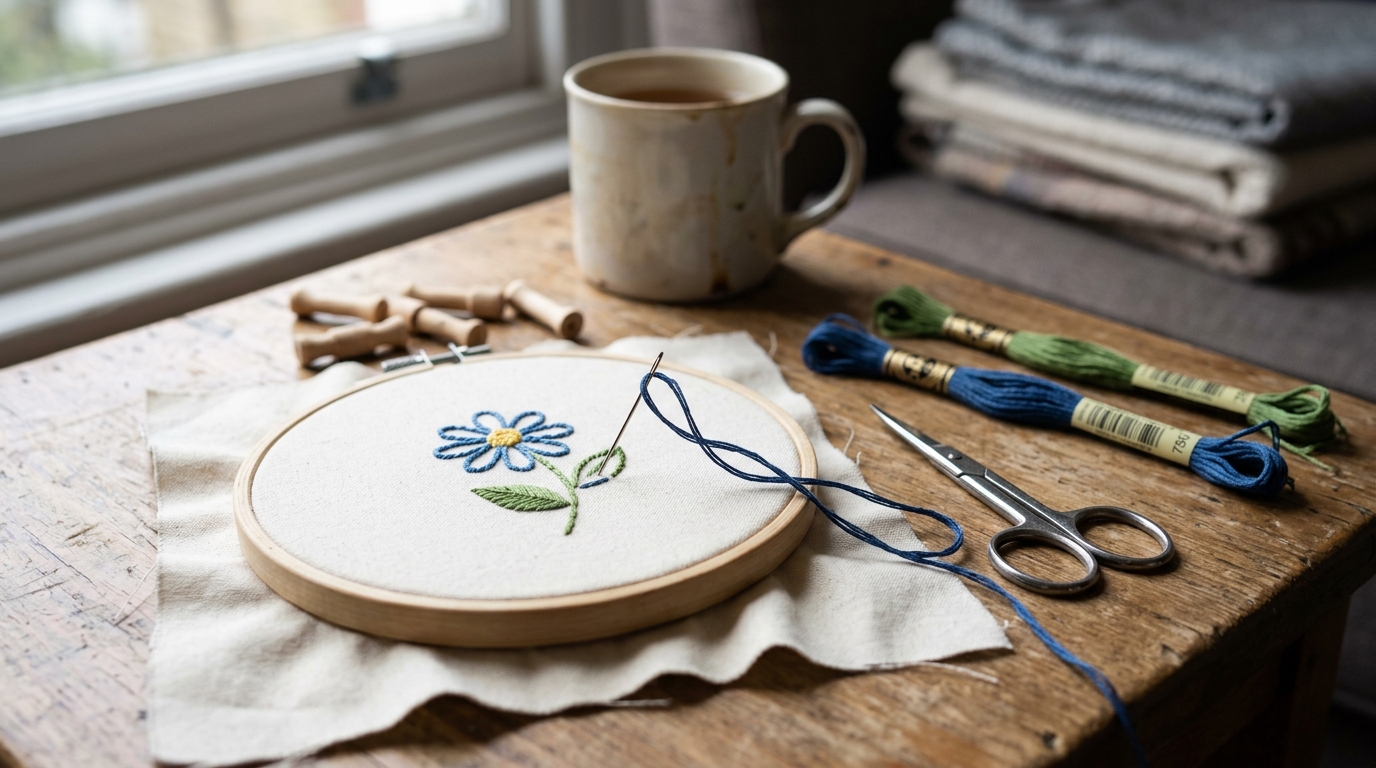
A hoop earns its keep once you want a face or snowflake on the front piece. It keeps the felt taut while you backstitch. Tacky glue is for basting. A tiny dot holds a small piece while you sew it down, and used sparingly you can still stitch straight through it. Felt offcuts are too pretty to bin, and they add lovely texture to a junk journal.

Printable freezer paper sheets for ironing templates onto felt

Pick 06 of 10

Printable freezer paper sheets for ironing templates onto felt

Letter-size sheets of freezer paper, which has one matte side for printing or tracing and one plastic-coated side that temporarily bonds to fabric under a warm iron. A template printed or traced onto a sheet can be pressed onto felt, cut along the line and peeled away. It is a different product from wax paper, which does not work the same way.

Why we picked this exact one: We chose the KOPAIBOS freezer paper sheets, a pack of 30 letter-size sheets. They are cut to printer size, so a free pattern can be printed straight onto them instead of traced, and the price is lower than the quilting-brand packs. The listing title calls them wax paper in passing, but they are coated freezer paper sheets; a grocery-store freezer paper roll works too if you are happy to trace.

See it on Amazon
Wooden embroidery hoops for stitching details on felt before assembly

Pick 07 of 10

Wooden embroidery hoops for stitching details on felt before assembly

Round wooden hoops made of an inner and outer ring with a screw to tighten them over fabric. A six-inch hoop gives room around a small design stitched on a felt square before the shape is cut out. The screw lets you adjust the grip for thicker felt.

Why we picked this exact one: We went with the Biaungdo six-piece set of 6-inch wooden hoops. One hoop is all you need at a time, but a set lets you keep two ornament fronts in progress without unmounting either. The trade-off is a plain, basic finish rather than a premium hardwood hoop.

See it on Amazon
Pinking shears for decorative zigzag edges on felt stockings and trims

Pick 08 of 10

Pinking shears for decorative zigzag edges on felt stockings and trims

Full-size shears with serrated blades that cut a zigzag edge. On felt they add a decorative border to stocking cuffs, simple flat ornaments and layered trims. They are best on straight lines and gentle curves rather than tight corners.

Why we picked this exact one: We picked the SINGER 9-inch pinking shears. They are a well-reviewed, mid-priced pair from a long-standing sewing brand with stainless blades and comfortable grips. They are too large for small detail work, which is why the small embroidery scissors stay on the essentials list.

See it on Amazon
Thick craft glue for basting small felt pieces before stitching

Pick 09 of 10

Thick craft glue for basting small felt pieces before stitching

A thick, white craft glue that dries clear and grabs felt without soaking through. On ornaments it is mostly used in tiny dots to hold an appliqued piece in place while you sew it down. Excess wipes away with a damp cloth before it dries.

Why we picked this exact one: We chose Aleene's Original Tacky Glue in the 4-ounce Always Ready bottle. It is the glue a prominent felt ornament designer uses to baste tiny pieces, and she notes that used sparingly it does not get in the way of sewing through. The bottle is built to sit upside down so the glue is always at the nozzle, and a toothpick gives better control over the very smallest dots.

See it on Amazon
Locking hemostat forceps for pushing stuffing into ornament points

Pick 10 of 10

Locking hemostat forceps for pushing stuffing into ornament points

A pair of stainless steel locking forceps, one straight and one curved, with long narrow jaws. In sewing they grip a small wisp of stuffing and place it exactly into a narrow point or corner. The locking handle can also hold a tiny piece while glue sets.

Why we picked this exact one: We went with the SURGICAL ONLINE 6.25-inch straight and curved hemostat set. Stuffed-toy makers regularly recommend hemostats for stuffing, and this 6.25-inch length is a handier size for small ornaments than the long 8-inch versions. A chopstick does a rougher version of the same job, so this is a comfort upgrade rather than a necessity.

See it on Amazon

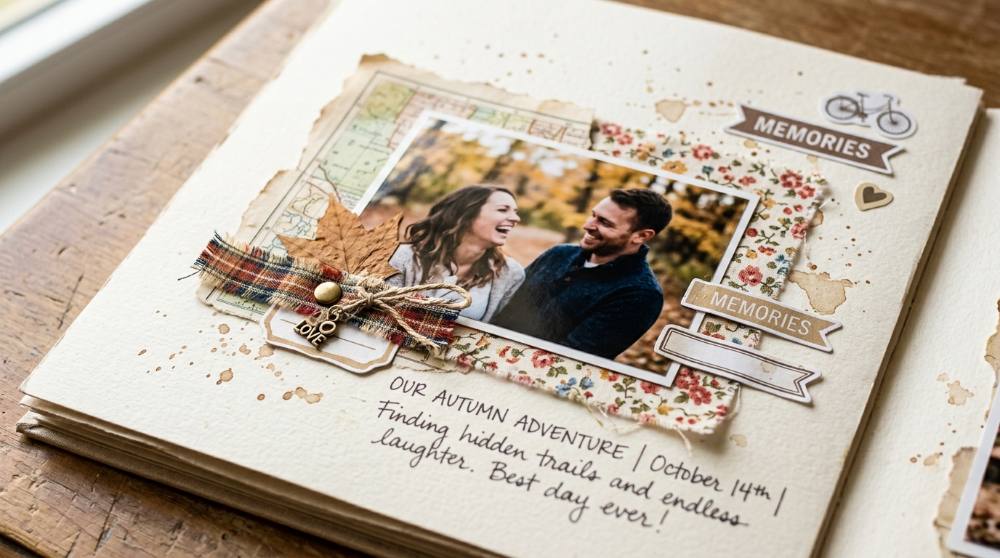
Hemostats sound like overkill until you try to push stuffing into a star point with your fingertip. They make star points easy. Pinking shears are pure decoration, since felt has no weave to unravel, but a zigzag cuff on a mini stocking does look sweet. If you enjoy the template and glue side of all this, the same habits carry straight over to scrapbooking.

Lumpy Stars, Sliding Stitches and Other First-Batch Surprises

Why does my blanket stitch keep sliding out of place?

Usually it's tension. Beginners tug each stitch tight to make it look neat, and a stitch pulled too hard drags sideways and bunches the ones next to it, especially where the stitch length changes. Pull each loop just until it lies flat against the edge. If one has already wandered, a tiny extra stitch over it will hold it in place, the same tension habit covered in embroidery beginner mistakes.

I used loads of stuffing, so why does my ornament look lumpy?

Lumps come from pushing stuffing in as big balls, not from using too much. Big clumps stay separate inside the shape and show through the felt as bumps. Pull the fill into small, fluffy wisps and fill the points first with a chopstick or hemostats. Then keep adding, because most first ornaments are understuffed rather than overstuffed.

How can I tell whether the felt I already own is wool or acrylic?

Feel it first. Acrylic felt is light, slick and a bit shiny under a lamp, while wool and wool blend feel denser, look matte and wrinkle when you ball them up. If you're still unsure, safely hold a small scrap to a flame. Acrylic melts, and wool smolders.

Why don't my front and back pieces line up after I embroider the front?

Embroidery pulls felt in slightly, so a shape cut before stitching often warps and ends up smaller than its plain back piece. Beginners cut both halves first because it feels organized. Instead, stitch the design on a larger square of felt, then cut the front shape out around it and cut the back to match.

Should the hanging loop go on first or last?

It's tempting to stitch the loop in at the very start and forget about it. The catch is that you can't see how a stuffed, embroidered ornament balances until it's finished, and a loop fixed early can't move. Plenty of pattern designers add it last instead, so they can check how the ornament hangs and put the loop where it sits straight, with the ends still hidden inside.

Love what you see here? Save individual picks with on any item, or copy everything to a list of your own in one click — great for coming back to later, or dropping as a not-so-subtle hint.

Disclosure: This section may contain affiliate links to Amazon. We may earn a small commission from qualifying purchases at no extra cost to you.