Affiliate link: we may earn a small commission, at no extra cost to you.
One Seat, Four Hours, and a Small Person Who Disagrees
A toddler who has only just learned to run is about to spend four hours sitting still. That's it. A plane cabin, or the back of the car on the long drive to the grandparents. Parents who do this often will tell you something odd: the thing that holds a one-year-old longest is rarely the toy you packed. It's the window blind, the safety card, the seat pocket they can empty and refill — and the same crackers they shrugged at on Tuesday turn fascinating the moment they come out of a different box.
The rhythm almost everyone lands on in the end is pacing. You don't open the bag; you hand over one thing at a time, and you keep two unopened things back for the leg home. A toddler who sees all six activities at once will have finished all six before the drinks trolley moves. If your traveller is still under one, by the way, the bag is an entirely different bag — the carry-on list for flying with a baby under one is mostly feeding and changing, and almost none of this applies yet.
So this stays short. Something to fiddle with, something to paint or stick, snacks in their own container and a packet of wipes will carry most of a day between them. Everything after that is insurance.
Nothing here costs enough to sting when it gets dropped down the side of a seat or left on a tray table somewhere over France.
Save the picks into a list of your own and you can send the one link on — to whoever is packing the other bag, or to the grandparents who keep asking what to get them before the trip.
What It Looks Like in Real Life
A few real moments from this situation, with nothing fancier than the things below.
Small hand on the cloud windowThe view is free, it lasts longer than most toys, and it costs nothing to pack.
Head down, twenty quiet minutesOne activity spread out on a flat surface is worth three handed over at once.
The Five Things You Hand Out One at a Time
These five cover the stretch between take-off and landing, or between one motorway services and the next. The order matters more than the quantity. The busy book goes first because it works while the seat belt sign is still on and you can't reach the bag overhead, and the water pad gets held back for the moment the fidgeting starts. One warning that catches everybody out: anything with loose pieces will go under the seat in front, and you are not getting it back.
Disclosure: This section may contain affiliate links to Amazon. We may earn a small commission from qualifying purchases at no extra cost to you. Certain content that appears on this site comes from Amazon.
01Pick 01 of 12
Soft Fabric Toddler Busy Book
A soft, flat-packing cloth book whose pages are covered in fastenings a small child can work with their fingers: zips, press studs, buckles, laces and hook-and-loop flaps. There is nothing to switch on and nothing that rolls away, so it survives a tray table and a car seat equally well. Look for pages that are sewn rather than glued, and an age grade that matches the child actually holding it.
Why we picked this exact one: The Taf Toys Busy Book for Toddlers 1-3 is graded 18 months to 3 years, which is unusual here: most felt busy boards on Amazon are marked 3+ and sized for bigger fingers. It packs flat enough to slide in beside a tray table, and the fastenings are sewn to the pages rather than hanging loose, so nothing drops into the aisle. At 4.4 stars it sits a little below the pricier boards, and the recurring complaint is that a determined toddler can work a page free.
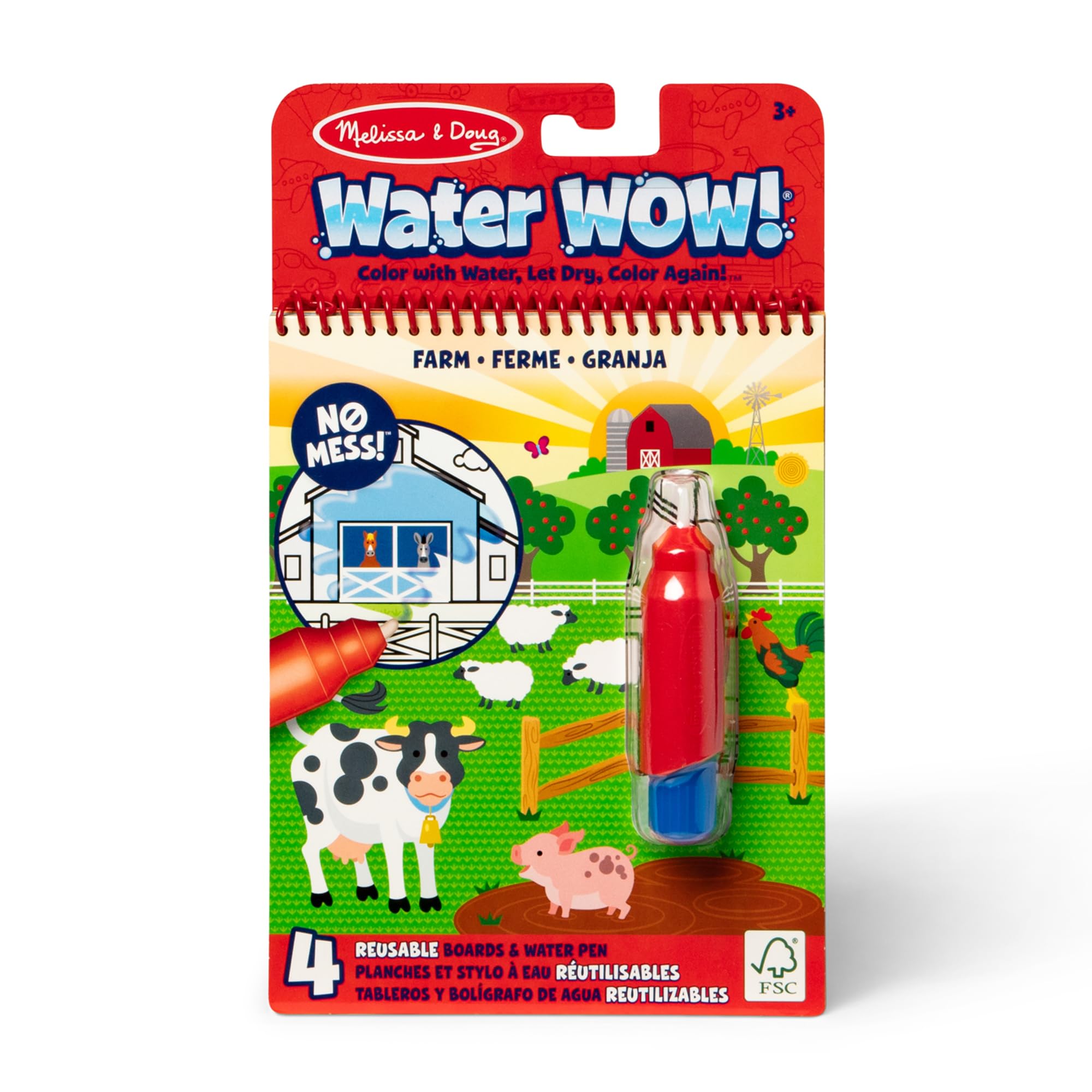
A small pad of thick pages with a refillable water pen. Brushing water across a page brings hidden colour up through the white, and once it dries the page goes blank again, so the same few scenes get painted over and over. No ink, no paint, nothing to wipe off a seat, which is the whole point of it on a journey.
Why we picked this exact one: The Melissa & Doug On the Go Water WOW! Farm pad is the one parents name when you ask them for a single flight activity, and 4.8 stars across more than 4,000 ratings backs that up. The pen clips into the cover, so it survives a bag. Two honest limits: the maker grades it 3+, so a younger one in this band needs you sitting beside them, and the pen holds very little water, so you will be refilling it.
A lidded cup with soft flexible flaps across the top. A small hand pushes through to get a cracker and the flaps close again, so a cup dropped off a tray table doesn't empty itself across the floor. A pair means one for dry snacks and one for the round things that roll.
Why we picked this exact one: The Munchkin Snack Catcher is the one almost everyone ends up with: 4.7 stars across more than 72,000 ratings, which is an unusual amount of agreement about a plastic cup. The flaps are soft enough that a one-year-old gets through on the first try rather than giving up. They stain with anything orange, and the two handles make the cup wider in a packed bag than the photos suggest.
Small compartmented boxes, each holding three or four kinds of food in their own sections. The dividers stop crackers going soft against fruit, and a set lets you hand over one box per stage of the journey instead of opening everything at once. Shallow boxes sit on a tray table better than tall tubs do.
Why we picked this exact one: The Caperci Lunchable Snack Containers set gives you four small boxes for under ten dollars, which is the right price for something that will be left in a seat pocket. They sit flat on a tray table rather than toppling, and at 4.7 stars across roughly 1,600 ratings the lids hold. The catch is that those lids snap on rather than screwing down, so a box of yoghurt is a bad idea.
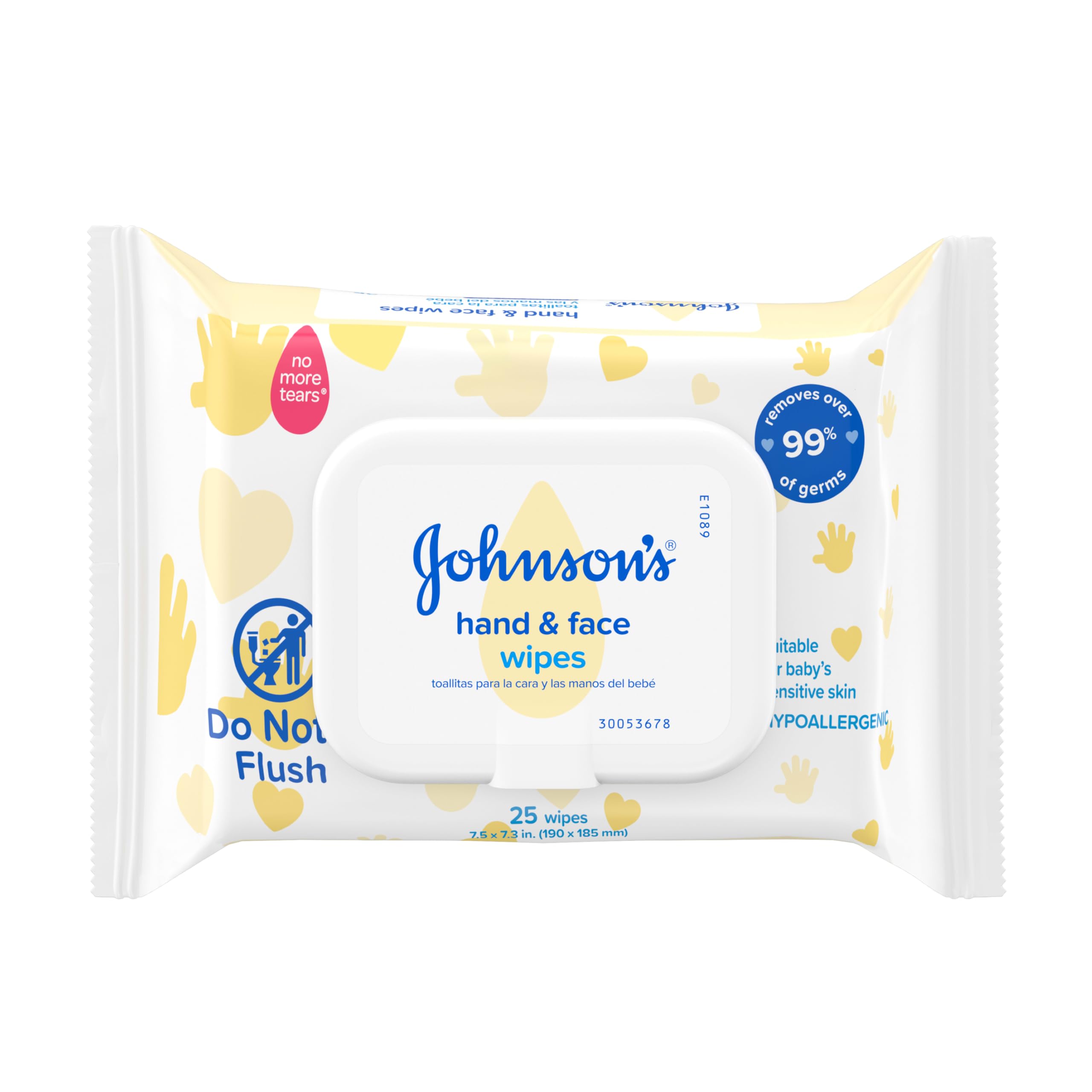
Pre-moistened wipes made for a small child's hands and face rather than for surfaces, in a flat travel pack. They cover the two jobs that come up constantly: the hands that have just held everything, and the face after a snack. A pack this size slides into a seat pocket instead of sinking to the bottom of the bag.
Why we picked this exact one: Johnson's Baby Hand & Face Cleansing Wipes are gentler than the antibacterial hand wipes sold as travel kit, which matters when the same wipe goes over a face. The 25-count pack is flat enough for a seat pocket, and 4.7 stars across 7,000 ratings makes it a known quantity. You will want more than one pack for a whole day, and they are not built for scrubbing down a tray table.
Pack them in separate pouches rather than one big bag, so you can pull out one thing without showing them the other four. And keep the snacks coming in small handfuls rather than as a meal — a toddler who is eating is a toddler who isn't trying to climb into the row behind.
Two Books That Survive a Whole Journey
Books earn their place in a travel bag differently from books at home. On a journey the ones that work are the ones the child can operate themselves — a flap to lift, a sticker to move — because a story you have to read aloud only lasts as long as your voice does, and a cabin is loud. Both of these fit in a coat pocket, which is the other half of the test.
06Pick 06 of 12Book worth reading
Lift-the-Flap Board Book
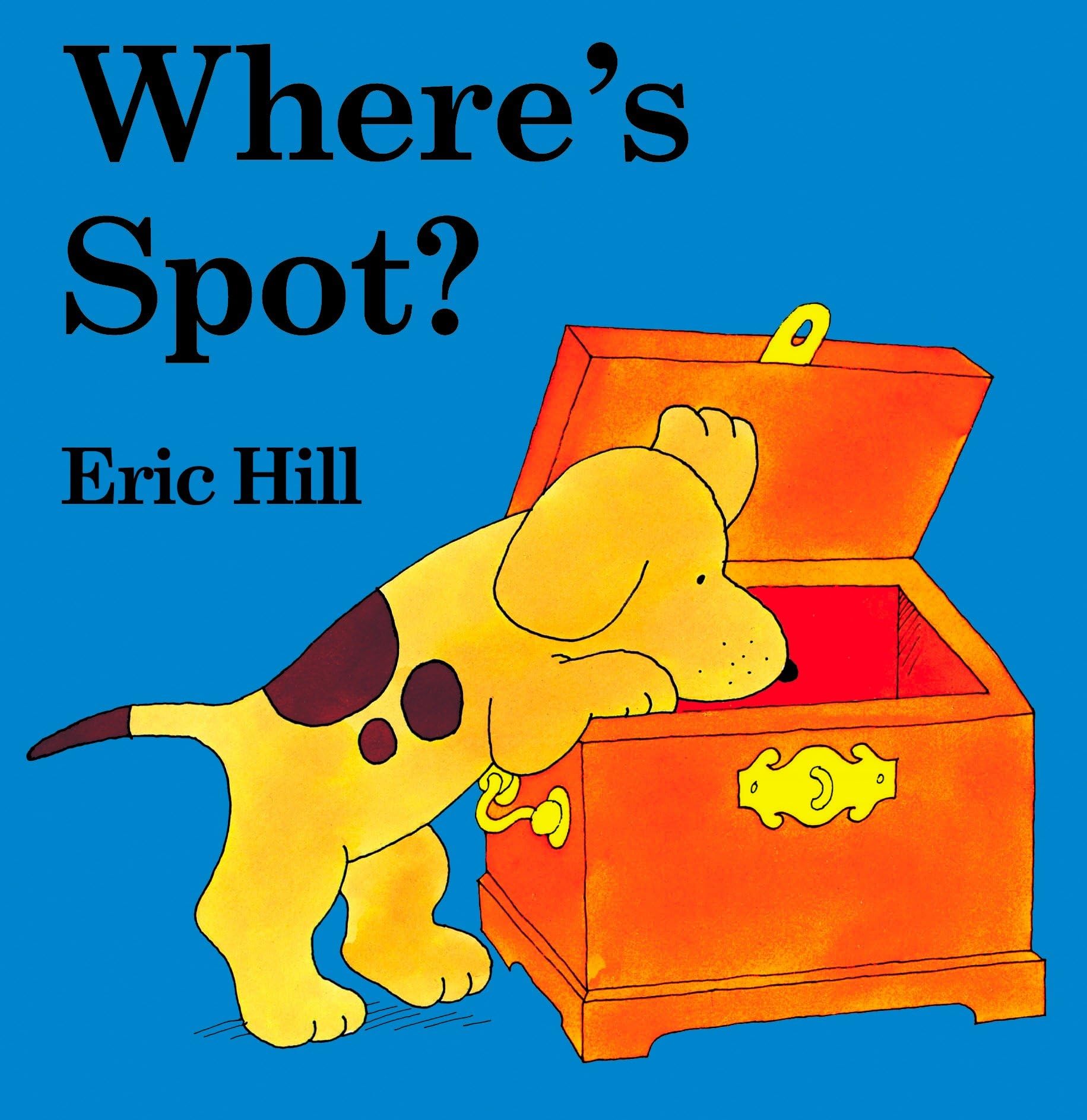
A short board book built around a flap on each spread: lift it, and something is underneath. The pages are thick card a small hand can turn alone, and the whole book runs about two minutes, which is what makes it survivable on the twentieth reading. For a child still at the pulling stage, look for card flaps rather than paper ones.
Why we picked this exact one: Where's Spot? by Eric Hill is the lift-the-flap board book most of the others are copying, and it still sits at 4.8 stars across more than 37,000 ratings. It is genuinely short, which is the quality that counts when you are on reading number twelve somewhere over the Atlantic. The flaps are card and they do give way eventually; most copies that go travelling come home with tape on at least one.
A pocket-sized pad of scenes with cling stickers that lift off and restick without losing their grip. Because nothing is permanent the same pages get rebuilt dozens of times, and a sticker that lands on a window or a sleeve comes off cleanly. Reusable vinyl clings are the version to look for; paper stickers are single-use and end up welded to upholstery.
Why we picked this exact one: The Melissa & Doug On the Go Make-a-Face Reusable Sticker Pad is pocket-sized rather than letter-sized, which is what makes it a travel pad instead of a table activity. Ten scenes and 65 cling stickers means there is still something unplayed left for the way home. The maker grades it 3+ and the clings are small, so a child who still puts things in their mouth needs you awake beside them.
Don't bring the thick hardback they love at bedtime; it weighs more than everything else combined and gets two minutes. If anything, bring one familiar book and one they've never seen, and keep the new one sealed until the second half.
The Screen Plan, and the Car-Only Extras
Screens are not the enemy here, but they are the thing most worth thinking about in advance rather than at hour three. Two decisions do most of the work: how the screen is held, and what the child listens through. Both have a genuine fork in them, so they're laid out as pick-one below rather than as four things to buy. The headphones in particular are the item people buy on the way to the airport and then discover a toddler needs a fortnight of practice with.
Pick one
These 2 do the same job. You only need one of them, so pick the one that suits you better.
08Pick 08 of 12Option A
Kid-Proof Foam Tablet Case with Handle and Stand
A thick foam shell that wraps a tablet on every side, with a moulded handle a small child can actually grip and a kickstand that props it up on a tray table. The foam absorbs the drops a hard case passes straight through to the screen. Cases are cut for one tablet model, so the one you buy has to match the tablet in your bag.
Why we picked this exact one: The BMOUO kids case has the two things that matter on a trip, a grab handle and a built-in screen protector, for around fourteen dollars, and it is rated 4.7 stars across roughly 2,500 ratings. It is cut for the 10th-generation and A16 iPad specifically; the same foam-handle style exists for most tablets, but you have to buy the one for yours. It also makes the tablet noticeably bulkier in a bag.
Pros
Works on a plane tray table and in their hands
Foam takes the drops a hard case passes to the screen
Uses the tablet you already own
Cons
Cut for one tablet model, so you buy the matching version
Nothing stops them tapping out of the video app unless you set that up first
A clamp that straps around the headrest posts of the front seat and holds a phone or small tablet facing the back, with a swivel for the angle. The screen ends up near eye level instead of down in a lap. It is a car-only fitting; on a plane there is nothing for it to clamp to.
Why we picked this exact one: The Timewall headrest mount is the cheap, boring version of this: a strap, a clamp and a swivel for about ten dollars, rated 4.5 stars across roughly 1,800 ratings. It takes anything from a phone up to an 11-inch tablet, so it outlives whichever device you happen to be using this year. The clamp needs exposed headrest posts, which not every front seat gives you.
Pros
Keeps the screen at window height rather than in a lap
Uses the phone you already carry, no second device
Lives in the car between trips
Cons
No use at all on a plane, there is nothing to clamp to
These 2 do the same job. You only need one of them, so pick the one that suits you better.
10Pick 10 of 12Option A
Toddler Volume-Limited Wired Headphones
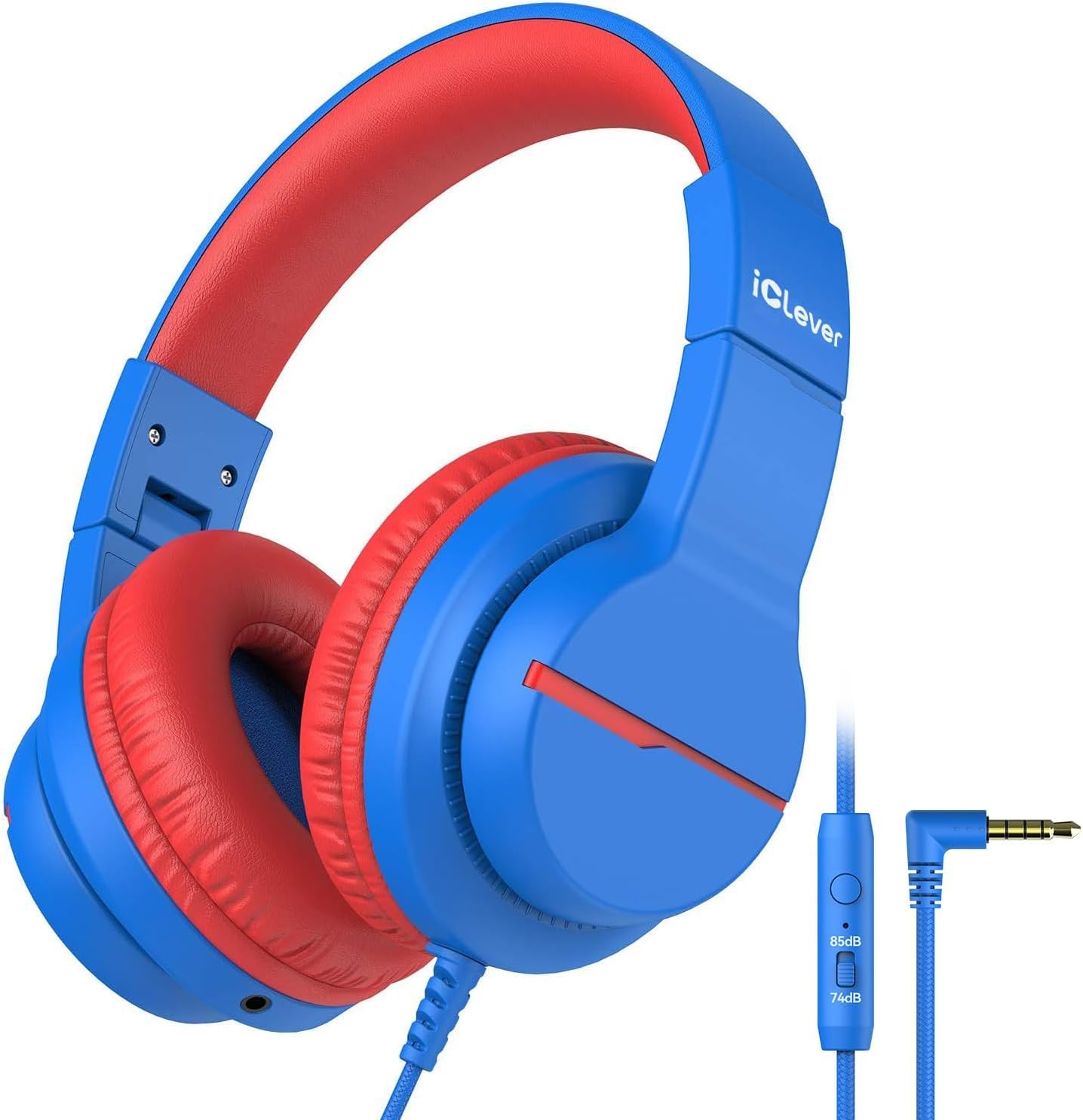
Small over-ear headphones on a 3.5 mm cord, with a volume ceiling the maker states as 85 dB. The band adjusts down far enough for a very small head and they fold flat for a bag. A cord means nothing to charge and nothing to pair, and also a cable looped near a car seat.
Why we picked this exact one: The iClever HS19 is sold as toddler headphones rather than school headphones, and the band really does shrink small enough to matter; at 4.6 stars across more than 14,000 ratings it is the most-bought of the volume-limited sets. The maker states an 85 dB limit. They are plastic at ten dollars, and the hinges are the part that goes first.
Pros
Plugs straight into a seat-back screen on a plane
Nothing to charge or pair before you leave
About a third of the price of the wireless pair
Cons
A cord to untangle, and to keep clear of a car seat harness
Needs an adapter on a phone with no headphone socket
Over-ear Bluetooth headphones scaled for a child, with a volume ceiling the maker states as 85 dB and a battery quoted in tens of hours. No cable means nothing wound around a car seat and nothing yanked out when they lean forward. They take a cable as well, for a seat-back screen.
Why we picked this exact one: The iClever BTH12 pairs once and then holds charge across a flight, a layover and the drive at the other end, which is the real argument for it over the wired pair. The maker states the same 85 dB limit, and it is rated 4.6 stars across more than 13,000 ratings. At around twenty-four dollars it is the most expensive thing on this page, and it is one more device to remember to charge the night before.
Pros
No cord to catch on a car seat harness
Enough battery for a whole travel day
Takes a cable too, if a seat-back screen needs one
A soft-sided tray that buckles around a car seat or sits on a lap, with raised edges, mesh pockets down the sides and a slot that props a tablet upright. It gives a child somewhere to put things in a seat that has nowhere, and it folds flat to carry. The raised lip is what stops crayons rolling off at the first roundabout.
Why we picked this exact one: The PILLANI travel tray has the raised edge and the side pockets and still collapses flat, which is more than most of the rigid trays manage; it is rated 4.5 stars across roughly 5,000 ratings. It works on a plane tray table too, though it is really built around a car seat. The honest limit is bulk: it is one more thing to carry through an airport, and it will not fit every car seat shape.
A fair warning on the screen: it is the one thing on this page that stops working the moment you take it away, so it's worth being the last card rather than the first. Save it for the back half, when the stickers have been stuck and nobody is sleeping. By the time they're three to five the balance shifts again and a ten-hour flight with a preschooler runs on different things entirely.
The Bits Nobody Mentions Until You're Already On Board
Why has everything been used up before we've even taken off?
Because the bag came open all at once. A toddler shown six things will pick all six inside ten minutes, and then there is nothing left and four hours to go. Keep it all out of sight and hand over one item at a time, and don't start the next one until the last has genuinely died. Parents who travel often keep two things sealed for the journey home, where nothing is new any more.
Will a screen make the car journey worse?
It can, and where you put it is usually what decides. The parents who end up with a travel-sick toddler almost always had the screen down in the child's lap; the ones for whom screens work keep it mounted up near the window, so the moving view outside is still in the picture. Try it on a half-hour drive before you commit to a whole day. And download everything the night before — signal on a motorway is not a plan.
They pull the headphones straight off. Are we doing it wrong?
No, that's just what the first attempt looks like. The parents who get headphones to work start weeks ahead, at home, with something the child already wants to watch, so the headphones become part of the good thing rather than a strange new thing on a strange day. Let them take them off whenever they like during practice. And don't assume a child-sized pair will be waiting on board — check with your airline if you would rather not carry your own.
Do we need to buy them their own seat?
Most airlines let an under-two travel on a lap and the saving is real, but ask anyone who has done a long-haul with an eighteen-month-old on their knees and the answers get blunt fast. By that age a toddler is big enough and busy enough that the lap becomes the problem, and nearly everything on this page wants a surface and a seat belt to work against. Rules and prices differ, so check with your airline before you decide.
What do people forget every single time?
A spare top for the adult. Everyone packs two changes for the child and none for themselves, and the person who gets soaked is whoever is holding them. Put it in the same bag as the child's spares, not in the hold. Small bags for wrappers, wet clothes and the remains of a snack box fall into the same category — nobody lists them, everybody uses them.
Parents Who Have Done This Before
Parents and writers we found while researching this list. They write from their own trips and days, on sites they run themselves. No sponsorships, no affiliations.
Jenny and Jason Lynn have flown long-haul with their two boys since they were toddlers and write the trips up in detail, including the flights that went badly.
Their long-haul survival guide is the honest version of what this page covers: pacing activities out one at a time and what a toddler actually does for ten hours in a seat.
Writes The Travel Bunny, a budget travel blog, and keeps a long, regularly updated guide to flying with toddlers covering red-eyes, meltdowns and jet lag.
A parent who has packed the bag on this page still has to survive the flight itself, and her guide covers the hours this page deliberately leaves alone.
A small family-travel agency that writes up what first-time flying parents get caught out by, including what can go through security for a small child.
This page assumes you already know the airport part; their first-timer piece fills in the bit before the seat, which the parent packing this bag is usually also worrying about.
Maryrose and Reid live on Oahu and fly a two-year-old five hours over open ocean several times a year, then write down what worked on that particular flight.
Their tips were tested on the same length of flight this page is written for, and they reach the same conclusion about many small snacks rather than a few big bags.
Copy these picks into a list of your own in one click. Take out what you don't need, add your own, then send one link to your partner, the grandparents or whoever asks. When someone reserves a pick, everyone sees it, so nothing gets bought twice.
Disclosure: This section may contain affiliate links to Amazon. We may earn a small commission from qualifying purchases at no extra cost to you. Certain content that appears on this site comes from Amazon.