Toss juggling is the thing you already picture: objects going up, crossing over, coming back down, over and over, in a shape jugglers call the cascade. People do it in living rooms, in parks, and at monthly club nights that exist in most decent-sized towns. It's old. The earliest known picture of it is painted on the wall of an Egyptian prince's tomb at Beni Hasan, women caught mid-throw, somewhere around 1900 BC. Here's the part outsiders never guess: modern jugglers mostly talk to each other in numbers, so a plain three-ball cascade is just “3” and whole tricks get traded as strings like 441 or 97531.
The first week is almost entirely bending down. You throw, the balls go somewhere you didn't intend, and you pick them up again. That isn't a sign you're bad at it. It's the actual shape of learning this, and everyone who can juggle went through exactly that stretch, usually swearing.
Our take: buy one set of three balls and nothing else until the cascade holds. Rings, clubs, extra balls — they all stay in the shop until three go round without you thinking about them.
I kept the picks cheap on purpose. If this turns out not to be your thing, you're out roughly the price of a pizza.
Where This Little Kit Can Take You
A few real moments and results from this hobby — made with tools no fancier than the ones below.
Three clubs against the lightsCaught from behind, so you watch the pattern rather than the performer.
Clubs down after the setYears of catches leave a club scuffed in exactly the places your hands touch.
The nice thing about juggling is how small the decision is. If you're still weighing it against other options and want the wider view on how to pick a first hobby that actually sticks, that's ten minutes well spent. Otherwise, read on. The shopping list is one line long.
The Entire Shopping List
Three balls. That's the list. What matters isn't how many things you buy but which kind, because the wrong ball turns practice into a scavenger hunt. Beanbags — stitched fabric or a soft shell with millet or beads inside — land with a dull thud and stay roughly where they fall. Tennis balls and hard stage balls do the opposite: they bounce out of your hands on landing and roll a long way, and you'll spend more of the session crawling than throwing. It's the single most common beginner mistake, and it's made before anyone throws anything.
Disclosure: This section may contain affiliate links to Amazon and eBay. We may earn a small commission from qualifying purchases at no extra cost to you. Product listings from eBay are provided for discovery purposes and link directly to eBay.
Pick one
These 3 do the same job. You only need one of them, so pick the one that suits you better.
01Pick 01 of 10Option A
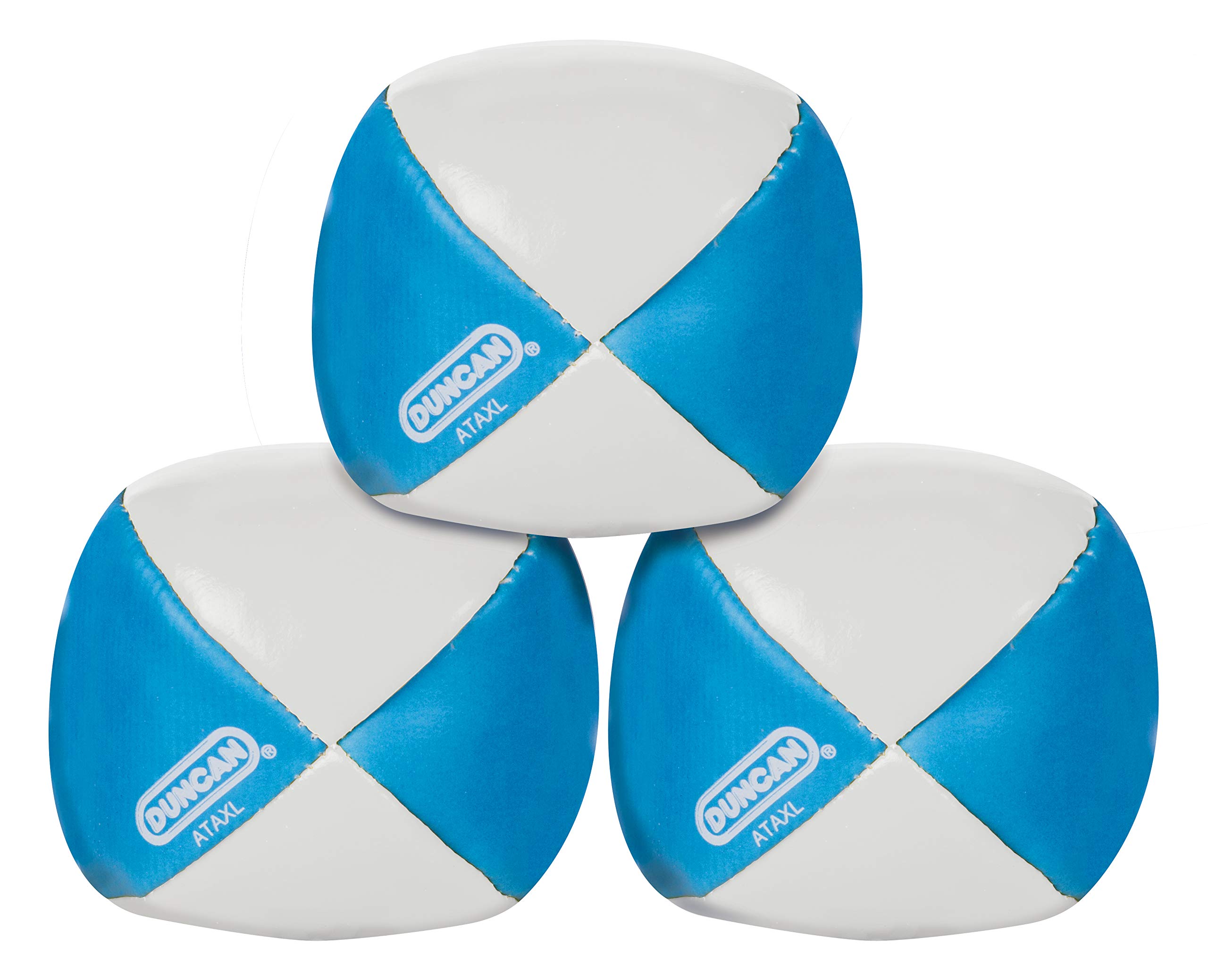
soft vinyl juggling balls that stay put when you drop them
Soft juggling balls with a vinyl outer shell and a loose bead filling inside. The filling kills the bounce, so a missed catch drops straight to the floor instead of rolling away. For a first set, look for a shell you can wipe down and a fill that keeps its shape rather than settling into one corner.
Why we picked this exact one: The Duncan Toys three-pack is the cheapest set here that a practitioner wouldn't wince at, and Duncan has been making skill toys since long before juggling was a hobby rather than a profession. Over four thousand ratings sit behind it at 4.4 stars, which is rare at this price. The listing never states a diameter or a weight, so you're trusting the brand rather than the spec sheet.
Pros
Under ten dollars, so a failed experiment costs nothing
Vinyl wipes clean after a session on the grass
Cons
No stated size or weight, so you take what arrives
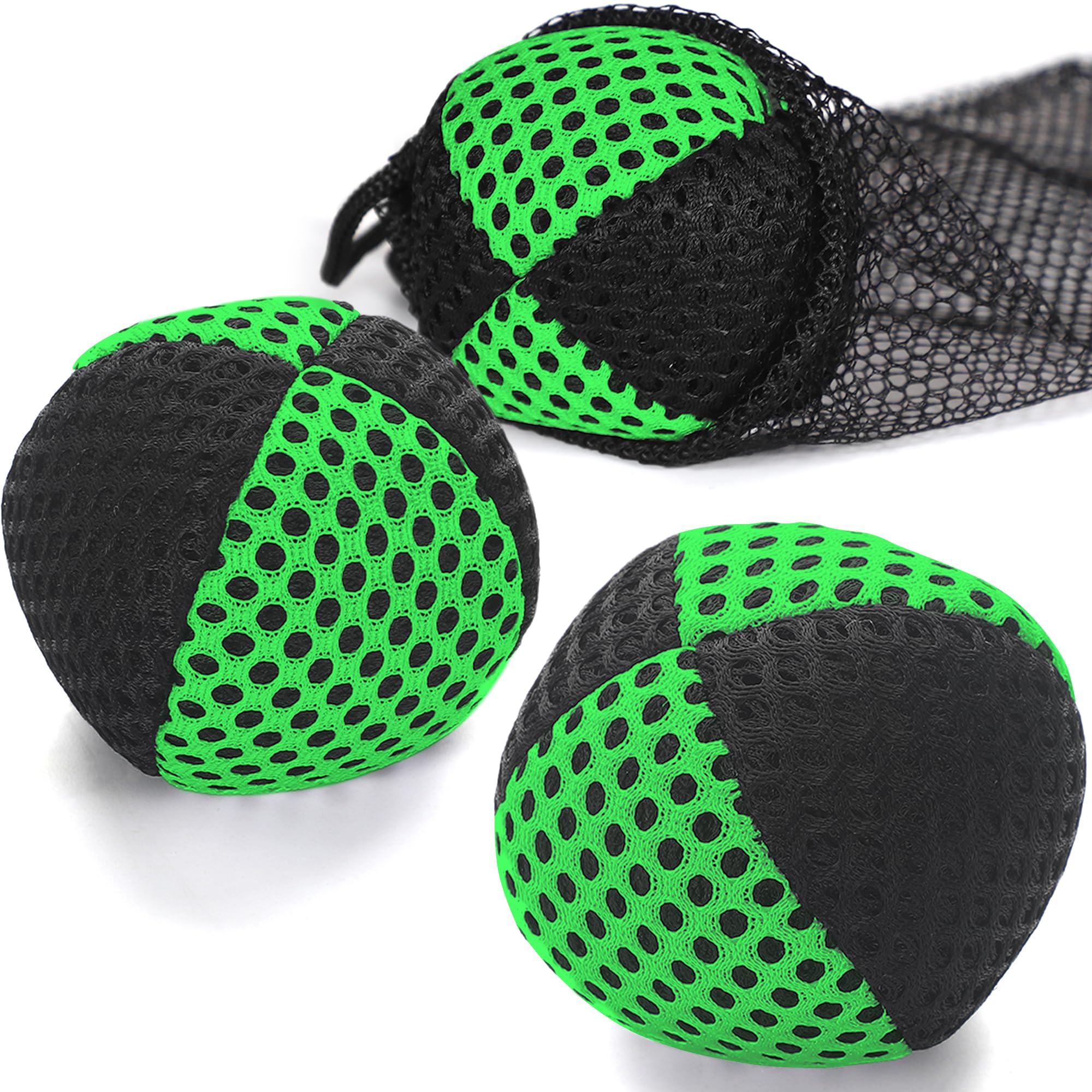
hand-stitched beanbag juggling balls sized for learning
Hand-stitched fabric juggling balls filled with beads, sized and weighted for learning rather than performing. Stitched seams give a slightly grippier surface than a moulded shell, which helps while your catches are still sloppy. Check the stated diameter and weight before buying, because plenty of sets list neither.
Why we picked this exact one: The oazoxcx hand-stitched set is the one that actually prints its numbers, 2.4 inches across and 4.2 ounces, which puts it inside the range jugglers name for learning. The hand-stitched seams and the jute storage bag are more care than a twelve-dollar set usually gets. It's an unknown brand, so the 305 ratings are doing the reassuring here.
Pros
Prints its specs: 2.4 in across, 4.2 oz each
Arrives in a jute bag, so the three travel together
Cons
Fabric scuffs faster outdoors than vinyl or leather
A no-name brand with a few hundred ratings behind it
leather juggling balls built to the size and weight jugglers name
Leather-panelled juggling balls filled with millet, built to the dimensions experienced jugglers tend to settle on. The many-panel construction keeps the ball round through thousands of catches, and the millet filling kills the bounce entirely. More panels mostly buys hand-feel, not extra life.
Why we picked this exact one: The Zeekio Galaxy set is built to 67 mm and 130 g, the size and weight jugglers quote when a beginner asks, and Zeekio makes juggling props rather than toys in general. Twelve leather panels and a millet fill give the dead landing that makes catching forgiving. It costs three times the vinyl set, which only makes sense once you know you'll keep going.
Pros
Hits the 67 mm, 130 g spec jugglers actually name
Millet fill and twelve panels hold their shape
Cons
Three times the price of the vinyl set
Overkill if you're not yet sure you'll stick with it
Pick one of the three below and ignore the other two. Weight matters more than you'd expect: somewhere around 110 to 130 grams gives your hands enough to feel, and 67 to 70 millimetres sits comfortably in an adult palm without forcing your fingers apart. If you like the idea of a skill that lives entirely in your fingers, a first speedcubing setup scratches a similar itch from a chair.
When Three Balls Stop Being Enough
Rings and clubs get described as harder balls, which is wrong in an interesting way. A standard ring is around 32 centimetres across and barely an eighth of an inch thick, and that tells you most of it: a big flat thing that shows almost no profile the moment it turns edge-on. Your eyes have to learn something new, not your hands. Clubs are a different animal again. The prop makes one full turn per throw, and the whole skill is letting go at the moment that puts the handle back in your palm rather than the body. Neither is a prize for finishing balls. They're separate little hobbies that happen to share a cascade. If you enjoy a craft that pays out slowly, these patience crafts with jaw-dropping results run on the same fuel.
04Pick 04 of 10
full-size juggling rings for learning the second prop
Ridged PVC juggling rings in the full adult size, sold in threes. A ring shows a wide face on the way up and almost no profile when it turns edge-on, so the skill it builds is tracking rather than catching. Go for the full size: the small children's ring looks friendlier and is considerably harder to juggle.
Why we picked this exact one: The Zeekio Aero set is a 13-inch, 48 g ridged PVC ring from a brand that makes juggling props rather than party toys. That light weight matters: flat rings much over 120 g start bruising hands on the catch, and these sit nowhere near it. No Amazon listing qualified, so this comes from eBay, from a skill-toy shop with 99.7% positive feedback across 155,000 sales. At 48 g they are easily pushed around by any breeze outdoors.
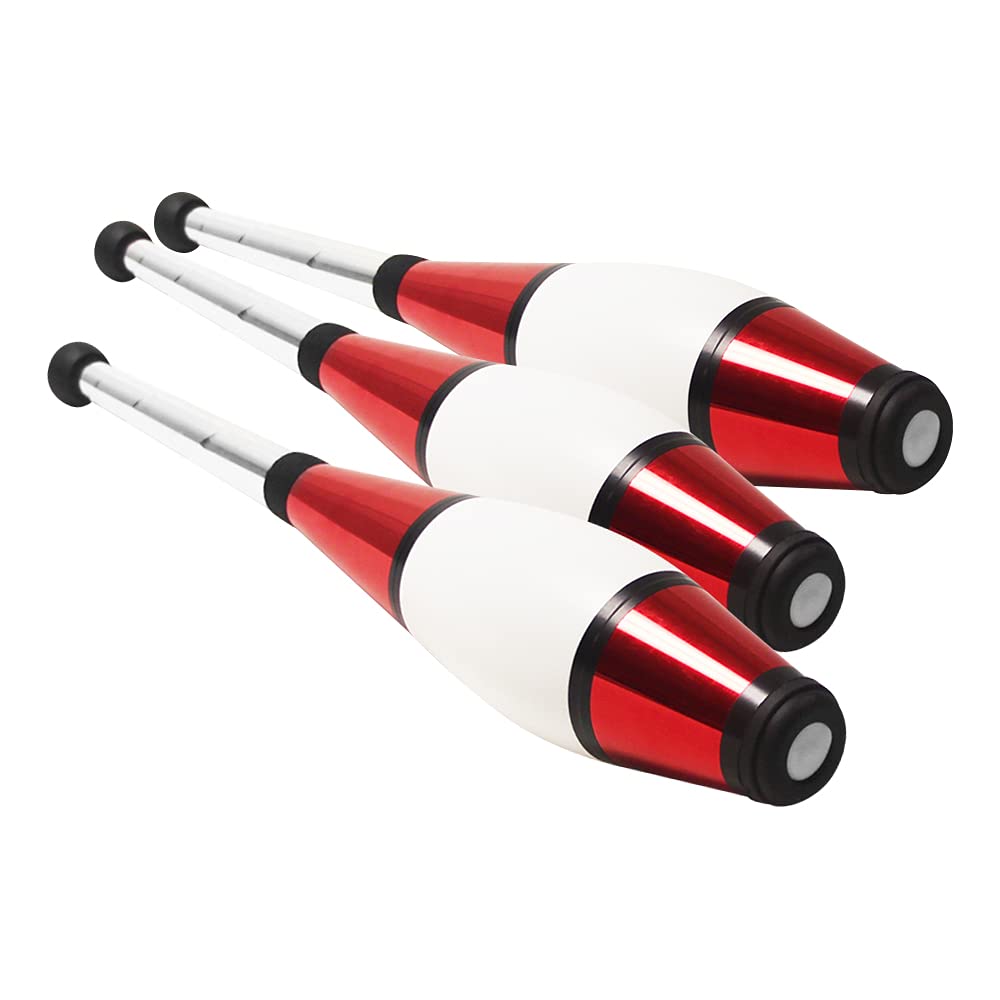
multi-piece juggling clubs for learning spin and handle control
Juggling clubs built around an inner dowel with a moulded body and a wrapped handle. The dowel puts weight nearer the middle of the club, which makes the spin steadier than a one-piece club where the mass sits out in the body. Standard adult clubs run around 52 centimetres long and 210 to 230 grams.
Why we picked this exact one: The Zeekio Pegasus set is a multi-piece club, wrapped handle over an inner dowel, at 20.5 inches and 8 ounces, which lands inside the range jugglers use at every level. That construction is the specific thing practitioners prefer over cheap one-piece clubs, whose handles have no give and sting on a bad catch. Sixty dollars is worth it once your cascade runs without thinking. If you're still chasing drops, wait.
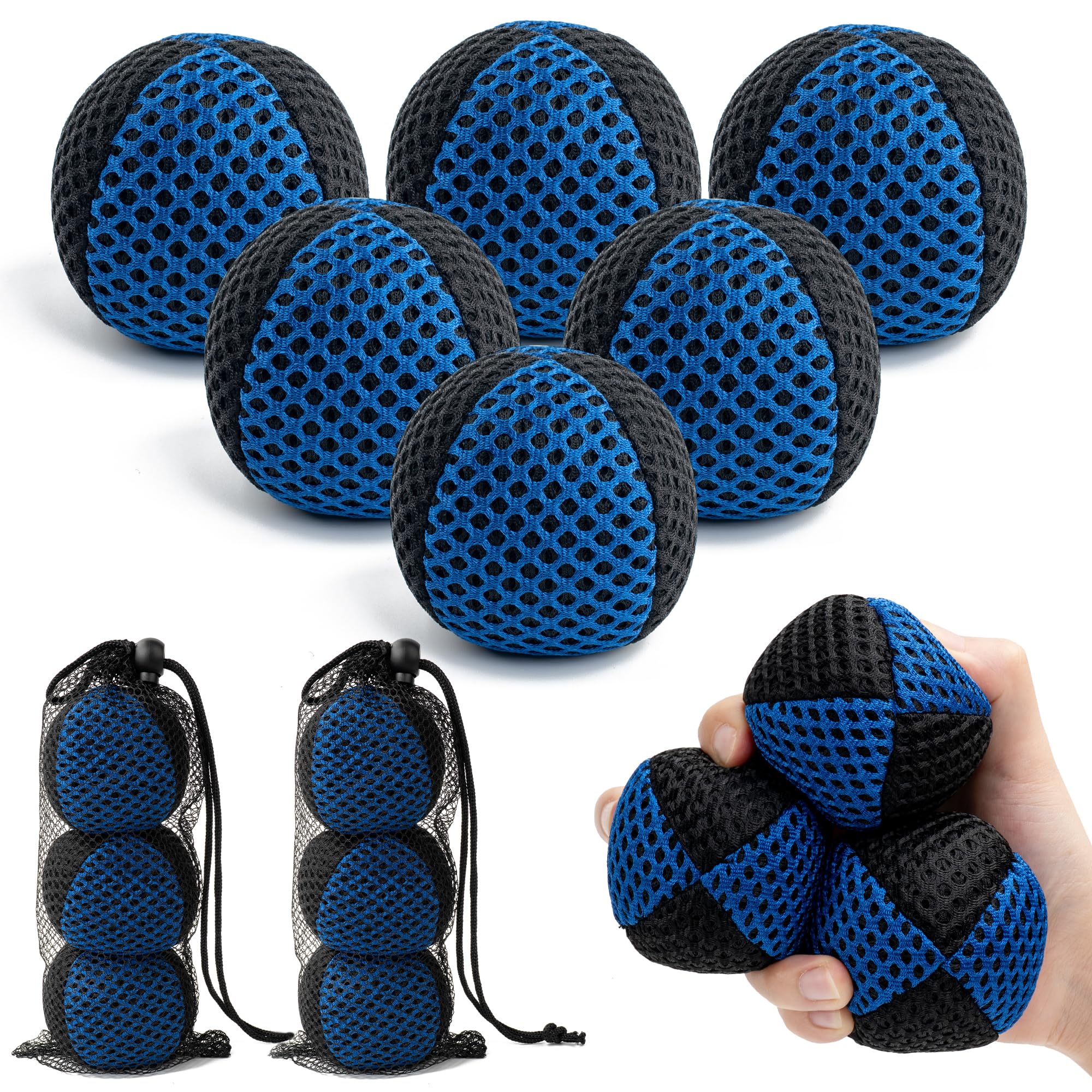
Six matched beanbag juggling balls in one set, each around 6.3 centimetres and 120 grams. Having more than three lets you work the four-ball fountain, where each hand throws in its own column instead of crossing. Matched weight across all six matters more here than it does with three.
Why we picked this exact one: The oazoxcx six-ball set gives you six matched 120 g beanbags for about twenty dollars, less than a second three-ball set costs from most juggling brands. It uses the same stitching and bead fill as their three-ball version, so the feel carries over if that's where you started. It's the same anonymous brand, and the mesh shell is fabric, not a surface for juggling over gravel.
Buy one new prop at a time and give it a fortnight before you judge it. The honest order is balls until the cascade is boring, then rings or clubs depending on whether you'd rather train your eyes or your release. Fair warning on the rings: the first few catches land on the heel of your hand and you will remember them.
Small Things That Quietly Make Practice Better
None of this is required, and I'd be suspicious of anyone who told you otherwise. But three frustrations turn up in week two for almost everyone, and each has a cheap fix. The balls skitter under the furniture on a hard floor. You can't work out why one throw keeps drifting forward. And you can't see what your hands are doing while they're busy doing it. If you're trying to build the daily habit at the same time, a beginner creative routine is the harder half of the problem.
07Pick 07 of 10
a low-pile runner to practise over on hard floors
A thin washable runner rug, roughly two feet by six, with a non-slip backing. On a hard floor a dropped beanbag skips and travels; on a low-pile runner it stops roughly where it lands. The point is low pile, because a thick or shaggy rug swallows the balls instead.
Why we picked this exact one: The OLANLY 2x6 washable runner is low-pile polyester with a non-slip backing, the combination that stops a dropped ball dead without sliding under your feet. At twelve dollars it costs less than most dedicated practice mats and it goes in the washing machine. It's sold as a hallway rug with a floral border, so it is decor first and practice surface second.
a full-length mirror for checking throw height and drift
A narrow full-length mirror that hangs over a door or mounts to a wall. Juggling in front of one shows the two things you can't feel: whether your throws are reaching the same height, and whether the pattern is creeping forward away from your body. Tempered glass is the sensible choice near anything you're throwing.
Why we picked this exact one: The VooBang 14x48 over-the-door mirror is tall enough to show a three-ball pattern top to bottom without the wall space most people don't have. It's tempered glass, which matters in a room where things are being thrown. The over-door hook limits where it can live, and at 48 inches it won't show the top of a club throw.
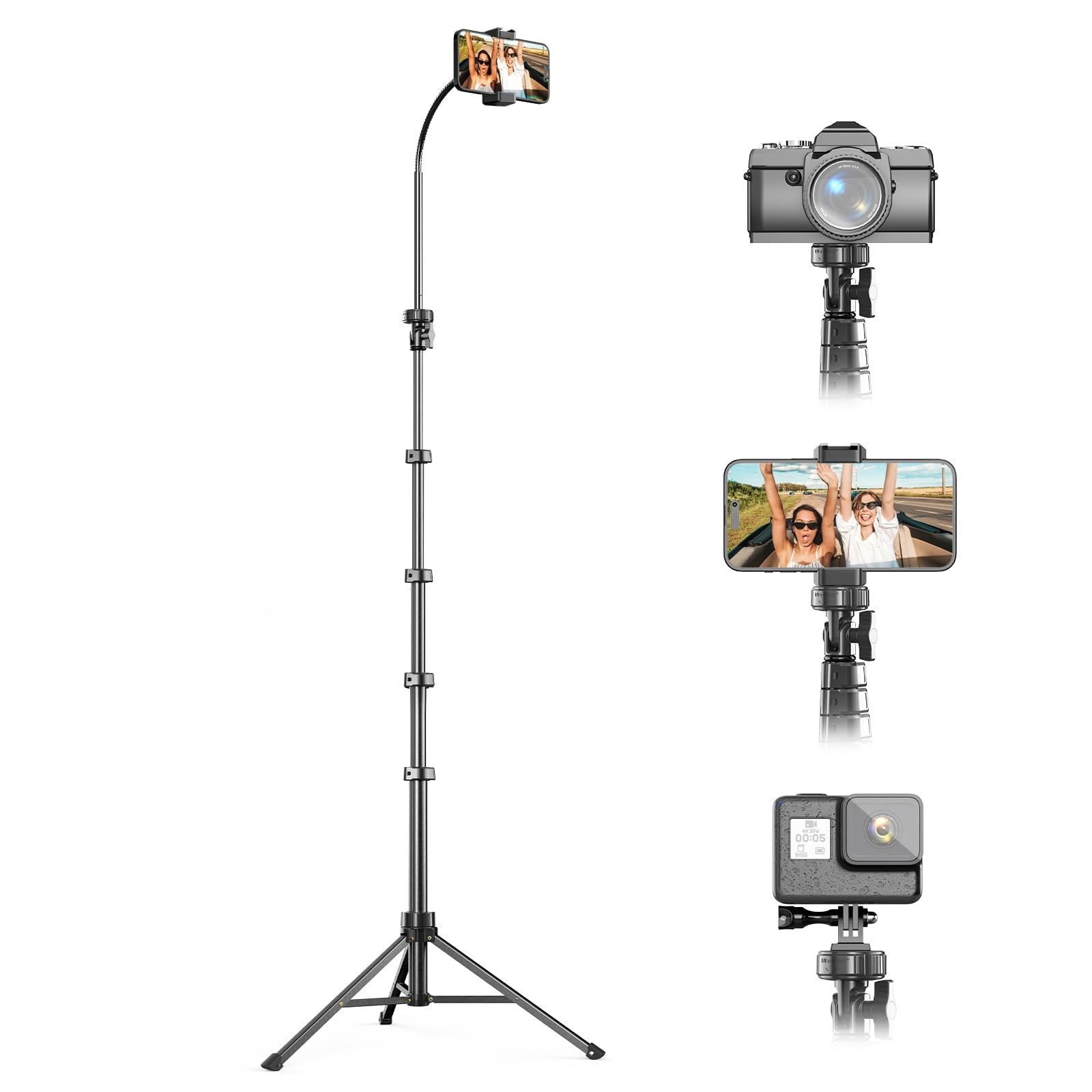
An extendable tripod that holds a phone at standing height, with a bendable neck and a remote shutter. Filming a minute of practice catches what a mirror doesn't: where your hands sit, whether your elbows have crept up, how early the pattern starts to drift. Height is the spec that matters, because a desk tripod crops your hands out of frame.
Why we picked this exact one: The UBeesize 88-inch tripod reaches standing height and folds down into a selfie stick, so it covers both filming yourself and showing someone a trick. Ninety thousand ratings at 4.5 stars is an unusually large sample to be confident about. It's light enough to tip, so stand it against a wall rather than in the middle of the room where a stray throw will find it.
Short and daily beats long and occasional. Teachers of this tend to count practice in throws rather than minutes, and fifty clean one-ball throws is a perfectly respectable session. I'd film myself once a week rather than every day, because watching it daily only makes you self-conscious. If you want a second small skill for the same ten-minute slot, a first ukulele setup is the other classic.
One Book Worth Owning
Juggling is a video-shaped skill. You can learn the cascade from four minutes of footage and most people do. A book earns its place differently: it hands you the map instead of the next trick, so you can see where rings and clubs sit relative to each other and why some patterns are prerequisites for others. That's the part that's genuinely hard to assemble from a feed.
10Pick 10 of 10Book worth reading
a beginner-to-intermediate juggling manual
A paperback juggling manual that teaches the basic patterns and then explains the structure behind them, including the numeric notation jugglers use to describe tricks. It covers balls, rings and clubs rather than stopping at three balls. Look for a book that explains why a pattern works, not one that's a catalogue of tricks.
Why we picked this exact one: Thom Wall's Juggling: What It Is and How to Do It was written by a former Cirque du Soleil juggler over six years, and it's the modern book jugglers point newcomers to now that the older classics are mostly out of print. It teaches through several different approaches rather than one fixed sequence. At twenty-two dollars it costs more than your first set of balls, which is a strange but accurate summary of this hobby.
Read it in the gaps rather than instead of practising. Nobody ever learned a cascade by reading about one. It sits comfortably among the best starter hobbies for adults, mostly because the entry cost is a tenner and the kit fits in a coat pocket.
Why Your Pattern Keeps Walking You Across the Room
Why do I keep stepping forward until I hit the wall?
Nearly every beginner throws slightly forward rather than straight up, because the natural arc of a throwing arm pushes the ball away from the body. You don't notice it on any single throw. You notice it when you've travelled two metres and the sofa stops you. The fix is physical rather than mental: stand about an arm's length from a wall and practise facing it. Throws that drift forward hit the wall and come back, and within a few sessions your arms quietly stop doing it.
Two balls felt fine, so why does the third one break everything?
With two balls you can get away with a throw that isn't quite right. With three you can't, and the usual tell is that the third ball never actually leaves your hand — you catch the first two and freeze. Separate the problem: throw all three and deliberately don't try to catch any of them, just get them out of your hands in rhythm. Once all three throws happen reliably, the catches start arriving on their own.
Is my ceiling too low to do this at home?
Probably not, and this stops more people than it should. A three-ball cascade is thrown to a little above head height, so an eight-foot ceiling is workable even if you're over six foot, and jugglers do it routinely. Clubs are the thing that actually tests a room, though plenty of people practise those indoors too once they stop assuming they can't. If headroom is genuinely tight, the trick experienced jugglers use is to lie on your back and throw upward, which turns two feet of clearance into eight.
Should I buy a heavier ball to get more control?
Weight helps up to a point and then stops helping. Too light and your hands get almost nothing to correct against on the next throw; too heavy and your arms are tired before the pattern is. The range jugglers recommend to beginners is roughly 110 to 130 grams in a 67 to 70 millimetre ball, and most sets sold as beginner balls sit inside it. If a listing won't tell you either number, that's useful information in itself.
Can I skip ahead and just buy clubs now?
You can, and you'll learn both things slower. Clubs stack rotation on top of a pattern you haven't made stable yet, so every drop has two possible causes and you can't tell which one you're fixing. The useful test isn't whether you can juggle three balls. It's whether you can juggle three balls while holding a conversation. Once the cascade stops taking your full attention, the spin is the only new thing left to learn, and clubs go much faster.
None of these show up in the first ten minutes. They show up in week two, which is also when most people quit. They're normal, not personal.
People Worth Following Into This Hobby
Real practitioners we found while researching this setup — people who do the work, show their process, and publish on sites they run themselves. No sponsorships, no affiliations; we just think they're worth your time.
Catalogues and animates hundreds of toss-juggling patterns, each with its siteswap, difficulty and prerequisites.
Its three-ball cascade page is the exact next step after this setup's essentials, and it is where the beanbags-not-tennis-balls advice in our first section comes from.
Teaches juggling through free tutorials and private virtual lessons, and runs a pattern database that orders tricks into a learning path.
This setup argues rings and clubs are separate skills rather than harder balls; her Pattern Path is the ordered route through those patterns once the cascade is solid.
Filmed and posted free step-by-step juggling videos in 2002, among the first on the web, after 25 years of street performing.
The one-ball, two-ball, three-ball sequence in those videos is the progression this setup's essentials are bought for, including the warning not to hand the ball across.
Love what you see here? Save individual picks with on any item, or copy everything to a list of your own in one click — great for coming back to later, or dropping as a not-so-subtle hint.
Disclosure: This section may contain affiliate links to Amazon and eBay. We may earn a small commission from qualifying purchases at no extra cost to you. Product listings from eBay are provided for discovery purposes and link directly to eBay.
Your next hobby might be in here
Every so often I stumble on a hobby too good not to share. Get new hobby setups and guides by email — no spam, unsubscribe anytime.