Oyster mushrooms are carnivores. Their threads grow tiny lollipop-shaped droplets of a paralysing toxin, and a soil roundworm that brushes one is stopped within minutes and then digested for its nitrogen. That is the organism you will be keeping in a bag on a shelf, where it eats sawdust or straw instead and hands you dinner about a fortnight later. People have grown them on purpose since the First World War, when Germany worked out how to cultivate them as a wartime food. These days it happens in spare bathrooms, garage corners and a great many kitchens.
What surprises people isn't the growing, it's the pace. Nothing visible happens for days, then one morning there are little bumps at the cut in the bag, and a few days after that you are looking at a cluster the size of your hand. Once they have pinned, oysters roughly double in size every day. You will take photographs. Everyone does.
Start with less than you think you need. A colonised block, something that keeps the air around it damp, and a bottle that throws a genuinely fine mist will get you a harvest, and that really is the whole list.
Nothing below costs enough to sting if you decide after one flush that mushrooms aren't your thing.
Where This Little Kit Can Take You
A few real moments and results from this hobby — made with tools no fancier than the ones below.
A block in full flushClusters push out of every seam once the substrate is fully colonised.
Cupping the first clusterPicked while the cap edges still curl downward, before the spores drop.
None of this wants a spare room or a shelf of lab equipment. A corner of the kitchen out of direct sun, plus five minutes a day with a spray bottle, covers it. If you already keep a corner of the house given over to indoor plants, the rhythm will feel familiar, except that this one feeds you.
The Three Things That Make Mushrooms Appear
Here is the honest version of the choice in front of you. You can buy a block that is already full of mycelium and simply open it, or you can buy spawn and substrate and build your own. For a first grow the block wins, easily. Building from spawn means a clean transfer, a bag that stays shut for three weeks, and a real chance of mould taking it before you ever see a mushroom. The block skips all of that: you cut it, you soak it, you mist it. What is actually worth learning at this stage is what a healthy block looks like and what the right humidity feels like, and a ready-to-fruit block teaches both without punishing you for a slow start.
Disclosure: This section may contain affiliate links to Amazon. We may earn a small commission from qualifying purchases at no extra cost to you.
01Pick 01 of 07
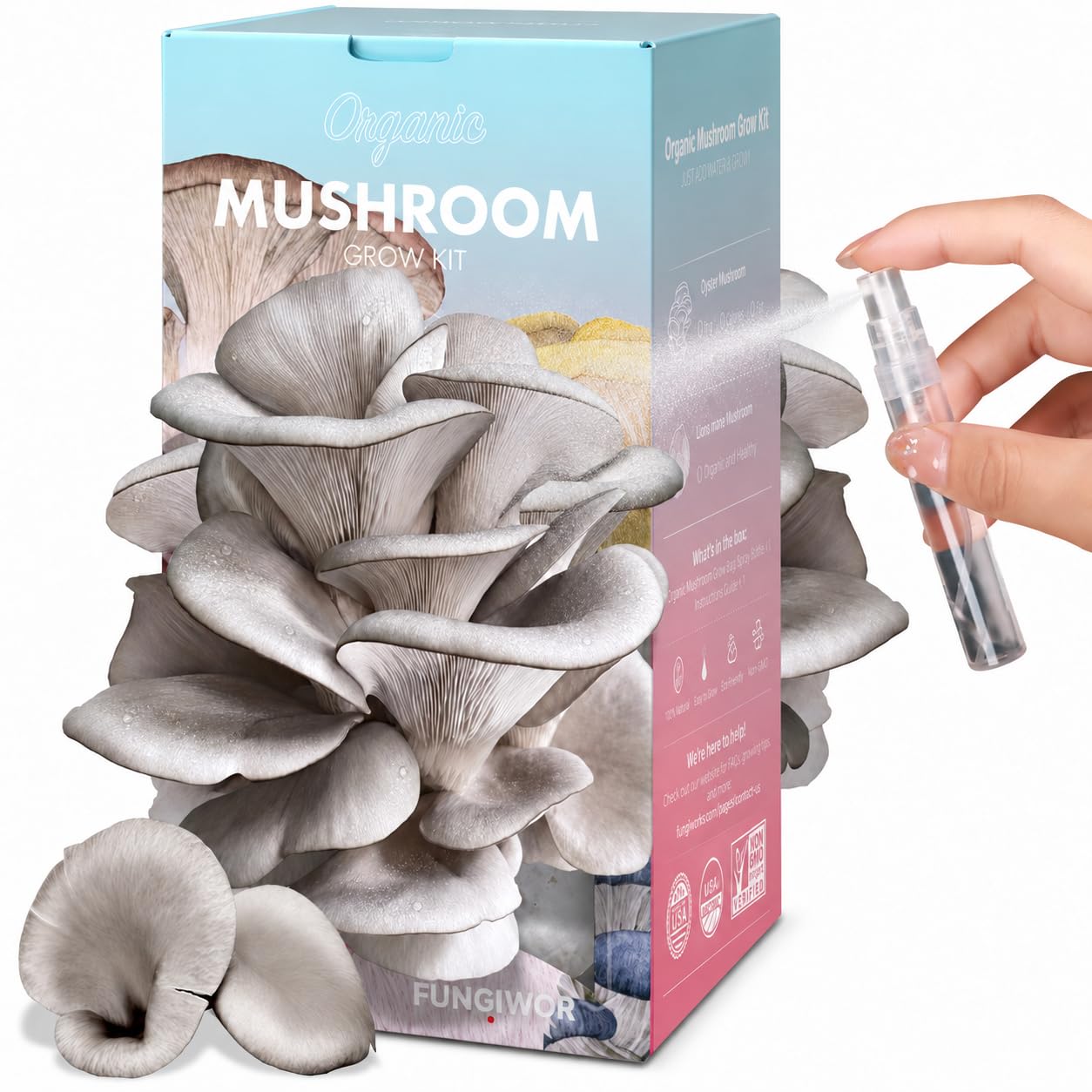
ready-to-fruit oyster mushroom block for a first indoor grow
A sealed bag of sterilised sawdust or straw already colonised right through with oyster mushroom mycelium, so it only needs opening and keeping damp to fruit. Most blocks weigh three to five pounds and carry two or three flushes before the substrate is used up. Look for one with openings on more than one face, and check the species, because some oysters want a cool room while others are happy at ordinary kitchen temperature.
Why we picked this exact one: The Fungiworks 4 lb organic oyster kit has cut openings on both faces, so clusters come from two sides rather than one. It fruits yellow oysters, which are happy roughly between 64 and 86F and so suit a normal kitchen better than the cool-loving pearl and blue strains. It carries 4.3 stars, though from a modest 48 ratings, and the seller will replace it if no mycelium growth shows within 14 days.
clear fruiting chamber with filtered air ports for holding humidity around a block
A rigid transparent tub with pre-cut holes covered by breathable filter discs, which lets a block sit in near-saturated air while stale air still swaps for fresh. The filters keep mould spores and fungus gnats out without sealing the box. A twelve-inch cube suits a single block on a shelf, and the supplied plugs let you close the holes during colonisation and open them for fruiting.
Why we picked this exact one: The Myco Labs Grower's Select 28Q cube is a twelve-inch polypropylene tub with four filtered air holes and hole plugs, and it ships as a two-pack, so there is a spare while one is in use. At 4.5 stars across 334 ratings it is the best-reviewed purpose-made chamber at this size. Twenty-eight quarts is small enough for a kitchen shelf, though an unusually large block will want the next size up.
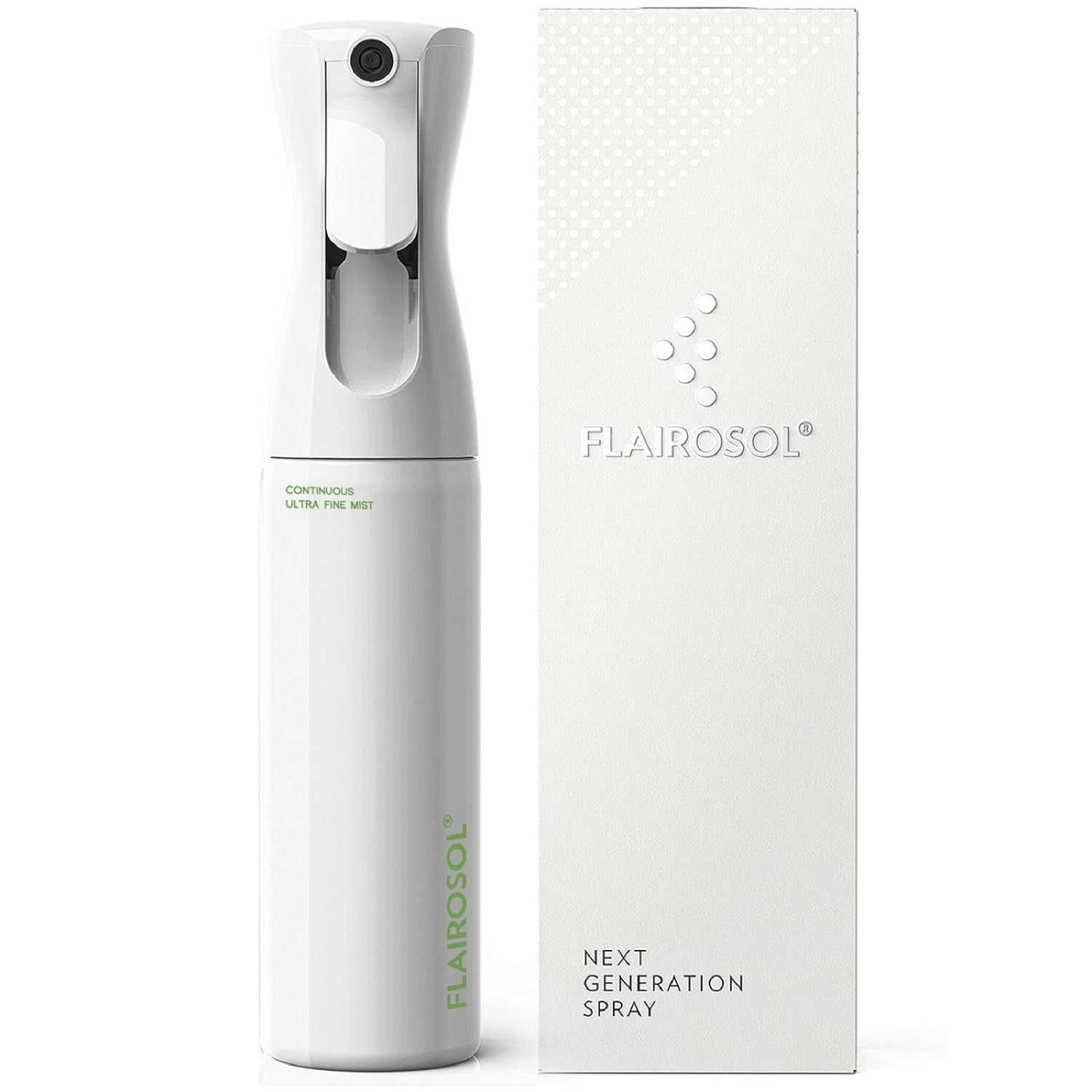
continuous-mist spray bottle for damping a fruiting block
A pump sprayer that delivers an even, very fine mist for as long as the trigger is held, rather than the pulsed jet of a standard trigger bottle. The fineness matters far more than the volume. Three hundred millilitres covers a week of twice-daily misting for one block.
Why we picked this exact one: The Flairosol Original plant mister uses a pre-compression pump that holds a continuous fine mist instead of spitting, which is what a bag of young pins wants. It sits at 4.6 stars from more than 1,300 ratings. The trigger needs a few firm pumps to pressurise before each session, which is mildly annoying and the price of the even spray.
Open the bag the day it arrives, give it the soak the instructions ask for, then mostly leave it alone. Pins turn up about a week later and then move quickly, usually under a week from bumps to the pan. Resist cutting extra holes to hurry it along. A block with its whole surface exposed dries out and throws a beard of tiny leggy mushrooms instead of a few good clusters.
What You'll Want By the Second Block
A first grow runs fine on guesswork. The second one is where you start wanting numbers, because "it feels humid in there" and "91%" are different claims and only one of them explains why the pins aborted on Tuesday. These are the things growers add once a first flush has proved the idea works. None of them are needed to get mushrooms. All of them make the next batch less of a lottery.
04Pick 04 of 07
digital hygrometer and thermometer with logging for a fruiting chamber
A small sensor that reads relative humidity and temperature and, on models with Bluetooth, keeps a history you can read on a phone. The history is the useful part for growing, because it catches the overnight dips a glance at the display never will. It belongs inside the chamber, not beside it.
Why we picked this exact one: The Govee H5075 logs temperature and humidity to a phone app and exports up to two years of readings, so a failed pin set can be lined up against the night the chamber dried out. It holds 4.5 stars across nearly 49,000 ratings. Bluetooth is the limit here: it records continuously but only syncs when you come within about 50 metres of it.
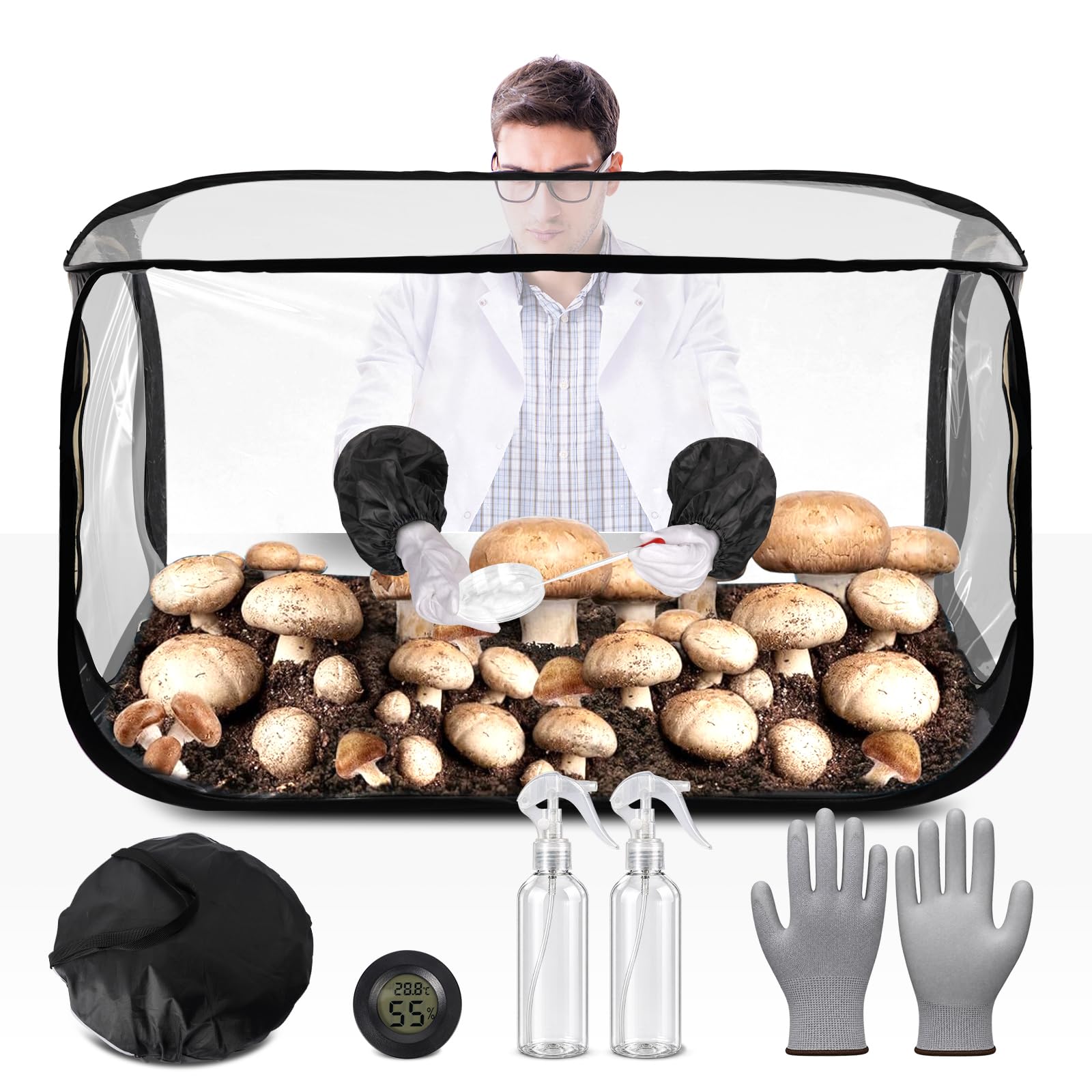
collapsible still air box for clean transfers when you start making your own blocks
A clear enclosure with elastic arm holes that creates a pocket of motionless air, so drifting spores settle instead of landing on whatever you have open. It is the low-cost stand-in for a filtered flow hood. It becomes useful the moment you stop buying ready-made blocks and start putting spawn into your own substrate.
Why we picked this exact one: The Salcod still air box measures 38 by 20 by 25 inches, with dual-zipper access and elastic arm holes sized for different arms, and it folds flat between sessions. At 4.4 stars from 358 ratings it is among the better-rated boxes at this size. The frame is light, so it shifts if you lean your weight on it.
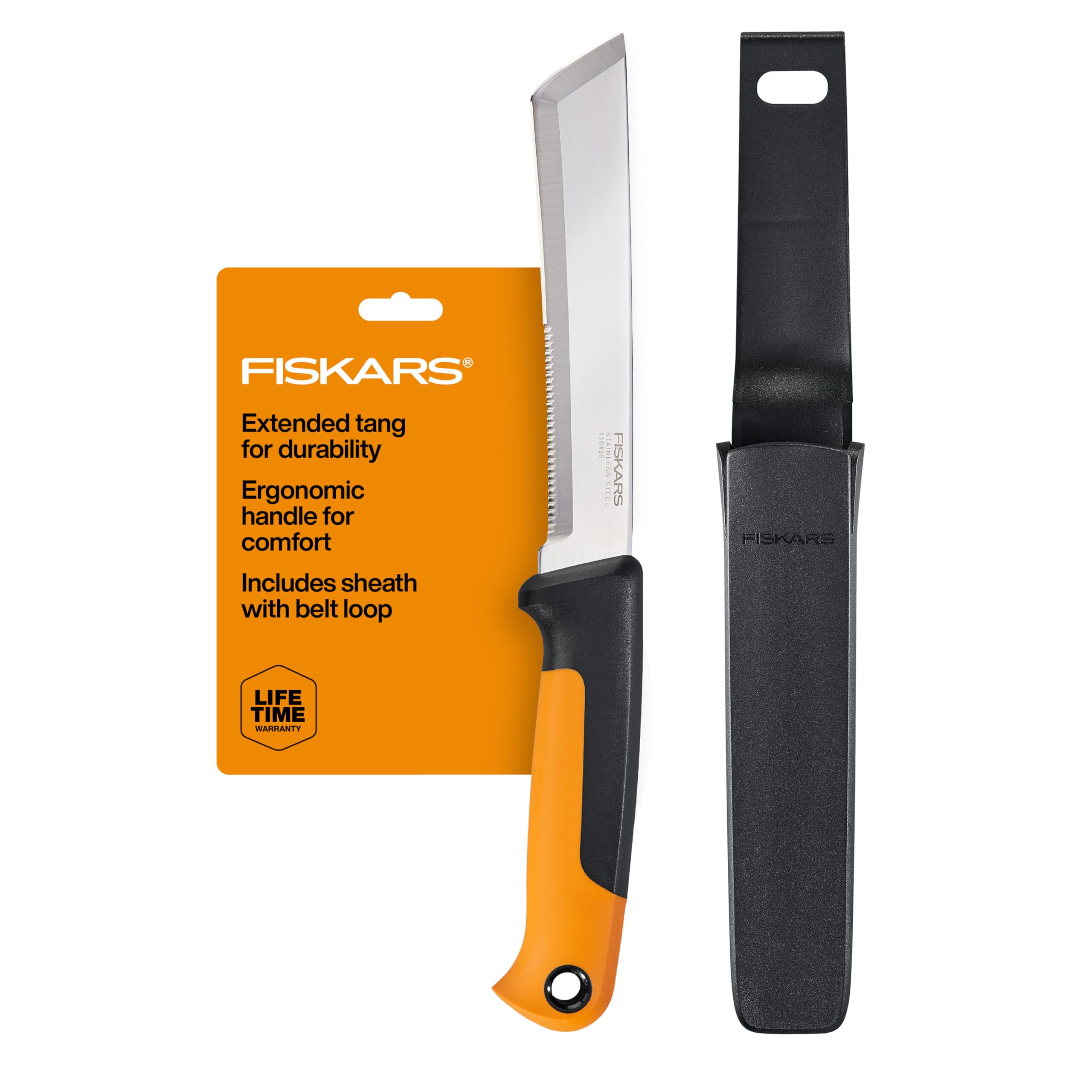
harvesting knife for cutting clusters cleanly off a block
A short, stiff blade with a flat section for push cuts and a serrated section for sawing through a dense stem base. A cluster of oysters is surprisingly tough where it meets the substrate. A sheath earns its keep if the knife lives in a drawer near the grow.
Why we picked this exact one: The Fiskars harvesting knife pairs a flat tip for push cuts with a serrated section that takes a thick cluster base in one stroke, and it comes with a hard sheath and a lifetime warranty. It holds 4.5 stars from 300 ratings. It is a garden tool rather than a dedicated mushroom knife, so there is no brush on the handle, which an indoor grower will never miss.
ultrasonic fogger with a hose for holding humidity automatically
An ultrasonic humidifier with a tank and a flexible hose that pipes cool fog into an enclosure, plus a dial for output and a cut-off when the tank runs dry. It replaces hand misting with a steady background humidity. A few litres of capacity covers a night without a refill.
Why we picked this exact one: The Coospider 3.8L fogger runs an adjustable 1.5 to 6.3 ft hose into a chamber and shuts itself off when the tank empties, and at 4.3 stars from over 4,800 ratings it is the most-tested unit in this bracket. It is worth the step up once you are on a third or fourth block and tired of missed mistings; wait if you are still finding out whether you enjoy the routine. It is sold for reptile tanks, so nothing on the box mentions mushrooms.
Add them one at a time rather than all at once, or you'll never know which change fixed anything. And here's the warning nobody prints on a box: a block in full flush throws out an enormous number of spores, and oyster spores are the ones growers react to most. Keep the chamber somewhere with a window you can open.
What the Second Block Costs
This is the part that doesn't show up at checkout. A block isn't equipment, it's food, and the mycelium eats it. You get a generous first flush, a noticeably smaller second, sometimes a third worth picking, and then the bag is spent and belongs in the compost or spread under a shrub. The chamber, the sensor and the mister are bought once. The block is a running cost, and if you keep one going continuously that's a fresh one every couple of months or so.
Building from spawn and substrate brings the cost per flush down a long way, and it is the natural next step rather than a different hobby: a bag of sterilised hardwood sawdust and a bag of grain spawn will make several blocks for roughly what one ready-made block costs. The trade is a clean transfer and three weeks of staring at a sealed bag with nothing to see. If you already keep a sourdough starter alive on the kitchen counter, the mental model transfers directly. You are feeding a culture on a schedule and reading it for signs that it's unhappy.
Everything That Looks Like Failure in Week Two
Why are my mushrooms all stem and no cap?
Long stems with small caps mean carbon dioxide has built up around the block, and it is the commonest fault in a closed chamber because the instinct is to seal it tighter to hold the humidity in. The mycelium reads high CO2 as still being buried, and it stretches, hunting for open air. Oysters want a genuinely busy air exchange, and growers put the figure at six to twelve complete changes an hour rather than a sealed box. Crack the lid, or open the filter holes you plugged during colonisation, and the next flush comes out stubby and proper.
There's green mould in the bag. Is it finished?
Green or blue-green patches are usually Trichoderma, and it gets in where the substrate wasn't fully colonised before air reached it. A small spot on a block that is otherwise solid white may get outrun by the mycelium; a spreading patch will not, and that block is compost. Here's the part nobody warns you about: don't open a contaminated bag indoors. Carry it outside first, because the spores come off in a cloud and settle on every surface in the room, including the next block you were about to start.
My pins appeared and then shrivelled. What happened?
Pins abort when the humidity drops sharply, and the usual cause is enthusiasm: lifting the lid to look, spraying the tiny mushrooms directly, or letting the chamber dry out overnight. Baby mushrooms want damp air around them, not water on them. Mist the cut in the bag and the walls of the chamber instead, and leave the plastic on the block rather than peeling it back, because the bag holds a layer of humidity exactly where the pins are forming.
What's the white dust on the shelf under my block?
Those are spores, and they mean the harvest went slightly late. Oysters are ready while the cap edges still curl down a little and have only just begun to flatten, and there is roughly a twenty-four hour window when they are perfect. Past it they drop heavily. This matters beyond eating quality, too: a block in full flush releases a great many spores into a room, growers do pick up coughs and wheezing after months of it, and the medical literature records occupational asthma and lung inflammation among mushroom workers. Pick on time, and keep the grow somewhere you can air out.
People Worth Following Into This Hobby
Real practitioners we found while researching this setup — people who do the work, show their process, and publish on sites they run themselves. No sponsorships, no affiliations; we just think they're worth your time.
Runs the main US extension programme for specialty mushroom growing, publishing factsheets, videos and guidebooks from its own trial production.
Their indoor-production resources pick up exactly where this page stops, covering the move from one bought block to inoculating your own substrate, which is the step the running-cost section points at.
Co-runs an urban mushroom farm in Devon and has been teaching low-tech cultivation since 2009.
His oyster guide carries the fruiting numbers a beginner needs next, including the temperature bands for each oyster strain, which decides whether a block will fruit happily in your kitchen or sulk.
Love what you see here? Save individual picks with on any item, or copy everything to a list of your own in one click — great for coming back to later, or dropping as a not-so-subtle hint.