Bonsai isn't a species. It's an ordinary tree - a juniper, an elm, a pine you could otherwise plant in a garden - kept knee-high by pruning its branches and cutting its roots back every couple of years, and the Chinese were already growing dwarfed trees in shallow dishes by around 700 AD. Japan borrowed the practice, then only renamed it “bonsai” around 1800, when scholars near Osaka wanted a word that set the shallow-pot trees apart from ordinary potted ones. Here's the part that still gets me. The oldest tree in America's national collection has been in training since 1625, and it was standing in a Hiroshima nursery on the morning of 6 August 1945, about three kilometres from the blast, shielded by a garden wall. Nobody outside the family knew until the donor's grandsons mentioned it in 2001, twenty-five years after the tree had been given away.
Most first bonsai die the same way. Someone buys a juniper labelled for indoors, puts it on a shelf, waters it on Sundays because the tag says to, and six weeks later the foliage goes grey-brown and nothing brings it back. The tree was never a houseplant. Junipers want real sun and a real winter, and growers watch the same dead juniper get posted to their forums every January. You've got two honest options: start outdoors with a species that belongs outdoors, or start indoors with a tropical that can genuinely tolerate a room. The label on the pot won't tell you which one you've bought.
We're minimalists about this. One tree, a bag of gritty soil, a pair of scissors, a cutter that leaves a wound a trunk can heal over, and something to water with. That's the whole list for year one, and the list doesn't get longer just because the shop has a wall of tools.
Nothing below costs enough to sting if you decide in March that you'd rather keep succulents.
Where This Little Kit Can Take You
A few real moments and results from this hobby — made with tools no fancier than the ones below.
Layered canopy, shallow white potEvery tier of foliage is the result of cutting back the same branches for years.
A larch forest on stoneGroup plantings sit on a flat slab rather than in a pot, with moss standing in for forest floor.
If you've already managed to kill a pothos, honestly, start with a first corner of easy indoor plants instead - they forgive a missed week in a way a tree living in two inches of grit never will. A bonsai pot holds so little that one hot afternoon can empty it. That's the real difficulty of this hobby, and no tool on the next list fixes it.
The Five Things That Make a First Year Possible
Here's where the money actually goes, and it isn't where people expect. The tree is the cheap part. The tools cost more than the plant. Only two of them are genuinely bonsai-specific with no hardware-store equivalent - the rest of your kit can come out of a drawer, and experienced growers will happily tell you that ordinary needle-nose pliers and flush snips are fine. One small pleasure nobody mentions: the first time you cut into juniper foliage, the whole bench smells of gin.
Disclosure: This section may contain affiliate links to Amazon. We may earn a small commission from qualifying purchases at no extra cost to you.
01Pick 01 of 09
Young Juniper Bonsai Tree
A small juniper grown on for a few years and pruned into a basic bonsai shape, sold as nursery-grown stock rather than as a finished show tree. Junipers are the species most often handed to beginners because they take hard pruning and recover from clumsy cuts, provided they live outdoors all year. Look for a trunk that tapers visibly from base to apex and foliage that is dense rather than leggy.
Why we picked this exact one: The Shimpaku juniper from Brussel's Bonsai is the pick here, because Shimpaku is the cultivar experienced growers name first when a beginner asks what to start on - one described it as close to bulletproof. Brussel's is a dedicated US bonsai nursery, so this is a catalogue line rather than a one-off listing that vanishes after a single sale. At $40 it's cheap enough to practise on. It has to live outdoors.
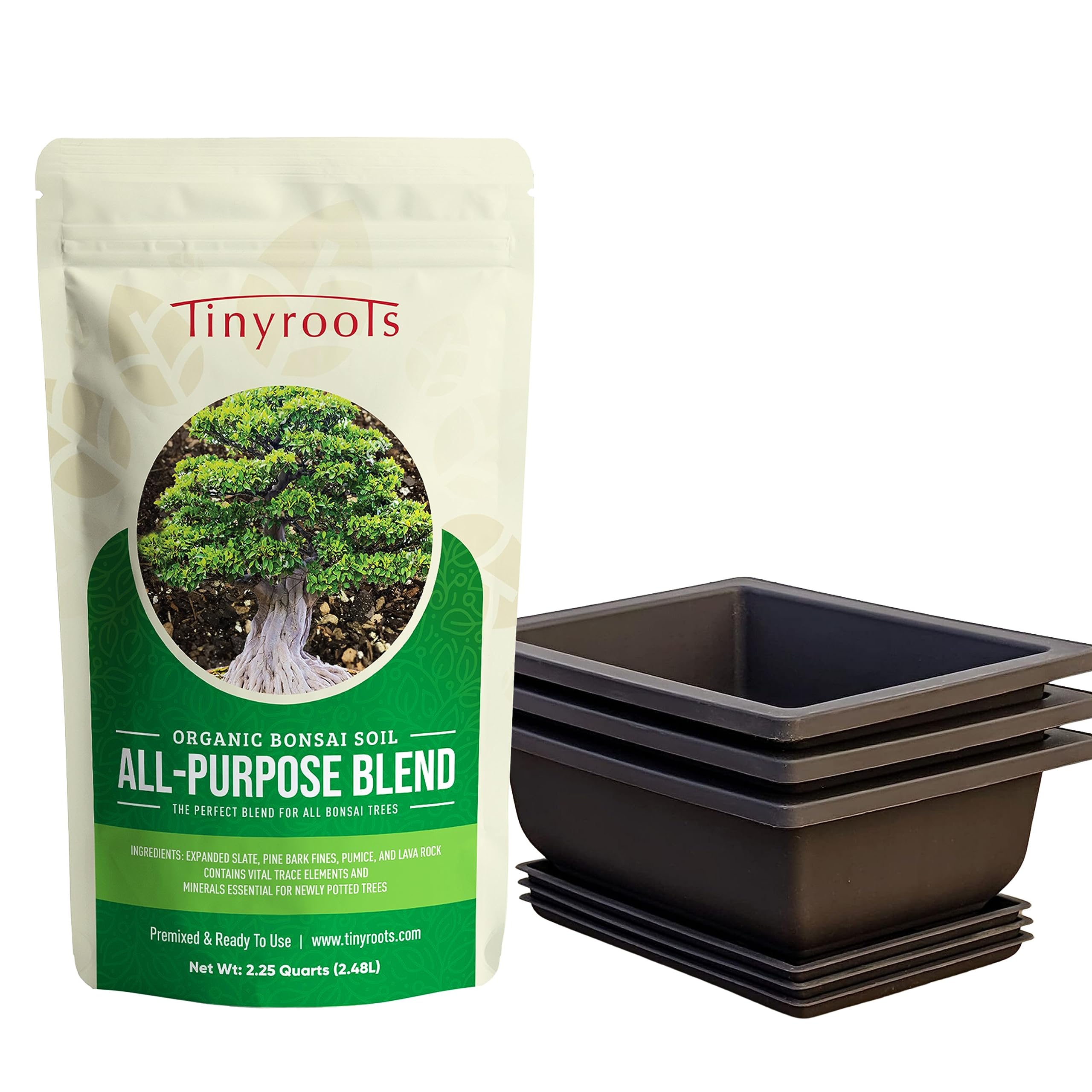
Bonsai soil isn't soil in the garden sense. It's a sifted mix of hard particles - baked clay, pumice, lava - that water runs straight through, leaving air pockets between the grains for the roots. Training pots are the plain ones a tree grows in for a few years before it earns a ceramic one.
Why we picked this exact one: The Tinyroots all-purpose mix from Bonsai Outlet comes blended for bonsai already, so you skip the fiddly business of buying akadama, pumice and lava separately and proportioning them yourself. It's the cheapest honest option we found, and it comes with three six-inch training pots, which is exactly where nursery stock should sit for its first couple of years. Only 40 people have reviewed it, so treat the 4.3 as thin evidence rather than a verdict.
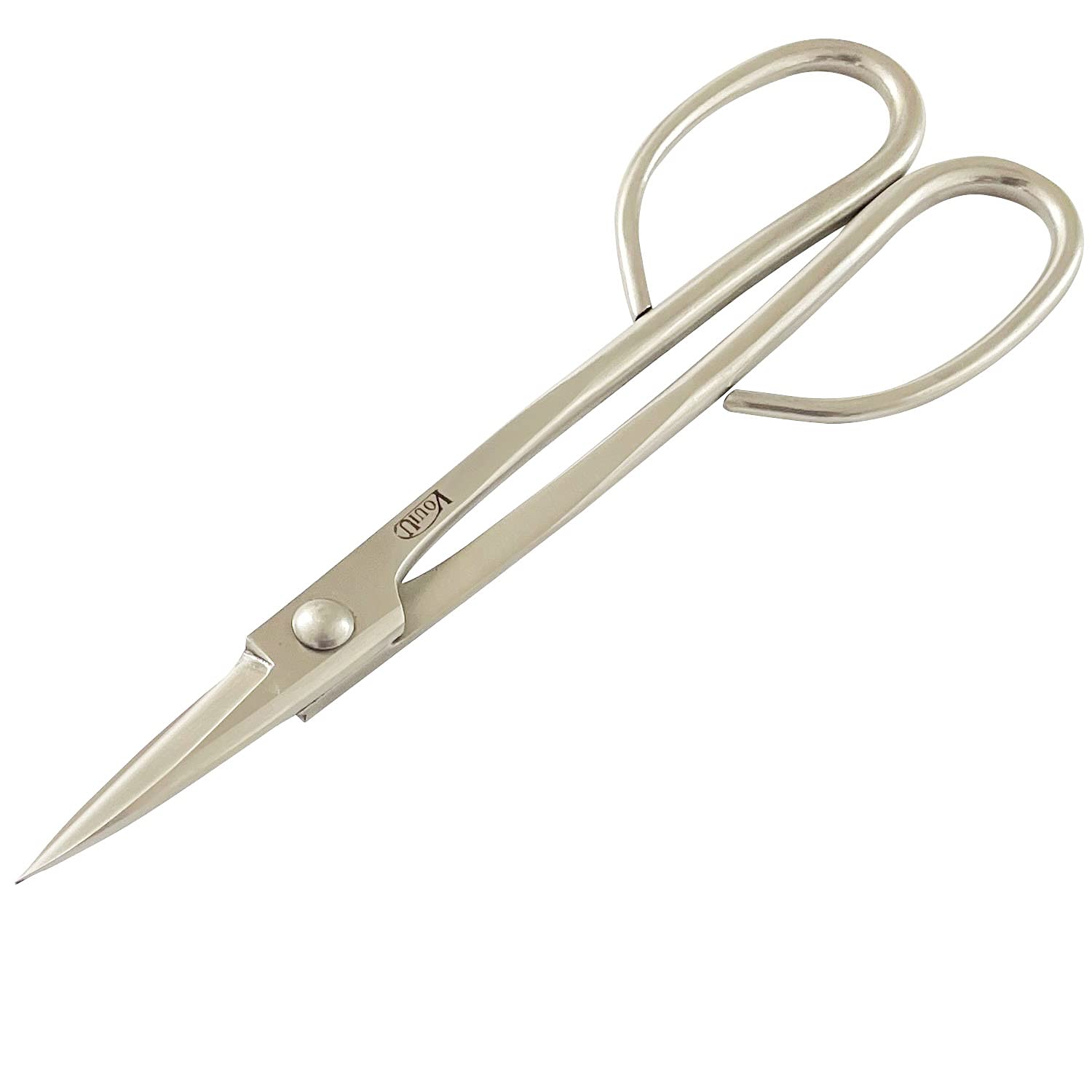
Bonsai scissors pair long thin handles with short blades, so you can reach into a crowded canopy and take one twig without mangling the three around it. The length also keeps your knuckles out of the foliage. They're meant for green growth and thin shoots, not for anything thicker than a pencil.
Why we picked this exact one: The Vouiu 8-inch bonsai scissors cover the first of the two tools growers say have no household substitute. At under $16 this is not Japanese steel and the edge will want honing sooner than a ninety-dollar pair would, but 335 reviewers at 4.5 stars suggest it cuts properly out of the box. Buy better ones later, once you know you're staying.
A concave cutter has curved blades that bite a shallow dish into the trunk where a branch used to be, rather than leaving a stub level with the surface. As the trunk thickens it rolls over that dish and the scar disappears into the bark. This is the one bonsai tool with no equivalent in a normal toolbox.
Why we picked this exact one: The Vouiu 8-inch concave cutter is the second of the two specialised tools, and at $23.97 it's the cheapest way to own one without gambling - 924 reviewers at 4.7 stars is a lot of evidence for a tool this niche. The 8-inch is the general-purpose size and covers the branch work on starter material. Anything heavier is a job for a knob cutter, years from now.
The rose is the perforated head on the end of the spout. A good one delivers a dense, soft shower instead of a jet, which matters when the soil is loose grit sitting a couple of inches deep in an open pot. The long spout lets you reach under the foliage and water the soil rather than the leaves.
Why we picked this exact one: The Dramm 2-litre long-spout can ships with a plastic rose already fitted, and Dramm is the brand bonsai growers reach for when they talk about watering gear. At $34.62 it costs more than a supermarket can, and that plastic rose is not the dense brass fitting on a ninety-dollar English can - but it does the job it is bought for. Watering is what kills most first trees, so this is a poor place to save ten dollars.
With these five you can buy a tree, get it out of its nursery compost in the right season, shorten branches without leaving stumps, and water it without washing the soil over the rim. Don't try to do all of that in one weekend. The common advice is to split the shocks - style one year, repot the next, or at least leave a hard-styled tree in its nursery pot for a full season before you touch the roots.
Year Two Shopping, Not Year One
None of this keeps a tree alive. These are the things you buy once a tree has survived a winter and you've worked out that you want to shape it rather than merely keep it going. I'd actively talk you out of buying them on day one - beginners who arrive home with a full tool roll tend to end up with a tree they're then too nervous to cut. And a warning about the thing that is deliberately not on this list: the pebble humidity tray bundled with almost every beginner bonsai does very little, and growers point out that a conifer left sitting in standing water has acquired a new problem rather than solved an old one.
06Pick 06 of 09
Anodized Aluminum Bonsai Training Wire Set
Wire is wound around a branch so you can bend it and have it hold the new position while the wood stiffens there. Aluminium is the beginner's metal: soft enough to go where you push it instead of fighting back. You want several thicknesses on hand, because wire too thin for its branch simply unwinds itself.
Why we picked this exact one: This anodised aluminium set from Grow A Bonsai Tree runs 1.0mm to 3.0mm, which spans everything on a young juniper, and aluminium is what growers hand beginners because it's kinder to thin bark than copper and much easier to apply. Copper holds better gauge for gauge, but it hardens as you wrap it and takes real practice. More than 3,000 reviewers at 4.7 stars. Take the wire off before it starts biting into a thickening branch.
A turntable is a weighted disc on bearings that lets you spin the pot without picking it up. Bonsai is judged from one chosen front, but you prune it from all sides, and lifting a wet pot twenty times in an afternoon is how pots get dropped. The useful ones take real weight and still turn under one finger.
Why we picked this exact one: The Mighty Mini 12.5-inch turntable costs $12.98 and more than 1,500 people rate it 4.6, which makes it the rare accessory that costs less than the trouble it saves. It's stainless ball bearings on a plain steel base - no finish worth admiring, and it will rust if you leave it out in the rain. Rated to 200 pounds, so a starter tree asks nothing of it.
A display pot is shallow, wide and glazed, with a drainage hole and usually wire holes for tying the tree down. Moving a tree into one is a commitment rather than a decant: the root ball has to be cut back to fit, which is surgery with a timing of its own.
Why we picked this exact one: The Brussel's Bonsai oval planter is ten by eight inches and three and a half deep, which suits a tree in the eight-to-twelve-inch range - about where starter stock lands. It comes from the same grower as the tree, it has a proper drainage hole, and 975 reviewers put it at 4.6. At $36 it costs almost as much as the juniper, which tells you something true about this hobby.
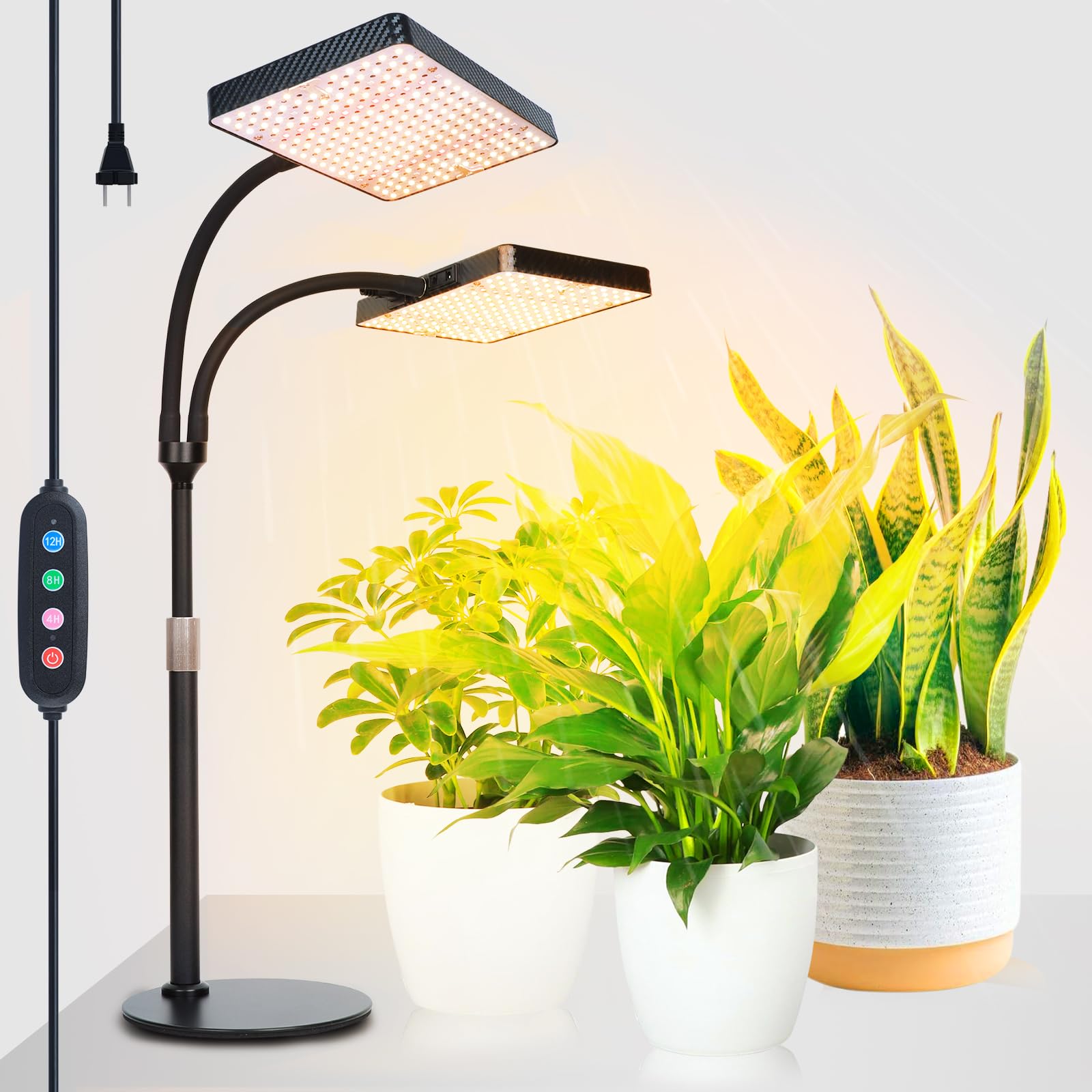
A grow light is the honest answer to the fact that a windowsill, even a south-facing one, is far dimmer than outdoors. These clamp or stand on a gooseneck arm over the tree and run themselves on a timer. They're only relevant to the tropical species that can genuinely live inside.
Why we picked this exact one: The GroCruiser 50W desk light is the step up worth making only once you know your tree lives indoors for good - a ficus or a dwarf jade, never a juniper. Its timer covers the roughly ten-hour day those species want without you having to remember, and at $49.99 with 211 reviewers at 4.4 it's the cheapest thing here that is actually a grow light rather than a bright lamp. If your tree lives outside, skip it and spend nothing.
Buy these one at a time, as the tree gives you a reason to. If it's the slow precision you like here rather than the gardening, cutting kumiko lattice from thin wood strips scratches a very similar itch and finishes in an evening instead of a decade.
The Tree Is the Cheap Part
A young juniper is a one-off purchase. The soil isn't. Akadama, the baked Japanese clay that holds the water in most mixes, starts breaking down after roughly two years, which is one of the reasons repotting runs on a two-year rhythm rather than on a whim. So the recurring spend is soil, the occasional pot, and fertiliser through the growing season - applied in smaller doses than you'd give a houseplant, because there's so little soil to hold it.
Then there's the cost nobody puts a number on: trees die. Most people lose their first one. A few lose their first three. The ones who stay are the ones who treated a cheap tree as tuition rather than as a pet, which is the honest argument for starting on a plain nursery shrub instead of a gift tree with a ribbon round the pot.
Why Your Tree Looks Fine Until Suddenly It Doesn't
The label says water every three days. Why is that wrong?
Because a printed label can't see your weather. A pot holding two inches of grit in July might want water twice in a day; the same pot through a cool damp week might want none. Growers are unanimous on this - you check the soil and water when it's actually drying, never on a calendar. Push a finger or a wooden skewer into the mix and go by what comes out. Watering to a schedule is how the same tree gets drowned in April and desiccated in July.
I bought it as an indoor bonsai. Was the shop lying?
Mostly, yes. Junipers, pines and maples are temperate trees that need light and temperature to fall over several weeks so they can go dormant, and a heated room never gives them that signal. Growers put it bluntly: no species actually likes living inside, and only tropicals and subtropicals will tolerate it. Three weeks indoors is already enough to damage a juniper. If you've got a temperate species, the fix is to put it outside and shelter the pot from hard frost - not to hunt for a brighter window.
Should my first tree be a finished one or a cheap shrub from a garden centre?
A finished tree teaches you watering. A cheap shrub teaches you bonsai. Experienced growers keep steering beginners towards ordinary containerised nursery stock precisely because it needs real root reduction and real branch selection, but not the brutal ninety-percent root cut that a tree collected from the wild demands. You will make those cuts badly the first time. Making them badly on something you picked up for pocket money is tuition; making them badly on the tree you saved up for is an expensive afternoon.
Can I prune it hard and repot it the same weekend?
Better not. Root work and heavy pruning are each a shock, and the usual advice is to keep them apart - style one year and repot the next, or leave the tree in its nursery pot for a full season after a hard styling. A tree recovering from both at once will often just sit there doing nothing, which beginners read as dying and answer with more water, which makes it worse. Do one thing, then wait and watch what the tree does about it.
How long until it looks like the photographs?
Longer than anything on the box suggests. A tree raised from seed needs something like three to five years before it can even be styled, and the refinement that makes a trunk read as ancient is measured in decades. That's not an argument against starting - the first year is genuinely absorbing - but the pleasure is watching a branch you wired two springs ago finally hold its position on its own. If you want a finished object by Sunday, pick another hobby.
People Worth Following Into This Hobby
Real practitioners we found while researching this setup — people who do the work, show their process, and publish on sites they run themselves. No sponsorships, no affiliations; we just think they're worth your time.
Writes Bonsai Tonight, publishing weekly posts and how-to guides on developing bonsai from nursery stock upward, and runs a small bonsai business in California.
His piece on basic bonsai tools walks through exactly the scissors, concave cutter and pliers this setup buys, including which of them have perfectly good non-bonsai equivalents.
Runs Crataegus Bonsai in Oregon, takes apprentices, and posts technical essays weekly on decisions like whether wire should be unwound or cut off.
This setup tells beginners the timeline is measured in years rather than seasons, and his writing on what the practice is actually for is the best answer we found to the obvious follow-up question.
Grows trees from seedlings to heavy-trunked specimens in a backyard nursery in Florida and blogs every stage, mistakes included.
He works the cheap nursery-stock route this setup recommends and photographs what happens when a styling decision goes wrong, which is the part finished-tree galleries never show.
Has published bonsai articles and species guides at Bonsai4Me since 2001 and has written three books on the craft.
His introduction to bonsai soils explains why the granular mix in our essentials list behaves so differently from potting compost, which is the mistake that kills most first trees.
Love what you see here? Save individual picks with on any item, or copy everything to a list of your own in one click — great for coming back to later, or dropping as a not-so-subtle hint.