Finger Painting for Toddlers: Washable Paint and a Plan for the Mess

Finger Painting for Toddlers: Washable Paint and a Plan for the Mess

Curated by Daria

This page may contain affiliate links.

washable water-based finger paint for toddlers

Where I'd start

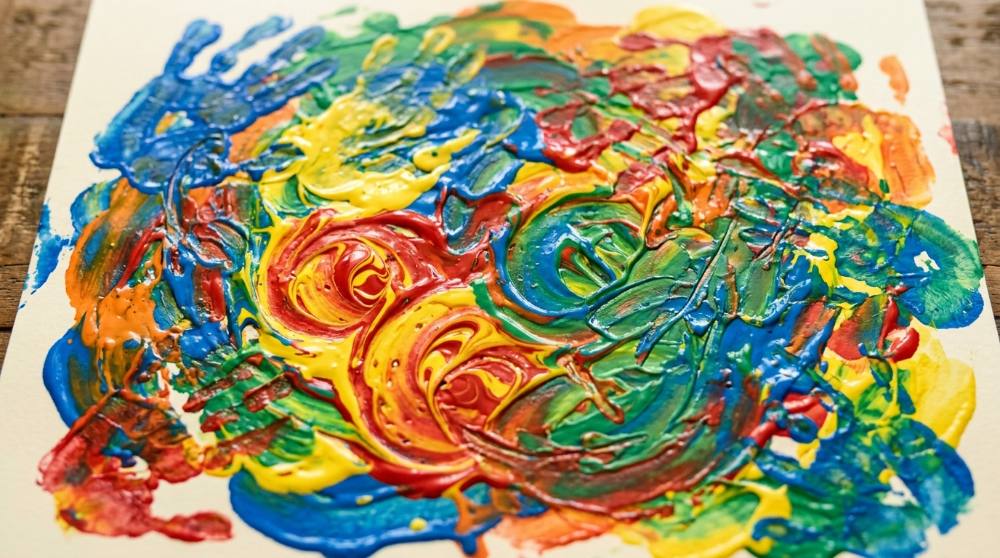
Thick paint that stays on top of the paper lets little hands drag and wipe lines before they decide what to create.

washable water-based finger paint for toddlers

See it on Amazon
Jump to the 9 picks

Ten Fingers and No Instructions

Finger painting didn't come out of a nursery. It came out of a school in Rome, where an American teacher called Ruth Faison Shaw watched a child smear iodine down a wall and thought: that. By 1931 she had patented a thick, non-toxic paint built for small hands, and two years later her pupils' work was hanging in a Manhattan exhibition. The material is now so specifically a toddler thing that European toy safety rules give it a chapter of its own, EN 71-7, down to a list of which preservatives are allowed in it. Not bad for a smear of iodine.

Here's the part nobody warns you about: your toddler probably won't paint anything. They'll put one colour down, flatten both palms into it, and then look up at you to see what happens next. That is the activity. Early years guidance calls it process art, which means there's no model to copy and no steps to follow, and the CDC goes as far as telling parents to hand a two-year-old finger paint so they can explore making marks. The sheet of paper is almost incidental.

So our starting position is: buy less than you think. Paint, something big to paint on, and a plan for the floor will carry you through the first dozen sessions. Brushes can wait.

Nothing on this page costs enough to sting if the whole experiment lasts one afternoon.

If you take one thing from here, make it the order of operations: sort out the cleanup first, then put the paint out. Do it the other way round and you'll spend the session guarding the sofa instead of watching your kid work out that blue and yellow do something. The kit below is built around that.

The Five Things Between You and a Painty Afternoon

Most first finger-painting kits get bought backwards. People spend on twelve colours and then improvise the mess control with a tea towel. Flip it. Two colours is genuinely plenty for a toddler, since more just gets you to brown faster, and the smock and the floor mat are what decide whether you do this again next week. One more thing worth knowing before you buy anything: stir a squirt of washing-up liquid into the paint and it comes off skin and clothes far more easily. Nursery staff have been doing that for years.

Disclosure: This section may contain affiliate links to Amazon. We may earn a small commission from qualifying purchases at no extra cost to you.
washable water-based finger paint for toddlers

Pick 01 of 09

washable water-based finger paint for toddlers

Thick, water-based paint made to be pushed around with fingers and palms instead of a brush. It sits on top of the paper rather than soaking in, which is what lets a child drag a line and then wipe it out again. When you are choosing a tub, the things to look for are the round AP seal, a water-based formula and no added scent.

Why we picked this exact one: We went with the Crayola Washable Finger Paints 6-count because the tub states ACMI Certified, and that seal is the one paediatric guidance actually asks for. Over eight thousand ratings sit behind it, which is rare in this category. The catch is the manufacturer age grade of three and up, so with a younger toddler this is a paint you sit down with rather than hand over.

See it on Amazon
wide white paper roll for floor and tabletop painting

Pick 02 of 09

wide white paper roll for floor and tabletop painting

A continuous roll of white kraft paper, 18 inches across, that you tear off at whatever length the session needs. It is the standard surface in nursery art areas because you can run a long strip down a table or across the floor. Weight matters more than whiteness here, since finger paint goes on wet.

Why we picked this exact one: The Bryco Goods 18-inch white kraft roll ships as two 75-foot rolls, so you stop rationing paper partway through a good session. It is heavier than copy paper, though still not as sturdy as glossy finger-paint stock, so tape the corners down before a wet palm reaches them. More than 33,000 ratings is a lot of people agreeing that a plain paper roll is fine.

See it on Amazon
oversized foam stampers for toddler paint printing

Pick 03 of 09

oversized foam stampers for toddler paint printing

Chunky foam shapes mounted on a wide disc with a knob handle, pressed into paint and then onto paper. One press gives a whole clean shape, which is a different kind of satisfying from smearing. The disc and handle are deliberately big so small fingers stay clear of the paint if they would rather.

Why we picked this exact one: The READY 2 LEARN Giant Imaginative Play Stampers set of ten sits on a three-inch disc, which puts every piece well outside the small-parts size that matters at this age. The foam is thick enough to hold a real load of paint instead of printing in patches. Fewer than fifty people have reviewed this exact set, which is the trade-off for a stamper this genuinely oversized.

See it on Amazon
long-sleeved waterproof smock for toddler messy play

Pick 04 of 09

long-sleeved waterproof smock for toddler messy play

A full cover-up with long sleeves and gathered cuffs, cut for one- to three-year-olds. The sleeves are the part that earns its keep, because toddlers paint with their forearms as much as their fingers. A fabric waterproof layer behaves better than a bare plastic sheet.

Why we picked this exact one: Madrona Brands sizes this smock for one to three specifically, rather than selling one shape for every child up to eight, and that fit is the difference between coverage and a tent. It is fabric rather than bare plastic, and the classic flat plastic apron has a habit of just carrying wet paint on its surface onto whatever the child leans against next. Pockets are an odd inclusion at this age, but they do no harm.

See it on Amazon
large waterproof floor mat for painting and messy play

Pick 05 of 09

large waterproof floor mat for painting and messy play

A wipe-clean polyester sheet a little over four feet square, with a non-slip backing. It goes under the table, the high chair or the paper itself, and rolls up afterwards. Machine washable counts for more than it sounds, because sooner or later a wipe won't do it.

Why we picked this exact one: The CLCROBD splat mat is 51 inches across with silicone grip spots on the back, so it stays put when a toddler kneels on it rather than rucking up. Over 3,600 ratings back it. It is sold as a high-chair mat, so the prints are aimed at mealtimes rather than art, which is cosmetic but worth knowing before it arrives.

See it on Amazon

With these five you can be set up in about two minutes and cleared away in five, and that ratio is what decides whether finger painting becomes a thing you do or a thing you did once. Expect the first few goes to be short and faintly baffling. Everything after this is optional.

When One Afternoon Turns Into a Habit

None of this is necessary. Each one solves a problem you'll recognise after a few sessions: the evening you have no energy for wet paint, the toddler who flatly refuses to touch the stuff, the kid who suddenly wants to hold something. Paint sticks are the one I'd buy second, right after the essentials, and they're a sensible step toward oil pastels for beginners, which work from about three in jumbo AP-sealed form. There's a smell to wet tempera that gets into a room, and the sticks skip it entirely.

twist-up solid tempera paint sticks for mess-free painting

Pick 06 of 09

twist-up solid tempera paint sticks for mess-free painting

Solid tempera paint in a fat twist-up tube, used like a crayon but drying to a painted finish. No water, no pots, nothing to rinse. The colour is far stronger than a crayon and it dries in a minute or two.

Why we picked this exact one: The Ooly Chunkies set of twelve has the fattest barrel of the paint sticks we compared, which matters a lot while a child still holds things in a fist. It carries a 4.8 rating across more than two thousand reviews. They are graded three and up, and the caps are small enough to be one more thing to keep track of around a younger toddler.

See it on Amazon
washable bath-time finger paint for tub walls

Pick 07 of 09

washable bath-time finger paint for tub walls

Soap-based finger paint meant for tub walls and tiles, which rinses away with water when you're done. It handles like thick finger paint, but the cleanup is the bath you were running anyway. It is for non-porous surfaces only, so grout and painted walls are out.

Why we picked this exact one: The Crayola Bathtub Fingerpaint five-tube pack has over six thousand ratings behind it, which for a bath product is a serious sample. Each tube holds three ounces, so a session doesn't feel rationed. Crayola is explicit that it cleans off reliably on non-porous surfaces only, so keep it well away from grout and painted walls.

See it on Amazon
chunky triangular-handled paint brushes for small hands

Pick 08 of 09

chunky triangular-handled paint brushes for small hands

Short, fat brushes with a three-sided rubber handle and thick bristles. The triangular shape stops them rolling off the table and nudges a child toward a tripod grip without anybody turning it into a lesson. At about six inches long they are short enough to stay roughly on task.

Why we picked this exact one: The READY 2 LEARN triangle-grip set of six is approved from eighteen months, which is unusually low for a paint brush. Reviewers keep noting that the bristles stay put rather than shedding into the paint. Six is more brushes than one child needs, so expect to lose a couple to the garden and not mind much.

See it on Amazon
double-sided standing easel with a built-in paper roll

Pick 09 of 09 · Worth the upgrade

double-sided standing easel with a built-in paper roll

A height-adjustable wooden easel with a magnetic board on one side, a chalkboard on the other and a paper roll feeding up from behind. Painting upright uses the shoulder and the whole arm instead of the wrist, which feels completely different from painting flat. A tray along the bottom holds the pots.

Why we picked this exact one: The JOYOOSS double-sided easel is the step up worth taking once you're painting most weeks and the child is about three. Below that a standing easel mostly gets leaned on and pulled over, so wait. It takes a paper roll on a spindle, which means no taping sheets down every time, and it folds flat when the room needs the space back.

See it on Amazon

Buy these one at a time, as the problem actually turns up. The easel is furniture rather than an art supply, and it earns its floor space around three, once a child can stand at it without dragging it over. Which brings us to the part of this page I'd read twice.

The Label You Should Actually Look At

Almost every children's paint leans on one phrase: conforms to ASTM D-4236. It sounds like a safety certification. It isn't. All it means is that a toxicologist reviewed the formula and that any hazards have been labelled, which is a different promise entirely. The seal doing the real work is the ACMI Approved Product mark, the small round AP, and the American Academy of Pediatrics asks for both together. Water-based, unscented and formaldehyde-free is the rest of the list. Scent is a particularly bad idea for an age group that puts nice-smelling things in its mouth.

Worth saying plainly: the AP-sealed paint and the giant stampers above both carry a manufacturer age grade of three and up. That's normal for art materials and it isn't a reason to skip them, but it is a reason to stay at the table. Under three, finger painting is something you do alongside your child, not something you set out and walk away from. Keep anything that would fit through a cardboard tube out of reach, and finish with soap and warm water rather than a wipe.

None of this needs to make a simple activity feel fraught. Check one tub for the AP seal, once, and then stop thinking about it.

The Questions You'll Have By the Second Session

A whole handful went in their mouth. How worried should I be?

The trap is reading non-toxic as edible, which it isn't; an AP-sealed paint is formulated so that the amount a child can grab does no harm, not so that it belongs in a mouth. In practice that means wiping the mouth, offering a drink and carrying on, rather than ending the session in a panic. If you have a determined mouther, the move early years practitioners actually make is to cook up a paint from cornflour, water and food colouring, which costs almost nothing and keeps in the fridge for a couple of weeks. Keep the shop-bought tubs for when that phase passes.

Why does every single painting end up the same brown?

Because the whole set got put out at once, and mixing is the interesting part for a toddler, so everything meets everything within a minute. You end up with a stack of identical sheets and an empty paint tub. Put out two colours, decanted from the big bottle into small pots, and keep the rest in the cupboard. If you want something worth keeping on the fridge, pull the sheet away a little before it reaches the brown stage.

The paint has stained their hands and it won't come off.

Washable paint comes off skin easily most of the time, but a long session leaves colour sitting in the creases of the palm and around the nails, and parents reach for scrubbing. Don't; it just makes small hands sore, and the colour fades within a day on its own. The fix is upstream, with the washing-up liquid stirred into the paint before you start, then soap and warm water rather than a baby wipe at the end. Wipes smear pigment around more than they lift it.

He won't touch it at all. Have I wasted the money?

No, and this is far more common than the photographs suggest: plenty of toddlers find wet paint on skin genuinely unpleasant, and pushing usually sets the whole thing back. The standard early years workaround is to put blobs of paint on paper, cover it with cling film or seal it in a freezer bag, and tape that to the table or a window. They can shove the colour around and watch it mix with nothing on their hands at all. Many children work their way to the real thing from there, and a chunky brush or a stamper is the other route in.

My handprints keep coming out as blobs. What am I doing wrong?

Almost everyone starts by pressing the hand into a pot or a puddle, which loads far too much paint and fills the fingers in as one shape. What nursery staff do instead is spread paint onto a sponge and press the sponge onto the hand, so the coat is thin and even before anything touches paper. Then press the hand down flat and lift it straight up rather than rolling it. One more thing: finger paint goes on much wetter than a brush does, so thin printer paper will pill and tear under a palm where a heavier roll or proper finger-paint stock holds.

Love what you see here? Save individual picks with on any item, or copy everything to a list of your own in one click — great for coming back to later, or dropping as a not-so-subtle hint.

Disclosure: This section may contain affiliate links to Amazon. We may earn a small commission from qualifying purchases at no extra cost to you.