Watercolor for Kids: Real Paint That Washes Out

Watercolor for Kids: Real Paint That Washes Out

Curated by Daria

This page may contain affiliate links.

washable pan watercolors sized for small hands

Where I'd start

Narrow paint pans let colors bleed into each other fast, turning bright yellow into dull grey without you noticing.

washable pan watercolors sized for small hands

See it on Amazon
Jump to the 8 picks

Let Them Flood the Page

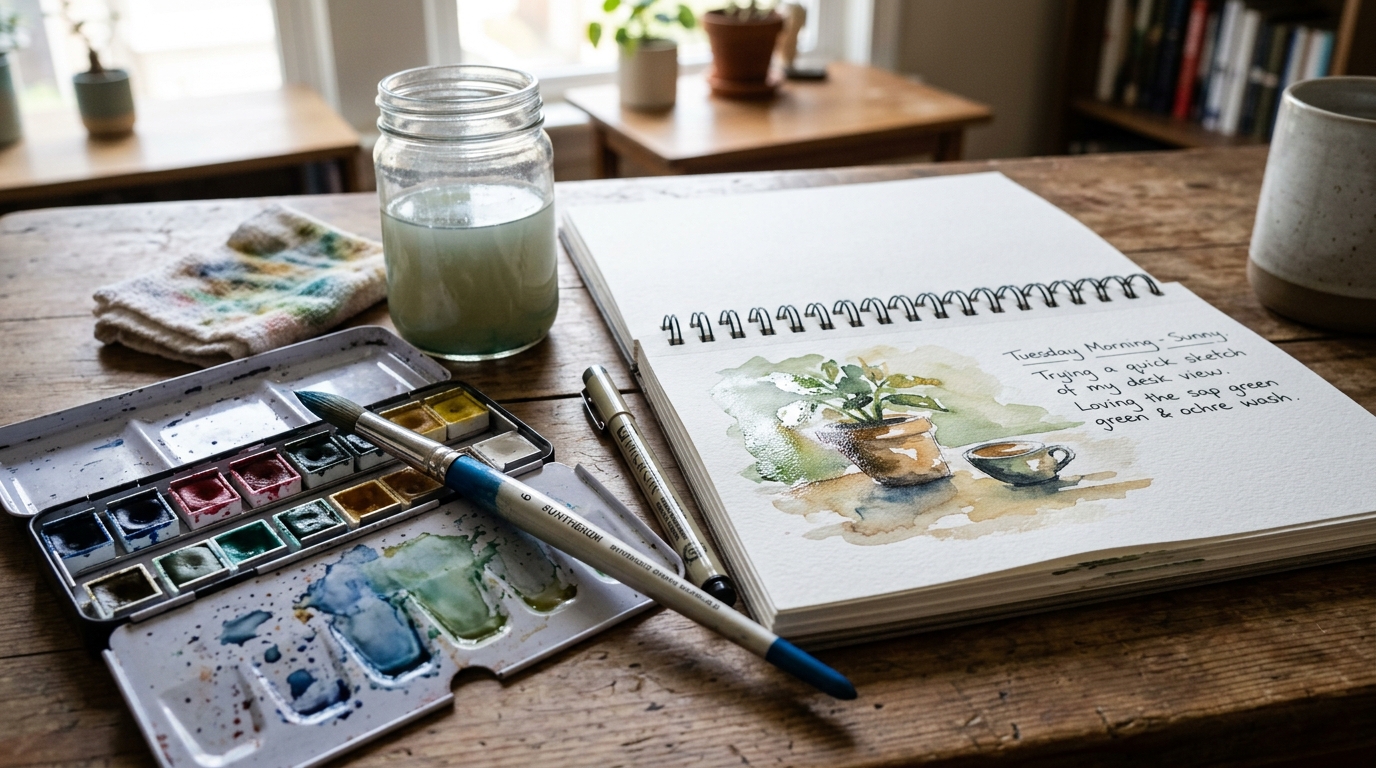
Watercolour is a stain, not a coating. You wet a cake of dried pigment, drag it across paper, and the colour sinks in and spreads by itself, which is why a four-year-old can make something lovely on the first go. People have been doing this a very long time — Paleolithic cave painters mixed red earth with water, and Egyptian scribes painted papyrus with water-soluble colours long before anyone called it art. Here's the bit I didn't know: that little tray of hard coloured squares was once a prize-winning invention. Before the 1780s paint came as hard blocks you had to grind down in water first, until two brothers named Reeves worked out a cake that dissolved the second a wet brush touched it, and the Society of Arts handed them a silver medal for it.

Most children's paint sets are toys wearing a paint set's clothes. The pans are the size of a thumbnail, the colour comes out grey, and the paper buckles into a damp crisp by about the fourth brushstroke. None of that is the child's fault, though they will generally decide it is and wander off. A real kit costs a few dollars more and behaves like a completely different activity.

Our philosophy: buy four things, not a trolley-load. Washable pans, chunky brushes and paper thick enough to take a flood. Add a cup that won't empty itself when an elbow finds it, and you're done.

Nothing on this page costs enough to make you resent it if the whole business turns out to be a two-week phase.

One thing worth settling before you spend anything: the goal here isn't a painting you'd frame. Early childhood educators call this process art, and the test is simple — there's no sample to copy and no right answer, so the child decides when it's finished. The soggy grey page is often the one where the most figuring-out happened. Put it on the fridge anyway. They check.

What Goes on the Table

This is where parents overspend and under-buy at the same time. The usual purchase is a 48-colour set in a hinged case with a brush like a toothpick, paired with whatever paper is in the printer. Colour count is the least important number in this entire list. What matters is pans wide enough that a small hand can hit one without dragging through its neighbour, and paper that can get genuinely wet without pilling into fuzz under the brush.

Disclosure: This section may contain affiliate links to Amazon. We may earn a small commission from qualifying purchases at no extra cost to you.
washable pan watercolors sized for small hands

Pick 01 of 08

washable pan watercolors sized for small hands

A tray of dried colour cakes that wake up the moment a wet brush touches them, so there is nothing to squeeze, mix or set up first. Washable formulas are built to lift off skin, clothes and the table with soap and water. Look for wide, shallow pans rather than a high colour count, and check the label carries the ACMI AP seal, since the line "conforms to ASTM D-4236" only means the product was reviewed for labelling and is not a non-toxic claim.

Why we picked this exact one: The Crayola Washable Watercolors 16-colour tray won a ten-set bench test run by a practising art teacher, who put it first for colour that lifts with almost no coaxing and the clearest true red of anything she tried. ACMI lists it with the AP seal, and the listing is graded for ages 4 and up, which matches this page. One honest caveat: refill pans for trays like this have become hard to buy, so treat the tray itself as something that gets replaced rather than topped up.

See it on Amazon
short-handled round and flat brushes for children

Pick 02 of 08

short-handled round and flat brushes for children

Short plastic-handled brushes in two shapes: rounds that come to a point for small shapes and detail, and flats with a square edge for covering a sky or a background quickly. A short handle sits in a small fist the way a crayon does, instead of waving around behind the hand. Buy them in quantity rather than singly, because children are hard on bristles and a splayed brush stops making a clean line.

Why we picked this exact one: This YGAOHF 24-piece kids' set splits evenly into twelve rounds and twelve flats, which covers both jobs without a shopping decision. The handles run 6.5 inches, short enough that a five-year-old's grip stays over the paper. They are not heirloom brushes and the cheapest ones will shed a hair or two, but at this count a wrecked brush is a shrug rather than a problem.

See it on Amazon
140 lb cold press watercolor paper that survives a soaking

Pick 03 of 08

140 lb cold press watercolor paper that survives a soaking

Heavyweight paper made to hold standing water without pilling or tearing. The 140 lb / 300 gsm weight is the usual floor for real watercolour work, and a cold press surface has enough tooth to grab pigment as it spreads. Printer paper and sketch pads are the common substitute and the common disappointment.

Why we picked this exact one: The Canson Montval pad is the cheapest honest 140 lb sheet I could find on Amazon at 9 x 12 inches. Canson states the surface takes scraping, erasing and repeated washes, which matters more here than it does for an adult, because children scrub. It is a twelve-sheet pad, so it will not last a whole winter.

See it on Amazon
spill-resistant rinse-water cups with snap-on lids

Pick 04 of 08

spill-resistant rinse-water cups with snap-on lids

Small cups with a narrowed, lipped opening that holds the water in when the cup goes over, which it will. The lids snap on so a half-used cup can be set aside rather than emptied. Having two on the table lets a child rinse in one and pick up clean water from the other.

Why we picked this exact one: The Ultimate Stationery six-pack of no-spill cups has the narrowed collar that actually catches the water on a knock, rather than a plain beaker with a lid. Six is more than anyone needs, which is the point when one goes missing under the sofa. They arrive with a set of small brushes too, which you can treat as spares.

See it on Amazon

With these four on the table a child can sit down and keep going for as long as they feel like it, and the whole lot wipes off with a damp cloth. Expect the first few pages to come out pale and grey. That's the ratio of water to paint rather than the paint itself, and it's the first of the mistakes almost every watercolour beginner makes. Show them once how to press the brush against the rim of the cup and it mostly sorts itself out.

For the Child Who Keeps Coming Back

None of this belongs in week one. Buy it when you notice the pad is half gone and nobody suggested painting. The genuine risk is the other order: the good easel arrives, the habit never does, and the whole lot migrates to the top of a cupboard. I'd wait until they've run out of paper at least once. There's also a smell that comes with this stage, faintly sweet and slightly like wet cardboard, which is a damp pad drying on a radiator.

concentrated liquid watercolor for droppers and big washes

Pick 05 of 08

concentrated liquid watercolor for droppers and big washes

Watercolour supplied as a concentrated liquid in squeeze bottles rather than a dried cake. It stays transparent, so it can go straight over a drawing without hiding the lines underneath, and it covers a large sheet far faster than a pan. The darker colours want watering down before they are usable, which also makes a bottle last.

Why we picked this exact one: The milo Liquid Watercolor set covers eight colours in 4 oz bottles, and both the listing and ACMI's own certified-products database record it with the AP seal, which several cheaper liquid sets could not show me. It is the priciest thing on this page by some way, though the bottles are concentrate and a household will not finish them quickly.

See it on Amazon
water-soluble crayons that turn into paint under a wet brush

Pick 06 of 08

water-soluble crayons that turn into paint under a wet brush

Crayons made from water-soluble colour: a child draws with them normally, then brushes water over the marks and the drawing dissolves into washes. The appeal is control, because the shape gets drawn before any water is involved. They are graded for ages five and up, so they suit the older half of this age range.

Why we picked this exact one: Prang's Payons are the water-soluble crayon I would start with: ACMI lists them with the AP seal, the Amazon listing states AP certification outright, and a brush comes in the box. The manufacturer grades them 5 and up, so a four-year-old is outside the maker's own band. Twelve colours for this price is not cheap next to a crayon box, and a child will use them in far smaller quantities.

See it on Amazon
long-sleeved waterproof smock that covers down to the thigh

Pick 07 of 08

long-sleeved waterproof smock that covers down to the thigh

A waterproof overgarment with full sleeves and elasticated cuffs, cut long enough to reach the thigh when a child is sitting. Sleeves are the part that matters, because a forearm resting in a wet wash is how paint reaches a jumper. A front pocket catches drips on the way to the sink.

Why we picked this exact one: The Plie long-sleeve smock is sized across ages 1 to 10 on its own listing, so it spans this whole page rather than one school year. It is a brand-owned listing with the age band stated up front, which is what I want on anything a child wears. An old adult shirt worn backwards does the same job for nothing, if you have one going spare.

See it on Amazon
adjustable tilting board that holds paper at a chosen angle

Pick 08 of 08 · Worth the upgrade

adjustable tilting board that holds paper at a chosen angle

A wooden board with a hinged prop that locks at several angles, from flat to nearly upright, plus a ledge along the bottom to stop pencils rolling off. For watercolour the useful settings are the shallow ones: a slight tilt pulls a wash gently down the sheet instead of letting it pool. A near-vertical easel is the wrong tool here, because wet colour simply runs.

Why we picked this exact one: The U.S. Art Supply 26 x 21 inch board is the step up I would make once a child is painting most weeks: six locking angles, including the shallow ones watercolour needs, on a surface big enough for a full pad plus a paint tray. Wait if painting is still an occasional rainy-afternoon thing, because a propped-up baking tray tests the same idea for nothing. It is beechwood and heavy, which is good for stability and bad for carrying it between rooms.

See it on Amazon

These stretch the hobby rather than replace the kit. Somewhere around eight or nine a lot of children start minding that a second wash drags the first one around, which is the point where a beginner watercolour setup with artist-grade paints starts to earn its price. Until then the washable pans are doing exactly what they were built for.

The Grey Page, the Wrecked Tray and Other Rites of Passage

Why does everything my child paints come out grey?

Two things are usually happening at once, and only one of them is about water. Children dip into every pan in the tray, black and brown included, and one trip through those contaminates the rinse water, after which every colour lands on the page slightly dirty. Art teachers' standard fix is blunt: lift the black, brown and white pans out of the tray before you hand it over. Change the water the moment it looks like tea, and the other half of the problem is the ratio, where too little pigment leaves a wet page with almost nothing on it.

The brand-new tray looked destroyed after one session. Is it ruined?

Almost certainly not, though it looks it. Children press hard and gouge craters into the cakes, and colours smear across each other until the tray looks like a palette somebody gave up on. Teachers who go through this weekly say the cure is a rinse at the sink, which carries the smeared top layer away and leaves the colours underneath intact. The step people miss is drying: take the lid off and leave the tray open, because a case snapped shut on wet pans keeps them soft and muddy for the next session.

Why does the paper go bobbly and then tear?

Because thin paper has nowhere to put the water. Sketch pads and printer paper swell where they're wet, cockle into ridges, and then pill into fuzz the moment a brush passes over the same spot twice. A child reads the hole in the middle of their picture as their own mistake. The weight to look for is 140 lb, also written 300 gsm, which is heavy enough that a flooded page dries flat-ish and takes a scrub without coming apart.

They painted over their drawing and it disappeared. What happened?

They used an opaque paint over line work. Some children's pan sets are deliberately opaque, which gives punchy flat colour but sits on top of pencil and marker lines and swallows them. Transparent watercolour and liquid watercolour do the opposite: the drawing shows straight through. If the plan is to draw first and paint second, check the set is a transparent one, or get the colour down first and let them add the lines on top once it's dry.

How do I stop the brushes being destroyed inside a fortnight?

The damage is almost always scrubbing. A child who wants a darker colour pushes harder instead of picking up more pigment, and the bristles splay out and never come back to a point. It helps to give the motion a name and make it gentle, which is what art teachers are doing when they tell a class to stroke the paper rather than scour it. Rinsing properly between colours matters just as much, since a dirty brush put back into the tray is the fastest way to turn a clean set muddy.

Love what you see here? Save individual picks with on any item, or copy everything to a list of your own in one click — great for coming back to later, or dropping as a not-so-subtle hint.

Disclosure: This section may contain affiliate links to Amazon. We may earn a small commission from qualifying purchases at no extra cost to you.