Beginner Watercolor Painting Setup

Beginner Watercolor Painting Setup

The Essentials You Need Before Your First Painting

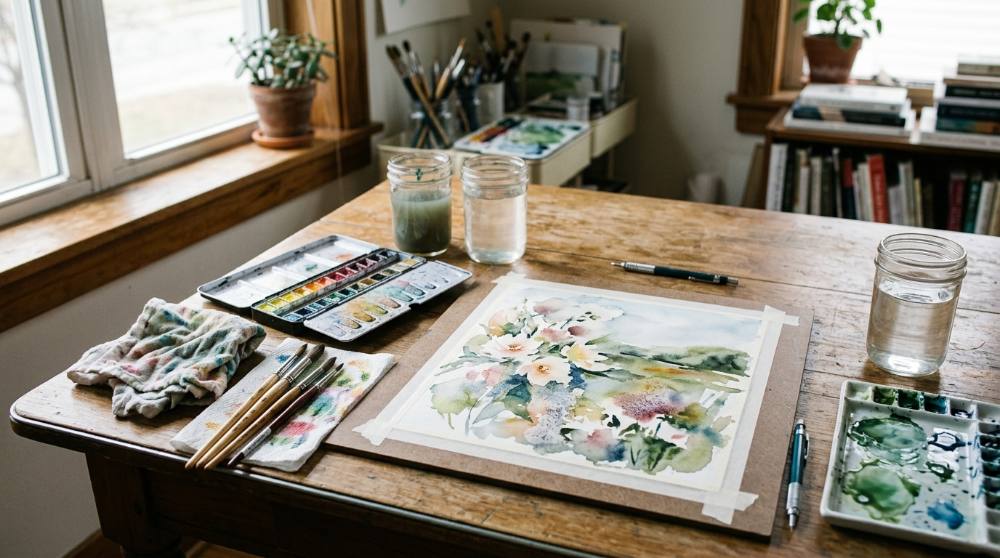
Watercolor is one of the most accessible painting hobbies to start because the core supply list is genuinely short. You need paint, paper, brushes, a palette to mix on, and tape to hold your paper flat. The challenge is that each of those categories has a quality threshold that matters: paper that is too thin will buckle and pill when it gets wet, paint that is too cheap will produce chalky results that make learning color mixing confusing, and the wrong brushes will make basic techniques like wet-on-wet blending difficult or impossible. Getting these five items right from the beginning means the materials support your learning rather than work against it.

Winsor & Newton Cotman Watercolor Paint Set, 12 Half Pans

Winsor & Newton Cotman Watercolor Paint Set, 12 Half Pans

The Cotman line is Winsor & Newton's student-grade watercolor range, consistently recommended by art instructors as the best entry-level option that bridges the gap between cheap craft-store paints and expensive professional-grade colors. The 12-color half-pan selection gives beginners warm and cool versions of the primary colors plus earth tones, which is the ideal starting palette for learning color mixing. The half-pan format keeps paint portions controlled and prevents the common beginner mistake of overusing tube paint.

Why is this important? Watercolor paint quality directly affects how the medium behaves on paper. Cheaper paints contain heavy fillers that produce chalky, opaque results, which makes learning transparent layering techniques much harder. Starting with a paint that behaves predictably lets beginners understand what the medium is supposed to feel like from the start.

Strathmore 400 Series Watercolor Pad, 9x12 Wire Bound, 12 Sheets

Strathmore 400 Series Watercolor Pad, 9x12 Wire Bound, 12 Sheets

The Strathmore 400 Series is a cold-press, 140 lb watercolor pad that handles multiple layers of wet paint without pilling or significant buckling. At 9x12 inches the sheets are large enough for a complete composition but manageable for a beginner working at a desk. The cold-press texture provides a slight tooth that helps watercolor pigment settle naturally, making wash control easier than on very smooth paper.

Why is this important? Paper quality is the most consequential purchase decision in a watercolor setup. Thin or non-watercolor paper buckles immediately when wet, tears when you try to lift or rework color, and produces uneven absorption that makes technique feel unpredictable. Using proper 140 lb watercolor paper from the start means the surface is teaching you correct habits rather than fighting you.

Winsor & Newton Foundation Watercolour Brush Set, Short Handle, 6 Pack

Winsor & Newton Foundation Watercolour Brush Set, Short Handle, 6 Pack

This six-brush set includes rounds and a flat, covering the range of marks beginners need from fine detail lines to broad washes. The short handles make the set well-suited to working flat at a desk, which is how most beginners start. The synthetic bristles are soft enough to hold a water reservoir and release it smoothly without absorbing too much pigment, which is the core requirement for watercolor brush performance.

Why is this important? Watercolor brushes must be soft enough to hold a reservoir of water and release it smoothly onto paper. Stiff brushes designed for oil or acrylic will drag and scratch the paper surface, making wet-on-wet blending, one of watercolor's defining techniques, almost impossible. A set of proper watercolor rounds gives beginners the tools to explore both detail and wash work from their first session.

Mr. Pen Airtight Watercolor Palette with Lid, 18 Wells and 2 Mixing Areas

Mr. Pen Airtight Watercolor Palette with Lid, 18 Wells and 2 Mixing Areas

This plastic folding palette has 18 wells for holding individual paint colors and two large flat mixing areas for diluting and blending washes. The airtight lid seals wet paint between sessions so you can stop mid-painting and return without finding dried-out color. The white interior makes it easier to judge true color as you mix, which matters when learning color theory and saturation control.

Why is this important? Pan sets often include a small mixing area in their lid, but it is rarely large enough to mix the diluted washes that watercolor technique depends on. A dedicated palette with generous flat mixing areas gives beginners the physical space to blend color accurately and work at a consistent saturation, rather than being forced into cramped, imprecise mixing.

FrogTape Delicate Surface Painters Tape with PAINTBLOCK, 1 Inch Wide

FrogTape Delicate Surface Painters Tape with PAINTBLOCK, 1 Inch Wide

FrogTape Delicate Surface is a low-tack crepe-paper tape that peels cleanly from watercolor paper without tearing the surface. Taping all four sides of your paper to a rigid board before painting keeps it flat as paint is applied, creates clean edges when the tape is removed at the end, and ensures even water absorption across the entire sheet. The PAINTBLOCK formulation along the tape edge prevents paint from bleeding under the margin.

Why is this important? Watercolor paper warps when it becomes very wet, and even heavy 140 lb paper can buckle enough to cause pooling paint to run toward the low spots rather than staying where you applied it. Taping paper to a board eliminates this problem and keeps results consistent. It also creates a clean white border when the tape is removed, which gives finished work a more polished appearance.

These five items together cost under $65 and will carry a beginner through dozens of practice sessions. Once you are comfortable mixing color and controlling how much water you load onto a brush, the two fundamental watercolor skills, you will have a clear sense of what else you actually want to add. The next section covers items that make the process noticeably more enjoyable without being strictly required to start.

Helpful Additions for a Smoother Practice

None of the items in this section are required before your first painting session, but each one solves a specific problem that comes up regularly once you are painting consistently. Masking fluid lets you protect white highlights without overworking the paint. Water brushes give you a way to practice without setting up a full workstation. A fine-mist spray bottle keeps your pan paints moist and ready to use. And a brush holder protects your brushes between sessions and during drying. If you find yourself painting at least once a week, each of these earns its place on the table.

Winsor & Newton Art Masking Fluid, 75ml

Winsor & Newton Art Masking Fluid, 75ml

Masking fluid is a liquid latex product applied to areas of watercolor paper you want to protect from paint, typically bright highlights, fine white lines, or small detail areas. You brush it on before painting, let it dry, paint freely over the top, and then peel it off to reveal the preserved white paper underneath. Winsor & Newton's formulation appears pale blue when wet so it is easy to see where it has been applied, and dries to a clear, flexible film that peels cleanly without staining.

Why is this important? Preserving white areas in watercolor is fundamentally different from other painting media because you cannot paint white over watercolor the way you can with acrylic or oil. The only truly clean white in a watercolor painting is the bare paper itself. Masking fluid lets beginners plan compositions that include white detail without needing to paint carefully around every small shape by hand.

Pentel Arts Aquash Water Brush Assorted Tips, Pack of 4

Pentel Arts Aquash Water Brush Assorted Tips, Pack of 4

Aquash water brushes have a hollow handle that holds water, which feeds the bristles continuously as you paint without a separate jar. The assorted tip set includes fine, medium, broad, and flat brushes, covering the full range of marks from fine detail lines to flat washes. They are particularly useful for painting away from a desk and for quick daily practice sessions where setting up a full workstation is not practical.

Why is this important? Standard watercolor brushes require a separate water supply and frequent reloading, which interrupts the flow of quick sketching and makes painting in locations without a flat surface difficult. Water brushes eliminate that dependency and extend a watercolor practice into situations, such as a train commute or a park bench, where carrying a jar of water is not practical.

Holbein Watercolor Spray Bottle, 2oz

Holbein Watercolor Spray Bottle, 2oz

This 2 oz fine-mist spray bottle is designed for watercolor use, with a nozzle that produces an even, gentle mist without disturbing wet paint on paper. Its primary uses are re-wetting dried pan paints before a session so they activate quickly, and keeping paper damp during wet-on-wet painting techniques where timing is important. The small size keeps it unobtrusive on a working surface.

Why is this important? Pan watercolors dry out between sessions and become stiff, causing them to release pigment unevenly when first used. Misting the pans a few minutes before painting activates the pigment and makes colors brush-ready much faster. A fine-mist spray bottle is also essential for wet-on-wet technique, where keeping the paper surface evenly damp controls how paint spreads and blends.

U.S. Art Supply 12-Hole Multi-Function Plastic Paint Brush Cleaner and Holder with Palette Lid

U.S. Art Supply 12-Hole Multi-Function Plastic Paint Brush Cleaner and Holder with Palette Lid

This plastic brush holder provides 12 slots for standing brushes upright while they dry after rinsing, protecting the bristles from bending under their own weight. The lid doubles as a mixing palette surface, giving you additional flat space for color work. Keeping brushes upright while drying prevents water from running into the ferrule, which loosens the adhesive that holds bristles in place and is a leading cause of early brush deterioration.

Why is this important? Brush care is one of the simplest habits to establish early in a painting practice and one of the most consequential for keeping brushes in good condition. Brushes stored standing tip-down or laid flat while wet lose their shape quickly, requiring earlier replacement. A dedicated holder makes proper brush storage automatic rather than something to remember.

Think of this section as the second layer you add once you have sat down with the essentials and started to notice what slows you down. These tools do not change how the paint behaves on paper, but they make the process more fluid and let you focus on creative decisions rather than managing small logistics. If you are enjoying watercolor and want to push your technique further, the next section introduces a few additional tools worth exploring.

Going Further: Tools That Open Up New Techniques

Once you are comfortable with basic washes and color mixing, a few additional tools can expand what you are able to do. Watercolor pencils let you draw and paint in a single medium, which is useful both for sketching on location and for adding fine details that a brush cannot easily produce. A smaller travel-sized watercolor pad gives you a portable sketchbook for daily practice, separate from your main working pad. And a natural sea sponge introduces a category of mark-making, soft, organic texture that a brush simply cannot replicate. None of these is urgent for a first session, but each one opens up a technique that most watercolor painters discover they want within a few months of regular practice.

Derwent Watercolour Pencils, Metal Tin, 12 Count

Derwent Watercolour Pencils, Metal Tin, 12 Count

Derwent Watercolour Pencils lay down dry color that dissolves when a wet brush is passed over it, creating smooth, painterly effects from a pencil format. The 12-color tin covers a practical range of hues for basic painting work and is particularly well-suited to beginners who want to sketch and paint in a single medium. The metal tin protects the pencils during transport, and the Derwent formula has a high pigment load that produces clean color response when wetted.

Why is this important? Watercolor pencils bridge the gap between drawing and painting, which makes them a natural progression for beginners who already feel comfortable sketching. They allow for much more detail control than a brush in small or complex areas, and can be used dry for a pencil effect or wet for a traditional watercolor look, or both within the same piece.

Canson Artist Series Montval Watercolor Paper Pad, 5.5x8.5 inch, 20 Sheets, 140lb

Canson Artist Series Montval Watercolor Paper Pad, 5.5x8.5 inch, 20 Sheets, 140lb

The Canson Montval pad measures 5.5x8.5 inches, small enough to slip into a bag, and uses 140 lb cold-press paper that handles watercolor properly. With 20 sheets on a wire binding that opens completely flat, it works well as a portable painting journal separate from a larger studio pad. The Montval cold-press texture is consistent with standard studio paper, so technique and color habits developed in this pad transfer directly to larger formats.

Why is this important? Maintaining a regular painting practice often depends on having something small and portable that you can pull out for a quick sketch anywhere. A dedicated travel-sized watercolor pad lowers the barrier to short, low-stakes practice sessions, and that kind of regular practice builds skills faster than occasional longer sessions in a fixed studio setup.

Lullingworth Natural Sea and Synthetic Sponges, Assorted Sizes, 7-Piece Value Pack

Lullingworth Natural Sea and Synthetic Sponges, Assorted Sizes, 7-Piece Value Pack

This assorted seven-piece pack contains natural sea sponges in multiple sizes, used in watercolor painting to apply broad textured marks that a brush cannot replicate. Natural sponges absorb and release pigment in irregular, organic patterns that are convincing for foliage, stonework, clouds, and rough ground. The pack includes both natural and synthetic sponges, allowing a beginner to compare the different mark qualities each type produces.

Why is this important? A brush applies paint in a direction with a specific edge, but many natural textures are more accurately rendered with a randomized tool. Sponge painting allows beginners to achieve complex-looking textured results quickly and without the fine motor control that detailed brush work requires, making it an accessible way to introduce variety into early paintings.

With everything across these three sections, you have a complete watercolor setup that can take you from your first experimental wash through to finished paintings you would be happy to share. Watercolor rewards curiosity and regular practice more than any other quality, and this kit gives you plenty of room to experiment before you ever feel the need to add anything else.

Love what you see here? Save individual picks with on any item, or copy the whole list to your own wishlist in one click — great for coming back to later, or dropping as a not-so-subtle hint.

A Few More Beginner Setups We Carefully Put Together

Cozy Candle Making Starter Kit

Cozy Candle Making Starter Kit

View Setup
Disclosure: Some product links may be affiliate links. If you make a purchase through one of these links, we may earn a small commission at no extra cost to you.