Lomography: Shoot Weird, Wonderful Film on a Toy Camera

Lomography: Shoot Weird, Wonderful Film on a Toy Camera

reusable plastic 35mm film camera with a fixed-focus lens

Start here · pick 01 of 07

reusable plastic 35mm film camera with a fixed-focus lens

See it on Amazon

Affiliate link: we may earn a small commission, at no extra cost to you.

DariaCurated by Daria
Jump to the 7 picks

Blurry, Leaky, and Exactly Right

In 1991 a handful of students from Vienna picked up a cheap Soviet compact in a Prague camera shop, shot it without thinking much, and got their film back full of smeared colour and dark corners. They liked it. That accident grew into Lomography, a whole way of shooting where a plastic camera's defects count as the picture rather than the problem, practised mostly on holidays and gig nights and walks to work. Here's the part nobody expects: the Holga, the camera the look is named after, was never meant to be arty at all. It was designed in Hong Kong in the early 1980s as a cheap family snapshot camera for mainland China, flopped there once 35mm took over, and only became a cult object after it drifted abroad.

What catches people out is how little there is to operate. One shutter speed, one aperture, no meter, and no focus ring worth trusting. You point it, you press, and you find out a week or two later whether it worked. That's the actual skill on offer here, and it isn't a technical one: it's learning to let a frame go before you've seen it. If you want the opposite deal, with a meter and a sharp lens and control over every exposure, a proper beginner film photography setup is the other road out of the same junction.

Our take: buy the camera, buy one roll, stop. A plastic body and a single roll of colour film will teach you more across 36 frames than any accessory bolted onto it.

Nothing on this page costs enough to sting if you shoot that roll and decide it isn't for you.

One warning before the shopping. This is a hobby with a built-in delay, and that delay is the best and the worst thing about it. You'll forget what you shot. Then an envelope turns up with a stranger's afternoon inside it.

Two Objects and a Roll of Tape

A toy camera is mostly empty space. You notice it the moment you pick one up: it weighs about as much as a sandwich, and the shutter gives a dry little click that sounds like it can't possibly have done anything. That lightness is exactly why beginners start bolting extras onto it. They don't need to. What they need is the right film inside it, because on a body with one aperture and one shutter speed, the film is the only exposure control that exists.

Disclosure: This section may contain affiliate links to Amazon. We may earn a small commission from qualifying purchases at no extra cost to you.
reusable plastic 35mm film camera with a fixed-focus lens

Pick 01 of 07

reusable plastic 35mm film camera with a fixed-focus lens

These are simple reloadable film cameras built almost entirely from plastic, with one shutter speed, one aperture and no focusing to do. The soft single-element lens and the loose body are what produce the vignetting and the occasional streak of stray light the style is known for. Check that it takes standard 35mm film, carries a built-in flash, and reloads rather than being thrown away after a roll.

Why we picked this exact one: The Ilford Sprite 35-II is the pick here: a 31mm f/9 fixed-focus lens with a 1/120 shutter and a built-in flash, which is about as close to the classic plastic-camera formula as anything still made new. It sits at 4.2 stars across 348 ratings, and because it reloads you aren't buying a fresh disposable every month. The flash needs roughly 15 seconds to recycle between frames, which indoors is slow enough to be irritating.

See it on Amazon
ISO 400 colour negative 35mm film for mixed daylight

Pick 02 of 07

ISO 400 colour negative 35mm film for mixed daylight

Colour negative film rated at ISO 400 is the general-purpose stock for cameras you can't adjust. It copes with bright sun and a grey afternoon on the same roll and still holds usable detail when the exposure lands well off. Look for 36-exposure rolls in the standard C-41 process, which is what every ordinary lab is set up to develop.

Why we picked this exact one: Kodak Ultramax 400 is the roll to start on, the cheap fast colour stock film shooters reach for when they don't know what the light is going to do. It holds 4.8 stars from more than 5,400 ratings, which is about as settled as film opinion ever gets. Its grain is noticeably coarser than a slower stock, though behind a plastic lens that barely registers.

See it on Amazon
matte black cloth tape for sealing a camera's body seams

Pick 03 of 07

matte black cloth tape for sealing a camera's body seams

Matte black cloth tape of the sort used on film sets is fully opaque, tears by hand and peels away without leaving glue behind. A one-inch width runs neatly along the seams of a small camera body without creeping over the controls. Steer clear of household duct tape, which leaves a gummy film that's miserable to clean off a plastic shell.

Why we picked this exact one: ProTapes Pro Gaff in the 1-inch black matte roll is the one to get; it's the standard cloth tape on film sets and it lifts off a plastic shell cleanly. At 4.8 stars over 883 ratings it's thoroughly liked, and a 55-yard roll will outlive several cameras. It does cost more than hardware-store tape, which is only worth it because of how it comes off.

See it on Amazon

Load it, shoot it in daylight for a week, and resist checking the counter every ten minutes. Expect two or three frames to come back as abstract mush; that's ordinary on a first roll and it isn't your fault, since a fair few of the mistakes beginners make with film look exactly like that. Once you've seen what a plastic lens does to a sunny afternoon, everything after this makes more sense.

Once the First Roll Comes Back

Here's where people overspend. The urge after a good roll is to buy more camera, and that's nearly always the wrong move, because the camera is already doing its job. What's worth money is a stranger film, a way to colour your own light, or a cheaper route to actually seeing your pictures. Film is the one thing worth buying several of at a time, which is why film tends to live in the fridge in houses where somebody shoots a lot of it.

colour-shifting 35mm film that remaps greens and yellows

Pick 04 of 07

colour-shifting 35mm film that remaps greens and yellows

This is a colour negative film built to swap a scene's colours rather than record them: foliage comes back plum and violet, and yellows shift towards pink. It develops in the ordinary C-41 process, so any high-street or mail-in lab can handle it. The strength of the shift depends on how much light you give it, which on a fixed-exposure camera means choosing your weather.

Why we picked this exact one: Lomography's Lomochrome Purple is the obvious first strange stock, the one with the biggest and most recognisable shift of the bunch. At 4.6 stars from 205 ratings, people are plainly getting the results they came for. It costs noticeably more per roll than ordinary colour film, so treat it as an occasional thing rather than a habit.

See it on Amazon
coloured lighting gel sheets for tinting a camera flash

Pick 05 of 07

coloured lighting gel sheets for tinting a camera flash

Lighting gels are thin translucent plastic sheets in saturated colours, sold in sets and meant to be cut down to size. Taped over a small flash, they turn its output one strong colour for every frame you fire it on. Sets with a spread of true primaries are far more useful than packs of subtle correction tints.

Why we picked this exact one: The Lystaii nine-sheet gel pack is the sensible starting set, with enough A4 sheets to cut up and waste while you work out which colours you like. It carries 4.3 stars across more than 1,500 ratings. These are thin sheets rather than heat-rated professional gels, which is fine on a small flash and not fine on a hot lamp.

See it on Amazon
half-frame 35mm camera that fits two photos in every frame

Pick 06 of 07

half-frame 35mm camera that fits two photos in every frame

A half-frame camera exposes half the usual area of 35mm film, so a 36-exposure roll gives you around 72 pictures. Each image is vertical by default and grainier, because a smaller piece of film has to be enlarged further. Like other simple film cameras these are focus-free, with a built-in flash and nothing to set.

Why we picked this exact one: The Kodak Ektar H35 is the half-frame most people end up with, and at 4.3 stars from over 4,500 ratings it's easily the most-tested option in its category. Doubling the frames per roll is the entire argument for it. The trade-off is genuine: half-frame negatives are small, and budget lab scans of them come back visibly softer than full-frame ones.

See it on Amazon
desktop film and slide scanner for digitising negatives at home

Pick 07 of 07 · Worth the upgrade

desktop film and slide scanner for digitising negatives at home

A standalone film scanner lights a negative from behind, photographs it with a built-in sensor and writes the file straight to a memory card. Units in this class take 35mm strips and mounted slides and show each result on a small screen as you feed the film through. They replace the scanning half of a lab order, not the developing half.

Why we picked this exact one: The Kodak Slide N Scan is the step up worth making: 22MP, a 5-inch screen, and 12,600-odd ratings at 4.3 stars behind it, which is unusual depth of feedback for film gear. It pays for itself only once you're shooting more than a roll or two a month and sending film out for develop-only, so anyone below that should stay on lab scans, which are both cheaper and sharper. Its output is noticeably softer than a flatbed or a lab's, making this a convenience upgrade rather than a quality one.

See it on Amazon

None of this makes your photographs better in any measurable sense. It makes them stranger, which on a plastic camera amounts to the same thing. If the scanning end appeals, the honest next step is doing the chemistry too, and a beginner darkroom film developing setup is where that starts. Pick one item, shoot a few rolls with it, and leave the rest until you're bored.

What a Roll Actually Costs You

The camera is the cheap part, and nobody warns you. A roll of colour film runs around twenty dollars, and mail-in labs start near fourteen to develop and scan it with your negatives posted back. Call it thirty-five dollars to see thirty-six pictures. Work that out per frame and it lands close to a dollar each, which is a genuinely uncomfortable number the first time you do the sum. In my experience that arithmetic, not the blurry corners, is what makes people quit.

There are honest ways to bring it down. Develop-only costs less than develop-and-scan, buying film three or five rolls at a time cuts the price per roll, and a half-frame body doubles your pictures for one lab fee. What doesn't help is shooting carelessly just to finish a roll faster, which is the reflex almost everybody has in week two. If the per-picture cost is the sticking point, an instant photography setup for beginners prices the same problem differently: more per shot, but no waiting and no lab.

Why Your First Roll Looks Like That

Everything came back pale and washed out. Did I break something?

Almost certainly not, you just loaded film that was too fast for the day. A fixed-exposure plastic camera is built around one combination of aperture and shutter speed, so bright sun on ISO 400 film pours in far more light than the scene needs. Colour negative film absorbs roughly three stops of that before it protests, but past about that point the bright areas flatten into nothing. If you shoot mostly outdoors in strong light, load something slower; if your light varies, stay on 400 and accept pale sunny frames as the price of usable cloudy ones.

My light leaks show up on some frames and not others. Why?

Because a leak depends on where the sun sits relative to the body seam, not on when you press the shutter. Light creeps in while the film is simply sitting in the camera, so a roll carried around in bright sun for a week fogs far more than one shot in a single afternoon. Two strips of opaque tape along the side seams stop most of it, and keeping the camera in a bag between shots stops the rest. People who shoot these cameras seriously tape them by default and peel a strip off deliberately when they want the effect back.

My lab's scans look normal but the negatives look odd. Which one is right?

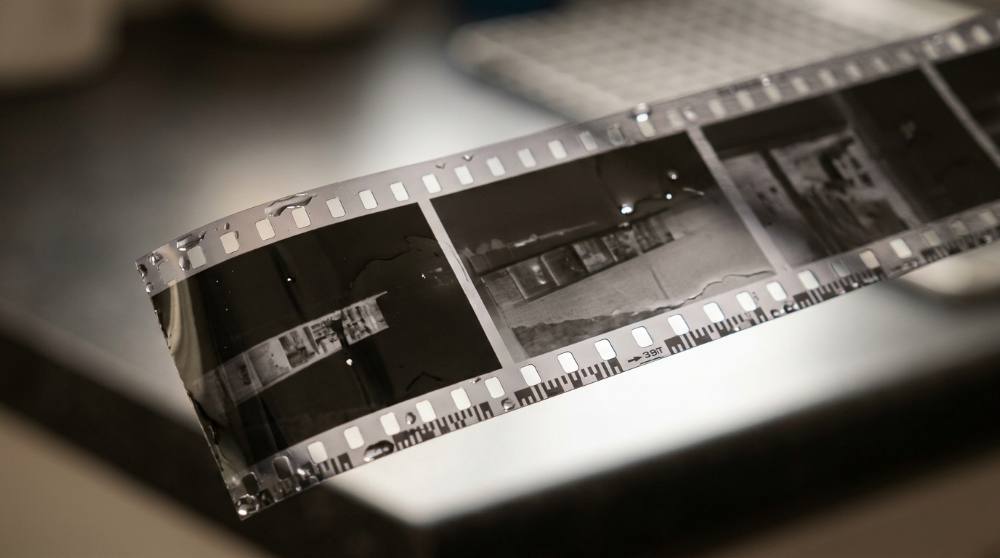
The negatives. Most labs colour, contrast and density adjust every single frame, which quietly tidies away precisely the casts and streaks you were shooting for. If your scans come back looking suspiciously well-behaved, ask for no corrections next time, which is usually just a box to tick on the order. It's also worth holding the negatives up to a window yourself, because that's the only way to tell whether an effect was never there or was simply edited out.

I bought expired film because it was cheap. How much should I overexpose it?

Less than the internet tells you. The "one stop per decade" line gets repeated everywhere, and for a single roll of expired colour negative it's a fair starting guess, but applied to slide film it destroys the picture outright. Slide film should be shot at box speed however old it is. Storage history matters more than the date in any case: a roll kept cold ages far more slowly than one that sat in a warm attic, and the faster the film, the more speed it loses in bad storage. On a camera you can't adjust, the only lever you have is what you load, so save expired stock for bright days and treat the roll as a bet.

Why does everyone say to shoot redscale below its box speed?

Because redscale film is wound backwards, so you're exposing it through its orange base, and that base blocks a good deal of light before any of it reaches the emulsion. Shoot it at the number printed on the box and you underexpose it, which gives you muddy near-black frames. The usual rule is to rate it at half its stated speed or lower, and how much extra light you give it decides the colour: generous exposure pushes it towards gold and amber, mean exposure towards deep crimson. A fixed-exposure camera won't let you dial any of that in, so the practical version is to shoot redscale on the brightest day you can find.

Love what you see here? Save individual picks with on any item, or copy everything to a list of your own in one click — great for coming back to later, or dropping as a not-so-subtle hint.

Disclosure: This section may contain affiliate links to Amazon. We may earn a small commission from qualifying purchases at no extra cost to you.