You shuffle a deck, turn one card, and it points you at a short written prompt: a stranger at the door, a memory you are about to lose, a customer who wants one last hot drink before they move on. You answer it in a notebook, in your character's voice. Then you draw again. That is the whole engine, and it mostly lives on itch.io rather than in game shops - Koriko's print run is sold out worldwide as I write this, with a reprint promised for early 2027. Some of these games get wonderfully strange about their props: Koriko has you stack twenty-one matching dice into a tower that wobbles every time your witch takes a risk, and Chris Bissette's The Wretched is played into a microphone, because what you are recording is a distress log nobody is coming to hear.
The appeal is hard to explain until you have done it once. There is no table to organise, no GM to wait on, nobody to perform for. People arrive from two directions: roleplayers who cannot get a group together, and writers who find a blank page frightening but can happily answer a question. If you have ever started a diary and given up by February, the difference here is that the game keeps asking.
Start with as little as you can get away with. A notebook, a pen that will not bleed through, a handful of matching six-siders and one ordinary deck of cards will run most of the games people hand to beginners, and two of those four are probably in a drawer already.
Everything in the core list below costs less than a takeaway, which felt like the right bar for a hobby you might bounce off within a week.
Where This Little Kit Can Take You
A few real moments and results from this hobby — made with tools no fancier than the ones below.
A year, filled in by handPages like this are the only thing a solo journaling game leaves behind.
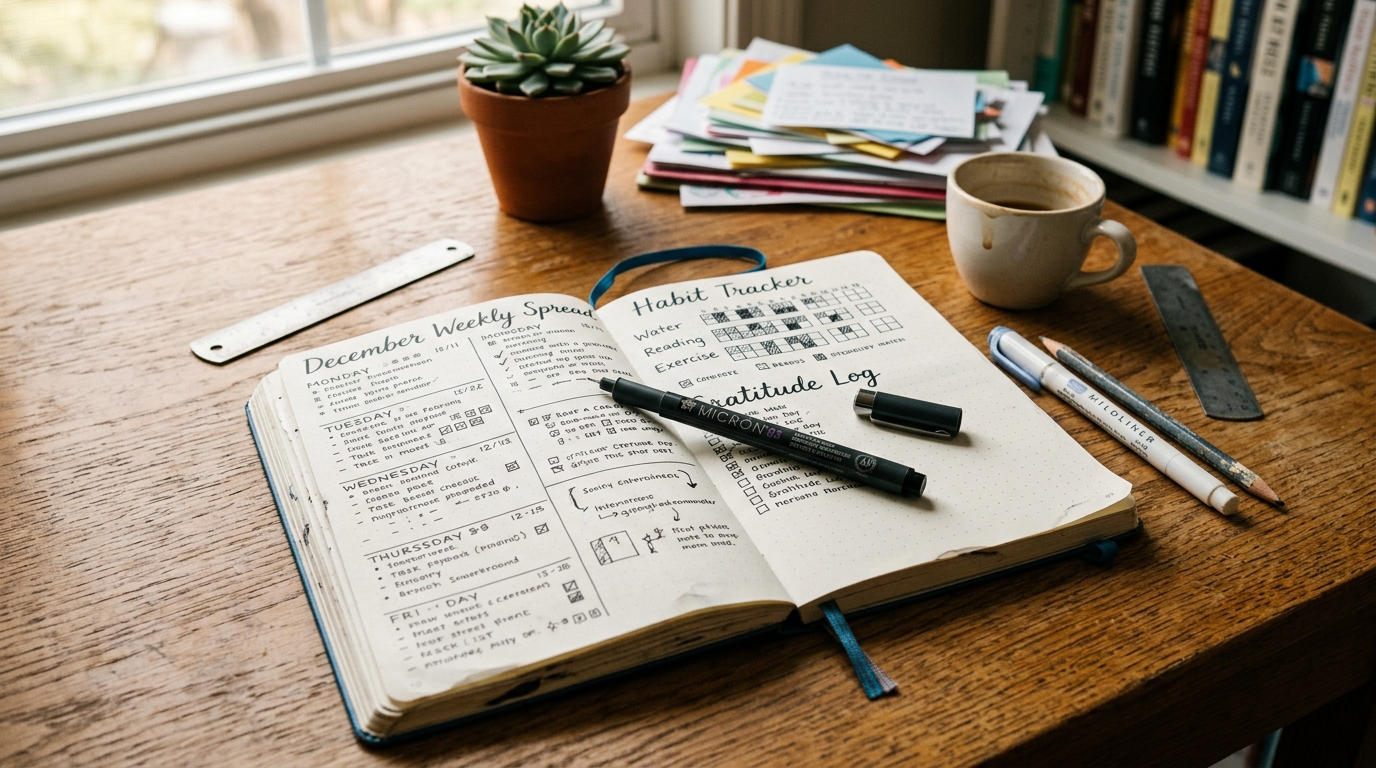
Answering the promptMost sessions look exactly like this and last about an hour.
Six-siders waiting on the deskMatching dice, because some games ask you to stack them.
Here is the thing nobody mentions at the checkout: one book is a lot of evenings. Koriko runs in six volumes and its designer reckons each one takes an hour or two, so that single book is most of a winter. Thousand Year Old Vampire is 188 pages and its own page promises play "in a couple of hours or a couple of weeks"; players tend to finish across three or four sittings. Last Tea Shop asks for an hour or so of quiet time and deals you one visitor at a time. So buy one. Play it until it is done, or near enough that you know how you like to write, and only then pick up the next - starting with a stack of four means staring at four spines wondering which you are allowed to open, which is a very good way to open none of them. If you want a wider map of the scene before you choose, our introduction to solo roleplaying for beginners lays out how the different families of games differ.
Four Things, and Two Are Already in Your Drawer
This is the complete kit for the games people actually recommend to newcomers. Apothecaria asks for a deck of cards with the jokers left in, a journal and something to write with - no dice at all. Last Tea Shop wants a pen, paper and one or two six-siders. Alone Among the Stars runs on a deck and a d6. Between them, the four items below cover every one of those, and the rulebook is the only thing you will buy separately.
Disclosure: This section may contain affiliate links to Amazon. We may earn a small commission from qualifying purchases at no extra cost to you.
01Pick 01 of 12
A5 Dot Grid Hardcover Notebook
A hardbound notebook in A5, the half-letter size that still fits a small map but slides into a bag. The pages carry a faint 5 mm dot grid instead of lines, so you can write prose, sketch a cottage or rule off a tracker on the same spread. When choosing one, the number that matters is paper weight: heavier stock stops the ink showing through to the back of the page.
Why we picked this exact one: The STATIONERY ISLAND A5 bullet dotted journal uses 120 gsm paper, which is heavier than the 100 gsm that rival dotted notebooks use, and that is the difference between writing on both sides of a page and only using one. It lies reasonably flat and comes with two ribbon markers, handy when you keep a tracker at the back. The cover is PU rather than real leather and scuffs if you are rough with it, but it holds a shape in a bag.
Gel pens lay down a water-based ink that flows with almost no pressure from your hand. That matters over a long writing session, where a stiff ballpoint makes you press harder and harder without noticing. A 0.5-0.7 mm tip is the usual range for journaling - fine enough to stay legible at small sizes, wet enough not to skip.
Why we picked this exact one: The Uni-Ball 207 in 0.7 mm medium point is the pen most people land on after trying a few, and its rating holds up across more than 32,000 reviews. The retractable barrel means no cap to lose mid-sentence - a small thing until you are writing with a deck of cards spread across the table. Twelve is more than one person needs at once, which is the point: you will lose some.
Standard opaque six-sided dice at 16 mm, the size used in most board games. A bulk set of identical dice does two jobs in this hobby: rolling for prompts, and stacking. Games that build a tower out of dice need them to be the same size and square-edged, or the stack will not hold.
Why we picked this exact one: This SLSESIN 50-piece 16 mm set solves the stacking problem by brute force - fifty identical acrylic dice, so the twenty-one you need for a tower all match. They rate 4.8 stars and come with a drawstring pouch, which is the difference between dice living in a bag and dice living under the sofa. The pips are painted rather than inset, so they will wear if you rattle them for years.
An ordinary 52-card deck with two jokers, in the standard poker size. Card-driven games map suits and values onto a prompt table, so the deck is doing the same job dice do elsewhere - it just gives you fifty-two outcomes instead of six. Several games specifically ask for the jokers to be left in, so check before you pull them out.
Why we picked this exact one: The Bicycle two-pack is the obvious call here - a red deck and a blue deck, each with its two jokers, at a price that makes keeping a dedicated game deck painless. The air-cushion finish means they separate cleanly when you fan them one-handed over a notebook. Paper cards do soften after a few hundred shuffles, which is exactly why you want the spare.
With these four on the table you can open almost any beginner-friendly game and start the same evening. One warning worth having in advance: people underestimate how much they will write. A player of Apothecaria has filled five 80-page notebooks and is still going, and a Koriko player came out of their first year with sixty-two pages. If you already keep a dotted notebook running, our beginner bullet journaling setup covers the same paper from the other direction - trackers, indexes and spreads rather than fiction.
The Props Only Some Games Ask For
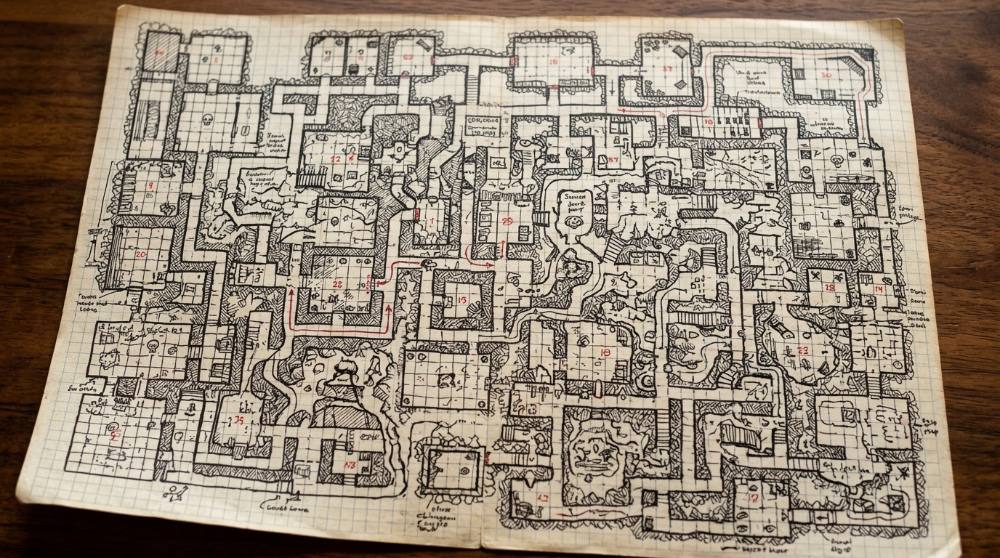
A handful of games want something the core kit does not cover, and there is no point buying any of it until you have picked one of those games. The Wretched & Alone family needs a block tower. Koriko needs tarot. Thousand Year Old Vampire needs a d10 next to its d6. Everything here is cheap, and everything here sits in a cupboard until the right book turns up. If dice rather than cards are what pull you in, our beginner solo dungeon crawler setup goes further down that road.
05Pick 05 of 12
Wooden Tumbling Block Tower Game
Fifty-four wooden blocks stacked three to a layer into a tower you pull from. In a solo game the tower is not a contest - it is a clock. Each risky moment costs you a pull, the structure gets less stable, and the collapse is the ending. Any 54-block set works, but the blocks need to be milled evenly or the tower falls far too early.
Why we picked this exact one: The official Hasbro Gaming Jenga set is worth the small premium over generic 54-block towers because the blocks are cut to a consistent tolerance, and an uneven block is the difference between a tower that tells a story and one that topples on pull four. Its listing even counts 1+ players, which is unusual honesty for a party game. The box is flimsy; most people end up storing the blocks in the sleeve it ships with.
A complete tarot deck is 22 Major Arcana plus 56 Minor Arcana, and games built on tarot need both halves: one can hang the cast you meet on the Major Arcana while the suits drive ordinary events. For this use a beginner deck with keywords printed on the face saves you reading a separate book mid-session.
Why we picked this exact one: The Witchy Cauldron beginners' deck prints the upright and reversed meaning on every card, which removes the one real barrier for someone who has never handled tarot and just wants to play. It follows Rider-Waite imagery, so anything you pick up here transfers to other decks later. All that printed text does crowd the artwork - readers who want a beautiful deck usually end up buying a second one.
The standard seven-dice set: d4, d6, d8, d10, percentile d10, d12 and d20. Journaling games mostly live on d6 and cards, but a few reach for the wider dice to spread outcomes across a longer table - a d10 gives you ten equally likely results where a d6 gives six. Acrylic sets are fine here; precision matters far less than it does in a competitive game.
Why we picked this exact one: The CREEBUY blue-and-silver seven-die set clears 4.8 stars across more than 5,000 ratings and costs less than a sandwich, which is the right amount to spend on dice you may use in one game out of five. The numbers are inked in white against a dark swirl, so the d10 and the percentile d10 are easy to tell apart at a glance. They are acrylic, so they will pick up scuffs if you roll them on a bare desk.
My honest advice is to buy none of this on day one and then buy exactly one of them the week a game demands it. The block tower is the one that surprises people - a pull you make with a shaking hand lands differently from a die you roll, and once you have felt that you understand why a whole family of games was built around a stack of wood. For the gentler end of the shelf, our round-up of cozy solo RPGs for quiet evenings leans toward the games that need nothing more than the core kit.
Small Comforts That Make It a Ritual
None of this changes a single outcome in a single game. What it changes is whether sitting down feels like a faff. The two pairs below are genuine either-or choices rather than a shopping list - one way of rolling dice, one way of printing sheets - and the page shows them side by side for exactly that reason. If the pen is the part you want to indulge, our beginner fountain pen writing setup is the obvious next step, with the caveat that fountain pen ink wants heavier paper than a gel pen does.
Pick one
These 2 do the same job. You only need one of them, so pick the one that suits you better.
08Pick 08 of 12Option A
Felt-Lined Dice Rolling Tray
A shallow tray with soft lining and raised sides, used as a dedicated rolling surface. It does two things: it stops dice skating off the table into the rug, and the lining muffles the clatter. A tray sits flat beside the notebook, so dice stay within reach between rolls.
Why we picked this exact one: The RERIVER octagon tray is about 11.6 inches across and 1.6 inches deep, which is enough room for a fistful of dice without taking the whole desk. Its velvet liner is the part doing the real work - it kills the noise, which matters if you play late. The PU leather sides fold for storage but hold their shape better if you leave them up.
Pros
Flat and low, so it sits beside the notebook
Quietest option - the felt kills the clatter
Dice stay in easy reach between rolls
Cons
You still roll by hand, so a sloppy throw is a sloppy roll
A dice tower is a small chimney with angled baffles inside. You drop dice in the top, they bounce off the baffles on the way down and land in a catch tray at the bottom. Because the dice tumble rather than being thrown, the result is less influenced by how you let go of them.
Why we picked this exact one: The Cusdie bamboo tower folds flat and holds itself shut with magnets, so it travels in the same bag as the notebook rather than living on a shelf. Bamboo gives it a drier, softer knock than plastic towers. It will not take oversized dice, and the catch tray is small - fine for the two or three dice these games roll at a time, cramped for a fistful.
Pros
Baffles randomise the drop, so your throw stops mattering
These 2 do the same job. You only need one of them, so pick the one that suits you better.
10Pick 10 of 12Option A
Compact Monochrome Laser Printer
A black-and-white laser printer fuses powdered toner onto plain paper. For a hobby that lives on downloaded PDFs this is the workhorse: play sheets, oracle tables, print-and-play cards and the printer-friendly editions most designers include. Laser toner does not dry out between uses, which suits a printer that sits idle for weeks.
Why we picked this exact one: The Brother HL-L2405W is the compact end of a range that has been the default home mono laser for years, and it prints the plain text and line tables this hobby needs without fuss once it is on the network. Its Amazon rating sits at 4.0 rather than higher, and the reviews that drag it down are almost all about wireless setup rather than print quality - worth knowing before you order. Cartridges are cheap and last, which is where a laser earns back the higher sticker price.
Pros
Prints on ordinary paper you already own
Pages last for years, so printed sheets go in the journal
A thermal printer has no ink or toner at all. It heats a coated paper that darkens where the head touches it, so the only consumable is the paper itself. This one takes letter-size sheets rather than the narrow receipt rolls most portable thermal printers use, and prints over Bluetooth from a phone.
Why we picked this exact one: The Phomemo M08F is the rare thermal printer that takes a full letter sheet, so a character sheet comes out at the size it was designed for instead of as a ribbon. It weighs about 1.5 lb and runs from a phone over Bluetooth, which suits someone with no desk to spare. The real trade-off is permanence: thermal prints are black only and fade with heat and sunlight, so treat them as sheets you reprint, not pages you keep.
Pros
No ink or toner to buy or dry out, ever
Small and light enough to put in a drawer
Prints straight from a phone over Bluetooth
Cons
Needs its own coated thermal paper
Black only, and the print fades in heat or sunlight
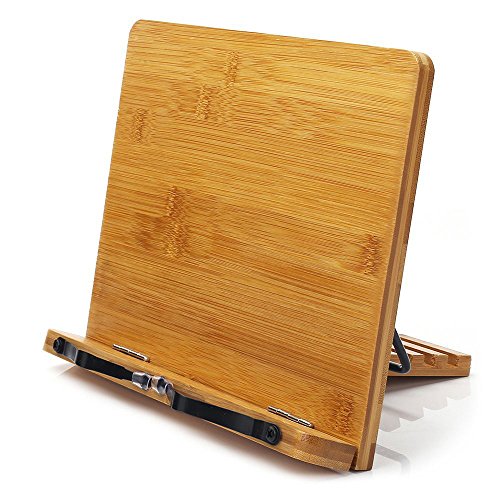
A folding stand that props a book upright at an angle, with sprung clips that hold the pages down. It frees both hands and lifts the text to eye level. For thick books the clip strength matters more than the stand - a weak clip lets a heavy page flip back the moment you look away.
Why we picked this exact one: The wishacc bamboo stand has clearly been bought for this sort of job a lot: 4.7 stars across nearly 30,000 ratings, with five angle settings and page clips strong enough for a thick rulebook held open at a prompt table. Bamboo keeps it light enough to fold away between sessions. The clips can leave a faint crease in thin paper if you leave a page pinned for hours.
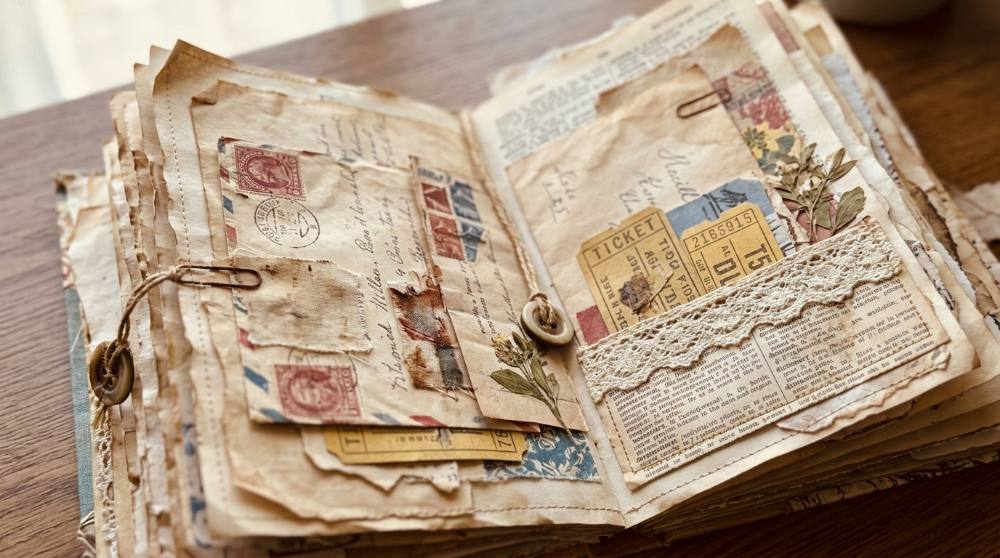
If you only take one thing from this section, make it the book stand. It costs less than the dice gadgets and it fixes the single friction everyone hits, which is holding a rulebook open at a prompt table with one hand while writing with the other. A thought on the printing: once you are printing sheets anyway, the pages you fill start wanting a home - tipped-in, taped down, kept. That instinct has its own hobby, and our beginner junk journaling setup is where it leads.
What Nobody Warns You About Before the First Card
Is this just creative writing with extra steps?
It is a fair question and the answer is a specific no: the randomiser takes away the choice of what happens next, and that is the choice that stalls most people in front of a blank page. You are not inventing the event, you are answering it - the game says a stranger hands you a wrapped package, and all you decide is what your character does about that. The failure mode is overruling a draw because you do not like it. Do that twice and the game quietly turns back into a blank page, which is the thing you bought it to avoid. Write the bad draw; it is almost always more interesting than the one you wanted.
Where do I actually buy these if they are not in shops?
Mostly itch.io, the designer's own store, or a crowdfunder, and new players lose weeks waiting for a physical copy that is not coming. Print runs here are small and reprints take a year or more - Koriko sold out worldwide and is not back until early 2027. The part nobody mentions is that almost every designer in this scene keeps a pool of free community copies for anyone who cannot pay, topped up as other people buy: Thousand Year Old Vampire's page lists over 960,000 of them remaining, and Koriko's notes that more than 6,000 have already been claimed. Buy the PDF, print the sheets you need, and stop refreshing the stock page.
How often am I supposed to shuffle the deck back together?
Card-driven games are frequently vague about this and beginners default to dealing their way through the whole deck like a game of patience. That slowly skews everything: by the back half of a deck you know roughly what is left, and the prompts you most want start becoming impossible. Anna Blackwell, who wrote Apothecaria, has answered this directly for those games - shuffle each drawn card back in as soon as is convenient, so the odds stay as close to static as possible. Resolve the draw, shuffle it back, carry on.
My dice tower keeps collapsing at twelve. Am I doing it wrong?
Probably not - stacking twenty-one dice is far harder than the instruction makes it sound, and players say so openly. Two things genuinely help. Use dice that are all the same size and square-edged, which is why Koriko specifies it rather than leaving it to taste, and build on something that is not a soft tablecloth. Jack Harrison has since clarified that once you do get all twenty-one stacked you clear the stack and start fresh, and that the stack carries over between volumes rather than resetting - so an early collapse costs you less than it feels like it does.
Which one should I start with if I want to know tonight whether I like this?
Not the big beautiful hardback, which is the instinct almost everyone has. A couple of hundred pages takes an evening just to read, so if the style turns out not to suit you, you have spent the whole session finding out. The one-page and single-sitting games exist for exactly this: the original Last Tea Shop is free and its designer has said it always will be, and Alone Among the Stars needs nothing but a deck and one six-sider. Play one of those for an hour first. You will know by the second prompt.
Whichever way you come in, the honest measure of this hobby is not how good the writing turns out. It is whether you open the notebook again on Thursday.
People Worth Following Into This Hobby
Real practitioners we found while researching this setup — people who do the work, show their process, and publish on sites they run themselves. No sponsorships, no affiliations; we just think they're worth your time.
Writes The Soloist, a Bloggie-winning newsletter that has covered solo and GM-less tabletop RPGs every few weeks since 2022, and designed the solo RPG SOLO BORG.
The eight journaling tips there go straight at the problem this setup's first question raises - what to actually write once the card has been drawn - and the toolkit series is where a reader finds their next game after the one book we tell them to finish.
Designs and self-publishes solo games as Loot The Room, including The Wretched, and posts playthroughs and extra prompts for them.
This is the designer of the game our specialty section's block tower exists for, and the Wretched Month posts walk through what playing one of these actually looks like session by session.
Makes gentle, paper-based solo journaling games and writes about the craft of answering a prompt, showing three different answers to one scene side by side.
It tackles the decision a beginner stalls on hardest - whether to play yourself, a softer version of yourself, or someone nothing like you - which nothing in a rulebook explains.
Writes about solo roleplaying and keeps a longhand campaign journal, publishing the analog workflow behind it - index pages, numbered pages, print for reference and cursive for story.
The notebook and pen advice there is where our essentials picks come from, and the indexing system is the fix for readers who fill notebooks faster than they expect.
Love what you see here? Save individual picks with on any item, or copy everything to a list of your own in one click — great for coming back to later, or dropping as a not-so-subtle hint.