Affiliate link: we may earn a small commission, at no extra cost to you.
Packed at 36 Weeks, Opened at 3 a.m.
A hospital bag is the one piece of baby prep that sits in the hallway for weeks doing nothing, then gets about four minutes to prove itself. Most people pack one around 36 weeks and keep quietly adding to it until labour starts. Here is the bit nobody mentions beforehand: you will very likely come home with more than you took in, because hospitals routinely send parents off with pads, mesh underwear and a peri bottle. So leave room. Empty space earns its place in this bag.
What follows is the version parents and doulas describe afterwards, not the enormous list that gets screenshotted and passed around. It covers one to three nights on a postnatal ward, for the person giving birth, whoever stays with them, and the baby's ride home. Hospitals differ wildly in what they hand out, and some units limit you to one bag, so ring yours and ask. Some hand out gowns and pads. Some hand out almost nothing.
Our approach here: pack for one night, not three. A front-opening nightdress, knickers you can bin, a long charging cable and one outfit for the baby will get you through the first day intact. Anything else can be fetched later by whoever is driving.
Nothing below costs enough to sulk about if your hospital turns out to hand you the same thing for free.
What It Looks Like in Real Life
A few real moments from this situation, with nothing fancier than the things below.
Folded and ready to goThe sleepsuit and booties that get used exactly once, on the way out of the building.
Packing it a month earlyMost parents pack around 36 weeks and keep quietly adding to it.
Pack it in two halves if you can. One bag goes in with you, and a second stays in the car with spares and the going-home clothes, which is what parents who have done this before tend to do. You can copy any of these picks into a list of your own and send one link to whoever keeps asking what you still need.
What Actually Comes Out of the Bag
Ask a doula what people reach for and the answer is boringly consistent: something to wear that opens at the front, underwear nobody minds binning, and a cable long enough to reach the bed. Baby clothes too, though fewer than you think. The common mistake is not forgetting something. It is packing a dressing gown. Postnatal wards run hot, and the gown that lists insist on is the thing parents describe lugging home unworn.
Disclosure: This section may contain affiliate links to Amazon. We may earn a small commission from qualifying purchases at no extra cost to you. Certain content that appears on this site comes from Amazon.
Pick one
These 2 do the same job. You only need one of them, so pick the one that suits you better.
01Pick 01 of 10Option A
front-opening gown for labour and the first night
A loose, soft gown that snaps open at the shoulders and down the front, so a midwife can reach your back for monitoring and the baby can go skin to skin without you undressing. It closes properly at the back, unlike the hospital gown that gapes. Look for snaps rather than buttons, and a dark colour, because the first night is messy.
Why we picked this exact one: The Frida Mom labor and delivery gown is the one that keeps turning up on doula packing lists, and its snaps run far enough down the front that skin-to-skin needs no undressing at all. It holds 4.6 stars from more than 5,000 ratings. It is tagless, which matters more than it sounds after a long night in the same thing. The cut is generous, so size down if you want it fitted rather than roomy.
Pros
Opens at the shoulders and the front, so monitoring and feeding need no undressing
One piece, with no waistband sitting near a caesarean scar
Cheaper than the two-piece set
Cons
A gown feels exposed walking a corridor to the nursery
Nothing on your legs when the ward cools down at night
button-front nursing pyjama set for a postnatal ward
A two-piece set with a button-through top and loose bottoms, sold with a matching robe. The buttons let you feed without lifting anything over your head, and the trousers mean you can walk to the shower without feeling half-dressed. Check where the waistband sits if a caesarean is on the cards, because elastic across a fresh scar is the usual complaint.
Why we picked this exact one: The SUNNYBUY 3-piece maternity nursing set holds 4.8 stars, the highest of the sets I compared, and the top buttons the whole way down rather than only at the neck. The fabric is thin enough for a hot ward, which the fleece-lined sets are not. The robe is the third piece and is the bit most parents leave at home, so treat it as a bonus rather than a reason to buy.
Pros
Trousers, so you can walk the corridor without feeling half-dressed
Buttons the whole way down for feeding
Still wearable at home afterwards, which a delivery gown is not
Cons
The waistband sits right where a caesarean scar is
Two pieces means twice as much to get back on at 3 a.m.
disposable high-waist underwear for the days after birth
Soft stretchy disposable boyshorts cut high over the belly, worn with a pad and then thrown away. They sit above a caesarean scar rather than across it, which the hospital's mesh pairs often do not. Buy them by the pack, because you will change more often than you expect in the first two days.
Why we picked this exact one: The Frida Mom 8-piece disposable boyshorts hold 4.7 stars across more than 20,000 ratings, which is an unusual amount of agreement for anything in this category. They are noticeably more substantial than the hospital mesh and they stay up instead of rolling down. Eight pairs covers a short stay, so a longer one or a planned caesarean is worth a second pack in the car.
extra-long multi-tip charging cable for a hospital bed
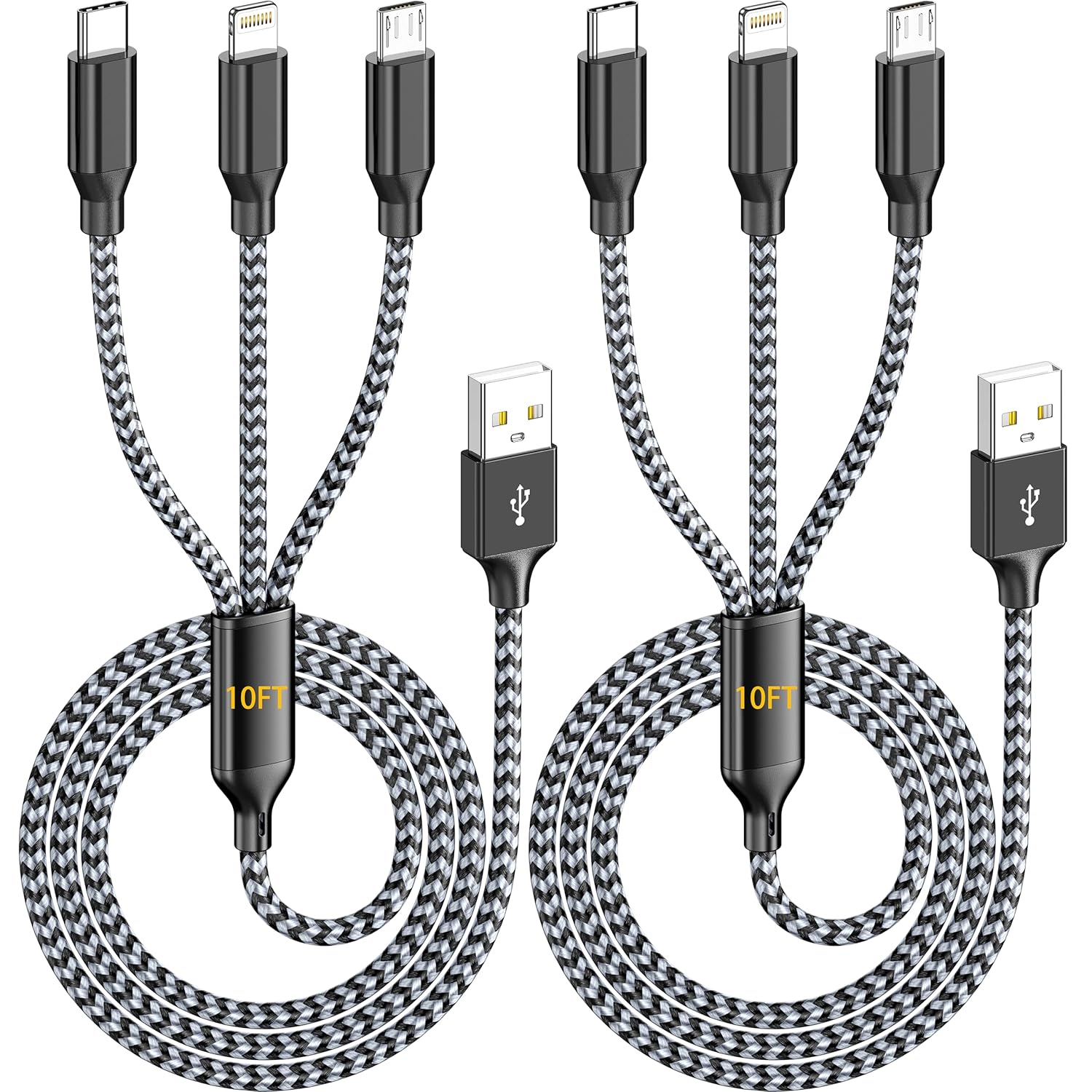
A ten-foot lead with three tips on it, so one cable charges a USB-C phone, an older Lightning phone and anything micro-USB. The length is the whole point, because hospital sockets sit behind the bed or across the room rather than beside your hand. A two-pack means nobody is negotiating over one cable at 2 a.m.
Why we picked this exact one: The IDISON 10-foot 3-in-1 cable is MFi certified on the Lightning tip, which is the part cheap multi-cables usually get wrong, and it comes as a pair so you and your partner each get one. It holds 4.4 stars from over 3,000 ratings. Ten feet is also a trip hazard in a small room, so run it under the bed frame rather than across the floor.
Organic cotton one-pieces with feet and a front zip, sold in multipacks by size. A zip is one movement in a dim room instead of hunting for a dozen poppers while a newborn objects. Buy one pack in newborn and one in 0-3 months, because you will not know which fits until you meet them.
Why we picked this exact one: The O2 BABY organic cotton zip-front sleeper closes with one pull instead of a row of poppers, which is the difference between ten seconds and two minutes in a dark room. It holds 4.6 stars from over 3,000 ratings. Organic cotton earns its price here because this is the first thing against new skin, not as a general rule. It is sold one size per pack, so covering both newborn and 0-3 months means buying two.
With these in the bag you can get through a night on the ward without sending anyone home for supplies. If relatives keep asking what to buy you, point them at the things worth asking for while you are still expecting, because the bulky gear is better bought by somebody else. One trick from parents on their second baby: put each of the baby's outfits in its own labelled bag, so your partner can grab one without unpacking the lot at 4 a.m.
For the Second Night, When the Novelty Has Worn Off
Nights two and three are quieter and much longer. The baby sleeps, you do not, the ward sits somewhere between warm and tropical, and the floor is cold in a way nobody warns you about. None of what follows changes anything that matters. It just makes the stay less grim.
Pick one
These 2 do the same job. You only need one of them, so pick the one that suits you better.
06Pick 06 of 10Option A
quick-drying non-slip shower sandals for a shared bathroom
Open rubber slides with drainage holes through the footbed and a textured sole, the kind used in dorms and changing rooms. They go on without bending down, which matters more than usual after birth, and they dry between uses instead of sitting damp in a bag. Look for real tread rather than smooth moulded plastic.
Why we picked this exact one: The COZYAREA quick-dry slides have drainage holes straight through the footbed, so they stop holding water the moment you step out, and the sole is textured rather than flat. They hold 4.4 stars from around 2,000 ratings. They are stiff out of the box and not something you would walk far in, which for a corridor and a shower is no great loss.
Thick fleecy socks with rubber grips printed across the sole, sold five pairs to a pack. The grips are the point, because ward floors are hard and polished and you may be walking on them unsteadily. They pull on without bending down and go straight in the wash afterwards.
Why we picked this exact one: The Yebing non-slip hospital socks come five pairs to a pack at 4.6 stars from over 2,000 ratings, so you can change them daily without finding a washing machine. The lining is thick enough to be genuinely warm rather than only non-slip. They are fluffy, so they shed a little in the first wash, and they are no use at all in a shower.
Pros
Warm on a cold ward floor
Five pairs, so there is always a clean one
Soft enough to keep on in bed
Cons
Useless on a wet shower floor
Soak up anything spilled and have to come straight off
wireless seamless nursing bras for the first days of feeding
Soft wire-free bras with clips at the straps, so one side opens without the whole thing coming off. They are cut like a crop top rather than a structured bra, which suits a chest that is changing size by the day. A wire that fitted at 38 weeks will not fit three days after the birth, which is why nobody packs a structured bra.
Why we picked this exact one: The HBselect 5-pack is seamless, wire-free and clips at both straps, and it holds 4.6 stars from over 2,600 ratings. The stretch panel means one size covers a fair range, which is the whole reason to buy soft rather than fitted right now. There is very little support in them, so anyone used to a structured bra will find them extremely light.
A small battery fan with five speeds that tilts to stand on a table instead of being held. On a ward where you cannot open a window or touch the thermostat, it is the only temperature control you have. Check the run time rather than the speed count, because you want it to last a night away from a plug.
Why we picked this exact one: The Koonie handheld fan is rated for 20 hours on a charge and tilts 90 degrees, so it stands on a bedside table rather than needing a hand to hold it. It holds 4.4 stars from more than 5,000 ratings. It is a personal fan and not a room fan, so it cools whoever it points at and nobody else, which is worth knowing if your partner is melting too.
soft knit cotton blankets for the walk out of the building
Large stretchy ribbed knit blankets, roughly 33 by 42 inches, sold in pairs. A blanket this size works as a cover on the way out, a clean surface on a ward table, and something over your shoulder while the baby is on it. Two is the right number, because the first one stops being clean quickly.
Why we picked this exact one: The Konssy ribbed knit pair measures 33 by 42 inches each, big enough to tuck round a newborn and still cover your shoulder, and it holds 4.8 stars from nearly 500 ratings. Knit stretches, so it stays where you put it better than a woven cloth does. It is an open knit, which means it catches on buttons and zips more than a plain cotton square would.
Keep these in the half of the bag that stays in the car and carry them up only if you end up staying a second night. Whatever comes home with you folds straight into the first weeks at home with a newborn, so none of it is wasted if labour turns out to be quick. Throw your own lip balm in too. Labour is hours of breathing through your mouth, which is why lip balm sits on nearly every list a doula writes.
The Questions Parents Ask Once the Bag Is Zipped
When should it actually be packed?
Most people aim at the due date and get caught out, because a bag packed at 39 weeks is a bag packed by someone who is already worn through. Doulas tend to name 36 weeks, and the reason is less about early labour than about thinking clearly: at 36 weeks you can still decide what you want near you. Pack it, then stick a note on the zip listing the things that can only go in at the last minute, like your phone charger and your glasses. That note is what stops the 3 a.m. scramble.
Why does everyone say to leave the dressing gown at home?
Postnatal wards are heated for newborns rather than for you, and a gown is bulky enough to swallow a third of a bag. Parents describe packing one because a list told them to, then never taking it out again. If you want something over your shoulders when visitors arrive, a cardigan you already own does the job in a fraction of the space. What you will genuinely want on your feet is not slippers either, it is something you can walk into a shared shower.
How many sizes of baby clothes go in?
Two, and this is the one place where over-packing is justified. A late growth scan estimates weight loosely, so a baby predicted at seven pounds can arrive at nine, and a newborn sleepsuit that will not do up is a miserable thing to discover on a ward. Pack newborn and 0-3 months, one of each in the bag you carry in and the rest in the car. You will only use one size. You will not know which until you meet them.
Do we need to bring nappies and wipes?
Usually not, and skipping them is the single biggest space-saver here. Most hospitals supply nappies, wipes and a hat for the length of the stay, and plenty send you home with the open packs. Ring your unit and ask, because this varies by hospital and sometimes by ward. What they almost never supply is clothes for the walk out of the building, which is why one going-home outfit matters more than a pack of nappies.
What do people wish they had packed?
A longer charging cable, by a distance. Hospital sockets are rarely beside the bed, more often behind it or across the room, and a standard cable leaves your phone on the floor while you are in a bed you have been told to stay in. The second answer is food for whoever is with you. Your support person is not a patient and does not get fed, the hospital shop closes, and the vending machine wants small change or a card.
Parents Who Have Done This Before
Parents and writers we found while researching this list. They write from their own trips and days, on sites they run themselves. No sponsorships, no affiliations.
Attends births around the New Hampshire and Maine seacoast and teaches the prepared-childbirth classes at her local hospital.
Her packing post starts from what she has watched people use in hospital rooms rather than from a list, which is the same test this page applies to the dressing gown and the second size of sleepsuit.
Works as a birth and postpartum doula across the East Bay and runs birth classes, writing long posts on what hospitals and birth centres actually provide.
She wrote her hospital-bag post because she sees what people use over and over and what they wish they had, which is exactly the gap this page fills between the supplied mesh underwear and a pair you bring yourself.
Runs online birth and breastfeeding classes as a certified doula and lactation counsellor, and publishes the guides she hands her own clients.
Her birth-bag post is built from more than 150 births she has supported and argues item by item about what earns its place, including the paperwork this page's FAQ leaves out.
Gabriela works as a birth doula and publishes the checklists and preparation notes she walks her own clients through.
Her checklist is where the 36-week packing deadline on this page comes from, and she splits the bag the same way: the birthing parent first, then the baby.
Copy these picks into a list of your own in one click. Take out what you don't need, add your own, then send one link to your partner, the grandparents or whoever asks. When someone reserves a pick, everyone sees it, so nothing gets bought twice.
Disclosure: This section may contain affiliate links to Amazon. We may earn a small commission from qualifying purchases at no extra cost to you. Certain content that appears on this site comes from Amazon.