Wrap wool once around a finger, lift the lower loop over the top, and a soft rope starts creeping out the back of the hand. That is the whole craft. Children pass it between themselves on school steps and in the back of cars, and Waldorf kindergartens have taught it to five- and six-year-olds for decades before any needle appears. The peg version of the same trick is much older — knitting spools are the oldest members of the knitting-loom family, going back more than 400 years, and the earliest recorded mention of a knitting frame is a 1535 guild ruling in Strasbourg about who was allowed to knit stockings. The small wooden ones were sold as a knitting nancy, sometimes painted with a face so they looked like a doll, and wounded soldiers were handed them as occupational therapy during the First World War.
Here is what actually happens at the kitchen table. A child picks up the rhythm faster than you would expect, knits a rope long enough to reach the hallway, then asks what it is for. That question is the real beginning. Fingers make cord, and a loom turns cord into something with a shape: a hat, a cuff, a cowl. The loom step waits until they can go around a ring of pegs without losing their place, which for most children is a good while after the first rope. If you want the grown-up end of the same ladder, our list of what a first-time knitter needs when the needles come out covers it.
Buy almost nothing to start. A ball of thick wool and a pair of hands is the entire kit for the first week, and the loom only needs to appear once the rope has stopped being interesting on its own.
Everything below is cheap enough that an abandoned loom at the back of a cupboard will not bother anyone.
Where This Little Kit Can Take You
A few real moments and results from this hobby — made with tools no fancier than the ones below.
The first hat, pompom and allA tube of chunky knitting gathered at the crown, which is what a round loom makes before anyone decorates it.
Chunky stitches, close upAt this thickness every loop is visible, which is exactly why beginners are given it.
Small hands, thick wool
One warning before any of this goes in a basket. The urge to buy a big craft box is strong, and here it backfires: a child picking through fourteen tools loses the thread before the first loop goes on. Three things is the honest answer, and two of them are sitting in the next section.
The Three Things That Have to Be in the House
Thick, smooth, light-coloured yarn does most of the work on this page. Dark yarn hides the loops. Fuzzy novelty yarn hides them completely, and fun fur, which looks like the most exciting ball on the shelf, has ended more than one first project. The other two things are tools a child uses with you nearby: the hook that lifts loops off the loom pegs, and a blunt plastic needle for the ends. Scissors stay with the adult, which is less about danger than about the yarn getting cut in the right place.
Disclosure: This section may contain affiliate links to Amazon. We may earn a small commission from qualifying purchases at no extra cost to you.
01Pick 01 of 07
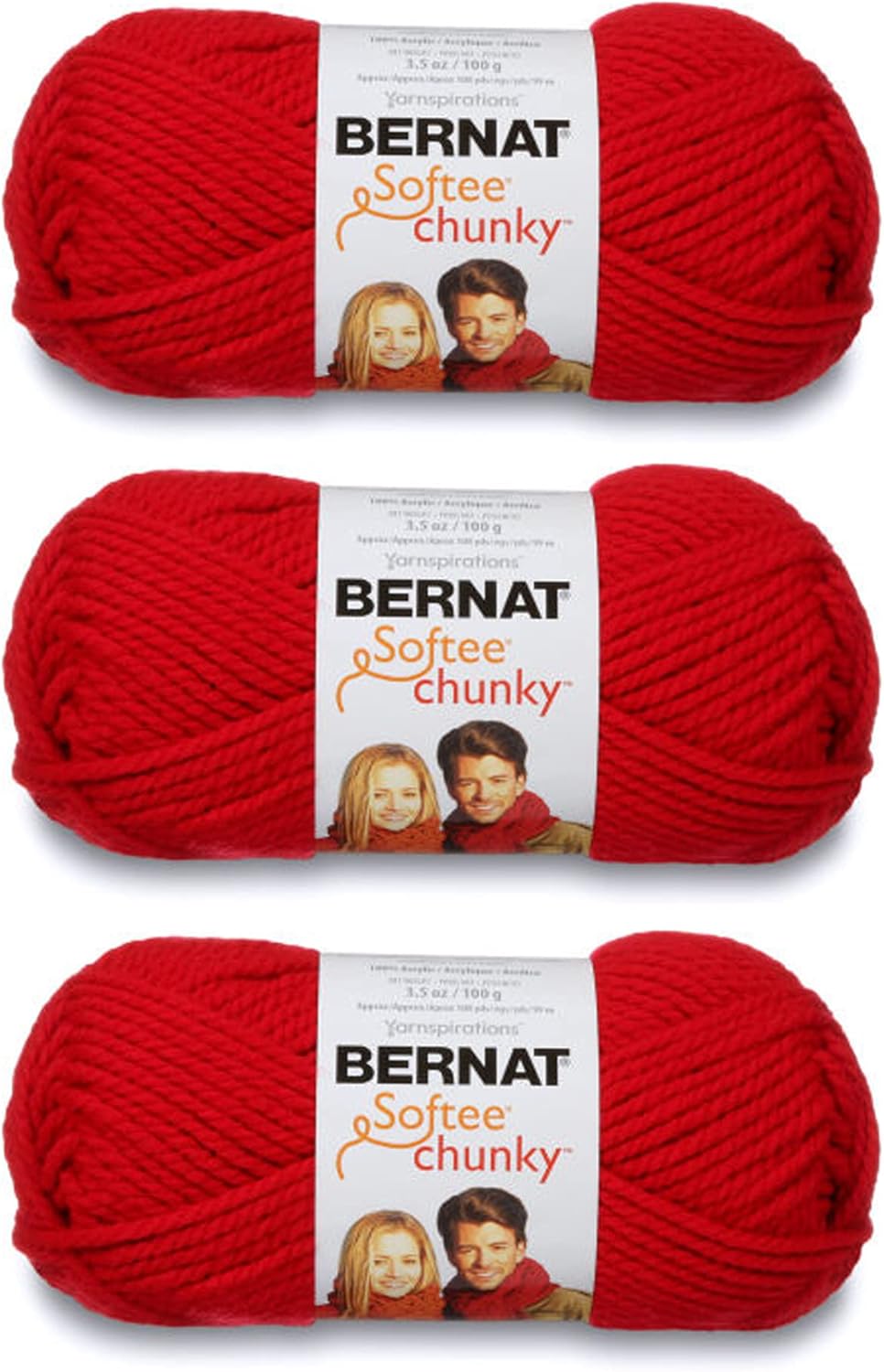
Super Bulky Acrylic Yarn
Super bulky yarn, the weight marked #6 on the band, is thick enough that a loop sits visibly on a small finger. For this kind of work you want a plain plied acrylic rather than a chenille or eyelash yarn, because the stitch has to stay readable while a child copies it. Light, clear colours show the loops better than dark ones, and machine washable matters more here than it would for an adult project.
Why we picked this exact one: We went with the Bernat Softee Chunky 3-pack. Its band gives 11 stitches over 8 mm (US 11) needles, which sits squarely in the range a 5/8-inch large-gauge loom is built for, so the yarn and the loom below genuinely match. It is plain plied acrylic and machine washable, which is the right call for something that will be dragged across a floor. One pack is one colour, so three colours means three packs.
A round knitting loom is a ring of pegs. Wrapping yarn around them and lifting each lower loop over the upper one makes the same stitch a needle would, one stitch per peg. Gauge is the distance from the centre of one peg to the next, and large gauge, around 5/8 of an inch, is the one that takes chunky yarn. Look for a set with more than one ring size and the lifting hook included in the box.
Why we picked this exact one: The Authentic Knitting Board 'Premium' Chunky round set is the one we would buy. Its listing states the gauge outright, 5/8 inch centre to centre for chunky #5 to #6 yarn, which most loom sets leave you to guess, and the lifting hook and four patterns are in the box. Three rings of 48, 36 and 24 pegs cover a grown-up head down to a small one. Amazon files it under adult craft supplies rather than toys, so treat the hook as a tool you hand over rather than one that lives in the toy box.
A yarn needle is a blunt, large-eyed needle for sewing with wool instead of thread. Plastic ones have no point at all, which is what makes them handable by a child, and the eye is wide enough to take super bulky yarn without splitting the plies. They are what you use to close the top of a loom-knit hat, to sew a coiled cord into a flat mat, and to bury the loose tail at the end.
Why we picked this exact one: The ManTangSun plastic yarn needles are 9 cm long with an oversized eye and a rounded tip, which is the combination that lets a child do the sewing rather than watch it. They hold 4.6 stars, though at 145 ratings this is a thinner track record than the looms here. Fifty needles is far more than one household needs; the upside is that losing them stops mattering.
With these three a child can make a rope on Saturday morning and have a hat by Sunday, assuming someone helps with the sewing at the crown. If the first hat swims on them, use the 24-peg ring next time: each peg is one stitch, so fewer pegs is a smaller hat, and no other setting needs changing. The section below is for the point where one rope and one hat have stopped being enough.
When One Rope Isn't Enough Anymore
There is a moment, usually a few weeks in, when the cord stops being the point and the child starts asking for things the round loom cannot make. Flat things, mostly. Scarves, cuffs, a strip to sew onto a bag. That is the signal to add width rather than more yarn, and it is also the moment most parents overbuy, because the craft aisle is full of kits that solve problems a beginner does not have yet. None of the four below is urgent. Each answers a request you will actually hear.
04Pick 04 of 07
Snap-Together Knitting Loom Links
A link loom is a knitting loom broken into separate segments that clip together, so you choose the peg count instead of accepting the one the ring gives you. Snapped into a line it knits flat panels such as scarves and cuffs; closed into a circle it works like a round loom. Check that the links share the same gauge as the looms you already own, or the same yarn will knit up at a different tension.
Why we picked this exact one: The Authentic Knitting Board Flexee Loom Links Chunky set runs at the same 5/8-inch gauge as the round looms in the first section, so nothing a child has learned has to be relearned. Thirty-six links build out to 72 pegs, which is where scarf width lives, and the hook comes with it. Its 4.4-star average is the lowest of the looms on this page, which is worth weighing against the flexibility.
A pompom maker is a pair of hinged plastic arches you wind yarn around, tie through the middle, then snip along the outside. It replaces the cardboard-ring method, which is the step children most often give up on halfway. Sets that cover several diameters are more useful than one size, because the pompom has to suit the hat it sits on.
Why we picked this exact one: The Knewmart 4-size pom pom maker covers roughly 1.4 to 3.4 inches across four plastic formers. It is the cheapest thing on this page and it does the single job cleanly: wind, tie, snip, open. The arms are thin plastic, so this is a tool that will eventually crack rather than one that gets handed down.
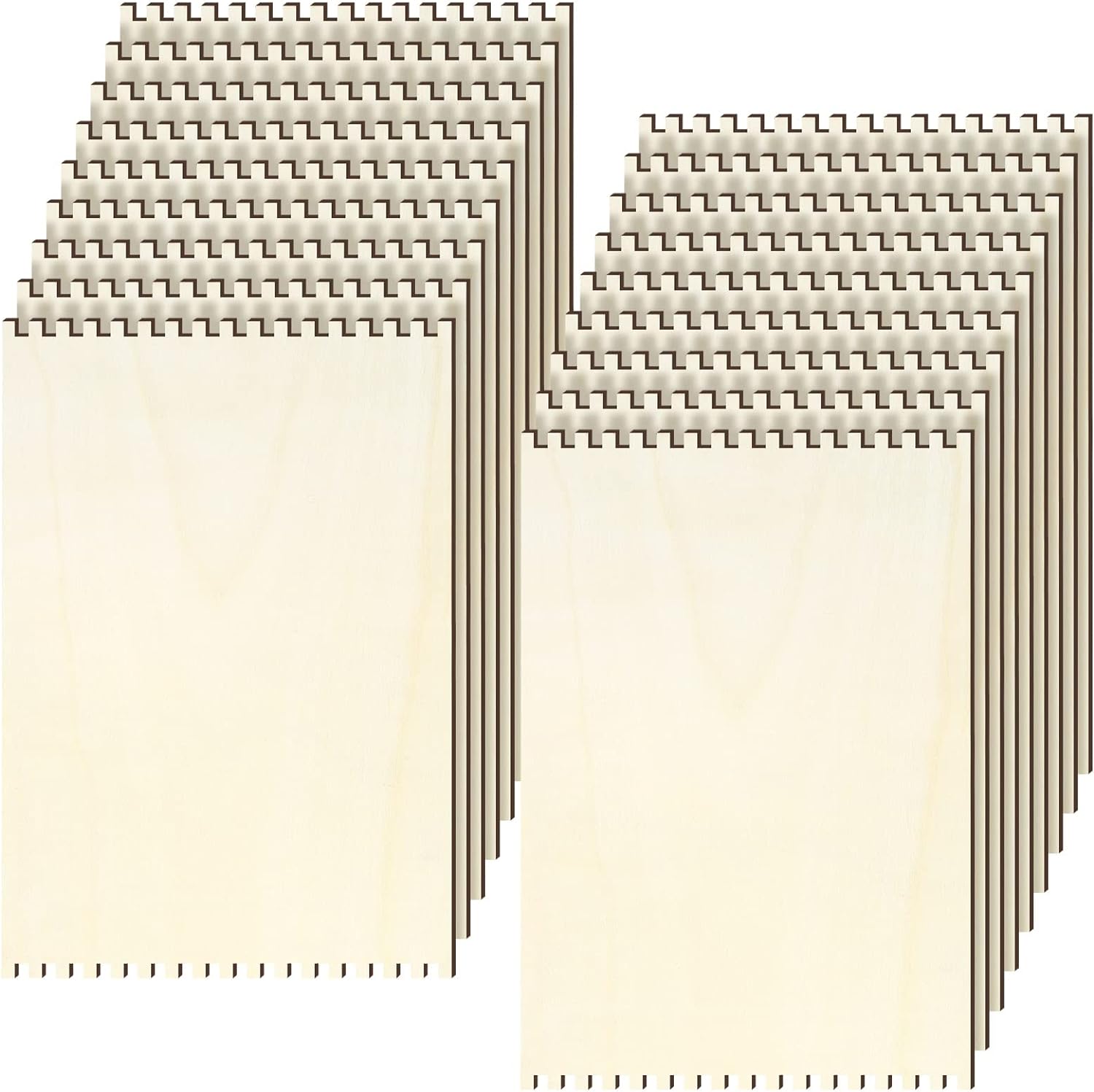
A frame loom is a flat board with notched ends that hold the lengthwise threads taut while you weave across them. It is the other half of the yarn story: knitting builds fabric one loop at a time, weaving builds it in two directions at once. A lap-sized board around six by nine inches is enough for a coaster, a small bag panel or a doll-sized blanket.
Why we picked this exact one: The Minatee 18-piece wooden weaving loom is a 6 by 9 inch notched board with gear-cut ends that grip the warp threads instead of letting them slide. It is wood rather than plastic, which tells when a child pulls hard on a row. At 186 ratings it is a smaller listing than most here, so there is less collective experience behind it.
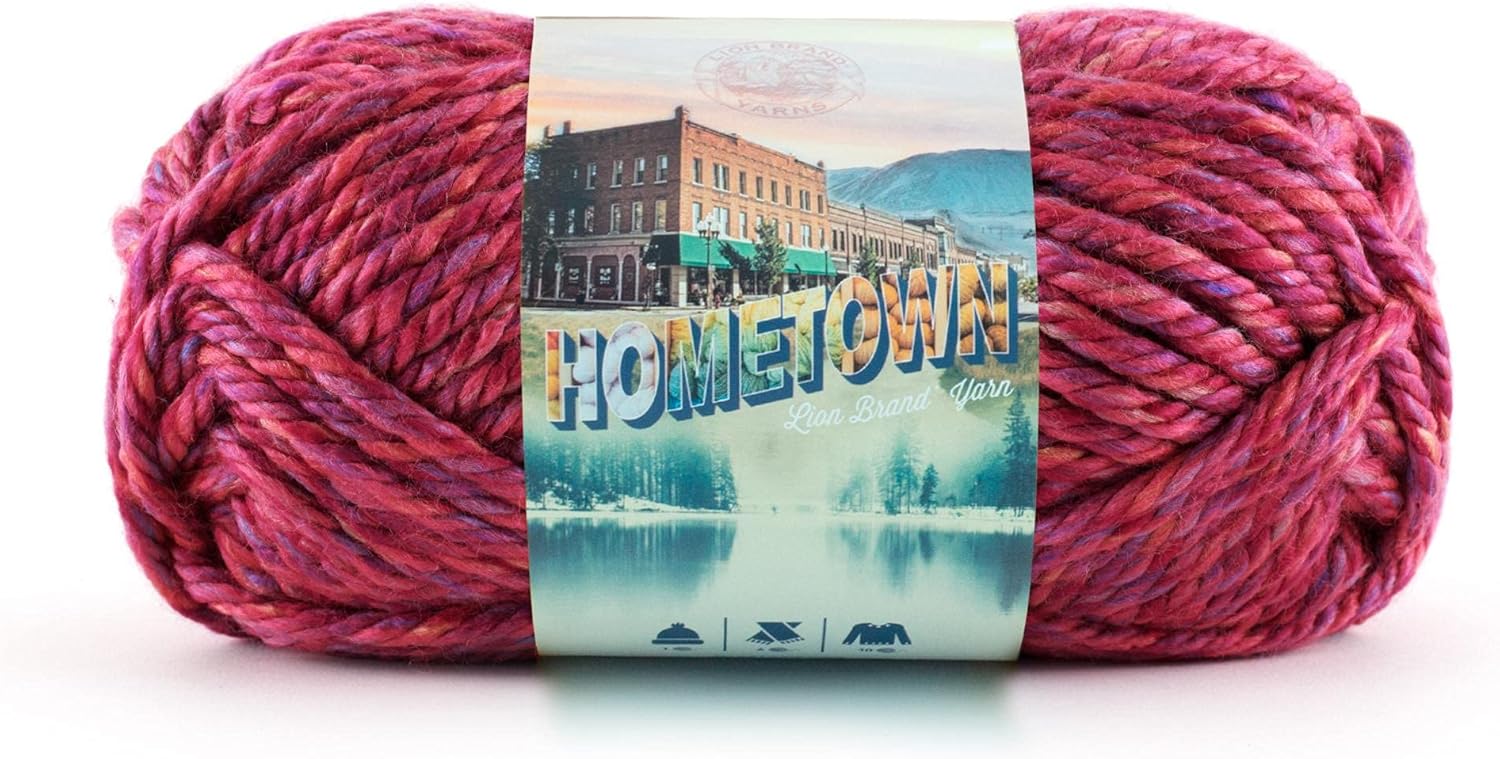
Buying super bulky yarn a ball at a time, rather than in a single-colour pack, is how a child ends up with stripes. Each ball is one solid shade, so colour becomes a decision they make at the shelf instead of one made for them. Keep to the same weight class as the yarn already in the basket, or the new colour will knit up at a different width on the same loom.
Why we picked this exact one: Lion Brand Hometown is the single-ball option we would use for colour. It is rated CYC #6 super bulky, the same weight class as the three-pack in the first section, so it drops onto the same loom without changing anything. The listing carries more than 11,000 ratings across its colours. Per yard it costs more than buying a pack, which is what letting a child pick is worth.
A warning about that first scarf: plain loom knitting curls at the edges, and it will keep curling no matter how carefully it is worked. Reversible stitches such as garter or granite lie flat, which is why loom knitters reach for them on anything wider than a cuff. If all of this has you wondering whether a hook would suit your child better than pegs, we compare how knitting and crochet differ for a complete beginner elsewhere.
The Bits Nobody Mentions Until Something Goes Wrong
What age is this, honestly?
Parents tend to guess too old, because they are picturing needles. Many Waldorf kindergartens bring in one-finger knitting around five or six, and some four-year-olds manage it, since the one-finger version is only two moves repeated. The readiness sign is whether a child can copy a simple movement of your hands, not how old they are. Two fingers and four fingers come later and make a wider, flatter cord; the loom waits until a whole ring of pegs can be worked without losing the place. This is a teaching sequence that handwork teachers have used for a long time, not a developmental test, so there is nothing lost by trying it again in a month.
Which yarn, out of an entire wall of it?
The wall is the trap. Children reach for the sparkly, the fuzzy and the dark, and all three make the loop impossible to see at the exact moment they need to see it. Thick, smooth, plainly plied yarn in a light clear colour is what people who teach this recommend, and it is why the first section is so specific. For the loom there is a second constraint: a large-gauge loom at 5/8 of an inch between peg centres is built for chunky and super bulky yarn, roughly the range a 6 to 9 mm needle covers, and thin yarn on it produces gappy fabric with holes.
They have wrapped it so tight the loop will not lift. Now what?
Wrapping too tight is the single most common thing that goes wrong, and it happens because a child holds the ball far away and pulls the working yarn taut between hand and ball. The loop then grips the finger and will not come over, and a frustrated five-year-old yanks it, which tightens everything further. Move the ball closer, into their lap or against their chest, so there is slack in the strand. The wraps loosen on their own after that, without anyone being told to relax.
We have to stop for dinner. Will the whole thing unravel?
This is why half-finished cords get abandoned: a child slides the loops off to eat, cannot get them back in order, and the rope goes in the bin. Loops come off a finger in a specific sequence and have to go back the same way. Slide them onto a pencil or a lollipop stick instead, in order, and the work keeps. Connector felt-tip pens are even better, because they snap together end to end and nothing can slip off the far side.
How do we finish it so it does not come undone?
Most beginners tie a knot and trust it, then find the cord has quietly unzipped itself from the end a week later. Cut the yarn leaving a long tail, thread that tail through the last loop or loops with the blunt needle, and pull it snug; the loops close on themselves rather than relying on a knot. Then sew the tail back down into the fabric for a few centimetres so it cannot work free. On a loom-knit hat the same long tail is what gathers the crown shut, which is why the needle sits in the essentials and not in the nice-to-haves.
People Worth Following Into This Hobby
Real practitioners we found while researching this setup — people who do the work, show their process, and publish on sites they run themselves. No sponsorships, no affiliations; we just think they're worth your time.
Writes step-by-step yarn tutorials and reviews knitting books, including a full finger knitting walkthrough and a finger-knit headband project.
Her finger knitting tutorial is the technique this setup's first section assumes, shown move by move, and her headband gives a child a use for the rope they ask about.
Teaches loom knitting through hundreds of filmed tutorials and keeps the loom gauge comparison charts that tell you which yarn a given loom was built for.
Her beginner loom series answers the question this setup leaves open, which loom and which yarn belong together, and her free finger-knit cowl is a first project beyond a plain rope.
Publishes free loom knitting patterns with a filmed tutorial for every one, written by Denise after about a decade of working almost entirely with beginners.
Her beginners' supply list argues for exactly the kind of round loom set this page recommends, and her stitch write-ups explain why a plain loom knit curls where a reversible one does not.
Designs and photographs craft projects for children aged roughly five to twelve, testing each one by hand and shooting the steps with her own daughters.
Her finger knitting post is where the trick of parking loops on connector pens comes from, which is the answer to the dinner-time question in this setup's FAQ.
Love what you see here? Save individual picks with on any item, or copy everything to a list of your own in one click — great for coming back to later, or dropping as a not-so-subtle hint.