Spinning on a drop spindle is about as plain as making something gets: you hang a weighted stick from a wisp of wool, flick it, and the twist running up the fibre turns fluff into thread. People do it on sofas, on buses, standing in queues, walking between fields. Whorl-weighted spindles go back at least to Neolithic times, and archaeologists keep turning up the little stone and clay whorls almost everywhere people lived, including a possible set from a Natufian village in Israel around twelve thousand years old. Here's the detail I like best. The shrub Euonymus europaeus is called the spindle bush in English because its hard, fine-grained wood was what people reached for when they made the things.
What catches most newcomers out is how much the wool matters and how little the tool does. A plain wooden spindle and well-prepared fibre will make yarn on your first evening. A beautiful spindle and the wrong fibre will convince you that you have no hands. Almost every miserable first week traces back to that second case, and hardly anyone warns you about it before you have spent the money.
Our take: buy the stick, buy the wool, stop. A spindle and one braid of medium crossbred wool really are enough to make yarn, and you can finish the skein in a kitchen sink with a few drops of wool wash. Everything further down is for after you know you like this.
We stuck to things cheap enough that giving up in a fortnight wouldn't sting.
Where This Little Kit Can Take You
A few real moments and results from this hobby — made with tools no fancier than the ones below.
Grey singles wound on the shaftThe puff of raw wool on the left is the same stuff as the smooth cop of yarn on the right.
Four spindles, four half-made yarnsEach whorl sits at the top of its shaft, with the spun yarn building into a cone underneath.
This is a skill that rewards repetition far more than equipment, and the distance between your first metre and your tenth is enormous. People who teach beginner classes routinely watch someone produce recognisable yarn inside an hour. Start there, and leave the pretty spindles for later.
The Three Things That Actually Make Yarn
A first spindle wants to be middling. Spinning teachers tend to put it somewhere between about one and a half and three ounces, and the reason is time: a heavier spindle keeps turning for longer, which gives you more of it to pull the fibre out before the twist arrives. Too light and the thing spins like a top, runs out, and reverses while you're still fumbling. Too heavy and it snaps the thread and hits the floor, which is where the name came from. You can test any spindle by tying a length of yarn to it and giving it a clockwise flick; it should run smoothly, without wobble, and keep going for a while.
The second purchase is the one people get wrong. Merino is the wool everybody has heard of, so it's the wool everybody buys first, and its staple runs roughly two and a half to four inches of very fine crimp that wants to be spun thin. A beginner drafting it gets a handful of fog. Then they decide they're bad at this.
Disclosure: This section may contain affiliate links to Amazon. We may earn a small commission from qualifying purchases at no extra cost to you.
01Pick 01 of 07
top-whorl drop spindle for turning loose wool into yarn
A drop spindle is a shaft with a weighted disc called a whorl, plus a hook to hold the yarn you have already made. You set it turning and hang it from a wisp of fibre, and the twist running up that fibre is what makes it yarn. For a first one, look for a medium weight, a shaft long enough to roll against your thigh, and a whorl that spins without wobbling.
Why we picked this exact one: The SAVINA top-whorl spindle is a plain hardwood one at about eleven inches with a 2.4 inch whorl, and it holds a 4.5 rating across 195 ratings. It comes apart into three pieces, which is the detail that matters if you want it living in a coat pocket. The small whorl does mean a shorter spin than a wide-rimmed spindle gives, so expect to flick it more often while you are still slow at drafting.
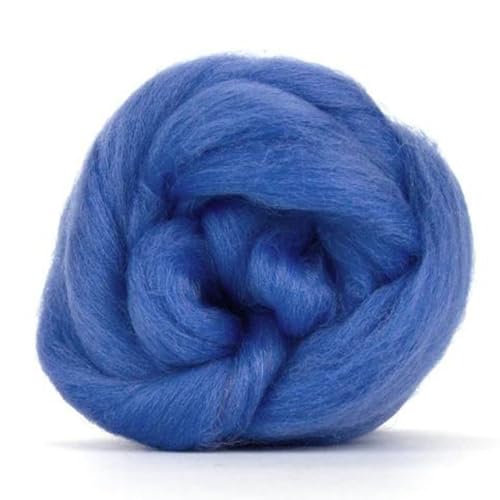
dyed Corriedale combed wool top for learning to draft
Combed top is wool that has been washed and combed so every fibre lies the same way, which is what lets you pull it out smoothly into a thin ribbon. Corriedale is a medium crossbred wool with a staple around three to five inches, long enough to grip itself while you work. Beginners should look for a named breed and a prepared top rather than an unlabelled bag of fluff.
Why we picked this exact one: This Revolution Fibers dyed Corriedale is sold as combed top at 26 micron in eight-ounce braids, which puts it squarely in the beginner-friendly crossbred range rather than the fine-wool one. It rates 4.7, though only across 39 ratings so far. Eight ounces is more than one project, which is the point: you will spin the first ounce badly and want the rest.
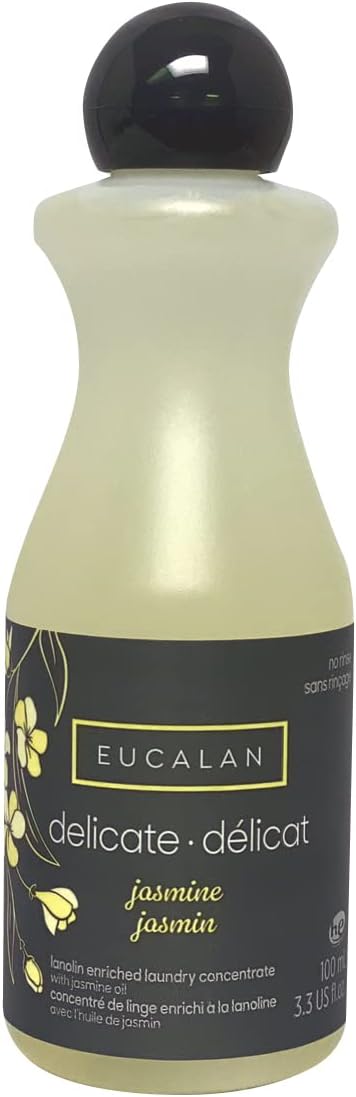
no-rinse lanolin wool wash for finishing a handspun skein
A no-rinse delicate wash is a mild concentrate you soak wool in and then simply squeeze out, with no rinsing step to agitate the fibres. The lanolin in it replaces some of what washing strips out of the wool. A small bottle lasts a long time because a skein needs only a few drops in a basin.
Why we picked this exact one: Eucalan Wrapture is the 3.3 ounce bottle of their lanolin concentrate, and at 4.7 across 346 ratings it is the one that keeps turning up in fibre people's sinks. It is a no-rinse formula, which matters here because the less you move a fresh skein around in water, the less chance it has to felt. The jasmine scent is strong in the bottle if you are sensitive to that, though it fades as the wool dries.
Three purchases and you can make yarn this week. Wash the finished skein before you judge it, because handspun changes in water and you genuinely cannot see whether it's balanced until it has been wetted and dried. Once a few skeins are hanging up, the obvious question is what to do with them, and a first knitting kit is the usual answer.
What You'll Want After the First Skein
None of this is needed to spin. All of it appears the moment you've filled a spindle and hit the next problem: getting the yarn off in one piece, twisting two strands together, and coping with wool that nobody combed for you. That last one is where spinning runs into needle felting, since both start from the same bags of loose fibre and the same question of how to open it up.
One honest warning about plying. Most people assume it's a finishing flourish and discover it's half the craft, because a single strand of handspun is lively and unbalanced and a plied one behaves like yarn. That's the job a steadier, bottom-heavy spindle is for.
04Pick 04 of 07
wooden niddy noddy for winding handspun into an even skein
A niddy noddy is a central bar with two crossbars set at right angles, used to wind spun yarn off the spindle into a loose skein. Winding onto one keeps the loops the same length so the skein washes and dries evenly. Most are sold by the skein size they make, commonly somewhere between one and two yards around.
Why we picked this exact one: The SAVINA niddy noddy makes a 48 inch skein and its crossbars pull out, so it stores flat instead of jabbing everything in the basket. It sits at 4.9 stars, but on only 31 ratings, which is simply how small this corner of Amazon is. Treat the 48 inches as nominal rather than exact; wraps multiplied by that figure gives you an estimate of yardage, not a measurement.
convertible high and low whorl drop spindle for plying
This style of spindle has a hook at one end and a grooved shaft at the other, so the same tool can be hung whorl-up or whorl-down. A low whorl sits with its weight at the bottom, which steadies it and lets it carry more yarn, and that is the arrangement most spinners prefer when twisting two singles together. A second spindle also means you can leave one half-full instead of emptying it every time.
Why we picked this exact one: The DICHA rosewood spindle carries a brass hook at the top and a groove cut into the shaft, so it works either way up and gives you a low-whorl setup without a second purchase. It holds 4.7 across 55 ratings and the whorl is pressed on rather than glued. Three inches of whorl makes it a slower, steadier turner than a narrow spindle, which is what you want for plying and not what you want for very fine singles.
pair of hand carding brushes for opening and blending raw wool
Hand carders are a matched pair of paddles covered in fine bent wire teeth. You load wool onto one and brush it across the other until the fibres separate and lie roughly parallel, which is what makes a compressed or matted fleece spinnable. They also let you blend two colours or two fibres into something you cannot buy.
Why we picked this exact one: The Woolbuddy pair is a 7 by 4.75 inch set on varnished bamboo handles, rated 4.2 across 364 ratings, which is far more feedback than most carders on Amazon have. The listing leans on felting and pet grooming, but the steel pins and the paddle size are the same thing spinners use. They are light boards rather than proper curved studio cards, so very dense fleece will fight them.
Buy these when the problem shows up rather than in advance. The niddy noddy is the one you'll reach for first, usually about twenty minutes after you realise a cop of yarn unwound onto the kitchen table is a tangle with ambitions.
One Book Worth Owning
Video is good for watching hands move and bad for answering the question you have at eleven at night, which is usually some version of why is this happening. A spindle book earns its shelf space by being searchable.
07Pick 07 of 07Book worth reading
beginner's handbook on spindle spinning technique
A single-subject book about hand spindles rather than wheels, covering how different spindles behave, how to draft and ply on them, and how to fix the things that go wrong. It works through the park-and-draft starting method and then the suspended spinning that follows it. Photographs carry most of the instruction, which is what you want for a skill that lives in the hands.
Why we picked this exact one: Respect the Spindle by Abby Franquemont is the title spinners name when somebody asks which spindle book to buy, and it sits at 4.8 across 874 ratings. She grew up spinning in the Peruvian Andes and writes about the spindle as a serious production tool rather than a cute starter object. It is from 2009, so the tool photographs look of their time, but nothing about twist and drafting has changed since.
Read the first three chapters before you spin anything and the rest after you've failed a few times, when the diagnoses will actually mean something to you.
Why the First Hour Goes Wrong, and Why It Isn't You
My yarn snaps the second I let the spindle hang. What am I doing wrong?
You're asking a length of fibre to carry the whole weight of the spindle before enough twist has run into it. Beginners let go early because the spindle turning looks like progress, when the twist is still sitting down near the hook. The fix is park-and-draft: give the spindle a clockwise spin, trap it between your knees so it can't unwind, then slide your hand up, pinch the yarn to hold the twist back, and pull out fibre before you let the twist travel in. Nearly everyone drifts away from parking on their own once their hands catch up.
Why does my spindle keep stopping and then turning backwards?
It's simply run out of momentum, and once it starts turning anticlockwise it unwinds the twist you just put in, the yarn goes back to being fluff, and the spindle drops. New spinners watch the fibre instead of the spindle and miss the moment. Re-flick it before it slows to a stop rather than after, and wind on whenever the spun length gets longer than your arm. Winding neatly into a cone matters too, because a messy cop is what makes the yarn snag coming off later.
Everyone says merino is the best wool, so why does mine fall apart in my fingers?
Because it's the wrong wool to learn on, and this is the correction spinners make more often than any other. Merino's staple is short and extremely fine, so it needs more twist and a much finer draft than a beginner can control, and it drifts apart under its own weight. Buy a medium crossbred instead, something with a three to five inch staple like Corriedale, Blue Faced Leicester, Romney or Coopworth. The short down wools such as Shetland, Cheviot and Suffolk are the other trap for the same reason.
My finished skein keeps twisting up on itself into a knot. Did I ruin it?
No, you've over-twisted the singles, and almost everyone does at first because extra twist is what stops the yarn breaking while you're learning. A single strand full of energy will corkscrew the moment it isn't held taut. Plying in the opposite direction takes most of that energy back out, and then washing and drying the skein under its own weight settles the rest. Don't judge any skein before it's been through water; it isn't finished until then.
People Worth Following Into This Hobby
Real practitioners we found while researching this setup — people who do the work, show their process, and publish on sites they run themselves. No sponsorships, no affiliations; we just think they're worth your time.
Dyes and blends spinning fibre in rural mid-Wales, test-spins every batch herself, and teaches spinning as modular online courses.
Her skein-length page works through why a niddy noddy sold as a fixed yardage does not tell you how much yarn you actually spun, which is the exact trap a beginner hits the first time they try to measure a finished skein.
Turns Turkish and top-whorl drop spindles, wool combs and hackles by hand, and writes step-by-step fibre-arts guides alongside them.
His beginner guide covers choosing a spindle weight and a first fibre in the same order this page does, so a reader who wants more detail on drafting before buying has somewhere to go that is written by someone who makes the tools.
Raises angora rabbits and sources Louisiana wool and cotton, then spins, naturally dyes and weaves it, documenting each stage on the farm blog.
Her beginner tutorial is built around the bare minimum you need to start, which is the same argument this page makes, and it shows the whole route from a raw local fleece to spun yarn rather than from a shop-bought braid.
Spins and teaches handspinning, publishing filmed drop spindle lessons and patterns written specifically for handspun yarn.
Most beginner material assumes a top whorl, and her walkthrough covers the bottom-whorl spindle on its own terms, which answers the whorl-position question this page raises for anyone who ends up with the other kind.
Love what you see here? Save individual picks with on any item, or copy everything to a list of your own in one click — great for coming back to later, or dropping as a not-so-subtle hint.