A closed terrarium is a sealed glass jar with a few tropical plants living inside it, and once the lid goes on the jar does its own watering. Moisture lifts off the leaves and soil, beads on the glass and slides back down. Most people keep one on a desk or a bookshelf, somewhere bright but never in the sun. The whole thing began by accident: in the 1830s a London doctor named Nathaniel Bagshaw Ward kept moth cocoons in stoppered glass bottles, spotted a fern and a grass sprouting in the soil at the bottom of one, and left it sealed for about four years, during which the grass flowered. Within a decade his glazed cases were carrying live plants across oceans, and Robert Fortune used them to smuggle 20,000 tea plants out of Shanghai to start the Indian tea trade.
Here is the part nobody tells you first: this isn't indoor gardening with a lid on. It's closer to keeping a very slow pet. You water it properly once, at the build, and after that your whole job is reading the glass and resisting the urge to help. If you already keep a shelf of indoor plants going at home, unlearn the watering routine before you start, because a sealed jar dies of kindness far more often than of neglect.
Buy less than you think. A jar with a proper lid, a chunky substrate, a handful of charcoal, some sphagnum and three small plants is a complete working terrarium. Driftwood, stones and tiny figurines can wait until the jar has survived month two.
I've kept the picks to things that get reused: the substrate, charcoal and moss below will build four or five jars rather than one, so the second terrarium costs you almost nothing.
Where This Little Kit Can Take You
A few real moments and results from this hobby — made with tools no fancier than the ones below.
A forest the size of a jarCushion moss, a red nerve plant and a sprig of conifer growing over a piece of bark.
Setting the last plant by handThe layers show through the glass: pebbles, dark substrate, then a carpet of moss.
One thing to settle before anything goes into the glass. The sealed jar and the open succulent dish you see in gift shops are opposite practices: one wants permanent damp, the other wants to dry out hard between waterings. Confusing the two is the most expensive mistake in this hobby, and we'll come back to why. Here's what actually goes in.
The Five Things That Go In the Jar
Build order matters here more than brand names. Everything stacks from the bottom up and gets packed in around the plants, so once the moss is laid you aren't getting back down to the soil without starting over. The one number worth remembering is depth: most terrarium plants want at least 7 to 8 cm of substrate, and anything with a real root ball wants 10 cm or more. Beginners pour in far too little, then wonder why the bottom stays swampy. Shallow soil over a wet base stays wet all the way to the surface, because the water has nowhere to go.
Disclosure: This section may contain affiliate links to Amazon and eBay. We may earn a small commission from qualifying purchases at no extra cost to you. Product listings from eBay are provided for discovery purposes and link directly to eBay.
01Pick 01 of 09
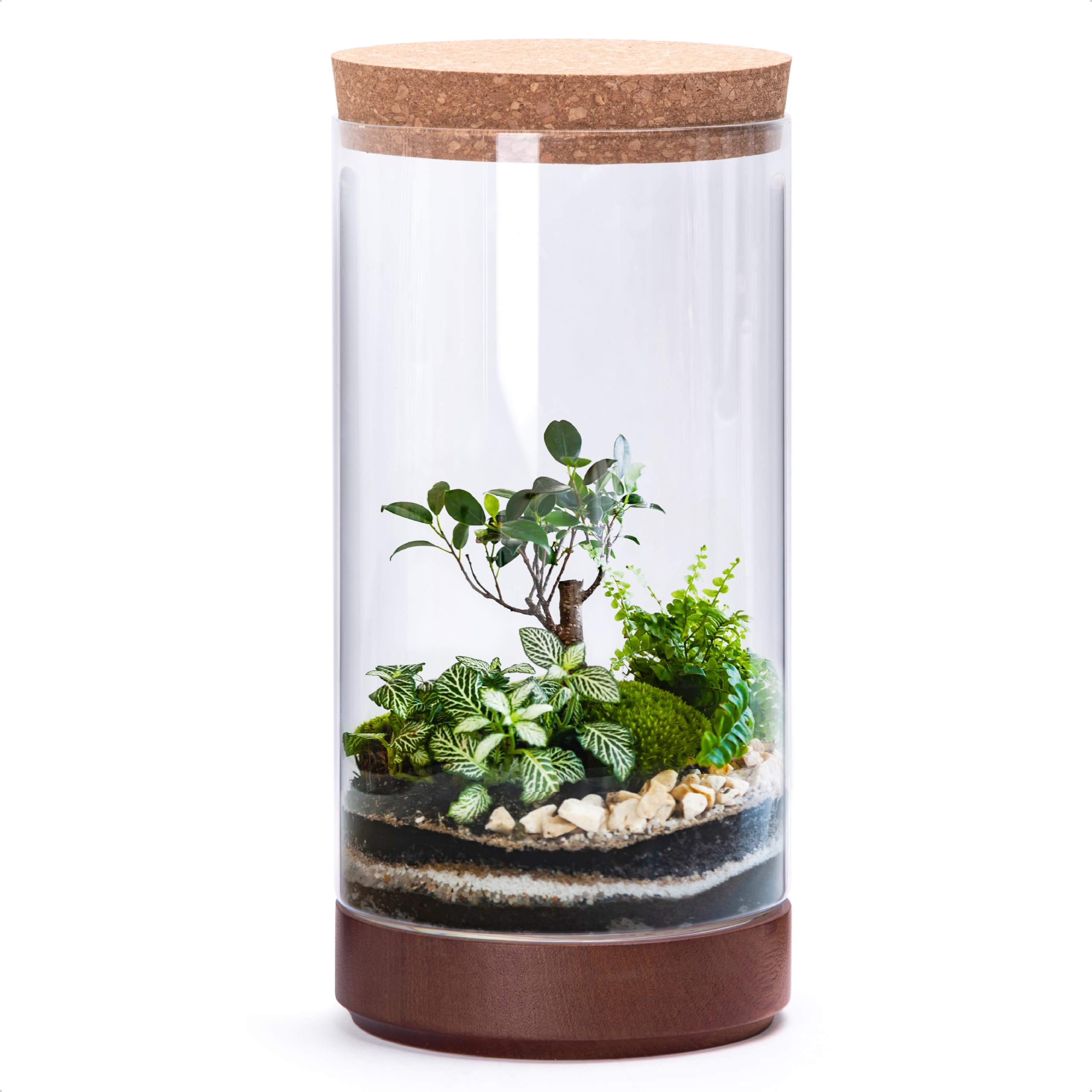
Glass Terrarium Jar with Cork Lid
A closed terrarium needs a clear glass container that actually seals, and height matters more than width because the soil, the planting layer and the plants all have to stack inside it. Look for a lid that sits snugly rather than one with vent holes, and for glass clear enough to see the layers through. A mouth wide enough to get your hand or a pair of tongs through saves a lot of swearing during the build.
Why we picked this exact one: The Phoenix Vine 6 x 12 inch cylindrical terrarium has the one dimension beginners regret skimping on: a foot of vertical space, so a proper depth of substrate still leaves room for a fern to grow upward. It holds a 4.6-star average across 88 ratings, and the cork lid seals without being fused shut, which matters on the days you need to air the jar out. The wooden base is purely decorative, and a couple of buyers note the cork can sit slightly proud of the rim.
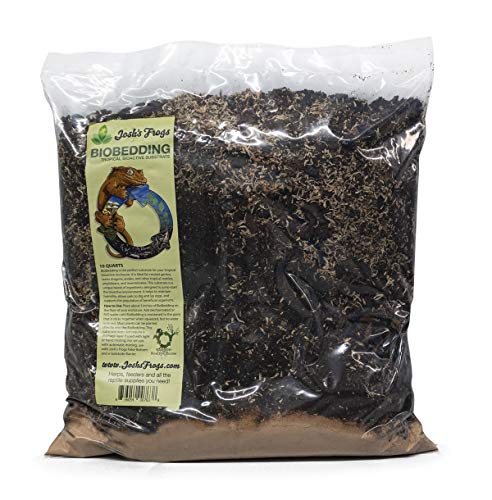
Terrarium substrate is a loose, bark-and-fibre blend rather than bagged potting compost, built so water drains through it while air still reaches the roots. Compost packs down into an airless brick inside a sealed jar, which is one of the commonest reasons a first terrarium fails. Look for a mix that stays visibly chunky in the bag, and plan on at least 7 to 8 cm of depth in the container.
Why we picked this exact one: Josh's Frogs BioBedding Tropical is the mix vivarium keepers reach for by default, and its 4.8-star average over 587 ratings reflects that. It arrives genuinely chunky, with bark and fibre still visible, so it holds moisture without packing down around the roots. Ten quarts is far more than one jar needs, which is either waste or the reason your second and third terrarium cost almost nothing, depending on how this goes.
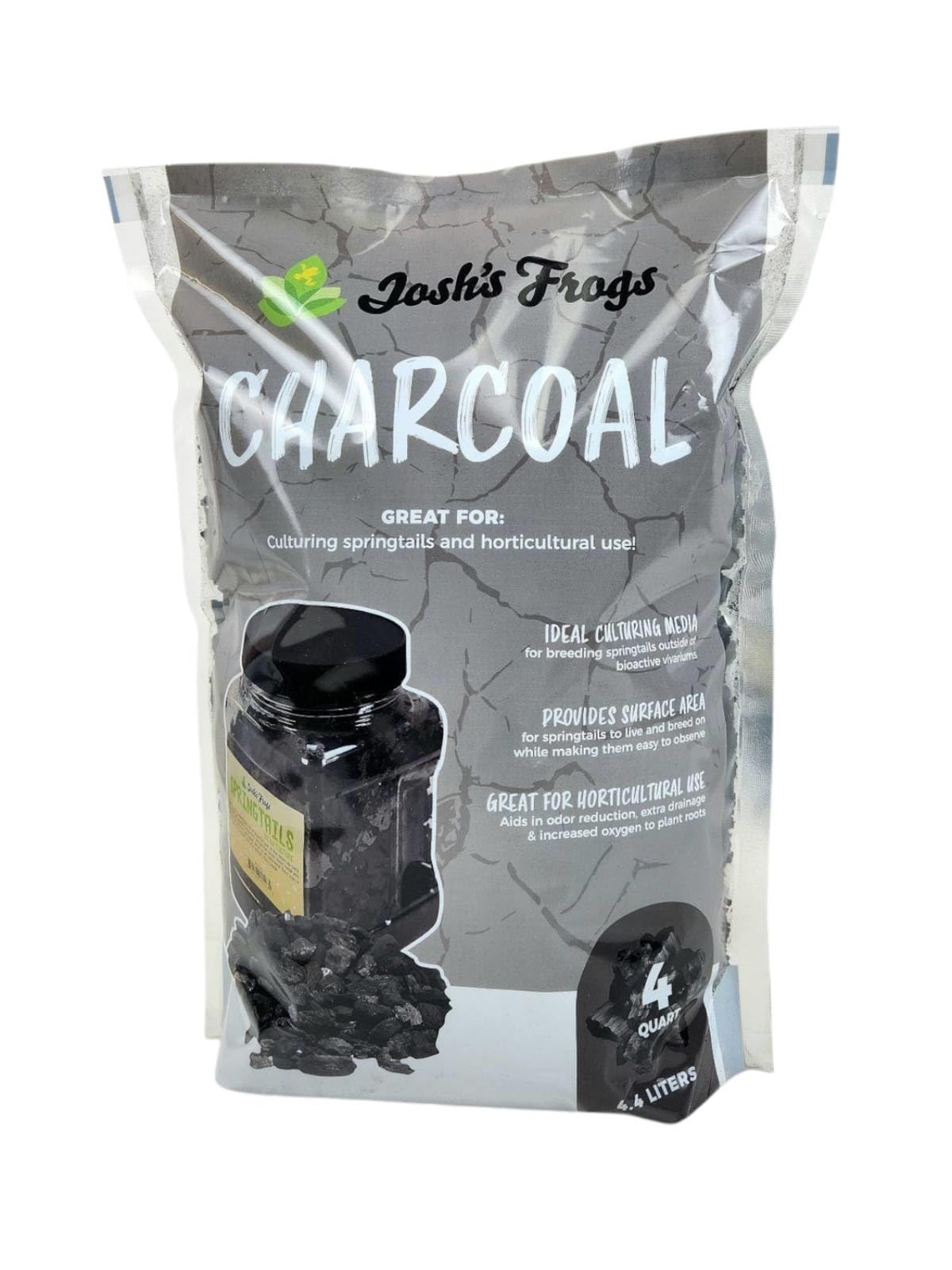
Activated charcoal is porous carbon that absorbs impurities from water sitting in a closed container, and it also loosens the soil it is mixed into. It goes in either as a thin band above the base or stirred through the substrate, which is the more useful of the two. Buy the chunky grade rather than a powder, because powder washes straight down through any barrier and settles at the bottom.
Why we picked this exact one: Josh's Frogs Charcoal comes in the coarse grade this job needs, not the dust you get from crushed barbecue briquettes, and it carries a 4.8-star average across 298 ratings. Mixing a couple of handfuls through the substrate does double duty, adding aeration as well as filtration. It is the priciest small bag on this list for what it is, though 4 quarts will outlast several builds.
Dried sphagnum moss is a springy, long-fibred moss that holds many times its own weight in water and takes up almost no space in a jar. In a terrarium it sits between the base layer and the soil as a barrier, stopping substrate from washing down, and it gets tucked around roots that want extra damp. It rehydrates in a bowl of water in a couple of minutes and should smell clean and earthy, never sour.
Why we picked this exact one: Better-Gro Premium Grade Sphagnum Moss is the cheapest item in this whole setup and carries a 4.7-star average over more than 6,500 ratings, which is a lot of agreement for a bag of dried moss. The fibres are long enough to lay as a mat rather than crumbling, which is exactly what the barrier layer needs. It is a compressed brick, so the bag looks alarmingly small until you soak it.
The plants that work in a sealed jar all come from damp forest floors: small ferns, nerve plants, creeping pileas and mosses. They want permanent humidity, low airflow and no direct sun, and they need to stay small enough that they are not pressed against the glass within a year. Buy them in 2 inch pots, wash most of the nursery soil off the roots before planting, and pull off any damaged leaves first.
Why we picked this exact one: Hirt's Gardens sells this eight-plant mini fern assortment specifically for terrariums, and the 2 inch pots are the right size for a jar rather than a tank. The rating sits at 4.4 stars, though only four people have left one, which is normal for live plants on Amazon. The mix varies with the season, so you are buying a sensible selection rather than a named species list, and eight plants is enough for two jars.
With these five in front of you the build is slower and fiddlier than it looks, and opening the substrate bag is the first genuinely nice surprise: damp bark and forest floor, nothing like potting compost. Expect a patch of white fuzz somewhere around week two or three. That's the jar settling in, not a failure. The next few items aren't needed to finish a terrarium, but they make the building of one a great deal less awkward.
Things That Make the Build Less Awkward
Reaching into a twelve-inch jar with bare fingers is how good moss gets crushed and good plants get planted sideways. None of this is compulsory. People have built lovely terrariums with a chopstick and a teaspoon. But the first time you try to tuck a cushion of moss into a back corner by hand, your knuckles arriving before your fingertips, you'll understand why terrarium people own very long tweezers. The clay pebbles below come with a caveat, which the questions at the end of this page deal with properly.
06Pick 06 of 09
Aquarium Aquascaping Tool Set
Terrarium tools are just ordinary tweezers, scissors and a flat spatula made long enough to reach the bottom of a deep container without your forearm blocking the view. The spatula doubles as the tamper that levels and firms the substrate. Fifteen inches covers most jars; anything shorter and you end up working blind with your hand in the way.
Why we picked this exact one: The Liveek 15 inch aquascaping set is sold for planted aquariums, which is the same job at the same reach, and it holds a 4.6-star average over 970 ratings. You get straight and curved tongs, curved scissors and a flat sand spatula that works perfectly well as a tamper. The black coating does chip with use, and the scissors are fine for moss and fern fronds rather than thick stems.
Expanded clay pebbles are baked clay balls, light and round, used as the reservoir layer at the bottom of a planted container. Water that drains past the soil collects in the gaps between them instead of pooling around the roots. If you use them at all, keep the layer shallow and never let the collected water rise back up into the soil.
Why we picked this exact one: Zoo Med HydroBalls are the expanded clay most vivarium builders already have on the shelf, with a 4.6-star average across nearly 1,500 ratings, and they are light enough not to stress the base of a glass jar. A 2.5 lb bag is plenty for several small terrariums. They do need rinsing before use, and the dust that comes off them in the sink is red.
Springtails are tiny soil arthropods, roughly one to five millimetres long, that live in damp leaf litter and feed on mould, fungi and decaying plant matter. Tipped into a terrarium they establish on their own and quietly eat the fuzz that would otherwise appear on wood and dead leaves. Cultures arrive on a carrier of charcoal or substrate, and that carrier goes into the jar with them.
Why we picked this exact one: The EK Exotics 5.5 oz temperate white springtail culture comes from an eBay seller with 99.5% positive feedback across 187 ratings and more than ten in stock, rather than a one-off listing that dies with its single sale. Amazon's live springtail listings all sit between 3.2 and 3.6 stars, because live animals and slow shipping go badly together, so eBay is the better route here. Order them early: springtails prevent a bloom far better than they clear one.
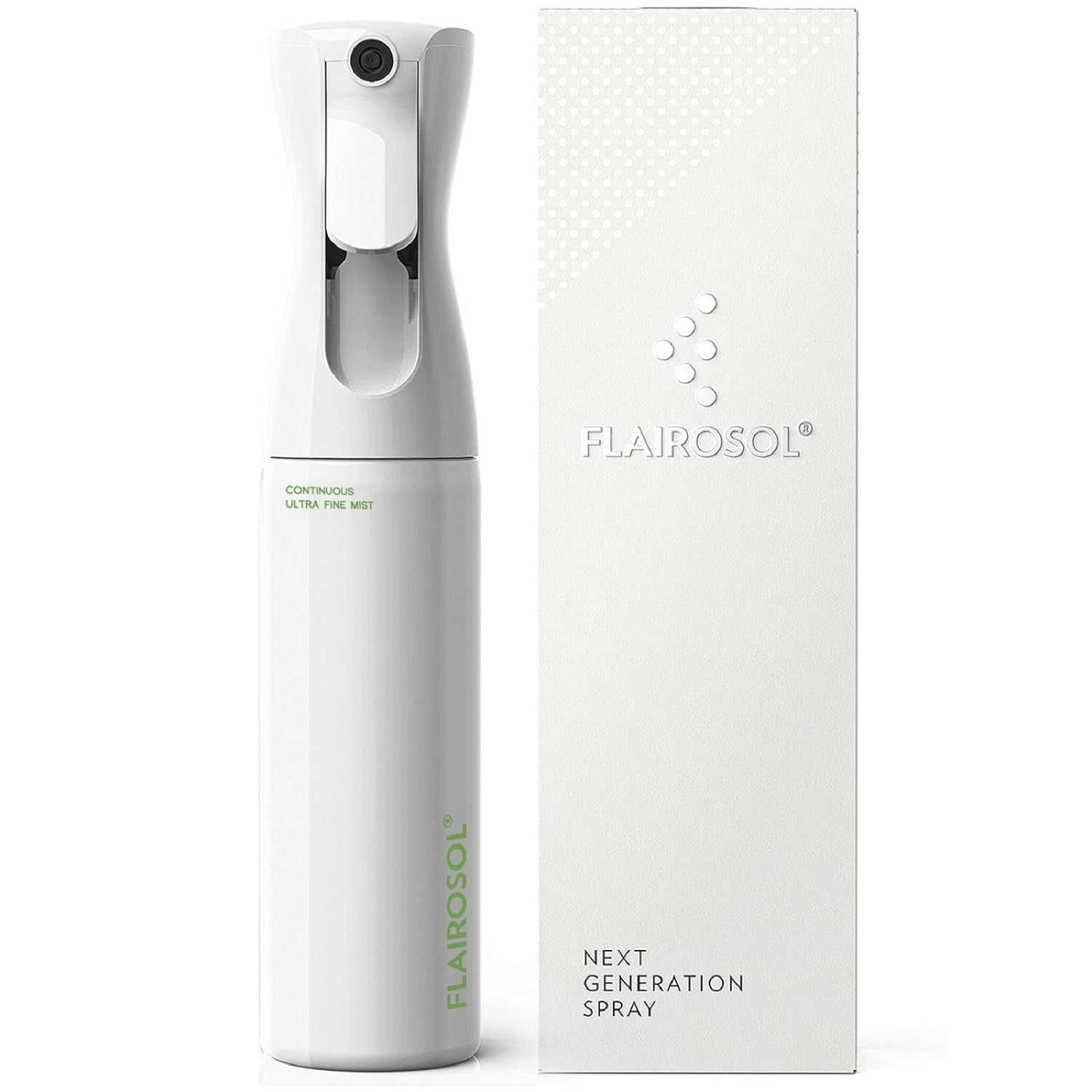
A continuous mister puts out an even fog on a single squeeze rather than a jet, which is the difference between dampening moss and knocking it loose. In a closed terrarium you are adding very small amounts of water very rarely, so control matters more than capacity. Fill it with rainwater or distilled water if your tap water is hard, because the limescale marks the inside of the glass.
Why we picked this exact one: The FLAIROSOL Original Plant Mister holds a 4.6-star average over roughly 1,400 ratings and sprays on both the push and the release, so a single pump covers a whole jar in a soft fog. At 300 ml it is small enough to live beside the terrarium rather than under the sink. The trigger needs a few pumps to prime when the bottle has been standing for weeks.
If you add only one thing from this section, make it the springtails. They are the difference between wiping the inside of the glass every fortnight and never thinking about it at all. Build a second jar and the same instinct for assembling tiny lit worlds that hide on a shelf tends to take over, which is how people end up with a row of them.
The Three Panics That Arrive in Week Two
Why did my succulents turn to mush in the sealed jar?
Succulents and cacti cannot cope with permanent humidity; they rot, and the rotting tissue then feeds mould through the rest of the jar. Beginners pick them because succulents are what every gift-shop glass bowl contains, but those bowls are open, and that is the entire difference. A sealed jar wants plants from a damp forest floor instead: nerve plants, small ferns, creeping pilea, moss. If you have already sealed succulents in, take them out today rather than waiting to see, because the soft rot spreads into whatever is next to it.
The glass has fogged up completely. Have I drowned it?
Read the glass in the morning. A light mist that clears over the course of the day is exactly right and means the water cycle is working. Drops running steadily down the inside, every day, means there is too much water in the system; take the lid off for a few hours a day until the beading stops, then close it again. The opposite reading matters too: no mist at all for several days, plus leaves going soft, means it needs a light misting. Adding water to a sealed jar is easy and getting it back out is not, so err dry.
There's white fuzz on the driftwood. Do I throw the whole thing out?
No. White fuzzy mould on wood or a dead leaf in the first month is normal, and it feeds on decaying matter rather than on living plants. Pull out the affected leaf or piece of bark with tweezers instead of just wiping the fuzz off the surface, because the food source is the actual problem. If it keeps returning, the jar is too wet and too stagnant, and a few hours of airing will do more than any spray. Springtails keep it in check long term, but they struggle against a bloom that has already spread, so add them early rather than as a rescue.
It's on a sunny windowsill and the leaves have gone pale. What happened?
Glass in direct sun behaves like a greenhouse with no vents, and a sealed jar can cook in a single afternoon. Pink nerve plants losing their colour, or fern tips going brown, is usually the first sign that the spot is too bright or too warm. Move it somewhere with good light but no direct beam, a few feet back from the window rather than on the sill itself. The famous sealed bottle garden in Surrey, planted in 1960 and watered once since, sits about six feet from a window and gets turned occasionally so it grows evenly.
Do I actually need the layer of pebbles at the bottom?
This is the one thing the hobby genuinely argues about. The case for a false bottom is that water draining past the soil has somewhere to collect instead of souring it; the case against is that in a small sealed jar it eats the vertical space the substrate needs, and in a well-watered terrarium that water should never have existed. Plenty of experienced builders now skip it and go deeper on soil instead. If you do use one, keep it to 2 to 3 cm of clay pebbles and make sure the water level never rises into the soil above, because at that point it has stopped draining anything.
People Worth Following Into This Hobby
Real practitioners we found while researching this setup — people who do the work, show their process, and publish on sites they run themselves. No sponsorships, no affiliations; we just think they're worth your time.
Builds closed terrariums in a London flat and photographs every layer of the stack, including the builds that moulded.
His layer-order guide is the clearest writing anywhere on the drainage-layer argument this setup's last question deals with, and he comes down on it from his own builds rather than from theory.
Has been planting sealed terrariums in a Bethnal Green studio since 2014 and teaches the build in weekly workshops.
Their troubleshooting page diagnoses the exact symptoms in this setup's questions, including pink fittonia losing its colour from too much sun, from thousands of jars they have had come back.
Posts a new moss and terrarium build most weeks, listing the exact species and the layer order she used in each one.
A beginner who has bought the plants in this setup can follow one of her builds species by species, including what she does with wild-collected moss and where it goes wrong.
Builds terrariums, vivariums and aquascapes and explains each decision on camera while making them.
His gallery is the answer to 'what could this become', and watching him plant one shows the tongs-and-tamper technique this setup's tools section only describes.
Love what you see here? Save individual picks with on any item, or copy everything to a list of your own in one click — great for coming back to later, or dropping as a not-so-subtle hint.
Disclosure: This section may contain affiliate links to Amazon and eBay. We may earn a small commission from qualifying purchases at no extra cost to you. Product listings from eBay are provided for discovery purposes and link directly to eBay.
Your next hobby might be in here
Every so often I stumble on a hobby too good not to share. Get new hobby setups and guides by email — no spam, unsubscribe anytime.