Target archery is the slow half of the sport. No woods, no deer, just a paper face at a known distance and the same shot repeated until your body learns it. Most people first meet it at a club field or a summer-camp range, shoulder to shoulder with ten other beginners. It is one of the oldest things you could take up, and yet it vanished from the Olympics for 52 years after 1920, because every host country ran the event under its own homemade rules; it only came back at Munich in 1972, once a single international rulebook existed. The part nobody warns you about is how honest the bow is. It copies what your back and fingers actually did, not what you meant.
What surprises most people is how little lawn this needs. Ten metres is a real practice distance for a beginner, and at that range the limiting factor isn't the length of your garden, it's what stands behind the target. The gear list is short too. A bow, arrows that match it, and something that genuinely stops an arrow; add a guard for your forearm and a tab for your fingers and you're finished shopping.
Our take: buy as little as you can, and buy it light. A bow you can hold at full draw for thirty seconds, a dozen arrows, a tab, an armguard and a bag target will keep you busy for a year. Sights, stabilisers and clickers can wait until you can put three arrows in the same fist-sized patch.
Nothing below costs enough to sting if the bow is gathering dust in the shed by March.
Where This Little Kit Can Take You
A few real moments and results from this hobby — made with tools no fancier than the ones below.
A tight group in the goldFive arrows inside the yellow is the moment every beginner is chasing.
Full draw under open skyTwo archers holding at anchor on an ordinary patch of grass.
None of this takes talent to begin. It takes a safe direction to shoot in and the patience to repeat one shot, which is the bit that quietly becomes the hobby. If you already like pastimes that reward standing still and paying close attention, you'll recognise the feeling from beginner birdwatching with binoculars and a field guide.
The Five Things Between You and Your First Arrow
The biggest mistake here is draw weight, and almost everyone makes it. Twenty-five pounds sounds like nothing while you're standing in a shop holding the bow, and it feels like a great deal by arrow twelve. Club instructors routinely start healthy adults somewhere between 22 and 28 pounds, and the people on the archery forums who regret anything regret going heavier too fast. Start light. What you're actually buying is form, and you can't build form while your bow shoulder is shaking.
Disclosure: This section may contain affiliate links to Amazon. We may earn a small commission from qualifying purchases at no extra cost to you.
01Pick 01 of 09
Takedown Recurve Target Bow
A takedown recurve comes apart into a riser and two limbs, so the limbs can be swapped for heavier ones later without replacing the whole bow. Beginner target models are sold as matched length and draw-weight combinations, often in two-pound steps, with a 68-inch bow suiting a 26 to 28 inch draw. Look for one sold by draw length rather than by age, and for threaded bushings in the riser if you ever want to add a sight.
Why we picked this exact one: The Sanlida Noble Standard is the one in-stock takedown on Amazon that actually comes in beginner draw weights, stepping up from 12 lb in two-pound increments instead of starting at 40. It ships as a working setup: string, rest, stringer, a basic tab, a quiver, six practice arrows and a paper face. Its maple-core limbs feel solid for the money. The bundled tab and arrows are the parts people replace first, which is why both get their own entry below.
Arrows are rated by spine, which is how much the shaft bends, and the right spine depends on your actual draw weight at your actual draw length. A recurve under about 30 pounds needs a very limber shaft; the stiff carbon arrows sold for 50-pound compounds group badly off one. Buy a dozen rather than six, because arrows get lost in grass and chewed up against each other in the target.
Why we picked this exact one: The LWANO 28-inch fiberglass dozen is rated for bows up to 35 pounds, which is exactly the band a 22 to 28 pound recurve sits in. Fiberglass is heavier than carbon and nobody shoots it in competition, but it survives being trodden on and shot into gravel, and at this price a lost arrow is not an event. Reviewers do say the dozen is not perfectly consistent, so expect one or two to fly slightly off from the rest.
An armguard is a stiff plate strapped over the inside of the bow arm, between wrist and elbow. It takes the slap when the string clips your forearm, and it holds a loose sleeve flat so the string cannot catch fabric. Eight inches covers the spot most beginners actually get hit.
Why we picked this exact one: The SAS 8-inch armguard is the three-buckle version rather than the elastic-sleeve type, so it stays where you put it once the strap warms up and stretches. It is the most-reviewed guard in its price band, and it is plain vinyl rather than leather, so sweat and rain do not matter. The buckles need a minute of fiddling the first time and then stay set.
A tab is a flat piece of leather that hangs off the middle finger and sits between the string and your fingertips. It lets the string slide off cleanly at release instead of rolling over skin, which is what keeps the arrow going where you aimed. Tabs come split for shooting with the arrow between the fingers, or in one piece for shooting all three fingers under it.
Why we picked this exact one: The Ringsun handmade leather tab is the plain, cheap answer forum regulars keep giving beginners: a basic tab, not an adjustable competition one with a shelf and a face plate. The leather is thick enough to blunt the string without deadening the feel of the release. Sizing runs small, so measure your fingers against the chart instead of guessing.
A bag target is a sealed sack of layered synthetic fibre that catches an arrow by friction instead of letting it punch through foam. Arrows come out with one hand, which matters far more than it sounds when you are shooting a hundred in an afternoon. Two printed faces give several aiming points, so the same spot is not destroyed in a week.
Why we picked this exact one: The Morrell Yellow Jacket Stinger is rated to stop field points up to 325 feet per second, roughly four times what a 24-pound recurve produces, so light shooting will not wear it out for years. It is a 20-inch block with a tote handle, so it goes back in the shed after a session instead of weathering on the lawn. Field points only, though: a broadhead will ruin it in one shot.
Together these five put a working range in your garden for a bit under two hundred dollars, and four of them will outlast the bow. That is roughly the same opening spend as most hands-on hobbies, which is worth remembering if you're still weighing up which first hobby is worth the money. One warning before the next section: measure your draw length before you order anything, because the bow length and the arrow length both hang off that number.
Or Just Buy One Box
Piecing the list above together comes to a bit under two hundred dollars before a single arrow flies, and that's a lot to spend on finding out whether you enjoy standing in a garden pulling a string. Complete sets exist for a quarter of it. The catch is always the same one, and it's worth looking at squarely.
The one-box alternative
Takedown Recurve Bow Set
One-box archery sets pair a simple takedown riser with fibreglass limbs, six arrows and the small accessories, so nothing else has to arrive before the first shot. They are built to a price, with a moulded riser and a dual arrow rest that works for either hand. The draw weights on offer are usually fixed and fairly heavy.
Why we picked this exact one: The IS-TONGTU set is the best-reviewed complete takedown bow set in this price band, and it is here as the honest comparison point rather than as a rival to the picks above. Its real limit is draw weight: 30 pounds is the lightest option, which is already at the top of what coaches hand a beginner, and there is no 20-pound version to grow out of. The six arrows are the first thing you will want to replace.
Six arrows and a bow, so you can shoot the minute it arrives. There is no target in the box, so you still need something safe to shoot into.
Twelve matched arrows and a target rated far above your bow, so a session does not stop every six shots to hunt for shafts. better here
Quality of the tools
Moulded riser, fibreglass limbs, throwaway arrows. It shoots and it keeps shooting, but nothing on it adjusts.
A wooden takedown riser with threaded bushings and swappable limbs, plus a bag target built to outlast the bow. better here
The first evening
Assembled and shooting in about ten minutes, in one delivery. better here
Five separate orders, and the heavy target is usually the one that arrives last.
Where it leads
Nothing carries forward but the accessories. When 30 pounds stops suiting you, the whole bow goes.
The limbs swap for heavier ones on the same riser, and the tab, guard, netting and target stay with you for years. better here
Our verdict: it depends. Buy the set if you want a bow in the garden this week and are happy to find out later whether archery sticks; build it from the picks if you already know you want to shoot properly, or if 30 pounds is more than you can hold steady.
Either way, the target and the netting are a separate purchase; no bow set includes something safe to shoot into. If you like the idea of a cheap box that teaches you whether a craft suits you, whittling with one knife and a block of wood runs on the same logic for a tenth of the money.
What You'll Quietly Buy in Month Two
None of these change how an arrow flies. They change how the session feels, and three of the four are about not damaging things. The netting is the odd one out, and honestly it isn't optional in a small garden; it's only down here because the target does the real work and the net catches the shot that got away from you.
06Pick 06 of 09
Recurve Bow Stringer
A stringer is a cord with a pocket at each end that lets you bend the bow with your leg instead of your hands. You stand on the cord, pull the riser up, and slide the string loop into its groove with no sideways force anywhere. It takes about ten seconds once you have done it twice.
Why we picked this exact one: The Selway Limbsaver is the stringer forum regulars name when a beginner asks, and the one most starter bows should have come with in the first place. Its rubber pockets hold the limb tips without scuffing them, and the cord is long enough for a 68-inch bow. Plenty of kits include a thin nylon stringer; this is the one you keep using.
Backstop netting is a dense fibre curtain hung loose behind the target so a missed arrow drops at the foot of it instead of carrying on. The slack is the whole point: a taut sheet bounces arrows back, a hanging one swallows them. Archers who would rather not buy one hang a rubber horse stall mat or a length of old conveyor belt instead.
Why we picked this exact one: The Silipull panel is rated for bows up to 45 pounds, which covers any sensible beginner recurve with room to spare, and it ships with hooks and rope so it hangs off a fence or a pair of posts with no extra hardware. At 5 feet by 3.35 feet it covers roughly one target's width, so a narrow garden may want two panels or the bigger size. It is dense cloth rather than open mesh, so it behaves like a sail on a windy day.
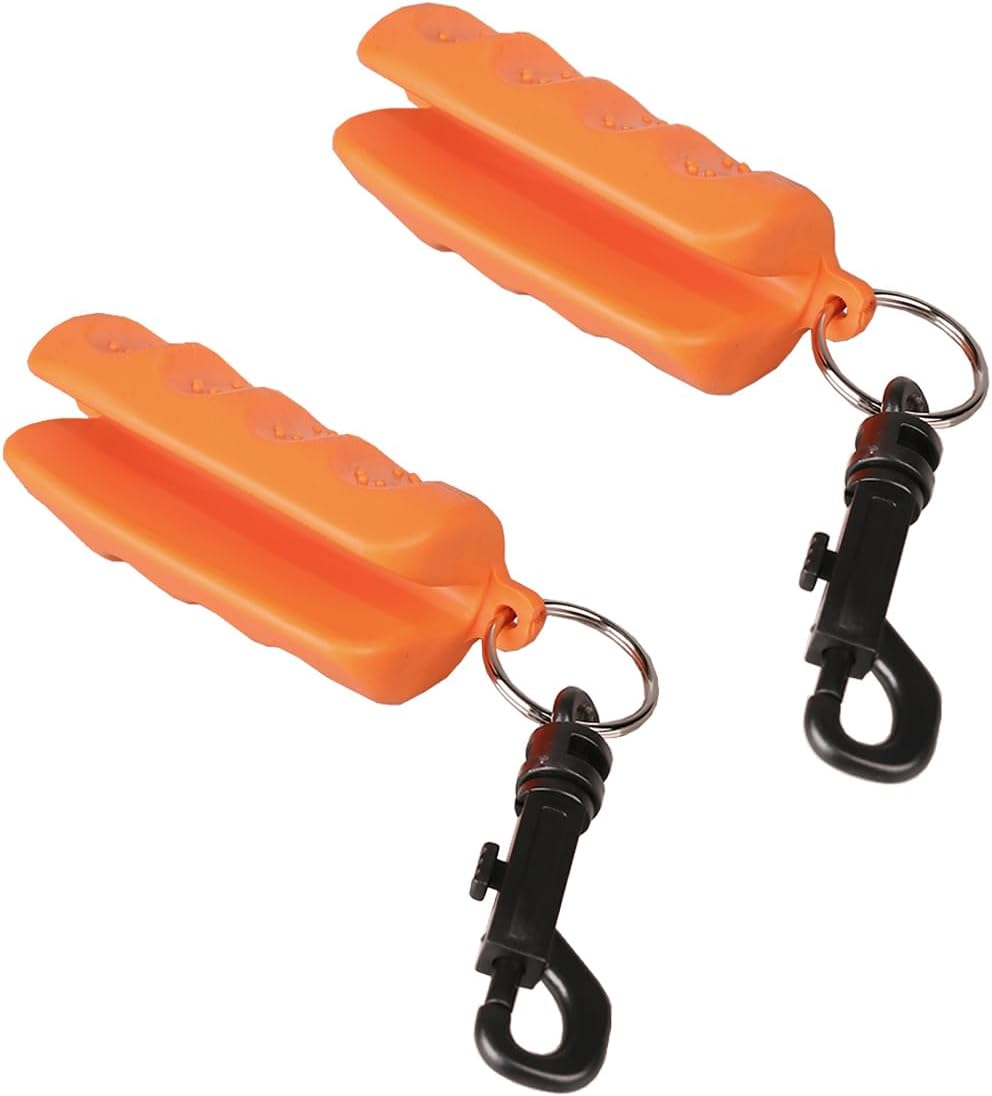
An arrow puller is a block of grippy rubber you close around the shaft so your hand cannot slide off it. Pulling a stuck arrow bare-handed means gripping harder and twisting, which is how shafts bend and fletchings tear. A belt clip keeps it where your hand already goes.
Why we picked this exact one: The KRATARC puller is the cheapest thing on this page and the one most likely to still be in the bag in five years. Its rubber grips fiberglass and carbon equally well, and the belt clip means it is on you rather than lying somewhere near the target. A bag target like the one above gives arrows up easily enough that you may not need it until you move to foam.
A bow stand is a small folding frame that holds the bow upright on its lower limb tip while you walk down to the target. Laying a strung bow in wet grass picks up grit that then grinds into the limb faces and the string. The good ones fold flat and weigh almost nothing.
Why we picked this exact one: The TRUGLO Bow Jack has outsold every other folding stand in its class for years, and it takes a recurve limb tip as happily as a compound cam. It is plastic, so it will crack if you stand on it, but it costs less than a pack of arrows. In long grass it wants a flat patch to sit on.
Buy the stringer with the bow and the rest when something annoys you enough. That is generally the cheapest route into any gear-heavy pastime, and it's the pattern behind most of the starter hobbies worth taking up as an adult. Resist the urge to add a sight in the first month; aiming is the easy part, and a sight on sloppy form just locks the sloppiness in.
Read This Before the First Arrow Leaves
Archery is one of the few quiet hobbies where a beginner mistake can genuinely hurt somebody, and the dangerous errors are not the obvious ones. Nobody shoots a neighbour on purpose. They shoot high over a target that was too close to a fence, or they loose a string with no arrow on it and destroy a bow in their hands.
Never dry-fire. A drawn bow is holding energy that the arrow is supposed to carry away; with nothing on the string, that energy goes into the limbs instead, and manufacturers warn plainly that it damages the bow. It can also send splinters at your face. Check behind and around the target before every end, not just the first one, and remember that a pet or a child can walk into a garden in the time it takes you to nock. Hard surfaces behind a target throw arrows back; soft ground lets them bury harmlessly. Keep the shooting line square to the target so the whole lane is in front of you, and when in doubt, shoot toward your own house rather than anyone else's.
Then there's the legal side, which catches people out. Plenty of towns define a bow as a weapon in the ordinance that bans discharging weapons inside city limits, and an HOA can ban it outright even where the city does not. Check before you buy, not after. Archers who want to be certain invite the local police to walk the intended range; it costs nothing and settles the question.
The honest advice from almost every coach is to take one lesson at a public range before shooting alone, because the bad habits you build in week one are the ones you'll be unpicking in year two. If your garden turns out to be too short or too overlooked for any of this to be sensible, that's genuinely worth knowing before you spend a penny, and a first indoor plant corner is the kind of slow hobby that needs no safe backdrop at all.
The Questions That Come Up After Arrow Fifty
Is it actually legal to shoot in my own garden?
People assume archery sits outside firearms rules, and in many places it doesn't. A good number of city ordinances ban discharging a weapon within city limits and define a bow as a weapon, and an HOA can forbid it on its own. The consequence is not usually a fine; it's that you are liable for anything your arrow touches, and a stray shot over a fence becomes your problem entirely. Read your local ordinance before ordering a bow, and if you want certainty, ask the police to look at the range you have in mind.
Why do all my arrows land to one side when my aim feels fine?
Beginners read a consistent left or right miss as a form fault and start twisting their stance to fix it. Often the fault is in the arrow: a shaft too stiff or too limp for the bow doesn't bend cleanly around the riser as it leaves, and it leaves at an angle every single time. Shuffling your feet hides it for a week and then it comes back. Match the spine to your real draw weight at your real draw length, using the arrow maker's chart, before you change anything about how you stand.
Why does the string still hit my forearm even with a guard on?
The guard is treating the symptom. A string that keeps catching the arm usually means the bow elbow is rotated into the string's path, often because the hand is squeezing the grip instead of letting it sit in the web of the thumb. Archers fix it by rolling the elbow outward and relaxing the bow hand, not by buying a longer guard. Some bows and some body shapes will always brush the arm a little, which is exactly why the guard stays on.
Can I just stack hay bales instead of buying a target?
It is the most repeated cheap tip in archery and the one archers push back on hardest. Arrows go straight through a loose bale and keep going, they bury so deep in a tight one that you spend the session digging, and the dry stalks scuff the finish off shafts and shred fletchings. A bale also rots and slumps after one wet winter. A layered bag target costs about the same as the arrows you'd wreck in a month.
How do I work out my draw length before I own a bow?
Nearly everyone guesses this from their height and gets the wrong bow length as a result. The standard method is to stand with arms out level, have someone measure fingertip to fingertip, and divide that wingspan by 2.5. That number sets both the bow length you order and the length your arrows need to be, so getting it wrong once costs you twice. Measure it before anything goes in a basket, and expect it to creep up slightly in your first months as your form opens out.
People Worth Following Into This Hobby
Real practitioners we found while researching this setup — people who do the work, show their process, and publish on sites they run themselves. No sponsorships, no affiliations; we just think they're worth your time.
Ashe Morgan, who shot recurve internationally for Great Britain for ten years, runs a recurve coaching site with a drills library, technique breakdowns and video courses.
This setup stops at 'start light and build form'; his beginner shot-cycle and drill pages are where a reader goes next to learn what that form actually is, including the release faults behind the one-sided misses in our FAQ.
Bonnie and Ed Terribilini are USA Archery certified instructors who teach private and group archery lessons in Santa Cruz and write up the form steps they teach on the range.
Their NTS walkthrough covers stance, grip and anchor in the order a coach teaches them, which is the lesson this page recommends a beginner take before shooting alone in a garden.
A former USA Archery Level 4 coach and editor of Archery Focus magazine who has blogged about coaching archery for over a decade and wrote a book specifically for adult beginners.
He writes about the equipment side of beginner archery honestly, including when arrow tuning is worth starting and why most beginner kit is adequate if set up properly, which is the argument behind our essentials list.
A free online magazine written by field archers, mixing unbiased kit reviews with build-it-yourself target projects costing under thirty pounds.
Readers who get hooked on a static bag target in the garden tend to want moving and novelty targets next, and this is where archers document how they built theirs and how to shoot them safely.
Love what you see here? Save individual picks with on any item, or copy everything to a list of your own in one click — great for coming back to later, or dropping as a not-so-subtle hint.