Picture someone at a kitchen table with a rulebook, a few dice and a notebook, playing a tabletop roleplaying game with nobody else in the room. They're the hero and they're also the world. No referee. When something uncertain comes up - is the dock guarded, is the stranger lying - they don't decide; they ask, roll, and read the answer off a table, and the story walks off somewhere they never planned. People do this on balconies, on trains, in cafes, in the hour after the house goes quiet. The game that pulled most of them in, Ironsworn, arrived in 2018 as a free download and won a Gold ENnie the next year for Best Free Game - it beat the paid competition while costing nothing.
Here's the whole loop, and it really is this small. You want to know whether the derelict still has power, so you ask the oracle: is there power? You roll, the table gives you a hedged yes, and now it's your job to say what that looks like. One flickering corridor, maybe. Nothing else. You write that line down and ask the next question. Four moves later you're standing in a ship you've never seen, and you didn't invent a single part of it on purpose.
Our philosophy: buy the smallest pile that can produce a real evening of play. One rulebook, dice that cover a six-sider and a matched pair of ten-siders, somewhere to write, and a stack of cards. That is a campaign. Everything past that can wait until you know you'll keep going.
Nothing below is a splurge. The rulebook is the one real expense; the rest of the kit is the plain cheap version on purpose, because you shouldn't be out much if this turns out not to be your thing.
Where This Little Kit Can Take You
A few real moments and results from this hobby — made with tools no fancier than the ones below.
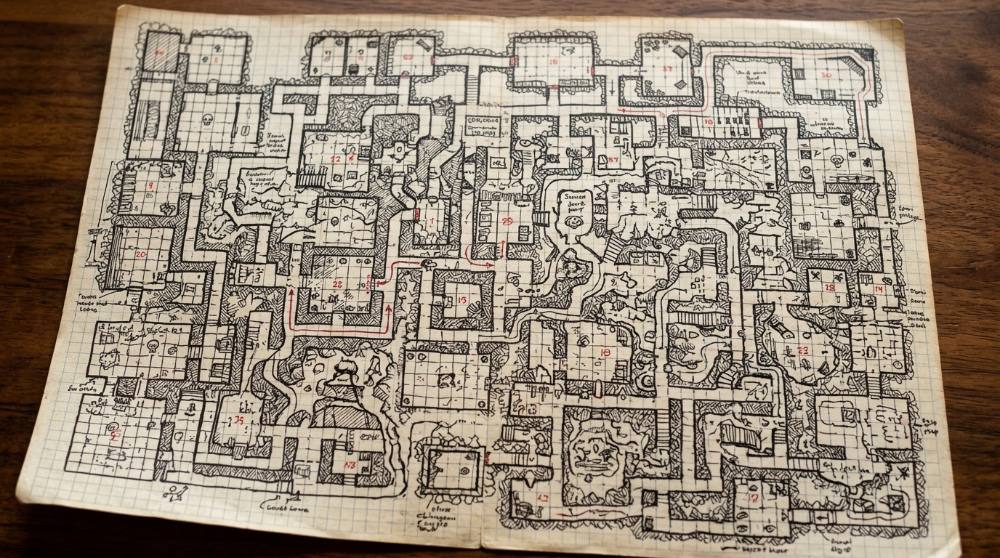
A sheet filled in by handThe play sheet is the only object a campaign leaves behind.
Asking the table a questionNobody else is waiting on this roll.
Everything tipped from the bagTwo of these ten-siders decide every risk you take.
One thing worth knowing before you spend anything: a core rulebook here is not a starter snack. The Starforged hardcover runs to 404 pages, and one player's solo campaign with it filled nineteen published chapters before it wrapped. Sessions themselves are small - twenty minutes if you only want a few moves, a couple of hours if you're deep in it. So buy one book, and play it until it's nearly finished and the rules have gone quiet in your head. Starting with three at once is the classic mistake in this corner of the hobby; you end up with a shelf and no idea which one to open tonight or which comes next. This is also the steepest of the solo styles to learn, and I'd say so plainly - if 404 pages already sounds like a lot, the beginner solo dungeon crawler kit has you rolling in an evening instead.
Four Things, One Campaign
The list is short because the book does the heavy lifting. You need the rules, the dice those rules actually name, somewhere to keep the story, and something to pin the loose pieces on. Beginners overspend here in a very particular way: they buy the core book, then a supplement, then a second system, and never get a character past creation in any of them. Buy these four. Play. Let everything else prove it's needed.
Disclosure: This section may contain affiliate links to Amazon and eBay. We may earn a small commission from qualifying purchases at no extra cost to you. Product listings from eBay are provided for discovery purposes and link directly to eBay.
01Pick 01 of 10
complete solo science-fiction roleplaying rulebook with built-in oracle tables
A solo-capable rulebook carries both halves of the game: the rules for what your character does, and the random tables that stand in for a game master. The good ones give a large share of their page count to those tables, covering places, people, creatures and complications, so you can keep asking questions without running dry. Look for one that supports solo play by design rather than a group game with a solo appendix added at the back.
Why we picked this exact one: We went with Modiphius's Ironsworn: Starforged Deluxe Edition rulebook, Shawn Tomkin's standalone sci-fi follow-up to Ironsworn. It's a finished game, not a toolkit you bolt onto something else, and it assumes no prior Ironsworn experience. The print copy includes the publisher's PDFs at no extra cost, which matters on evenings you want the oracle tables searchable. The catch is supply: Amazon's listing keeps slipping out of stock, so this link points at a stocked game retailer on eBay instead.
polyhedral dice packs with the matched ten-sided pair solo roleplaying rolls need
An oracle-driven action roll uses one six-sided die against two ten-sided dice, and the oracle tables themselves run to a hundred rows, so you also need a percentile roll. A single seven-die set contains only one plain ten-sider alongside a percentile die, which is one die short of a legal roll. Multi-set packs are the cheap fix: several matching tens, and spares for when one goes under the sofa.
Why we picked this exact one: The CREEBUY six-pack of seven-die polyhedral sets is here for one unglamorous reason: six sets means six ten-sided dice, and you need two of them matching to roll properly. It sits at 4.7 stars, and the numbers are recessed and painted rather than printed, with the six and nine underscored so you don't misread a result at the end of a long scene. These are not heirloom dice - the colours are loud and the edges come sharp out of the bag - but they roll true and cost less than a single fancy set.
lay-flat dotted notebook for keeping a running campaign journal
The campaign journal is where a solo game actually lives: scene notes, the names you rolled up, what you owe whom, and the half-sentence that reminds you why the station was burning. A notebook that opens flat matters more than it sounds, because you'll be writing with a rulebook propped open beside it. Dot grid is the usual choice since it takes prose, rough maps and progress tracks equally well.
Why we picked this exact one: The RETTACY A5 dotted journal is the cheapest notebook we found that still does the one thing this hobby needs, which is lie flat at 180 degrees without being held open. It carries 4.8 stars across a very large review base, and the 100gsm paper takes a fountain pen without ghosting through to the next scene. Two ribbon markers is the small luxury that earns its keep - one for where you're writing, one for your character's stats.
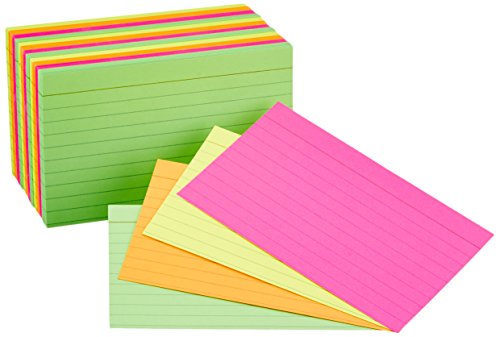
ruled index cards for tracking characters, threads and locations
Loose cards do the job a notebook can't: they re-sort. One card per person, per unresolved thread, per place, spread across the table so you can see at a glance what's still open and what's gone cold. Ruled on one side and blank on the other is the useful combination, since the back takes a sketch map or a layout. Colours let you separate people from plots without inventing a filing system.
Why we picked this exact one: Amazon Basics ruled index flash cards are the unexciting right answer here, at 4.8 stars across tens of thousands of ratings. The pack comes in assorted neon colours, which is what lets you keep people, places and open threads in separate piles without labelling anything. The card stock is thinner than a premium brand's, so they curl a little if you shuffle them for months - at three hundred to a pack, that's a problem you can afford to ignore.
With these on the table you can start tonight and keep going for months - the rulebook has enough tables in it that you'll stop worrying about running dry. Expect the first session to feel mechanical and a bit silly, like you're filling in a form that occasionally describes a spaceship. That passes around session two, when you stop looking up moves and start arguing with the dice. If you want the full list of potholes before you hit them, we wrote up the mistakes new solo roleplayers keep making.
The One Book To Add Second
A second book is how this hobby grows, but only after the first one is nearly spent. The useful kind isn't more setting - it's a tool that unlocks every other game on your shelf, so a rulebook you already own can be played alone. Add it when your first campaign is winding down and you've started eyeing a game that has no solo rules of its own. There's a gentler second step too, if a whole emulator sounds like homework: a beginner journaling RPG setup asks far less bookkeeping of you.
05Pick 05 of 10Book worth reading
game master emulator that adds solo oracles to any roleplaying game you own
A game master emulator is a system-agnostic book of procedures: a yes/no oracle, a measure of how far events have slipped out of your control, random events drawn from your own list of open threads and characters, and tables that turn a bare answer into a detail. It doesn't replace a game's rules - you still roll that game's dice - it replaces the person who would have told you what happens. One emulator covers every rulebook on your shelf.
Why we picked this exact one: Word Mill Games' Mythic Game Master Emulator Second Edition, by Tana Pigeon, is the direct update of the 2003 ruleset that started this whole practice. It simplifies the Fate Chart and adds a chartless Fate Check, so you can run the oracle from memory once it sticks. Watch the edition when you buy - the earlier revision is still widely sold and looks almost identical on a listing page. This link goes to a bookseller on eBay because Amazon's copy ships on a lead time and costs more.
None of this makes the game better. It makes it faster, which once you're playing twice a week turns out to be the same thing. Two of the picks below come in pairs - a tray or a tower, a laser printer or an inkless one - and you genuinely only want one of each pair. Printing deserves a word of warning: it sneaks up on you. The free character sheets, move references, oracle worksheets and printable asset cards are all official downloads, and sooner or later you'll want them on paper instead of on a phone screen you have to keep unlocking mid-scene. If you're still deciding whether any of this is for you, solo roleplaying explained for beginners is the gentler way in.
06Pick 06 of 10
printed asset card deck for the character options a solo campaign unlocks
Assets are the character options you spend experience on - companions, vehicles, paths, equipment - and in play you want them in front of you, not buried in a chapter. A printed deck turns character advancement into picking a card off the table and laying it beside your sheet. The alternative is printing the publisher's free card files yourself, which works fine and costs nothing but a cutting session.
Why we picked this exact one: The Modiphius Ironsworn: Starforged Asset Deck is the publisher's own 90-card set, which means it matches the rulebook exactly rather than approximating it - 87 asset cards plus three reference cards, poker-sized. Be aware the review record is thin: twelve ratings at the time of writing, which is normal for a niche official accessory but worth knowing. Skip it entirely if you own a printer, since the same cards are a free download.
These 2 do the same job. You only need one of them, so pick the one that suits you better.
07Pick 07 of 10Option A
felt-lined rolling tray that keeps dice on the table and quiet
A rolling tray is a shallow walled dish, usually leather or wood with a soft lining, that catches dice before they reach the floor. The lining is the point: it muffles the clatter and stops the dice skating. Depth matters more than diameter - too shallow and a firm throw clears the side anyway.
Why we picked this exact one: The RERIVER octagon tray is the practical size rather than the photogenic one: 11.6 inches across with 1.6-inch walls, which is deep enough that an impatient throw stays in. It holds 4.8 stars over several hundred ratings. The felt is glued rather than stitched, so treat it gently at the seams, and the PU leather outside is exactly as convincing as PU leather ever is.
Pros
Flat and open, so you grab the dice straight back out
Quieter than a tower, which matters when the house is asleep
folding wooden dice tower that randomises the roll for you
A dice tower is a small chimney with angled baffles inside. You drop the dice in the top, they bounce their way down, and they come out at the bottom into a catch area. The baffles do the randomising, which is why some players trust a tower more than their own wrist. The folding kind collapses into a flat case for carrying.
Why we picked this exact one: The Cusdie bamboo folding tower earns its place over the fancier acacia towers by collapsing flat and going in a bag, which matters in a hobby people genuinely play on trains and in cafes. It rates 4.5 stars and holds together with magnets rather than hinges, so there's nothing to wear out. Bamboo is light, which is the trade-off: it rattles more than a heavy tower and will walk across a smooth desk if you drop dice in hard.
Pros
Internal baffles randomise the roll, so a tired throw is still a fair one
Folds flat and travels, which suits playing away from your desk
Dice land in the base instead of scattering
Cons
Louder - the dice rattle down through the baffles
Slower than scooping dice off an open tray
Small opening if you like throwing a fistful at once
These 2 do the same job. You only need one of them, so pick the one that suits you better.
09Pick 09 of 10Option A
compact monochrome laser printer for character sheets and oracle references
A mono laser is the sane home printer for a hobby that prints text and line art in bursts and then nothing for a month. Toner is a powder, so it doesn't dry up the way inkjet cartridges do between sessions, and the per-page cost is low. For this use the only specs that matter are that it prints a full page cleanly and connects without a cable.
Why we picked this exact one: The Brother HL-L2405W is the small wireless mono laser we'd put next to a gaming table: it prints a clean letter page, sets up over wifi, and the toner survives long gaps between sessions. Its rating is 4.0 rather than the 4.2 we usually insist on - budget mono lasers sit in that band almost across the category, and the complaints cluster on the bundled subscription trial rather than the printing. Decline the trial at setup and it behaves like an ordinary printer.
Pros
Toner doesn't dry out between printing sessions
Prints full letter and A4 pages, so booklets and card sheets work
inkless portable thermal printer for reference sheets on the move
A thermal printer burns the image into heat-sensitive paper instead of laying down ink, so there's nothing to replace but the paper itself. The portable letter-size models run off a battery and print from a phone over Bluetooth. Output is monochrome and the paper is the consumable you have to keep buying.
Why we picked this exact one: The Phomemo M08F is the portable we'd pick because it takes full letter-size thermal paper rather than the narrow receipt rolls most pocket printers use, so a move reference sheet comes out readable. It weighs about a pound and a half and sits at 4.2 stars over a large review base. The honest limitation is the medium: it's black only, the paper is a recurring cost, and a thermal sheet in a sunny window won't look good in a year - fine for play aids, wrong for anything you want to keep.
Pros
No ink or toner to buy, ever
Light enough to live in a bag with the notebook
Prints straight from a phone over Bluetooth
Cons
Black only, and greys come out muddy
Needs its own thermal paper, which is the running cost
Buy none of this in month one. Buy the one that matches the friction you actually feel - dice skittering off the table, or a fourth trip to the printer at the library. The tell that you're ready is boring and reliable: you'll notice you've stopped reading the rulebook and started reaching past it. And if the thing you end up loving is the table itself rather than the story, beginner solo miniature wargaming scratches a very similar itch with more things to look at.
The Questions That Show Up Around Session Two
Do I need the emulator and the rulebook, or is one of them enough?
One is enough, and most beginners buy both because the two products get recommended in the same breath. They do different jobs. Starforged already carries its own oracle tables, so bolting a general emulator on top adds a second set of procedures you have to remember mid-scene - which is exactly what makes a first campaign stall. A game master emulator earns its place when you want to play something that has no solo rules at all. Finish a campaign with the rulebook first, then add the emulator when you've got a game on the shelf you want to play alone.
The free PDF is right there. Why would I buy anything?
You shouldn't, not yet. Ironsworn is a complete game given away for nothing, and it won a Gold ENnie for Best Free Game in 2019 - this isn't a demo with the good bits removed. The honest sequence is to play two or three sessions of the free one, find out whether narrating to yourself feels good or excruciating, and only then buy a printed book. What you're paying for later is a physical object you can flip through without unlocking a phone, not access.
The oracle said 'Demand Warning' and I have no idea what that means. Now what?
This is the single most common place a new player freezes, and it happens because the core oracles are deliberately abstract - verb-and-noun pairs rather than finished answers. People who've played for years will tell you the same two things: reroll it, or walk away from it. Rerolling an abstract result that doesn't fit your scene is not cheating and not a failure of imagination; it's normal play. And when nothing comes, stop the session mid-scene. The answer usually turns up in the shower.
Why do I keep failing? Am I reading the dice wrong?
You're probably reading them right. The odds in this family of games are tuned so that the partial success is the most likely result and outright misses are common, because complications are what generate a story when there's no game master to throw any at you. Beginners coming from video games read that as losing and start fudging rolls, which quietly removes the only thing pushing the plot. The fix is to treat a miss as the game taking a turn rather than you taking a hit - and to notice that the rulebook literally contains a move called Take a Break, because stopping is part of the design.
People Worth Following Into This Hobby
Real practitioners we found while researching this setup — people who do the work, show their process, and publish on sites they run themselves. No sponsorships, no affiliations; we just think they're worth your time.
Designs and self-publishes the Ironsworn family of solo roleplaying games and gives away the character sheets, move references and oracle worksheets people actually play from.
The core rulebook in our essentials is his, and his free Starforged playkit is the exact set of sheets our printer picks exist to print.
Plays Ironsworn and Starforged entirely on paper and has written up every step of building that setup, down to binding the oracle tables into pocket booklets.
His setup post is the long version of our essentials list, and he is candid about the two things that frustrate beginners most: abstract oracle results and losing rolls on purpose.
Wrote the Mythic game master emulator in 2003 and still publishes a monthly magazine of new solo tools, tables and procedures built on it.
The second book we recommend is hers, and her site carries the free guide for new solo roleplayers plus the tutorials that explain the Fate Chart properly.
Love what you see here? Save individual picks with on any item, or copy everything to a list of your own in one click — great for coming back to later, or dropping as a not-so-subtle hint.
Disclosure: This section may contain affiliate links to Amazon and eBay. We may earn a small commission from qualifying purchases at no extra cost to you. Product listings from eBay are provided for discovery purposes and link directly to eBay.
Your next hobby might be in here
Every so often I stumble on a hobby too good not to share. Get new hobby setups and guides by email — no spam, unsubscribe anytime.