Affiliate link: we may earn a small commission, at no extra cost to you.
Your Milk Is Half an Hour From Being Cheese
Heat a pot of milk, stir in something sour, and within about a minute the whole thing breaks into soft white clouds drifting in thin greenish whey. That's it. That's cheese, or at least the fresh half of it: ricotta, paneer, chevre, the mozzarella you tear over a pizza. People have been at this for a very long time, and the proof is oddly specific. Archaeologists testing perforated clay pots from central Poland, dated between 6,800 and 7,400 years old, found milk fat soaked into the holes, which makes those sieves the oldest cheesemaking kit anyone has dug up. The word ricotta just means recooked, which tells you how little the method has really moved.
What nobody warns you about is how abrupt the change is. One moment the pot plainly contains milk. Thirty seconds after the acid goes in it contains something you could strain. Aged cheese is a different hobby altogether, wanting a cave, a humidity controller and three months of nerve, and none of that is on this page. Everything here gets eaten the day you make it, or the morning after.
Our line on kit: buy the four things that actually decide whether a curd forms, and raid your own cupboards for the rest. A thermometer you trust, cloth fine enough to hold the curd, a little rennet, a jar of citric acid. The pot and the colander you already own, and the only thing that matters about the pot is that it's stainless rather than aluminium, which reacts with the acid.
Nothing below costs enough to sulk about if you make one batch of ricotta and never do it again.
Where This Little Kit Can Take You
A few real moments and results from this hobby — made with tools no fancier than the ones below.
Ricotta still warm in the clothThe curd is scooped out while it is still steaming, which is when it tastes best.
Pulling the curd into ropesCurd only stretches like this inside a narrow window of acidity and heat.
If you've ever kept a sourdough starter alive on the kitchen counter, you already have the temperament for this, though cheese is far less needy about it. Nothing here takes longer than an evening. The hard part isn't technique at all, it's buying the right milk, which is where the next section starts.
The Four Things That Decide Whether the Curd Forms
Here's the uncomfortable bit about fresh cheese: the recipe is almost not the point. You can follow a ricotta method to the letter and still pour five dollars of milk down the sink, because the milk was wrong or the thermometer was lying to you. Each of these four closes off one of those failure routes. I'd buy all four before the first attempt rather than work out which one was missing at nine at night, standing over a pot of warm, stubbornly uncurdled milk.
Disclosure: This section may contain affiliate links to Amazon. We may earn a small commission from qualifying purchases at no extra cost to you. Certain content that appears on this site comes from Amazon.
01Pick 01 of 09
Digital Instant-Read Food Thermometer
A thin-probe digital thermometer reads a pot of milk in a few seconds and gives you the number the recipe is actually asking for. Fresh cheese lives in narrow temperature windows: a quick mozzarella curd is set at 90F and cooked to 105F, while whole-milk ricotta only breaks somewhere around 190F. Look for a stated accuracy figure rather than a vague promise, and check the thing against boiling water the day it arrives.
Why we picked this exact one: The CDN DT392 ProAccurate is the one I'd buy: it states its accuracy as plus or minus 1.7F instead of hiding behind adjectives, and it's NSF certified, which is rare at this price. It reads in six to eight seconds and holds a 4.5-star average across thousands of reviews. The trade-off is that it has no pot clip, so you dip it and read it rather than leaving it hanging in the milk while the temperature climbs.
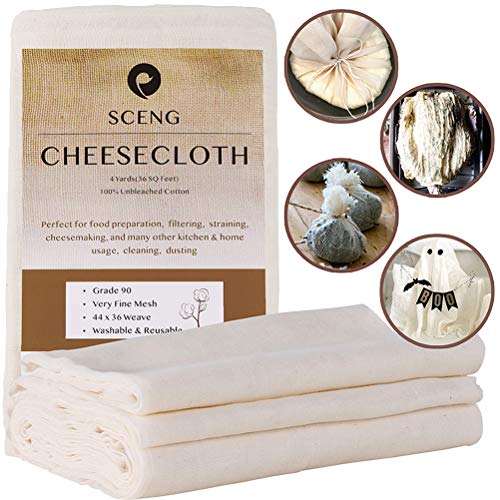
Cheesecloth is graded by how tightly it's woven, and that grade is the only number worth checking. The loose stuff in supermarket and hardware aisles sits around grade 50 and lets soft curd run straight through into the sink. Grade 90, what dairy people call butter muslin, holds the fine grainy curds that ricotta and chevre throw, and washes out for reuse.
Why we picked this exact one: The S.CENG grade 90 cheesecloth gives you four square yards for under ten dollars, enough to cut into several draining squares and keep spares. It's unbleached, which suits a craft whose recipes already tell you to dissolve rennet in non-chlorinated water. At 4.7 stars it's among the better-reviewed cloths on the site. It stains a faint yellow after a few batches and never looks new again.
Rennet is the enzyme that makes milk set into a curd you can cut into cubes, rather than the soft flocs that acid alone produces. It comes as liquid or as tablets: liquid is measured straight out with a quarter-teaspoon, while tablets have to be crushed, dissolved and scaled down, and they never quite dissolve. An opened bottle keeps roughly a year in the fridge and fades slowly as it ages.
Why we picked this exact one: North Mountain Supply's liquid calf rennet is the straightforward pick: it's a 1:10,000 strength liquid, and the maker's own dose of about a quarter teaspoon per gallon is exactly what beginner recipes assume, so you're not converting anything. Three ounces is far more than a home kitchen gets through in a year, which is the real catch, since it loses potency with age. Keep it cold and expect to replace it rather than finish it.
Citric acid is the acid most same-day cheese recipes call for, dissolved in cool water and stirred into cold milk before any heat goes on. Next to vinegar or lemon juice it's neutral, dropping the pH without leaving a flavour of its own behind, and it's far easier to measure the same way twice. A small jar lasts ages, since a gallon of milk takes about a teaspoon and a half.
Why we picked this exact one: North Mountain Supply's 3.5 oz jar of food-grade citric acid is sized for a kitchen rather than a brewery, where the usual alternative is a two-pound bag you'll still be working through in 2030. It's a plain jar of one pure ingredient, and it carries 4.6 stars across more than a thousand reviews. It cakes solid if damp gets into it, so keep the lid shut and a dry spoon handy.
Four purchases, somewhere under fifty dollars, and you can make three different cheeses tonight. The one thing none of them fixes is the milk itself, which is where most first batches genuinely die, so read the carton before you read the recipe. Get past that and the rest really is stirring and waiting.
Once the First Batch Actually Works
There's a predictable moment, usually around the third batch, when you stop worrying about whether the curd will set and start being irritated by the mechanics instead. The curd mass slumping out of a colander into a shapeless heap. The bread knife that doesn't reach the bottom of the pot. The discovery that chevre wants the milk held at one temperature for twelve hours and your stove simply doesn't do that. These fix those particular irritations. None of them is needed for ricotta, and honestly I'd resist buying any until something has annoyed you twice.
05Pick 05 of 09
Cheese Draining Baskets
Draining baskets are small perforated moulds that hold soft curd while the whey runs out, so the cheese takes the basket's shape instead of a cloth's wrinkles. They leave the ribbed pattern you see on the sides of shop-bought ricotta. Size matters more than material here: a basket much bigger than your batch gives you a flat disc rather than a proper round.
Why we picked this exact one: The Country Trading Co. set of five Italian-made baskets covers the sizes a home batch actually produces, two small rounds, a medium round and two squares, rather than a single mould that only suits a full gallon. They rinse clean under the tap, which is more than cloth manages. Amazon lists them as made to order with a lead time rather than shipping off a shelf, so don't plan a batch around next-day delivery.
Cutting the curd means drawing a blade through the set mass in a grid, all the way down, so every cube can release its whey at the same rate. The tool only needs to be long enough to reach the bottom of your pot and flat enough not to tear. Bakers' straight icing spatulas do exactly this job.
Why we picked this exact one: The New Star Foodservice 14-inch straight icing spatula is the cheap, obvious answer: a flat bakery-grade stainless blade long enough to reach the bottom of a stockpot, at 4.6 stars across nearly two hundred reviews. Because it's sold as a baking tool rather than a cheese tool you're not paying a specialist markup for the same piece of metal. The blade is deliberately blunt, which is right for curd and useless for anything else in the kitchen.
Pressing is what turns a wet curd into a block you can cube and fry. The traditional home method is two plates and something heavy, which works but applies uneven pressure and slides off the counter at the worst moment. A screw press holds the curd in a perforated box and lets you tighten it gradually as the whey comes out.
Why we picked this exact one: The bd.Ai 304 stainless tofu press doubles as a paneer press, which is the same job under a different name, and at under thirty dollars it costs a fraction of the presses built for aged wheels. Side and bottom drainage with a drip tray keeps the whey off the counter, which two plates and a tin of beans never manage. It's small, sized in the listing for one to three people, so a two-gallon batch means pressing in two rounds.
A starter culture is freeze-dried bacteria that eat lactose and turn it into lactic acid, souring the milk slowly instead of all at once. Mesophilic cultures work best around 86F, roughly a warm room, so cultured fresh cheeses set overnight on the counter rather than on the stove. Aromatic varieties also build the buttery, slightly tangy notes you taste in a good chevre.
Why we picked this exact one: Flora Danica from Cheese and Yogurt Making is the aromatic mesophilic culture that fresh-cheese recipes tend to name outright, so you're not guessing at substitutions. One 50-unit packet is quoted at around 130 gallons of milk, far more than a home kitchen will use, so portion it and keep the rest in the freezer. It sits at 4.6 stars, though on a modest 54 reviews, and it's the only thing on this page with an expiry date.
An immersion circulator heats a water bath and keeps it at a set temperature indefinitely, stirring as it goes. Stand your milk pot in the bath and the milk stays exactly where you put it, with no scorched layer on the bottom and none of the drift that comes from nudging a gas ring up and down. Home cheesemakers also use one to pasteurise small amounts of raw milk.
Why we picked this exact one: The Greater Goods sous vide cooker is the step up worth making once you've decided this is going to stick: it holds a 15-litre bath from a single dial, with no app and no account, which is the right shape for a kitchen tool. It carries 4.6 stars across nearly two thousand reviews. At around seventy-five dollars it costs more than everything else here put together, so wait, because if you're still making ricotta and paneer, both of which are over in twenty minutes, it will live in a drawer.
That's a fair test for all of them, actually: have you already improvised around it more than once? The curd knife and the baskets earn their place fast. The culture only makes sense if chevre genuinely appeals to you, and the circulator only once cheese has stopped being an experiment. If a craft that runs on time and temperature rather than skill sounds like your kind of thing, salt-packed kraut and kimchi in a jar works on much the same logic and needs even less equipment.
The Pot of Milk That Refuses to Become Cheese
Why did my milk never form a curd when I followed the recipe exactly?
Almost always the milk. Ultra-pasteurised and UHT milk is heated far past ordinary pasteurisation, and that heat damages the casein proteins so thoroughly that rennet can't knit them into a curd with any strength. It may even look set, then collapse into grains the second you start heating and stirring. The trap is that cartons don't always say so plainly, and organic, goat and long-life lines are the usual culprits. Read the small print for ultra-pasteurised or UHT, or for an implausibly distant use-by date, and if a brand fails you twice, change brand rather than recipe.
Is quick mozzarella really the easy one to start with?
No, and it's the most oversold claim in home cheesemaking. Thirty-minute mozzarella depends on citric acid landing the curd inside a narrow stretching window around pH 5.1 to 5.3, and since milk arrives at slightly different acidity depending on the herd and the season, the same measured dose doesn't always get there. Experienced cheesemakers steer beginners to ricotta or paneer first and put mozzarella third. Starting with the hardest one and failing is how people conclude they're bad at this.
My ricotta curds sank into a dense lump instead of floating. What went wrong?
Too much acid, almost certainly. A correctly acidified batch throws up a light curd that rises as a white cloud; overshoot and the curd tightens, mats together and drops to the bottom. Add the acid gradually instead of tipping in whatever quantity the recipe quotes, and stop the moment the whey turns from milky to a clear greenish yellow. That colour change is the signal that the curd has fully separated, and every extra splash after it only coarsens the texture.
My paneer melted in the pan. Isn't it meant to be the cheese that doesn't melt?
It is, and melting means whey is still in the block. Paneer keeps its shape because it's set with acid and no rennet at all, but that only holds once it has been squeezed properly dry. Twist the cloth hard, then press it under real weight for a couple of hours rather than twenty minutes. Beginners treat pressing as tidying up at the end instead of as part of the recipe. Under-pressed paneer also tastes flatter, because the whey it's still carrying dilutes everything else.
Do I need a pH meter?
Not at the start, and the cheap ones are worse than useless. The sub-twenty-dollar general-purpose meters sold for pools and hydroponics drift badly in something as thick as milk, and a confident wrong number does more harm than no number. Cheesemakers who want a reading use narrow-range paper strips covering roughly pH 4 to 7, which cost pennies a test, or else a proper food pH meter with a spear tip. For ricotta and paneer you need neither, because the colour of the whey tells you everything.
People Worth Following Into This Hobby
Real practitioners we found while researching this setup — people who do the work, show their process, and publish on sites they run themselves. No sponsorships, no affiliations; we just think they're worth your time.
Runs a Vermont dairy farm with a rare Lynch Lineback herd and photographs each stage of her own paneer and ricotta batches, including the ones that go wrong.
Her paneer walkthrough is the clearest answer to the melting-paneer question in our FAQ, and she makes the same point we do about hardware-store cheesecloth being too open for soft curd.
Milks her own goats off-grid in the Tasmanian forest and has made all her family's cheese for twelve years, mostly without any packaged culture.
She explains exactly which cheeses are vinegar cheeses and which need a living culture, which is the line between the ricotta and paneer in our essentials and the chevre the starter culture unlocks.
Keeps a dairy goat herd at Antiquity Oaks in Illinois, writes books on homestead dairying and teaches an online home-dairy course covering chevre, queso blanco and mozzarella.
Readers who get a taste for chevre from our starter culture need somewhere structured to go next, and her beginner cheesemaking posts start from the same premise we do, that the first cheeses need almost no equipment.
Films and writes up his own cheese makes from an Australian home kitchen, publishing full recipes with the temperatures and timings rather than a tidied summary.
His piece on the seven cheeses you can make without a cheese cave is the natural next read for anyone who finishes this page and wonders where the boundary of same-day cheese actually sits.
Love what you see here? Save individual picks with on any item, or copy everything to a list of your own in one click — great for coming back to later, or dropping as a not-so-subtle hint.
Disclosure: This section may contain affiliate links to Amazon. We may earn a small commission from qualifying purchases at no extra cost to you. Certain content that appears on this site comes from Amazon.
Your next hobby might be in here
Every so often I stumble on a hobby too good not to share. Get new hobby setups and guides by email — no spam, unsubscribe anytime.