


Strikning for begyndere: Pinde, garn og dine første projekter

What You Actually Need to Cast On
The thing that surprises most people about knitting is how little it takes to make real fabric: two needles and a ball of yarn, and within an evening you have rows you can hold up to the light. What decides whether those first stitches cooperate or fight you is a handful of small choices in this opening list. Smooth, light-colored yarn, needles with enough surface grip to keep loops from sliding off, and a blunt needle for tidying ends will let the craft teach itself. If you are still weighing the two big yarn crafts against each other, it pays to glance at a beginner crochet kit first, because the starting tools differ more than newcomers expect.
Enkeltspidsede bambuspinde i et komplet udvalg af begynderstørrelser
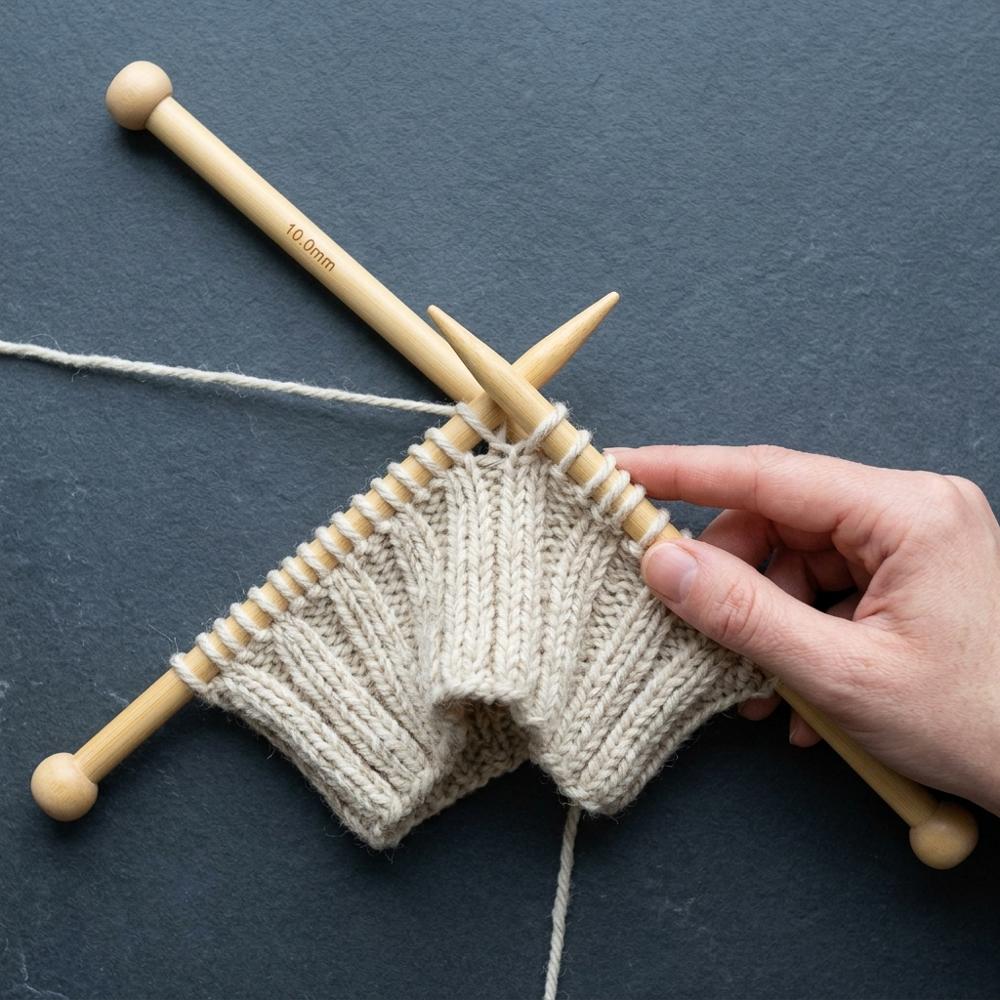
Et sæt lige, enkeltspidsede bambuspinde i mange tykkelser, fra fine til grove. Det lette træ har et lille greb på overfladen, så maskerne ikke smutter af, mens du finder din rytme. Som begynder bør du kigge efter en glat, splintfri finish og størrelser i området US 7 til 9, der passer til mellemtykt garn.
Blødt worsted-garn til at lære dine første masker
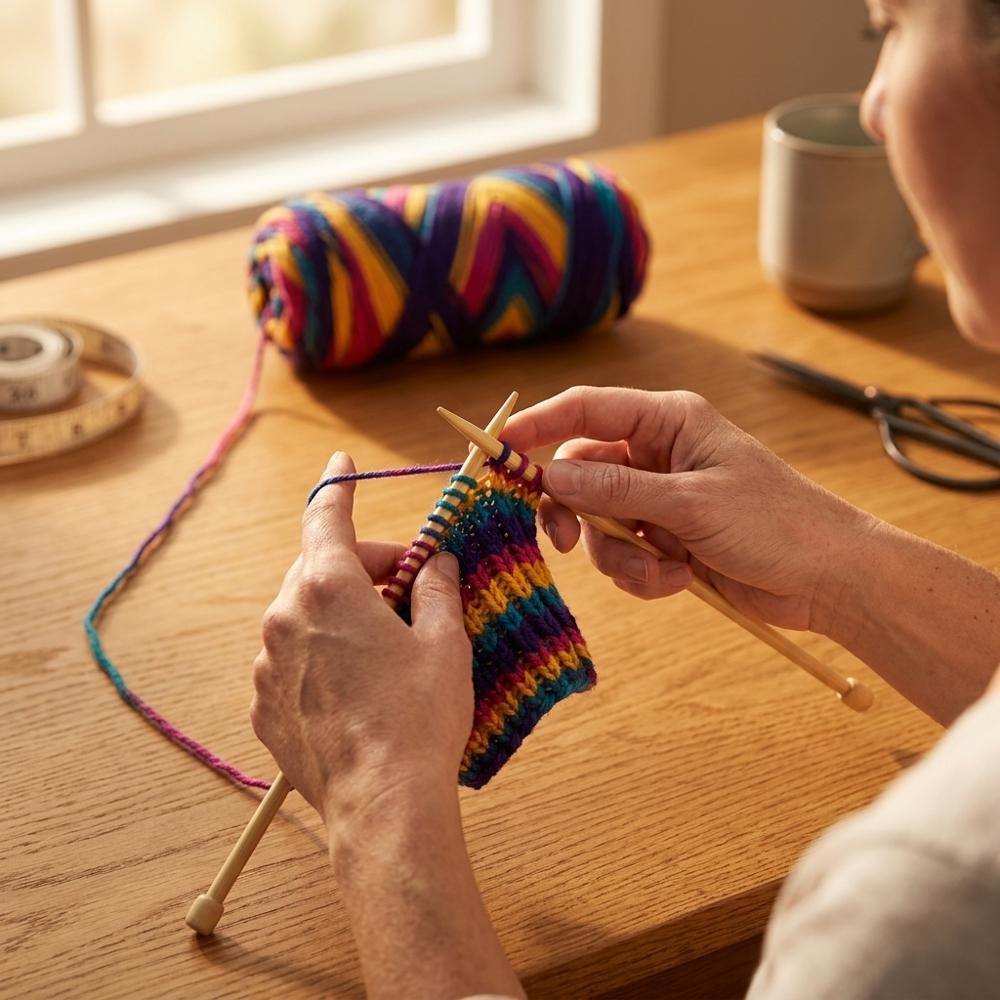
Et stort nøgle af mellemtykt worsted-garn, der ligger i det letteste garntykkelses-bånd for nybegyndere. Det er blødt og maskinvaskbart, så øvestykker overlever hverdagens slid. Vælg en lys, ensfarvet nuance frem for en mørk eller meleret, for du har brug for at kunne se hver enkelt maske, mens du lærer.
Bøjede stoppenåle til at hæfte garnender
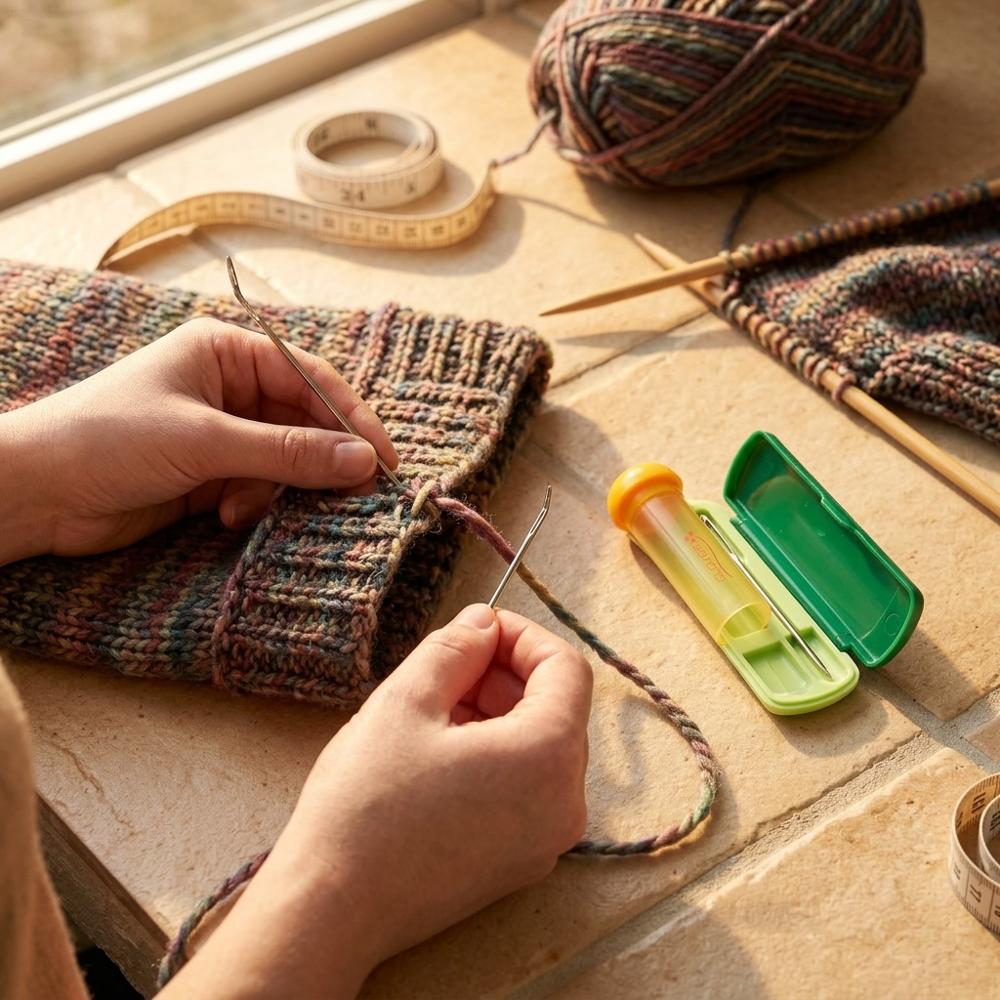
Et sæt stumpe nåle med stort øje og en let bøjet spids, der nemt glider ind under maskerne. De klarer den sidste opgave i ethvert projekt: at føre løse trådender tilbage ind i stoffet og sy stykker sammen. Kig efter en virkelig stump spids, så den glider mellem trådene i stedet for at flække dem, og et øje, der er stort nok til worsted-garn.
Lille skarp saks til rene garnklip
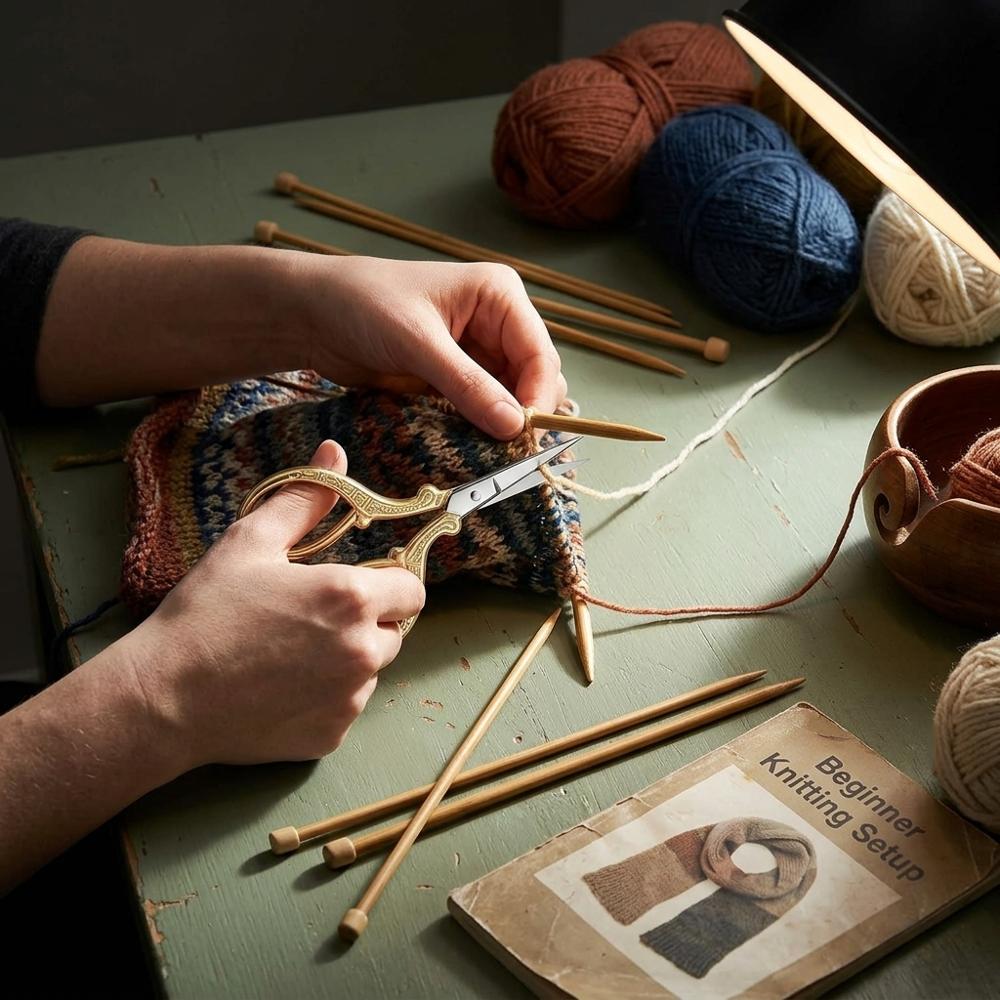
Kompakt saks i rustfrit stål med korte, fint spidsede blade. De skarpe spidser klipper garnet rent lige præcis dér, hvor du vil have det, hvilket betyder noget, når du efterlader en ende, der skal hæftes. Kig efter smedede blade, der holder sig skarpe, og et spidshylster, så den rejser sikkert med i projektposen.
Strikkebog for begyndere – trin for trin
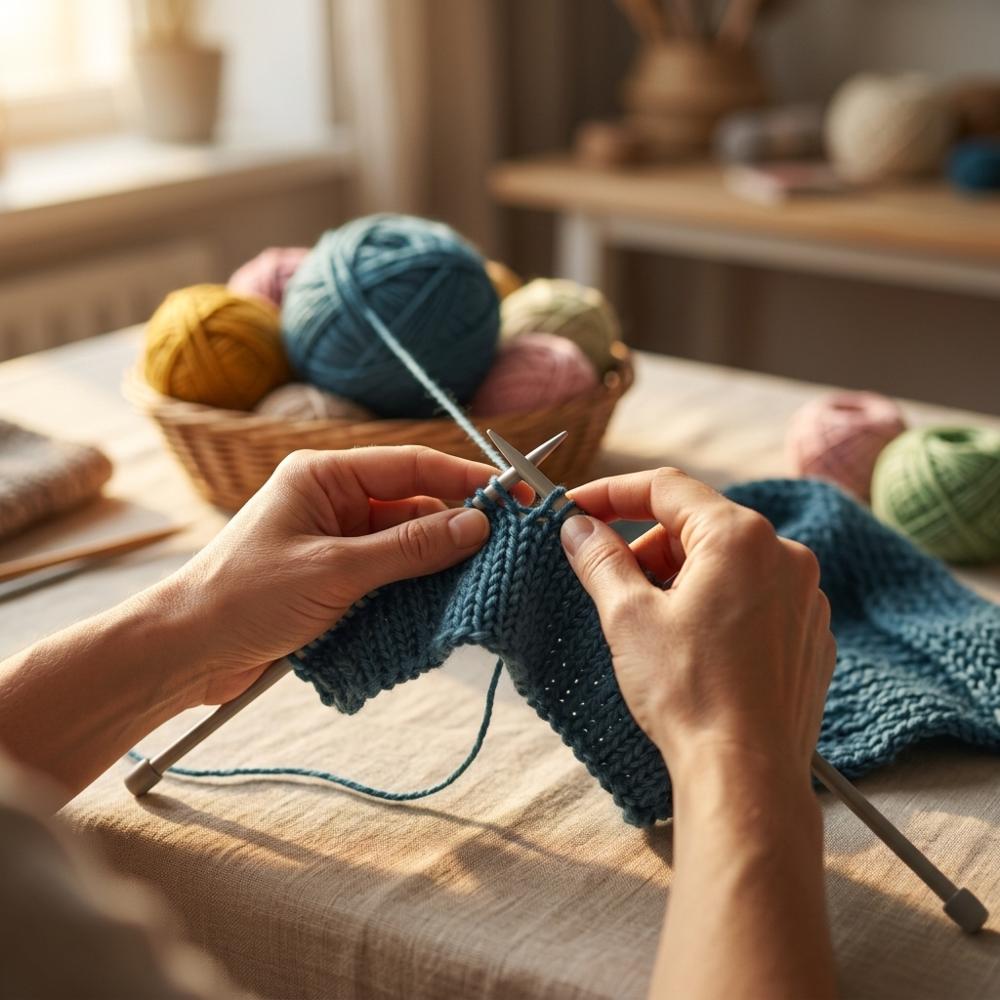
En trykt guide lavet til begyndere, der tager dig gennem opslagningen, de grundlæggende masker og afbindingen – og derefter byder på enkle startmønstre, du kan øve dig på. En bog, du kan klappe op og følge i dit eget tempo, udfylder de huller, som spredte videoer efterlader. Hold øje med en, der har tydelige fotos eller tegninger af hånd- og pindeholdninger, som videoer ofte suser forbi.
With these five items you can cast on, work garter and stockinette, and bind off a finished scarf without buying anything else. One honest caution: skip dark or fuzzy novelty yarn at the start, since you cannot see individual stitches in it and nearly every beginner who tries ends up unpicking in frustration. If you are genuinely torn about which needlecraft suits you, reading how knitting compares with crochet for newcomers can save you a wasted first purchase. Once the basics feel steady, a few small tools make the work far less fiddly.
The Small Tools That Quietly Save Your Project
None of these are required to knit a stitch, yet each one answers a specific moment of confusion that ambushes beginners. The classic case is losing your place: you set a project down, pick it up two days later, and have no idea which row you stopped on or where the pattern repeat begins. Markers and a counter exist for exactly that gap between sessions, which stretches longer and happens more often than anyone admits when they start. If you are still feeling out whether this is your craft at all, thinking through how to settle on a first hobby is worth doing before you spend on extras.
Maskemarkører med lås til at holde styr på mønsterpunkter
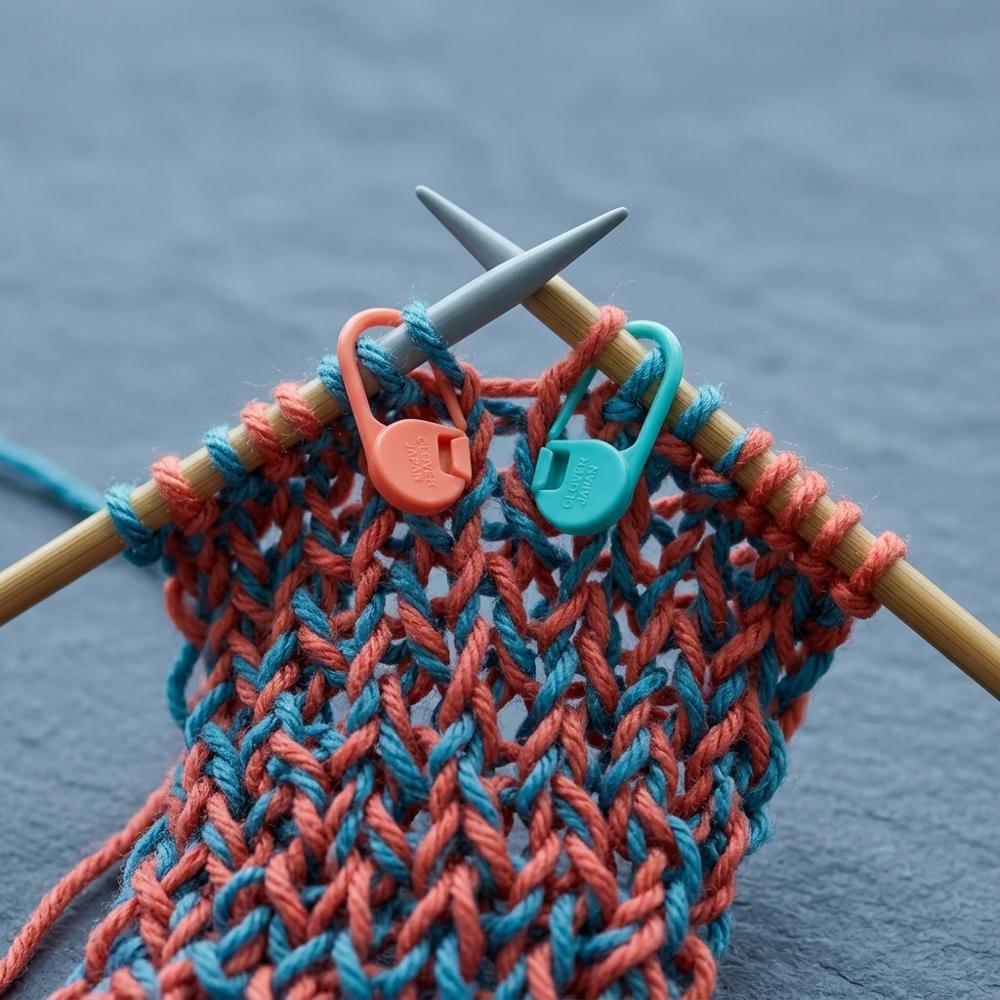
Små ringe, du klipser fast på en maske for at markere et gentag, en udtagning eller starten på en omgang. Låsemodellen kan åbnes og lukkes, så du kan klipse den fast på strikketøjet midt i en række – modsat en fast ring, der kun kan glide på pinden. En god markør er nem at åbne med én hånd og lille nok til ikke at strække den maske, den sidder på.
Mekanisk rækketæller, der holder styr på, hvor du er
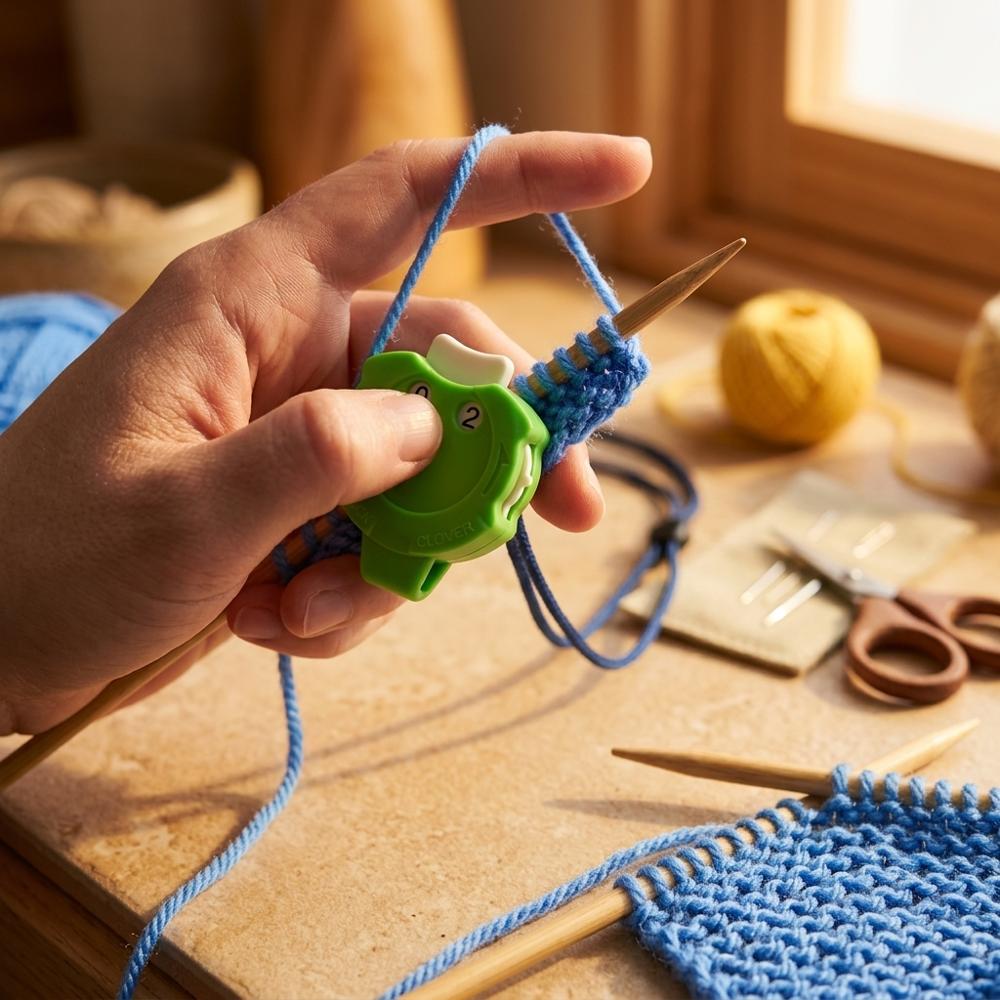
En lille kliktæller, du tæller én op på, hver gang du har strikket en række færdig. Den store skive og det faste klik gør den nemmere at stole på end en streg kradset på et stykke papir. Hold øje med et tydeligt, letlæseligt display og et fast klik, så du kan mærke, at tallet rykkede.
Optrækkeligt blødt målebånd til at måle dine projekter
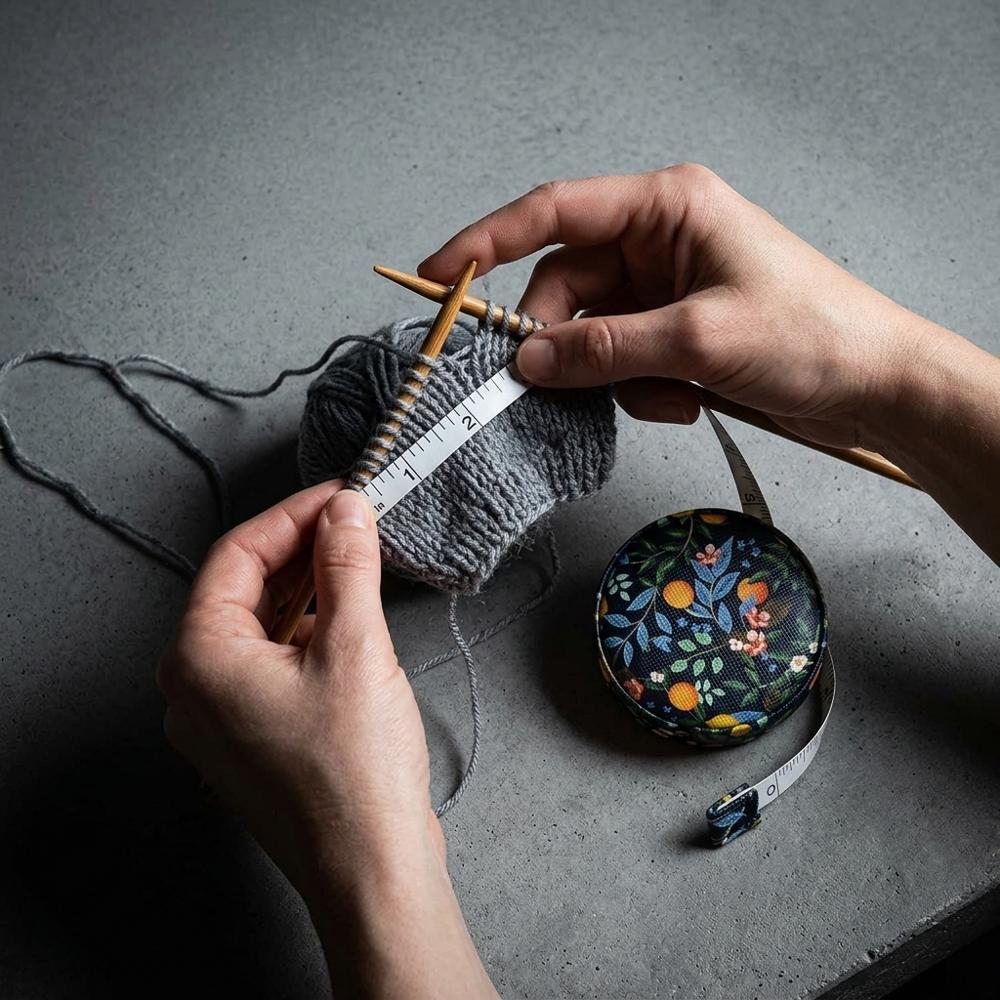
Et fleksibelt målebånd med trykknap, markeret i både tommer og centimeter, der trækker sig ind i et lille hus. Fordi det bøjer, følger det det strikkede stykkes form på en måde, en stiv lineal ikke kan. Et hus, der trækker båndet ind, er guld værd, så det ikke ligger og roder rundt i tasken.
Projekttaske til at holde orden på garn og redskaber
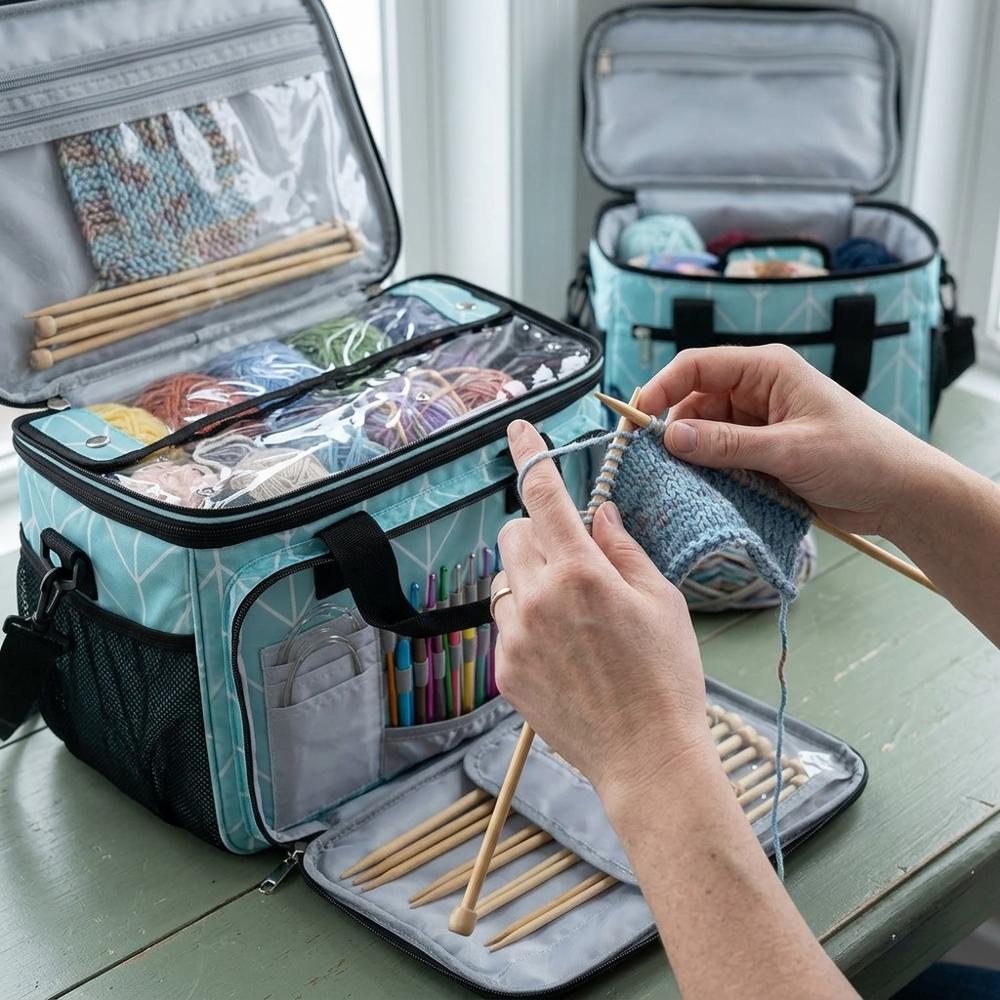
En fast taske med snørehuller, der fører arbejdsgarnet ud indefra, og lommer, der holder på pinde og småredskaber. Den holder ét igangværende projekt samlet og klar til at tage fat på. Hold øje med garnhuller og en lukning, der holder støvet ude – det er hele pointen med en dedikeret taske.
Add these gradually rather than in one haul, because the most common money mistake here is buying gadgets whose purpose you will not understand for months. A counter and a few markers earn their place by your second project, while a dedicated bag is less about technique and more about keeping crumbs and pet hair out of your yarn. Knitting also sits comfortably beside other approachable hobbies adults tend to take up, so nothing you learn to organize here goes to waste if you branch out later.
Going Past the Flat Scarf
At some point a straight scarf stops being enough and you want a hat, a cowl, or a pair of socks, things worked in a continuous round instead of back and forth. That single change, from two straight needles to a circular needle joined in a loop, unlocks most of what people picture when they imagine knitting. The other two items here are about rescue and finishing: a hook is the fastest way to catch a stitch that has dropped and begun to run, and blocking is the step that turns a slightly lumpy hand-knit into something that looks shop-bought. If you enjoy that final polishing stage, a beginner embroidery setup scratches a very similar itch.
Bamboo circular knitting needles for working in the round
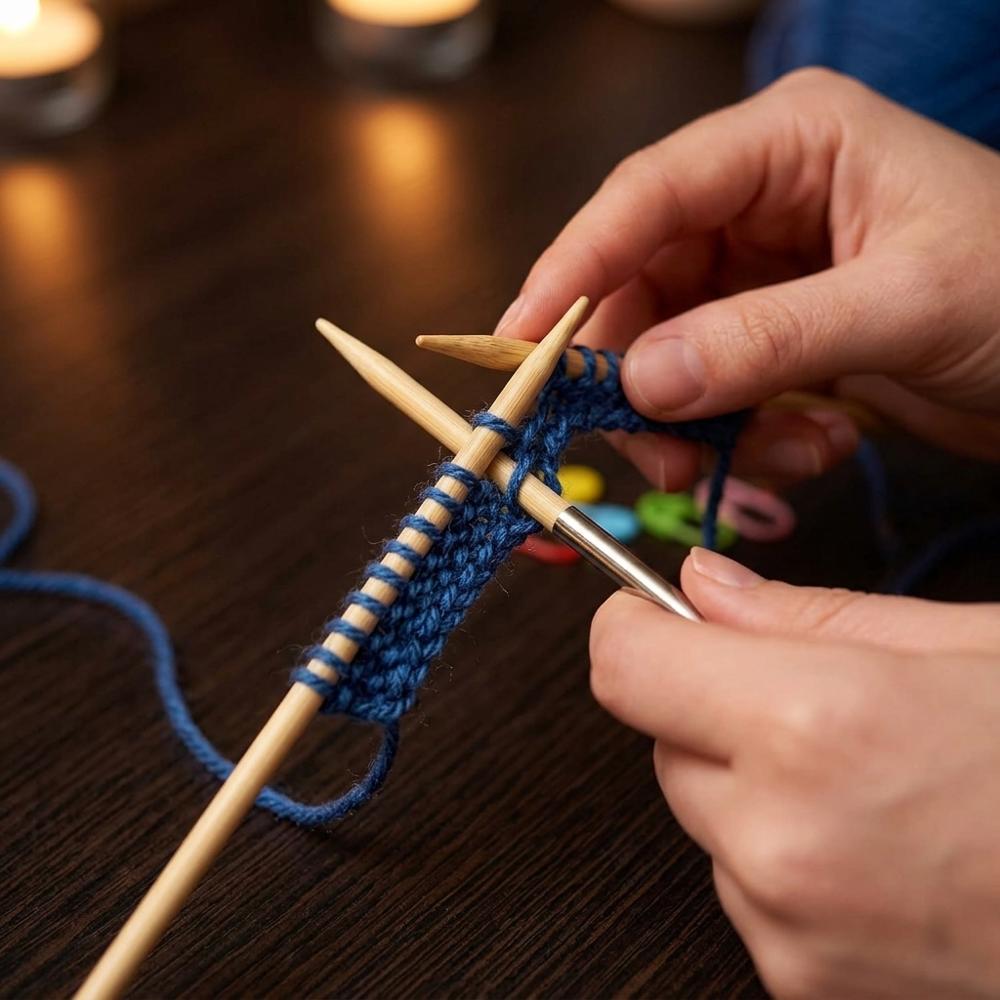
Pairs of bamboo tips joined by a flexible cable, sold across a range of sizes with a storage case. The cable lets you knit a continuous tube for hats and cowls, and it also holds the wide stitch counts that a blanket demands. The detail that matters most is a smooth join between tip and cable, so stitches glide across without catching.
Crochet hooks for catching and fixing dropped stitches
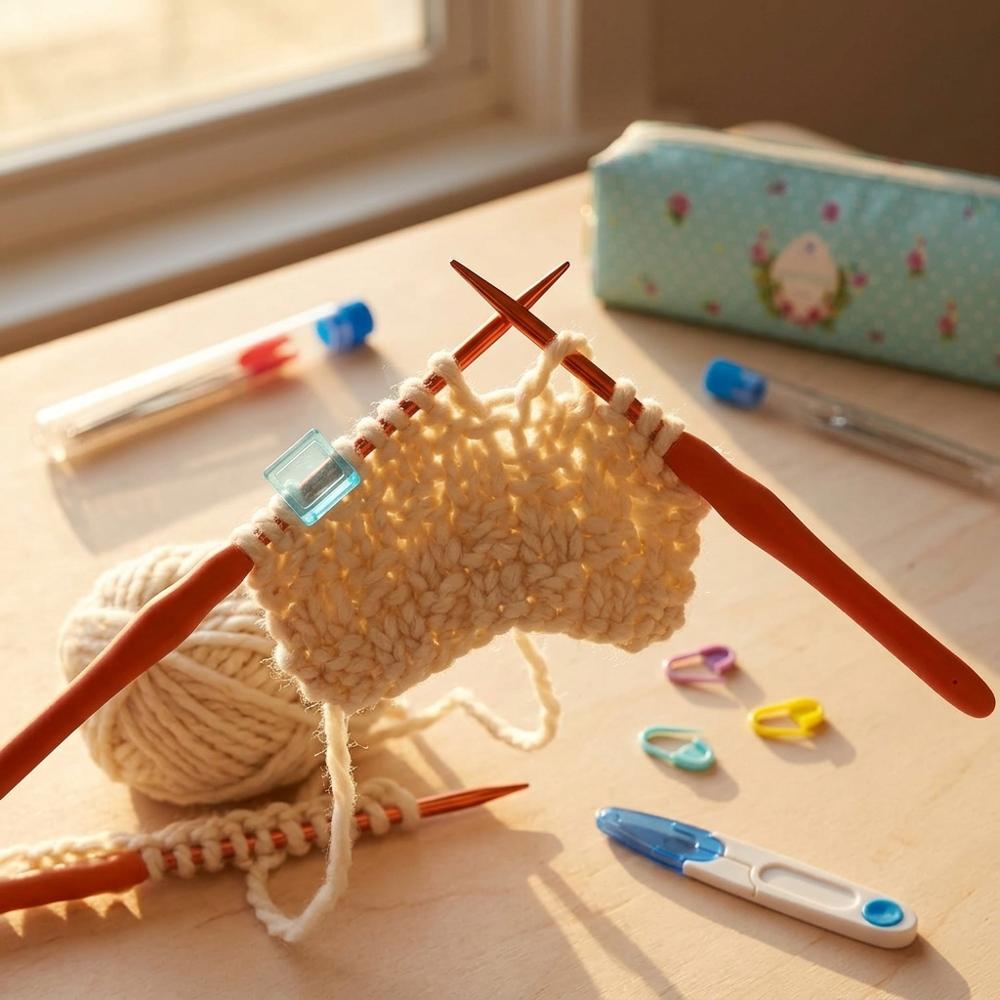
A graded set of crochet hooks with cushioned handles. In knitting their main use is rescue: the hook catches a stitch that has slipped off and ladders it back up the fabric. Pick a hook close to your needle size so the recovered stitch matches the tension of its neighbors.
Foam blocking mats with pins for finishing knits
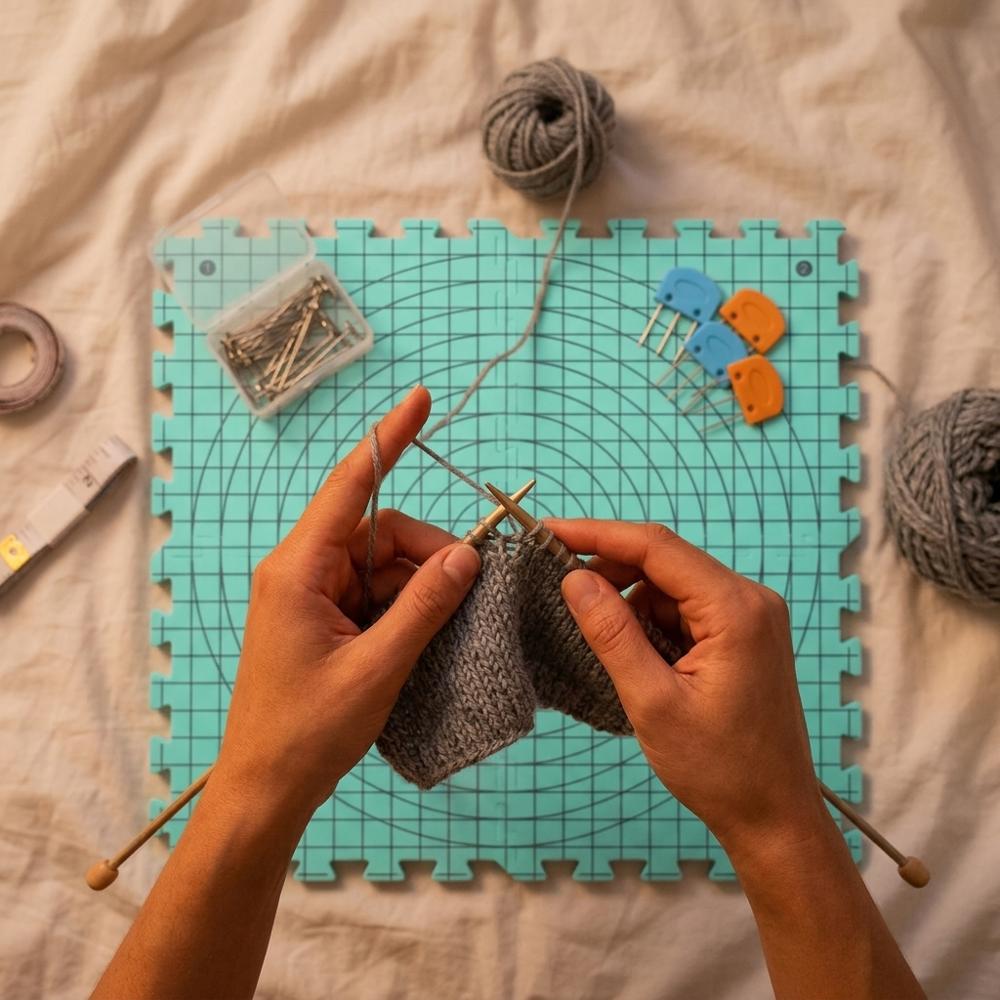
Interlocking foam squares printed with a measuring grid, supplied with T-pins. You pin a damp finished piece into shape and let it dry flat so the stitches settle. The grid lines are the useful part, letting you keep edges straight and matching pieces the same size.
You will not need any of this in your first month, and buying it early tends to leave it gathering dust. Add a circular needle when you have a specific round project in mind, keep a hook within reach the moment you try anything past a scarf, and treat blocking as the reward at the end rather than a chore.
Why Does My Knitting Keep Getting Wider, and Other Things Nobody Warns You About
Why does my scarf keep getting wider when I never added a stitch on purpose?
Beginners almost always create accidental stitches by carrying the yarn over the needle between stitches or knitting into the gap before one, usually without noticing. Each stray loop reads as a new stitch on the next row, so a rectangle slowly spreads into a triangle. The fix is to count your stitches every few rows and learn to recognize the little bar a yarn-over leaves, so you can drop it on purpose before it multiplies.
Why do my stitches feel almost impossible to slide along the needle?
This is knitting too tightly, and it comes from gripping out of nervousness and giving the yarn an extra tug after every stitch. The result is stiff fabric, sore hands, and needles that suddenly feel a size too small. Stop pulling each stitch snug, let it rest at the widest part of the needle, and if the habit sticks, move up one needle size rather than blaming your hands.
Everyone says to knit a gauge swatch first, but can I just skip it?
For a scarf you can; for anything that has to fit, skipping it is how you end up with a hat sized for a melon. Beginners skip swatches because they feel like homework standing between you and the fun part. When size matters, knit the swatch, then wash and measure it the way you will treat the finished piece, since many yarns relax or shrink after their first wash.
Why does the yarn keep splitting every time I push the needle in?
Splitting happens when the tip slides through the middle of the plies instead of under the whole stitch, and sharp metal points on softly spun yarn make it worse. The stitches come out fuzzy and weak, and the work feels like a fight. Use blunter wood or bamboo tips while you learn, aim to scoop the entire loop, and favor a smooth plied yarn over a loosely spun single.
Do I actually need to weave in the loose ends, or can I just tie a knot?
Knots feel secure, so beginners tie off their tails and move on, but knots in knitting work loose over time, poke through to the front, and leave a visible lump. In anything you wear or wash, they can come undone entirely. Thread each tail onto a blunt needle and run it through several stitches on the back, reversing direction once so it locks; it holds far better than a knot and disappears into the fabric.
Kan du lide, hvad du ser? Gem individuelle artikler med ⋮ på et produkt, eller kopier hele listen til din ønskeliste med ét klik — perfekt til at vende tilbage til eller sende som et diskret hint.
 Endnu et par begynderopsætninger, som vi omhyggeligt har sammensat
Endnu et par begynderopsætninger, som vi omhyggeligt har sammensat
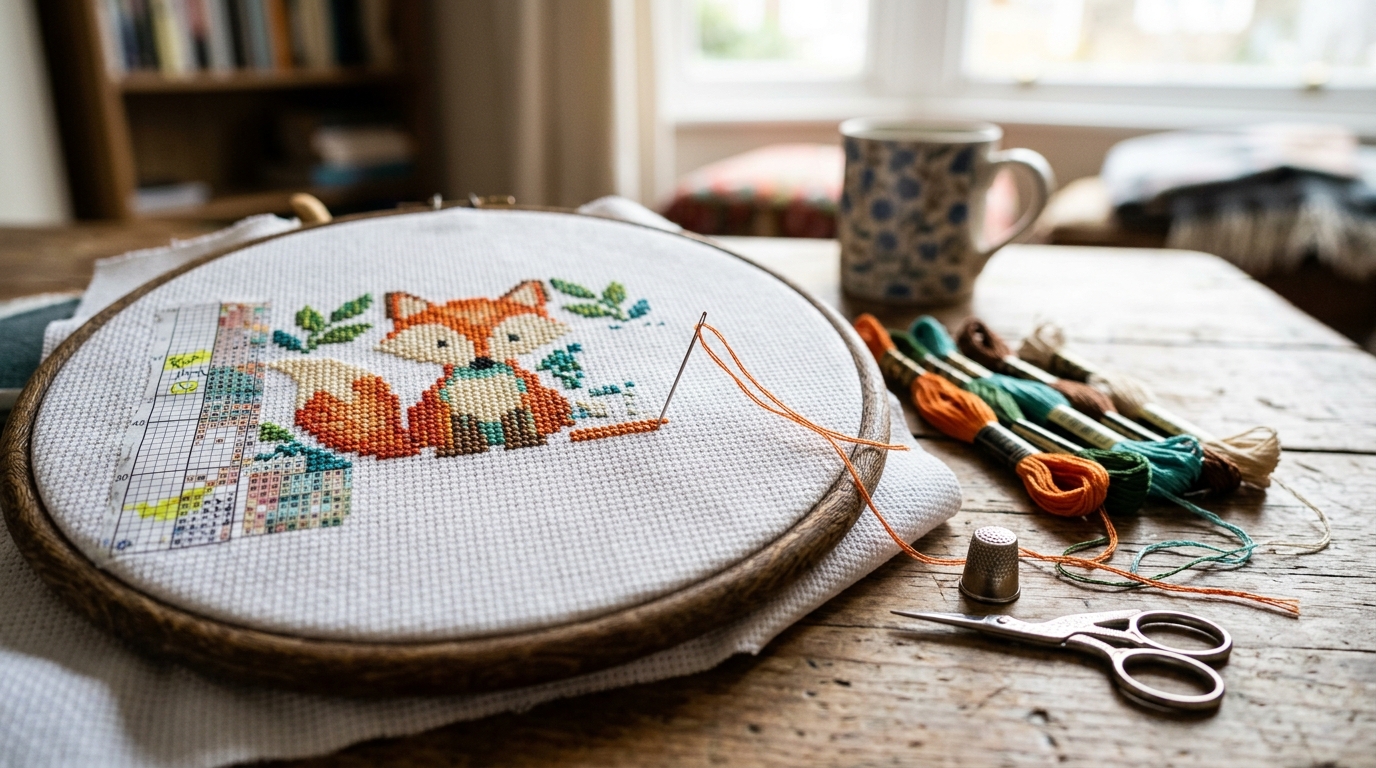
Begynder Cross-Stitch Opsætning: Grundlæggende om Rude, Tråd og Nål
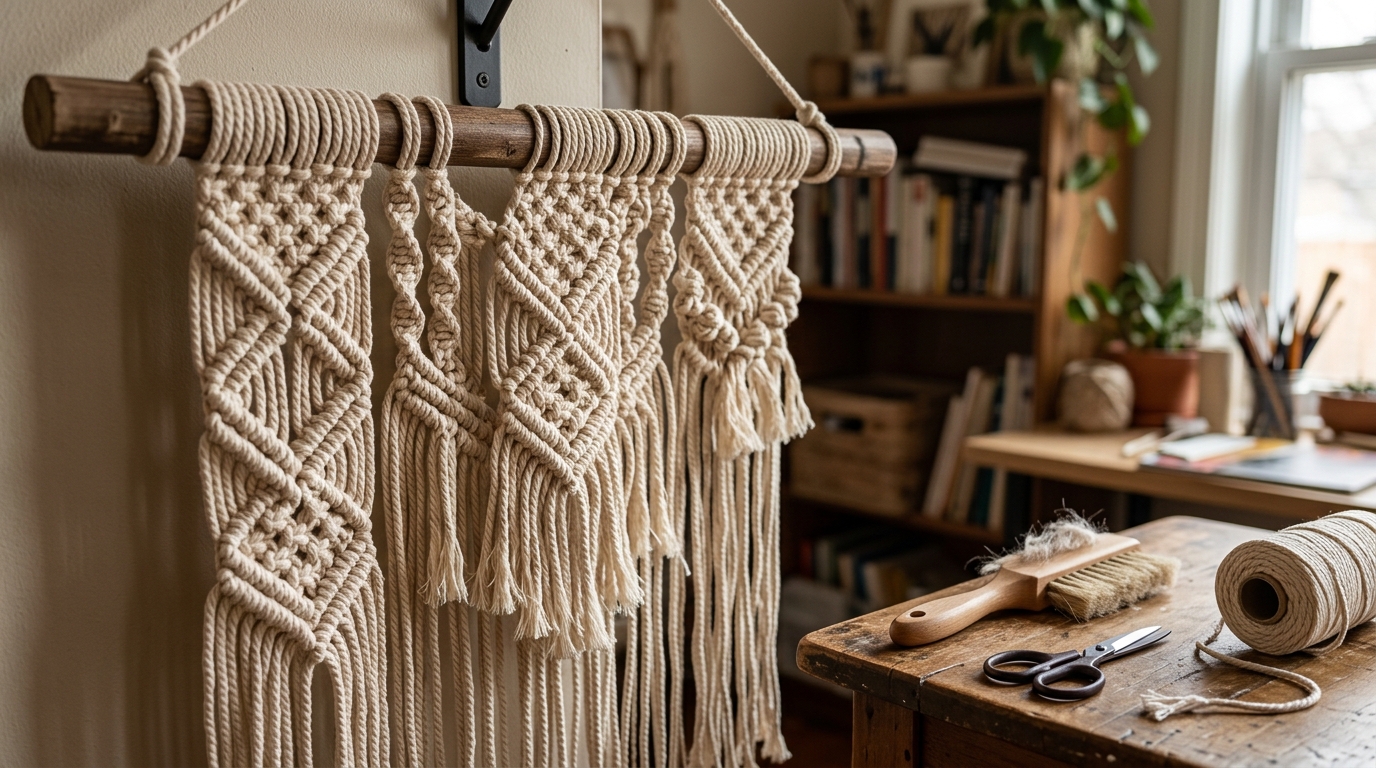
Makramé for begyndere: Snor, knuder og det at hænge det op
Oplysning: Nogle produktlinks kan være affiliatelinks. Hvis du foretager et køb via et af disse links, kan vi tjene en lille provision uden ekstra omkostninger for dig.