



Beginner Bullet Journal Setup: Notebook and Pen Essentials

The Four Things Worth Buying Before Page One
The honest starting list for a bullet journal is two items: a notebook and a pen. Everything past that is optional. But the difference between a frustrating first month and a smooth one usually comes down to paper that can take ink without ghosting, and a pen that dries fast enough not to smear under the side of your hand. That paper-weight question is the same one that matters if you ever move toward setting up a fountain pen for everyday writing, where thin pages show through almost immediately. I would add two quiet workhorses to the true essentials, a ruler and a pencil, because the first time you try to rule a monthly grid freehand you understand why.
A5 dot grid notebook with numbered pages and thick bleed-resistant paper
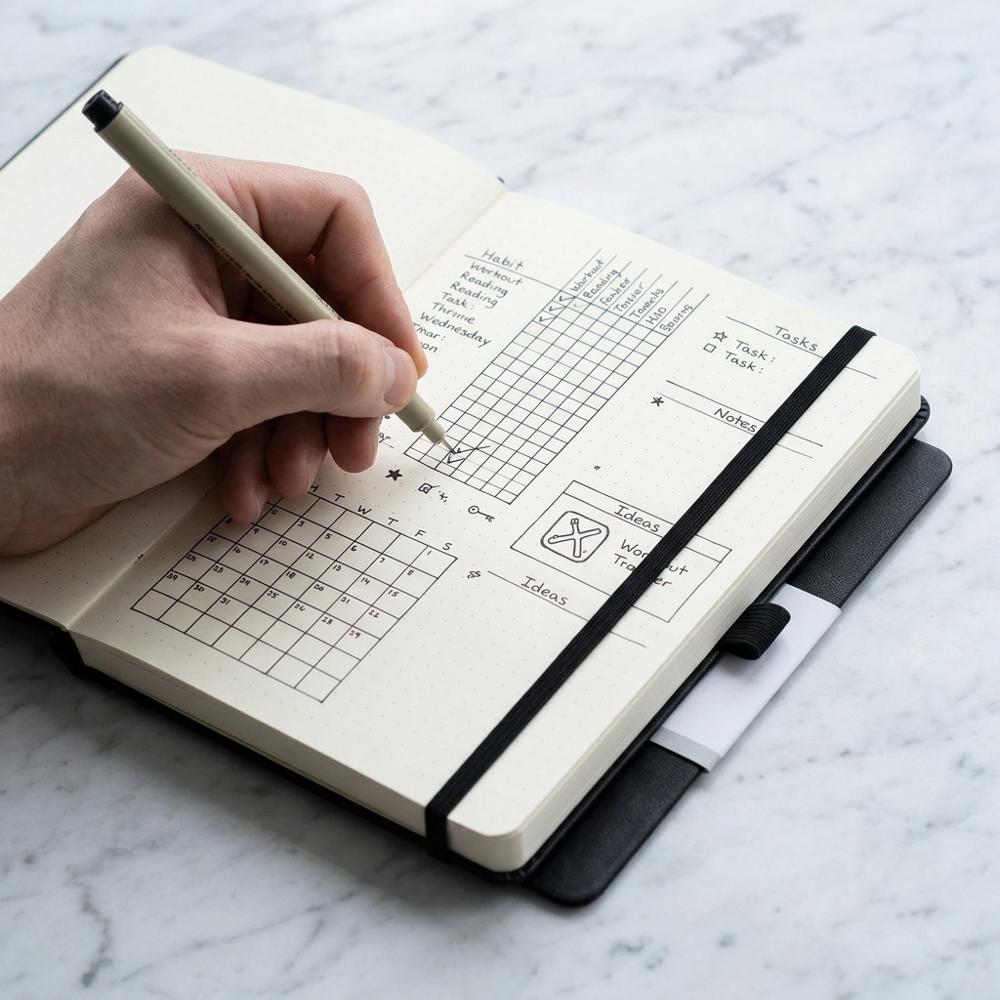
A dot grid notebook is the foundation of a bullet journal: faint dots guide lines, boxes, and lettering without the visual noise of full grid lines. Look for A5 size, numbered pages, and paper around 100gsm or heavier, which resists the ghosting and bleed-through that thinner notebooks suffer once you reach for markers. A hardcover and a back pocket help it survive being carried around every day.
Black pigment fineliner pens for everyday writing and rapid logging
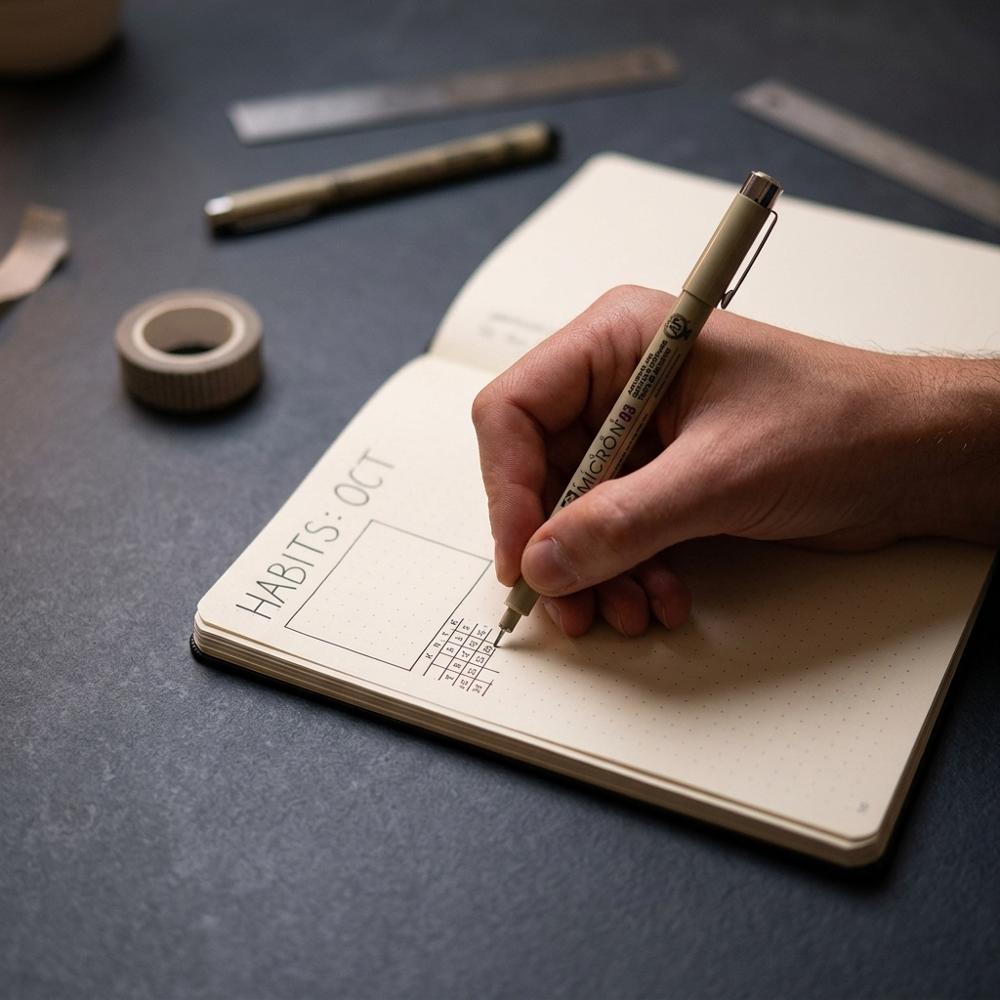
Pigment-ink fineliners lay down a consistent, water-resistant black line that won't smear when you later run a highlighter or marker over it. A 0.3mm tip is a comfortable everyday size for writing tasks, dates, and bullets without feeling scratchy. Archival pigment ink also resists fading, so older logs stay legible months later.
Stainless steel rulers with cork backing for drawing clean grids and lines
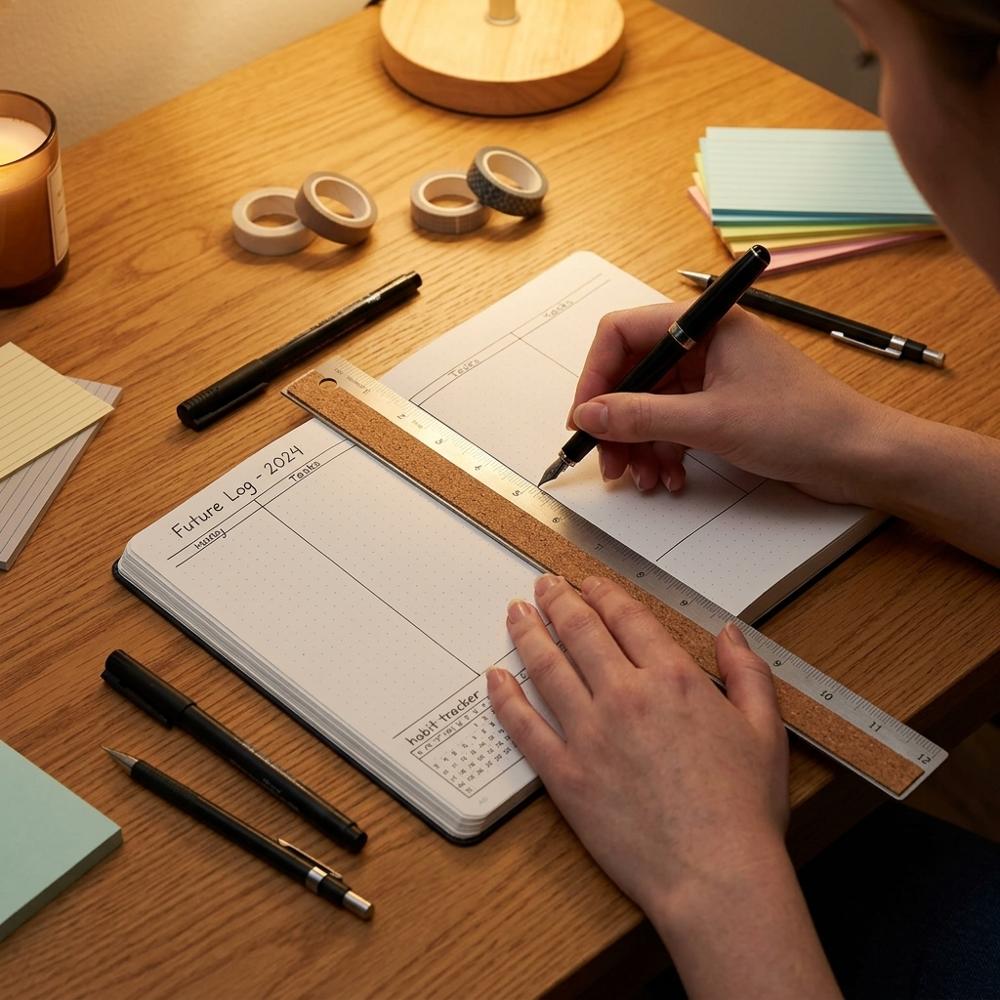
A metal ruler with a cork-backed underside grips the page instead of sliding, which matters the moment you rule a monthly grid or a straight header line. The cork also lifts the edge slightly off the paper, cutting down on ink smearing under the ruler. Having both a short and a long ruler covers small trackers and full-page spreads.
Mechanical pencils with refill leads and erasers for sketching layouts
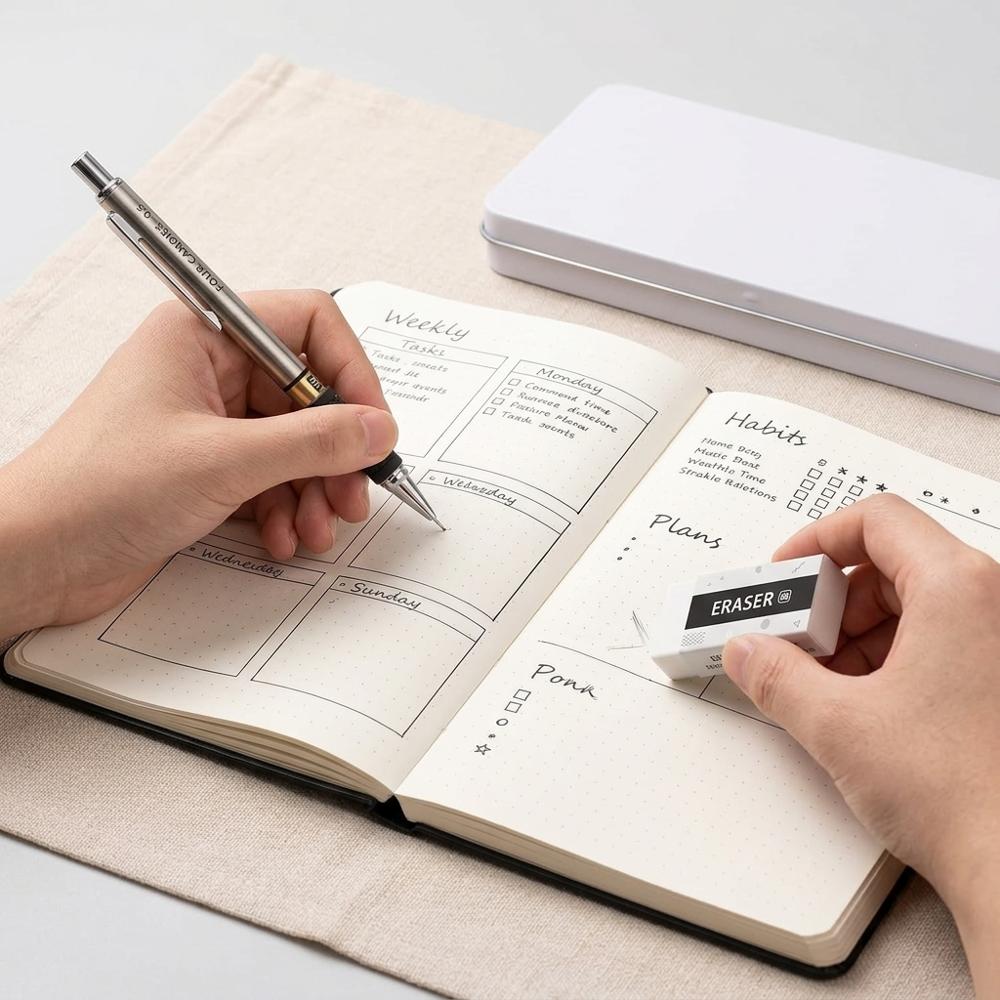
A mechanical pencil holds a consistent fine line for drafting a layout before you commit it in ink. Light pencil guidelines let you place a grid or header, then erase the marks once the ink has dried. A set that bundles spare leads and erasers means you won't stall mid-spread hunting for refills.
With these four you can build an index, number your pages, and start rapid-logging tasks the same afternoon. Resist the pull to buy the elaborate spread you saw online before you have filled a plain week of daily logs, because a layout you cannot sustain is the fastest route to quitting. If you would rather keep the whole kit deliberately lean, a bullet journal setup that comes in under fifteen dollars shows how little the system actually demands.
Color, Headers, and Other Things You Will Want by Month Two
Most people do not reach for color until the basic habit sticks, and that is the right order. Once daily logging runs on autopilot, the decorative layer is what makes you want to open the book: a brush-lettered header, color-coded tasks, a clean banner across the top of a spread. Those headers are really just the first step into hand lettering, and they look harder than they are once you have the right nib. None of the tools here are required, and buying all four at once is a reliable way to end up with a drawer of dried-out markers.
Dual-tip brush pens for lettered headers and adding color to spreads
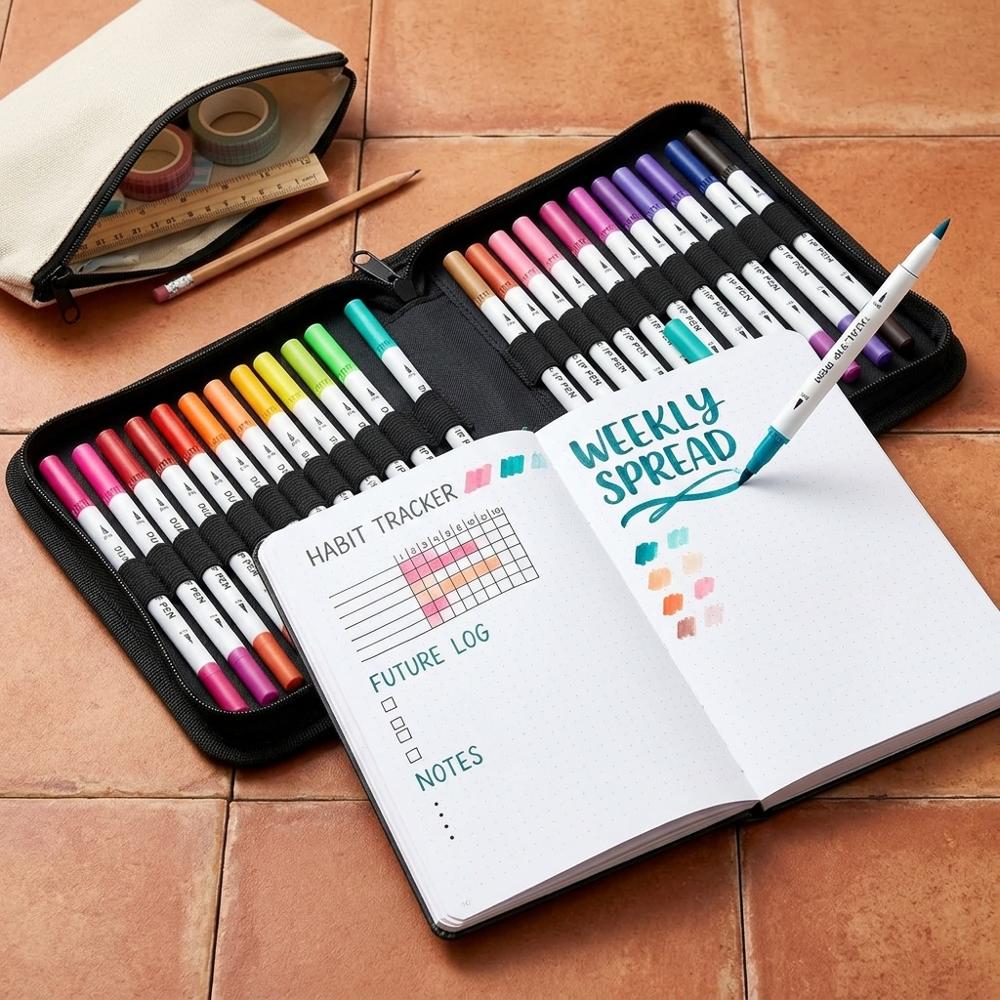
Dual-tip brush pens carry a flexible brush nib on one end for lettering and a fine tip on the other for outlining or small details. The brush end builds the thick-and-thin strokes of brush lettering, while the fine end handles doodles and labels. A wide color range helps with theming spreads, though beginners rarely need more than a handful at first.
Soft highlighters and gel pens for color-coding and gentle highlighting
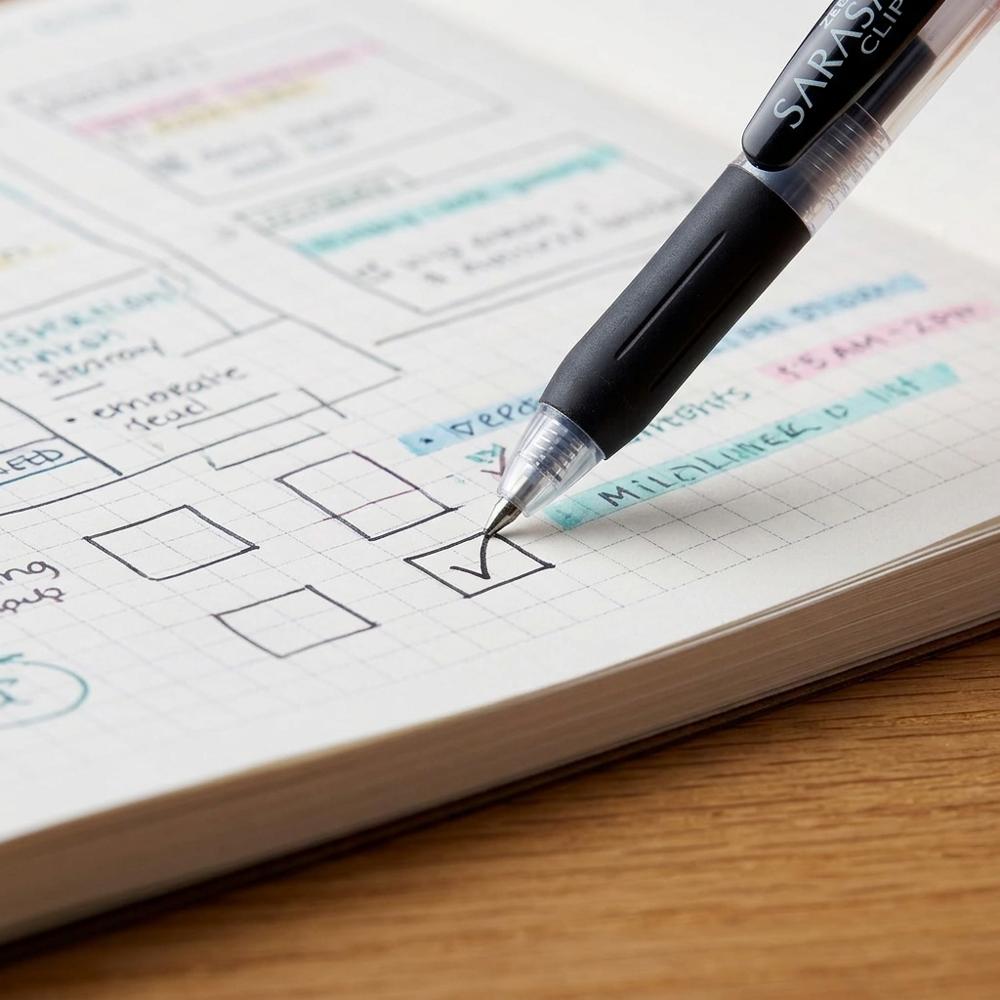
Mild-toned highlighters use muted colors that highlight or underline without the harsh glare of standard fluorescents, so text stays readable beneath them. Paired with matching gel pens, the set covers both color-coding tasks and laying soft accent blocks into a layout. The double-ended highlighters usually carry a broad tip for filling and a fine tip for underlining.
Fine-tip color pens for color-coding, doodling, and small headers
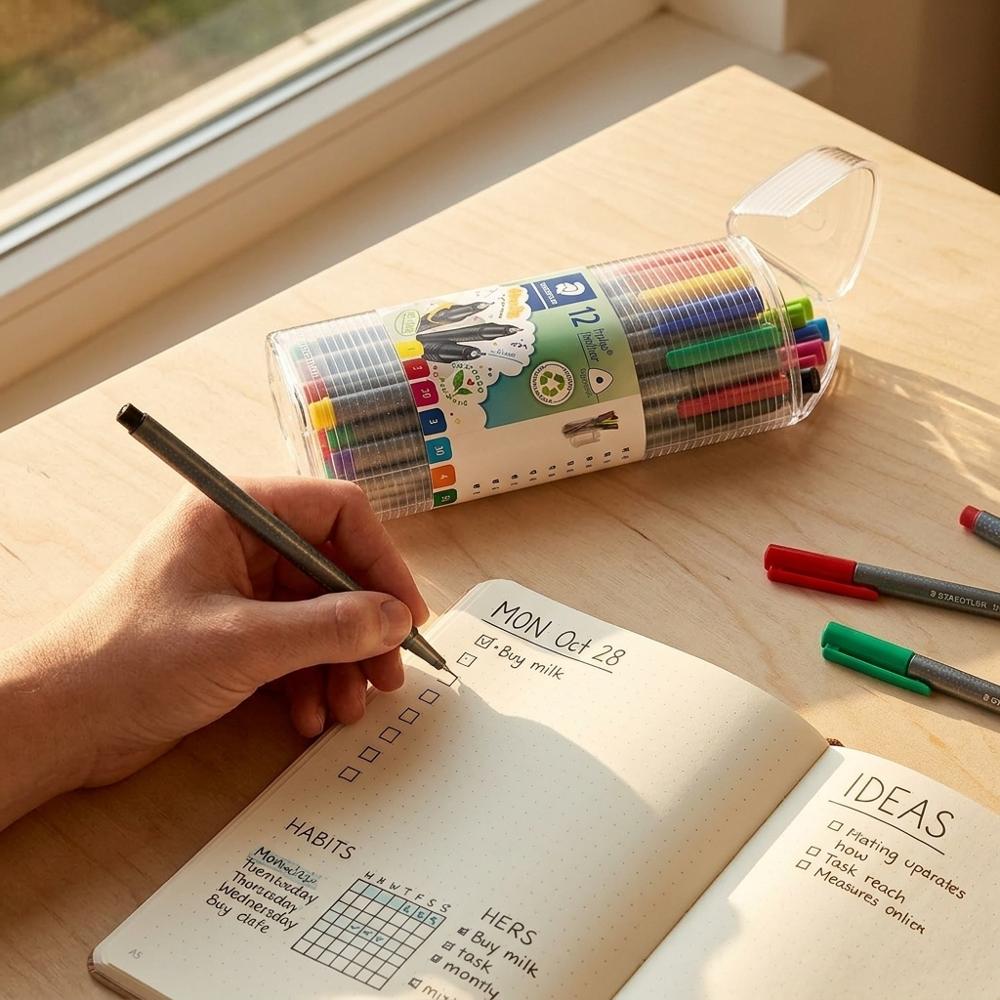
Colored fineliners give you a thin, controlled line across a range of colors, which suits color-coding, small headers, and simple line doodles. A 0.3mm tip writes cleanly at the small scale most journaling happens at, where broader markers would overwhelm a dotted page. A triangular barrel eases finger fatigue during longer writing sessions.
A5 journaling stencils for quick headers, boxes, and tracker shapes
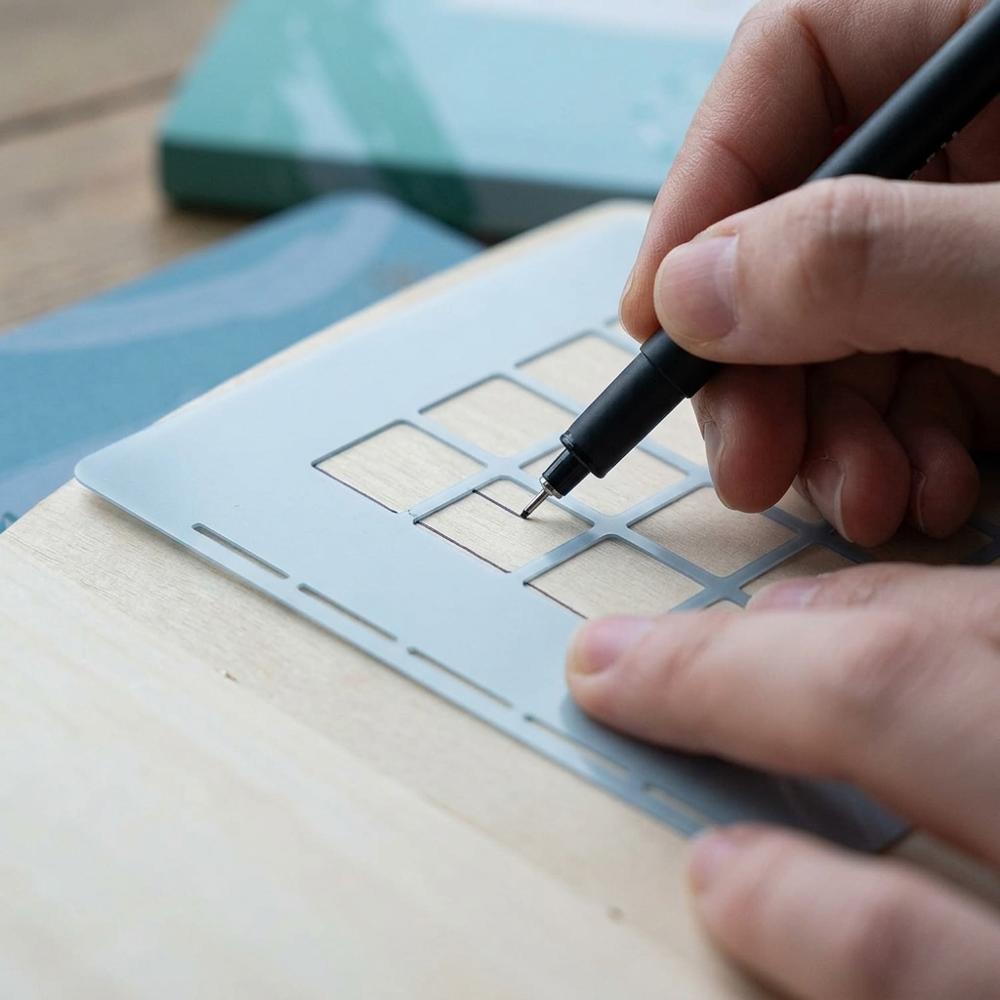
Journaling stencils are thin templates with cut-out letters, shapes, boxes, and icons you trace to keep elements even and repeatable. They speed up recurring work like drawing a month of identical tracker boxes or matching headers across spreads. A5-sized stencils are cut to fit standard journals, so the shapes land where you need them.
Add these gradually, one at a time, and you will actually learn what each does before the next one arrives. A stencil earns its keep faster than people expect, while brush pens often sit unused until your lettering confidence catches up to them. If the colorful side pulls you in, you may find yourself drifting toward keeping a watercolor journal for looser, paint-led pages. That same instinct to record the world rather than schedule it shows up everywhere once you notice it. Outdoors it turns easily into a nature journaling practice built around observation instead of planning.
Why Your Second Spread Looks Worse Than Your First
Why does my second spread always come out messier than my first?
Beginners pour all their energy into the first page, then cannot sustain that effort daily, so later spreads look rushed by comparison and feel like failures. The result is usually a notebook abandoned by week three. The fix is to design for your laziest day, not your most inspired one: a layout you can fill in ninety seconds survives, while an elaborate one quietly becomes a source of guilt.
Why do experienced journalers leave the rest of the book empty instead of planning it out?
New users assume they must pre-draw a year of monthly pages up front, then real life changes and those carefully ruled pages go to waste. The page numbers and index exist precisely so collections can live anywhere and be found later, rather than being scheduled in advance. Set up only the current month and trust the index to locate things; an unplanned book is a feature of the system, not a gap in it.
Why does my marker bleed through even on thick journal paper?
Water-based brush markers release far more ink than a fineliner, so even 100 to 160gsm paper can ghost or bleed where a thin pen sits perfectly clean, and people wrongly blame the notebook. The consequence is a ruined facing page mid-spread. Keep brush work to one side of a sheet, slide a scrap page behind it, and test any new marker on the very last page before you trust it on a real spread.
Why can't I keep up with all the habit trackers I set up?
Trackers look so satisfying that beginners log everything at once, water, steps, mood, gratitude, a dozen habits, then miss a few days and abandon the whole journal out of guilt. A tool meant to reduce overwhelm ends up creating it. Track only two or three things that genuinely matter for a single month, and treat a missed box as information about your week rather than a personal failure.
Îți place ce vezi? Salvează articole individuale cu ⋮ la orice produs, sau copiază întreaga listă în propria ta listă de dorințe cu un singur clic — ideal pentru a reveni mai târziu sau pentru a o trimite ca sugestie.
 Câteva configurații suplimentare pentru începători pe care le-am pregătit cu atenție
Câteva configurații suplimentare pentru începători pe care le-am pregătit cu atenție
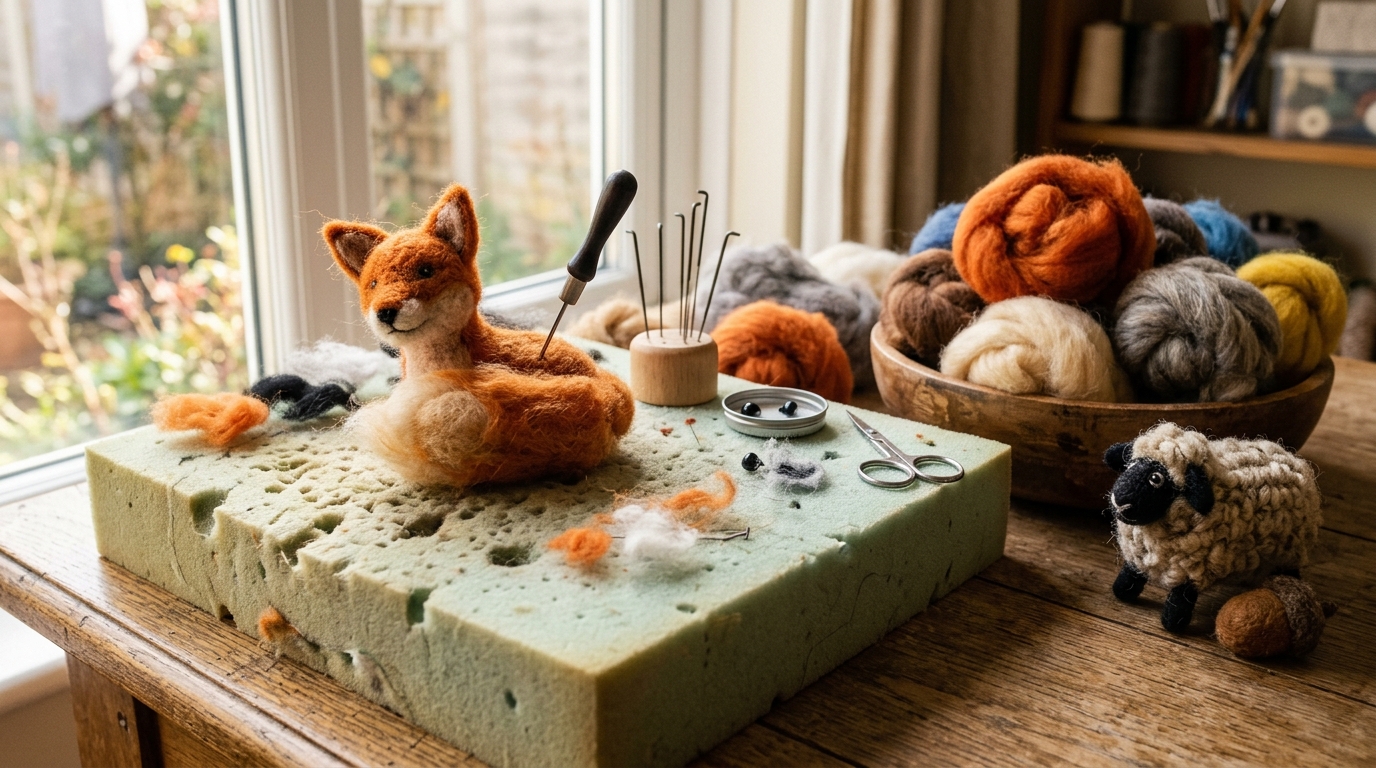
Set de Începător pentru Felting cu Ac: Modelează Lâna în Artă 3D
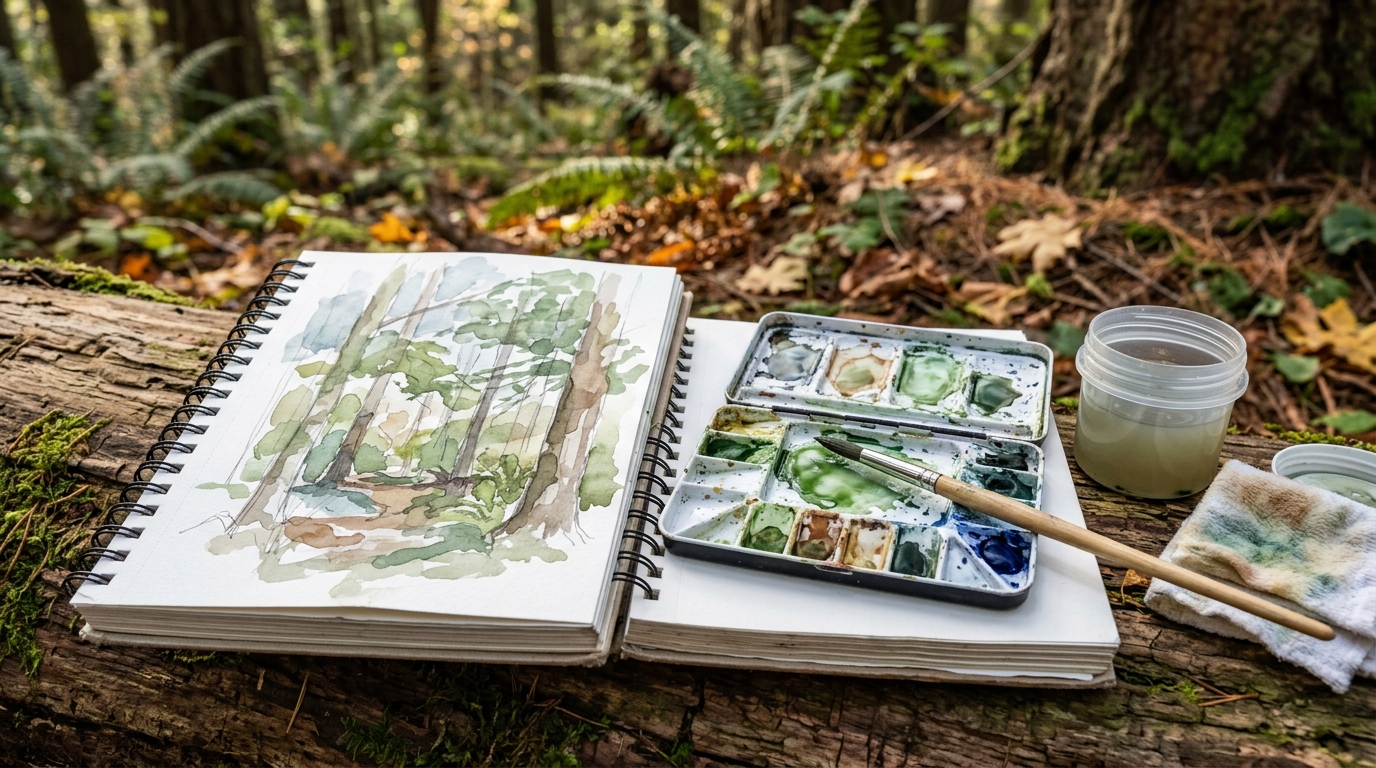
Elemente esențiale pentru începători în schițarea de călătorie cu acuarelă
Dezvăluire: Unele linkuri către produse pot fi linkuri afiliate. Dacă efectuați o achiziție prin unul dintre aceste linkuri, este posibil să câștigăm un mic comision, fără costuri suplimentare pentru dvs.