


Beginner Crochet Setup: Hook, Yarn, and Starter Stitches

Everything It Takes to Pull Your First Loop
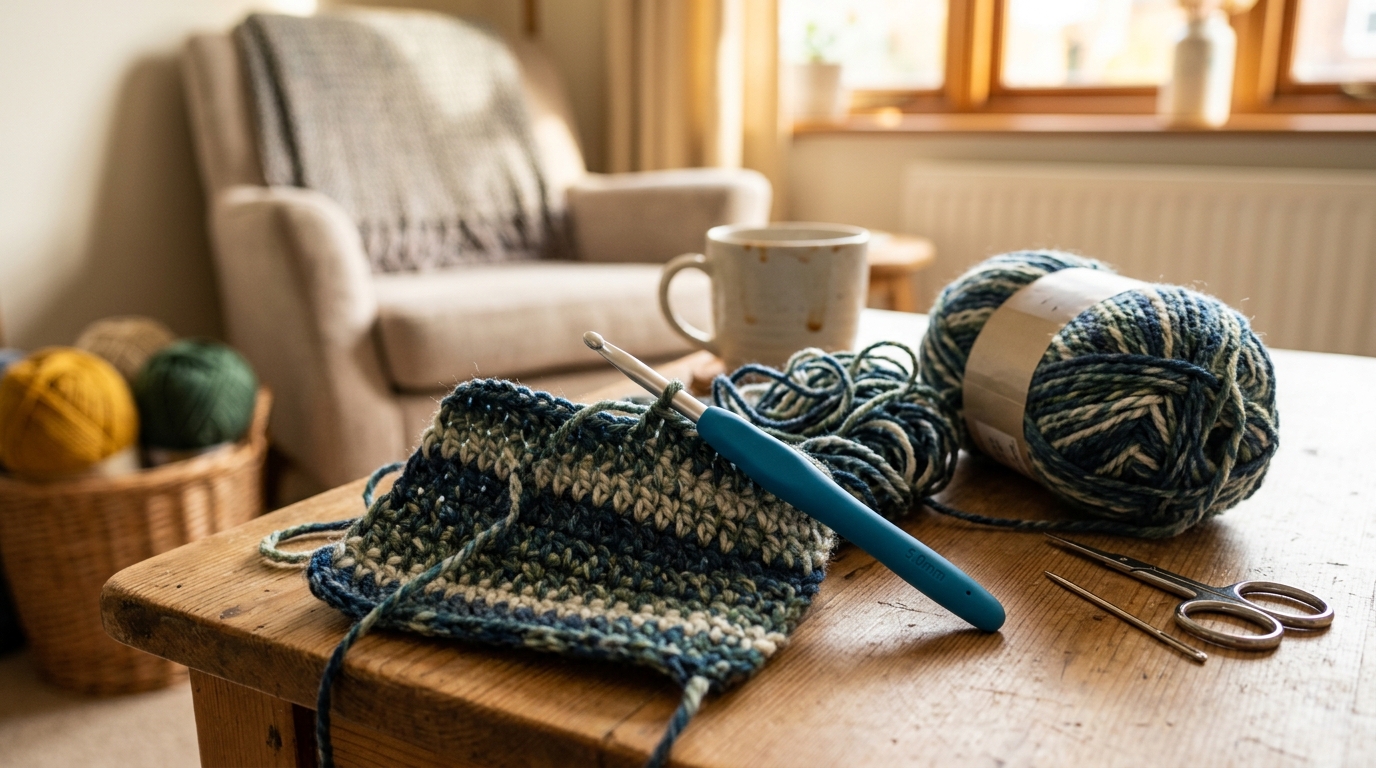
The barrier to entry here is almost comically low: one hook, one ball of yarn, and you can be making fabric before your tea goes cold. The first real hurdle is not the stitches, it is tension, the evenness of how tightly you pull each loop, and the tools below help or sabotage that more than any tutorial will. If you are still deciding between the two big yarn crafts, it is worth understanding how crochet compares to knitting for a complete beginner, because crochet's single-hook approach is far harder to accidentally unravel. I would resist the urge to buy a giant labeled bin of supplies; a few well-chosen pieces beat a tub of mediocre ones.
Ergonomic crochet hook set with soft grips and storage case
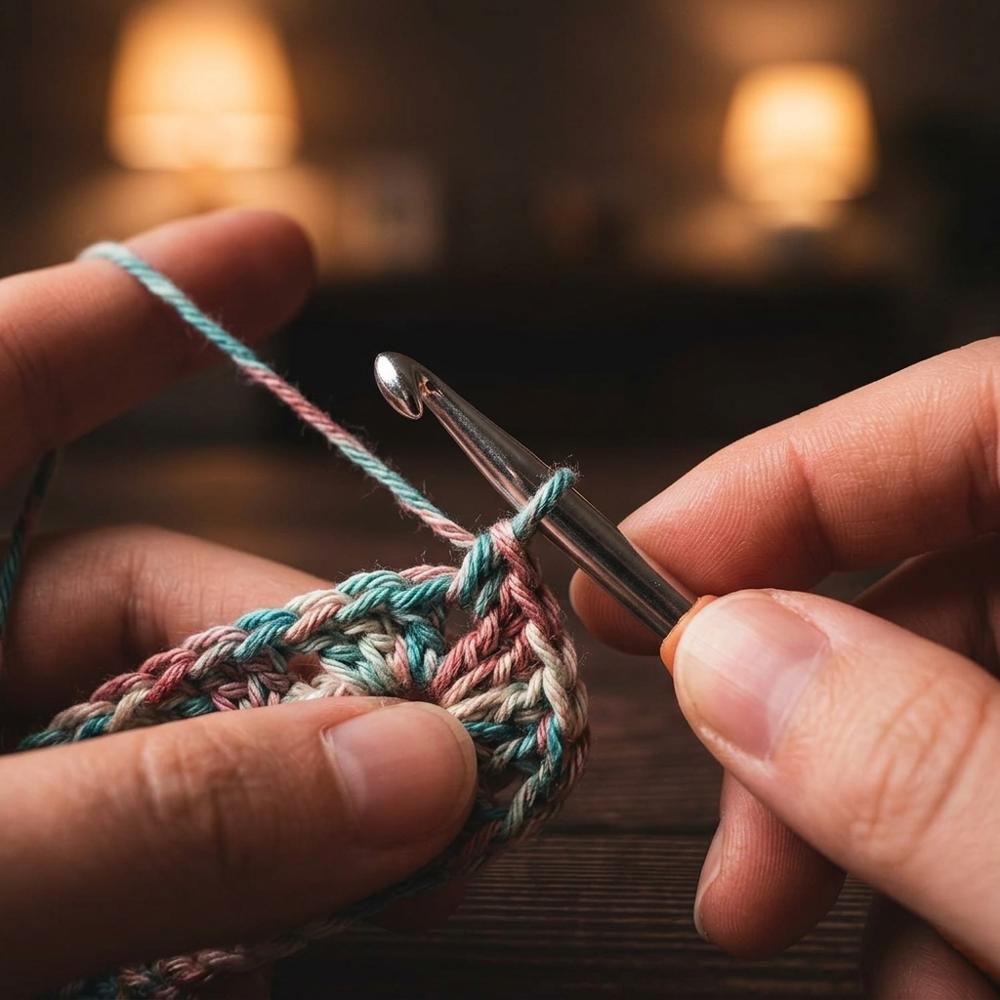
A set of crochet hooks spanning the common beginner sizes, each with a cushioned handle that is thicker than a bare aluminum shaft. The soft grip reduces the hand cramping that creeps in during long sessions, and a zip case keeps the sizes sorted. Look for a clearly marked range from roughly 2mm up to 10mm so a single purchase covers most beginner patterns.
Smooth light-colored worsted acrylic yarn for first projects
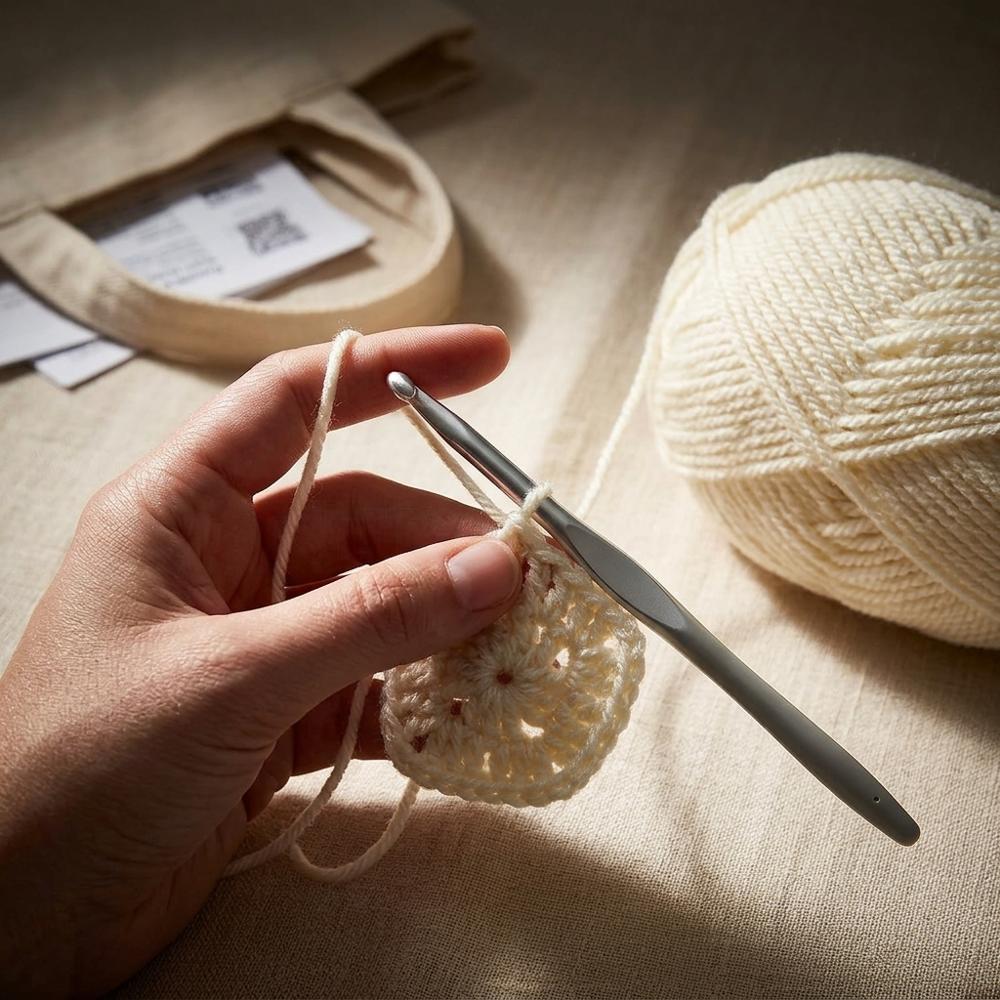
A smooth, medium (worsted) weight acrylic yarn in a pale, solid color. Light neutrals like ecru make individual stitches easy to see, which is what a beginner needs while learning to read their own work. The anti-pilling finish keeps practice pieces from going fuzzy, and acrylic is washable and cheap enough to pull out and reuse without guilt.
Bent-tip metal tapestry needles for weaving in yarn ends
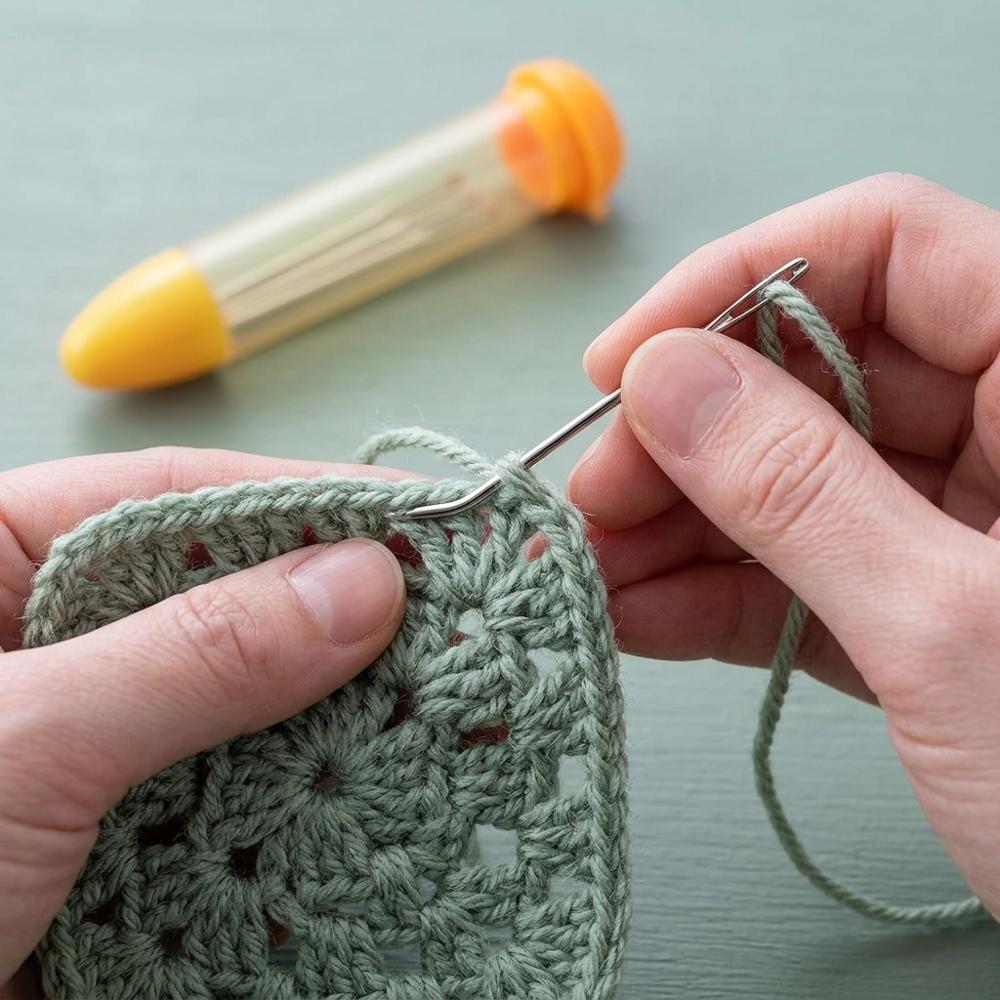
Blunt, large-eyed needles used to weave loose yarn tails back into a finished piece and to seam parts together. The bent tip slips under stitches without splitting them, which makes tidy finishing easier than with a straight needle. A blunt point matters so you pass between strands rather than piercing them.
Locking stitch markers for tracking crochet rounds and rows
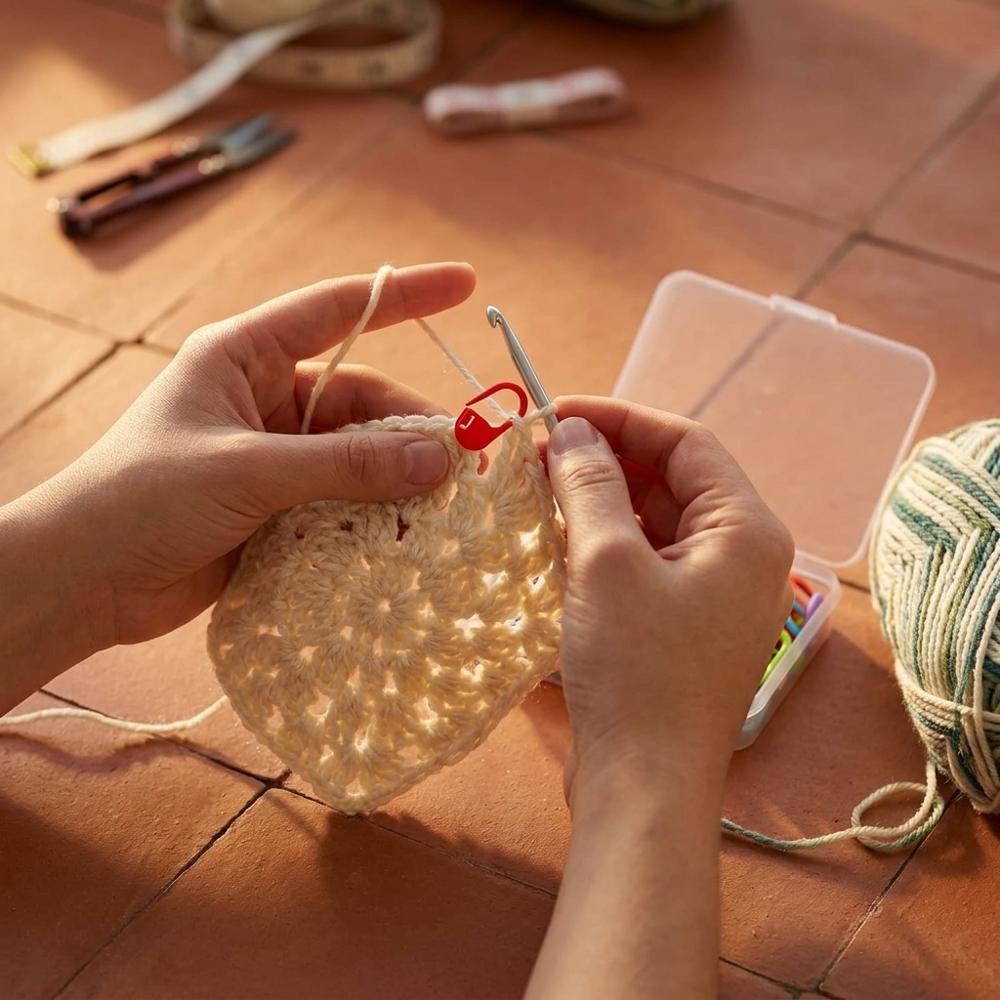
Small plastic clips that lock closed and clip onto a stitch to mark your place. They pin the live loop so a project cannot unravel between sessions, and they flag the start of a round in spiral work. Choose locking markers rather than closed rings, since closed rings cannot be removed mid-row.
Compact folding scissors for trimming yarn on the go
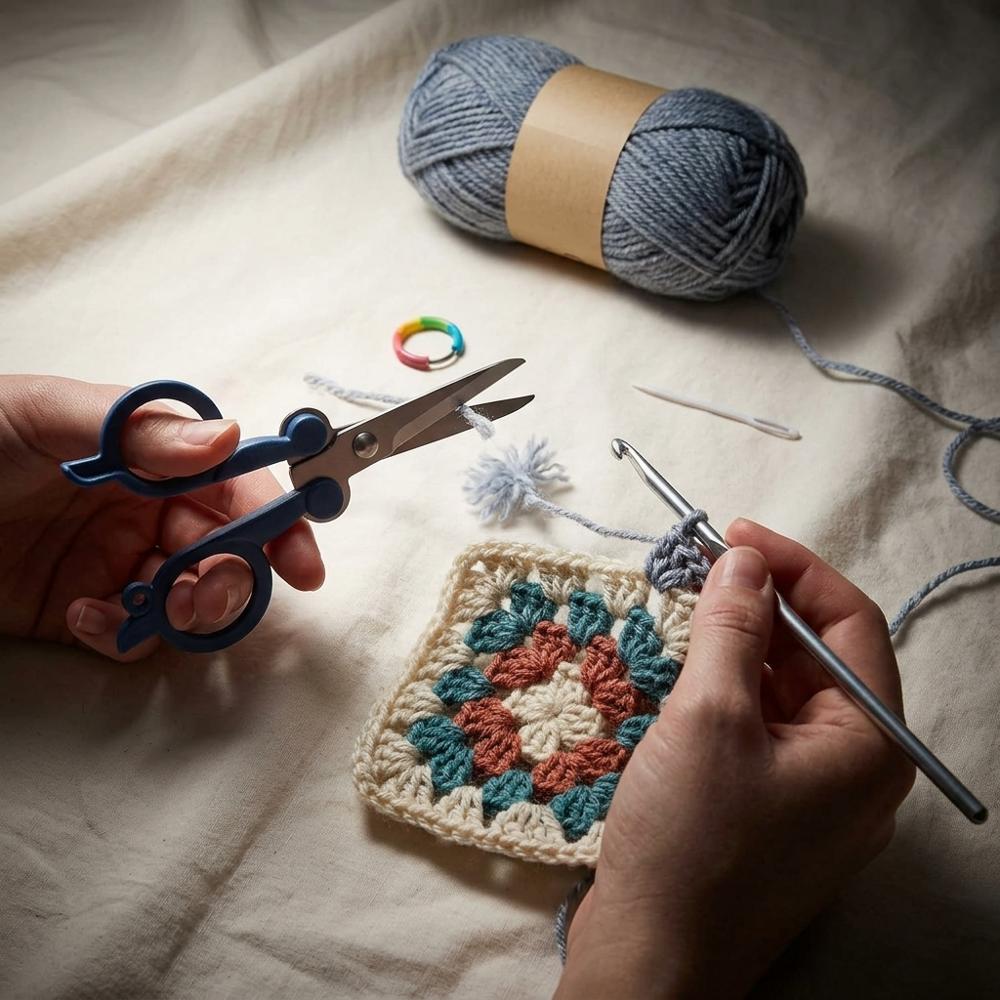
Compact scissors that fold their blades into the handle, small enough to live permanently in a project bag. The folding design protects both the blades and whatever they share a bag with, and a short blade generally clears carry-on rules. A sharp, fine point trims yarn tails close to the work without fraying.
With these five, you can work a foundation chain, practice single and double crochet, and weave in your ends so the piece does not quietly come apart in the wash. The detail nobody mentions is that your first swatch will probably curl and look lopsided, and that is tension finding its feet rather than a sign you chose wrong. Crochet keeps landing on lists of the best starter hobbies for adults precisely because this short supply list gets you to a finished object fast.
The Extras That Keep a Project From Sliding Into Chaos
None of these will teach you a stitch, but each one removes a specific small frustration that ambushes people around their third or fourth project. The usual trigger is losing track: which round am I on, where did that 4mm hook roll off to, is this scarf actually the width the pattern wants? If you already enjoy portable handwork like a beginner embroidery setup, you will recognize the appeal of keeping everything corralled in one place. Buy these as the annoyances appear, not all at once.
Stand-up crochet hook organizer case
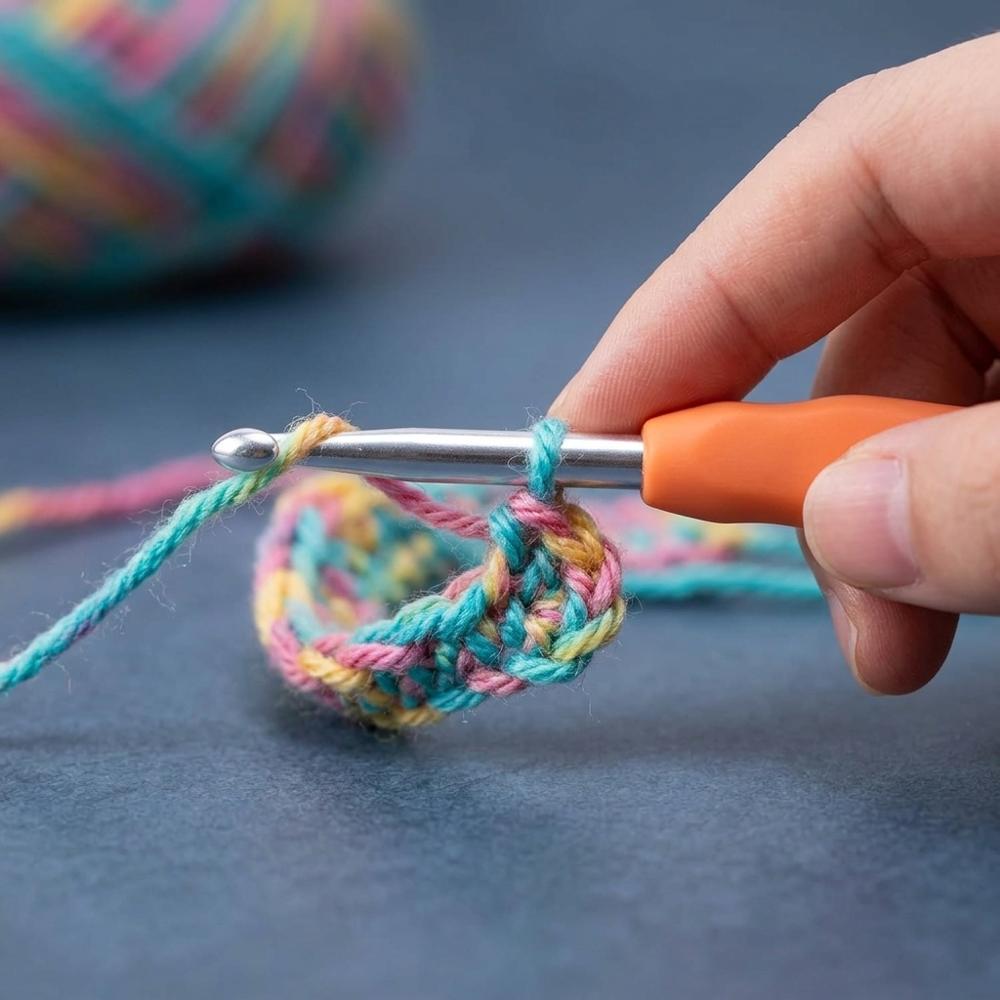
A fabric organizer that holds crochet hooks and small notions, with a stand-up design that keeps everything visible and within reach. Individual slots stop hooks from rattling loose or going missing, and pockets corral markers, needles, and a counter. Look for clearly sized slots and a closure that keeps tools from spilling.
Click-style mechanical row counter for crochet
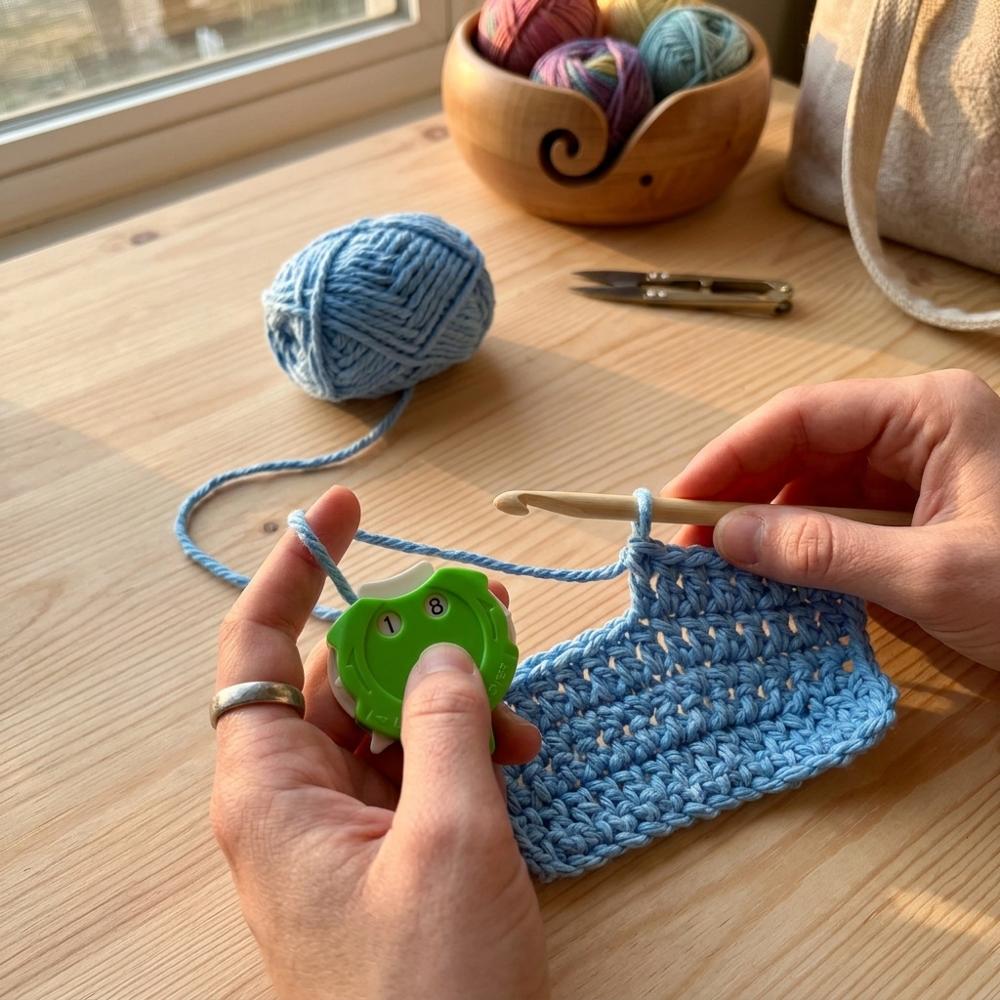
A small mechanical counter you click once per row or round to keep a running tally. It saves you from recounting stitches every time you are interrupted, which with crochet is often. A simple click-style counter is easier to trust than counting from memory and needs no batteries.
Retractable soft tape measure for checking crochet gauge
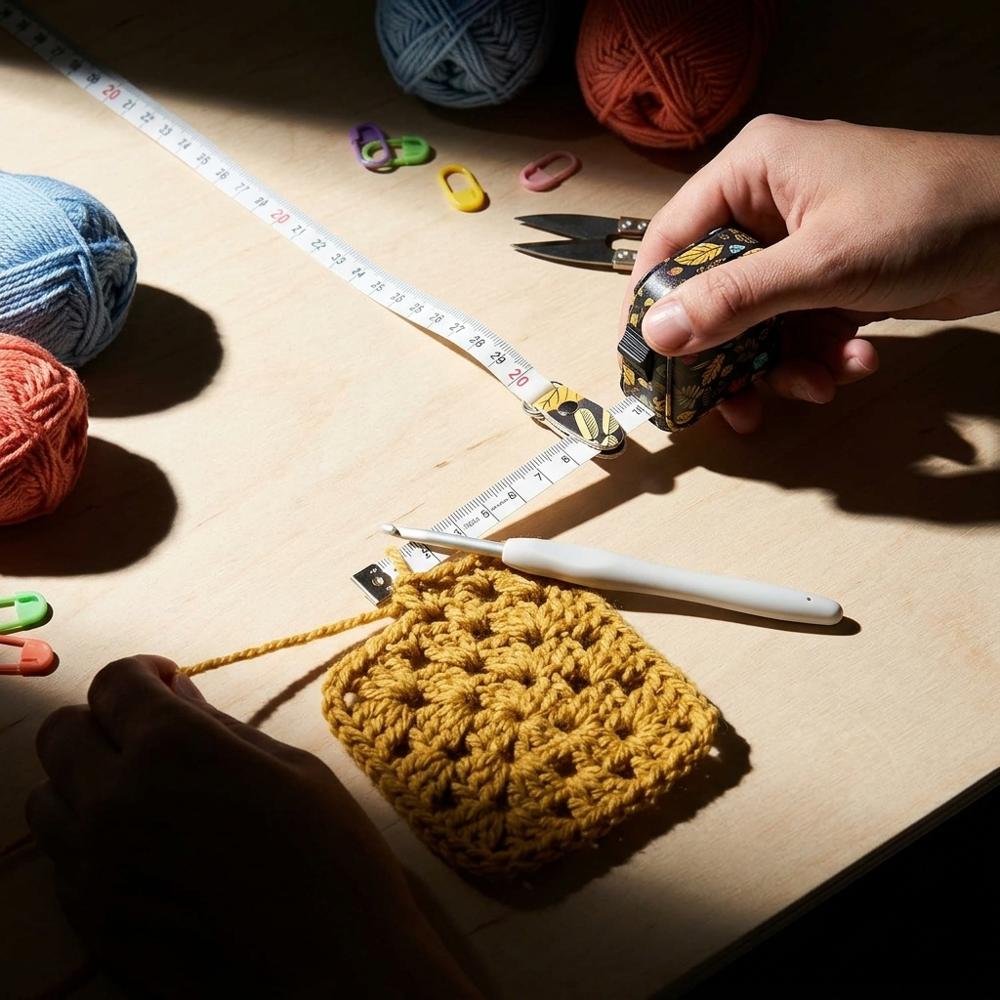
A soft, flexible tape measure that retracts into a small case, marked in both inches and centimeters. The flexible blade wraps around curved pieces like hats and follows fabric the way a rigid ruler cannot. A retractable case keeps it from tangling at the bottom of a bag.
Zippered yarn and project tote bag for crocheters
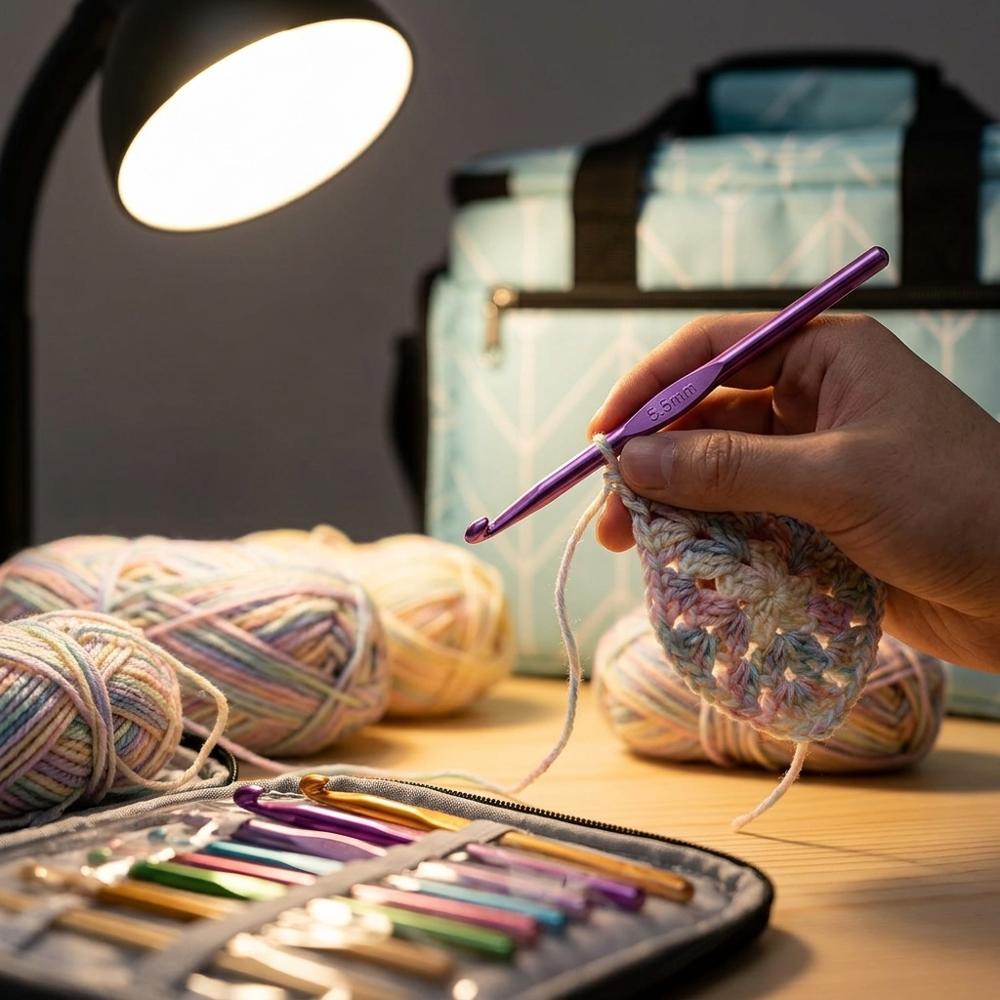
A roomy zippered bag built to hold yarn, hooks, and a work-in-progress, often with grommets or slots to feed yarn out cleanly while you work. Keeping a project contained stops yarn from rolling across the floor and collecting pet hair. Look for interior pockets for small tools and a top that closes fully.
Together they turn crochet into something you can pick up and put down without losing your place, which matters more than it sounds when life keeps interrupting. My honest take is that the row counter and a tidy case earn their keep within a week, while the larger totes are pure pleasure rather than necessity. If you are still weighing crochet against other crafts, this low-friction, low-cost progression is a big part of how to choose your first hobby without overcommitting.
When a Flat Square Becomes a Stuffed Animal
At some point the flat practice swatches stop being enough and you want to make a thing, usually a lumpy little animal with eyes, or a granny square that lies flat instead of cupping like a taco. That shift, into shaping and finishing, is where these three come in. People who also pick up a beginner knitting setup will find blocking familiar, since both crafts use it to coax stubborn fabric into shape. Amigurumi in particular has its own small toolkit, and it is cheap to assemble.
Interlocking foam blocking mats with T-pins for shaping crochet
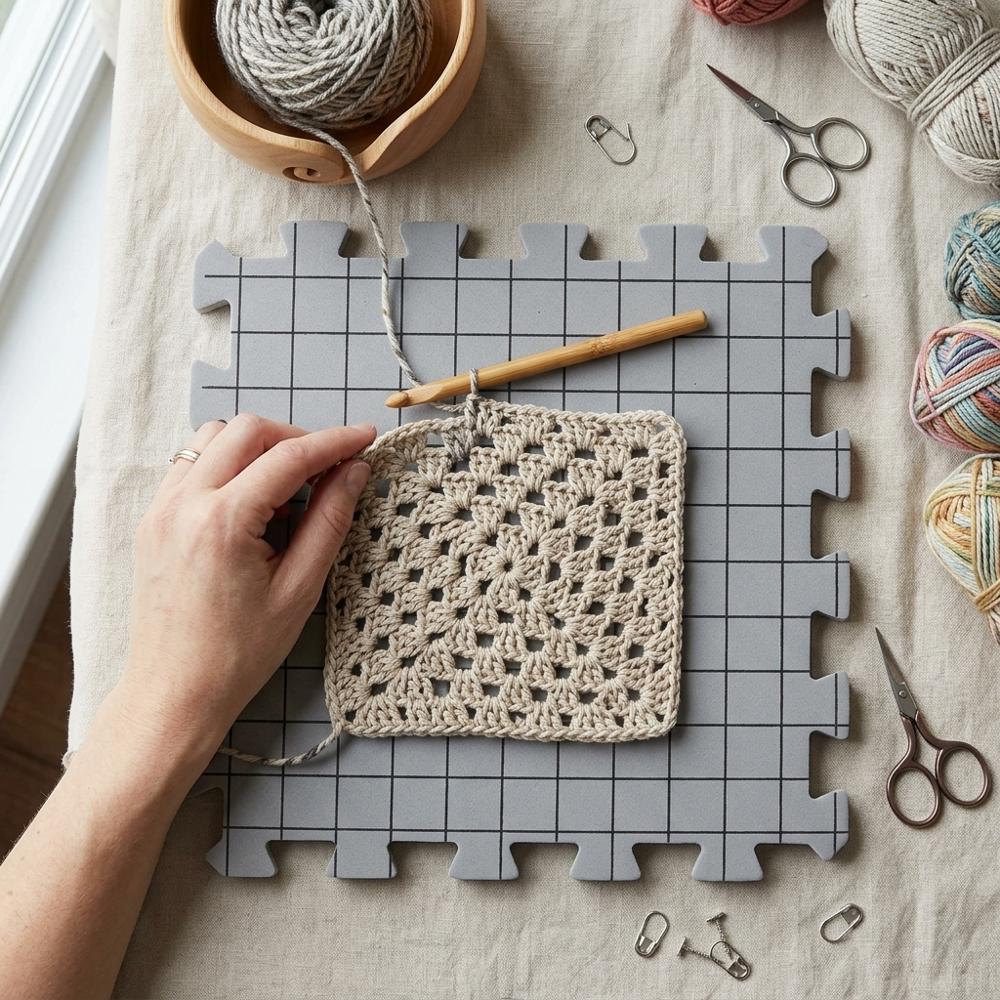
Interlocking foam tiles printed with a measured grid, used with pins to stretch damp or steamed pieces into shape as they dry. The grid lets you pin to exact dimensions so squares end up square and edges stay straight. T-pins hold the work in place, and rust-free pins matter so they do not stain the fibers.
Machine-washable polyester fiberfill for stuffing amigurumi
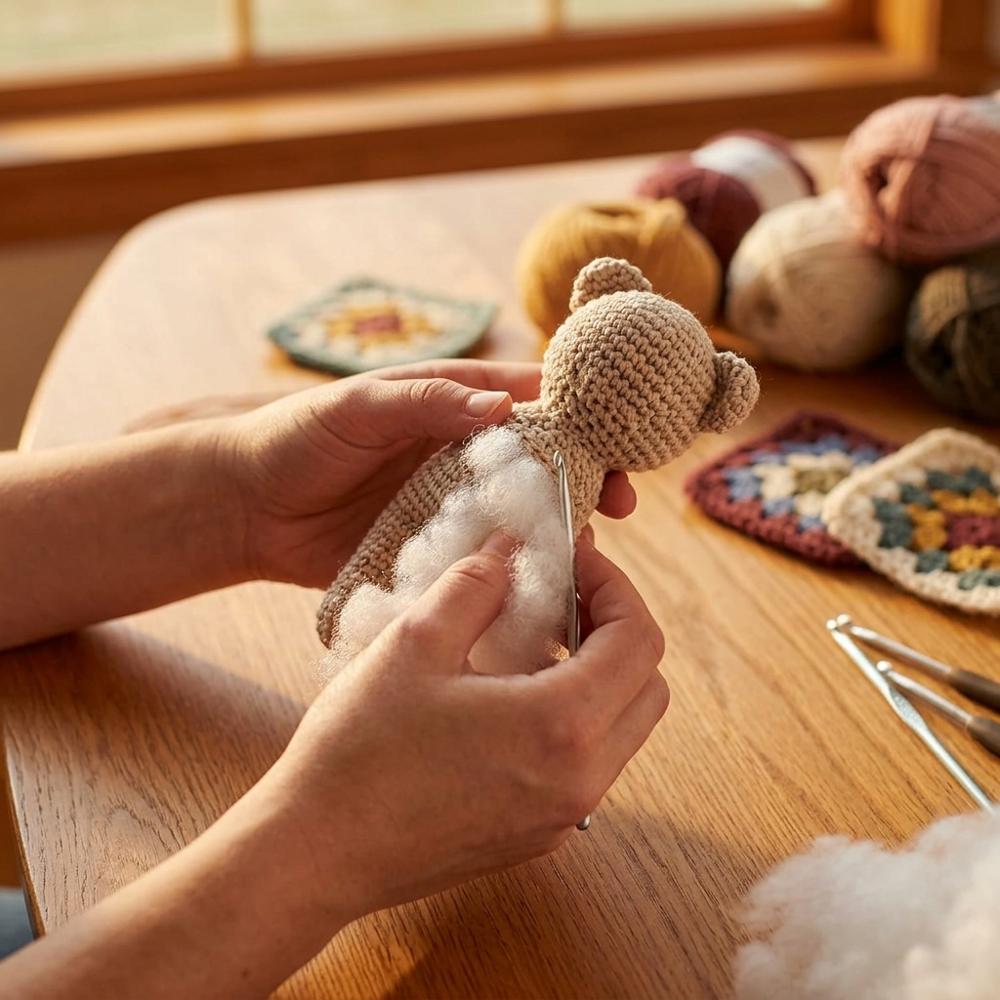
Loose polyester fiber used to stuff crocheted toys, cushions, and shaped pieces. It is springy and machine-washable, so finished toys keep their form and can be cleaned. Smooth, lump-free fill is what gives amigurumi an even surface rather than a bumpy one.
Assorted plastic safety eyes for crochet amigurumi and toys
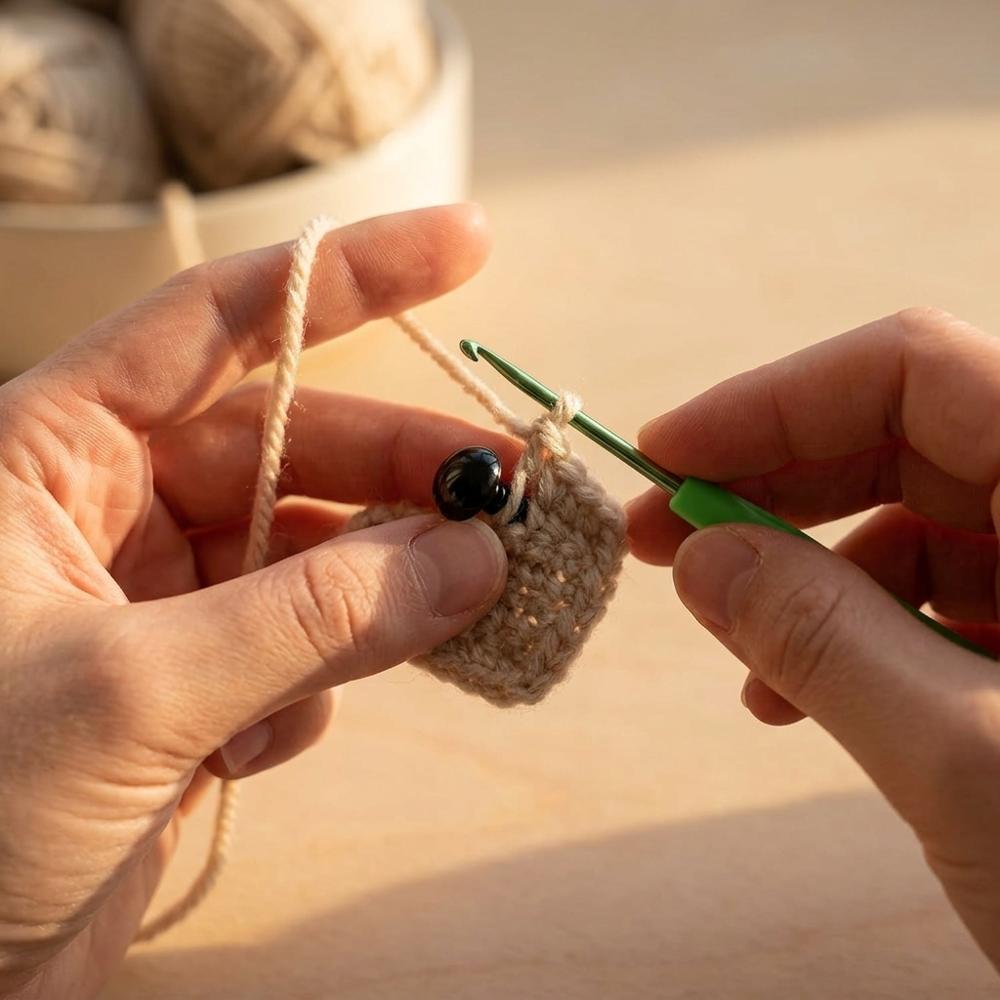
Plastic eyes with a post and a push-on washer that locks them permanently into crocheted fabric. An assortment of sizes lets you match the eye to the size of the toy. The washer makes them more secure than glued-on eyes, though that permanence means placement has to be right the first time.
With stuffing, safety eyes, and a way to block your work, you cross from making squares to making objects people actually ask you for. A word of caution on the eyes: they are a genuine choking hazard, so think twice before putting them on anything bound for a baby or a home with a curious toddler, and reach for embroidered eyes instead. Give yourself permission to make a few wonky bears before a good one shows up.
Why Does My Crochet Keep Going Sideways?
Why does my scarf keep getting wider or narrower as I go?
Beginners almost always miss the last stitch of a row or accidentally add one at the start, because the turning chain disguises where the row really ends. The result is edges that drift outward into a trapezoid or pinch inward to a triangle. Count your stitches at the end of every row for the first few projects, and learn to recognize the final stitch so you stop working into the turning chain by mistake.
I followed the pattern exactly, so why is mine a different size?
This is gauge, and new crocheters treat it as optional until a hat comes out doll-sized. Your personal tension rarely matches the designer's, so the same hook and yarn can give you a noticeably different number of stitches per inch. Before a fitted project, crochet a small swatch and compare it to the pattern's gauge, and if you are off, change hook size rather than forcing your hands to change.
Why do my stuffed animals have gaps that the filling pokes through?
Stuffed pieces are worked far tighter than scarves, and beginners use their normal loose tension, leaving holes that show white filling. The fix is counterintuitive: drop a hook size or two below what the yarn label suggests so the fabric is dense and the stuffing stays hidden. Working in a continuous spiral and marking the first stitch of each round also stops the seam-line jog that makes shapes look crooked.
Should I add safety eyes before or after stuffing the toy?
Many first-timers stuff the toy and then try to add the eyes, only to find the washers cannot be pushed on from inside a packed body. Safety eyes are permanent once the washer is seated, so the timing has to be right. Position and lock them in while the piece is still open and empty, and skip them entirely for infant gifts in favor of stitched-on eyes, since they are a choking hazard for very young children.
Gostou do que viu? Guarde artigos individuais com ⋮ em qualquer produto, ou copie toda a lista para a sua própria lista de desejos com um clique — ideal para consultar mais tarde ou partilhar como sugestão.
 Mais algumas configurações para iniciantes que preparámos com cuidado
Mais algumas configurações para iniciantes que preparámos com cuidado
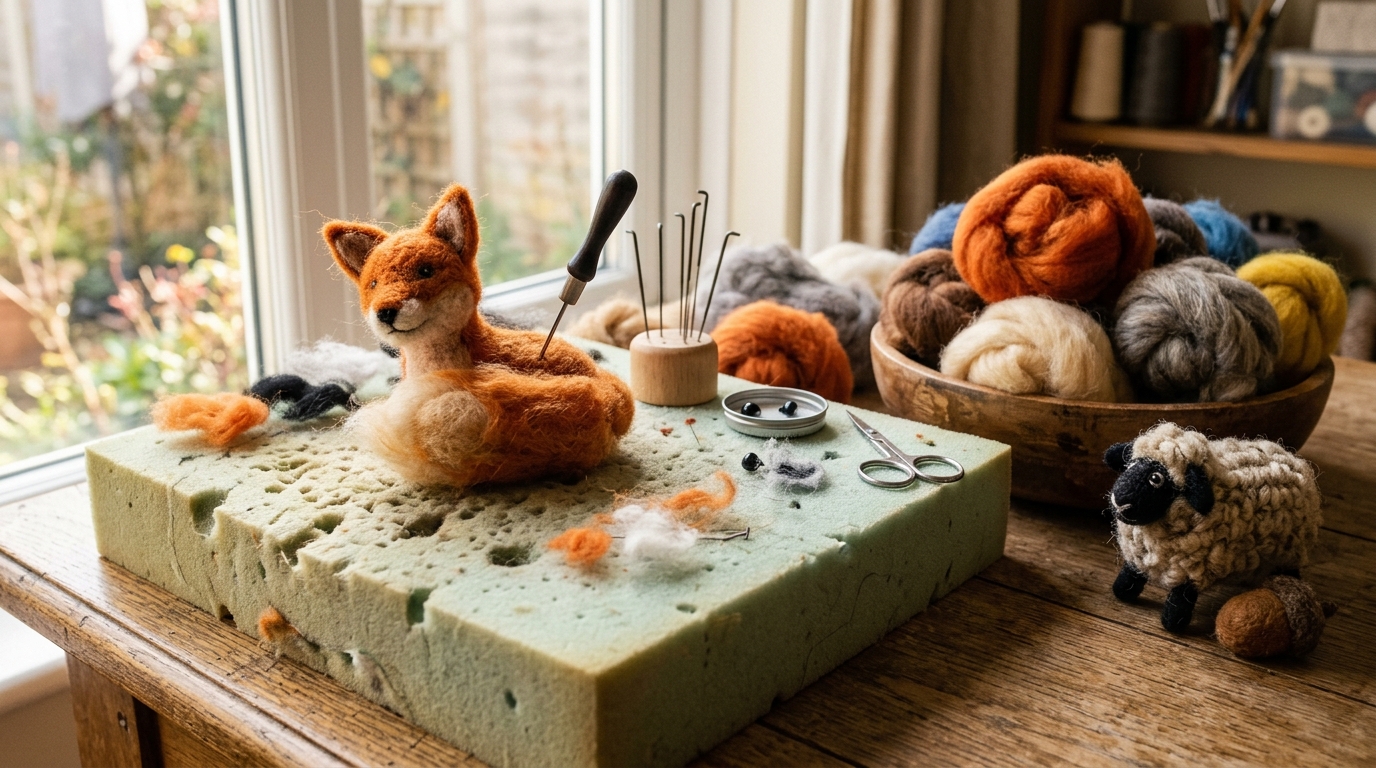
Kit Inicial de Feltragem com Agulha: Esculpa Lã em Arte 3D
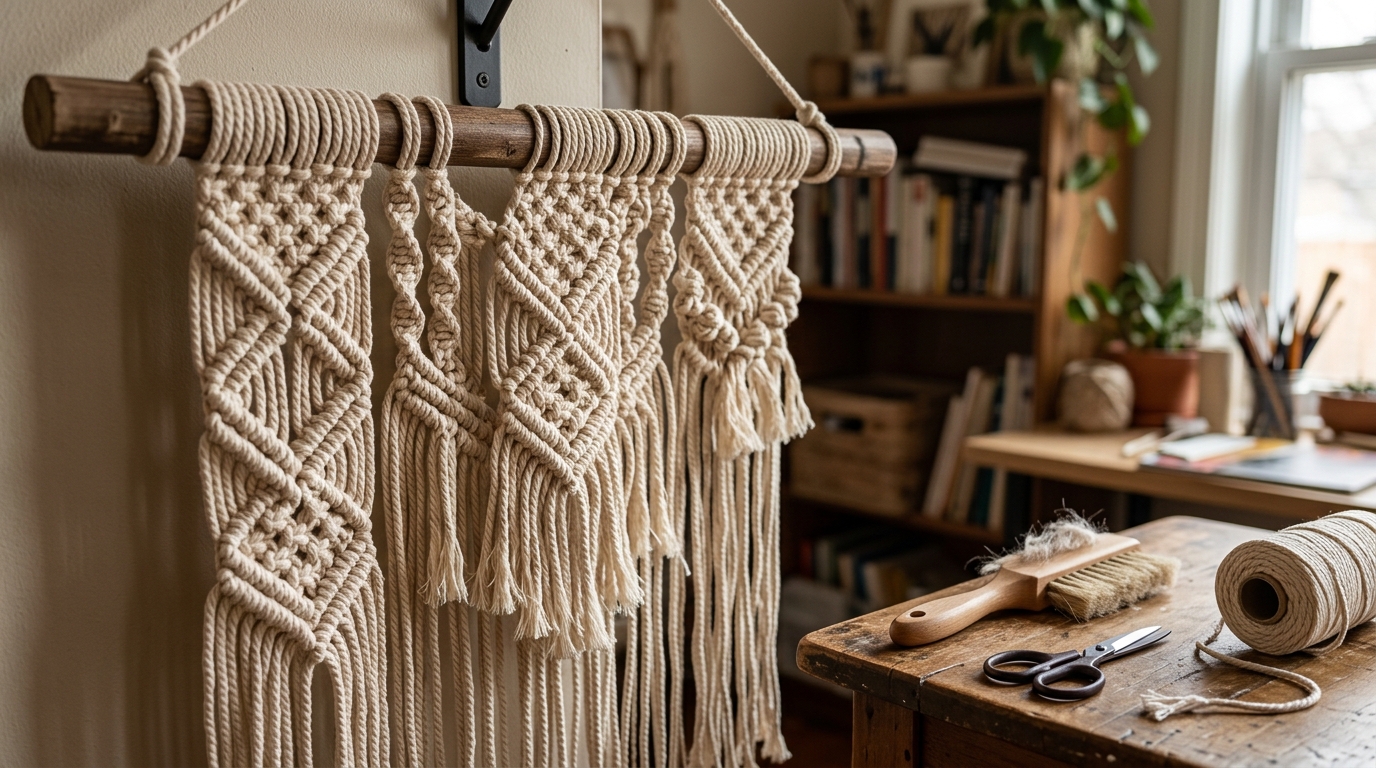
Macramé para Iniciantes: Cordão, Nós e o Básico para Pendurar
Divulgação: Algumas ligações de produtos podem ser ligações de afiliado. Se efetuar uma compra através de uma dessas ligações, poderemos receber uma pequena comissão sem qualquer custo adicional para si.